




📽️ CRUCIAL VIEWING
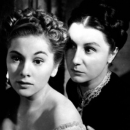
Alfred Hitchcock's REBECCA (US)
Music Box Theatre — Saturday, 11:30am and Monday, 4pm
Following Joan Fontaine's death in 2013, Alfred Hitchcock's REBECCA was referenced in most every write-up of the late actress's illustrious career, and for good reason. Hitchcock made the film under contract with producer David O. Selznick, who was working on REBECCA at the same time as he was tying up loose ends on his legendary 1939 film GONE WITH THE WIND, and Fontaine competed for the leading role in a race similar to that of Selznick's search for the perfect Scarlett O'Hara. Fontaine even competed against Vivien Leigh, who eventually won out as Scarlett and was also married to actor Laurence Olivier, the man chosen over Ronald Colman to play the male lead in Hitchcock's first joint venture with the infamously controlling Selznick. Fontaine was selected and she brings genuine curiosity to the unique role that is really two characters in one. The film, based on the eponymous novel by Daphne du Maurier, is about a young woman (Fontaine) who falls in love with a handsome widower and settles for a dull, but privileged life in the shadow of his late wife, Rebecca. The young woman's husband, Maxim, rarely mentions Rebecca, but his friends, family, and even the household staff, are deeply reverent of her memory and the impact her death supposedly had on Maxim. She never appears on screen, not even in a photograph or portrait, yet the book and film are titled after her; just as ironically, the first name of Fontaine's character is never mentioned and she's referred to only as Mrs. de Winter, just as Rebecca was called when she was alive. In an attempt to seem as lively and welcoming as the first Mrs. de Winter, Fontaine's character convinces Maxim to throw a costume ball like the one they used to have at Manderley (Maxim's estate) in gayer times, only to receive bad advice from the duplicitous housekeeper, Mrs. Danvers (played intriguingly by Judith Anderson and considered to be Hitchcock's only lesbian character). Danvers suggests that she copies the outfit of an ancestor whose portraits hangs in the house, after which it's revealed that Rebecca had adorned the same costume at the previous year's event. The portrait is not of Rebecca (it's of Maxim's ancestor, Caroline de Winter), but it acts as a representation of the deceased woman, and in being both unnamed and eventually recreating Rebecca's costume, Fontaine's character is also a representation of the conflicting character whose name is as much a presence as her living counterpart. It's no wonder then that, despite Maxim's later admissions of their marriage being a sham and his late wife as having been a promiscuous sociopath, critic Kent Jones, in his essay for the Criterion DVD release, would consider Rebecca to be "the film's real heroine." The film subconsciously suggests that, both in Rebecca's lasting effects on those she knew when she was alive, and those who came after. Hitchcock's first American film was not an entirely his own, with Selznick insisting upon as strict an adherence to the original material as censorship would allow, but scholar Robin Wood is correct when he declares this understated film as the "the most decisive single step both in Hitchcock's career and aesthetic evolution." Hitchcock would use similar themes in later films; for example, in VERTIGO (1958), he adapts another story in which a woman with multiple identities causes a male lead great distress. (Also, the first part of VERTIGO revolves around a painting and the woman who is imitating it.) Wood argues that "[S]kepticism about male-female relationships under patriarchy is central to Hitchcock's importance to us today," and that REBECCA is the first example of this enduring theme in Hitchcock's work. Despite Hitchcock's tempestuous relationship with Selznick, REBECCA reflects a turning point in the iconic director's career that foreshadows some of his best films. Screening as part of the Fond of His Mother: Queer-coded Hitchcock series. (1940, 130 min, DCP Digital) [Kat Sachs]
Bleak Week: Cinema of Despair
See Venues and showtimes below
Hayao Miyazaki's PRINCESS MONONOKE (Japan/Animation)
Siskel Film Center — Friday, 6pm and Saturday, 8pm
As morally complicated as it is visually complex, PRINCESS MONONOKE was Hayao Miyazaki’s darkest, most contemplative film prior to THE WIND RISES. Like WIND, MONONOKE advances a skeptical view of war and technological progress. It adopts a Medieval setting to portray, in the director’s words, “the very beginnings of the seemingly insoluble conflict between the natural world and modern industrial civilization.” What makes the film intellectually challenging, however, is that Miyazaki refuses to demonize industrial civilization in delineating the story’s conflict. MONONOKE takes place in a mythological feudal Japan where humans interact freely with gods and demons. Much of the second half concerns the persecution of forest spirits by the denizens of Irontown, a refinery/village that’s producing the first iron Japan’s ever seen and which it wants to destroy parts of the surrounding forest in order to expand. In a simpler film, Irontown would be a land of dumb brutes, yet Miyazaki presents the village as progressive, even enlightened. The town’s leader, Lady Eboshi, radically refuses to acknowledge the Emperor’s authority, putting her centuries ahead of her time; she also employs former sex workers, lepers, and other social outcasts in the town’s operations. (Miyazaki says he took inspiration from John Ford’s westerns in his depiction of a diverse small community.) One can’t help but admire the resolute spirit of Irontowners even as they aspire to commit genocide against the gods—Miyazaki’s humanism is so profound that he sees good even in characters that perform evil deeds. Similarly, the film’s hero, Ashitaka, often seems callow and insecure when doing good. Ashitaka is attacked by a demon at the start of the film and spends the rest of the picture slowly dying from a curse that’s placed on him. The young man’s fate parallels that of the forest spirits: he’s doomed to die, but he’s determined to use whatever strength he has left to fight for the protection of the natural world. And as depicted by Miyazaki and the Studio Ghibli team, the natural world seems magisterial enough to die for. (1997, 134 min, DCP Digital) [Ben Sachs]
---
Gregg Araki’s MYSTERIOUS SKIN (US)
Music Box Theatre — Friday, 6:45pm
MYSTERIOUS SKIN marked Gregg Araki’s first attempt at adapting someone else’s work, a significant deviation from the previous six films that burst out fully formed from the skull of the New Queer Cinema titan. Yet this effort, an adaptation of Scott Heim’s 1995 novel of the same name, feels emotionally tethered to the rest of Araki's oeuvre, excising some of his usual arch humor and abrasive wit but still remaining as curious and empathetic. Within Heim’s text—a devastating work navigating the long-term effects of childhood sexual abuse—Araki clearly identified thematic elements that resonated with him: queer isolation, chosen family, our varying relationships with sex and intimacy, and, of course, aliens. Trauma finds itself wandering in multiple directions as two young boys, both the victims of sexual abuse by an older man, find vastly different methods of coping with their respective experiences. Brian (Brady Corbet) has fully erased the experience from his mind, cocooning himself deeper and deeper into the belief that this bizarre blip in his memory must be the result of a freak encounter with a UFO. Alternately, Neil (Joseph Gordon-Levitt) begins projecting his experience onto his continued sexual relationships with older men, eventually turning to sex work to perhaps regain some form of bodily autonomy over his sense of desire. Araki has always created characters who wear their emotions naked on their sleeve, and here is no different, his young actors yearning for escape and understanding, conveyed through dual narration from Neil and Brian, echoing the literary source material. In the filming of MYSTERIOUS SKIN, Araki went to noble lengths to make sure his youngest actors would not fall prey to the same mental abuses of the characters they were portraying, providing them with abridged scripts that only contained specific scenes and actions, with much of the more toxic sexual content crafted through shots and moments cemented back together again in the editing room. This careful, considerate filmmaking practice ultimately became an artistic boon for Araki, resulting in a film that never feels exploitative, toxic, or cruel, but rather built upon the implied relationship of images with one another, memories becoming refracted and distorted and eventually finding their way back together again. (2004, 105 min, DCP Digital) [Ben Kaye]
---
Martin Rosen’s WATERSHIP DOWN (UK/Animation)
Siskel Film Center — Friday, 8:45pm and Wednesday, 6pm
Martin Rosen's 1978 adaptation of Richard Adams' novel remains one of the great achievements in animated storytelling. A landmark work that shattered the assumption that animation existed solely for children, WATERSHIP DOWN transforms Adams's sprawling 500-page epic into a film of genuine philosophical and emotional weight. Nearly five decades later, it remains as unsettling and provocative as ever. The film's power begins with Rosen's refusal to follow the Disney tradition of animals as comforting companions. Instead, he pursued what has often been described as "rabbit realism." Drawing inspiration from Adams' primary source, R. M. Lockley's The Private Life of the Rabbit, the production studied the behavior of wild rabbits in detail. Animators observed live animals, while the backgrounds were painted from the Hampshire downlands that inspired the novel. As a result, scenes of violence—hawks snatching rabbits from the air, animals caught in wire snares, or the climactic dog attack—depict death with an uncommon honesty. Audiences initially approached the film expecting innocence, only to discover an animated work concerned with mortality, political power, and spiritual transcendence. At its core, WATERSHIP DOWN is a study of competing political systems embodied by different rabbit warrens. Sandleford represents complacent hierarchy, where authority dismisses Fiver's apocalyptic warnings until destruction arrives. Cowslip's Warren offers a subtler horror: a comfortable society sustained by voluntary sacrifice, where rabbits accept death in exchange for security. Efrafa, ruled by General Woundwort, provides protection through totalitarian control. By contrast, Watership Down itself functions as a democratic ideal, where leadership is earned through empathy, consultation, and trust. Rosen ultimately argues that communities endure not through domination or comforting illusions, but through cooperation, shared stories, and a willingness to confront reality. The film's mythology provides a broader framework for these political divisions. In the opening sequence, designed by John Hubley, Frith the sun god creates all animals as equals. When rabbits multiply without restraint and consume more than their share, Frith urges them to show consideration for other creatures. Their refusal leads him to create predators with an appetite for rabbits. Yet even in punishment, Frith grants them speed, cunning, and resilience. His warning to El-ahrairah, the Prince with a Thousand Enemies, becomes the film's defining philosophy: "All the world will be your enemy... But first they must catch you." In the present, Hazel (voiced by John Hurt) and his brother Fiver (voiced by Richard Briers) live in Sandleford. Mocked as unstable, Fiver foresees the destruction of their warren in a vision of fields running red with blood. When the leadership ignores him, Hazel leads a small band of followers in search of safety. Their journey turns them into refugees moving through hostile territories, where they encounter predators, traps, gunfire, imprisonment, and exploitation. Rosen's determination mirrored that of his characters. After distributors rejected the project as adult-oriented animation, he personally financed its UK release. He championed Art Garfunkel's "Bright Eyes” for the theme music, fought for the film's more naturalistic approach, and ultimately helped create one of the highest-grossing British films of 1979. The film endures because its concerns remain timeless. The displacement of communities in the name of development, the necessity of cultural memory, the struggles of migration, and the dangers of authoritarianism continue to shape modern life. WATERSHIP DOWN asks viewers to empathize with creatures constantly hunted and displaced while recognizing, within their journey, the courage required to build a community founded on dignity, cooperation, and the pursuit of a life well lived. (1978, 92 min, DCP Digital) [Shaun Huhn]
---
Gus Van Sant’s LAST DAYS (US)
Music Box Theatre — Saturday, 7:15pm
Like Alexandr Sokurov’s THE SUN (which was released the same year), Gus Van Sant’s LAST DAYS considers moments that no one can corroborate yet loom large in the popular imagination. THE SUN dramatizes Emperor Hirohito’s period of quasi-seclusion prior to his acceptance of Japan's defeat in World War II; LAST DAYS contemplates Kurt Cobain’s period of quasi-seclusion prior to his suicide in 1994. Both films exude a creepy aura, as they’re made with the knowledge they’re presenting things we shouldn’t be seeing, but Van Sant’s film, structured like a countdown to death, can be spine-tingingly morbid. It can also be mesmerizing, poignant, or weirdly funny, all while delivering relatively little in terms of plot. Thanks to the masterful sound design (by Leslie Shatz) and cinematography (by Harris Savides), every gesture has a heightened quality—something both fragile and stinging—that evokes what it may be like to look and listen to the world for the last time. Ironically, a lot of what transpires in LAST DAYS turns out to be banal: Blake (Michael Pitt), the film’s Cobain stand-in, wanders around a palatial home in New York State, prepares some meals, records a little music, and walks in the woods. He also does a lot of heroin, though Van Sant never depicts his drug use on screen; this structuring absence explains the film’s languid pace and the impassive gaze of Savides’ camera. Most of the other characters in the film are the hangers-on with whom Blake is sharing the house, and they appear just long enough to reveal their revolting vanity and greed. (The film regards them with the same blunted fascination as everyone else, however.) Their presence would make anyone misanthropic enough to give up on life, and Blake, with his death wish, perversely seems to need them. In some of the stranger moments of LAST DAYS, a few people show up whom Blake doesn’t need—a man selling ad space in the Yellow Pages and two young evangelists from the Church of Latter-Day Saints—and their unexpected appearances play like non-sequitur jokes. The surprising (albeit still grim) humor reflects the influence of Bela Tarr on this period of Van Sant’s career as much as any of the formal decisions; like all of Tarr’s work from DAMNATION (1988) on, LAST DAYS is a hypnotic dirge of a film. (2005, 97 min, 35mm) [Ben Sachs]
---
Takashi Miike’s VISITOR Q (Japan)
Music Box Theatre — Saturday, 9:45pm
VISITOR Q is not what I’d deem a horror movie. It has little gore (it’s edited and framed cheekily so that the worst is left “unseen”), but it is horrific. A challenging viewing for those who seek a challenge. Told in a series of linked vignettes, it follows a repressed, dysfunctional family whose lives are disrupted when a mysterious stranger is invited into their home. The mother is a drug addict beaten by her son; the father a bumbling fool with memory loss and deep-seated shame. The visitor draws out the long-suppressed taboos, desires, and sins of each maladjusted family member, permanently altering their relationships to each other and with themselves. In the striking opening scene, an older man converses with a young prostitute in a love hotel room. He holds a video camera, she snaps shots intermittently on a digital camera. Their unmasked expressions and unposed forms intercut as they flirt, negotiate, and entangle their bodies among anxious inhibitions, the wave of releasing them only for them to return shortly after. It is this synthesis that makes Miike so engaging; his films operate as viewfinders for the dysfunctional. His refusal to shy away from the possibilities of the human body, for better or worse, offer glimpses of rarely explored material ideas only whispered about behind closed doors. The absurdity of these acts are often so dark that they loop right back around to becoming wacky, cartoonish. VISITOR Q is about a society turned on its head, where unity is achieved through brutality and love blossoms from taboo. In a filmography of over 100 films, it remains one of his most formidable, but what is cinema for if not a medium to explore all sensory, visual, corporal, and formal possibilities of the world? (2001, 94 min, World DCP Digital Restoration Premiere) [Olivia Hunter Willke]
---
David Cronenberg's SPIDER (Canada/UK)
Music Box Theatre — Saturday, 11:45pm
Over the course of David Cronenberg’s career, the filmmaker has moved through different periods. Since DEAD RINGERS (1988), his films have become less interested with body horror and science fiction and more literary and melodramatic. In the director's commentary for the SPIDER DVD, Cronenberg made it clear he has no interest in a psychoanalytical study of a character. Throughout his films, his greatest interest is the human condition, not scientific study. That being said, it’s tempting to view his body of work through a Freudian lens. This can go as far back as RABID (1977), when a character holds up a book called The Life and Work of Sigmund Freud. SPIDER begins as a man, Spider, is released from a psychiatric hospital to live at a halfway house in London’s East End. At the start, the audience doesn’t know his condition or the reason for his confinement. As he refamiliarizes himself with old streets and places, Spider relives memories from childhood. Along with him, the viewer struggles to find out what happened and where it all went wrong. Previously, Cronenberg made a film adaptation of William S. Burrough’s Naked Lunch, a book considered unadaptable for the screen. From early stages, the director worked with screenwriter Patrick McGrath (who also wrote the novel on which this is based). In development, Cronenberg pushed McGrath to construct a story that would work for the cinematic medium and would differ from the novel. The Canadian auteur remarked, “You have to be unfaithful to the book in order to be faithful, there is no direct translation." In the novel, the reader follows Spider’s notebook where the character eloquently recounts events in detail. For the film, the creators optioned the character to barely speak in complete sentences if he ever spoke. The audience experiences the world as the character; a London neighborhood that would normally be bustling with cars and people remains occupied only by the isolated Spider. Through visuals and space occupied by the actors, the audience breathes the atmosphere of the character’s inner life. Ralph Fiennes gives an astonishing performance as an emaciated man with schizophrenia trying to piece his life back together. Much of his performance is improvised mumbling, the actor was encouraged to create his own written language for scenes when Spider writes in his journal. Generous to his collaborators, each film directed by Cronenberg has its own voice and life. He is one of the last living auteurs who sculpts the essence of literary works into cinema. (2002, 98 min, 35mm) [Ray Ebarb]
---
Orian Bakri & Meriem Bennani's BOUCHRA (Italy/Morocco/US/Animation)
Siskel Film Center — Sunday, 2:30pm
Orian Barki and Meriem Bennani have teamed up again after their collaborative web series 2 Lizards, which documented life during lockdown. In a similar stylistic vein, BOUCHRA, a 3D-animated metafilm, tells an intimate story of multiculturalism, city night life, queer love, and its consequential struggle of navigating family expectation. Taking place between a cyberpunk, rainy Manhattan and a sunny, colorful Casablanca, Bouchra, this centers on a young lesbian filmmaker, who takes the form of a humanoid coyote; she moves into her New York apartment and tries to make an autobiographical film as she reconnects with her ex-lover. She draws her life and memory into storyboards and meticulously finds ways to initiate a conversation over the phone with her mom, Aicha, who lives back home in Casablanca, about her sexuality—or to resolve something that was mentioned years ago but has been buried since. At some point, scenes from the film Bouchra's making blends with the reality that Bouchra occupies, but to figure out what’s real and what isn't is missing the point. Barki and Bennani excel at constructing an absorbing story that so effortlessly conveys many things at once. For one, this reflects the lived experience of someone who constantly finds ways to reconcile parts of her identity that are difficult to be forged together. It’s a love letter to metropolitan loneliness and living with differences. The dizzying tracking shots that close up to the face are dreamy. Light and shadows convolute under flickering neon signs. It’s also a medium-conscious film that’s rich in social commentary. Many shots, albeit fleeting, are given to teenagers (also animal humanoids) loitering in groups but each hooked to their phone screens. The myriad screens integral to our daily life are represented thoroughly: the smartphone that lights up when it rings; the phone calls we take through the computer; the back-and-forth text messages that progress into voice messages; a 3D-animated “Is It Cake?” put through a moiré filter to look like it’s on TV; cell phone videos that are shown in a vertical format… The details are touching and thought-provoking. And even though the animated body can sometimes come off stiff, there’s never an ounce of doubt that a beating heart is therein, screaming to be understood. Barki in attendance for a post-screening conversation moderated by animator Sarah Schmidt. (2025, 83 min, DCP Digital) [Nicky Ni]
---
George A. Romero's NIGHT OF THE LIVING DEAD (US)
Music Box Theatre — Sunday, 6:45pm
George Romero would go on to make better films than NIGHT OF THE LIVING DEAD—movies that suggest the unlikely fusion of Mark Twain’s all-American satire, Michael Powell’s fanciful curiosity, and John Cassavetes’ intimate, handmade aesthetic within the confines of the horror genre. But his debut is still an object lesson in independent filmmaking: Rather than cover up his distance from Hollywood (budgetary and geographical), Romero embraces it. The resulting film boasts a sharp sense of location—the suburbs and rural areas outlying Pittsburgh—and an understanding that the banal makes the horror all the scarier when it arrives. Much has been written about the radical implications of casting a black actor to play the heroic, gun-toting lead in 1968, though Romero (one of the few popular U.S. filmmakers so consistently open about his radical politics) claims to have no political motivation in this decision. More focused is the film’s pointed anger at middle-class conformity, which gives the film its enduring bitter rage. Followed by a discussion with Pulitzer Prize winning author Daniel Kraus. Copies of Partially Devoured: How Night of the Living Dead Saved My Life and Changed the World will be available at the show. (1968, 96 min, 35mm) [Ben Sachs]
---
Chris Sullivan's CONSUMING SPIRITS (US/Animation)
Siskel Film Center — Monday, 6pm [Free Members-Only Screening]
Chris Sullivan's otherworldly animation is full of tiny, odd, and potent details: the tremor of a hand, the turn of a radio dial, a bird on a tree limb. It is this world of small things that draws one in slowly. CONSUMING SPIRITS, local filmmaker and SAIC professor Chris Sullivan's decade in the making animated feature, is an Appalachian gothic with four main characters—all trapped by some problem of their own making and held together by a sad and inescapably interconnected past. It is a remarkable achievement that such a simple story isn't overwhelmed by the fractured visual world Sullivan builds. CONSUMING SPIRITS glides through stop-motion animation, pencil drawing, collage animation, and Sullivan's signature style of cutout animation, and the movement is fragile and corporeal. While all of the characters in his film are grotesquely rendered, it is hard to imagine them as lifeless pieces of paper. The film is something akin to the magical animation of Yuri Norstein—more cinematic than cartoonish. It often delivers surprising moments of translucence or a mystifying depth of field or a strange spot of light, which all seem to be more captured than constructed. It is also often ruthlessly funny and gruesome, deepening our look at these troubled characters as they attempt to deal with their individual tragedies and disappointments. CONSUMING SPIRITS is exactly as advertised—a consumption. (2012, 129 min, DCP Digital) [Christy LeMaster]
---
John Woo's BULLET IN THE HEAD (Hong Kong)
Music Box Theatre — Tuesday, 7pm
Color, movement, physical dexterity, symbolism, choreography, artificiality, formal confluence, romanticism—reduce the stylized Hong Kong action movie to its most important parts, and what you end up with is a pretty apt description of the mid-20th century movie musical, just substitute gunfights for song-and-dance numbers. Nowhere is this relationship between the two genres more blatant than in John Woo's Minnelli-influenced Vietnam War epic, an ambitious corrective to THE DEER HUNTER (a movie that also wears its Minnelli influence on its sleeve) that flopped hard at the box office back in 1990. Opening with an extended audio-visual jam on the Monkees' "I'm a Believer," BULLET IN THE HEAD follows three HK street toughs (Jacky Cheung, Waise Lee, and the shorter/cooler of Hong Kong's two Tony Leungs) who decide that they can make a quick buck in the totally-not-dangerous Saigon war profiteering industry and get their lives ruined in the process. While all of Woo's HK action films are melodramatic (have you seen THE KILLER lately?), none of them foreground the melodrama the way BULLET IN THE HEAD does; the film's distinctive blend of soapy plotting, choreographed violence, and expressionist color verges on the hallucinatory. With an introduction by Carson Wang, doctoral student in Screen Cultures at Northwestern University and political organizer with Asian American Midwest Progressives and Asian Americans Advancing Justice Chicago. (1990, 136 min, 35mm) [Ignatiy Vishnevetsky]
---
William A. Wellman’s SAFE IN HELL (US)
Music Box Theatre — Thursday, 7pm
William A. Wellman’s best films, most of which come from the 1930s, have a physical, almost pugnacious quality to them, as if he were boxing with the material instead of merely directing it. Consider the rickety dolly shots that crop up all over SAFE IN HELL and which Wellman uses for dramatic emphasis. With this device, he associates feeling with movement, thereby exalting one of the core principles of cinema. Wellman, who famously joined the Royal Air Force before he broke into movies, probably never thought about his work in such highfalutin terms; he seems to have reached his style and motifs intuitively. And boy did his intuition help him in the early ‘30s, when he was under contract to First National Pictures to direct several features a year—most of which ended up being winners. SAFE IN HELL comes from a banner twelve-month cycle that also saw the release of THE PUBLIC ENEMY, NIGHT NURSE, and THE STAR WITNESS. It remains the most shocking of these four films, as it literally opens with a sex worker being instructed over the phone about her next appointment. Her client turns out to be none other her former boss, who raped her and then blackballed her from working in respectable jobs again, effectively forcing her into her current line of work. After a heated argument, she knocks him unconscious and leaves his hotel room, unaware that she started a fire before she left. When Gilda finds out later what’s happened, she realizes she needs to get out of town; luckily her sailor boyfriend can smuggle her out of the country on a boat. He takes her to a small island in the Caribbean that’s known as a place where wanted men can cool their heels. This is the hell of the title, and it’s where the action really begins. Most of the story takes place in the hotel-and-bar where Gilda ends up hiding out and befriending a handful of lowlives from around the world. (Was this the DESPERATE LIVING of 1931?) The camaraderie on display tempers the brash, low-brow sensibility of much of the plot, which includes more shocking turns to top the film’s beginning. One of the glorious things about pre-Code films in general, not just Wellman’s, is how they traverse multiple genres within individual films; as the rules of sound cinema were still in flux, these movies are free to be whatever they want, whenever they want. Thus, SAFE IN HELL is alternately an exploitation movie, an adventure story, a comedy, a hangout picture, a romance, and a courtroom drama, and all in 73 minutes to boot. For a movie about confinement, this exudes a sense of liberty. (1931, 73 min, 35mm) [Ben Sachs]
---
Also screening at the Music Box as part of Bleak Week are Uli Edel's 1981 film CHRISTIANE F. (131 min, New 4K DCP Digital Restoration) on Friday at 9:15pm; Roger Watkins’ 1983 film CORRUPTION (79 min, 35mm) on Friday at midnight; Richard Brooks's 1977 film LOOKING FOR MR. GOODBAR (135 min, 35mm) on Sunday at 11:30am; George A. Romero's 2005 film LAND OF THE DEAD (93 min, 35mm) on Sunday at 9:30pm, presented by Music Box of Horrors; and Todd Solondz's 2004 film PALINDROMES (100 min, New 4K DCP Digital Restoration) on Thursday at 9pm, introduced by Aja Essex. The Film Center's iteration focuses entirely on animated films: Michael Schaack's 1994 film FELIDAE (78 min, DCP Digital) screens Saturday at 6pm and Monday at 9pm and Dash Shaw's 2021 film CRYPTOZOO (95 min, DCP Digital) screens Wednesday at 8pm. See Venue websites for more information.
📽️ ALSO RECOMMENDED
Agnès Varda’s LE BONHEUR (France)
Alamo Drafthouse — Saturday, 4:30pm
In her essay for the Criterion release of Agnès Varda’s enigmatical third film, LE BONHEUR, Amy Taubin writes, “Few films have inspired as many wildly differing interpretations in the decades since their release as… LE BONHEUR.” (The film’s title translates to ‘happiness,’ appropriately deceptive in its professed sincerity.) She surmises a couple of theories: “Is it a pastoral? A social satire? A slap-down of de Gaulle–style family values? A lyrical evocation of open marriage?” I’d agree with the social satire part. But more than that, I’d say, it’s a lyrical provocation (rather than evocation) of the male gaze, not just how a woman looks or even is desired by a man, but their value to men in terms of the titular sentiment. The film opens on a field of sunflowers, a flora destined to be represented on canvas and screen; ironically—at least in the context of Varda’s "exquisite fable of infidelity,” per an old version of the film’s poster (which adorns my wall)—the sunflower symbolizes loyalty and adoration, and is at the center of the Greek myth of Clytie and Apollo, the former of whom was in love with the latter, the God of the Sun, and, when his attention wandered to another woman, a Babylonian princess, went so far as to tell her father of the affair so that he’d punish her by death. Clytie nevertheless failed to win back Apollo, and thus turned into a flower, the sunflower, after spending so long gazing up at the sun. François (French television star Jean-Claude Drouot) might fancy himself a god, maybe even that of the sun, as the world revolves around his happiness, a notion presented straightforwardly, even a bit whimsically; he’s a carpenter, and his wife, Thérèse (Claire Drouot; the nuclear family of the film is played by a real-life family, complete with their kids playing the children in the film), a homemaker and seamstress. Their relationship is idyllic—the couple are clearly still in love, and as a family they spend weekends in the French countryside, where sunflowers bloom with abandon. (Varda remarked in an interview that she centered the film around these picnics so as to guarantee being able to spend a month outside.) François then meets Émilie (Marie-France Boyer), a beautiful post-office worker, with whom he enters into an affair. The tension of the film, or perhaps the lack thereof, isn’t that François loves another woman more than his wife, but that he loves another woman in addition to her and sees no problem with it. This, for him, is happiness, he at the center, like the sun, and his two loves idolizing him like blooming flowers dependent on his star’s luminous rays. If you haven’t yet seen the film or heard about what transpires in it and want to be surprised, I’d recommend reading no further. Because though at first Thérèse seems okay with the revelation, she’s later found dead in the lake where they take their outings, whether or not she committed suicide or accidentally fell into the water unclear. François mourns but soon goes on to marry Émilie, having effectively slotted her into the spot left by Thérèse, the viewer left to wonder if it could be just any woman. As Chantal Akerman said, aptly identifying the axiomatic of this masterfully canny fable, “The idea is extraordinary: one love is worth the same as another, a person can be replaced by another. For me, LE BONHEUR is the most anti-romantic film there is.” Fitting commentary from another Belgian-born filmmaker who made another classic of male-gaze deconstruction (though Varda’s probing occurs in the film, while Akerman’s dismantling exists entirely outside of it). Illustrating all this are some of Varda’s most romantic tableaux, filled with warm sunshine, cool pastels, and abundant bouquets of flowers, all while Mozart plays; it looks and even sounds like a bucolic love story but could be, actually, the most understated of cautionary tales. The film is certainly a Rorschach test of sorts, except with sunflowers instead of ink. Presented as part of Alamo’s Olivia Wilde Guest Selects series for her new film THE INVITE. (1965, 80 min, DCP Digital) [Kat Sachs]
Saul Williams and Anisia Uzeyman’s NEPTUNE FROST (US/Rwanda)
Black Film Club Collective at Elastic Arts (3429 W. Diversey Ave., #208) — Saturday, 8pm
“The movie has a plot that defies common sense,” wrote Roger Ebert upon revisiting Fritz Lang’s METROPOLIS some years back, “but its very discontinuity is a strength.” I watched Saul Williams and Anisia Uzeyman’s NEPTUNE FROST the night before I left on a trip to Berlin; the film came to mind as I read informational placards at an exhibit about Lang’s visionary achievement at the Deutsche Kinemathek’s Museum für Film und Fernsehen. Much like METROPOLIS, Williams and Uzeyman’s inspired Afrofuturist disquisition addresses a contemporary moment from so far into the future (spiritually if not in actuality; it's not made clear when it takes place) that solutions of the present look positively prehistoric by comparison. It’s the current juncture that the filmmakers interrogate through a meticulously constructed albeit intriguingly opaque narrative, rapidly confronting all means of social issues in such a way that defies "common sense" and is all the better for it. The film centers on two characters—Neptune (Elvis Ngabo/Cheryl Isheja), an intersex runaway who miraculously transitions from male to female toward the beginning of the film, and Matalusa (Bertrand "Kaya Free" Ninteretse), a coltan miner spurred by the death of his younger brother—and the impact their eventual coupling has on the remote Burundi hideaway where a radical cyberpunk hacker collective later endeavors to seek retribution from an unjust world. In summary it sounds cohesive enough, but in practice Williams (a multi-hyphenate talent who wrote the film’s script) wastes no opportunity in adding layer after layer to an already dense political mythology; the persistent refrain of the phrase “unanimous goldmine” used as a greeting is just one example. NEPTUNE FROST is also a musical, with memorable, politically charged songs written by Williams and performed as outré set pieces reminiscent of the cannily exuberant numbers in Bruno Dumont’s two Joan of Arc films. The costumes and production design are similarly memorable; both were created by Rwandan artist Cedric Mizero, who utilized recycled materials and what might otherwise be termed trash to create an out-of-this world, but still decidedly of this world, DIY milieu. Rwandan actress and filmmaker Uzeyman, who looked to shooting in her home country due to Burundi being too unstable, is also the film’s cinematographer, responsible for the nimbleness with which beautiful African landscapes and hacker dance parties both evince a similar halcyon beauty. NEPTUNE FROST is part of a larger project, titled MartyrLoserKing after the hacker collective; there’s reportedly more to come, a few more albums and even a graphic novel. The sheer ambition of its intent and the sublimity of its realization, marked by that brazen discontinuity, are what set it and others of its ilk—those films ahead of their time yet still very much of their time—definitively apart. Following the screening, a featured poet will respond to themes from the film, creating space for reflection, dialogue, and collective imagining. (2021, 105 min, Digital Projection) [Kat Sachs]
Werner Herzog's CAVE OF FORGOTTEN DREAMS in 3D (International/Documentary)
Music Box Theatre — Monday, 7pm
Taking advantage of cinema's unique capabilities, Werner Herzog once again brings us to a place few people have traveled, or can travel, and offers us another glimpse into the wonderful and unknown. That Herzog routinely does this has caused some to decry him as more of a showman than a director, but for this very reason Herzog is one of cinema's most natural talents. His ability to show us marvelous things, real and imaginary, is without peer. In his newest return from the wild he brings us CAVE OF FORGOTTEN DREAMS, a documentary so concrete yet seemingly so imaginary—two qualities Herzog combines like a lucid dreamer whether he's working in fiction or non-fiction. With CAVE, Herzog gives us a privileged look at some of the earliest examples of art made by humankind, the paintings of animals in Chauvet-Pont-d'Arc Cave in the South of France. Herzog is accustomed to exploration without boundaries and trespassing at whim, however in this film Herzog and his small crew are relegated to a narrow walkway as they navigate the cave—a limit he tries to circumvent by placing the camera on a pole to extend beyond arm's length. This technique falls short of capturing a desired viewpoint of a painting of a woman, the only depiction of a human; a rare defeat for Herzog caused, no doubt, by the privatization of the cave. Herzog tries to make up for the fact that most of the world will never see these paintings up close by shooting the movie in 3D, somewhat mitigating the feeling of distance from them and creating a greater sense of awe (though the music at times can over-saturate this sense). As if the technological gimmick and the uncanniness of actually seeing the paintings on video wasn't enough, Herzog heights the imaginary sense in a postscript in which he shows us some albino alligators thriving in a nearby greenhouse-cum-jungle that gets its warm water from a neighboring nuclear plant. Herzog's proclivity to find and marvel at the irrational in nature is welcoming and refreshing in an age of scientific explanation. (2010, 89 min, New 3D DCP Digital Restoration) [Kalvin Henley]
Todd Haynes' VELVET GOLDMINE (US)
The Davis Theater — Tuesday, 7pm
VELVET GOLDMINE is a transitional work, sandwiched between the intensity and coldness of his earlier works and the complacency of the later: a truly decadent work in all the best senses of the word. Loosely based on the lives of David Bowie, Lou Reed, and Iggy Pop, and gleefully stealing the structure of CITIZEN KANE, Haynes's film attempts nothing less than a reinvention of the musical as a micro-historical fantasia. Christian Bale's reminiscing journalist investigates the career, stardom, and afterlife of Brian Slade, compellingly played by Jonathan Rhys-Meyers. A loose Bowie-stand-in, Slade is disturbingly charismatic, indiscriminately carnal, and brilliant. He crosses paths with, mentors, and then brutally battles Curt Wild, played by Ewan McGregor. An uncontrollable maniac, furious and self-destructive, Wild unleashes within Slade an explosion of sexual and sonic experimentation that brings about glam rock. Haynes rips the frame to shreds, burns the celluloid, cross-casts new covers of minor 1970s hits, and turns the memoiristic call-and-response of the Welles film into a postmodern refusal of master narratives. History, Stephen Dedalus famously muttered, was a nightmare from which he was trying to awake. VELVET GOLDMINE presents history as a nightmare from which no one awakens, a pulsating, thumping fever-dream of debauchery and incomprehensibility, one that never grows clear, only more distant, and from which emerge not wakeful eyes in the daylight but the monstrous, Reaganite undead. Screening as part of the Big Screen Classics series. (1998, 124 min, DCP Digital) [Kian Bergstrom]
Meredith Alloway’s FORBIDDEN FRUITS (US)
FACETS — Sunday, 1pm and Thursday, 6pm
"'60s by way of '90s by way of now." Meredith Alloway's pre-production mantra was realized by a devoted cast and crew. Cinematographer Karim Hussain (POSSESSOR, INFINITY POOL) referenced Mario Bava’s BLOOD AND BLACK LACE when first approached. The Sherway Gardens mall, previously used for MEAN GIRLS, stands in for Highland Place Mall. Alloway was able to adapt Lily Houghton’s stage play by pitching it as “MEAN GIRLS but a slasher.” Houghton, with Alloway, updated her play, "Of the woman came the beginning of sin, and through her we all die," to reflect the present day. FORBIDDEN FRUITS wears its references openly: HEATHERS (1989) by way of PRACTICAL MAGIC (1998); a Gen-Z CLUELESS; THE CRAFT (1994) with JAWBREAKER (1998) sensibilities. Yet Alloway's debut remains singular, a work brewed from past formulas. True sisterhood forms through the retail seasons of a boutique clothing store. Set in a hyper-capitalist universe where Nordstrom and American Eagle coexist with parody brands like Free Eden, Sister Salt, and Yeast Garden, this mall culture feels familiar yet absurd. At Free Eden —not Free People—a tablecloth display can easily become a $400 beach accessory. The store profits while employees sleep in their cars. The mall setting, a landmark of Reaganism, has been reduced to liminal spaces, ransacked storefronts, and ghost-town food courts in most areas. Alloway shows both the boom of shoppers and the emptiness after closing time. The structure itself eventually becomes a weapon against the women who work there. Apple (Lily Reinhart) is the leader of the Free Eden sales team, dubbed the fruits: Cherry (Victoria Pedretti), Fig (Alexandra Shipp), and new employee Pumpkin (Lola Tung). Alloway encouraged the cast to build their characters' identities. Reinhart worked with a movement coach to capture Apple's unwavering confidence and chose a bowler-cut manicure, for obvious reasons. Apple, the alpha femme sales associate, also runs an afterhours coven with her fruits. Pumpkin's arrival, like Sarah’s in THE CRAFT, completes a quartet representing fiscal quarters rather than classical elements. This coven dominates profit margins while dismantling the patriarchy. Female empowerment, sisterhood, and confessing sins to martyred feminist icon Marilyn Monroe in a changing room define their closing shifts. As wants change, can their paradise sustain itself? "Goat's milk, thigh gaps, rose petals, bone cast, truffle oil, bitch slap, blood clots, juice prep," the group chants while inducting Pumpkin. When the fruits wring out their underwear into a bedazzled boot, one audience member at my screening gagged and left; perhaps he realized he'd have to listen to layered female characters speaking to one another, with names, desires, goals, and no need for men. He wasn't welcome anyway. The shopping mall is a fallen paradise, a cement block where these women try to build a garden but are seduced by power dynamics and terrified of abandonment. As coven dynamics break down, secrets surface and a snake must be punished. The blood-soaked final act provides ample gore and shock to solidify its place as a horror comedy destined for midnight programming. FORBIDDEN FRUITS is a lovingly handmade mix-tape of '90s witchcraft films, giallo aesthetics, feminist energy, Gen-Z parlance, and an uncanny recollection of vanished mall culture that feels fresh and nostalgic all at once. Screening as part of the Must-Watch Indies series. (2026, 103 min, DCP Digital) [Shaun Huhn]
Brian De Palma’s DRESSED TO KILL (US)
Alamo Drafthouse — Friday, 9:45pm
DRESSED TO KILL opens like a diamond reflecting light in many directions, inside the Day-Glo ambience of a bedroom, bathed in the immortal sound-sphere of Pino Dinnaggio’s soft-core string arrangements; the mind is where this film begins and ends. The glare of light pierces through the skin of this film like a sharpened razor, tearing at the fabric of the illusion. No other filmmaker, other than Godard, has played so much with what we as viewers perceive as the surface, or surfaces of films, revealing their layers into a sinking hole, like mirrors reflecting into themselves. This is the start of what we have come to know as Brian De Palma. While his previous films pointed towards the direction this film would take audiences, this is the film from which the rest follows. The layers of reality are just as buried as the more “obvious” BODY DOUBLE years later, and this work cements the filmmaker as the premiere Master of Subversion. While it’s tempting for critics to dish out weak cases in the trial of “Is De Palma the new Hitchcock?” maybe we as viewers, in our own times, should better ask the question “Is De Palma the new Buñuel?” A great deal could be said on that point, avoiding the narrow view to which we compare De Palma to Hitchcock; but what will this serve other than a base entry-way into De Palma the filmmaker? Maybe this is the ultimate juncture where PSYCHO and BELLE DE JOUR meet? Maybe De Palma better illustrates the similarities between Buñuel and Hitchcock? Or maybe De Palma is just De Palma and we’d serve his work, and ourselves, better if we proceeded as such? Yes, this film is an almost reimagining of PSYCHO, more so, an examination of the Hitchcock film itself, in which all the elements from the 1960 classic are fleshed out in the most literal sense: there is the murder of an innocent woman trying to regain her moral compass, her discussion with the unknowing murderer about her position in life, a killer with multiple personalities, a relative of the victim investigating the murder, the psychologist’s explanation, nefarious showers, and cross-dressing. De Palma seems to be daring critics and viewers to make the obvious comparisons, as he would do so more graphically the rest of his career. There may be no greater filmmaker, sans Griffith, to truly develop/invent the cinema like Hitchcock (certainly directors like Scorsese and Polanski “rip off” or “pay homage” to Hitchcock as much) and De Palma understands Hitchcock’s position as bedrock in the proliferation of the cinematic language. He understands that to try to avoid imitating Hitchcock within the “thriller genre” is almost as foolish as someone simply trying to BE Hitchcock. It’s of note to mention the emotional connection that runs throughout the film, that of a boy being separated from his mother. While the emotions are less obvious than they are in an emotionally fuelled work like CARLITO’S WAY, they are not simply absent. Over the course of the film, the boy’s obsession with solving his mother’s murder, transitions into the fascination of using the eye of a camera to better establish a long-sought truth, one that will become more refracted and oblique as the investigation proceeds. As in a film like Michelangelo Antonioni’s L’AVVENTURA, the original objective of the investigation is but a mere side-entrance into the connection between two lost souls as they solve the mystery together. This film is no more a horror film than the opening of BLOW-OUT is, and yet simply reducing the film to a mere commentary on genre, is completely missing the point. The ending of this film splits, like male and female, into two different planes of view, as we now get the voyeur perspective more explicitly, à la mental institution patients and customers at a posh Manhattan restaurant. To be more revealing about its conclusion is not so much an avoidance of things being spoiled, but more of things being discovered; this is not a film that sits neatly into the category of “well-defined,” but one that reveals itself over time, as it sweeps you up in the fantastical joys of how a film speaks to an audience and how an audience speaks to a film. (1980, 105 min, DCP Digital) [John Dickson]
Simón Mesa Soto’s A POET (Colombia)
FACETS — Saturday, 5pm and Sunday, 3:30pm
At first and second glance, Oscar Restrepo (Ubeimar Rios) is a loser. Middle-aged, estranged from his wife and daughter, and freeloading off his pensioner mother when he’s not collapsing on the sidewalk after a drunken late-night rant, he’s unable to hold a job or even profit from the legacy of a poetry career fading into obscurity. But he also claims to thrive in such a condition, alluding to a fellow Oscar—Wilde—when he shares with a room of other poets the quote “Where there is suffering, there is sacred soil.” He then immediately confesses that poets constantly exaggerate their suffering. Situating itself within a squirrelly vérité-style visual idiom, A POET grapples sardonically with age-old notions about the lot of the “tortured artist” while remaining attuned to contemporary socioeconomic realities. When Oscar finally finds employment teaching at the local poetry school, he takes under his wing a fledgling young poet named Yurlady (Rebeca Andrade) from an impoverished family. New ethical and social questions emerge from this relationship. To what extent is Oscar using his charge as a personal or career project to accomplish? What boundaries is he crossing by seeing her outside of school? And where can poetry, or any art-making, fit in the lives of the materially precarious? Needless to say, A POET does not have a romantic view of the working artist, nor of the institutional contexts in which their work is funded and circulated. As if matching the perturbed, ramshackle comportment of Rios’s remarkable performance as Oscar, Mesa Soto uses handheld 16mm cinematography with deliberately exposed film rebate, leaving every shot framed by jagged black edges. It’s a striking, appropriately scrappy look for a film flailing at the margins. Impressively, A POET avoids making Oscar into a grotesque or pitiable character; he may still be a loser, but his resilience and fundamental good-heartedness prove he’s no failure. The Saturday screening will be preceded by an introduction from Must-Watch Indies series programmer Marya E. Gates and a post-screening Q&A with RogerEbert.com Associate Editor Robert Daniels. (2025, 124 min, DCP Digital) [Jonathan Leithold-Patt]
Paul Thomas Anderson's BOOGIE NIGHTS (US)
Alamo Drafthouse — See Venue website for showtimes
For me, no Paul Thomas Anderson film has yet topped the dynamic experience of watching BOOGIE NIGHTS. This is exemplified by the film’s vibrant pool party scene—set to Eric Burdon and War’s “Spill the Wine”—as the camera follows those just having fun and those deep in significant conversation. It’s a film that perfectly seesaws the audience between scenes of pleasure and of real darkness. It’s hilarious at times while also containing one of the most horrifyingly tense scenes in cinema. It is both brutally honest yet sweetly empathetic to its main characters. It’s dazzling in its meandering and colorful '70s and '80s set pieces, its memorable costuming, and influential soundtrack. Set in Los Angeles during the Golden Age of Porn—and based on an earlier mockumentary short film by Anderson—BOOGIE NIGHTS follows the rise and fall of Dirk Diggler (Mark Wahlberg), a young aspiring adult film star. He is discovered by Jack Horner (Burt Reynolds) and joins his community of filmmakers and stars. This group includes outstanding performances from Julianne Moore, John C. Reilly, Don Cheadle, and Philip Seymour Hoffman, just to name a few. The film combines an overarching narrative with distinct vignettes, making the stories of even the most minor of characters matter. Dirk may be the central figure around which the rest of the characters revolve, but the film makes it clear everyone else is just as significant, just as complicated, and everyone else is also struggling and succeeding in their own ways. Rollergirl (Heather Graham), a porn starlet who never takes off her skates the entire film, could easily be a background character solely based on her visual gimmick but instead is fully allowed to both find joy in and rail against her situation—the striking costume and period setting is so entertaining but never overshadows the characters. BOOGIE NIGHTS constantly takes time for these characters, stressing that their experiences are also essential. The result is intimate while simultaneously suggesting worlds of possibility both on and off camera. (1997, 155 min, DCP Digital) [Megan Fariello]
Ingmar Bergman's PERSONA (Sweden)
Alamo Drafthouse — Friday, 5pm; Sunday, 12:15pm; and Wednesday, 2pm
Along with CITIZEN KANE (1941), PERSONA remains the one of the most written about films in the canon (Raymond Bellour, Jacques Aumont, Robin Wood, Roger Ebert, Paisley Livingtson, P. Adams Sitney, Susan Sontag, Andrew Sarris, to name a few, all waxed famously on it). In a career of countless theatrical productions and 48 feature films, PERSONA remains Ingmar Bergman’s crowning achievement. After his trilogy (THROUGH A GLASS DARKLY, WINTER LIGHT, THE SILENCE), the Swedish auteur had plans for a major work titled THE CANNIBALS, but the project fell through. The image of two women sitting together comparing hands became the seed for his next film, with a working title of "Kinematography." Recruiting the striking Bibi Andersson and not-yet legendary Liv Ullman, the director collaborated to make a new vision with constant experimentation and evaluation (three quarters of the film would be reshot). At this point in the '60s, directors across Europe were wading in the cinematic revolution brought on by Godard and others of the French New Wave. The then-48-year-old theater director affirmed the developments of the cinematic revolution to further build his craft. To paraphrase Susan Sontag, the film opens in darkness before the arc light of a projector is kindled and a rapid progression of images overwhelms the viewer: an erect penis, a silent film cartoon, or nails driven through hands, images that were deeply personal to Bergman’s psyche. The chamber drama begins in a hospital. A nurse, Alma, is assigned to care for a now mute stage actor, Elisabet. For her recovery, the two travel to an isolated cottage on the sea. Alma regales the mute with her life story, speaking of her darkest regrets. Elisabet writes a note to the doctor, telling of all Alma has disclosed. When Alma reads the letter, tensions begin to rise. The more time spent together, the women’s identities intertwine. “Persona” translates to mask, a hiding of the face. In the film, only through time do the characters reveal their true selves. Alma uses her supposedly normal life to mask her past traumas and fears while Elizabet hides behind her illness. As is often the case, neither use their mask for malicious reasons, but for survival. Alma can pursue a happy life by way of a bright deposition. Because of her condition, Alma never has to reveal herself directly and confront her past. Although muteness takes her away from the stage, the malady becomes her haven. Bergman asserts, “She finds she can no longer use words. She becomes violently disturbed; loses her ability to express herself.” In cinema, language does not have to be trusted, nor should it be. As spectator, the quest for truth is scaled through an index of image, sound and edit to measure against "the word." As an auteur who kept a day job as a theatre director, Bergman often depended on the spoken word in his work. While there is some cinematic experimentation in his trilogy (monologues addressed to camera, long sequences of silent images, and the infamous "Bergman close up"), PERSONA is a slap in the face from the get-go. By way of a conversation started by Jean-Luc Godard, he raises the form for both the New Wave and himself. Screening as part of the Sad Girl Cinema Club. (1966, 84 min, DCP Digital) [Ray Ebarb]
Jamie Babbit's BUT I'M A CHEERLEADER (US)
Alamo Drafthouse — Thursday, 7pm
Instead of rewatching BUT I'M A CHEERLEADER, a hilarious, if occasionally inexpert, sendup to John Waters in a hard, vinyl bubble gum palette that skewers gay conversion therapy, gay culture, and binary gender roles, among other things, instead I decided to read contemporary reviews of the movie (spoiler: most critics hated it). Having loved the movie so much that I've seen it a good half dozen times, I wondered what I was missing, or what those critics were missing, and then I realized no one seemed to be mentioning just how camp this movie is, and why it could not be enjoyed as anything else and still enjoyed. Lou Lumenick of the New York Post called it "dumb, heavy-handed satire." Owen Gleiberman of Entertainment Weekly declared, "Any self-respecting lesbian should rear up in horror at [this movie]." (Spoiler: I didn't.) Gemma Files at Film.com disparaged the film's "Ungainly sentiment and unnecessary stylization." (Emanuel Levy's moustache also hated the movie.) Did these critics watch the same movie as me? Or do they just not love camp? In lieu of tracking them down and asking why they hated the movie so much, I re-read Susan Sontag's popular essay from 1964, "Notes on 'Camp.'" Sontag admitted in her notes, "I am strongly drawn to Camp, and almost as strongly offended by it." How presciently that hints at the enduring magnetism of PINK FLAMINGOS and the rest of Waters' glorious spectacles! Sontag also notes, "Many examples of Camp are things which, from a "serious" point of view, are either bad art or kitsch." ...much like BUT I'M A CHEERLEADER. The subject matter of Jamie Babbit's first feature film is, in many ways, so horrifying and traumatic in reality that the only way to properly tease out the absurdity, the trauma, and the brutally oppressive systems at play that sculpted these actual camps where fragile LGBT youth were sent to "pray the gay away" or learn how to properly conform to gender roles is through camp, in Sontag's definition of the term. The only way to process and analyze just what was at stake (and still is, by the way...this pseudoscientific "therapy" is only banned in 15 states today, and that only for minors), was through extreme stylization and aestheticization, devotion to overblown artifice, and "failed seriousness" that define camp. Sontag goes on to say, "The whole point of Camp is to dethrone the serious." "Camp is a solvent of morality. It neutralizes moral indignation, sponsors playfulness." Babbit's direction of BUT I'M A CHEERLEADER is crystal clear in this sense. She skewers each subject she tackles with "heavy-handed satire," or, as Sontag would put it, that feeling of "it's too much!" through fabulous actors like RuPaul as an "ex-gay" counselor who constantly displays his (failed) masculinity in a sort of reverse-drag performance, Clea DuVall as the brooding fellow inmate at camp who lures Natasha Lyonne's innocent cheerleader to the dark side of homosexuality, Dante Bosco (whom you may remember as Rufio from HOOK, an accidental, as opposed to deliberate, camp film), and of course, Cathy Moriarty as the seethingly angry director of "True Directions." Perhaps, now that I think about it, BUT I'M A CHEERLEADER isn't a good movie. Is it so bad that it's good? Or is it that gay conversion therapy is so morally repugnant you just have to laugh, have to make it playful? Perhaps it's just so camp that it doesn't have to be good. Camp is a sensibility that doesn't lend itself to traditional criticism. All I can say is that the first time I walked out of this movie I chuckled at remembered jokes, but I also felt seen and understood in a unique way that only queer, camp movies can do, and that it reached something beyond the comedy and made me feel quite tenderly about the earnest first love the teens experience in one of the few lesbian films from the 1990's with a happy ending. Because, as Sontag put it so well, "Camp is a tender feeling." (1999, 92 min, DCP Digital) [Alex Ensign]
Bob Rafelson's FIVE EASY PIECES (US)
Northbrook Public Library (1201 Cedar Ln., Northbrook) — Tuesday, 7pm
FIVE EASY PIECES is one of the indisputable masterpieces of the New American Cinema, displaying a literary complexity in cinematic terms. Carol Eastman (working under the pseudonym Adrien Joyce) wrote the character of Bobby Eroica Dupree specifically for Jack Nicholson, and it's one of the greatest gifts a writer has ever given to a screen actor. Drawing on Nicholson's moodiness and darting intelligence, Eastman created an unforgettable antihero, a contemptuous jackass who's also a wounded, pitiable soul. When we first meet Dupree, he's a surly blue-collar type working on an oil rig; we quickly learn, however, that this life is only an epic charade, an attempt to convince the world he isn't really a blue-blood piano prodigy. Yet the charade is a failure, as Dupree lashes out at his friends and cheats constantly on the sweet-hearted girl naive enough to love him (Karen Black, in the movie's other immortal performance). Few US films have depicted so precisely the love-hate relationship between a certain type of intellectual and the working class. The opening passages of FIVE EASY PIECES are careful not to condemn Dupree's arrogance; it's clear that he sincerely respects the authenticity of blue-collar America, even if he can never emulate it himself. (Beneath Dupree's pouting is an unspoken feeling of betrayal by American culture for being far more stratified than it presents itself to be—a sentiment at once immature, jaundiced, and highly relatable.) He displays a similar ambivalence in the movie's final act (to which the film drifts, novelistically, after a brief stint as a road movie), when this prodigal son visits the dying father he hasn't seen in years. The family manor sits on a small island off the coast of Washington state: Rich in natural beauty and appearing chilly even in summer, it's the closest equivalent in US movies to the desolate island of Faro that Ingmar Bergman's characters are always retreating to. Indeed, this may be the most successful response to Bergman's cinema that American movies produced, climaxing in a scene of confession that taps into an almost universal pain. (Nicholson purportedly wrote this scene himself, which may explain why the feeling of self-examination cuts so deep; there's nothing else like it in his career.) There are other noticeable influences of European art cinema in Bob Rafelson's direction, namely Michelangelo Antonioni's portraits of modern alienation; but one of the reasons that FIVE EASY PIECES is so extraordinary is that it manages to speak through its influences instead of simply imitate them. Working with the great cinematographer Laszlo Kovacs (who also shot EASY RIDER and most of Peter Bogdanovich's best films), Rafelson gives each location a vivid sense of place, devoting as much attention to forgotten decor as he does to psychology. (1970, 97 min, DCP Digital) [Ben Sachs]
📽️ ALSO SCREENING
⚫ Alamo Drafthouse
Mike Nichols's 1967 film THE GRADUATE (106 min, Digital Projection) screens Saturday, 1:30pm, and Wednesday, 3:15pm, as part of Alamo’s Olivia Wilde Guest Selects series for her new film THE INVITE.
Maggie Kang and Chris Appelhans’ 2025 film KPOP DEMON HUNTERS (96 min, Digital Projection) screens Monday, 12pm, and Tuesday, 11:45am, as part of the Kids Camp series.
Tjut Djalil's 1981 film MYSTICS IN BALI (86 min, Digital Projection) screens Tuesday, 9:30pm, as part of the Terror Tuesday series.
James Keach's 2026 documentary GREGG ALLMAN: THE MUSIC OF MY SOUL (99 min, Digital Projection) screens Wednesday at 6:45pm.
Antônio Carlos Fontoura's 1974 film THE DEVIL QUEEN (90 min, Digital Projection) screens Wednesday, 9:30pm, as part of the Weird Wednesday series. More info on all screenings here.
⚫ Chicago Film Archives
Preservation through Photography: The Story and Legacy of Metropolitan Missionary Baptist Church, a free public event co-presented by Chicago Film Archives and Landmarks Illinois, takes place Saturday, 3pm–6pm, at Metropolitan Missionary Baptist Church (2151 W. Washington Blvd., Garfield Park). The program includes a tour of the church, a selection of home movies from the CFA's Ernest F. Ledbetter Family Collection, and a panel discussion on the legacy and future of MMBC and the methods by which it might be preserved, featuring Gordon Parks Foundation Fellow Scheherazade Tillet, Gordon Parks Foundation Programs Director and CFA board member Michal Raz-Russo, and CFA Founder and Executive Director Nancy Watrous, moderated by Landmarks Illinois Easements and Advocacy Associate Amber Delgado. Free admission; registration required here.
A Celebration, a large-scale video installation by experimental filmmaker and Chicago Film Archives curatorial assistant Colin Mason, is on view through Saturday, July 4, in the lobby of 150 N. Riverside Plaza (enter via Randolph Street); free and open to the public Monday–Friday 4–7pm and Saturdays 11am–5pm. The installation is part of the 150 Media Stream arts program, curated by Chicago video artist Yuge Zhou, and was produced in partnership with Chicago Film Archives. More info on all screenings and events here.
⚫ Chicago Public Library
The Chicago Public Library's Community Cinema program presents free film and TV screenings at dozens of neighborhood branches throughout the week. See the full schedule here.
⚫ Cinema/Chicago
Creative Film Producing with Gabrielle Nadig, a free masterclass presented by Cinema/Chicago's Chicago Industry Exchange program, takes place Friday, 6pm, at the Alliance Française de Chicago (810 N. Dearborn St.); doors open at 5:30pm, and a networking mixer follows in the foyer. Registration is free.
Olivia Wilde's 2026 film THE INVITE (107 min, DCP Digital) screens Tuesday, 7pm, at AMC Newcity 14 (1500 N. Clybourn Ave.), as a Cinema/Chicago Members' Screening; standby cards distributed from 6:15pm, with available seats released at 6:50pm. Cinema/Chicago membership required.
Barnabás Tóth's 2023 Hungarian film MASTERGAME (90 min, DCP Digital) screens Wednesday, 6:30pm, at the Chicago Cultural Center (78 E. Washington St.), as part of Cinema/Chicago's Free Summer Screenings series, co-presented by the Consulate General of Hungary. Note: online tickets are sold out; a standby line opens one hour before showtime, with available seats released 15 minutes prior. More info on all screenings and events here.
⚫ FACETS
Two Optical Noise programs presented by Cineromero Productions open a Pride-themed Friday evening. alterotics presents: THE FUTURE IS A FUCK, a curated shorts program of queer erotic experimental film, screens at 7pm; please note that the program is sold out. Afterwards, two films by Maria Beatty—her 1996 film THE BLACK GLOVE (approx. 30 min, Digital Projection) and her 1998 film LADIES OF THE NIGHT: LES VAMPYRES (approx. 35 min, Digital Projection—screen at 9:30pm.
FACETS Film Trivia takes place on Saturday starting at 4pm.
Nadav Lapid's 2025 film YES (152 min, DCP Digital) screens Saturday at 8pm, Sunday at 6pm, and Thursday at 8:30pm as part of the Must-Watch Indies series.
Sweet Void Cinema presents a screenwriting workshop on Wednesday from 6 to 9pm in the FACETS Studio.
Alek Keshishian's 1991 documentary MADONNA: TRUTH OR DARE (122 min, Digital Projection) screens Wednesday, 7pm, preceded by a curated pre-show of Madonna music videos beginning at 6:15pm, as part of the Staff Picks series. More info on all screenings here.
⚫ Goethe-Institut Chicago (150 N. Michigan Ave.)
Rosa von Praunheim's 1999 film THE EINSTEIN OF SEX (100 min, Digital Projection) screens Wednesday at 6pm. Free admission; advance registration and a photo ID required.
Lateral Entrant, a site-specific exhibition by Chicago-based interdisciplinary artist Maya Nguyen incorporating video, photography, and performance, exploring migrant strategies of camouflage and adaptation across languages and visual cultures connecting Vietnam, Germany, and the United States, is on view through July 31. Public viewing hours are available by advance registration on Eventbrite, and a state- or federally-issued photo ID is required for building check-in. More info on all screenings and events here.
⚫ Music Box Theatre
Francesco Sossai’s 2025 film THE LAST ONE FOR THE ROAD (100 min, DCP Digital) begins and Adam Carter Rehmeier's 2025 film CAROLINA CAROLINE (105 min, DCP Digital) continues screening. See Venue website for showtimes.
Marty Schousboe’s 2026 film NEVER CHANGE! (100 min, DCP Digital) screens Saturday, 4:15pm, with Schousboe and writer-actor John Reynolds in attendance for a post-screening Q&A. Free admission.
Life within the Lens, a shorts program guest-curated by Tyler Michael Balentine, screens Sunday, 2:15pm, with filmmakers in person for a post-screening Q&A.
James Keach's 2026 documentary GREGG ALLMAN: THE MUSIC OF MY SOUL (99 min, DCP Digital) screens Wednesday at 7pm.More info on all screenings here.
⚫ National Public Housing Museum
Minhal Baig's 2023 film WE GROWN NOW (93 min, Digital Projection), preceded by a program of short documentaries about the Cabrini-Green Homes, screens Wednesday at 7pm. Free admission; seating is offered on a first-come, first-served basis. More info here.
⚫ Siskel Film Center
Chie Hayakawa’s 2025 film RENOIR (118 min, DCP Digital) and a new 4K DCP Digital restoration Alejandro Gonzalez Iñáritu’s 2000 film AMORES PERROS (153 min) both screen this week. See Venue website for showtimes.
National Theatre Live’s 2026 production of The Playboy of the Western World (150 min, DCP Digital) screens four times this week. See Venue website for showtimes.
A free preview screening of Michael Sarnoski’s 2026 film THE DEATH OF ROBIN HOOD (123 min, 35mm) is on Tuesday at 6pm. RSVP required. More info on all screenings here.
CINE-LIST: June 12 - June 18, 2026
MANAGING EDITORS // Ben and Kat Sachs
CONTRIBUTORS // John Dickson, Ray Ebarb, Alex Ensign, Megan Fariello, Kalvin Henley, Shaun Huhn, Ben Kaye, Jonathan Leithold-Patt, Christy LeMaster, Nicky Ni, Ignatiy Vishnevetsky, Olivia Hunter Willke
