

📽️ CRUCIAL VIEWING
Orson Welles' THE MAGNIFICENT AMBERSONS (US)
Chicago Film Society at the Music Box Theatre — Sunday, 11:30am
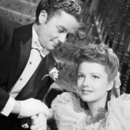
The reputation of Orson Welles as a failed wunderkind began to dog him with his second feature, THE MAGNIFICENT AMBERSONS, a story of fading aristocrats in turn-of-the-century Indianapolis. With Welles on assignment in Brazil, shooting the documentary IT’S ALL TRUE (which itself went unfinished after RKO pulled funding), the studio chopped forty minutes out of his original cut and tacked on a “happy” ending. The cut footage was destroyed, and a print possibly shipped to South America has been long considered one of the lost Grails of world cinema. The released film enjoyed good notices, though Manny Farber’s dissenting read intuited the discordant editing: “There is really no living, moving, or seeing to the movie; it is a series of static episodes connected by narration, as though someone sat you down and said ‘Here!’ and gave you some postcards of the 1890s.” The 1918 source novel by Booth Tarkington, himself a privileged scion of Indianapolis, includes among its virtues a knowing parody of the milieu’s manners, something the aristocratic Welles surely appreciated, a quality that together with its decades-long narrative sweep helped to win it a Pulitzer prize. In other respects the novel has aged poorly, with particular blind spots where Tarkington’s reactionary critiques of urbanism, his racist language, and stereotyping of the African-American servant class are concerned. Yet the blurred iris of the book’s perspective casts a somnolent spell over its snow-globe setting, a fairy tale about a rich boy who believes that neither he—nor the world—should ever grow up. The triangle of tormented affection between eccentric inventor Eugene Morgan (Joseph Cotten), his sweetheart the widowed Isabel Amberson Minafer (Dolores Costello), and her resentful son George (Tim Holt) structures the narrative as a disquieting forward drift. Morgan is the ambivalent agent of change, whose automobile factory changes the face of the town once lorded over by the Ambersons, as George stands athwart history—and his mother’s romance with Eugene—crying “Stop!” The masterstroke is the early image of an imperious boy George, kitted out as Lord Fauntleroy and proclaiming his innocence in an episode of awful mischief as neighbors pray for his “comeuppance”; the bill that comes due for the young Amberson Minafer in the end is ultimately a commonplace fate, of living to see people and places once loved pass away. The collision between the filmmaker’s realism and the novelist’s satirical kitsch finds expression in the Tolstoyesque party scene that introduces the central relationships, the rising and gliding of Stanley Cortez’s camera drawing out the networks of the Ambersons’ grand, yet shrinking and stifling set. Farber’s apprehension of the film’s perversely static cadence has revealed itself, with time, as the persistence of Welles’s vision, trapping the viewer with George inside the moldering Amberson estate as the world dramatically, imperceptibly, lurches on outside. Preceded by Stan VanDerBeek's 1958 short film WHEEEELS NO. 2 (5 min, 16mm). (1943, 88 min, 35mm) [Brendan Boyle]
Annual Festival of Films from Iran
Siskel Film Center — See below for showtimes
Shahram Mokri’s BLACK RABBIT, WHITE RABBIT (Tajikistan/United Arab Emirates)
Saturday, 11:30am and Monday, 5:45pm
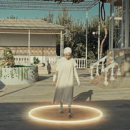
Shahram Mokri is the closest contemporary equivalent we have to Alain Resnais in the 1960s; his endlessly imaginative work engages with film form to interrogate the nature of perception, memory, and cinematic storytelling. His fifth feature, BLACK RABBIT, WHITE RABBIT, is characteristically mysterious and entrancing, raising more questions than it answers while developing a distinctive, enveloping atmosphere. Told across several episodes, the film alternates between two principal narrative lines. In one, a well-to-do woman who recently survived a terrible car crash navigates her uneasy life in the labyrinthine mansion she shares with her husband and preteen stepdaughter. The other takes place on a soundstage where a director named Shahram (who never appears) is remaking of a classic Iranian film that contains a scene of political assassination; these passages center on the movie’s prop master, an industry veteran named Babak (played by the great Iranian actor Babak Karimi, a regular of Mokri’s films), who fears that a gun being used in the assassination scene contains real bullets. In both stories, Mokri employs fluid, roving long takes to explore the narrative environment as opposed to merely present it. At times, the camerawork suggests the intervention of a curious ghost, almost like in Steven Soderbergh’s recent PRESENCE (2024). A few of the shots run close to half an hour, and these exhibit Mokri’s typical brilliance with blocking, with the camera shifting between different characters’ points of view and circling back over the same places in a way that consistently defamiliarizes the settings. The threat of violence hangs over most of the proceedings, not only in the form of the questionable gun but in the unsubtle tyranny with which the husband in the first story lords over his wife. The tension can be excruciating, especially since Mokri provides no clue as to where the narratives are going—the film seems to take place in an uneasy interval between catastrophes. While it can be rough going to contemplate the inevitability of violence, BLACK RABBIT, WHITE RABBIT isn’t uniformly heavy; in fact, the film contains moments of levity that speak to Mokri’s unabashed joy in making movies. One passage features a giant, walking coffee cup, and in another, a group of props carry on a conversation via subtitles. Details like these affirm the endless possibility inherent in cinema just as others convey an unspecified terror latent in real life. The film moves gracefully between concerns pertaining to reality and the imagination, resulting in a rich cinematic poetry that’s uniquely Mokri’s. (2025, 139 min, DCP Digital) [Ben Sachs]
---
Bahram Beyzaie's KILLING MAD DOGS (Iran)
Saturday, 2:30pm and Thursday, 8:15pm
Given his status as one of Iran’s most celebrated dramatists, it’s no surprise Bahram Bayzaie approached genre filmmaking with an uncommon level of verbal and philosophical dexterity. Returning to noir for the first time since MAYBE SOME OTHER TIME (1988), and after a long yet still-prolific 1990s spent battling censorship, Bayzaie released KILLING MAD DOGS in 2001. We start the film with the walls already closing in, with two business partners frantically fleeing unseen forces who knock at doors and trash apartments before our assumed protagonist can arrive. They owe some people money, and their time seems to have run out. In a panic, they part ways. Soon after, Golrokh (Mojdeh Shamsaie), a writer on sabbatical, returns to Tehran in 1988 after a year away to find that her husband Nasser (Majid Mozaffari) has gone into hiding after his business partner fled the city with their money. Drowning in debt, Nasser ends up in prison and tells Golrokh the only way to free him and clear their name is for her to meet with the company’s investors to buy back their stakes at a discount. As Golrokh dutifully moves through the city and its different social strata in order to save her husband, the plot weaves a fabric of post-Revolution society full of misogyny and con artistry. The most explicit threats to Golrokh’s health mark some of the film’s most harrowing scenes, but the tense, neo-noir tone is fueled by the way that this dynamic lurks in every interaction, the most horrible possible fates always happening offscreen and referred to in code. We see markers of a post-Revolution Iran regularly occluding the frame, like when armed militants casually pass in front of characters in conversation, or when the construction happening directly outside Golrekh’s hotel room regularly shrouds her conversations in sparks and machinery. Offering Antonioni-esque modernism, Bayzaie and his DP Asghar Rafijam show us individuals socially bound by as well as physically trapped within the machinations of a changing Iran. This sophisticated synthesis of sociology and thrills is consummate Late Master work, and one can see the way Bayzaie’s stagy and philosophical inclinations peek through the genre framework. But it’s still primarily effective as a thriller, with Golrokh’s main weapon being her facility with words, a power known all too well by an exiled intellectual. Actress Mojdeh Shamsaie in attendance for a post-screening conversation moderated by festival co-founder, Mehrnaz Saeed-Vafa following the Saturday showtime. (2001, 135 min, DCP Digital) [Maxwell Courtright]
---
Bahram Beyzaie’s DOWNPOUR (Iran)
Saturday, 8:30pm and Monday, 8pm
Per Bahram Beyzaie, the title of his first feature, DOWNPOUR, has a more specific meaning in its original Farsi; the term ragbar might be translated more directly as cloudburst, since it refers to a rainfall that’s powerful but brief. This word carries metaphorical significance in the context of the film, which concerns a well-educated teacher’s short but impactful tenure at a grade school in an impoverished area of southern Tehran. DOWNPOUR conveys in vivid detail the teacher’s challenges in communicating with people unlike himself, both in and out of the classroom. Much of the film considers his cultural differences from his students and neighbors, and Beyzaie exploits these for gentle humor and poignant drama. No one is vilified, however, not even the townsperson who becomes the teacher’s romantic rival. Beyzaie cited Satyajit Ray as one of his major influences, and he shares with Ray a profound humanism that regards everyone who passes in front of his camera with dignity. There are other cinematic points of reference: Martin Scorsese (who helped with the film’s restoration in 2011) invoked the Italian neorealists in describing Beyzaie’s portrait of low-income Tehran, while the jaunty editing recalls the French New Wave. The film’s poetic sensibility is distinctly Iranian, though, as Beyzaie frequently interrupts the realistic proceedings with bold visual metaphors. In one remarkable shot, the director zooms back from the teacher and the woman he’s courting, sitting on a park bench and enjoying a seemingly intimate moment, to reveal that a number of trees behind them are filled with young onlookers. The creative liberty behind moments like these gives them an infectious cheer; clearly, Beyzaie was in love with making images, and DOWNPOUR exudes the unbridled enthusiasm of the best debut features. The film’s joyfulness was nearly lost forever when Iranian authorities seized the negative and all but one copy of the film after the Revolution. Thankfully, Beyzaie kept a personal print, which was used to digitally restore DOWNPOUR three decades after its ban. (1972, 130 min, DCP Digital) [Ben Sachs]
---
Bahram Beyzaie’s BASHU, THE LITTLE STRANGER (Iran)
Sunday, 3pm and Wednesday, 8:15pm
A 1999 poll of Iranian critics named BASHU, THE LITTLE STRANGER the greatest Iranian film of all time, and not surprisingly, the work exemplifies numerous qualities of the national cinema: a wise understanding of children, gently poetic visuals, a fablelike approach to storytelling, and a tantalizing sense of narrative ambiguity. The title character is a boy of about 10 who loses his family in the opening scenes during a bombing in the Iran-Iraq War. (This was actually the first film to depict the conflict; though completed in 1985, it wasn’t released until after the war ended.) He sneaks onto a truck that’s leaving his town and rides it across Iran, eventually disembarking in a remote village in the northern part of the country. While he doesn’t speak the regional dialect, he’s still welcomed into the home of a woman and her two young children; in exchange for room and board, he helps the woman with chores around her farm while her husband is away from home in search of work. The acceptance of Bashu by the family (and later the surrounding community) is genuinely heartwarming, as it reflects a spirit of camaraderie and resilience that Bahram Beyzaie sees in the Iranian people. It’s through this acceptance that Bashu is able to develop from a shell-shocked war orphan to a productive member of his newfound village. This is life-affirming cinema that’s never hackneyed or sentimental—Beyzaie grounds the narrative in real-life horrors, then shows how people can overcome them through their collective humanity. There’s a surprising amount of joy in BASHU, THE LITTLE STRANGER, not only in its theme of cross-cultural friendship, but in its moments of humor and levity. One of the most suspenseful sequences, in fact, has nothing to do with the Iran-Iraq War, but rather depicts Bashu being chased through the woods by his de facto foster mother, who’s determined to give him a bath. (1985/1989, 122 min, DCP Digital) [Ben Sachs]
---
Bahram Beyzaie’s DEATH OF YAZDGERD (Iran)
Sunday and Tuesday, 6pm
In the immediate aftermath of the Iranian Revolution, where an intense regime change looked to completely reshape the very being of the country, one can understand why Bahram Beyzaie’s DEATH OF YAZDGERD—a work inherently questioning the public’s relationship to their supposedly all-powerful leadership— might have rubbed the new rulers the wrong way. Originally conceived as a stage play that premiered at the City Theater of Tehran in the fall of 1979, Beyzaie’s work of historical fiction interrogates the murder of Yazdgerd III, the last king of the Sasanian Empire in 651 AD, whose untimely demise was itself tied to another seismic power shift in the region. It’s been well documented that Yazdgerd III did indeed travel out to the city of Merv where he was killed by a local miller, but Beyzaie spins the facts out into theatrical drama, imagining what might have happened in the immediate aftermath of the king’s death. Here, the miller, his wife, and their daughter each attempt—through varying and opposing narratives—to explain to the deceased king’s most loyal compatriots the circumstances that have led to them being accused of regicide. The stagebound aesthetics of DEATH OF YAZDGERD become immediately apparent: the action takes place entirely in real time in one single location, ably performed by a handful of actors with a palpable intensity usually reserved for the close proximity of theatrical presentation. Across its life on both stage and screen, the most immediate comparison for Beyzaie’s text has been RASHOMON (1950), perhaps our culture’s most famous narrative concerning the drama of clashing perspectives. But the influence of Akira Kurosawa flows through Beyzaie’s film far beyond narrative structure, most notably in the dynamism on display in both blocking and camera movement. Beyzaie turns what may have been a more static work in lesser hands into a momentous narrative full of intense synchronicity between body and image, constantly keeping us on our toes throughout his propulsive staging. As the miller and his wife, Mehdi Hashemi and Susan Taslimi, respectively, revive their performances from the City Theater of Tehran staging and bring their theatrical verve to the screen fully untarnished, filling this tale of death with a magnificent life all its own. (1982, 110 min, DCP Digital) [Ben Kaye]
---
Also screening in the Annual Festival of Films from Iran are Bahram Beyzaie’s 1979 film THE BALLAD OF TARA (102 min, DCP Digital) on Friday and Thursday at 6pm, with Friday’s screening followed by a Q&A with actress Mojdeh Shamsaie and reception; Hossein Keshavarz & Maryam Ataei’s 2026 film THE FRIEND’S HOUSE IS HERE (97 min, DCP Digital) on Friday at 9pm and Tuesday at 8:30pm; Farnoosh Samadi’s 2025 film BETWEEN DREAMS AND HOPE (106 min, DCP Digital) on Saturday at 6:15pm and Wednesday at 6pm; and Mohammad Rasoulof’s 2024 film THE SEED OF THE SACRED FIG (168 min, DCP Digital) on Sunday at 11:30am. More info on all screenings here.
Alfred Hitchcock's STRANGERS ON A TRAIN (US)
Music Box Theatre — Saturday, 11:30am
Hitchcock was rarely, if ever, judgmental of his characters, but it seems the judgment he spared them was instead reserved for his audience. It's evident in many of his films as he forces the audience, along with the "innocents" of the stories, to identify with the criminal or the accused while likewise punishing them for doing so. This dynamic is particularly pronounced in STRANGERS ON A TRAIN, a film in which one character, Guy, is harassed by another, Bruno, after he kills Guy's estranged wife in hopes that he'll return the favor and murder his domineering father. An element of condescension plays into both the plot and Hitchcock's assessment of those watching; at the beginning, Guy patronizingly tells Bruno that his idea of a "you-do-mine-I'll-do-yours" murder plot is okay, that all his ideas are okay. Guy is obviously dismissive of the idea, but Bruno takes his patronizing agreement as confirmation that Guy is on board with his plan. In that scene, Hitchcock shows us just how gray the area is between good and evil, and how something as simple as a throwaway platitude can have such disastrous implications. Despite Hitchcock's sympathy for the killer, he allots sympathy to the victim as well, but only so far as he can use it to further indict the audience. In a telling scene, Barbara, the sister of Guy's love interest, remarks that his deceased ex-wife was a tramp, thus implying that her status as a "lesser person" justified her brutal murder. Barbara's father, the senator whom Guy hopes to emulate, tells her that the dead woman was also a human being. Considerably less wordy than Jimmy Stewart's impassioned epiphany at the end of ROPE, the scene is like a swift smack in the face from Hitchcock. Bruno's easygoing and almost infectious attitude toward murder is brought from the dark into the light—it's all fun and games until humanity becomes a factor. Another key motif that Hitchcock uses in several of his films is that of the rhetorical "perfect murder," scenes in which innocent characters participate with the real criminals in surmising how to commit a foolproof crime. During a party at the senator's house, Bruno convinces two elderly aristocratic ladies to indulge in fantasies of committing murder while Barbara looks on. The scene serves dual functions: it reveals the sinisterness that lurks beneath the genteel surface and, as Barbara notices Bruno staring at her, transfixed by her resemblance to Guy's wife, punishes her and therefore us for previously being so quick to dismiss the victim. That's Hitchcock reminding us that we could so easily be the murderer or the one being murdered, exposing both our hubris and our fragility along with that of his characters. Screening as part of the Fond of His Mother: Queer-coded Hitchcock series. (1951, 101 min, 35mm) [Kat Sachs]
Victor Fleming’s THE WIZARD OF OZ (US)
Music Box Theatre — Thursday, 9:45pm
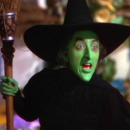
When Lyman Frank Baum, an American original who had tried his hand variously as a stage actor, a reporter, a newspaper publisher, a playwright, a shopkeeper (“Baum’s Bazaar”) and a traveling salesman, authored The Wonderful Wizard of Oz in 1900, he shared the copyright with a key collaborator: illustrator William Wallace Denslow. John Rea Neill would take over ink and pencils for dozens of Baum’s sequels, but it was Denslow’s color renderings of the Scarecrow, Tin Man, Cowardly Lion, Dorothy, Toto, and others that first endeared the characters to a mass audience, notably through merchandising campaigns that lent their likenesses to a variety of consumer goods. So when the time came to develop Oz as a Hollywood studio spectacle—in particular with the three-strip Technicolor process popularized by Walt Disney—the imagery had already lived for years in the American consciousness. During MGM’s production of THE WIZARD OF OZ, actor Buddy Ebsen was made seriously ill by the aluminum powder in his Tin Man makeup and replaced with Jack Haley, while Margaret Hamilton (as the Wicked Witch of the West) suffered third-degree burns when a fire effect went awry. In the context of these bizarre details, urban legends like the “Hanging Munchkin” supposedly visible in the finished film accrue plausibility. Judy Garland’s star performance as Dorothy became her defining role, though she had not been the studio’s first choice, and she endured much harassment and criticism of her looks throughout this and subsequent MGM productions. Generations of gay men have identified themselves as “friends of Dorothy,” partly in tribute to Garland, and the books have their own resonances for queer readers: Baum’s The Marvelous Land of Oz introduced the character of Princess Ozma, who transitions to her true identity after spending much of the book cursed to live as the orphan boy Tip. Oz has seen countless adaptations over the last 125 years, from derivative literature, stage productions, films, television series, and an “immersive experience” at the Sphere in Las Vegas, but nothing has approached the power of this 1939 movie to enchant and upset—what Dave Kehr called its “air of primal menace.” David Lynch located in Garland’s translucent vulnerability a store of wonder and terror that inspired much of his surreal work, and it is not reaching too far to suggest that the chasm between the innocent delights of Baum’s world and the pain inflicted by the Hollywood machine is the uncanny valley of the film’s awesome fairyland. This is the rare commercial entertainment that attains the sublime. Presented by Rated Q and Ramona Slick! - A Celebration of Queer, Camp, & Cult Cinema with preshow drinks and a DJ in the Music Box Lounge at 9pm and a dragshow performance in the Main Theater at 9:45pm, with the screening to follow. (1939, 102 min, 35mm) [Brendan Boyle]
📽️ ALSO RECOMMENDED
Alexander Sokurov’s RUSSIAN ARK (Russia/Germany)
Siskel Film Center — See Venue website for showtimes
RUSSIAN ARK interweaves at least two extraordinary accomplishments to breathtaking, sometimes dizzying effect. The first is technical: working with cinematographer Tillman Büttner, Alexander Sokurov executes a Steadicam shot lasting roughly an hour and a half that proceeds through 33 rooms of the Winter Palace of the Russian State Hermitage Museum and employs over 2,000 onscreen performers. The second is philosophical, as Sokurov surveys about 250 years of Russian history on his tour of the museum (with numerous historical figures appearing in person) and contemplates the national cultural identity. The director narrates the journey but never appears in front of the camera; at the start of the film, he asks whether he’s in a dream, and what follows, with its achronological progression and ghostly, near-constant camera movement, would seem to bear that out. He’s joined throughout by a traveler from the early 19th century, an unnamed French Marquis who views Russia from a skeptical, “European” perspective and who acts as an intermediary between the narrator and the various people on screen—and as an intermediary between Russian and non-Russian spectators. The narrator and the Marquis touch on art, politics, and what constitutes the Russian soul through their dialogue, though sometimes they step aside to let the film contemplate the distinguished personages and the ornate architecture of the Winter Palace, which plays such a significant part in the proceedings that it practically functions as a character. RUSSIAN ARK is obsessed by the legacy of Russia as an imperial power; when it considers the Communist era, it does so discreetly, as if alluding to some embarrassing taboo. (Sokurov doesn’t seem that comfortable with the present era, either; when the Marquis asks him at one point what system of government Russia has now, he’s notably unable to answer.) The film concludes with a grand ball for the aristocracy in 1913, one of the last before the Revolution, and Sokurov presents it as an epic wave of humanity capable of washing over any historical ugliness. This sequence alone makes RUSSIAN ARK one of the great big screen experiences, though the rest certainly benefits from the largest possible presentation, given that the film is concerned with things that are so much bigger than individual lives. (2002, 99 min, DCP Digital) [Ben Sachs]
Parker Callahan’s SODA POP (US)
The Davis Theater — Monday, 7pm
For those unfamiliar with Parker Callahan's work, fasten your safety belt as he bursts onto the stage in a fevered frenzy, racing through his set at an inhuman pace. If a bottle of video head cleaner could somehow sustain itself for an hour, it would come close to capturing the amped-up nature of his performance. After dominating the 2025 Edinburgh Fringe festival, Callahan filmed his comedy special at Chicago’s Playground Social. Callahan (dressed in only a red, white, and blue speedo with matching crew socks) begins his set like PC Principal from South Park or any Chad in general; however, he quickly sheds this persona to celebrate queerness. Songs, pre-recorded videos, memes, PowerPoint slides, audience participation, and sing-alongs collide in a barrage of absurd non-sequiturs made to feel like doom scrolling in someone else’s subconscious. The structure appears chaotic by design, but the strict timing of the multimedia playing behind him requires order. Throughout his career as a Chicago-based media artist, comedian, editor, and musician, Callahan has regarded collage, remix, camp, and pop-culture excess as his chosen tools of the trade. Earlier projects such as Commercial Appeal and Now That’s What I Call Grelley Duvall! blend video, music, and performance into works that resist conventional narratives. With SODA POP, Callahan has synthesized his experimentation and honed it into a wildly funny and untraditional TedTalk-esque stand-up. The show opens with Callahan calling the police to report the presence of gay people in the audience, only for a pre-recorded video (of himself) to immediately remind everyone that he is also gay. The joke escalates when the audience is encouraged to repeat the F-slur. Callahan confronts a heterosexual audience member for using the actual word. Another police video appears to clarify that permission was explicitly granted from someone gay, so it’s okay. And to show no hard feelings, he refers to the audience member as his husband throughout the rest of the show. While many of the setups take a joke to an absurd conclusion, beneath the provocation there is a safe and silly space to explore sexuality, identity, and stereotypes. In this regard, Callahan’s frenetic style and substance recalls the ‘80s performances of Robin Williams, who once described comedy as beginning "as a spew, a kind of explosion," before being sculpted into something hopefully meaningful. Williams believed comedy emerged from outrage at hypocrisy and life's cruel absurdities, and SODA POP operates according to a similar logic. The performance often resembles pure sensory overload, but beneath the manic energy is a persistent fascination with the contradictions people carry within themselves. Callahan's jokes expose the arbitrary rules surrounding sexuality, social performance, and identity while simultaneously implicating himself in the process. From a gay man swirling his iced coffee to induce hypnosis and extract information to fights with an imaginary friend named Lisa who has a cloaca to trigger warnings, a CHARLIE'S ANGELS sidebar, and mocking Kim Cattrall scatting with an upright bass—each rapid-fire segment is strung together to keep the audience consistently off-balance while having fun. Don't let his Republican song—"I'm a Republican, I'm straight, I eat pussy bad…"—or his song titled "Shit" fool you: Parker Callahan is anything but. Callahan in person for a Q&A moderated by Joe Swanberg. (2026, 61 min, Digital Projection) [Shaun Huhn]
Brian De Palma’s SISTERS (US)
Alamo Drafthouse — Saturday, 10pm
A sign of his decided turn toward the thriller genre, SISTERS is an impressive early film of Brian De Palma, demonstrating his referential but singular sense of style. Bernard Herrmann’s score provides the atmosphere for a Hitchcockian setting, filled with doubling, detective work, and derangement. Journalist Grace (Jennifer Salt) investigates Danielle (a superb Margot Kidder) after she witnesses a murder from her Staten Island apartment window, looking in from a neighboring building. Danielle is an identical twin with an odd relationship to her sister, Dominique, which complicates Grace’s search for the truth about what she saw. From the opening scene, which depicts a Candid Camera-style television show, SISTERS draws attention to the systemic nature of voyeurism within American culture. De Palma’s use of split screen, showing the same moment from different perspectives, builds tension rather than relief; he brings focus to the power dynamics of looking versus being looked at and what it might mean to take the risky stance of looking back. De Palma’s insistence on indicting media itself in this dynamic is also demonstrated in extended sequences of arresting documentary-style footage, revealing the disturbing history of Danielle and Dominique; in this sense, by folding media in on themselves, he directly acknowledges and addresses the exploitative nature of both his own film and the true circumstances on which it is based. SISTERS turning plot is also notable, as the focus shifts from Danielle to Grace back to Danielle, the camera—as well as Kidder’s shifting personas and emotions—twisting along with it. As a Long Island native, I am also always struck by the film’s perfect representation, from the ferry ride over to the commuter apartment buildings, of the strangely liminal space that is Staten Island. (1973, 92 min, DCP Digital) [Megan Fariello]
Stephen Winter’s CHOCOLATE BABIES (US)
Community Film Workshop at the Reva and David Logan Center for the Arts (915 E. 60th St.) — Saturday, 3pm [Free Admission]
A remarkable political satire of the New Queer Cinema era, CHOCOLATE BABIES is an unapologetically madcap celebration of Black Queer power and community. A group of HIV-positive radical activists (Suzanne Gregg Ferguson, Dudley Findlay Jr., Michael Lynch) take on the city’s conservative, harmful policies with a plan involving a closeted councilman (Bryan Webster). The romantic relationship between Max (Claude E. Sloan) and the councilman’s office worker, Sam (Jon Kit Lee) is at the heart of CHOCOLATE BABIES, underscoring the importance of love, both within the group and as a larger theme. The individual stories of each of the characters, their hardships and joys, are highlighted throughout as they battle against the political landscape that is threatening their very existence. Director Stephen Winter’s camerawork is so distinct, beginning with his kinetic depiction of New York in the '90s. He also emphasizes personal interactions between characters, often seated right next to one another as the camera pans back and forth—through these connections the film instantly feels lived-in. The close quarters in which the frame contains these characters reflect the themes of community, depicting both the arguments about how this group should best fight for their cause and the group's constant sense of humor despite their disagreements. Characters speak over one another, poke fun at each other; the excellent performances combined with the stylistic filmmaking guide the film between its lighter moments and much more serious commentary on the effect of the AIDS crisis on Black communities. These movements are at times purposely jolting, as CHOCOLATE BABIES forces the audience to face the reality of this crisis and its effect on marginalized groups. It’s a film that is completely bold in its purpose, equally solemn and funny, tragic and joyful. (1996, 83 min, Digital Projection) [Megan Fariello]
Kiyoshi Kurosawa’s SERPENT’S PATH and CHIME (Japan)
Alamo Drafthouse — Tuesday, 9:30pm
Kiyoshi Kurosawa had made over twenty features between the release of SERPENT’S PATH (1998, 85 min, New 4K DCP Digital Restoration) and CHIME (2024, 45 min, DCP Digital). The former, a jet-black comedy with maximalist brutality, depicts the kidnapping and torture of a man believed to be a child murderer. The latter is a quiet short film where Kurosawa unsettles his audience with his signature minimalism. CHIME opens on a cooking teacher who witnesses the suicide of one of his students. As he slowly begins to spiral downward, his actions escalate until reality slips entirely. With committed performances, the director locks the camera for most of the film, only panning when necessary. Outside of his classical, constricted visual language, Kurosawa employs a drone shot as our hero runs away from a body he has dumped in an unmarked location. The director has always depicted an uneasiness that lives just below everyday mundane life, making the audience feel as if the appalling remains just outside the edges of the frame or just around the corner. Over his past few films, Kurosawa has appeared interested in a critique of the modern male: isolated, self-centered and angry over unmet expectations. In their attempts to strive and compete, they are pushed to unspeakable actions. The sterility of CHIME juxtaposes the grindhouse quality to SERPENT'S PATH, a film that gets into the nitty-gritty logistics of torture, accented by engaging performances, leaving the viewer perturbed. Having recently remade SERPENT'S PATH, Kurosawa is one of the few working filmmakers who treats each work as its own pearl in a long filmography. Riffing on his previous work, he enters the halls tread most famously by Hitchcock. For a late period, he continues to find challenges for himself. As a master reaching new heightens, the work continues to enthrall and entice his followers and new audiences. Screening as part of the Terror Tuesday series. [Ray Ebarb]
Gregg Araki's NOWHERE (US)
The Davis Theater — Thursday, 9pm
In 1992, B. Ruby Rich identified a movement in independent cinema that unapologetically explored queer identities and subverted traditional norms, coining it "New Queer Cinema." This wave of films challenged conventional storytelling by embracing experimental techniques and foregrounding marginalized voices. Drawing inspiration from the irony and camp of John Waters, these films critiqued mainstream notions of masculinity, femininity, and heterosexuality. Working outside of Hollywood gave these filmmakers the freedom to address controversial themes, echoing the rebellious spirit of pioneers like Rainer Werner Fassbinder and Derek Jarman. Key examples of this movement include Todd Haynes' POISON and Gus Van Sant's MY OWN PRIVATE IDAHO (both 1991), which set the stage for the radical style of Gregg Araki’s Teen Apocalypse Trilogy, which explores themes of youth alienation, queer identity, and rebellion, by mixing dark comedy, surrealism, and punk aesthetics via a transgressive journey. In TOTALLY F**KED UP (1993), the first film of the trilogy, Araki finds his muse in the doe-eyed, sensitive, Keanu Reeves-esque James Duval. There is a rawness in its portrayal of queer youths navigating marginalization in Los Angeles. Set against the backdrop of the AIDS crisis, the film presents a nihilistic take on disaffected youth who reject authority and traditional values. Its fragmented, episodic narrative is reminiscent of a punk documentary, drawing parallels to THE DECLINE OF WESTERN CIVILIZATION (1981). The film’s sense of nihilism, pervasive throughout the trilogy, underscores the characters’ disillusionment with societal norms. Araki’s next film, THE DOOM GENERATION (1995), delves into a hyper-stylized, violent world filled with absurdity and sexual tension. It is a road movie at its core, whose interludes in convenience stores and run-down motels showcase a collapse of society occurring around our trio of anti-heroes. Araki amplifies the violence from TOTALLY F**KED UP, to reinforce the idea that the world is a hostile and meaningless arena where hedonism is the only respite. The dystopia the characters navigate is filled with grotesque representations of fast food, television, and advertising. The film’s brutal ending symbolizes society’s punishment and rejection of marginalized individuals, particularly those who defy mainstream, heteronormative values. NOWHERE, the final film of the trilogy, features a sprawling cast and a more surreal, colorful aesthetic. The film is essential viewing for the production design alone, as each set and color scheme become more visually arresting than the last. While NOWHERE includes scenes of over-the-top teen suicide brought on by Moses Helper, a televangelist played by John Ritter, the overall messages contained within the film embrace the germ of hope found inside hopelessness. James Duval is Dark Smith, who struggles to maintain a monogamous relationship with his polyamorous girlfriend Mel (Rachel True). NOWHERE follows Dark over the course of a day as he searches for love and meaning amidst a surreal landscape of drugs, alien lizards, stylized sets, soap opera melodrama, and sexual fluidity. The cast includes a who’s who of '90s exaggerated teen archetypes and dastardly authority figures played by a bevy of then-famous and future-famous stars. Araki, by design, throws these characters at us in a rapid succession of mini tragicomedies occurring too quickly to care. As alien abductions, heroin use, and sexual assault happen in the world around Dark, his focus on finding someone who will never leave him pushes him forward through the hellscape. NOWHERE culminates as the perfect epilogue to Araki’s trilogy as the emptiness that infects the characters' lives eventually leads to an aimless and futile ending. The Teen Apocalypse Trilogy is a countercultural landmark in LGBTQ+ cinema. The films are raw, confrontational, and definitively queer. They depict their gay characters without coding their queerness or forcing them into tragic narratives or token roles. Though Araki neither celebrates nor offers optimism to his characters for their sexuality, he infuses punk sensibilities, anarchy, and existentialism as a rebel yell for queer youth. This is exemplified best through Dark, as he learns the only way to face the meaninglessness in the world is to confront a cockroach alien while soaked in the blood of someone you care about and scream out in anguish. Screening as part of the Not Quite Midnight series. (1997, 83 min, DCP Digital) [Shaun Huhn]
Werner Herzog's CAVE OF FORGOTTEN DREAMS (International/Documentary)
Alamo Drafthouse — Wednesday, 6:45pm
Taking advantage of cinema's unique capabilities, Werner Herzog once again brings us to a place few people have traveled, or can travel, and offers us another glimpse into the wonderful and unknown. That Herzog routinely does this has caused some to decry him as more of a showman than a director, but for this very reason Herzog is one of cinema's most natural talents. His ability to show us marvelous things, real and imaginary, is without peer. In his newest return from the wild he brings us CAVE OF FORGOTTEN DREAMS, a documentary so concrete yet seemingly so imaginary—two qualities Herzog combines like a lucid dreamer whether he's working in fiction or non-fiction. With CAVE, Herzog gives us a privileged look at some of the earliest examples of art made by humankind, the paintings of animals in Chauvet-Pont-d'Arc Cave in the South of France. Herzog is accustomed to exploration without boundaries and trespassing at whim, however in this film Herzog and his small crew are relegated to a narrow walkway as they navigate the cave—a limit he tries to circumvent by placing the camera on a pole to extend beyond arm's length. This technique falls short of capturing a desired viewpoint of a painting of a woman, the only depiction of a human; a rare defeat for Herzog caused, no doubt, by the privatization of the cave. Herzog tries to make up for the fact that most of the world will never see these paintings up close by shooting the movie in 3D, somewhat mitigating the feeling of distance from them and creating a greater sense of awe (though the music at times can over-saturate this sense). As if the technological gimmick and the uncanniness of actually seeing the paintings on video wasn't enough, Herzog heights the imaginary sense in a postscript in which he shows us some albino alligators thriving in a nearby greenhouse-cum-jungle that gets its warm water from a neighboring nuclear plant. Herzog's proclivity to find and marvel at the irrational in nature is welcoming and refreshing in an age of scientific explanation. (2010, 89 min, DCP Digital) [Kalvin Henley]
Peter Strickland's THE DUKE OF BURGUNDY (UK/Hungary)
Alamo Drafthouse — Wednesday, 9:30pm
THE DUKE OF BURGUNDY is the most sumptuous of director Peter Strickland’s visually arresting films, all of which feel like they fit into the same world—familiar but so incredibly strange. This is, in part, due to Strickland’s visual language, one inspired by European genre films of the 70s. THE DUKE OF BURGUNDY pays homage to Jess Franco’s sensual films, including A VIRGIN AMONG THE LIVING DEAD (1973); the film features Monica Swinn, a Franco regular who hadn’t appeared in a film in over thirty years. Set in her stately home surrounded by nature, Cynthia (Sidse Babett Knudsen) is an expert in lepidopterology (the study of moths and butterflies). She is in a romantic relationship with younger student Evelyn (Chiara D’Anna), who is in a subservient sexual position to Cynthia’s dominant taskmaster role. The film follows the recurring routine and growing tensions of their relationship as expectations, needs, and bodies change. It all unravels in a dreamy unhurriedness; Strickland’s camera is sultrily voyeuristic, illuminating the true care between the two even through the shifts in their relationship. Color and textures reign here, predominantly the tactility and power of fabric, something Strickland would revisit more directly in his follow-up, IN FABRIC (2018). This is reflected in the wings of the insects they study—repeating shots of diagrams of their anatomy. Sounds as communication, too, are just as important for the insects as it is for the women, particularly the echoing dialogue of their recurrent sexual encounters. Pop duo Cat’s Eyes provides a melancholic autumnal score. Worth noting, too, is that THE DUKE OF BURGUNDY features only women on screen, even in the few crowd scenes—turning their complex internal world into unwavering cinematic lushness. Screening as part of the Weird Wednesday series. (2014, 104 min, DCP Digital) [Megan Fariello]
Paul Verhoeven's SHOWGIRLS (US)
Alamo Drafthouse — Sunday, 9:45pm and Monday, 6:30pm
Beautiful as money, Nomi Malone hitches a ride to Las Vegas in this film's opening moments, vividly asserting, switchblade at the ready, that she's going to be a dancer. Already she's a commodity, a body circulating through a network of temporary owners for a price, though this won't be fully clear until her past is revealed near the end of the narrative. Vegas proves exactly her equal, a hometown for people rejecting their origins, a city that Verhoeven shows to thrive precisely on the dissemination of dashed dreams and rude awakenings. Any sense of what a “real” Vegas might look like, how an actual dancer's career trajectory might be completed, is jettisoned in favor of a variegated torrent of imagery drenched in kitsch, in expertly ham-handed appeals to emotional response, in intricate and deadening formal maneuvers. But SHOWGIRLS isn't interested in characters, in narrative, but in glamour, in work, and in the tremendous effort that sexual entertainment takes to produce. 'You like her? ... I'll buy her for you,' the film's substitute Svengali says of Nomi, watching her gyroscopic breasts and buttocks slide around a stripper pole. This is of the falsest of films, constructed out of a series of intersecting surfaces utterly evacuated of substance. Its performers blandly dissemble wide, desperately erotic smiles, force their bodies into simulations of arousal, sweat through humiliating routines of grunt-and-thrust choreography, paint and festoon themselves with lacquer-thick make-up and acres of rhinestones. Verhoeven has always been a master of the physical object, at understanding human relationships as systems of conflicting and merging material engagements, but there has elsewhere always been the underlying hope that reason could see its way clear to an unmediated, somehow genuine connection between real people, could abolish, could transcend the mere appearances of things and give us access to ourselves as whole. Robocop finding, recuperating his family. Doug Quaid claiming interplanetary heroism. Nick Curran catching the killer. SHOWGIRLS will have none of this. It is the ne plus ultra and culmination of Verhoeven's cinema, a film that allows us no escape, that finds beneath every skin and layer nothing other than yet more sequins, glitter, ejaculate, and grime. No film takes American mass culture more seriously, or skewers it more dispassionately. (1995, 132 min, DCP Digital) [Kian Bergstrom]
Ridley Scott’s THELMA & LOUISE (US)
The Davis Theater — Tuesday, 7pm
In Sir Ridley Scott’s career, crowded with stoic men, mythic landscapes, and the architecture of masculine power, THELMA & LOUISE stands as a sunburnt outlier. Written by first-time screenwriter Callie Khouri, the film transforms the male-coded road movie into a feminist fable of rebellion. Khouri, having endured the chauvinism of the 1980s music and film industries, wrote what Hollywood dismissed as "two bitches in a car," a reaction that only amplified the film's central critique. Khouri and Scott would combat the naysayers with awards, nominations, and big box office. The story begins in domestic hell. Thelma (Geena Davis) is a housewife suffocating under the thumb of her oblivious husband Daryl (Christopher McDonald, cast at Davis' suggestion and perfectly embodying his signature buffoonish machismo). Louise (Susan Sarandon), a hardened waitress, carries the scars of a trauma she never wants to recount. When the pair drive off for a weekend escape in Louise’s aquamarine 1966 Thunderbird, the film seems at first a playful getaway. Tony Child’s "House of Hope" lilts over the stereo as the two embrace the open road. But one saloon, one dance, and one brutal assault later, the tone shifts irrevocably. Louise kills the man who attacks Thelma, and the women become fugitives in a nation that will never believe them. Scott, who studied Terrence Malick’s BADLANDS (1973) during pre-production, paints their flight with the dust and glow of the American West. His desert is a moral wasteland where justice belongs to those who seize it. Thelma and Louise’s journey is both mythic and political: women reclaiming outlaw space once reserved for cowboys and convicts. Each male figure they encounter—rapist, robber, husband, or trucker—embodies a flavor of entitled patriarchy. Brad Pitt’s charming thief JD seduces Thelma and robs her, yet in doing so awakens her sense of desire and agency. Even sympathetic men, like Louise’s ex Jimmy (Michael Madsen) or Detective Hal (Harvey Keitel), are powerless to save the damsels in distress. The film drains its men of authority. A trucker’s obscene gestures are answered by his phallic rig exploding in a plume of feminist fire. A state trooper is reduced to tears as he’s locked in his own trunk. Even the police, camped out in Daryl’s living room, watch a Cary Grant melodrama instead of sports in a quiet satire of Hollywood’s gendered expectations. Scott famously told his actresses to focus on the interior lives of their characters; he gave them full control, he just had to keep up and frame a world too small to contain them. The result is seamless tonal fluidity; the film slips from road movie to Western to myth without warning, driven by the electric chemistry between Sarandon and Davis. The improvised kiss at the finale, Sarandon’s idea, seals their defiance not as victims but as legends. As Marianne Faithfull’s "The Ballad of Lucy Jordan" plays, Thelma and Louise reach a crossroads between capture and freedom. Louise asks, "Do I wanna come out alive? I’ll have to think about that. They choose flight over submission, speeding toward the Grand Canyon as police cars swarm behind them. The Thunderbird, gleaming like a turquoise bullet, sails into eternity and suspended in a freeze frame, free at last. Thirty years on, their leap still asks whether the world has changed, or if women are still forced to drive off cliffs to taste freedom. THELMA & LOUISE is not a tragedy; it’s a revolution that just happens to end midair. Screening as part of the Big Screen Classics series. (1991, 130 min, DCP Digital) [Shaun Huhn]
Danny DeVito's MATILDA (US)
Alamo Drafthouse — Monday, 3:45pm
Children’s literature is often focused on abandonment—a child who's missing a parent or even orphaned completely, on one’s own or placed in the care of heartless guardians. Roald Dahl’s Matilda is rather about the struggle of dealing with selfish and incompetent parents. In his adaptation, Danny DeVito plays Mr. Wormwood, Matilda’s scheming father. He also provides a voiceover throughout the film as an omniscient narrator. It may seem unnecessary, but in a children’s film about child abuse, DeVito’s dual presence provides a balance to the horrors that Matilda (Mara Wilson) faces every day. He also provides an off-kilter cinematic world, with saturated bright colors and exaggerated camera angles and close-ups to emphasize a child’s perspective. It’s not a storybook, but the style is exaggerated just enough to steady the implications of real horror the characters face. Born to the Wormwoods (Rhea Perlman plays her mother, in stupendously kitschy costumes and makeup), Matilda learns to take care of herself at a very young age, her intellect allowing her to manage on her own—and develop telekinetic powers. She also finds comfort in books, escaping into the fictional worlds they provide. She finally gets her wish of going to school and is there provided some much-needed comfort from her sweet teacher, Miss Honey (Embeth Davidtz); however, she continues to be mistreated there, now by the terrifying principal Miss Trunchbull who actively hates children. Played with impressive unhingedness by Pam Ferris, Trunchbull is the true villain of the film. While the Wormwoods are cruel, they rarely come off as truly threatening, providing much of the comedy of the film. Trunchbull gets in some hilarious one-liners, but she is an unambiguously violent character. Again, MATILDA uses exaggeration here to counteract any realistic violence, but the horror of angry and hateful adults is ever present. Fortunately, MATILDA is ultimately a story of resilience, friendship, and the profound effect of small and big kindnesses alike. A Kids Camp screening. (1996, 102 min, DCP Digital) [Megan Fariello]
📽️ ALSO SCREENING
⚫ Alamo Drafthouse
Danny Boyle's 1996 film TRAINSPOTTING (93 min, Digital Projection) screens multiple times this week in celebration of the film’s 30th anniversary. See Venue website for showtimes.
Joshua Bailey's 2025 documentary STOLEN KINGDOM (74 min, DCP Digital) screens Saturday at 5:15pm. More info on all screenings here.
⚫ Alliance Française de Chicago
Erik Cimon's 2016 documentary MONTRÉAL NEW WAVE (Digital Projection) screens Tuesday, 6:30pm, at the Alliance Française de Chicago's Julius Lewis Auditorium (54 W Chicago Ave), as the June installment of the 2025/2026 Cinémélodie film series, presented by Stephanie "La Gialloholique" Sack. Doors open at 6pm for a beer reception featuring a complimentary glass of Québécois beer, with a chance to win a $50 gift certificate to Le Bar at the Sofitel Magnificent Mile. More info here.
⚫ Chicago Film Archives
A Celebration, a large-scale video installation by experimental filmmaker and Chicago Film Archives curatorial assistant Colin Mason, is on view through Saturday, July 4, in the lobby of 150 N. Riverside Plaza (enter via Randolph Street); free and open to the public Monday–Friday 4–7pm and Saturdays 11am–5pm. The installation is part of the 150 Media Stream arts program, curated by Chicago video artist Yuge Zhou, and was produced in partnership with Chicago Film Archives. More info here.
⚫ Chicago Public Library
The Chicago Public Library's Community Cinema program presents free film and TV screenings at dozens of neighborhood branches throughout the week. See the full schedule here.
⚫ Cinema/Chicago
Chadden Hunter's 2024 documentary THE RAFTSMEN (82 min, Digital Projection) screens Wednesday, 6:30pm, at the Chicago Cultural Center (78 E. Washington St.), as part of Cinema/Chicago's Free Summer Screenings series, co-presented by the Australian Consulate-General Chicago. Online tickets are sold out; a standby line opens one hour before showtime, with seats released to standby ticket holders 15 minutes prior. More info here.
⚫ Comfort Film at Comfort Station (2579 N. Milwaukee Ave.)
Matthew Lancit's 2023 documentary FAIS LE MORT! (80 min, Digital Projection) screens Wednesday at 8pm. Free admission. More info here.
⚫ FACETS
The African Diaspora International Film Festival runs Friday through Sunday, with a diverse lineup of 14 films. More info, including a complete schedule, here.
Sweet Void Cinema presents a screenwriting workshop on Wednesday from 6 to 9pm in the FACETS Studio.
Anime Club brings together two films by Mamoru Oshii, pairing “a landmark political techno-thriller with a rare and dreamlike early OVA experiment,” on Thursday at 7pm. Free for Film Club Members. More info on all screenings and events here.
⚫ Goethe-Institut Chicago (150 N. Michigan Ave.)
Lateral Entrant, a site-specific exhibition by Chicago-based interdisciplinary artist Maya Nguyen incorporating video, photography, and performance, exploring migrant strategies of camouflage and adaptation across languages and visual cultures connecting Vietnam, Germany, and the United States, is on view through July 31. Public viewing hours are available by advance registration on Eventbrite, and a state- or federally-issued photo ID is required for building check-in. More info here.
⚫ Music Box Theatre
Adam Carter Rehmeier's 2025 film CAROLINA CAROLINE (105 min, DCP Digital) screens all week. See Venue website for showtimes.
Isabel Pakzad’s 2025 film FIND YOUR FRIENDS (89 min, DCP Digital) screens Saturday, 11:45pm, followed by a Q&A with Pakzad. More info on all screenings here.
⚫ Reeling: The Chicago LGBTQ+ International Film Festival
Hayley Kiyoko's 2026 film GIRLS LIKE GIRLS (95 min, DCP Digital) screens Tuesday, 7pm, at AMC Newcity 14 (1500 N. Clybourn Ave.), as a special free preview screening presented by the festival. Free admission; RSVP required. More info here.
⚫ Siskel Film Center
A new 4K DCP Digital restoration of Antônio Carlos de Fontoura’s 1974 film THE DEVIL QUEEN (99 min) and Milagros Mumenthaler’s 2025 film THE CURRENTS (104 min, DCP Digital) screen all week. See Venue website for showtimes. More info on all screenings here.
CINE-LIST: June 5 - June 11, 2026
MANAGING EDITORS // Ben and Kat Sachs
CONTRIBUTORS // Kian Bergstrom, Brendan Boyle, Maxwell Courtright, Ray Ebarb, Megan Fariello, Kalvin Henley, Shaun Huhn, Ben Kaye
