


📽️ CRUCIAL VIEWING
Allen Fong’s AH YING (Hong Kong)
Chicago Film Society at the Siskel Film Center – Sunday, 6pm
Director Allen Fong barely gets talked about today (at least not in this country), but in the 1980s, he was considered one of the leading lights of the Hong Kong New Wave alongside such luminaries as Ann Hui and Tsui Hark. AH YING was Fong’s second theatrical feature as well as the second for which he won the Best Director prize at the Hong Kong Film Awards; more than a critical success in its native country, the film was also a minor art house sensation abroad. It may seem a little surprising today that AH YING was so popular, given how low-key it is, but then again, it comes from an era when art house audiences were making hits out of stuff like LOCAL HERO (1983) and MAN FACING SOUTHEAST (1986), “small” movies made big by a winning attitude, regional color, and a subtly sophisticated sense of cinematic form. AH YING is at once guileless and self-reflexive, telling the story of how Hui So-Ying, a young actress playing herself, pursued her career in acting to escape the drudgery of her working-class life. She first hits on the idea of becoming an actress when she gets a part-time administrative job at the Hong Kong Film Culture Center, an institution that offers affordable screenings and filmmaking classes, much like Chicago Filmmakers here at home. Like many a nonprofit arts organization, the HKFCC doesn’t have the money to pay its employees, so the center lets Ah Ying take free classes in exchange for her labor. The heroine falls in love with movies, partly through learning how to act in them and partly through the influence of a cinephilic teacher from the Chinese Mainland (Peter Wang, who also co-wrote the script). Fong presents the filmmaking classes no differently than he presents the fish market that Ah Ying’s family owns and operates; like Hui’s later masterpiece A SIMPLE LIFE (2011), the movie asks us to regard cinema as no bigger or smaller than life itself. This ground-level view of the seventh art has a bit in common with Kiarostami’s films, and like Kiarostami, Fong often creates the illusion that he’s assembling the film effortlessly from scraps of real life. Preceded by Hal Hartley's 1991 short film THEORY OF ACHIEVEMENT (18 min, 16mm). (1983, 111 min, 16mm) [Ben Sachs]
Jacques Rivette’s VA SAVOIR (France/Italy/Germany)
Doc Films (at the University of Chicago) – Tuesday, 7pm
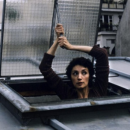
In VA SAVOIR (“Who Knows?”), Jacques Rivette revisits some of his favorite subjects (theater, duplicity, the passage of time); notably absent, however, is any paranoia. It’s one of the rare films in the director’s oeuvre to suggest a happy man behind the camera, as though Rivette had worked through his longtime obsessions and was now content to sit back, watch actors do actorly things, and execute a subtly graceful tracking shot now and then. That’s not to call the filmmaking lazy or haphazard. The most challenging director to come out of the Nouvelle Vague, Rivette maintains an air of strict realism even when he’s being playful, and this makes for a beguiling approach to film comedy. The first hour of VA SAVOIR is deliberately slow in the tradition of many Rivette films, taking time to establish the characters’ routines and interests so as to make it that much more satisfying when their lives are upended. Jeanne Balibar heads a principal cast of six, playing a French actress who returns to Paris while on tour with the Italian theater company she left town to join three years earlier. Balibar’s Camille is married to Ugo (Sergio Castellitto), her director and costar, yet she accepts an invitation to meet up with her ex-boyfriend Pierre (whom she jilted when she left for Italy), a philosophy professor, who still lives in Paris and is now married to dance instructor Sonia. While Rivette raises the possibility of an affair developing between Camille and Pierre, he introduces a subplot about Ugo trying to track down a lost 18th century manuscript and getting flirtatious with a comely librarian named Dominique, who lives with her mother and step-brother; the step-brother, in turn, has flirtatious encounters with both Sonia and Camille. The interweaving of destinies within a set group of characters invokes classical farce, though VA SAVOIR is more peculiar than humorous, as characters seem to fall in and out of love at random or else act against their natures as we’ve come to accept them. Yet the emotions are always believable no matter how fanciful the scenario gets—a reflection of Rivette’s faith in actors and the magic they create. Screening as part of the Jacques Rivette’s Late Style series. (2001, 154 min, 35mm) [Ben Sachs]
Ousmane Sembène’s FAAT KINÉ (Senegal)
Siskel Film Center – Wednesday, 6pm
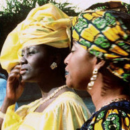
This is a miraculous movie in that it addresses some of the most important issues pertaining to humanity while at the same time feeling lighter than air. It’s the sort of masterpiece of which few filmmakers are capable, placing Ousmane Sembène in the select company of such giants as Renoir, Cukor, and Satyajit Ray. The film covers several days in the life of its title character, a 40-ish woman who manages a gas station in contemporary Dakar and has two children of college age. The story more or less begins when Faat Kiné takes her kids to their university entrance exams and ends with the party she throws for them after they pass. In between these narrative landmarks, Sembène luxuriates in Faat Kiné’s daily life, which involves going to work, tending to her elderly mother (who also lives with her), interacting with various characters in her neighborhood (some of whom owe her money or want her to lend them money), and fending off the advances of a host of potential male suitors, whom she routinely rebuffs in headstrong fashion. Indeed, the heroine is one of the most endearingly proud in all of cinema—one of the numerous pleasures of FAAT KINÉ lies in seeing how this confident woman takes charge of her life and shows the world who’s boss. It’s worth distinguishing, though, that Faat Kiné never comes across as arrogant or rude for all her stubbornness; she’s guided throughout by a compassionate, maternal instinct that Sembène clearly admires. Moreover, the film shows that Faat Kiné has earned her confidence, having built her life from scratch after her father disowned her in adolescence when she had two children out of wedlock by two different men and was subsequently kicked out of school. The character’s history of hardship hovers over much of what see, making her current happiness seem that much sweeter. Her happiness is threatened when her children’s fathers reenter the picture and threaten to take advantage of Faat Kiné again by forcing her into marriage. Their appearance leads to a showdown at the kids’ party, which provides the film’s unexpectedly intense climax. The men invoke African tradition, saying that as patriarchs, they have a right to dictate a woman’s future with regards to whom she marries and how she spends her money; the heroine, backed by a community of women and adolescents (effectively, the future), rebukes them by assuring them she can take care of herself. A former resistance fighter, laborer, unionist, and author, Sembène was in his late 70s when he made FAAT KINÉ, and the film reflects decades of wisdom in its humane, mellifluous pacing and precisely drawn character comedy. Like the heroine, the film projects a hard-won optimism, the product of life lived and lessons learned. Screening as part of the African Cinema from Independence to Now lecture series. (2000, 120 min, Digital Projection) [Ben Sachs]
Alexander Mackendrick's SWEET SMELL OF SUCCESS (US)
Doc Films (at the University of Chicago) – Monday, 7pm
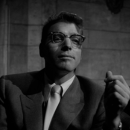
While much of what today is regarded as film noir depicts atomized characters estranged from public life, Alexander Mackendrick’s SWEET SMELL OF SUCCESS is a dark take on the world of publicity itself. New York locations, James Wong Howe’s signature high-key lighting technique, crackling slang-heavy dialogue by Ernest Lehman and Clifford Odets, a score by Elmer Bernstein and Chico Hamilton—the film offers all of these. But the centripetal force drawing everything together here is Burt Lancaster as the Walter Winchell-alike J.J. Hunsecker. Holding court at “21” Hunsecker, through his newspaper columns and radio programs, as well as the aid of Tony Curtis as the slithery publicity agent Sidney Falco, decides the fate of up and coming performers, advancing talent just as often as viciously crushing it with slangy sangfroid. But J.J. accrues his power though more than an innate dexterity with language; another key is his ability to acquire, withhold, and disclose secrets—both real and fabricated—at opportune times. SWEET SMELL OF SUCCESS is McCarthy’s America, a more proximate look at the sleazy world of scandal L.A. CONFIDENTIAL tried to pastiche, a study in control and manipulation, the cinematic equivalent of Wee Gee’s New York City photography, and, above all, it's Burt Lancaster in a role that will scare the shit out of you. Screening as part of the Painting with Light: The Cinematography of James Wong Howe series. (1957, 96 min, 35mm) [Nathan Holmes]
John Woo's FACE/OFF (US)
Siskel Film Center – See Venue website for showtimes
1997 found John Woo in a strange place. Considered a genius by his admirers thanks to the Heroic Bloodshed films he made in Hong Kong in the 80s and early 90s, Woo was brought to the big-budget Hollywood action filmmaking machine in 1993 to make the Jean-Claude Van Damme vehicle HARD TARGET. The director hit a snag immediately, losing final cut of the film and seeing the studio release a much-maligned version. His follow up, BROKEN ARROW (1996), fared even worse critically, probably because he put nearly none of his signature style into the action. Thankfully, it made enough at the box office for him to get to make FACE/OFF, by far the greatest of his American films. The plot is completely bonkers. I mean, really bonkers. Terrorist psychopath Castor Troy (Nicolas Cage) tries to assassinate FBI agent Sean Archer (John Travolta); instead, he accidentally kills Archer’s child. Jump to six years later, and Archer is about to finally arrest Troy. Before he does, Troy lets Archer know that he’s hidden a time bomb somewhere in Los Angeles. And by bad luck, Troy gets knocked into a coma before he can let Archer know where it is. So, of course, Archer decides to have Troy’s face surgically removed and swapped with his own so that he can trick Troy’s brother into revealing the bomb's location. Oh my god, how fun is this ridiculousness, a surreal two hours of acting in which the two leads do their best impressions of each other doing impressions of themselves. We have Nic Cage doing Travolta doing Nic Cage, and vice versa. We also have the kind of cop-and-robbers story that John Woo needs to do his beautiful John Woo thing. FACE/OFF fulfills the promise of John Woo in America—it's a Heroic Bloodshed film for Western audiences, complete with his signature gun duels, bullet ballets, and birds. The film invokes a giddiness that's almost humorous, but without coming off as trite or planned. Screening as part of the Science on Screen series. The Friday 7pm screening will be followed by a conversation with Michelle Rinard, Director and Curator of the International Museum of Surgical Science, and plastic surgeon Dr. David Morris. (1997, 139 min, 35mm) [Raphael Jose Martinez]
Monika Treut’s VIRGIN MACHINE (Germany)
Music Box Theatre – Monday, 7pm
Through the unsteady camera of Monika Treut, we meet Dorothee Müller, the protagonist of VIRGIN MACHINE, a young journalist caught in the heteronormative society in search of true romantic love. She’s seen in a rowing boat, using binoculars to survey the shore, looking—quite literally—for love and lovers. Dorothee tells her own story in the past tense, recounting her failed relationship with her boss, Heinz, and her “dumb” crush on her half-brother, Bruno. And thus begins a lesbian’s coming-out story. After her seminal 1985 feature debut SEDUCTION: THE CRUEL WOMAN, Treut turned to black and white for this sapphic travelogue that is often labeled as "experimental camp," splitting the scenes between Germany and the US as we follow Dorothee embarking on a transatlantic journey to first write an article on romantic love and, second, to find her estranged mom, who only exists as a notion and who we later learn used to be a stripper. What’s more, Dorothee seems to completely abandon this project when she falls in love with Ramona (Shelly Mars), a sex worker who works as a drag king and is disguised as a love-addiction therapist to fish for clients on television. To follow the storyline of Dorothee closely is to miss the point. Through Dorothee’s bright, innocent eyes, Treut guides us to explore the emancipating queer sex scenes that are only veiled by a thin layer of fiction. At the beginning of the film, we have punk singer Mona Mur playing a cameo. On the streets of San Francisco, Susie “Sexpert” Bright, who in real life is a writer and sex-positive activist, plays a barker who introduces Dorothee to the club. The star of the show is surely Shelly Mars, who, after VIRGIN MACHINE’s release, was at the forefront of the burgeoning drag king culture in the States. Dorothee’s ingenue gaze at times pokes at an uncomfortable spot. This is when she struggles to get around in a Black neighborhood to trace her mother's whereabouts or when she fixates her gaze at Asian faces from inside a taxi that takes her through Chinatown. “San Francisco is the new Hong Kong” may be the white driver’s way of complaining about traffic, but Treut leaves it ambiguous. From Hamburg to San Francisco, she implicitly encounters race, recognizing it as a kind of otherness she doesn’t need to internalize or solve. But in the end, Dorothee has found something, though it might not be what she thought she was looking for. Or maybe she knew it all along. Screening as part of the Female Misbehavior: The Films of Monika Treut series. (1988, 84 min, DCP Digital) [Nicky Ni]
Mohsen Makhmalbaf’s A MOMENT OF INNOCENCE (Iran) + Thierry Frémaux’s LUMIÈRE, LE CINÉMA! (France)
Doc Films (at the University of Chicago) – Wednesday, 7pm (INNOCENCE)
Siskel Film Center – See Venue website for showtimes (LUMIÈRE)
In his book Masters & Masterpieces of Iranian Cinema, Hamid Dabashi writes, “Among all [Mohsen] Makhmalbaf’s films I am most mesmerized by A MOMENT OF INNOCENCE (1996, 78 min, DCP Digital) . . . I remember that it was the pure simplicity of A MOMENT OF INNOCENCE that fascinated me. It was like watching a dream—incoherent, frightful, exciting, the film taking its own time entirely, and I was afraid that the dream would end before I was finished dreaming. It is hard to imagine that a film can be so personal and yet so universal, so privately narrated and yet so cosmic in its defiance of time and location.” Perhaps due to having watched the films together in close proximity, another quotation by Agnès Varda, which comes from the beginning of Thierry Frémaux’s LUMIÈRE, LE CINÉMA! (2025, 106 min, DCP Digital), resonated with me similarly. “In the Lumière films, the people we see are not our ancestors, our grandparents or forefathers. They are us.” This may seem like a random pairing, but both films illuminated for me the power of cinema as it pertains to time, memory, and the surreality of being. Makhmalbaf’s A MOMENT OF INNOCENCE no doubt recalls Abbas Kiarostami’s CLOSE-UP (1990), in which Makhmalbaf appeared; both bring real-life events into the liminal space of cinema, preserving them even as they reshape and evolve the situations at hand, evoking the personal yet universal aspect that Dabashi eulogizes. As a teenager and religious fundamentalist, Makhmalbaf stabbed a policeman at a protest and was subsequently sentenced to death; he spent five years being tortured in prison until he was released in the wake of the Iranian Revolution. A MOMENT OF INNOCENCE is a film about the making of a film about this incident, with Makhmalbaf and the actual policeman, Mirhadi Tayebi (who eventually became an actor), playing themselves, selecting and then directing the two young actors portraying them. The pairs break off to craft their respective narratives, revealing different motivations and understandings of what took place. The policeman is haunted by a girl for whom he had brought a flower, his desire to connect with her thwarted by young Makhmalbaf’s assault, while the filmmaker contends with his counterpart’s sensitivity toward his renegade activities. Their experiences begin to converge, as do the past and the present. At times it’s almost Buñuelian, evoking the same surreality and winsomeness, yet with the overlay of neorealism that tinges this era of Iranian cinema. What’s a matter of principle for one is a matter of love for another, evincing a sad truth, and maybe even optimism, about humanity: that behind complicated dynamics such as law and revolution, politics and religion, is mainly love. The film’s title in Persian translates to “Bread and Flower,” which sounds like it could be the title of a Lumière film. LUMIÈRE, LE CINÉMA! is also somewhat about the making of not just a film, but many of them; in his essayistic compilation of over a hundred of the Lumière and company’s short films, Frémaux—director of the Institut Lumière, the Lumière Film Festival, and the Cannes Film Festival—narrates the evolution of cinema both technologically and aesthetically vis-à-vis the brothers’ prodigious output. The films are a mix of documentary and narrative, the lines between the two modes being blurred; in using their invention, the Cinematograph, to document reality, the Lumières and their cadre of newly minted filmmakers nevertheless created narratives that entertained and inspired viewers as much in their potential for imagined prosaism as in the so-called realities being captured. (Early ethnographic films, for example, were rife with implied stereotypes that didn’t reflect the nuance of the images at hand but rather supported society’s perception of them.) Simply put, Frémaux's film shows cinema, as it pertains to the Lumières but also as it extends beyond them, as documentation of life but also as realization of dreams, that same liminal space that filmmakers like Makhmalbaf would later thrive in. (Incidentally, Makhmalbaf made a film, HELLO CINEMA, in 1995, in celebration of the medium’s 100-year anniversary; 1895 is considered the year motion pictures were first shown for entertainment with the earliest screenings by the Lumières.) In taking notes on the film, I wrote “charming, meditative, philosophical,” referring to Frémaux’s whimsicality in his presentation and analysis of the Lumière films—all words I’d apply also to A MOMENT OF INNOCENCE. Makhmalbaf’s film literalizes Varda’s rumination on the Lumières—its figures are bona fide avatars of the past—while the Lumière shorts themselves embody Dabashi’s notion of the personal rendered universal, a cinema in which the past is not distant, but lived again, and the lives onscreen feel inseparable from our own. [Kat Sachs]
📽️ ALSO RECOMMENDED
Christian Petzold’s MIROIRS NO. 3 (Germany)
Siskel Film Center – See Venue website for showtimes
The inciting incident of Christian Petzold’s new film MIROIRS NO. 3 is a countryside car crash that claims a life but leaves the vehicle intact. The car is a cherry-red Chrysler Le Baron, while the corpse belongs to the charmless male companion of the accident’s survivor, a music student called Laura (Paula Beer), which in movies—like Otto Preminger’s 1944 noir—is the name of a dead woman whose memory is so powerful she returns to life. In her fourth collaboration with Petzold, Beer plays Laura as a lost spirit who finds her place only after an encounter with death in the home of a nearby woman, Betty (Barbara Auer), who teaches her to garden and introduces her to her grown son (Philip Froissant) and husband (Matthias Brandt). The appliances in the home are constantly malfunctioning, while the men operate what may or may not be a criminal enterprise from their auto shop, returning the settings of the cars they service to zero. Early on, Betty slips and calls Laura “Yelena”: the ghost whose clothes she now wears. Petzold, a product of the academically monikered Berlin School of directors, has long made films in accordance with Jacques Derrida’s concept of “hauntology”—contemporary stories of late capitalism that are suffused not only with a century of Germany’s political and economic transformation but of storytelling, reflecting old films and fables through the language of digital surfaces and drab, glassy architecture. An acclaimed run of arthouse success began in the 2010s with his melodramas BARBARA (2012), PHOENIX (2014), and TRANSIT (2018), capped with an overtly supernatural outing in UNDINE (2020). With the more grounded, contemporary story of a struggling writer in AFIRE (2023) Petzold signalled not only this new period of artistic transition but a preoccupation with the intrusive present, and the imposition of climate crisis on his storytelling—as if the future had reclaimed his work from the past. MIROIRS NO. 3 is another work of transition, depicting little of the textures of wartime, capital and catastrophe that have characterized his cinema to date. Its sparse plotting provides plentiful moments of droll humor, Laura accepting her stage-managed role in Betty’s family as a microcosm of transactional relations under the decaying economic order, a crumbling house whose inhabitants press on out of shared delusion or human ingenuity. The old Petzold surfaces late in Laura’s sabbatical with a needledrop allusion to midcentury American pop music, like the mournful use of Burt Bacharach in TOTER MANN (2001), a stirring passage which seems to draw the characters out of their morbid rituals and into something like unconscious, unaffected life. This invocation of a re-animating nostalgia—the past as a friendly ghost—is a new, contingent optimism for Petzold, a notion as enticing or troubling as the wafting curtain across a window left ajar. (2025, 86 min, DCP Digital) [Brendan Boyle]
SUPER-HORROR-RAMA!
Music Box Theatre – See below for showtimes
Ian Coughlan’s ALISON’S BIRTHDAY (Australia)
Friday, 11:45pm
Despite being a low budget slow-burn, Australian horror ALISON’S BIRTHDAY creates a moody ambiance, at once dreamy and grounded. It’s the paced, ordinariness of the middle section of the film that brings such an odd, compelling atmosphere; things are strange, but not strange enough to worry much about until it’s too late. That’s Alison’s issue throughout, as the titular birthday girl (played by Ozploitation actress Joanne Samuel) is pulled between a normal life with her loyal boyfriend (Lou Brown) and to her pleasant, but odd homelife growing up with her aunt and uncle (Bunney Brooke and John Bluthal) after the death of her parents when she was very young. The film is bookended by horrific events in which Alison is involved. While playing with a Ouija board, Alison is warned not to return home for her nineteenth birthday by what seems to be the spirit of her father; her friend, apparently possessed, is killed during the session. Three years later, Alison is on the brink of turning nineteen, working at a record store, and dating the affable Pete. When she receives a phone call from her aunt, she’s guilted into returning home to celebrate but insists on bringing Pete along. Her family isn’t too pleased, and things gradually become ominous as it becomes evident that their resolve to have Alison home for this particular milestone is perhaps for nefarious reasons. With secret occult ritual, ancient stones, amulets, and a mysterious old woman living in the house, ALISON’S BIRTHDAY feels familiar within its folk horror genre. The lull of the middle of the film—in which Pete investigates what exactly is going on with Alison’s family—is broken by a truly disturbing ending, which makes the simmering horror, in the end, quite effective. Notable, too, is the score, which combines typical orchestral style with synth music, the bursts of electronic music awakening the audience to the terrible reality of Alison and her birthday. (1981, 97 min, DCP Digital) [Megan Fariello]
---
Emmanuel Kervyn’s RABID GRANNIES (Belgium)
Saturday, 11:45pm
Information on director Emmanuel Kervyn is scarce. He made RABID GRANNIES and later appeared in a small acting role, replacing Jean-Claude Van Damme’s Kurt Sloane in KICKBOXER 2: THE ROAD BACK. A martial artist by training, Kervyn did not initially intend to make a horror film. He was set to direct an action project with Van Damme for Brussels’ VDS Films, but financing collapsed. Producer Johan Vandewoestijne, coming off modest success with LURKER THE NECROPHAGUS, proposed pivoting to a low-budget horror film using the remaining funds. Coincidentally, Kervyn had also written a sprawling 250-page horror script. Under Vandewoestijne’s guidance, it was condensed into something producible, evolving into a horror-comedy hybrid. What emerged, almost accidentally, sparked a minor scandal within the Belgian film industry. At the time, Belgium produced only a handful of films annually, typically government-backed literary adaptations. RABID GRANNIES—gory, irreverent, and openly hostile toward inherited wealth—stood in sharp contrast. By partnering with Troma Entertainment, Kervyn and Vandewoestijne forfeited eligibility for state funding. That loss proved liberating. Free from institutional oversight, the film became one of the first fully independent Belgian productions made without government censorship. It feels like a punk intrusion—disruptive, excessive, and unconcerned with national prestige. Shot on 16mm in Kortrijk and the Castle of Ingelmunster, the film follows two elderly sisters who host their birthday dinner and invite extended family. The guests, introduced one by one, are uniformly contemptible and only at the party to ensure their inclusion in the aunts’ will. By the time they gather at the table, each has justified their eventual fate. A disinherited relative, exiled for Satanism, sends a cursed gift. The aunts transform into demons, and the massacre begins. Kervyn has since criticized the first half as sluggish, yet the deliberate pacing is essential. By lingering on the family’s corruption—whether through arms dealing, pharmaceuticals, or religion—the film builds a moral framework for its violence. When the bloodshed arrives, it feels earned. The dinner sequence offers a firing pistol for the rest of the film. Bodies are torn apart, heads devoured, limbs severed, and green bile floods the screen. The excess places it alongside THE EVIL DEAD (1982) and BAD TASTE (1987). Practical effects and bold lighting with a heavy use of red, green, and blue gels, elevate the production beyond its limitations. One particularly shocking moment involving a child pushes the film into genuinely unsettling territory. For years, Troma’s VHS and DVD releases trimmed much of the gore to secure an R rating. Vinegar Syndrome’s HD restoration reinstates these cuts, revealing the full extent of the effects work. Kervyn remains an enigma, but the work itself persists as visceral, abrasive, and unexpectedly funny. Its legacy rests less on authorship than on collective craftsmanship. Under severe constraints, its effects team created imagery that lingers, proving that creative freedom, even with minimal resources, can produce something lasting. (1988, 99 min, DCP Digital) [Shaun Huhn]
David Lynch's INLAND EMPIRE (US)
Doc Films (at the University of Chicago) – Friday, 7pm
So few digitally-shot features dare to place the medium's technical limitations at the front and center of their aesthetic. Mostly filmmakers just hope that the audience ignores how crappy everything looks. Not David Lynch. INLAND EMPIRE obsessively fixates on the look of mid-grade digital video: blocky smears of light, washed-out colors, hazy and peculiar. It's literally a dreamworld. As in a dream, you can't always tell what you're seeing—or what it means. There is only the eternal now; in the film's world, memory can just as easily refer to tomorrow as to yesterday. Memory is as blurry as the degraded visuals. We're forced to squint between the pixels, trying to remember. Lynch marries this to a soundtrack that's arrestingly intricate, populated with all manner of industrial noises and hair-raising sound effects. It's an image/sound mashup as scary and bewildering as any nightmare. Seen in a darkened theater we're caught in its brilliant grip. Screening as part of the Psychodynamic Cinema series. (2006, 180 min, DCP Digital) [Rob Christopher]
Hong Sang-soo's WHAT DOES THAT NATURE SAY TO YOU (South Korea)
Doc Films (at the University of Chicago) – Saturday, 3pm
How many of Hong Sang-soo’s movies don’t contain a scene where someone gets drunk and makes a fool of themselves? No matter how much he evolves formally, Hong returns again and again to the same narrative and thematic fixations (his filmography may be the closest equivalent in narrative cinema to Monet’s haystacks), and drunken embarrassment happens to be one of them. So, if you’re a fan of the South Korean writer-director, then WHAT DOES THAT NATURE SAY TO YOU might play like a mystery for most of its run time, the mystery being, who will play the inebriated ass? In this film, Hong assembles a collection of characters who all seem likely to implode when drunk, puts them in close proximity of one another for long enough for their foibles to become apparent, then gives everybody booze. Here’s the set-up: Dong-hwa (Ha Seong-guk), a 30-something poet, goes with his girlfriend of three years, Jun-ee (Kang So-yi), to meet her family for the first time. Her mother, father, and older sister (who recently moved back home to “work things out”) live on the side of a mountain outside of Seoul; all three are interesting people with cool hobbies. Dong-hwa starts to clash with Junee’s socially awkward sister (Park Mi-so) in subtle ways, which may lead you to think that one of them will make a faux pas after the wine starts to pour. But what about Jun-ee’s dad (Hong regular Kwon Hae-hyo), who seems almost unnaturally happy about everything? Or her mom (Cho-Yun-hee), herself a poet of local renown? Who knows what resentments they’re harboring? As usual with Hong, the fun of WHAT DOES THAT NATURE SAY TO YOU lies in how the filmmaker unpeels his characters, revealing more about them as the story progresses until you reach their true natures. The film contains some jabs at the egos of poets, but for the most part, it maintains the gentle attitude that’s been running through Hong’s 2020s work so far. Screening as part of the New Releases and Restorations series. (2025, 108 min, DCP Digital) [Ben Sachs]
Paul Verhoeven’s ELLE (France)
Doc Films (at the University of Chicago) – Saturday, 9:30pm
In some quarters, ELLE has been unfairly dismissed because of its rape scene. It’s become a polarizing film in the blogosphere and twittersphere, with some reaching their opinions without even having seen the film. ELLE both succumbs to and rises above the rhetorical positions and derision tossed at it, and delivers perhaps the year’s most biting satire, a film unafraid of its complexity and hard to pin-down characters and events. The film stars the great Isabelle Huppert as Michèle Leblanc, the CEO of a highly profitable video-gaming company, who is attacked in her home by an invader, as seen through the ambiguous eyes of a black cat, seated across from the horror, yet impervious to it. Once her rapist has fled, Leblanc decides not to report the incident, which may or may not have something to do with her mysterious past. She then sets in motion a highly unlikely series of events in reaction to this violent event. More than the opening scene does, though, what dominates the film are the other men Leblanc finds herself beset by (her son, ex-husband, sexual partner, male employees, father, mother’s boyfriend, etc.), as they all clamor for her time and money. Verhoeven limits us to a clear identification with his protagonist’s intentions, desires, fears, and dreams; as such, ELLE is less-suited to comparisons with IRREVERSIBLE and THE PIANO TEACHER, and more so to associations with BELLE DU JOUR and BITTER MOON. The film is almost a reverse of the violent sexuality on display in another Verhoeven masterpiece, BASIC INSTINCT, with Leblanc displaying more-than-mild curiosity towards her assailant, even though common sense would dictate differently; both films, along with Verhoeven’s BLACK BOOK, mix the detective genre with voyeuristic desire, so you’re never really sure where the detective’s trail ends and erotic fixation begins. This blurring of the lines between fetishistic observation and good detective work makes Verhoeven’s art particularly relevant, and perhaps even necessary, as a framework through which to grapple with our current corrosive societal and political atmosphere that challenges the very notion of “truth” and “facts,” spiraling them into subjective torrents of dark matter. This is a film seemingly built around the exposing of facts, where we see two characters meet on screen, then part, new information is revealed about one or both of them, then they meet again, constantly challenging our perception of them and the film itself. The audience is then left relegated to the position of the aforementioned impassive black cat, watching but unable to intervene. Screening as part of the Arthouse Vulgarity series. (2016, 130 min, DCP Digital) [John Dickson]
Harmony Korine's SPRING BREAKERS (US)
Doc Films (at the University of Chicago) – Thursday, 9:30pm
In the light of day, GUMMO may be Harmony Korine’s more enduring, trailblazing achievement, and TRASH HUMPERS is surely his most gleefully, deviantly fascinating, but SPRING BREAKERS stands as his most shiny, indulgent, Day-Glo-drenched ticket to midnight movie infamy. Vanessa Hudgens and Selena Gomez—self-consciously cast here as cast-outs from the corporate House of Mouse—are joined by Ashley Benson and Rachel Korine (wife of director Harmony) as part of an unholy foursome, vivid and bright, gunning for the ultimate spring break glory… until the path turns, almost imperceptibly, into something decidedly darker and looser. Leaning on an unmistakably specific, Floridian iconography of teen hedonism, and infiltrating the vibe of ‘90s cable television (American exceptionalism as filtered through MTV and Girls Gone Wild), SPRING BREAKERS was shrewdly recognized by critics, notably Steven Shaviro, for the radicalism behind its audiovisual experimentation and its formally innovative, recursive editing patterns. Korine’s maximalist aesthetic of flash-forwards, flashbacks, music montages, and mixed formats (from glorious anamorphic 35mm all the way down to VHS camcorder glitchiness) careens into a free association between themes of irony, sincerity, clichés about pop culture, clichés about spirituality, and clichés about co-ed sexuality, like a raunchy Rorschach blot for the midnight or multiplex spectator. The circular narrative structure of SPRING BREAKERS emphasizes the way that cinematic images and sounds not only acquire, but also importantly shed, their meanings when they are repeated ad nauseum. But by emphasizing the stimulation of feelings over meanings, does Korine successfully exploit the cult of spring break, or does he just do it to lull you into a stupor? In the music-video logic of formal rhymes, where endings turn back into beginnings, and you can see the end of the road as the same place you started from, innocence and objectification go hand-in-hand, no need to ask Is it feminist?. In the meantime, never has a Britney Spears song been so incisively, intelligently choreographed. Never has James Franco, starring as cosmic gangster/rapper Alien and a one-man minstrel show, looked so high off his own supply. Never has spring break looked so liberating and tedious at the same time, when the empty, endless drudgery of partying becomes its own punishment. This is where our story ends. Spring Break...for-ever. Screening as part of the Arthouse Vulgarity series. (2012, 94 min, DCP Digital) [Tien-Tien Jong]
Céline Sciamma's GIRLHOOD (France)
Doc Films (at the University of Chicago) – Thursday, 7pm
Delivering on the promise of her 2007 Louis Delluc award-winning debut WATER LILLIES, and her impressive second feature TOMBOY, Celine Sciamma's GIRLHOOD is another lively snapshot from a singular French filmmaking talent about adolescent girls constructing their identities in the face of societal pressure. The film centers on Marieme (remarkable newcomer Karidja Toure), a black teenager living in the outskirts of Paris who is being raised, along with two younger sisters and a possessive older brother, by an overworked single mother. Marieme finds an alternative family when she is taken under the wing of a trio of brassy older girls who promptly rename her "Vic" and initiate her into a new world of shoplifting, street-fighting, and more glamorous fashions and hairstyles. While GIRLHOOD is an exemplary coming-of-age picture, it isn't quite the universal story that its English-language title implies. A more accurate translation of the original French title, "Band of Girls," would better capture the film's flavor since Sciamma is interested in exploring the dynamics of a group identity within a specific cultural milieu. Sciamma's focus on the "band" is underscored by a deft use of the now-unfashionable CinemaScope aspect ratio, which is conducive to grouping multiple characters together. This aesthetic choice pays dividends in the film's undisputed highlight: a scene in which the girls check into a hotel room for the sole purpose of dressing up, getting drunk, and dancing with each other while listening to Rihanna's "Diamonds." The feeling of sisterhood imparted by this sequence, bolstered by the buoyant performances and gorgeous blue-tinted lighting, makes it a far better showcase for the song than Rihanna's official music video. Even if it weren't any good, GIRLHOOD would be worth seeing just because its focus on the intimate lives of black female characters makes it something of an anomaly. Fortunately for movie lovers, the result also shines bright like a diamond in the firmament of contemporary cinema. Screening as part of the Black Girlhood series. (2014, 112 min, DCP Digital) [Michael Glover Smith]
Lawrence Dane’s HEAVENLY BODIES (Canada)
The Davis Theater – Saturday, 7pm
When the protagonist appears standing next to the poster for FLASHDANCE (1983) during the opening credits, you can tell HEAVENLY BODIES wears its influences on its sleeve. Exploiting the growing ‘80s aerobics craze, this Canadian film is kinetic, full of a charming boisterous energy—much like the dance moves it highlights. That’s due in large part to star Cynthia Dale, who plays Samantha, a bubbly and expressive lead instructor at a local dance studio, Heavenly Bodies. Started with her two best pals (Patricia Idlette and Pam Henry), the business is growing, and Sam dreams of making enough to buy the building. That dream gets closer when she successfully auditions to be a dance instructor for a local morning television show, though she also makes an enemy of one of the competitors. Complicating her triumph even further is her new romance with footballer Steve (Richard Rebiere) and balancing single motherhood. This all culminates in a dance marathon, solidifying another trope of the subgenre, though doing it all with such enthusiastic pep—even before the ending marathon, Sam never seems to stop moving. The film contains multiple dream ballet sequences with Sam dancing her heart out, and one that stands out takes place in the empty television studio reminiscent of classic Hollywood sets. The soundtrack is also a complete stand-out, with songs repeating throughout so much they make an impression. Sparks have a song that opens the film; there’s also a track by Canadian New Wave group, Boys Brigade. Not to be forgotten, too, are the fashions: a sea of high cut spandex leotards with soft pastels dotted by bold accents, all in a spectacular haze of movement and color. Presented by Oscarbate and featuring a live performance from Cinematic Choreo. (1984, 90 min, New 4K DCP Digital Restoration) [Megan Fariello]
Phil Lord & Chris Miller’s PROJECT HAIL MARY (US)
Music Box Theatre – See Venue website for showtimes
Irreverence is typically the first word that comes to mind when I think of Phil Lord and Chris Miller, the directing duo begging to find the next piece of intellectual property they can subvert. This is the comic team who found joyous originality with the world of Lego bricks, rebooted the 21 Jump Street TV series into a pair of absurd action comedies, and put their writing and producing powers into a series of animated, multiverse-hopping Spider-Man films that have practically reinvented mainstream American animation. So it’s curious to find them, after a twelve-year gap between films, with PROJECT HAIL MARY, a proudly earnest work of science fiction, painstakingly faithful to its literary source (the much-loved 2021 novel of the same name by Andy Weir). This all comes on the heels of the duo’s failed attempt at directing a Han Solo prequel film—an effort reportedly rejected by the studio heads for Lord and Miller’s loose, improvisational directing style—that may have left the team eager to jump back into the sci-fi realm, ready to prove their directorial bona fides on the grand stage. On many fronts, their gambit paid off; in an era of over-reliance on green screen and muddy CGI effects, PROJECT HAIL MARY feels revolutionarily tactile in its expansive sets and practical VFX work, while Lord and Miller have also abandoned their more meta-comedic tendencies to stick with humor properly based in character and situation, a wonderful reprieve from the irony-laced humor of recent Marvel Studios output. The film, yet another “lone man trapped in space” story from author Weir (his earlier The Martian was similarly brought to life in an acclaimed silver screen adaptation), relays the amnesia-laddled journey of Ryland Grace (a charming-as-ever Ryan Gosling) and his quest to find out how to save Earth from near destruction due to an organism eating away at the Sun, and why he was the one specifically chosen to carry out this mission aboard a spaceship lightyears away from home. Amidst the mystery of Grace’s backstory, and the tightly-edited scientific sequences of astronomical discovery along the way (greatly aided by Daniel Pemberton’s triumphant score and Greig Fraser’s forever-rotating camera), the true success of the film is the friendship Grace forms with a bizarre rock-shaped alien creature—later named “Rocky,” of course—that joins his mission. The creature, voiced and manipulated by legendary puppeteer James Ortiz, is a magnificent work of design, with no facial features but an endless amount of personality injected into his spider-like motions, a testament to the power of puppetry as an art form. Rocky’s every move and “breath” brings further life into the blockbuster, especially as the film trudges through its bloated two-and-a-half-hour runtime. Grace and Rocky’s relationship is the core foundation that keeps PROJECT HAIL MARY so exciting and fresh, a budding tale of two characters separated by language and culture, working together on a shared mission built around hope and compassion. It’s far from irreverent, but it still feels as truthful to the work of Lord and Miller as anything they’ve made. (2026, 156 min, 70mm [through Sunday] and DCP Digital [starting Monday]) [Ben Kaye]
Oliver Laxe’s SIRĀT (Spain/France)
Music Box Theatre – See Venue websites for showtimes
Indebted to Henri-Georges Clouzot’s THE WAGES OF FEAR (1953) and William Friedkin’s remake SORCERER (1977) (to say nothing of Werner Herzog’s output), SIRĀT is something of an arthouse blockbuster, delivering as much in the way of shocks and suspense as any action movie while inspiring rumination on the tenacity of humankind and the uncaring majesty of the natural world. It’s commanding filmmaking, especially in a theatrical setting, thanks to the meticulous, at times overwhelming sound design and the no less overwhelming desert landscapes. As Dave Kehr wrote of THE TARNISHED ANGELS (1957), this should be seen on a big screen or not at all—it’s a film about the kinds of momentous experiences that make us feel small in relation to world around us. SIRĀT begins at a rave in the desert (it was shot mainly in Morocco, with some portions shot in Spain), as the film cuts between various dancers and technicians. It gradually comes to focus an older Spanish gentleman named Luis (Sergi López, one of the only professional actors in the cast); he hasn’t heard from his adult daughter in five months, and he’s come to the desert with his other child, a preteen boy, because he believes she’s joined the nomadic raver community in this part of the world. Luis befriends a group of itinerants and chooses to follow them to the next rave they’ve heard about, little knowing how perilous the trek across the desert will be. The physical hardships that the characters face recall the aforementioned Clouzot and Friedkin films, but where the protagonists of those films were motivated by greed and self-preservation, the characters of SIRĀT are driven by different urges. Luis wants to reunite his family, while his new friends are in search of a perpetual high, be it from drugs, music, nature, or danger. As Laxe presents them, there is a spiritual element to both of these quests, which makes the nomads’ acceptance of family man Luis less strange than it may first appear. And because Laxe maintains such a spiritual vibe, it feels particularly staggering when real-world concerns intrude on the proceedings, such as the news that World War III has broken out. That the narrative of SIRĀT exists under the shadow of war gives the film a frightening topicality that only adds to its urgency. (2025, 114 min, DCP Digital) [Ben Sachs]
Paul Thomas Anderson's ONE BATTLE AFTER ANOTHER (US)
Doc Films (at the University of Chicago) – Saturday, 6pm
A motif of flooded landscapes recurs in Thomas Pynchon’s novels about the midcentury American counterculture. In Vineland (1990), radical filmmaker turned counterinsurgent Frenesi Gates confesses a recurring vision of disappeared beaches she calls the Dream of the Gentle Flood, set to a siren song promising the return of “whatever has been taken… whatever has been lost….” Pynchon renders this uncommonly emotional scene with a blue-green melancholy, a generational lament for stolen futures and failed alternatives employing the same haunted imagery that Inherent Vice (2009) conjures in one of P.I. Doc Sportello’s aborted reveries, analogizing the broken promise of the hippie decade to the excavation of a mythical underwater continent: “some undrowned Lemuria, risen and redeemed, where the American fate, mercifully, failed to transpire…” Said American fate is the subject of Paul Thomas Anderson’s new film ONE BATTLE AFTER ANOTHER, a loose Vineland adaptation that strips one of the book’s central plots—a government spook returns to hunt an ex-radical’s teenage daughter, living in hiding with her burnout papa sixteen years after the destruction of their revolutionary cell—out of the Reagan ‘80s and plants it in an apocalyptic present tense recent-past-near-future so up-to-the-minute it could have wrapped production this week. (Anderson isn’t a prophet, he’s just paying attention.) In the Californian hamlet of Baktan Cross, forcibly retired explosives expert Bob “Ghetto Pat” Ferguson (Leonardo DiCaprio) tries to keep daughter Willa (newcomer Chase Infiniti) alive by sending her to self-defense classes with Sensei Sergio (Benicio Del Toro) and policing her use of technology, but can’t protect her from the arrival of a federal dragnet led by Col. Steven J. Lockjaw (Sean Penn), whose past entanglement with Willa’s mother Perfidia (Teyana Taylor)—and possible fathering of a mixed-race daughter—threatens his initiation into the inner sanctum of a white supremacist cabal. So the thugs surge into town, an old ally (Regina Hall) spirits Willa away, and Bob teams with Sergio to rendezvous with what remains of his network before Steven can smoke them out. Anderson’s treatment of this scenario—angry, funny, frantic—distills the experience of our 21st-century late-capitalist crack-up at a moment when the potential for organized mass resistance has slowed to an ebb tide. The diluvial theme in Pynchon resonates with Hunter S. Thompson’s oft-mythologized monologue in Fear and Loathing in Las Vegas, which describes California at the end of the 1960s as “that place where the wave finally broke and rolled back.” The Fitzgeraldian, Lost Generation lilt of Thompson’s prose typifies the rueful sentiment of much post-’60s literature (including Pynchon’s), and Anderson’s reliably knotty, suggestive character work here locates failures aplenty in Bob’s scattered movement: chiefly, the equation of Bob and Steven as parallel father figures with mutual responsibility for the shrunken future offered to Willa, and whose fetishization-slash-idolatry of Perfidia shares Anderson’s roving authorial eye. Bob has another parallel in Sergio, whose work speeding a hidden community of undocumented migrants to safety serves as a quiet contrast to the revolutionaries fixated upon code words and armed resistance. Sergio knows when to lie low and when to run for the high ground, as do the skateboarders they meet whose blissed-out ride for freedom amidst a militarized crackdown sums up this movie’s command of motion and message in a single feather-light shot. If Anderson ultimately wills some optimism into his vision of a shaky generational truce, ONE BATTLE AFTER ANOTHER also acknowledges that an ungentle flood is here, and the tides are climbing high. The American fate may not be to recover what was lost but to move with the rising waters—as in the final chase that sees Willa hurtling through an undulating desert road, mastering its crests and troughs, surfin’ U.S.A. Screening as part of the New Releases and Restorations series. (2025, 161 min, DCP Digital) [Brendan Boyle]
📽️ ALSO SCREENING
⚫ Alamo Drafthouse
Juan Antonio Bardem’s 1973 film THE CORRUPTION OF CHRIS MILLER (107 min, Digital Projection) screens Tuesday, 9:30pm, as part of the Terror Tuesday series.
Mark Region’s 2009 film AFTER LAST SEASON (93 min, Digital Projection) screens Wednesday, 9:30pm, as part of the Weird Wednesday series. More info on all screenings here.
⚫ Asian Pop-Up Cinema
The 20th edition of Asian Pop-Up Cinema continues, with screenings throughout the week at the AMC NEWCITY 14 and One Rotary Center (1560 Sherman Ave., Evanston). More info on all screenings and events here.
⚫ Chicago Film Archives
“A Celebration,” a new video artwork at 150 Media Stream created by experimental filmmaker Colin Mason, will showcase images from home movies in Chicago Film Archives collections. 150 Media Stream is a large-scale digital art installation spanning a 150-foot LED wall in downtown Chicago curated by Yuge Zhou. In the lobby of 150 N. Riverside Plaza; enter through the Randolph Street entrance. More info here.
⚫ Chicago Public Library
View all screenings taking place at Chicago Public Library branches here.
⚫ Doc Films (at the University of Chicago)
Julia Loktev’s 2024 documentary MY UNDESIRABLE FRIENDS: PART I—LAST AIR IN MOSCOW (324 min, DCP Digital) screens Sunday, 12pm, as part of the New Releases and Restorations series.
Four films by Robert Beavers—EARLY MONTHLY SEGMENTS (1968-70/20002, 33 min, 16mm), WINGED DIALOGUE (1967/2000, 3 min, 16mm), PLAN OF BRUSSELS (1968, 18 min, 16mm), and THE COUNT OF DAYS (1969/2001, 21 min, 16mm)—screens Sunday, 7pm, as part of the Robert Beavers: My Hand Outstretched to the Winged Distance and Sightless Measure series. More info on all screenings here.
⚫ Elastic Arts (3429 W. Diversey Ave., #208)
On Wednesday at 6:30pm, FUGUE STATE brings the first of two new programs to Elastic Arts, featuring radical cinema, new premieres, expanded cinema performances, and interactive installations. FUGUE STATE Program 2 also screens at Elastic Arts Foundation on Wednesday, April 8. More info here.
⚫ FACETS
Chicago Film Frenzy takes place through Sunday.
Queer Expression and Open Space Arts presents Elliot Tuttle’s 2025 film BLUE FILM (82 min, Digital Projection) on Tuesday at 7pm.
Sweet Void Cinema presents a screenwriting workshop in the FACETS Studio on Wednesday from 6pm to 9pm. More info on all screenings and events here.
⚫ MCA Chicago
The shorts program Scenes from the City in a Garden, curated in conjunction with the City in a Garden exhibit, screens Saturday at 2pm. More info here.
⚫ Mouse Arts and Letters
David E. Simpson’s 1999 documentary HALSTED STREET, USA (57 min, Digital Projection) screens Thursday, 7pm, followed by a conversation with Simpson. More info here.
⚫ Music Box Theatre
Petra Volpe’s 2025 film LATE SHIFT (92 min, DCP Digital) begins screening. See Venue website for showtimes.
Beyond Chicago, a collaboration between the Music Box and Beyond Fest, begins Thursday night and runs through the following Sunday. For more information and a full schedule, visit here. Visit here for more info on all other screenings.
⚫ Siskel Film Center
Essence McDowell’s 2024 documentary INVISIBLE GIANTS (42 min, DCP Digital) screens Monday at 6:15pm, followed by a post-screening Q&A with McDowell. More info on all screenings here.
CINE-LIST: March 27 - April 2, 2026
MANAGING EDITORS // Ben and Kat Sachs
CONTRIBUTORS // Brendan Boyle, Rob Christopher, John Dickson, Megan Fariello, Nathan Holmes, Shaun Huhn, Tien-Tien Jong, Raphael Jose Martinez, Nicky Ni, Michael Glover Smith
