

📽️ CRUCIAL VIEWING
Female Misbehavior: The Films of Monika Treut
Music Box Theatre – See below for showtimes
Monika Treut’s MY FATHER IS COMING (Germany)
Sunday, 9:15pm
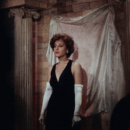
Like WHO KILLED TEDDY BEAR? (1965) for the 1960s, or GIRLFRIENDS (1978) for the 1970s, Monika Treut’s MY FATHER IS COMING alternately exists as a rollicking sex comedy and a chronicle of a particular mode of New York City in the 1990s, a celluloid time capsule delivered in the shape of a queer caper with a title that could be read as a cheeky double entendre to the filthy minded. The set-up is comical enough: Vicky (Shelley Kästner), a lesbian actress working as a waiter and living in the detritus-covered East Village, has all but obscured the reality of her life from her father, the conservative-minded Hans (Alfred Edel), now traveling from Germany to visit her for the first time. Can Vicky pass herself off not only as a successful actor, but also a heterosexual? Will Hans believe that Vicky’s homosexual roommate is actually her boyfriend? In an interview with Film Quarterly, Treut shares her love of the transgressive works of John Waters and Andy Warhol, but freely admits that “with MY FATHER IS COMING, I wanted to reach out to straight people, and open them up through the character of the father.” Treut’s cinematic olive branch—a slightly less risque sidestep from her earlier outré work—is somewhat noble then, a means of exploring the emotional disconnect between queer culture and those subscribed to heterosexual conservative values. For Hans, all it really takes is a savory encounter with the beguiling Annie Sprinkle (a legendary artist herself) to awaken some sense of sexual empathy within him, while the cruddy apartments and boisterous nightclubs make New York something of a queer Mecca for Vicky. On initial release, Jonathan Rosenbaum, in his Chicago Reader review, referred to the film as “simpleminded sexual tourism addressed to rubes.” For Treut, maybe that’s not a bad thing. (1991, 82 min, DCP Digital) [Ben Kaye]
---
Monika Treut’s GENDERNAUTS: A JOURNEY THROUGH SHIFTING IDENTITIES (US/Germany/Documentary)
Monday, 7pm
In the middle of the documentary GENDERNAUTS: A JOURNEY THROUGH SHIFTING IDENTITIES, Texas Tomboy is seen putting in contact lenses in a mirror. It’s a quick moment, but striking in the way director Monika Treut presents the theme of transformation of the body as a part of everyday life. This isn’t just mundanity, however, but a celebration of the ways in which personal choice and freedom allow for sincere expression. As she follows a group of transgender and genderqueer folks residing in San Francisco at the turn of the millennium, Treut presents queer theorist Sandy Stone as a narrative guide through this supportive community and the stakes within it, “broadening our understanding of gender and gender roles.” Following subjects previously featured in her work (Annie Sprinkle and Max Wolf Valerio) in addition to new ones, GENDERNAUTS presents a joyful examination of how each subject narrates their personal experience and the intersection between technology, nature, and art. In this millennial moment and located on the doorstep of the ‘90s tech boom, the use of websites and computer graphics are highlighted, useful ways of making connections with a larger community. Stone mentions the symbolic metaphor of the cyborg as a presentation of multiple identities, a combination of both human and tech. GENDERNAUTS is a gentle but wholly effective work, arguing that mutability is essential to being human, and thus the trans experience, in whichever of the many forms it can take, should be celebrated and supported. As academic Susan Stryker states in the film, “within transgenderism… there can be a way of show[ing] the remarkable diversity of human experience.” (1999, 86 min, DCP Digital) [Megan Fariello]
---
Monika Treut’s FEMALE MISBEHAVIOR (Germany/US)
Wednesday, 7pm
Assembled from four films shot on 16mm made between 1983 and 1992, then combined into a documentary mosaic, FEMALE MISBEHAVIOR operates as a record of voices insisting agency. Treut does not impose a thesis. She provides a safe space. What emerges are distinct individuals whom the majority would not have embraced at the time directly addressing any audience that might listen. DR. PAGLIA (1992)the quadrilogy’s most overtly confrontational segment lets Camille Paglia run the show. She is nonstop, with inhuman rapid-fire dialogue that accelerates into its own performance piece. Paglia discusses a vision of feminism rooted in sensuality, contradiction, and conflict. A militant signaling for third-wave feminism. ANNIE (1989) paints a portrait in broad strokes as iconic adult film actress Annie Sprinkle reinvents herself as a performance artist. Her public exhibition piece is titled “Public Cervix Announcement,” in which she uses a speculum, then provides the audience a flashlight and a clear view. Sprinkle comments she is “into tit art,” reframing pornography as authorship. ANNIE functions as both a portrait and a manifesto, locating pleasure within performance and refusing any shame historically assigned to it. Treut captures an otherwise exploitative moment with grace and ease. In BONDAGE (1983)—the earliest shot segment—we’re introduced to a member of the Lesbian Sex Mafia (LSM) and offered a glimpse inside S&M practices. Carol’s dominance role is shown through imagery that is rough, industrial, gritty, and low-fi. It is more of an experimental aesthetic than seen within the other segments. Carol describes pain as a site of control. Offering comfort that refuses translation. Treut’s accompanying images in BONDAGE would become more commonplace in music videos of the early ‘90s, but here, they are trailblazing. The final segment, MAX (1992), carries the film into terrain that, at the time, had almost no cinematic precedent. Max Wolf Valerio speaks candidly about his transition, detailing the material realities of hormone therapy, surgery, and social navigation. His reflections on becoming “your own twin brother” articulate his overall optimism. The segment’s closing gesture, repeating the address of a trans support group, transforms the film into a conduit. Treut would later revisit Valerio in GENDERNAUTS, extending this archive across decades. What distinguishes FEMALE MISBEHAVIOR is Treut’s refusal to exoticize. There is no trace of Mondo exploitation within Treut’s vision. Her subjects are neither elevated into icons nor reduced to case studies. They exist within the frame as people speaking, sometimes bluntly, sometimes playfully, but always with control over their own narratives. This methodology aligns with pro-sex feminist thought emerging in opposition to the anti-pornography movement, which often framed such expressions as inherently exploitative. Treut counters this fight with candid sketches; the camera doesn’t argue with its subjects, it only witnesses. The film’s structure, assembled from works created years apart, mirrors the shifting terrain of queer and feminist discourse in the US. It captures a moment when sexuality, gender, and representation were being renegotiated in real-time for the first time. That temporal layering gives the film its enduring vitality. Each segment holds its own context, yet together they form a continuum of resistance, a record of individuals refusing to be defined by frameworks seeking to contain them. More than three decades later, FEMALE MISBEHAVIOR remains urgent. It documents the labor that made contemporary conversations possible. Treut’s camera doesn’t have the answers, but it always captures the moment. (1992, 81 min, DCP Digital) [Shaun Huhn]
---
Also screening as part of Female Misbehavior: The Films of Monika Treut series, presented in partnership with the Goethe-Institut Chicago, is GENDERATION (2021, 88 min, DCP Digital) on Tuesday at 9:15pm.
The Chicago European Union Film Festival Spotlight: Cyprus
Siskel Film Center – See Venue website for full schedule and showtimes
Cinephiles tend to neglect films from smaller countries like Cyprus, possibly because these national cinemas lack the funding to support recognizable auteurs. Yet there are rewards to be found in exploring out-of-the-way regions of global filmmaking, as this year’s edition of the Chicago European Union Film Festival demonstrates. The six Cypriot movies that I got to preview ranged from not bad to pretty good, and they covered multiple genres and subjects; while I couldn’t identify consistent themes or concerns, I came away from the experience with some compelling impressions of the national imagination. The most imaginative of the six was Kyros Papavassiliou’s EMBRYO LARVA BUTTERFLY (2023, 91 min, DCP Digital), a sci-fi drama that takes place in an alternate reality where people no longer experience time linearly. Cursed with “arbitrary time,” human beings find themselves transported each morning decades into the past or future based on the patterns of the weather. One could read this premise as an allegory for climate change (which is defamiliarizing reality for people all over the world), yet Papavassiliou doesn’t lean into any easy metaphors. Rather, the filmmaker seems content to wander around his fictional world, dramatizing how life might look and feel under such strange parameters. EMBRYO LARVA BUTTERFLY centers on a married couple who find themselves together one day and divorced the next, which becomes a poignant reflection of the instability of modern relationships. Conversely, Stelios Kammitsis’ THE MAN WITH THE ANSWERS (2021, 80 min, DCP Digital) concerns the solidification of a relationship. In this pleasant road movie, a quiet man in his early 20s travels from Cyprus to Germany after the death of his grandmother and ends up befriending the free-spirited German tourist he picks up along the way. What seems at first like a contemporary spin on the Italian classic IL SORPASSO (1962) takes a different turn when the two men fall in love, yet it still allows viewers to enjoy seeing two mismatched characters develop a bond as they drive through beautiful European landscapes. Yianna Americanou’s .DOG (2022, 100 min, DCP Digital) doesn’t lack for homoeroticism either, though it’s generally below the surface. The film is a powerful work of social realism that presents what happens when an adolescent boy is reunited with his father after the latter is released from prison. Andreas Konstantinou plays the father, and he gives a searing performance as an unstable man who clearly loves his son but has no idea of how to raise him. The film’s trajectory follows the two characters as the older man pushes the younger into increasingly dangerous situations, as though priming him to follow in his footsteps and enter a life of crime. Americanou develops intensity through her assured direction of actors, though beneath the in-your-face performances lies an old-fashioned moral drama about a young man learning to make the right decisions in life. Tonia Mishiali’s PAUSE (2018, 96 min, DCP Digital) considers a character going through another important life change; the heroine is a housewife experiencing menopause and struggling to live with her overbearing husband, who seems to have become even more tyrannical since retiring from his job. Mishiali breaks up the realistic drama with fantasy sequences that show the heroine acting on the feelings she generally represses, often refusing to make cuts to distinguish between actuality and dreamlife. This has the effect of obscuring the film’s sense of reality, but in a good way—there’s a Resnaisian feel for the contours of the character’s inner life that makes for a fascinating character study. If PAUSE suggests the influence of Alain Resnais in its depiction of interiority, then Adonis Florides’ AFRICA STAR (2024, 107 min, DCP Digital) suggests the influence of Resnais in how it juggles multiple timelines. This ambitious film begins in the 2000s, when a woman begins to investigate her family history; Florides then interweaves the stories of this character’s mother in the early 1960s and grandmother in the period just after WWII. Themes of desire, betrayal, and self-preservation connect the different storylines, which are all filmed in black and white and feature several of the same actors. The film is interested in how forces of Cypriot history have shaped ordinary lives, particularly those of women; in contrast, Marios Piperides’ SMUGGLING HENDRIX (2018, 92 min, DCP Digital) looks at the way political circumstances affect contemporary lives in Cyprus. This is a genial farce about a musician living on the Greek side of the island who finds himself entangled in all sorts of mishigas when his beloved dog (the eponymous Jimi Hendrix) runs away and winds up on the Turkish side. Piperides makes light of Greek-Turkish tensions on Cyprus, portraying them more as inconveniences than anything else, but he still develops engaging, low-level suspense as the hero pursues any and all options to recover his pet. Of all the films I previewed, this provided the most insight into daily life in Cyprus today, despite being the most lightweight in terms of tone. [Ben Sachs]
Michael Almereyda x2
Siskel Film Center – See showtimes below
Michael Almereyda's NADJA (US)
See Venue website for showtimes
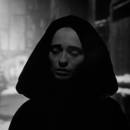
Director Michael Almereyda shot key moments of NADJA on a toy PXL2000, or Pixelvision camera. Released in the late ‘80s, the camera had a revival in the ‘90s, liked by indie directors like Almereyda for its accessibility and distinct visual style. The Pixelvision scenes in NADJA center around vampires, switching into a fantasy horror mode unable to escape the video era. NADJA is filled with juxtapositions of classic vampiric elegance and ‘90s disaffectedness. Drawing on a slew of inspirations, from vampire novels and their cinematic adaptations as well as André Breton’s surrealist novel Nadja, the film imagines what a world full of vampires would look like in the ‘90s. After Count Dracula is staked through the heart, his daughter, Nadja (Elina Löwensohn), goes on a mission to collect the body and reconnect with her sick brother (Jared Harris). Along the way she seduces Lucy (Galaxy Craze), who’s married to Jim (Martin Donovan), the nephew of Van Helsing (Peter Fonda). Van Helsing, who has dedicated his life to tracking down Dracula and his children, enlists Jim’s help to track them all down. Shot entirely in black in white, NADJA feels in line with Abel Ferrara’s film of the same era, THE ADDICTION (1995); both feature vampire women waxing poetically about their circumstances as they wander the streets of New York. Cloaked and constantly smoking, Löwensohn’s Nadja is sophisticated, her words lyrical, and she’s strikingly presented against the urban setting. Her melodramatic presence, along with Van Helsing’s steadfast devotion to his mission, clashes with the low\-budget visuals, creating an oddball sense of humor throughout the film. Almereyda’s clashing use of visual style in combination with classic horror film references and a modern setting present a distinctive version of the vampire story. Its eccentric approach was not widely appreciated, even during production. Executive producer David Lynch ended up funding NADJA himself; he makes a cameo early in the film as a morgue attendant. (1994, 93 min, New 4K DCP Digital Restoration) [Megan Fariello]
---
Michael Almereyda's EXPERIMENTER (US)
Tuesday, 6pm
The Milgram Experiment was a series of social-psychological experiments performed to test a human's obedience to authority figures. Two men are led into a room where they are informed by a scientist that one participant will be 'teacher' and the other, 'learner.' They are told that they will be testing the effect punishment has on learning. The learner is placed in a separate room where an electroshock device is placed on his forearm. He must answer a series word pairs given by the teacher, and for every incorrect answer, the teacher must flip a switch on a circuit board that sends a shock of increasing voltage. As the voltage rises, the learner can be heard screaming, yelling, and pleading from his room but, despite this, the vast majority of teachers would continue to the highest shock level simply because the authority figure, the scientist, imparts that "it is vital to the experiment that you continue." The shocks, though, are not real, and the learner is playing prerecorded audio from his isolated location. EXPERIMENTER is a highly stylized film on the life of Stanley Milgram (Peter Sarsgaard), the researcher behind the experiment. Sarsgaard plays the role with a cold, clinical detachment. He frequently breaks the fourth wall with asides, much akin to Kevin Spacey in HOUSE OF CARDS, and these monologues are interspersed with Milgram's findings, life musings, and personal tidbits. Michael Almereyda's obsession with depicting small details of the experiments, the settings, and Milgram's life parallels Milgram's own obsessions with his questions and answers. Screening as part of the Science on Screen series. After the screening, Yuan Chang (YC) Leong, Assistant Professor of Psychology at the University of Chicago, will lead a conversation about why social context is so powerful, what modern psychology and neuroscience have learned since Milgram, and what his experiments still get us thinking about today.(2015, 90 min, DCP Digital) [Kyle Cubr]
György Kovásznay’s BUBBLE BATH (Hungary/Animation)
Music Box Theatre – Friday and Saturday, Midnight
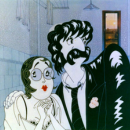
György Kovásznay’s only feature, BUBBLE BATH is a stunning achievement in visual madness, using the skeleton of a banal love triangle as an excuse to deploy a mind-boggling variety of animation styles and strategies. It is a dizzying accomplishment, often changing mood or genre mid-shot, never allowing the viewer to get a handle on its patterns or structure, and in its awesome energy revealing itself to be the visual heir to the verbally anarchic comedy of the early '30s that sought to find comedy in breaking free from as many constraints—of decency, of propriety, of logic, even—as possible. Kovásznay’s film depicts a man hiding from his fiancée by getting into SCUBA gear and flushing himself down a toilet that doubles as a kaleidoscope and a song-and-dance routine that changes into a pastiche of 1920s Modernist painting styles as just two of its least odd moments. The film is as exhausting to watch as it is exhausting of animation’s resources, using every tool imaginable, from its multiplicity of designs, of coloring techniques, of shapes, to even its multiplicity of media, incorporating live action photography as an animation element more than a few times. Had Kovásznay not died of cancer soon after completing this, there’s no telling the giant in international cinema he could have been. Screening as part of the Animation Adventure series. (1980, 69 min, DCP Digital) [Kian Bergstrom]
📽️ ALSO RECOMMENDED
Cold Sweat Double Feature
FACETS – Friday, 7 (CITY OF THE LIVING DEAD) and 9pm (THE DAY OF THE BEAST)
Lucio Fulci's CITY OF THE LIVING DEAD (Italy)
Lucio Fulci flitted from genre to genre, from knockabout comedies to gialli to poliziotteschi, like a bee sucking and mulching all the pollen from one flower before moving implacably on to the next. This 1980 staple from the era of Saturday night stoned VHS stoned trashfests is a cornucopia of maggots, drill bit murders, and acting veering madly between the dull and affectless and the hilariously overwrought. It’s a mishmash of Romero, Lovecraft, and run-of-the-mill occult nonsense (including a straight rip-off of Goblin’s DAWN OF THE DEAD score). New characters show up out of nowhere without a whit of craft or care as to their place in the barely sensical story, but it has its moments: a stray intuitive camera move here and there, and a "live" burial scene that’s well built and genuinely eerie. None of the above is necessarily pejorative; pretend you are seeing it with a late-night crowd, throw up your hands at the way it keeps threatening to kick in but never quite does, and have yourself a giggle. Starring a bedentured Christopher George, a demonically possessed sex doll, and an undertaker who looks like Vince Vaughn. (1980, 93 min, Digital Projection) [Jim Gabriel]
---
Alex de la Iglesia's THE DAY OF THE BEAST (Spain/Italy)
During high school a friend of mine stumbled on this Alex de la Iglesia Spanish heavy metal horror-comedy masterpiece. Why a single Blockbuster Video, in a town 45 minutes north of Chicago, had a lone copy of the film is a question still shrouded in complete mystery. But sometimes the universe is the perfect curator and gives you exactly what you need at the time you need it the most—and you end up with a movie that changes your life forever. THE DAY OF THE BEAST is religious horror exploitation at its finest. A priest, a metalhead, and a TV psychic team up to summon the devil so that they can kill the soon-to-be-born anti-Christ on Christmas Eve. Think Peter Jackson directing THE OMEN, but make it heavy metal. That alone should really sell you on the film, but if you’re still not convinced, I’ll get into a few more details. It unfolds like this: A Spanish priest has been studying the Bible closely, looking for clues and patterns in it that might foretell the location and time of the anti-Christ’s birth. Finally cracking the code, he realizes that the only way he can be sure to be there at the birth on Christmas is to commit as many sins as possible in order to get close to the Devil. It’s a preposterous plot, one that coming from very Catholic Spain takes irreverence a step over the line—and how wonderfully so! Director de la Iglesia uses the film’s protagonist to skewer the hypocrisy and image of the Church, and to play with the expectations of religion in the spiritual world and secular world. And, as nearly all of his films have at least a thin patina of politics, he also manages to get a running dig at post-Franco fascists. What makes THE DAY OF THE BEAST so great, besides the humor and the strange plot, are the characters, which are developed with a real sense of authenticity. While obviously heightened for maximum comedic impact, they seem like real people. The metalhead in particular avoids the easy clichés that usually devolve into parody and camp. There’s always a warm feeling when a movie nails a subculture right. This guy? He looks like a lot of dudes I’ve partied with over the years. THE DAY OF THE BEAST is a truly creative and unique genre film that is often overlooked, but those who do know about it generally tend to love it. Why it doesn’t have a bigger following, especially considering how rabid horror fans and metal fans (and especially that Venn diagram overlap) tend to be, is also a mystery. De la Iglesia always manages to make incredibly interesting and entertaining genre films that have a strong streak of social commentary just under the ridiculousness. He should have the same broader appeal as Sam Raimi or Peter Jackson (perhaps it’s subtitles that held him back?). For Satan’s sake, do yourself a favor and watch it now. All hail THE DAY OF THE BEAST! (1995, 103 min, DCP Digital) [Raphael Jose Martinez]
Agnès Varda's CLÉO FROM 5 TO 7 (France)
The Davis Theater – Tuesday, 7pm
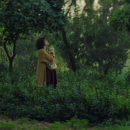
Cléo, a stupid and prodigiously influenced rising pop singer, believes she is dying of stomach cancer, a fear that overwhelms her for the majority of the film's real-time running time and which functions as the movie's primary organizing device. The opening scene features Cléo at a tarot reading (the only scene in color), setting up a kind of aesthetic thesis statement on Varda's part: all of existence, in this work, is intimately orchestrated, choreographed, and meaningful, but, crucially, only for this one moment. The fortune-teller is no mere character but a marker for a structural division that cleaves the entirety of the film. The first two-thirds of it are intensely kinetic--mirrors everywhere, setting up bizarre pseudo-split screens, jump cuts unmotivated by plot or psychological concerns, self-reflexive insertions within the narrative (a song performance, a silent film)--and an effect of this is to make the film's constructed nature unmistakable. As Cléo leaves the tarot reader's apartment, for instance, her footsteps are in perfect synchrony with the nondiegetic music we hear, and in a remarkable move Varda repeats the same shot of her descending stairs multiple times in a row, drawing her film into the orbits of such hyper-controlled avant-garde artworks as Duchamp's Nude Descending a Staircase and Murphy and Léger's 1924 film BALLET MÉCHANIQUE. But after a puzzling encounter with a friend who works as a nude model for sculpture students, Cléo enters a wooded park for the first time and meets a soldier on leave about to return to Algeria. Up until now, the film has been a city-bound labyrinth, filled with confusing and grotesque people, buildings, and images. But in the park and in the company of Antoine (the two share an almost instant connection) the film veers into romance. In a series of lyrical long takes and graceful, unobtrusive stagings, Antoine accompanies her to the hospital where test results await her, findings that she knows may well condemn her to death. And here Varda pulls her most brilliant structural play, for just as Cléo begins to contemplate what the doctor's words mean to her future, the film ends, half an hour early. CLÉO FROM 5 TO 7 thus turns its protagonist's melodramas into the stuff of deepest power, for the ending is not conclusion but a demand that each of us in the audience supply the missing minutes of Cléo's life. Indeed, the final five minutes reveal the formal virtuosity of the preceding scenes to have actually been ruminations on the roles of fate, love, and death, and turn Cléo's silly up-and-coming singer into a chanteuse of modernist melancholy. The ideal screening of this masterpiece would keep the lights low and theatre doors shut two quarter hours after the projectors were silenced, forcing the viewers to dwell in the same tenuous uncertainties that Cléo, freed now from her celluloid prison, no longer needs concern herself with. Screening as part of the Big Screen Classics and Spotlight on Women series. (1961, 89 min, DCP Digital) [Kian Bergstrom]
Brittany Shyne’s SEEDS (US)
FACETS – Saturday, 3pm and Sunday, 4pm
When discussing her debut feature SEEDS, director Brittany Shyne has described the film as "the maintenance of legacy and cultural presentation." This becomes painfully clear as the full scope of her work comes into view, a kaleidoscopic look at the lives of Black farmers in the American South that, like the best documentaries, acts as both art and artifact. Originally conceiving of the film as a project while in grad school, Shyne, also acting as cinematographer here, wanted to use her filmic voice to capture a perspective that she had yet to see portrayed faithfully, if at all, on camera. Structurally, SEEDS exists as a “process” documentary; there are no talking heads, no descriptive voiceovers, simply the footage of these farmers in Georgia and Mississippi working, talking, and simply living, Shyne’s imagery providing enough context and artistry to paint a sumptuous picture as is. We are thrust, in pristine black-and-white, into the world of these “centennial farmers,” those whose families have owned their respective land for over a hundred years, their cultural footprint measured in acres, struggling to keep up with an agricultural community that has systematically left them far behind. Shyne’s compositions are gorgeously intimate, her camera finding its way into the deep crevasses of gigantic mechanical cotton pickers, into funeral homes during reverentially joyful services, and even to Washington DC, joining the farmer’s mass protests against the blatantly racially discriminatory practices of the Department of Agriculture (during the Biden Administration, mind you). Two figures who find themselves poking through the artistic morass of agricultural imagery are Willie Jr. and Carlie, two enigmatic farmers whose presence particularly highlights how this profession—for Black southerners, at least—still mainly rests in the hands of the elderly (Carlie is 89 in the footage here, but has since passed). There is an existential weight at the heart of SEEDS, of Black Americans finally owning land in a country that has brutally othered them for centuries, hoping that there will be someone to whom they can pass down these fields of legacy. Cotton and corn will continue to grow, but will those who have given their lives to cultivate these crops still be given the space to do so, to grow even fuller, even stronger? (2025, 123 min, DCP Digital) [Ben Kaye]
Gints Zilbalodis' FLOW (Latvia/Animation)
FACETS – Sunday, 2pm
As a film enthusiast fixated on the art of animation who also just so happens to be a cat owner, I was somewhat predisposed to have a visceral emotional response to Gints Zilbalodis’ FLOW, a dialogue-free animated adventure centered on a feline protagonist thrown into various episodes of peril. But my own personal biases aside, the joys of Zilbalodis’ feature become self-evident early on, the painterly images and gentle atmosphere immediately creating a world you’re thrilled to inhabit for its nimble less-than-ninety-minute runtime. Animated entirely on the open-source software Blender, Zilbalodis and his team have created something almost akin to an open world video game like The Legend of Zelda: Breath of the Wild, with charmingly rendered creatures navigating treacherous environs with puzzle-like intuition of how to get from one destination to the next. The narrative details of the world are purposefully thin, with preference given to a show-don’t-tell mode of storytelling that trusts the audience to imagine what may or may not have led to this world of abandoned homes and cityscapes surrounded by ever-growing greenery. Even within us filling in the world-building gaps, the ever-rising waters and lack of any human inhabitants can easily lead us down some climate-fueled apocalyptic rabbit holes. One can imagine the worse version of the film, the animal cast (here; a cat, a capybara, a secretarybird, a lemur, and several adorable dogs) given snark-fueled vocal performances from celebrity actors that completely burst the bubble of sincerity. Thankfully, what we have instead is a crew of creatures grunting and meowing and barking, nowhere near approaching anthropomorphism, but still granted enough distinct personality for us to become invested in their journey. Something almost spiritual starts to take over the film, the journey of our lead cat hero becoming less and less about reaching a set destination, and more so merely attempting to find some sense of peace and community with this new pack of disparate animal friends amidst a world falling apart in disarray. Above all else, FLOW succeeds in doing what animation does at its most holy: forgoing the rules and expectations of “real world” cinema to create something singular and spectacular from whole cloth. Most thrillingly, it’s in service of a story about stopping in one’s tracks to take in all that is bigger than ourselves and finding the beauty in knowing that none of us are alone in our journey. (2024, 85 min, DCP Digital) [Ben Kaye]
Věra Chytilová's DAISIES (Czechoslovakia)
Alamo Drafthouse – Sunday, 4:30pm
Věra Chytilová's films have earned her acolytes and enemies at an equal rate—particularly DAISIES, an anarchic, poetic, visually exhilarating film lacking in any affirmation whatsoever. In more recent years, it has cemented Chytilová's stature as an avant-garde genius, a feminist icon, and a major influence behind films such as CELINE AND JULIE GO BOATING and MULHOLLAND DRIVE. In the period immediately following its release, Chytilová was marked as both a dangerous dissident (by the Czechoslovak government, who unofficially blacklisted her) and a political traitor to the Left (by Godard, who made her the central figure of his anti-Soviet/Czechoslovak documentary PRAVDA). During one of the first screenings of her work in France, audience members walked out, complaining that "they shouldn't make that kind of film. It undermines people's faith in socialism. If that is the way it really is, then none of it is worth it at all." DAISIES leads with exactly this kind of "objectionable" nihilism, opening with the two protagonists deciding that "the world is spoiled; we'll be spoiled, too." These two teenage girls, both named Marie, spend the rest of the film on a hedonistic rampage of consumption and destruction, in no particular order, culminating in a banquet scene that merges both tendencies to an apocalyptic conclusion. Marie and Marie do everything that decent women shouldn't (cheat, steal, make messes, advertise casual sex without following through, overeat, etc)—and care about precisely nothing. They speak in nonsensical, non sequitur dialogue that seems like it could have been randomly generated ("Why say 'I love you?' Why not just 'an egg?'"), but was actually carefully curated by Chytilová to serve as "the guardian of meaning" for her "philosophical documentary." During production, the only thing that she insisted remained untouched was the original script; everything else was up for grabs. Her production team took full advantage of this freedom in depicting the Maries' nihilistic spree, resulting in a surreal and stunning display of meaningless excess at every turn. Most notably, Jaroslav Kucera, the film's cinematographer (and Chytilová's husband), shot the film as one of his famous "colour experiments," and Ester Krumbachová, the film's costumer, styled the Maries in trendy mod bikinis and minidresses as often as elaborate sculptural outfits made from newspaper and loose wires. Screening as part of Queer Film Theory 101. (1966, 74 min, DCP Digital) [Anne Orchier]
Lars von Trier's MELANCHOLIA (International)
Alamo Drafthouse – Friday, 3:50pm; Monday, 7pm; and Tuesday, 1:45pm
Recall for a moment, before the hype on MELANCHOLIA veered left around the 2011 Cannes film festival, how the cinematic community shared a collective laugh following Lars von Trier's early proclamation that his end-of-days opus would be his first film to feature an unhappy ending. Even with common wisdom against lending the man's ramblings much credence, nothing short of cataclysmic was expected. These expectations do wonders for MELANCHOLIA, which, liberated at the outset of the remotest chance of a final reprieve, forces viewers into the skin of von Trier surrogate Justine, a depressed bride facing both the figurative and literal end of the world. As Justine, Kirsten Dunst turns in a career-best performance, careening through emotional swings as only someone who has been there and back again can embody, and still Charlotte Gainsbourg very nearly eclipses her in the film's more insulated second half; her role as Justine's put upon yet supportive sister Claire is of paramount importance in this subtlety-free portrait of depression. Von Trier's ploy to christen himself the modern Tarkovsky is apparent enough in the titular looming planet and the recurring Brueghel references, but he goes for broke with the year's most visceral final shot, allowing this most personal project to bow out on an emotional high note. And at that end, "unhappy" proves an adequate qualifier, given the gloomy forecast for all mankind, yet it doesn't sum up the spectacular visions, the emotional crescendos, or the golden mean achieved by Dunst and Gainsbourg, all of which meet their natural zenith under the glow of MELANCHOLIA. Not something to watch so much as to behold. (2011, 136 min, DCP Digital) [Tristan Johnson]
Oliver Laxe’s SIRĀT (Spain/France)
AMC River East 21, Davis Theater, and Music Box Theatre – See Venue websites for showtimes
Indebted to Henri-Georges Clouzot’s THE WAGES OF FEAR (1953) and William Friedkin’s remake SORCERER (1977) (to say nothing of Werner Herzog’s output), SIRĀT is something of an arthouse blockbuster, delivering as much in the way of shocks and suspense as any action movie while inspiring rumination on the tenacity of humankind and the uncaring majesty of the natural world. It’s commanding filmmaking, especially in a theatrical setting, thanks to the meticulous, at times overwhelming sound design and the no less overwhelming desert landscapes. As Dave Kehr wrote of THE TARNISHED ANGELS (1957), this should be seen on a big screen or not at all—it’s a film about the kinds of momentous experiences that make us feel small in relation to world around us. SIRĀT begins at a rave in the desert (it was shot mainly in Morocco, with some portions shot in Spain), as the film cuts between various dancers and technicians. It gradually comes to focus an older Spanish gentleman named Luis (Sergi López, one of the only professional actors in the cast); he hasn’t heard from his adult daughter in five months, and he’s come to the desert with his other child, a preteen boy, because he believes she’s joined the nomadic raver community in this part of the world. Luis befriends a group of itinerants and chooses to follow them to the next rave they’ve heard about, little knowing how perilous the trek across the desert will be. The physical hardships that the characters face recall the aforementioned Clouzot and Friedkin films, but where the protagonists of those films were motivated by greed and self-preservation, the characters of SIRĀT are driven by different urges. Luis wants to reunite his family, while his new friends are in search of a perpetual high, be it from drugs, music, nature, or danger. As Laxe presents them, there is a spiritual element to both of these quests, which makes the nomads’ acceptance of family man Luis less strange than it may first appear. And because Laxe maintains such a spiritual vibe, it feels particularly staggering when real-world concerns intrude on the proceedings, such as the news that World War III has broken out. That the narrative of SIRĀT exists under the shadow of war gives the film a frightening topicality that only adds to its urgency. (2025, 114 min, DCP Digital) [Ben Sachs]
Maïlys Vallade and Liane-Cho Han’s LITTLE AMÉLIE OR THE CHARACTER OF RAIN (France/Belgium/Animation)
Alliance Française de Chicago – Saturday, 1:30pm
As of this writing, my child is sixteen months old, and though it’s highly unlikely I’ll ever know how he experiences the world, something like LITTLE AMÉLIE OR THE CHARACTER OF RAIN gives me a small glimpse into the prospect. Based on a semi-autobiographical novel by Amélie Nothomb, LITTLE AMÉLIE turns childhood growth into something less narrativized and more sensorial, the experience of absorbing the world around you becoming a monumental task in itself. The young Amélie, calling herself a “god” as she enters the world, is practically catatonic for the first two years of her life, an impenetrable bubble of stasis waiting for the world to literally shake her awake. She eventually learns to walk and talk with incredible speed, racing to catch up with her surroundings, both as an emerging member of the human species, as well as a Belgian catching up to the culture and nature of her family’s new Japanese environs. Amélie’s introspective journey is as much shaped by Belgian chocolate as it is koi fish, blooming spring flowers, and the literal calligraphy of her name in Japanese kanji—“Ame,” she learns, is the Japanese word for “rain.” The film’s animation style similarly works to dazzle with bright, evocative colors, the two-dimensional form bringing each new sensation to life through textured, shimmering hues. We, alongside Amélie, experience the world anew, with heartbreak and wonder sitting alongside each other. To take in the world is to experience humanity’s gloom and joy in tandem, the film teaches, and for something so profound to be discovered in a film geared toward young audiences feels like a gift for the taking. Screening as part of the Festival de la Francophonie 2026. Presented in partnership with Asian Pop-Up Cinema as part of their 20th annual film festival, with the support of the Honorary Consulate General of Belgium in Chicago and the Wallonia Investment & Trade Agency. (2025, 78 min, Digital Projection) [Ben Kaye]
Paul Thomas Anderson's ONE BATTLE AFTER ANOTHER (US)
Northbrook Public Library (1201 Cedar Ln., Northbrook) – Wednesday, 2pm and 7pm
A motif of flooded landscapes recurs in Thomas Pynchon’s novels about the midcentury American counterculture. In Vineland (1990), radical filmmaker turned counterinsurgent Frenesi Gates confesses a recurring vision of disappeared beaches she calls the Dream of the Gentle Flood, set to a siren song promising the return of “whatever has been taken… whatever has been lost….” Pynchon renders this uncommonly emotional scene with a blue-green melancholy, a generational lament for stolen futures and failed alternatives employing the same haunted imagery that Inherent Vice (2009) conjures in one of P.I. Doc Sportello’s aborted reveries, analogizing the broken promise of the hippie decade to the excavation of a mythical underwater continent: “some undrowned Lemuria, risen and redeemed, where the American fate, mercifully, failed to transpire…” Said American fate is the subject of Paul Thomas Anderson’s new film ONE BATTLE AFTER ANOTHER, a loose Vineland adaptation that strips one of the book’s central plots—a government spook returns to hunt an ex-radical’s teenage daughter, living in hiding with her burnout papa sixteen years after the destruction of their revolutionary cell—out of the Reagan ‘80s and plants it in an apocalyptic present tense recent-past-near-future so up-to-the-minute it could have wrapped production this week. (Anderson isn’t a prophet, he’s just paying attention.) In the Californian hamlet of Baktan Cross, forcibly retired explosives expert Bob “Ghetto Pat” Ferguson (Leonardo DiCaprio) tries to keep daughter Willa (newcomer Chase Infiniti) alive by sending her to self-defense classes with Sensei Sergio (Benicio Del Toro) and policing her use of technology, but can’t protect her from the arrival of a federal dragnet led by Col. Steven J. Lockjaw (Sean Penn), whose past entanglement with Willa’s mother Perfidia (Teyana Taylor)—and possible fathering of a mixed-race daughter—threatens his initiation into the inner sanctum of a white supremacist cabal. So the thugs surge into town, an old ally (Regina Hall) spirits Willa away, and Bob teams with Sergio to rendezvous with what remains of his network before Steven can smoke them out. Anderson’s treatment of this scenario—angry, funny, frantic—distills the experience of our 21st-century late-capitalist crack-up at a moment when the potential for organized mass resistance has slowed to an ebb tide. The diluvial theme in Pynchon resonates with Hunter S. Thompson’s oft-mythologized monologue in Fear and Loathing in Las Vegas, which describes California at the end of the 1960s as “that place where the wave finally broke and rolled back.” The Fitzgeraldian, Lost Generation lilt of Thompson’s prose typifies the rueful sentiment of much post-’60s literature (including Pynchon’s), and Anderson’s reliably knotty, suggestive character work here locates failures aplenty in Bob’s scattered movement: chiefly, the equation of Bob and Steven as parallel father figures with mutual responsibility for the shrunken future offered to Willa, and whose fetishization-slash-idolatry of Perfidia shares Anderson’s roving authorial eye. Bob has another parallel in Sergio, whose work speeding a hidden community of undocumented migrants to safety serves as a quiet contrast to the revolutionaries fixated upon code words and armed resistance. Sergio knows when to lie low and when to run for the high ground, as do the skateboarders they meet whose blissed-out ride for freedom amidst a militarized crackdown sums up this movie’s command of motion and message in a single feather-light shot. If Anderson ultimately wills some optimism into his vision of a shaky generational truce, ONE BATTLE AFTER ANOTHER also acknowledges that an ungentle flood is here, and the tides are climbing high. The American fate may not be to recover what was lost but to move with the rising waters—as in the final chase that sees Willa hurtling through an undulating desert road, mastering its crests and troughs, surfin’ U.S.A. Screening as part of the Critics’ Choice Film Series. (2025, 161 min, DCP Digital) [Brendan Boyle]
📽️ ALSO SCREENING
⚫ Alamo Drafthouse
A Mystery Machine screening takes place Monday at 7:30pm.
Exploding out of the AGFA vaults as a brand-new 35mm preservation, a 1990s kung fu fantasia from Hong Kong that’s described as a breathtaking combination of action, comedy, and cooking screens Tuesday at 6:45pm.
Claudio Guerin Hill’s 1973 film A BELL FROM HELL (106 min, Digital Projection) screens Tuesday, 9:30pm, as part of the Terror Tuesday series.
Dave McCary’s 2017 film BRIGSBY BEAR (97 min, Digital Projection) screens Wednesday, 9:30pm, as part of the Weird Wednesday series. More info on all screenings here.
⚫ Asian Pop-Up Cinema
The 20th edition of Asian Pop-Up Cinema begins Friday, with screenings throughout the week at the AMC NEWCITY 14, the AMC Evanston 12, the Alliance Francaise de Chicago, and the Culture Center of the Taipei Economic and Cultural Office in Chicago. More info on all screenings and events here.
⚫ Chicago Film Archives
“A Celebration,” a new video artwork at 150 Media Stream created by experimental filmmaker Colin Mason, will showcase images from home movies in Chicago Film Archives collections. 150 Media Stream is a large-scale digital art installation spanning a 150-foot LED wall in downtown Chicago curated by Yuge Zhou. In the lobby of 150 N. Riverside Plaza; enter through the Randolph Street entrance. More info here.
⚫ Chicago Public Library
View all screenings taking place at Chicago Public Library branches here.
⚫ Cinema/Chicago
A member screening of Sofia Coppola’s 2025 documentary MARC BY SOFIA (97 min, Digital Projection) takes place Saturday, 1pm, at the Chicago History Museum. More info here.
⚫ The Davis Theater
An Oscarbate Trust Fall screening takes place Saturday at 7pm.
Joe Swanberg presents a Secret Screening w/ Q&A on Monday at 7pm. More info on all screenings here.
⚫ Doc Films (at the University of Chicago)
Doc Films’ spring calendar begins this Monday. The schedule has not yet been posted online, but check here for more information in the coming days.
⚫ FACETS
Lynne Ramsay’s 2025 film DIE MY LOVE (119 min, DCP Digital) screens Saturday at 8pm and Thursday at 9pm.
On Sunday starting at 10:30am, join FACETS and Chicago Danztheatre Ensemble for My First Movies, a playful and engaging film experience designed especially for children ages 2–5.
Chloé Zhao’s 2025 film HAMNET (125 min, DCP Digital) screens Sunday and Thursday at 6:30pm.
Sweet Void Cinema presents a screenwriting workshop in the FACETS Studio on Wednesday from 6 to 9pm. More info on all screenings and events here.
⚫ Leather Archives & Museum
Tobi Hill-Meyer’s 2012 short film MONEY SHOT BLUES AND HOW TO FAKE EJACULATION (11 min, Digital Projection) and Todd Verow’s 2012 film BOTTOM (85 min, Digital Projection), the latter with a pre-recorded introduction from Verow, screen Saturday at 7pm. More info here.
⚫ Music Box Theatre
Phil Lord and Chris Miller’s 2026 film PROJECT HAIL MARY (156 min, 70mm) begins screening and Tony Benna’s 2025 documentary ANDRE IS AN IDIOT (88 min, DCP Digital) continues. See Venue website for showtimes. More info here.
⚫ Siskel Film Center
Gianfranco Rosi’s 2025 documentary POMPEI: BELOW THE CLOUDS (114 min, DCP Digital) continues screening. See Venue website for showtimes.
Off Center: Experiments in Emulsion takes place Monday, 6pm, followed by a dialogue with Julian Antos of the Chicago Film Society, who will talk the audience through the science of film emulsion.
Conversations at the Edge presents Volcanoes, Mountains, Forests: Malena Szlam And Jiayi Chen on Thursday, 6pm, followed by a conversation with the filmmakers and audience Q&A. More info on all screenings here.
CINE-LIST: March 20 - March 26, 2026
MANAGING EDITORS // Ben and Kat Sachs
CONTRIBUTORS // Kian Bergstrom, Brendan Boyle, Kyle Cubr, Megan Fariello, Jim Gabriel, Shaun Huhn, Tristan Johnson, Ben Kaye, Raphael Jose Martinez, Anne Orchier
