

📽️ CRUCIAL VIEWING
Warren Beatty’s REDS (US)
Chicago Film Society at the Music Box Theatre – Monday, 6:30pm
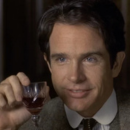
Warren Beatty’s REDS is rich, intoxicating, beautiful and, most of all, desperately romantic, precisely because of its revolutionary politics—so much so that even listing its pleasures could fill an entire capsule. Beatty, who also stars as Jack Reed—a journalist and communist activist whose book Ten Days That Shook the World is a seminal account of the 1917 October Revolution—had wanted to make a film about Reed since the mid-’60s and achieved this feat on the heels of the success of HEAVEN CAN WAIT (1978). (Notably, Beatty had originally intended only to produce, and only later decided to star in and direct.) Previously, the Soviet director Sergei Bondarchuk had asked Beatty to star as Reed in what would later become RED BELLS (1982), in which Reed, played by Franco Nero, goes to Mexico during the revolution to interview Pancho Villa. Beatty didn’t like the script and began working on his own treatment; later, in 1976, playwright Trevor Griffiths was brought on, receiving co-writing credit with Beatty, though the script would go through further revisions with writers Peter Feibleman, Robert Towne, and Elaine May, with Jeremy Pikser—later co-writer of Beatty’s BULWORTH (1998)—serving as a research consultant. (Pikser later said that “in terms of, if you counted the words on a page of REDS, more than anybody else it would be Elaine May.”) Beatty brought on then-girlfriend Diane Keaton to play Louise Bryant, Reed’s wife and a journalist in her own right (Beatty and Keaton’s relationship, however, wouldn’t survive production); the film is as much about their relationship as it is about Reed, with a heavy focus on his final years in Russia, where he was employed as a propagandist for the Comintern (after originally having traveled there to have his newly formed Communist Labor Party of America recognized by them) and where he eventually died days before he would have turned 33, becoming one of only five Americans buried in the Kremlin. At over three hours, it’s a sweeping epic of Reed and Bryant’s sometimes tense but more often deeply romantic entanglement, set against the global political landscape in which it flourished; Beatty excels at making an epic that’s both politically and narratively engaging. The cast has much to do with that achievement. Beatty is excellent, as is Keaton, but it also features a murderers’ row of a supporting cast—largely drawn from Reed and Bryant’s Greenwich Village circle—including Edward Herrmann as Max Eastman, Maureen Stapleton as Emma Goldman (for which she won an Oscar), Gene Hackman as a magazine editor, and Jack Nicholson as Eugene O’Neill, with whom Bryant had a short-lived affair. (Not for nothing, this may be my favorite of Nicholson’s performances.) Vittorio Storaro’s lush cinematography makes everything look almost verdant in its grittiness, and the score, by Stephen Sondheim, is perfect. While the outcome is so, so satisfying, its production was not without woe; not necessarily on the level of May’s ISHTAR (1987), in which Beatty would star, but thereabouts. As per this fascinating profile of the film’s production in Vanity Fair from 2007: “The party line, [editor Dede Allen] says, was that REDS had not exceeded the recent total racked up by APOCALYPSE NOW (1979): 700,000 feet of exposed film, about 100 hours’ worth. As Allen recalls, ‘It got to the point where I never discussed [footage] with anybody. That was verboten. [But] I know it was more than 700,000 feet. Are you kidding?’ According to [production manager Nigel] Wooll, ‘We went through over two and a half million feet of film.’” All of which, I’d say, was worth it. Perhaps most unique about the film, and a technique that would later be cribbed by Christopher Nolan for INTERSTELLAR (2014), is Beatty’s use of “witnesses,” real people who knew the players involved, some more famous than others (among them are writers Henry Miller and Rebecca West and ACLU co-founder Roger Nash Baldwin). Shot against a stark black backdrop, the interviews are often enlightening but also often arbitrary—Miller, for example, ruminates on how there was just as much fucking going on then as now, and another subject wonders, “I’ve forgotten all about it. Were there socialists? I guess there must have been, but I don’t think they were of any importance”—all told, more humorous than anything else. It’s representative of Beatty’s handling of the material, with accordant gravitas but also with a wry nod to the inherent inattention of history, something he’s trying to make sure we don’t do through by his own witnessing. Preceded by the 1941 short COME THE REVOLUTION (3 min, 16mm). (1981, 194 min, 35mm) [Kat Sachs]
Onion City Experimental Film Festival Opening Night: Useful Fantasy (Experimental)
Siskel Film Center – Thursday, 8pm
Curated by artist Peter Burr, who’s also represented in the program with his piece ALONE WITH THE MOON (2012, 14 min, Digital Projection) and a work-in-progress called MAINTENANCE GAME (which Burr will be in person to present), this collection of shorts promises an excellent edition of the Onion City Experimental Film Festival. There are a couple of classics in the lineup, both screening on 35mm: Suzan Pitt’s delightful animation ASPARAGUS (1979, 18 min, 35mm) and Peter Tscherkassky’s mind-blowing OUTER SPACE (1999, 10 min, 35mm). These two works, which differ greatly in form and tone, speak to the vast range of modes within experimental cinema. ASPARAGUS is silly and funny, combining 2D animation and stop-motion to create a memorable dreamscape; appropriately, the short first gained popularity when it was regularly screened with David Lynch’s ERASERHEAD (1978). Pitt creates all sorts of visual jokes to incorporate the titular vegetable into her imagery, though the most memorable shots may be the ones that mix different animation styles to depict a theater full of clay-made spectators watching cartoon figures on a stage. Such is the culmination of the film’s surrealist flow, which also features shots of objects mutating into different objects, a device that appears in another short in the program, Vince Collins’ MALICE IN WONDERLAND (1982, 4 min, Digital Projection). Collins riffs on various motifs from Alice in Wonderland in a trippy, almost frightening fashion, suggesting a drug-induced hallucination. The short speaks to the potential for abstraction within narrative works, a concept that Tscherkassky exercises in OUTER SPACE. That work famously manipulates shots from the 1982 horror film THE ENTITY (with superimpositions, strobe effects, and mirroring) to present a vision of ineffable terror. Created in widescreen and black-and-white, the film is sure to look great on celluloid and a big screen. Black and white imagery also features prominently in Boris Labbé’s animation LA CHUTE (2018, 14 min, Digital Projection), although that work is punctuated with bits of color. The overarching theme is damnation, with shots of figures falling into an abyss and giant monsters overwhelming said figures. It’s no less frightening than OUTER SPACE, and maybe even more so, since it’s less abstract. ALONE WITH THE MOON, on the other hand, speaks to the abstract side of experimental filmmaking, as Burr’s grainy black-and-white animation invites spectators to get lost in textures of the images. There’s a nice video texture to Shana Moulton’s THE MOUNTAIN WHERE EVERYTHING IS UPSIDE DOWN (2005, 5 min, Digital Projection), though the work is grounded in imagery concerning exercise, balls of various sizes, and wacky interior design. It’s a playful work that pairs well with ASPARAGUS, showcasing experimental cinema’s penchant for non sequitur humor. Co-presented by 150 Media Stream. [Ben Sachs]
---
Preceded by an Opening Reception at 150 Media Stream (150 N. Riverside Plaza) from 5:30pm-7:30pm.
Jacques Rivette’s THE STORY OF MARIE AND JULIEN (France)
Doc Films (at the University of Chicago) – Tuesday, 7pm
In 1975, Jacques Rivette set out to make a series of four films that engaged with multiple popular genres, ranging from adventure to musical comedy. He would shoot only two of the features, DUELLE and NOIROÎT (both 1976), then have a nervous breakdown two days into production on the third, which was to be called MARIE AND JULIEN and star Leslie Caron and Albert Finney. Though Rivette never wrote a complete script for the film (it’s likely he was planning to write/improvise it as he shot, a process he had used on other features), his cinematographer William Lubtchansky saved the notes that were to guide the production, and these were published in 2002 along with the written materials for two other unmade Rivette films. Revisiting the notes inspired the director to come back to MARIE AND JULIEN, and the film was finally completed, with a slightly different title and with Emmanuelle Béart and Jerzy Radziwiłowicz in the leads. Fittingly, the film is concerned principally with death and revival, as what begins as a crime-tinged character study gradually reveals itself to be a ghost story. Julien is a single middle-aged man who repairs clocks for a living but, when the movie opens, has also begun blackmailing a mysterious woman (identified only as Madame X) for extra money. One day, Julien encounters the younger Marie, whom he met a year earlier; they make a dinner date, and soon a passionate, highly physical relationship is born. This may be the most sexual film Rivette had made since L’AMOUR FOU (1968), which explored the intimate details of a marriage between a theater director and his actress wife as it was breaking down. But while L’AMOUR FOU is one of the director’s most realistic (and autobiographical) films, THE STORY OF MARIE AND JULIEN takes a supernatural turn in its second half that opens it up to all sorts of metaphorical readings. The turn comes over an hour into the characteristic slow-burn narrative; as usual, Rivette takes his time to introduce the characters and develop an air of realism, as if to build a bridge between everyday life and cinematic fantasy. When the film does enter the realm of the unreal, it feels rewarding, even cathartic, as it often does in Rivette’s work. What distinguishes this film is that the movement into fantasy here is also a movement ever inward. There are only four major characters in THE STORY OF MARIE AND JULIEN, and this makes for a somewhat claustrophobic experience at two and a half hours. At the same time, the absence of other characters heightens the intensity of the central romance and makes the developments of the final hour that much more heartbreaking. Playing as part of the Jacques Rivette’s Late Style series. (2003, 150 min, 35mm) [Ben Sachs]
Beyond Chicago
Music Box Theatre – See below for showtimes
Joseph Sargent's THE TAKING OF PELHAM ONE TWO THREE (US)
Friday, 4pm
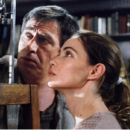
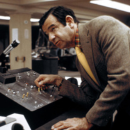
Let's start with all the things that the 1974 version of TAKING OF PELHAM ONE TWO THREE is not. Unlike A CLOCKWORK ORANGE, it's not a film that romanticizes anti-social violence; the PELHAM hoods are middle-aged, dejected men who hijack a subway train out of a fog of desperation that they themselves regard as pathetic and low. Nor is it a DIRTY HARRY or FRENCH CONNECTION, burnishing the results of warrior cops who step outside the law; Walter Matthau's police lieutenant scarcely fires a shot and spends the movie in a plaid button-up with a bright yellow tie, the squarest law enforcement figure this side of Jack Webb. PELHAM never drills too deep on sociological details, and consequently lacks the political depth and impassioned edge of THE INCIDENT, Larry Peerce's neglected subway heist thriller from seven years prior; the hostages are so generic that they're simply referred to as "The Homosexual," "The Spanish Woman," "The Hippie," "The W.A.S.P." and whatnot in the credits. If they represent a cross-section of society, circa 1974, PELHAM is not the vehicle to bring them together and reveal a common Americanism under duress; indeed, the movie is rife with ethnic slurs fired in every direction and a pervasive sense that the melting pot will boil long into the good night. So if THE TAKING OF PELHAM ONE TWO THREE is a great movie—and it is—that's largely because it subsists on its own special sense of funk and friction, a ruthless piece of work that churns in every direction and finds garbage all around. As a time capsule of mid-'70s New York, its only rival is TAXI DRIVER; PELHAM is the more coherent satire, laser-focused on the procedural rot of Lindsay-era NYC. Though the Metropolitan Transit Authority denied PELHAM the right to film in its subway, Mayor’s Office of Film, Theatre, and Broadcasting eagerly backed the project—a favor repaid with an unmistakable and deeply unflattering stand-in for Hizzoner himself, played by Lee Wallace as a meek, needy man who invokes John Lindsay's infamous complaint that he possessed the "the second toughest job in America" while sitting in bed watching a television game show. (Lindsay had been replaced by Abe Beame by the time PELHAM hit theaters, which made the movie a premature wake for a vision of New York hardly dead yet.) Despite its thundering threats and last-minute rescues, PELHAM never plays like a melodrama; instead it feels like just another day, just another damn thing, something else to muddle through and walk away from. With an introduction by actor Bob Odenkirk. (1974, 104 min, 35mm) [K.A. Westphal]
---
Kazuhiko Yamaguchi’s SILVER BUTTERFLY 2: SHE-CAT GAMBLER (Japan)
Friday, 7pm
Composed with a regal stare, the character of Nami is a prime example of Meiko Kaji’s brilliance as an actress. Though she’s moved to action when needed, professional gambler Nami derives her power from her observant control over every situation, quiet and watchful as every other character stumbles around her complete serenity. In sequel SILVER BUTTERFLY 2: SHE-CAT GAMBLER, Nami has returned to Tokyo from her travels on the road, seeking revenge for the death of her father thirteen years earlier. She’s not alone, having recently rescued Hanae (Tamayo Mitsukawa), a young woman who was sold into prostitution by her father (Junzaburō Ban) to settle his gambling debts. This complicates Nami’s return, as she’s determined to keep Hanae safe from the dominant Yakuza syndicate, who considers her their rightful property. All of this is connected to her father’s death, and with the help of her loyal friend Ryuji (Sonny Chiba), Nami plans her vengeance. The film is dotted with dreamy neon shots of Tokyo, roaming through bustling clubs, gambling houses, and backrooms of the Ginza district, the camera peering around objects and, in some strikingly composed shots, looking from directly above the gambling action. Despite its colorful setting, SILVER BUTTERFLY 2 is terribly melancholic, as Nami flashes back to her father’s untimely death. With Hanae’s own troubled relationship with her father, Nami’s connection to her is sweet and mournful. The connection between all the women characters is presented as multifaceted, with Nami’s old friend, Miyoko (Yukie Kagawa), now a Ginza madam, complicating her relationship to the underground world. All their positions within this world are dangerous, controlled by the whims of men; Kaji’s Nami understands too well the feeling of being out of control of one’s own life, reflecting her own constant need for self-possession. (1972, 86 min, DCP Digital) [Megan Fariello]
---
Toshiya Fujita's LADY SNOWBLOOD (Japan)
Saturday, 1:30pm
LADY SNOWBLOOD is an enduring classic within a campy genre of blood-gushing Japanese action films from the 1970s and 1980s. Several factors make LADY SNOWBLOOD stand out among these tales of vengeance that mostly chronicled contemporary Yakuza rivalries: it was directed by Toshiya Fujita, who more typically made soft-core films (called "pink films" in Japan) for a major Japanese studio; it starred actor and singer Meiko Kaji, who had starred in several of Fujita's romances; and it was produced independently, which gave both the director and cinematographer free reign to exercise their creativity. Their only constraint was the shoestring budget, which meant that they shot the entire production on only 20,000 feet of film, or a little under four hours. By contrast, most major Hollywood productions were shot on a 10:1 ratio. Filmed on 35mm in Tohoscope (a response to Cinemascope developed by Toho, a Japanese studio), the kinetic and lush cinematography brings high drama and emotional resonance to scenes full of fake blood and drawn-out deaths. LADY SNOWBLOOD was adapted from manga of the same name and tells the tale of a woman raised from birth to be an asura, a demon trained to balance the karma generated by the murder of her family and rape of her mother. Kaji (who also sings the mesmerizing theme song of the film) delivers a steely performance as an assassin trained to subsume all her feelings into her karmic duty. With gritty determination, she hunts down the men and woman responsible for her family tragedy, an unstoppable force set against the 19th-century Meiji era society and stunning coastal landscapes. Many will recognize the film's theme song and Lady Snowblood's character as clear inspiration (or, as some, including this reviewer, would say, shamelessly pilfered) for KILL BILL, which Quentin Tarantino directly referenced and showed to the cast and crew between takes. In addition to re-igniting interest in LADY SNOWBLOOD for a western audience, KILL BILL revitalized Kaji's musical career and encouraged her to put out her first studio album in three decades. Fans of Japanese cinema, good revenge stories, or gratuitously gorgeous epics in the 2.35:1 ratio must see LADY SNOWBLOOD at least once. Followed by Shun'ya Itô’s 1972 film FEMALE PRISONER SCORPION: JAILHOUSE 41 (90 min, 35mm). Meiko Kaji will participate in a post-screening Q&A following LADY SNOWBLOOD and will introduce FEMALE PRISONER SCORPION: JAILHOUSE 41. (1973, 97 min, DCP Digital) [Alex Ensign]
---
John Boorman's EXORCIST II: THE HERETIC (US)
Sunday, 2:30pm
An oddly specific thing I’ve noticed about John Boorman’s filmmaking is his use of sparkle. From Regan’s wild tap recital outfit to the mirrored filled sets that seem to go on infinitely, that sparkle is present so thoroughly in EXORCIST II: THE HERETIC, and it may be a symbol of why it made everyone so terribly angry upon its release in 1977. A sequel to William Friedkin’s extremely successful THE EXORCIST (1973), Boorman’s film marks a complete shift in tone, with a turn toward artifice and dark fantasy—something seen more explicitly in his next film, EXCALIBUR (1981). EXORCIST II is still not culturally appreciated for what it is, with its audacious choices—it’s essentially a teen psychic melodrama—while the third film has gotten its due with internet listicles of greatest horror moments recognizing its incredible jump scare sequence. In EXORCIST II, it’s four years after after the first film, and Regan (Linda Blair) is trying to maintain a normal teenage life while being studied and monitored at a psychiatric institute, under the supervision of Dr. Gene Tuskin (Louise Fletcher); Regan remembers nothing of the incident in D.C., though she seems to have developed some telepathic powers in the meantime. Father Lamont (Richard Burton) is tasked by the Cardinal to find answers surrounding the mysterious death of Father Merrin (Max von Sydow) and seeking help from Regan, searches for an African man, Kokumo (James Earl Jones), who defeated the demon Pazuzu as a small boy. The haziness of the film’s look fits the incongruity of the plot, but Boorman’s visuals are so dreamy it lulls one into hypnosis. Images like a shot of Pazuzu as a single locust hovering in midair, priests speaking in front of giant frescos that crowd the space with two-dimensional figures, and Regan atop her NYC apartment clad in a white Gunne Sax-style dress are all positively hallucinatory. EXORCIST II is also engaging with the Nigel Kneale-inspired themes of combining science with religious mysticism—namely through the psychiatric study of Regan as well as Kokumo’s work as an entomologist. It’s perhaps a bit ahead of its time in that way, as this subject is also explored later on in '80s American horror films like HALLOWEEN III: SEASON OF THE WITCH and PRINCE OF DARKNESS, both with direct connections to Kneale and John Carpenter. Also, both of those films were underrated at the time of their release and have gotten a second life and cult followings in the last few decades, with appreciation for their boldness in twisting the genre. It’s high time EXORCIST II got the same consideration. (1977, 117 min, 35mm) [Megan Fariello]
---
For more information about Beyond Chicago, including a complete screening schedule, visit here.
Andrei Tarkovsky's NOSTALGHIA (Italy/USSR)
Doc Films (at the University of Chicago) – Friday, 7pm and Saturday 4pm
Though not Andrei Tarkovsky’s most personal film (that distinction belongs to his 1975 film THE MIRROR, which is the most blatantly autobiographical), it may be fair to say that NOSTALGHIA is his second-most personal endeavor, considering that it’s about men torn between their native countries and the outside world. His first film made outside the USSR (it was shot in Italy), it explores, in addition to the titular theme of nostalgia, or homesickness, the consummate themes of boundaries—both literal and figurative—and alienation that tinge most of Tarkovsky’s films. As much as any Tarkovsky film can be said to follow anything, NOSTALGHIA follows a Russian writer called Andrei Gorchakov (Oleg Yankovsky, who appeared as the father in THE MIRROR) as he travels from the USSR to Italy to research the life of fictional 18th-century Russian composer Pavel Sosnovsky, whose own, more dire travails resembled those of Andrei’s. Accompanying him is a beautiful, young translator, Eugenia (Domiziana Giordano), who desires Andrei as much as she perturbs him. At the beginning of the film, the two visit Piero della Francesca’s Madonna del Parto fresco in Tuscany. Andrei declines to enter, and, in what sounds like a voiceover rather than direct dialogue, says, “I am fed up with all your beauties.” Both the sentiment and its ambiguity set the tone for the film, which is teeming with sublime yet cryptic imagery. After visiting the fresco, Andrei and Eugenia go to stay at a hotel next to a hot mineral bath, where they meet Domenico, a local eccentric who’d once kept his family locked away for several years in order to shield them from the fabled apocalypse. After being released from an asylum, as he tells Andrei, he became obsessed with trying to cross the pool with a lit candle. Throughout, there are enigmatic flashbacks, shot in a grayish black-and-white as opposed to the muted color used in the rest of the film, depicting a family in the Russian countryside, presumed to be Gorchakov’s wife, children, and dog. These and other asides—including interludes featuring the release of Domenico and his family from their home-prison and some featuring Eugenia, with Andrei’s wife and her boyfriend—succeed in imbuing the film with a dreamlike quality and in alienating it from its tenuous narrative, a strategy that drives home a sense of nostalgia or homesickness, which are ultimately forms of alienation derived from real or imagined boundaries. After completing the film, Tarkovsky and his wife made the decision to defect West, convinced that he’d no longer be able to make films in his home country; his resolve was likely solidified by the fact that the Soviet delegation campaigned against his being awarded the Palme d’Or for NOSTALGHIA. Yet even in retrospect, Tarkovsky did not consider it an “emigration” film. In an interview, he asked, in reference to it being about nostalgia, “How can someone live normally, fully, if he breaks with his roots? In Russian, ‘nostalghia’ is an illness, a life-threatening disease.” Ultimately, the film is a simple transference of internal feeling to an external source, the screen, one boundary in all this that could be said to have been successfully traversed. In another interview, Tarkovsky said, “I had not expected my psychological state to be capable of such clear embodiment in a film.” The final shots culminate with an almost nine-minute take of Andrei, instructed by Domenico, successfully carrying a lit candle across the baths; what follows is a scene of Andrei with his family in the countryside, which ends with the camera pulling back to reveal some Italian ruins surrounding them. It’s a personal film, but also an object simultaneously broader and more significant, a light, like the candle, that could be said to, as Tarkovsky put it, “display an entire human life… from beginning to end, from birth to the very moment of death.” Screening as part of the Psychodynamic Cinema series. (1983, 125 min, 35mm) [Kat Sachs]
Herbert Brenon's PETER PAN (US/Silent)
Doc Films (at the University of Chicago) – Monday, 7pm
For those who love hissing at Mr. Potter while swatting away tears during IT’S A WONDERFUL LIFE, dancing along to the “Time Warp” at a rambunctious screening of THE ROCKY HORROR PICTURE SHOW, or inexplicably throwing spoons at the screen during THE ROOM, Herbert Brenon’s PETER PAN will delight when, as in J.M. Barrie’s famous stage play, Peter looks directly at the audience and asks us to clap so that Tinker Bell may live. It’s interactive and, yes, cheesy, but also delightful in a way that sums up the entire viewing experience. By that point, even the most austere cinephiles will be clapping furiously, perhaps in tacit agreement that Tink represents not just the magic of the story, but the magic of the screen. Adapted by Willis Goldbeck, the film closely adheres to the play (Barrie wrote his own version for the screen, but Brenon declined to use it), even utilizing some of the stage dialogue in the intertitles. Still, despite its popularity as a stage show, the film version—its first adaptation to the screen—feels wholly separate from theater, even as we’re asked to help resuscitate Tink. The search for the titular troublemaker, always played by a young woman on the stage, is another of the movies’ fabled searches: in lieu of such cherub-faced megastars as Mary Pickford, Gloria Swanson, and Lillian Gish, Barrie himself chose the 17-year-old Betty Bronson, who shines in the role. Following the established trajectory, the film starts at the Darling residence, where, most jarringly, Nana the nurse-dog is played by a man in a dog costume, acclaimed “animal impersonator” George Ali. Soon enough Peter is wrestling with his shadow, and he, Wendy, and her brothers are off to Neverland, where they find themselves at odds with the imperious Captain Hook (Ernest Torrence)—ever-haunted by the dastardly crocodile, also played by Ali and rendered just as uncannily—whose crew kidnaps Wendy, her brothers, and the Lost Boys. (Before this point, a young Anna May Wong appears as Tiger Lily.) Peter saves the day, and Wendy, who’s become the boys’ adoptive mother, and her brothers return home with the crew in tow, with Mrs. Darling promising Peter that Wendy can visit once a year to help with spring cleaning, its gender politics admittedly the least charming thing about it. The story, prefaced with a title card featuring a missive “On the Acting of a Fairy Play,” is enchanting as always, but it’s the art direction, inspired set design and special effects that elevate it cinematically. Rarely is the stuff of so-called play-acting this lushly realized, wondrous yet tactile. Like Neverland, it’s a dream within reach. Screening as part of the Painting with Light: The Cinematography of James Wong Howe series. (1924, 102 min, 35mm) [Kat Sachs]
Radu Jude's KONTINENTAL '25 (Romania)
Siskel Film Center – See Venue website for showtimes
With the title and premise of KONTINENTAL ’25, Radu Jude alludes to Roberto Rossellini’s EUROPA ’51 (1952), one of the hallmarks of postwar European cinema. In that film, Ingrid Bergman plays an upper-class woman who acts on the preventable death of her ten-year-old son by committing herself to charity with increasing fervor; through her actions and the way they’re greeted by the people around her, Rossellini raises the question of whether saintliness is possible in modern times. Jude’s film is not a remake of Rossellini’s, nor are its concerns particularly religious, yet the Romanian director is clearly a descendant of the great Italian modernist in how he makes films to generate thought about morality and the state of the world. KONTINENTAL ’25 begins as a documentary-like account of a homeless man in the Romanian city of Cluj-Napoca (once the capital of Transylvania), centering on his degrading efforts to find work and food. After a bailiff comes to the boiler room where he’s been sleeping to evict him, the man commits suicide, and Jude shifts focus to the bailiff for the rest of the picture. Orsolya (Eszter Tompa) may feel terribly guilty about the man’s death, but she doesn’t develop any aspirations of saintliness (she does, however, deliver a Brechtian monologue in which she relates how much she donates each month and to which charity). She falls into a funk but tries to go on with life as usual, tending to her job, marriage, and children and trying to disregard the waves of online hate that have entered her life since news of the homeless man’s suicide went viral. In what’s become characteristic for the Romanian filmmaker, Jude presents Osolya’s life as a series of encounters that double as psychosocial examinations of late-capitalist Romania; more than ever, the prognosis looks bad. The writer-director’s wit remains forever sharp, and the subject matter here offers plenty of opportunities for his gallows humor. But the overriding sensibility is one of sadness and resignation; the more we learn about Osolya, the more unhappy we realize she is. A lot of this has to do with her limited economic possibilities, but that’s not all—Jude is trying to identify a despiritualized quality in contemporary Europe that’s making everybody miserable. (2025, 109 min, DCP Digital) [Ben Sachs]
📽️ ALSO RECOMMENDED
Satyajit Ray’s THE MUSIC ROOM (India)
Doc Films (at the University of Chicago) – Sunday, 4pm
A number of Satyajit Ray’s films rest on a particular tension between content and form. On the one hand, Ray’s characters will behave foolishly, short-sightedly, or selfishly; on the other, the director’s perspective is so resolutely humane that audiences find themselves empathizing with these characters and maybe even liking them. Such is the case with THE MUSIC ROOM, one of two features that Ray completed during his year off from making the Apu Trilogy. The protagonist is a feudal landlord in the 1920s who neglects his fields and wastes his fortune because he’s obsessed with throwing decadent parties in the music room of his mansion. His plight, on the page, suggests a straightforward fable about the wages of vanity or a Marxist allegory about the ruling class destroying itself. Yet Ray and lead actor Chhabi Biswas invest such care and imagination in their characterization of the landlord that he quickly stops seeming emblematic of Bengali aristocracy in decline and emerges as a human being—a greatly flawed human being, to be sure, but one in whose flaws we might see an amplified version of our own. Ray almost never included villains in his movies, and while the main character of THE MUSIC ROOM comes close, he never comes across as a monster. If anything, his addiction to an aristocratic lifestyle is something to be pitied. When the landlord first appears, he already seems small because he’s one of the few remaining people living on his dim, decaying estate. It’s only after showing this character in shambles does Ray flashback to him in better days, when he lived with his wife and son and had plenty of money to spend on musicians and other accoutrements of fancy soirees. Even though Roy will be undone by his tastes, one detects a certain nobility in his refinement as well as a steadfastness in his commitment to lavishness. Moreover, Ray heightens sympathy for the character’s ambitions by making the party scenes some of the most sensuous of his career. The musical performances are remarkable, and Ray often employs elegant camera movements during them that suggest a visual analogue to the intoxicating music. None of this absolves Roy of his pettiness or heedlessness, but it points to complex reasons behind his self-destructive actions, which in turn grants THE MUSIC ROOM an enduring sense of mystery. Screening as part of the Board Picks series. (1958, 99 min, DCP Digital) [Ben Sachs]
Fred Halsted's L.A. PLAYS ITSELF (US/Adult)
Doc Films (at the University of Chicago) – Thursday, 9:30pm
Fred Halsted, in his first film, seems to offer conflicting and mutually contradictory representations of intimacy and sexual relations, suspending indefinitely any comfortable escape into mere pleasure or lustful joy. The first scene depicts a pastoral encounter in the undeveloped outskirts of Los Angeles between a wanderer and a cherubic nude he discovers nestled deep into the visual scheme of the natural world. The two coyly flirt with one another, suck each other off, lovingly fuck, and bathe and play in the streams and fields. It is an episode dripping with cliché in its narrative structure, but any predictability or staleness that the situation might risk is neutralized. Utterly without irony or condescension, Halsted films their sex as wholly fulfilling, utopian, and lovingly precious. The flowers, the trees, the dripping, running water are shot stylistically identically to the grappling, pneumatic bodies of the men engaged in their lovemaking, and Halsted's editorial rhythms make clear that rather than two individuals meeting, this is instead only one moment out of an infinite continuum of life, a gloriously pleasurable outpouring of lust not simply for another's flesh but for the dissolving away of any distinction between one's self and one's partner, or even the world itself. A brutal, terrible transition follows: the space of nature and transparent, instant connection is literally bulldozed away, revealing in its stead a disorienting, nightmarishly impersonal Los Angeles proper. Shot in large part through moving windshields and featuring repetitive, non-diegetic dialogue in voiceover, this segment plays a double narrative, simultaneously meandering through an anonymous sea of desperate corner hustlers, run-down storefronts, and grubby streets and aurally following two new characters as an experienced older man is seducing, picking up, or perhaps just playing with a naïve Texan transplant to the city. In the third and surely the most extraordinary scene, the two unseen partners now take the stage. In staccato, upsetting fits and starts, the film undermines and destroys any sense of linear chronology in the sex between these men. Jumping unpredictably from one position and setting to another, Halsted builds the reverse and violent counterpart to the sweet and affirming sex of the first scene as the older man, played by Halsted himself (a man with a ferocious and compelling screen presence—witness his work in Joe Gage's otherwise lackluster EL PASO WRECKING CORP.) repeatedly beats, strangles, imprisons, binds, and fucks the younger one. Finally, after one of the film's exceptionally rare moments of ejaculation, Halsted lubricates his fist with his own semen and energetically fists his partner. But to describe the scene as such is to do the scene a disservice, for it is both a bruising, horrible vision and one of genuine purging, genuine connection on a level that the men in the nature scene could never have approached. Through sex, the film is saying, the inherent loneliness and isolation that characterized the human condition can be combated, and that it is then an act not of pleasure but of shared, reciprocal dwelling, something that could turn two worthlessly alienated and separate people into, at least for a time, a living, shimmering, wholly engaged zone of total contact. The tactility of arousal, the physicality of desire, and the transformations of those arousals and desires within a multiplicity of spaces—these have nowhere else been more beautifully shot or more starkly explored. Screening with Halsted's 1972 short SEX GARAGE (35 min, DCP Digital) as part of the Arthouse Vulgarity series. (1972, 55 min, DCP Digital) [Kian Bergstrom]
Dee Rees’ PARIAH (US)
Doc Films (at the University of Chicago) – Thursday, 7pm
In a remarkably skilled first feature, director Dee Rees presents a semi-autobiographical coming of age story. PARIAH follows Alike (Adepero Oduye), a Brooklyn teenager who’s finding her identity as a queer Black woman while having to hide it from her family, especially her religious mother (Kim Wayans). Inexperienced and shy, Alike relies on her older friend Laura (Pernell Walker), and the two spend their nights out in lesbian clubs. Concerned about her daughter’s preference for wearing baggy clothes, her choice of friends, and her constant going out, Alike’s mother forces her to spend time with a co-worker’s daughter, Bina (Asha Davis). Alike’s friendship with Bina develops as her friendship with Laura wanes and her family life becomes increasingly volatile. Grounded and honest, Rees depicts both moments of joyful discovery and heartbreaking violence experienced by Alike. She uses a mix of extreme close-ups and non-intrusive, distant camerawork, giving Alike the space she needs, a gentle look into her world of neon city lights and household shadows. Oduye’s central performance is effortlessly affecting, Alike’s drive to find acceptance both from herself and others a quiet but nevertheless powerful driving force. A talented poet, Alike writes toward the end of the film, “I am not running, I am choosing.” Screening as part of the Black Girlhood series. (2011, 86 min, DCP Digital) [Megan Fariello]
Louise Weard's CASTRATION MOVIE ANTHOLOGY 1. TRAPS (US)
Alamo Drafthouse – Tuesday, 6pm
It wouldn’t be difficult to map the lineage of filmmakers whose fingerprints are all over CASTRATION MOVIE, the epic, multi-part cinematic brainchild of director Louise Weard. Equal parts Jacques Rivette, Richard Linklater, Jean Eustache, and Claudia Weill, Weard’s commitment to an artistic atmosphere steeped in unabashed truth and realism is admirable and refreshing in an era of overwhelming manufactured cinema. All the more admirable, too, is her commitment to the project’s noted maximalism, this four-hour-plus feature being just the first half of Weard’s ongoing saga, with the second half promising (threatening?) to be at least six hours, the combined opus looking to challenge the likes of OUT 1 (1971) and LA ROUE (1923) in overall filmic girth. But it feels unfair to keep looking to the past to praise Weard’s work, as she has succeeded in crafting something new and inimitable and singular, a trans epic that oscillates between overt doomerism and abject, heartfelt compassion. Split up into two chapters, the film opens with “Incel Superman,” an aggressively heterosexual falling-out-of-love story concerning a young soon-to-be-incel named Turner (Noah Baker), setting up the film’s visual language alongside its exploration and deconstruction of gender dynamics. Shot entirely on digital camcorders, Weard’s epic is as low-fi as they come, most scenes shot entirely in single takes, feeling as if a random passerby pulled out a camera and recorded each moment. Further blurring these the lines of truth and fiction are the myriad moments of unsimulated sexual acts throughout, the film littered with oral sex, masturbation, and characters getting pissed on. The main participant in these acts is Michaela “Traps” Sinclair (played by Weard herself), a trans sex worker with a heart of gold and a mouth of brimstone, who acts as the main protagonist of the film’s second chapter “Traps Swan Princess. Traps surrounds herself with fellow queer miscreants (Magda Baker, a gorgeously heartfelt Aoife Josie Clements), chaotic drug peddlers (the hilarious trio of Cricket Arrison, Vera Drew, and Alice Maio Mackay) and various clients who run the gamut of genuine emotional interest. CASTRATION MOVIE is, above all else, honest; it’s honest about how nasty its characters can be to each other, honest about the joy and mundanity of sex work, and honest about how equally joyous and maddening the world can be for working-class queer people. Amidst the grainy, shaky digital cinematography of the film sit images that immediately grab your attention, of characters giving themselves hormone injections, staring out into snowy landscapes in the aftermath of receiving bad news, of broken men staring into the darkness wondering why the world hasn’t given them everything they think they deserve. Perhaps this is most concise way to convey the film’s dueling hearts; alongside the film’s empathetic subtitle, “The Fear of Having No One to Hold at the End of the World,” CASTRATION MOVIE opens with an immortal Norm MacDonald quotation, “Now this might strike some viewers as harsh, but I believe everyone involved in this story should die.” I couldn’t think of a better way to enter Weard’s magnificent world. (2024, 275 min, DCP Digital) [Ben Kaye]
Monika Treut’s VIRGIN MACHINE (Germany)
Film Studies Center (at the University of Chicago) – Friday, 7pm
Through the unsteady camera of Monika Treut, we meet Dorothee Müller, the protagonist of VIRGIN MACHINE, a young journalist caught in the heteronormative society in search of true romantic love. She’s seen in a rowing boat, using binoculars to survey the shore, looking—quite literally—for love and lovers. Dorothee tells her own story in the past tense, recounting her failed relationship with her boss, Heinz, and her “dumb” crush on her half-brother, Bruno. And thus begins a lesbian’s coming-out story. After her seminal 1985 feature debut SEDUCTION: THE CRUEL WOMAN, Treut turned to black and white for this sapphic travelogue that is often labeled as "experimental camp," splitting the scenes between Germany and the US as we follow Dorothee embarking on a transatlantic journey to first write an article on romantic love and, second, to find her estranged mom, who only exists as a notion and who we later learn used to be a stripper. What’s more, Dorothee seems to completely abandon this project when she falls in love with Ramona (Shelly Mars), a sex worker who works as a drag king and is disguised as a love-addiction therapist to fish for clients on television. To follow the storyline of Dorothee closely is to miss the point. Through Dorothee’s bright, innocent eyes, Treut guides us to explore the emancipating queer sex scenes that are only veiled by a thin layer of fiction. At the beginning of the film, we have punk singer Mona Mur playing a cameo. On the streets of San Francisco, Susie “Sexpert” Bright, who in real life is a writer and sex-positive activist, plays a barker who introduces Dorothee to the club. The star of the show is surely Shelly Mars, who, after VIRGIN MACHINE’s release, was at the forefront of the burgeoning drag king culture in the States. Dorothee’s ingenue gaze at times pokes at an uncomfortable spot. This is when she struggles to get around in a Black neighborhood to trace her mother's whereabouts or when she fixates her gaze at Asian faces from inside a taxi that takes her through Chinatown. “San Francisco is the new Hong Kong” may be the white driver’s way of complaining about traffic, but Treut leaves it ambiguous. From Hamburg to San Francisco, she implicitly encounters race, recognizing it as a kind of otherness she doesn’t need to internalize or solve. But in the end, Dorothee has found something, though it might not be what she thought she was looking for. Or maybe she knew it all along. Preceded by a short talk, “Female Gays: Liberation Through Lesbian Misadventure,” presented by programmer Jane Keranen and the following short films: Sadie Benning’s ME AND RUBYFRUIT (1989, 5 min, Digital Projection), Cheryl Dunye’s GREETINGS FROM AFRICA (1995, 10 min, Digital Projection), and Jenni Olson’s BLUE DIARY (1997, 7 min, Digital Projection). Presented in partnership with Court Theater. (1988, 84 min, Digital Projection) [Nicky Ni]
Mariano Baino’s DARK WATERS (Ukraine)
Alamo Drafthouse – Tuesday, 9:30pm
DARK WATERS marks the confident and rule-breaking feature debut of Mariano Baino. Shot in post-Soviet Ukraine under unstable conditions and with limited resources, inconsistent equipment, and political volatility, all of which seeps into the film’s texture. The result is a damp corridor of cinema where candles never go out and the weeping walls hide the past. In a distorted reflection of the opening to SUSPIRIA (1977), a nun—who appears to know too much—must be killed while cross-cutting the arrival of our main character Elizabeth (Louise Salter) to a remote island convent to investigate her past and reconnect with her friend Theresa. From the moment Elizabeth arrives, the film begins quietly dismantling logic. The convent is less a sanctuary than a threshold: blind nuns wander in the shadows, catacombs breathe beneath the floors, and every answer leads deeper into something older and less human. Narrative clarity is not the goal here. Instead, Baino builds a slow, accumulating dread, where meaning is sensed before it’s understood. Cinematographer Alex Howe renders the Ukrainian coastline and crumbling interiors in heavy browns, flickering ambers, and dense shadow, using natural candlelight to create images that feel tactile and unstable. The camera is rarely static, it tracks, descends, and leads us. In other moments, it takes on an evil point of view, a kinetic entity slaughtering everyone in its path. DARK WATERS establishes rhythms rather than exposition and encourages attention to sensation. The order of nuns enjoys marching with burning crosses, scorching the crops, and willingness to engulf the entire village in flames if it is prophesized. Whether it’s the hundred or so lit candles in the convent, buildings burning to ash, or a crown of embers hovering above the nuns, this fire motif creates an unsettling atmosphere that you can’t look away from. Elizabeth’s only help is Sarah (Venera Simmons), a nun who may or may not be in cahoots with the rest of the order. Sara offers her safety as they wait for the next boat to the mainland. The film exists within an Italian lineage, with echoes of Argento and Fulci and decades of nunsploitation, but Baino’s references never feel derivative. Its truest kin may be the cosmic unease of H. P. Lovecraft, where horror mixes the physical with the existential while summoning the uncanny dread of entities older than man and equally as incomprehensible. Improperly categorized as nunsploitation, the film avoids the subgenre’s typical emphasis on displaying transgression. There’s no eroticization or overt sensationalism; instead, the order is defined by ritual, repetition, and suppression. The convent is a site of repression, of secrets buried so deep they begin to infect the surface. Elizabeth’s investigation becomes less about discovery than recognition, as the film suggests fate has always led her to the island. DARK WATERS is constructed as a mood piece with tone, texture, and spatial disorientation at front and center. It doesn’t align with dominant trends of early 1990s horror, nor does it fully commit to any single tradition it references. There’s a peculiar beauty to DARK WATERS. Like the shattered amulet at its center, the film is made of fragments—scenes that when put together form a tapestry of foreboding with alternating patches of gothic architecture and cosmic horror. It never asks to be understood, it only asks that you stick around long enough for the darkness to faintly sound like an infant crying. Screening as part of the Terror Tuesday series. (1993, 94 min, Digital Projection) [Shaun Huhn]
Henry Hanson's DOG MOVIE (US)
FACETS – Thursday, 7pm
As someone who has both been both The Person On The Couch and the benevolent Granter Of The Couch in queer/punk spaces, an entire film centered around the unspoken, and unbearable, tension between that group housing yin and yang is far too relatable. When a queer couple, desperate to never possibly hurt anyone's feelings under any circumstances, adopt an elderly dog that happens to have the same name as their long-term couch-surfing friend, long simmering tensions start to come out. Shot entirely on a consumer camcorder, with a crew of two (director Henry Hanson and a location sound person), and utilizing non-professional actors improvising their dialogue, it would be easy to label this a mumblecore film. But that would be both reductive, dismissive, and wrong. Drawing from some of the same inspirations as that movement (namely Dogme95), DOG MOVIE seems to take equally from the trend of filmed improv in comedies (the films of Christopher Guest, the TV show Curb Your Enthusiasm). Hanson has made a kind, spirited comedy about some equally tender and obnoxious characters whose inability to speak directly with each other creates the type of atmosphere that we English speakers don't have a word for. Thankfully the Swedes do: Skamskudde. That one word describes the feeling you get when you watch something on film or TV that gives you such a feeling of secondhand embarrassment that you want to hide your face in a pillow. It's such an amazing word, and this is the first time I've found something that wholly embraces it. Fuck mumblecore, this is skamskuddecore. There's a fun energy that DOG MOVIE brings that helps you tolerate a level of inter-friend stress that could make this a horror film for the socially introverted. Sidestepping the navel gazing tendency of indie films that feel like a bunch of friends just getting together to make a movie one weekend, Hanson lets us know that he's in on the joke. When we see someone in bed reading a copy of the lefty queer beloved/reviled Conflict Is Not Abuse while trying to come up with the most tender way to kick some off the couch for good, there's no doubt to the satirical bite at play. A thoroughly enjoyable movie that, more importantly, feels like it could inspire similar films in its wake, DOG MOVIE, in the best possible way, is the kind of movie you see and think to yourself, "I could probably do that." And I really hope people do. The world needs more skamskudde queer cinema... but, like, not if it's going to displace other people's experiences because those are valid too, unless they're not respecting other... actually, maybe we should put a pin in this and come back to it later. Followed by a Q&A with the cast and crew. (2024, 51 min, DCP Digital) [Raphael Jose Martinez]
Steven Spielberg’s JURASSIC PARK (US)
Music Box Theatre – Tuesday, 4pm and 7pm
I don't remember when I first saw JURASSIC PARK—my dad tells me it was at the Melody 49, a two-screen drive-in in Brookville, Ohio—but I do recall when I first declared it a masterpiece. The thought occurred to me one night during college, in a bar, as all the most poignant and affecting thoughts do. The person to whom I was delivering this drunken homily agreed that it was a good movie, but alas, not a masterpiece, and I recoiled in shame over my enthusiasm for such non avertis cinema. Twenty-five years after seeing it for the first time and almost ten years after my spasmodic declaration, I maintain—this time with the courage of my convictions—that Steven Spielberg’s 1993 film, based on the novel by potboiler peddler extraordinaire Michael Crichton, whose own career resembles Spielberg’s in regards to both their populist sensibilities and resultant accusations of their work having bona-fide “entertainment value,” is a genuine masterwork, perhaps even the lauded director’s pièce de résistance. (Ironically, this assertion comes on the heels of a recent revelation that, at one point, Spielberg resented having to make JURASSIC PARK because it distracted him from SCHINDLER’S LIST, which he was able to do the same year after agreeing to the prehistoric sci-fi action-drama.) The funny thing about Spielberg is that I’m sure there’s at least one person who could say that about each and every one of this films, from DUEL to, most recently, THE POST and READY PLAYER ONE, and everything in between—it’s not just that Spielberg’s filmmaking is personal, which anyone familiar with his biography knows is his greatest strength, but that his work invokes in its viewers a sense that the film in question is not just personal for its maker, but also for them, that whichever world Spielberg has created belongs as much to them as they do it. And even beyond the sense that the world of Drs. Alan Grant (Sam Neill), Ellie Sattler (Laura Dern) and Ian Malcolm (Jeff Goldblum), as well as John Hammond (Richard Attenborough) and his grandkids Lex and Tim, belongs to me outside the cinema’s darkened theater (inside or out) is the sense of hope that JURASSIC PARK provides. To me, it represents the possibility of cinema, the sense that with cinema, anything is possible. A corny sentiment to be sure, but accurate nonetheless, be it the possibility for realism or fantasy, the joys and horrors to be found in real life or joys and horrors invented anew. JURASSIC PARK may also have been a last vestige of hope for blockbuster cinema, specifically with regards to its groundbreaking special effects via an ingenious combination of practical effects (including men in raptor costumes—take note during the famous kitchen scene) and CGI. In Entertainment Weekly’s appropriately entertaining oral history of the film, Spielberg says, “I was using Universal’s money to basically make an experimental dinosaur picture,” an audacious claim but not altogether untrue. If narrative cinema is rooted in linearity, the prospect of having actors interact with non-existent entities, in this case dinosaurs, literally non-existent, creates a sort of dissonance that simultaneously astonishes and perturbs. Such effects are now so much the norm that it’s hard to find speculative wonder in their execution, but that was precisely the case with JURASSIC PARK. It’s not without irony that another director, Attenborough, plays Hammond, the sanguine CEO whose behemoth company InGen both pioneers the DNA-replicating science and opens the disastrous theme park—what is a filmmaker if not some sort of mad scientist-cum-reluctant businessperson? JURASSIC PARK was criticized for its capitalistic inclinations on-screen and off; as it takes place in a theme park, the branding and subsequent merchandising for said park is prominent within the film, and off-screen, merchandise sales were reported to have topped one-billion dollars just several months after the film, then the highest-grossing of all time, was released. I won’t deny that it certainly reeks of consumerist excess, but I’m also reminded of one of the film’s most iconic set pieces, when, at the end, the T. rex destroys the park’s visitor center after killing the raptors, a banner reading “When Dinosaurs Ruled The Earth” falling as the T. rex roars. A poignant, if unintentional, autocritique, it’s as if to say that all the stuff in the world is no match for that which is natural, be it dinosaurs or the power of a good yarn, as Spielberg calls it—or, when rendered cinematically, both. All this, based more so on feeling than fact, may not be very astute criticism, but maybe that’s okay. Perhaps some films should just exist to awe, to remind us of the medium’s potential for such an impact, one piece of the puzzle though it may be. (1993, 127 min, DCP Digital) [Kat Sachs]
Ringo Lam's CITY ON FIRE (Hong Kong)
Alamo Drafthouse – Friday, 12pm; Monday, 10pm; and Thursday, 7pm
Unlike John Woo, Ringo Lam never sweetened his depictions of brutality with a sense of transcendence or poetry. His films proceed in hard, brusque gestures that suggest minimalist prose; moreover, the violence in his work is so unrelenting as to crush any promise of redemption for the characters. Lam’s punishing worldview is on full display in CITY ON FIRE, a superior cops and robbers picture that shows both sides of the law using excessive force. The film wastes little time reaching high intensity—it practically starts with an undercover officer getting stabbed to death by three assailants in a shopping district. The rest of the film follows the officer’s replacement, Ko Chow (Chow Yun-fat, in one of his first major roles), a supercool detective who can’t seem to get things right with his fiancée. Chow makes contact with a gang of jewel thieves by selling them guns; soon, he’s asked to join them in a robbery. He’s also encouraged to take part by one of his police superiors, a young inspector who doesn’t care about morality so long as he catches his mark. An interesting subplot of CITY ON FIRE concerns the rivalry between this inspector and the older, more principled investigator who first puts Chow on the case—in a scene characteristic of Lam, the two men have an argument over police ethics that peaks with one pointing a gun at the other. Another heated standoff in CITY ON FIRE was famously borrowed (along with other elements of the film) by Quentin Tarantino in his debut feature RESERVOIR DOGS (1992), but as violent as that film gets, it doesn’t feel nearly as nihilistic as this. There are times when Lam’s characters seem little more than wild animals; there’s a ferocity to the stabbings and shootings that makes them seem more painful than they do in other movies. By the end of CITY ON FIRE, the violence no longer seems like subject matter, but rather a means of expression, as though the characters could not communicate any other way. (1987, 105 min, DCP Digital) [Ben Sachs]
Curtis Miller’s A BRIEF HISTORY OF CHASING STORMS (US/Documentary)
Block Cinema (at Northwestern University) – Friday, 7pm
This essayistic documentary could’ve been tailor-made for me. I love tornadoes (and when I say love, I mean am in awe and fear of), and I love the movie TWISTER, and Curtis Miller’s A BRIEF HISTORY OF CHASING STORMS is about both. More so about tornados in general, as it traces an abridged history of Tornado Alley, a section of the country where tornados are most frequent, using several particularly monstrous ones as well as touchstones of “tornado culture,” as one might call it, to tell a rich story of this particular natural disaster. More than just delivering the macabre facts of these devastating events, Miller also mines them for sociological truths about our society. For example, one tornado originally rated an F6 on the Fujita scale but later downgraded to an F5 (Fujita, whose research was facilitated through the University of Chicago, personally surveyed the tornado’s damage, which helped to established guidelines for the newly realized scale) decimated a Mexican neighborhood in Lubbock, Texas, a history that’s been whitewashed, literally, to underemphasize the disproportionate amount of damage done in that area. It’s an elegant mix of such realities and the more folksy aspects of them, such as the TWISTER Movie Museum in Wakita, Oklahoma, where several of the film’s pivotal moments take place and were filmed. There’s a shrine to the late Bill Paxton, of whom the tour guide speaks very highly. This isn’t the only such museum in the film; it’s a fascinating examination of local histories and how they become the stuff of local legend, sometimes complete with charming museums that may not rival the Smithsonian in size but certainly exceeds it in spirit. There’s also a crusty amateur storm spotter (and car enthusiast, whose vehicle the Primo Victoria recently had some screen time in the 2024 sequel TWISTERS), whose interest in tornadoes doesn’t appear to be backed by science but rather a more homegrown communion with the phenomena, and a tornado safe room salesman who may represent the more capitalistic side of disaster speculation but is still strangely likable, in no small part due to the enthusiasm he exudes over his grandfather’s artwork, which peppers his office space. Evocative landscapes of impending storms were shot on 16mm (scenes involving interviewees were shot digitally but made to look like film in post-production), and a horn-heavy score resembles the beautiful but violent nature of the subject matter. If you didn’t “love” tornados before, you very may well after seeing this, and if you already did, well, join me in feeling as if it were made for you. Introduced by Robin Tanamachi, atmospheric scientist who specializes in radar-based studies of severe storms and tornadoes, storm chaser, and Associate Professor in the Department of Earth, Atmospheric, and Planetary Sciences at Purdue University. Following the screening, Miller (Lecturer in Art, Theory, Practice at Northwestern University), will participate in a Q&A with the audience. (2025, 70 min, DCP Digital) [Kat Sachs]
Harmony Korine's SPRING BREAKERS (US)
Doc Films (at the University of Chicago) – Friday, 9:30pm
In the light of day, GUMMO may be Harmony Korine’s more enduring, trailblazing achievement, and TRASH HUMPERS is surely his most gleefully, deviantly fascinating, but SPRING BREAKERS stands as his most shiny, indulgent, Day-Glo-drenched ticket to midnight movie infamy. Vanessa Hudgens and Selena Gomez—self-consciously cast here as cast-outs from the corporate House of Mouse—are joined by Ashley Benson and Rachel Korine (wife of director Harmony) as part of an unholy foursome, vivid and bright, gunning for the ultimate spring break glory...until the path turns, almost imperceptibly, into something decidedly darker and looser. Leaning on an unmistakably specific, Floridian iconography of teen hedonism, and infiltrating the vibe of ‘90s cable television (American exceptionalism as filtered through MTV and Girls Gone Wild), SPRING BREAKERS was shrewdly recognized by critics, notably Steven Shaviro, for the radicalism behind its audiovisual experimentation and its formally innovative, recursive editing patterns. Korine’s maximalist aesthetic of flash-forwards, flashbacks, music montages, and mixed formats (from glorious anamorphic 35mm all the way down to VHS camcorder glitchiness) careens into a free association between themes of irony, sincerity, clichés about pop culture, clichés about spirituality, and clichés about co-ed sexuality, like a raunchy Rorschach blot for the midnight or multiplex spectator. The circular narrative structure of SPRING BREAKERS emphasizes the way that cinematic images and sounds not only acquire, but also importantly shed, their meanings when they are repeated ad nauseum. But by emphasizing the stimulation of feelings over meanings, does Korine successfully exploit the cult of spring break, or does he just do it to lull you into a stupor? In the music-video logic of formal rhymes, where endings turn back into beginnings, and you can see the end of the road as the same place you started from, innocence and objectification go hand-in-hand, no need to ask Is it feminist?. In the meantime, never has a Britney Spears song been so incisively, intelligently choreographed. Never has James Franco, starring as cosmic gangster/rapper Alien and a one-man minstrel show, looked so high off his own supply. Never has spring break looked so liberating and tedious at the same time, when the empty, endless drudgery of partying becomes its own punishment. This is where our story ends. Spring Break...for-ever. (2012, 94 min, DCP Digital) [Tien-Tien Jong]
Mike Cheslik's HUNDREDS OF BEAVERS (US)
The Davis Theater – Tuesday, 7pm
A largely silent film that draws on Looney Tunes aesthetics as well as video game logic, HUNDREDS OF BEAVERS balances slapstick, sight gags, and sound effects with a genuinely arresting visual aesthetic, combining live action with animated elements. While all the features are familiar, together they create an imaginative modern approach and clever take on cinematic comedy. Jean Kayak (Ryland Brickson Cole Tews, who also co-wrote the film) is a popular applejack salesman, but when he loses his business in an explosion, he’s forced to find a way to survive in the snowy Midwestern wilderness. Desperate to find food, Kayak must learn the ways of a northern fur trapper, receiving help from some locals, though mostly struggling on his own to succeed; his goal to earn better equipment—and ultimately the hand of a local merchant’s daughter—by selling pelts is where HUNDREDS OF BEAVERS draws on a video game style, including recognizable sound cues, animations of how many pelts earn him which tools, and Kayak’s sneaking into the beavers’ hideout; it all adds to the uniqueness of the film’s storytelling. The cunning animals themselves are an annoying barrier to Kayak’s success. Larger creatures (such as the titular beavers) are performed by actors in mascot costumes, but director and effects designer Mike Cheslik also rounds out the animal residents with animation, puppets, and stuffed animals—which themselves are filled with stuffing guts; there’s a constant concurrence of the adorable, the gross, and cartoonish violence. Shot in black and white in both Wisconsin and Michigan, the film also looks striking, the backdrop of the forest landscape grounding the silly antics that ensue. Due its silent nature, the jaunty score by Chris Ryan is also an important driving force in the film, demonstrated in its first few moments with a catchy theme song about Kayak’s popular applejack. (2022, 108 min, DCP Digital) [Megan Fariello]
📽️ ALSO SCREENING
⚫ Alamo Drafthouse
John Woo’s 1989 film THE KILLER (123 min, New 4K DCP Digital Restoration) screens this week. See Venue website for showtimes.
The Best of Betty Boop, a compilation of newly restored cartoons in 4K, screens Monday at 7pm; Tuesday at 11:30am; and Wednesday at 4:15pm.
George Romero’s 1971 film THERE’S ALWAYS VANILLA (93 min, Digital Projection) screens Wednesday at 9:30pm. More info on all screenings here.
⚫ Asian Pop-Up Cinema
The 20th edition of Asian Pop-Up Cinema continues, with screenings throughout the week at the AMC NEWCITY 14. More info on all screenings and events here.
⚫ Chicago Film Archives
“A Celebration,” a new video artwork at 150 Media Stream created by experimental filmmaker Colin Mason, will showcase images from home movies in Chicago Film Archives collections. 150 Media Stream is a large-scale digital art installation spanning a 150-foot LED wall in downtown Chicago curated by Yuge Zhou. In the lobby of 150 N. Riverside Plaza; enter through the Randolph Street entrance. More info here.
⚫ Chicago Public Library
View all screenings taking place at Chicago Public Library branches here.
⚫ Cinema/Chicago
Cinema/Chicago presents a members only screening of Kirk Jones’ 2026 documentary I SWEAR (121 min, DCP Digital) on Wednesday, 7pm, at AMC River East. More info here.
⚫ The Davis Theater
Joe Swanberg presents Kayla Dawn Marcus and Boni Mata’s 2024 film TWO (85 min) on Monday, 7pm, followed by a Q&A with Mata and Marcus, actress Zainne Saleh and producer/actor Anthony DiMieri, moderated by Swanberg. More info here.
⚫ Doc Films (at the University of Chicago)
Cherien Dabis’ 2025 film ALL THAT’S LEFT OF YOU (146 min, DCP Digital) screens Saturday, 8pm, as part of the New Releases and Restorations series. This screening is presented in partnership with Faculty and Staff for Justice in Palestine, Students for Justice in Palestine, and the Center for Middle Eastern Studies. Note that this screening is free.
Three films by Robert Beavers—PALINODE (1970, 21 min, 16mm), DIMINISHED FRAME (1970, 24 min, 16mm), and STILL LIGHT (1970/2001, 25 min, 16mm)—screen Sunday, 7pm, as part of the Robert Beavers: My Hand Outstretched to the Winged Distance and Sightless Measure series.
Majid Majidi’s 1997 film CHILDREN OF HEAVEN (88 min, Digital Projection) screens Wednesday, 7pm, as part of the Iran Through the Lens of Childhood series. More info on all screenings here.
⚫ Elastic Arts (3429 W. Diversey Ave., #208)
Filth! Reel 5 screens Tuesday at 6:30pm.
Phase 3: Fugue State Chicago - Program 2, featuring radical cinema, new premieres, expanded cinema performances, and interactive installations, screens Wednesday at 6:30pm. More info on all screenings and events here.
⚫ FACETS
Sweet Void Cinema presents The Video Village, a new program of short films by Chicago-based filmmakers working across styles, formats, and scales, on Friday, with Block A starting at 7pm and Block B starting at 8:30pm, followed by a Q&A.
Anime Club presents “an all-day marathon devoted to a late-’90s anime landmark that forever changed how the medium imagined technology, identity, and the invisible networks connecting us all” on Saturday from 2:30pm to 10pm.
Pavli Serenetsky’s 2025 film MORE BEAUTIFUL PERVERSIONS (70 min, DCP Digital) screens Tuesday, 6:30pm, preceded by Hannah Schierbeek’s 2023 short film A BLACK HOLE NEAR KENT COUNTY (15 min, DCP Digital) and followed by a Q&A moderated by Jennifer Reeder.
Sweet Void Cinema presents a free screenwriting workshop on Wednesday from 6pm to 9pm. More info on all screenings and events here.
⚫ Music Box Theatre
Access Contemporary Music presents the Sound of Silent Film Festival, “a unique event featuring new short films screened with newly composed musical scores performed live,” on Wednesday at 7:30pm.
The Coen brothers’ 2000 film O BROTHER, WHERE ART THOU? (107 min, 35mm) screens Thursday, 4:15pm and 7pm, as part of the Prison Break: Films of Escape series.
Genki Kawamura’s 2025 film EXIT 8 (96 min, DCP Digital) screens Thursday, 9:30pm, in advance of a weeklong run beginning next Friday. More info on all screenings and events here.
⚫ Siskel Film Center
Sergei Loznitsa’s 2025 film TWO PROSECUTORS (117 min, DCP Digital) and Nick Beaulieu’s 2025 documentary MY OMAHA (85 min, DCP Digital) begin screening this week. See Venue website for showtimes.
José Miguel Jiménez’s 2025 documentary AMANDA (75 min, DCP Digital) screens Tuesday, 6pm, followed by a discussion with Jiménez and artist Amanda Cullen.
Gavin Hood’s 2005 film TSOTSI (95 min, DCP Digital) screens Wednesday, 6pm, as part of the African Cinema: From Independence to Now lecture series. More info on all screenings here.
CINE-LIST: April 3 - April 9, 2026
MANAGING EDITORS // Ben and Kat Sachs
CONTRIBUTORS // Alex Ensign, Megan Fariello, Shaun Huhn, Tien-Tien Jong, Ben Kaye, Raphael Jose Martinez, Nicky Ni, K.A. Westphal
