
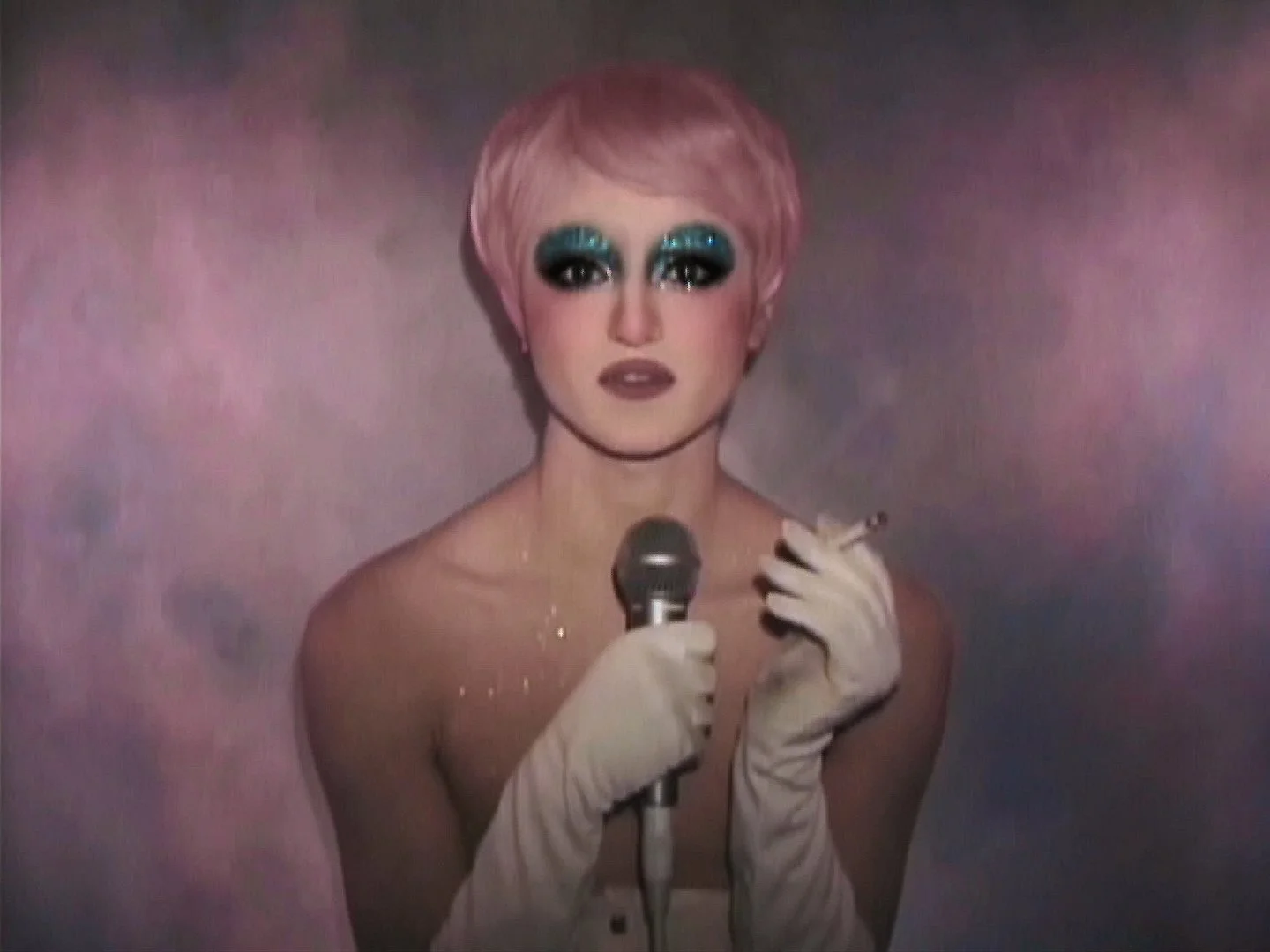
This interview has been edited for length and clarity. All photos courtesy of Artless Media.
Ben Kaye (Cine-File): I just saw John Cameron Mitchell on the Hedwig tour that just came through here at the Music Box here, it was delightful. How did this collaboration with him come about?
Alice Voena: During COVID I started posting a lot of drag online, a lot of different makeup looks, and through that I got connected with Mike Potter, who is the original wig and makeup designer for HEDWIG AND THE ANGRY INCH, both the film and the Broadway stage show, and any time that John has done it, Mike Potter's done that. So Mike and I, we became like really good friends just through social media, and when things were picking up again after COVID, he was touring with John on the Origin of Love Hedwig tour at that time, and was coming to the East Coast. He got sick and needed a last-minute replacement, and he happened to know that I could do the makeup and that I lived in relative distance to where the tour was going, so he messaged me. We got connected, and he brought me onto that tour.
I met John, and I didn't really expect anything other than an experience where I got to work with him for these few shows. But afterwards, he hit me up to do another one, and we kept in touch and we kept working together. While this was happening, I was writing the script for HEAVEN ABOVE ROWEN, and it was in the early stages of development, and I just had it in my like head that I wanted this character, Promise, to sound like John, and I kept writing in his voice, and it was probably a few years into working with John, and I decided to just text him and be like, "Hey, this is a big favor, but I've kind of been writing this character in your voice this entire time. Would you be willing to do this?” And I sent him the material, and he was like, "Absolutely, I am so happy to jump onto this.” So that's how John came on board with this whole thing.
BK: And did [composer] Stephen Trask come on alongside that?
AV: John joined first, and then Stephen and I were friends at this point because I had met Stephen through John, and I was just casually mentioning this to Stephen for the first time, I was like, "Yeah, I'm making this movie. I'm self-financing it. It's kind of like this really ambitious thing. It's mixed media,” all this stuff. And then I guess l dropped in the end "Oh, and John just said that he's gonna like you know, voice a character in it.” And then Stephen was just like, "Well, do you have anyone doing music?” and I was like, "Not yet. I haven't thought about that.” And he was like, "Let me do the music.” And that's sort of how he offered it up. I was telling him about what the material was, and I think that he just saw it as an opportunity, especially these themes of trying to find oneself and using drag as a form of escapism as well, you know I think it really drew him to it.
BK: Did you grow up with HEDWIG AND THE ANGRY INCH?
AV: Hedwig was definitely a film that for me solidified that I wanted to be a filmmaker. I don't think I've mentioned this to John and Stephen, but when I was in college, there was an icebreaker one time in some class where kind of we were going around the room, and the question was like, you know, if you could make it, and you could have any dream collaborators you wanted on a project who you wanted. I remember I said John Cameron Mitchell and Stephen Trask, because truly, that film, along with things like THE ROCKY HORROR PICTURE SHOW and those films that felt like almost queer fairy tales, were what cemented that I wanted to do something like this. I wanted to make movies that kind of felt like they existed in their own worlds. Hedwig for me, I immediately got glued to that music, that character, that story. I saw a lot of myself and really all of the characters in that film, and it definitely was something that again, for me, really made me want to pursue the arts in a more serious way, because up until when I discovered it, I don't know if I could really see myself in this profession making the kind of works that I want to make, and this kind of really broke down a barrier for me.
BK: You've been speaking about Hedwig, about Rocky Horror, all these shows that originated on stage. I know that you developed the character of Rowen through nightclub acts and that you did a staged reading of the work at one point. Was there ever like a time where you thought this could be a live performance, or were you always shooting for the moon for it to be a film?
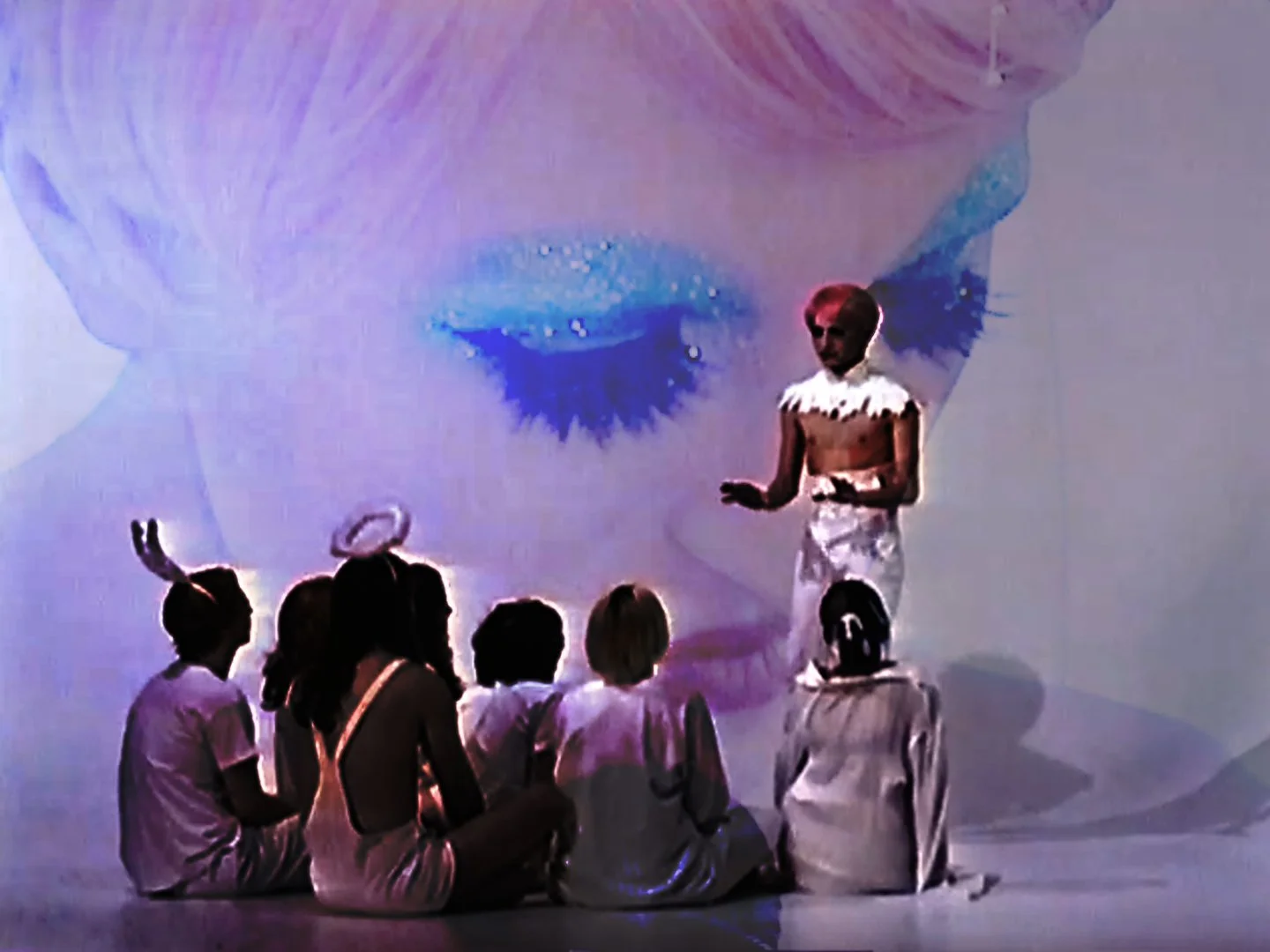
AV: I viewed it like winding down a river with this character, and figuring out what the story called to be. I created this character definitely as a drag act, I hosted a kind of religion-themed drag show called “Avalon” in Boston back in 2019, and along with it I made this zine about this fictitious church called Avalon, and so, the world-building and the performance was always a part of it. One of the biggest influences and throughlines for me on this work was musical theater, live theater. It was something that I actually discovered later on in my life. I didn't grow up as a theater kid. It was towards the end of high school I found this and I was like, I really love this. Things like Rocky Horror, Spring Awakening, Hedwig, all of that stuff really came together into this kind of mix.
I originally started drafting it when I was creating the script as a stage piece, and I felt that so much of this world deserved a greater visual language, or called for a greater visual language, and the best way for me to really do that was through film. So it began this adaptation zine to drag act to stage show to short film to feature film, and I really flowed down that river with this character, and I let it take me whatever direction I felt called for at the time. But definitely, as you can tell with the film itself, monologue is a big throughline, and that's because I am a sucker for a one-person theatrical show. I love that idea. I love that concept. I've always been drawn to pieces that are kind of this character study, where it's diving into one person's mind heavily.
BK: Were there any solo shows that inspired you in that sense, or any solo artists that you were hoping to evoke here?
AV: Yeah, there's been like a multitude of different solo shows that really felt deeply inspirational for me. Absolutely, Hedwig and the Angry Inch being one of them. There’s this really good work called Cruise by Jack Holden, which is a one-person show that also deeply inspired me about this gay man inhabiting different eras of generational gays who then informed who he is today. So stuff like that. Thom Pain (based on nothing) by Will Eno…
BK: Oh yeah, huge Will Eno fan here.
AV: Yes! Another brilliant inspiration. Absolutely.
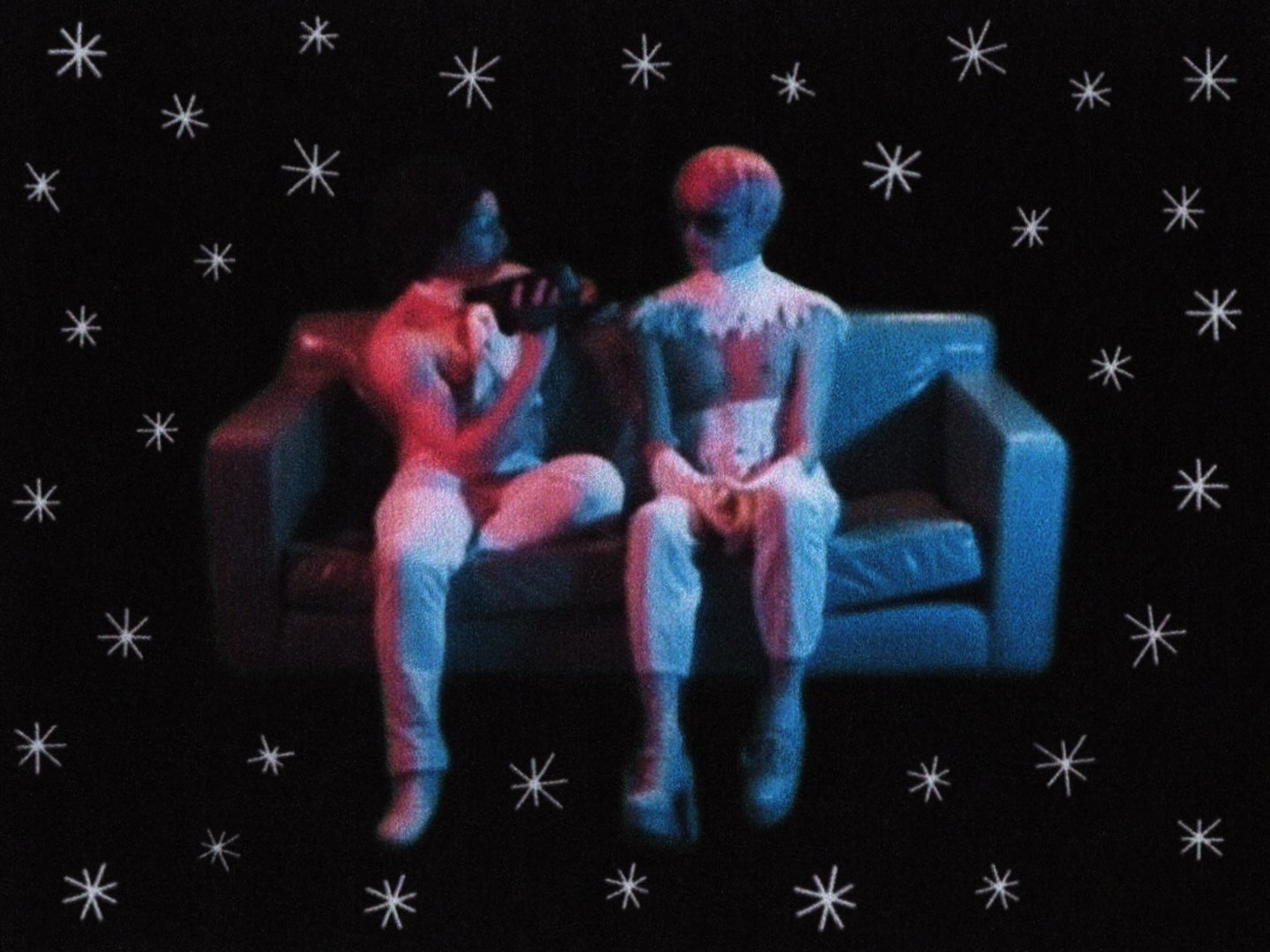
BK: I'm a sucker for mixed media, and I think you use it so well here. The animation starts off with stuff like the Emily Hubley-style drawings, but then you go in your own unique direction. I love the collage style of it, I love the lo-fi nature of it. With artists like the M Sisters’ DIVINE HAMMER, like Louise Weard’s CASTRATION MOVIE, there’s this lo-fi aesthetic happening across the trans art worlds. Is this a happy accident, or what do you think is uniting this movement in this aesthetic?
AV: I think it's a happy accident, if I had to guess. A lot of trans works are produced at a lower budget, and I think in doing so, a lot of filmmakers might be reflecting on the past sense of what that could have meant. That could have been a camcorder. You know, that could have been this lo-fi feeling. I think that it is a beautiful thing to be able to see this grain and almost have this reminder that this was captured on something that feels very analog, I just personally love that. For me, my reason for doing it the way that I did is that I wanted this film to kind of feel like a shoebox of memories. I had this visual image from my head of almost like, if somebody were to pull a shoebox out from under the bed and open it up and look at old letters and Polaroids and things like that, and have it rejog a lot of stuff. So I wanted to give it that sort of feeling, this dreamy ephemeralness of also this psychedelic world.
But yeah, capturing stuff on mini-DV and Hi-8 for me, it's funny. There might be this collective consciousness in that regard because I started that I think before I was even diving into trans film as directly as I am now. Yeah, it just was something that I was inherently called for. Maybe it was because you know, again, those were the mediums that I was working in when I first was making home movies for fun, and it felt like this place to return to, you know.
BK: You've got a lot of scenes that almost feel like they're on sound stages, or they're being staged in a black box theater. Things like having the talk show filmed on the beach, so there is this dream quality so built into it. What was the actual filming process like for this?
AV: It was an on-and-off process for multiple years. Because of it being a self-financed piece, I was working as a substitute high school teacher during the day, and at night, or after school hours, I would film this movie with whoever was around that wanted to help me. It was a very DIY project that kind of felt like a workshop, like a playground, like this thing where we would go in with what we wanted to shoot that day and really experiment and figure out what we could do based on limitations. And I think limitations to budget was a blessing when it came to this film because there are so many sequences that I think when I was writing them, in my head I was visualizing something very grand in some regard. And then when I'm actually met with the reality of “I need to create this scene using essentially no money,” I turn to things like mixed-media animation and more experimentation in my process, so it was a really long-winded filming process. Also in the sense that I would kind of work at it a lot for a long time, and then burn myself out for a month, and then just go back to it.
But I was always thinking about “how can I make this world feel uncanny in some way?” Even the things like the characters talking into the microphones; I was deeply inspired by when Jim Sharman originally directed The Rocky Horror Show in London in 1973, the budget was so tiny that the entire cast had to share one microphone on the stage that they would throw to each other whenever they had a line, and I know it was a limitation choice, but I thought that it was so interesting stylistically, and so I brought that into the film when I was recording the audio and also in the scene and also directing the scene. I had to figure out ways where I could do that all at once.
BK: The limitations inspiring your choices, that is inspired in itself, right?
AV: Absolutely, and, it's me really diving into my imagination. I think that, for me, limitation has brought out a lot of really amazing absurdist visuals, this experimentation comes out in a really beautiful way.
BK: You've been developing the character for a while. How much do you want audiences to see this line blurred between Alice and Rowen? How much of yourself do you want audiences to take from the character?
AV: I think that there is a lot of my personal gender journey in this character. Stephen Trask once said to me, "Rowen is just so lost,” and I think that this was a character that I created and really needed when I was deeply lost. For me, I started developing this character before I even came out as trans, and using it as this kind of freedom of experimenting with gender, that is what essentially brought me to who I really am, and it was probably about halfway through the production when I realized that, like, I need to come out. This is something that is within me. It’s a cautionary tale, ultimately; Rowen is somebody who is incredibly lost, who I think, in many regards, stays lost, and who is using religion as a deep form of escapism from oneself. And I think that there are a lot of people that use all sorts of things as escapism from, you know, actually getting to the root of who they are, but in this case, it's somebody who was raised one way and doesn't know how to really live outside of the realm of escapism through religion.
But there's a lot of me in that. A lot of my personal journey with gender, with having people interested in me, and also oftentimes, even how it can feel being publicly perceived in some way, and not necessarily understood. So there's definitely a lot of me in Rowen. I think Rowen represents a part of my life when I was deeply lost within myself and trying desperately through anything to try to figure out who I was, and through the ritual of becoming Rowen over and over and over again, I was able to emerge at the surface, knowing that I'm me.
BK: That's beautiful, I love that. We’re early on in the film's journey, how have responses been from audiences so far?
AV: It's been great. I haven't had a ton of direct communication with audiences, but the people who have deeply resonated with the work have reached out to me about the fact that they deeply enjoy it, and that it was something that they find incredibly unique, which I'm absolutely appreciative of. I know that this is not a film for everybody, obviously. There's the nature of it being a trans film, an experimental film, a film that leads itself with this pseudo poetry. Ultimately, I made a film that I really wanted to exist, and I knew that there were other people like me out there, and it's slowly finding those people, and I hope that it continues to, because it's for the weirdos out in the world like me.
