
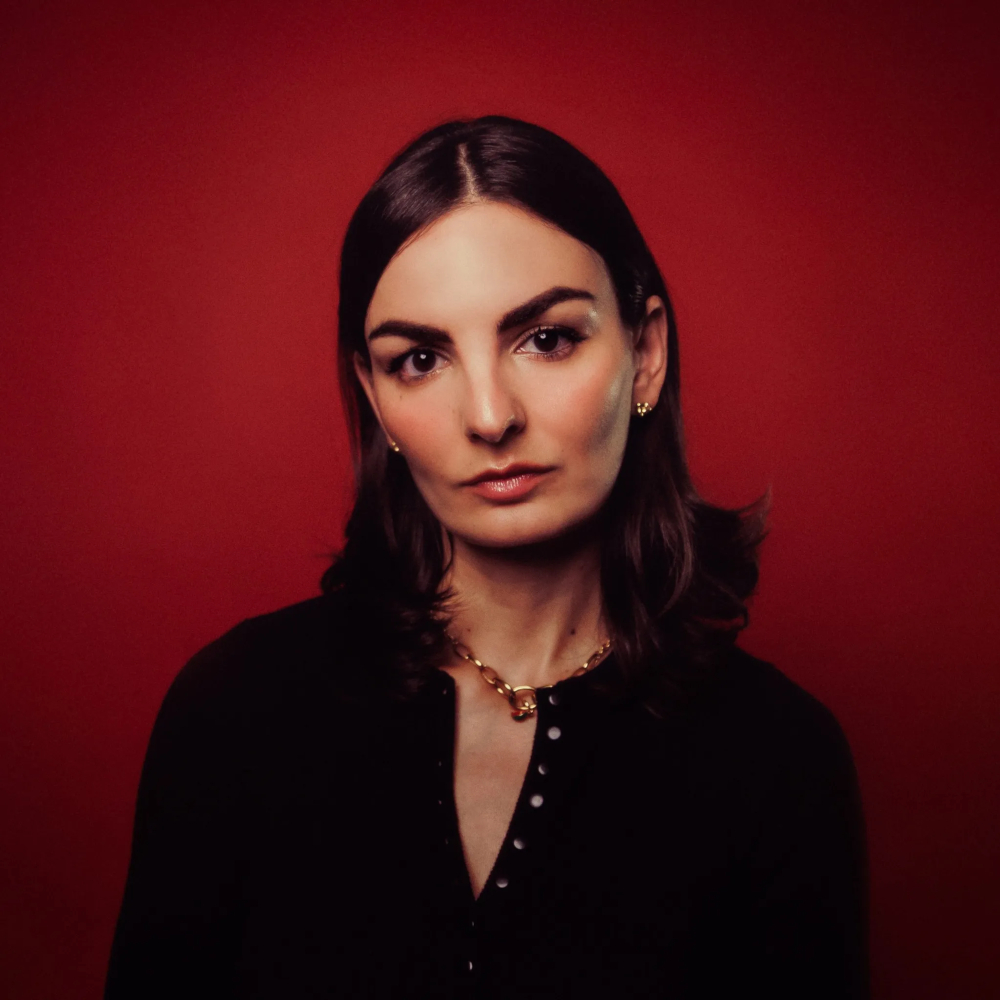
This interview has been edited for length and clarity. Photo credits: 1, 2, 3
Kat Sachs / Cine-File: You were a location scout previous.y Who scouted THE SCOUT? And what was it like approaching homeowners about using their homes for a movie about someone who approaches homeowners about using their homes for movies?
Paula Andrea Gonzalez-Nasser: I did the scouting. We knew it would be a small production and we'd all be wearing five different hats, but I also thought it would serve as a built-in rehearsal, allowing me to get into the character's headspace. What I didn't anticipate was how meta the process would be. We started scouting before we'd locked the script or secured financing. We'd meet homeowners, and five minutes into showing us around, they'd ask, "What's this movie about?" It was always awkward to explain, "Well, it's about what we're doing right now."
Some were relieved it wasn't a murder movie or porn. Others were genuinely intrigued. We met people who were even more interesting than the characters I'd written, and some of those encounters inspired rewrites.
I'm curious about the trajectory from working as a location scout to becoming a filmmaker. And is location scouting as exciting as it seems in theory?
It can be exciting when you're working on a project that values collaboration. You work closely with the DP and production designers, and finding something that works for them is rewarding. But when a production doesn't value what locations contribute creatively, it becomes draining.
I went to Florida State University, where I met most of the crew. After graduation, some of us moved to New York and made shorts on weekends while working on sets during the week. Eventually, we helped a friend [Justin Zuckerman] make a microbudget feature, YELLING FIRE IN AN EMPTY THEATER, and it felt like being back in film school. I produced my partner's film, FREE TIME [dir. Ryan Martin Brown], and then he produced THE SCOUT. We had this sweat-equity system.
I was still scouting to pay the rent, but I wasn't thinking about making a film about it. Only after I'd stopped did I realize it was an interesting way to explore someone who's simultaneously isolated and connected to other people. I wanted to tell a story through location scouting rather than make a movie about location scouting.
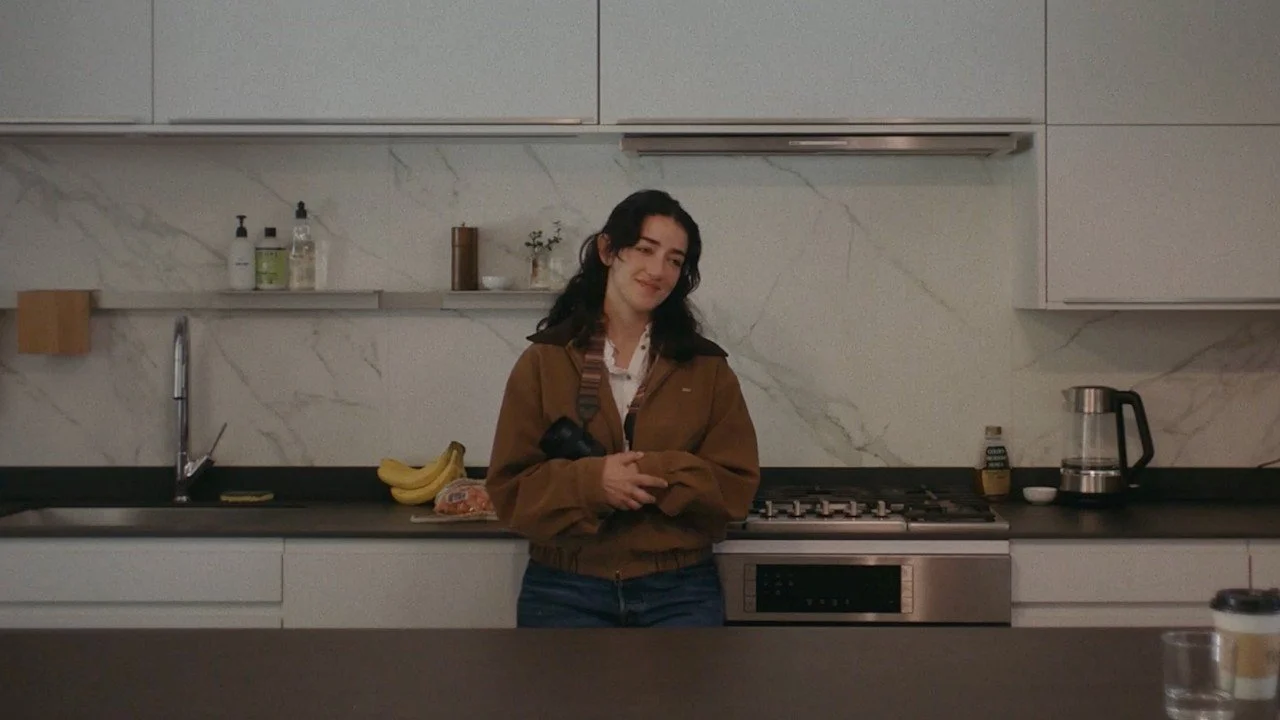
So the film was initially conceived more as a character study, with location scouting becoming a larger part of it?
Exactly. I've always loved episodic, vignette-style films, particularly Jim Jarmusch and Chantal Akerman. I'd watch their films and think, "This feels a little like scouting." I also worked on the last season of High Maintenance, and I'd joke that it was literally my life, biking around New York scouting locations.
But I really wanted to work with Mimi [Davila, who plays Sofia]. We'd worked together on a short, and I knew I wanted to make my first feature with her. Scouting became the perfect framework for a vignette film because you could spend 15 minutes with someone and never see them again. I wasn't particularly interested in writing a traditional three-act structure, and this felt like a way to ease into writing.
It's funny you mention Akerman, because I was going to ask whether there were films you looked at specifically for how they photograph people within spaces, rather than for story or tone. HOTEL MONTEREY came to mind.
Absolutely. I watched HOTEL MONTEREY three or four months before we shot and pulled stills, particularly the hallways and rooms seen through doorways. My DP, Nicola [Newton], loved those references. Antonioni was another influence, particularly how he uses architecture to frame and alienate characters, sometimes dividing them with columns or doorframes. And ALICE IN THE CITIES was important. It has more close-ups, but it's still restrained and objective, and Nicola loved it as a reference.
Sofia specifically works in television production, as you have. Do you think cinema and television ask us to look at spaces differently?
The scouting process is very different. For a film, you're often scouting months ahead, whereas television becomes more about economy and convenience. Can we find three locations in one area and shoot them in a day? With film, there's often more attention paid to how a space relates to the character. There are exceptions. High Maintenance emphasized the importance of making it believable that characters lived in particular neighborhoods. Shows like Succession and Severance also place enormous importance on their environments.
I scouted for Eliza Hittman's NEVER RARELY SOMETIMES ALWAYS, which uses locations to communicate so much about its characters, financially and emotionally. But I sometimes disliked how disposable locations could feel in television. It could be any coffee shop or house because we had to shoot 15 locations in a week.
I thought it was interesting that you use the patient, observational language of independent cinema to depict the machinery of television production. That world is experienced as fast-paced and constantly changing, but you don't necessarily depict it that way.
That's something our producer Ryan, Nicola, and I discussed a lot. The tendency, especially in lower-budget independent films, is to depict chaos through frenetic camerawork, with everything happening at once. But my experience of scouting involved a lot of hurrying up and waiting. I wanted to show stress accumulating through a slower, observational style. A stressful day isn't necessarily full of dramatic incidents. It's often small moments that aren't overwhelming individually but become exhausting together.
We wanted to depict that in something approaching real time. Akerman is brilliant at building tension through quotidian activities. Think about JEANNE DIELMAN, and how much tension accumulates simply through watching her cook. I found it fascinating to try something similar.
Did making the film change how you understood your own experience as a location scout?
I think it healed something in me. I never wanted to portray scouting as this awful profession. I have a lot of love and respect for it, but when I stopped, I wasn't necessarily looking back positively. Making the film got me excited about scouting again because we prioritized collaboration. In the film, Sofia doesn't really get to collaborate. Nobody answers her questions or gives her clear instructions.
Making THE SCOUT was the opposite. I got to work with trusted friends who all brought their own ideas. We'd find a location, send everyone the files, and people would chime in. It felt like, "Oh, this is how it's supposed to be."
Were you essentially creating the production environment you wished you'd experienced?
I think so. When I scouted for television, sometimes we'd get a script and I'd think, "This place doesn't exist. You've invented something I can't find." With THE SCOUT, I could write something, look for it, and, if it didn't exist, rewrite the scene around what was available. We let what was possible inform the creative process.
So much of production involves making something happen that feels impossible. You see people laughing on press tours about how they pulled something off, and you think, "Yeah, but it was probably miserable." It was rewarding to make the process less miserable for ourselves.
Those seemingly impossible things often happen at the expense of below-the-line workers. That's interesting in the context of conversations about auteurism, which can overlook the people involved in making a film. THE SCOUT is deeply personal to you, but it also recognizes filmmaking as a collective endeavor.
Even with the rollout, I've noticed how director-centric everything is. There's a tendency to frame a film as one person's vision, but making this couldn't have been further from that. Of course, I wrote it, and the idea came from my experiences. But the blocking of the dining room scene was Nicola's idea. We were going to shoot it in the living room, and she suggested moving it, which made it better.
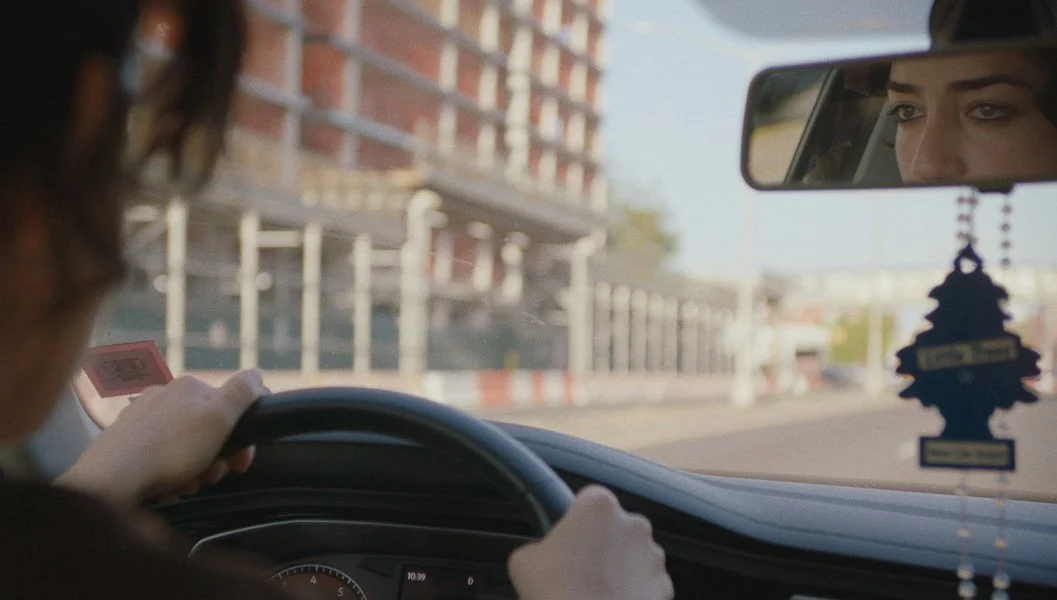
Originally, Sofia's car was supposed to be towed, but we couldn't shoot in a tow lot. My producer Matt suggested, "What if her car got booted?" That's how the boot ended up in the film. People imagine one author behind everything, but it's all these collaborators making creative decisions.
Speaking of the boot, that reminds me of the character in the film who offers to erase Sofia's parking tickets in an exchange that’s borderline flirtatious. When you were scouting, did you ever feel uncomfortable with how much access people gave you, not necessarily physically, but emotionally?
Definitely. People aren't accustomed to having a stranger enter such a personal space. Something about the immediacy brings their walls down. Ten minutes after meeting someone, they might be telling you intimate details about their divorce. You're thinking, "How did we skip ten steps?"
Part of me loved it because I'm fascinated by people. But standing in someone's living room or closet taking pictures is bound to break down boundaries. It made me uncomfortable sometimes, especially as I got older and became more aware of the potential dangers. When you're 23 and running around New York, you think nothing bad will happen to you. And that's simply not true.
One of my favorite sequences is when Sofia has dinner with the man who owns the fish store. There's something unsettling about how he uses her need to photograph the space to get her to have dinner with him. But the film doesn't entirely discredit him as someone who's lonely and trying to connect.
I see a parallel between him and the tech guy who's just become a father. They're both operating from genuine loneliness. Their behavior is inappropriate, but the impulse behind it is human. Sofia is empathetic and wants to meet them halfway. She recognizes that her job is extractive, too. She's entering their homes and trying to convince them to let a film crew use their space. So who is she to deny them some connection that feels less transactional? But those interactions cross a line, and she doesn't establish clear boundaries. We've all been in situations where we should have said, "I have to go," but stayed a little longer.
Sofia has to be intensely socially present while remaining almost invisible. I'm interested in that as a performance, particularly because filmmaking depends on a similar invisibility from many of the people involved.
Mimi has said that, ironically, to play someone who's almost a secondary character in her own life, she had to be extremely present. Through scouting, I'd become comfortable being invisible. I'd even come to see it as a strength. But directing requires you to be completely present. It's interesting that making the film was almost the opposite of what we were portraying. We had to do the opposite of what Sofia does to capture her experience.
Sofia also encounters people at very particular stages of their lives: an empty nester, a new father, a pregnant friend. There's an undercurrent of questions about what comes next for her.
A lot of that came from wanting to explore the gender politics of the job. When you're a woman in your 30s, people feel comfortable asking questions that aren't necessarily their business. As a scout, you ask homeowners whether they have roommates or who else lives there. Questions about family come up naturally, and people feel they can ask you similarly personal questions.
Those conversations turn toward relationships and the future, placing additional pressure on women working in creative industries. My male coworkers were never asked whether they were married. I was drawing on a period when I didn't know what was next. I wasn't necessarily thinking about those things myself, but other people were asking questions that forced me to.
Sofia is constantly evaluating spaces. Did you want the camera to look at rooms differently because we're experiencing them through a location scout's perspective?
The shooting style mirrors the way Sofia photographs spaces, but the inspiration was my belief that you can learn so much about people from where they live. I'm staying at a friend's house right now, and their books, movies, and art tell me so much about them. I wanted a film where less was said and more was shown, where audiences could take in those details and draw their own conclusions. That's what I did as a scout. You get an immediate feeling about someone from being in their space, and I wanted to recreate that visually.
Mimi spends so much of the film listening, which is difficult to make compelling onscreen. How do you direct an actor whose primary action is receiving information rather than expressing something overtly?
One of the first things Mimi told me was that she was excited by how challenging the role would be. She wasn't sure she could do it. In real life, she's outgoing, expressive, and a comedian, which surprises people when they see her performance. But comedians have an incredible ability to listen because they have to be present to react to someone else.
Even though the film was scripted, we enjoyed the flexibility to improvise, as long as we moved from point A to point B to point C. A lot of the other cast members were comedians, too, which allowed them to play off one another. Every take was different.
Although THE SCOUT is a narrative film, the way you talk about filmmaking—particularly the frame as a means of revelation—almost sounds like a documentarian's approach. Have you worked in documentary, or is it something you'd be interested in pursuing?
I worked as an associate producer at a documentary production company called Multitude Films, right up until I shot THE SCOUT. It was probably the most rewarding job I've had because I got to work on films I cared deeply about.
Sometimes I'd see documentaries develop from their earliest conception through editing and eventually their release. I think I've learned more about filmmaking through documentary editing than almost anything else. There's so much to learn about directing, writing, and observing human behavior.
I'd love to make documentaries someday. They can be more poetic than anything someone could ever write. People are just so fascinating.
