


📽️ CRUCIAL VIEWING
Martin Scorsese’s GANGS OF NEW YORK (US)
Chicago Film Society at the Music Box Theatre — Monday, 7pm
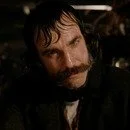
Since the early 1970s, Martin Scorsese had wanted to make a film based on Herbert Asbury’s 1928 nonfiction book The Gangs of New York: An Informal History of the Underworld, and it isn’t hard to see why. With MEAN STREETS (1973) and TAXI DRIVER (1976), Scorsese established himself as one of the cinema’s foremost chroniclers of New York City, and he would only add to this reputation with such subsequent masterpieces as AFTER HOURS (1985) and GOODFELLAS (1990). The vibrant, violent world of these films suggests that a menace is simply part of the environment, that it has perhaps always been there; The Gangs of New York, which concerned the street clubs that ruled the city throughout the 19th century, likely provided clues as to where it came from. Scorsese and Jay Cocks completed the first draft of the screenplay in 1977 with the intention of filming it around 1980. The film was to be Scorsese’s first epic production, but the failure of Michael Cimino’s HEAVEN’S GATE (1980) and the resulting death of New Hollywood signaled the end of those plans. The movie was scrapped and not to be revived for almost 25 years, when Miramax Films provided the budget for Scorsese to recreate 19th-century New York at Rome’s famed Cinecittà Studios. Costing roughly $100 million, GANGS OF NEW YORK was the director’s most expensive film to date, and one of its pleasures is that you can always see where the money went. Most shots contain dozens of extras, and the sets and costumes are intricately designed; as filmed by the great Michael Ballhaus (who was instructed by Scorsese to base his lighting schemes on Rembrandt’s), GANGS imparts a vision of the past that you can all but wander through. Adding to this elaborateness is Daniel Day-Lewis, who delivers one of his most memorable performances as gang leader Bill “The Butcher” Cutting. Day-Lewis and Scorsese put great effort into researching what a 19th-century New York accent sounded like, and the actor even spent seven weeks working at a butcher shop to hone realistic knifing skills. Cutting is an imposing and frightening personage who towers over the rest of the characters, including real-life figures like Boss Tweed and Thomas Nast. He also overshadows the other protagonists, played by Leonardo DiCaprio (in the first of his numerous collaborations with Scorsese) and Cameron Diaz. DiCaprio plays the son of a rival gang boss who’s killed by Cutting in the opening passages; on reaching adulthood, he joins Cutting’s gang with the intention of sabotaging it but ends up under the leader’s tutelage. The revenge plot may motor the film’s narrative, but GANGS OF NEW YORK is most alive in its incidental details—like the scene about rival volunteer fire brigades, the quick lesson in how Diaz’s character works as a “turtledove,” or the female gang member who fights wearing brass claws. Scorsese has always excelled at fleshing out his films in countless little ways, and spending decades learning about GANGS’ setting and historical context likely aided him in this pursuit. If the movie feels top-heavy in comparison with other Scorsese works, that may be because Harvey Weinstein cut almost an hour from the director’s original version. Weinstein's edits can be felt in the movie’s start-stop pacing, which is especially noticeable when it transitions between acts. GANGS OF NEW YORK may be a compromised film, but it remains an outstanding spectacle and a masterclass in period recreation. Preceded by Scorsese’s 1967 short film THE BIG SHAVE (5 min, 16mm). (2002, 167 min, 35mm) [Ben Sachs]
Castration at the Music Box Theatre
See below for showtimes
Louise Weard’s CASTRATION MOVIE ANTHOLOGY III. JUNIOR GHOSTS—PREMORPHIC DRIFT (Canada)
Monday, 3:30pm
At nine and a half hours into Louise Weard’s CASTRATION MOVIE ANTHOLOGY, we finally learn what became of the “Incel Superman.” When we left Turner Stewart (Noah Baker) at the end of Weard’s first anthology segment, he was plunging himself into the darkness of 4chan, beating up street performers, swimming in alcoholism, and limp with impotence. In the latest installment, CHAPTER III. JUNIOR GHOSTS—PREMORPHIC DRIFT, Weard opens in the immediate aftermath of a fatal stabbing at a support group called Born Angels (a group for grieving parents). Then we settle in with Izzy (Avalon Fast), a women’s crisis hotline operator, and her partner Trent (Henri Gillespi). Weard introduced Izzy and Trent in the first anthology segment as middle school friends of the incel. Chapters converge here when Izzy takes a call from a Born Angels survivor. In the first long, naturalistic take—which Weard is known for—Izzy tries to empathize by revealing that she has also lost someone, referring to Turner. Weard’s choice of using a dead name for the incel character only amplifies the hyperbolic journey of Turner’s transformation, from stubborn repression to a woman-harming misogynist. There’s a question embedded in JUNIOR GHOSTS: what could influence someone to do something horrific? Each entry in Weard’s sprawling, shot-on-Hi8 epic examines rhetoric that shapes behavior, from online misogyny groups to hot dog eating cults to the ideological machinery of gender politics. Here, Trent tells Izzy that she is transitioning and will go by Tiffany. Izzy’s initial frustration is almost understandable: after nine years together, she learns on their actual ninth anniversary that her partner has discussed transitioning with her family before telling her. She may have every right to feel blindsided, but what follows, however, is a slow spiral into hostility. Izzy refuses to respect Tiffany’s name or pronouns and begins reaching for arguments that increasingly resemble anti-trans rhetoric. Fast has the difficult job of making Izzy’s grievances legible without excusing any of the microaggressions and outright verbal abuse that follows. Weard holds us in Izzy’s perspective. Any sympathy for Izzy wanes fast, but for some watching, mileage may vary as Izzy’s resentment curdles. A comparatively compact, standalone chapter in Weard’s anthology, JUNIOR GHOSTS rewards newcomers while gaining resonance from its connections to Volume I, including a return of Michaela and an appearance by Jane Schoenbrun. Weard’s overarching project continues to be an increasingly interconnected examination of gender, alienation, and stories people tell themselves to justify their behavior. In JUNIOR GHOSTS, Tiffany may be the one transitioning, but the scariest form of self-actualization comes in the form of Izzy’s descent into transphobic hate. Weard and actor/composer Aoife Josie Clements in attendance for a post-screening Q&A. (2026, 127 min, DCP Digital) [Shaun Huhn]
---
Louise Weard’s CASTRATION MOVIE ANTHOLOGY II. THE BEST OF BOTH WORLDS (Canada)
Tuesday, 5:00 pm
Louise Weard’s subtitle for CASTRATION MOVIE ANTHOLOGY II encompasses both the melodrama and the joke of the film: THE BEST OF BOTH WORLDS. It is a horror film about escaping from a cult, as if made by Chantal Akerman under the guidelines of Dogme 95. This five-hour experiment in social discomfort relocates the action from the first volume’s Vancouver to New York. We meet Circle (Lex Walton) naked in a bathroom, snorting drugs off the sink before collapsing onto the cold tile. Weard drops us into the story without bearings, disoriented like our protagonist. Circle lives in Polygon, a trans-separatist cult occupying a Bushwick basement, where ketamine, hormones, hot dogs, and impromptu sex parties constitute daily rituals. Shielded from a hostile outside world, the group promises safety through collective identity, taking instructions from a digital proxy of its leader. But the community’s methods and power structure suggest psychological abuse. Circle has her doubts about the cult. When an opportunity presents itself, she runs. Freedom proves just as accommodating. Circle encounters Keller (Ivy Wolk), who describes herself as “ex-nonbinary,” challenges Circle’s gender identity, and encourages her to detransition. This imbalanced, controlling relationship offers Circle a sort of alternative to Polygon. Weard turns the familiar melodrama of an oppressive home life colliding with the promise of romantic liberation, always just out of reach. Circle escapes one hell only to find another. The party sequence stands out for its use of split-screen, as shocking here as it was to audiences at the first screening of De Palma’s CARRIE. Weard uses the multiple perspectives to divide our attention between Circle’s social isolation and Keller’s ability to blend in. The two screens intersect when the characters look at one another. The audio shifts between conversations, overlapping and chaotic, reflecting the discomfort of feeling alone at a party. As viewers, we follow the action, briefly manipulated into losing interest in the protagonist as we watch the screen moving through the apartment. Cine-File contributor John Dickson and Will Morris of the Music Box Theatre show up as Weard’s camera distracts us from Circle. We’re complicit in leaving her alone on the couch as our attention drifted. Circle wanted community and a chance to find herself. The New York that Circle and Keller wander is cruel, filled with ideological arguments and toxic internet culture. Weard refuses to simplify her characters; they can be selfish, cruel, contradictory, and sometimes not particularly likable. According to Lex Walton, each actor was given the plot synopsis and individual character details to work from, kept unknown to the rest of the cast. The improvised, dialogue-heavy sequences feel naturalistic, aided by Weard’s Hi8 aesthetic. Footage of Trump signing an executive order concerning gender ideology places these intimate conflicts against the broader political assault on transgender rights. Late in the film, Elizabeth Purchell plays a gun dealer who only sells to trans people. She “trans-vestigates” Keller to ensure she’s only arming the dolls. These two images hold the political subtext. Unfolding like a ‘60s scare film, THE BEST OF BOTH WORLDS is a devastating masterpiece akin to R.W. Fassbinder’s FOX AND HIS FRIENDS. Circle, like Fox, relinquishes control to others in the pursuit of happiness, only to be repeatedly denied. Weard and actor/composer Aoife Josie Clements in attendance for a postfilm Q&A. (2025, 300 min, DCP) [Shaun Huhn]
---
The world premiere of CASTRATION MOVIE ⅗ YEAR OF THE HYAENA screens Wednesday, 5pm, again with Weard and actor/composer Aoife Josie Clements in attendance for a post-screening Q&A.
Idrissa Ouedraogo’s SAMBA TRAORÉ (Burkina Faso/France/Switzerland)
Doc Films (at the University of Chicago) — Monday, 7pm
Admirers of Ryan Coogler’s SINNERS might notice a similarity between his latest hit and one of Idrissa Ouedraogo’s biggest, SAMBA TRAORÉ, which like the former includes the use of ill-gotten gains to open a speakeasy. In Coogler’s film, however, this leads to the fantastical by way of Irish folk-singing vampires, whereas in Ouedraogo’s it leads to the stuff of life. The film opens with the eponymous Samba Traoré as he and an accomplice rob a gas station in Banfora; the friend is killed, but Samba escapes with the money, after which he returns to his home village in southwestern Burkina Faso. There he becomes reacquainted with Saratou, a beautiful single mother with whom he falls in love. Flush with cash, Samba also wants to open a bar with his best friend. All told, it would seem his wrongdoings have made his life and that of those around him better, yet he struggles with guilt over the crime. His family and friends are suspicious of his newfound largesse, though they refrain from probing too carefully. Samba and Saratou eventually wed, with Samba accepting her son as his own; she subsequently falls pregnant. The film has been described as a “moral thriller,” though the thrills, outside the beginning when the robbery takes place, are only to be found in the rhythms of daily life and the crescendos of its common milestones. At times a viewer might even forget that Samba had committed a crime, or at the very least not care about it enough to let it degrade his newfound success, such passive absolution as much an indictment of us as him. Burkina Faso, whose name had been changed from Upper Volta by then-President Thomas Sankara in 1984, translates to land of the upright—or honest—man. The film was made several years after the assassination of the Marxist, pan-Africanist president, who was succeeded by Blaise Compaoré, formerly a close associate of Sankara’s and the architect of the coup in which he was killed. In a way, Samba embodies the spirit of free enterprise encouraged under Compaoré, using the stolen money to buy livestock and start a business. Also like Compaoré, Samba owes his status to an act of violence. Where Samba is different is in his guilt, which tempers his newfound happiness to the point of threatening to undo it altogether. The film is parabolic in its straightforwardness but resounds nevertheless. SAMBA TRAORÉ won the Silver Bear at the Berlin International Film Festival, following Ouedraogo’s Grand Prix win at Cannes for TILAÏ in 1990. Luca Guadagnino included it on his Sight & Sound list, declaring it “one of the great classics of my life. I’ll never forget when I saw this movie. It’s from one of the greatest directors of all time.” Screening as part of the Four from Burkina Faso, 1982–92 series. (1992, 85 min, DCP Digital) [Kat Sachs]
Alain Resnais' MÉLO (France)
Doc Films (at the University of Chicago) — Wednesday, 7pm
"In a way, [the film's] scariness is the reverse of the scariness of LAST YEAR AT MARIENBAD, where nostalgia and camp of various kinds gave the film's deadpan surface a decidedly macabre edge. But as MÉLO pungently demonstrates, facing decisions in the past without the placebos of simplification is potentially just as terrifying to an audience as confronting decisions in the present." So Jonathan Rosenbaum wrote in 1988 when MÉLO first screened in Chicago, in an essay that praised the film as one of Alain Resnais' very best. Its complex relationship to the past—which, for Rosenbaum, is the essence of its greatness—stems from Resnais' decision to adapt a forgotten 1929 melodrama entirely on its own terms. The art deco design is a perfect recreation of period sets; a red curtain appears between scenes; even the theatrical fourth wall is respected in the camera's placement and movement. But these would be mere stylistic experiments without the rich performances of the cast (Fanny Ardant, Pierre Arditi, Sabine Azema, and Andre Dussolier). In the 1980s, Resnais began to transfer the enigmatic qualities of his work from montage to the direction of actors, letting them express the complexities of a film through multi-layered characterizations. With MÉLO, he placed such performances in the service of outmoded material and psychological observations: The result is a vision of the past "as complex and as luminously real as the present" (Rosenbaum again) but also shut off to contemporary understanding. Henry Bernstein's story of a love-triangle among professional musicians is granted an integrity that makes it ultimately unknowable, yet the way Resnais circles around it is beautiful to behold. MÉLO contains some of his most hypnotic dolly shots and possibly the longest takes he attempted in a single feature, all of which highlight the eerie, not-quite-artificiality of the emotions. For anyone interested in Resnais' art, this rare screening is indeed crucial. Screening as part of the Mapping Melodrama series. (1986, 112 min, DCP Digital) [Ben Sachs]
Denis Mitchell’s THE HOUSE ON THE BEACH (UK/Documentary)
Block Cinema (at Northwestern University) — Thursday, 7pm
Several weeks ago Block Cinema screened Denis Mitchell’s CHICAGO: FIRST IMPRESSIONS OF A GREAT AMERICAN CITY (1961), and I was enraptured by the discovery of a new-to-me filmmaker. Mitchell was a British documentarian who, in the Encyclopedia of Documentary Film, is dubbed “one of the first television auteurs through a highly personal body of work.” Indeed, though documentaries usually have some pretext of objectivity, what I’ve seen of Mitchell’s work is motivated not just by a desire to present facts but to shape them into feelings. I’d wondered if perhaps, with the earlier film, I’d been moved by its lyrical appreciation (and, to Mayor Daley's dismay, occasional denigration) of our great city. THE HOUSE ON THE BEACH proves that it wasn’t an anomaly but rather an introduction. The latter works with trickier subject matter, though still with rhapsodic flair. Its title refers to Synanon, an alternative beachside community in Santa Monica focused on helping people overcome addiction. Written out it sounds idyllic; parts of the hourlong documentary make it seem so, too, as it emphasizes communal living and self-sufficiency, with many hailing its unorthodox methods. A cursory Google search reveals there to be more to the story; it’s since been described as one of the most dangerous and violent cults in American history. As the documentary was made just several years after the group’s inception, and it wasn’t disbanded until 1991, the film doesn’t show many of the controversial issues that plagued the organization, ranging from financial misconduct to attempted murder. (There’s a 2024 HBO documentary series called The Synanon Fix for those looking to learn more.) Mitchell’s documentary broaches one of the group’s insidious elements, however, which is its use of attack therapy, wherein members of the group would talk about themselves and their problems, only to be met with harsh ridicule in an activity they call "The Game."f It’s interesting subject matter, to be sure, but Mitchell’s filmmaking is even more so. There’s an evocative sequence of community members’ hands—fidgeting, holding cigarettes, all common behaviors of an addict—set to a spiritual, immediately followed by a short scene of attack therapy, which is then followed by the community members having a dance. This sequence is emblematic of Mitchell’s elegantly anarchic filmmaking style, which can lurch from one aspect to another without seeming too random. Later, there’s an odd scene where the group’s founder, Chuck Dederich, looks down from a balcony and admonishes someone sweeping for holding the broom conventionally, instructing them instead to “put the hair up on top by your face. It’s completely fatuous, raising the questions of first, why is it better to sweep that way? and second, why include that in the film? It’s this nimble handling of poignancy and inanity that makes Mitchell’s films, at least those I’ve seen, complicated love letters to the nuances of their subjects, controversy and all. Additional 16mm films to be announced. (1965, 60 min, 16mm) [Kat Sachs]
Jack Auen & Kevin Walker’s CHRONOVISOR (US)
Music Box Theatre — See Venue website for showtimes
The concept of dualism—the belief that the mind and the body exist as two separate entities—arises early on in Jack Auen and Kevin Walker’s transfixing CHRONOVISOR, this particular school of thought training us perhaps on how to view the rest of the film, a beguiling text where the intellectual rigor of its construction moves parallel to the terror of its synopsis. This notion of dualism is also helpful when looking at the larger realm of film analysis as a practice: a film’s what and it’s how (or rather, its form and its function) will oftentimes work in tandem, but in the most fascinating examples, they actively oppose one another, demanding from the viewer a kind of “double vision” to both follow along with specific narrative beats while also allowing oneself to become consumed by the audio-visual sensory whims of the filmmaker(s). Auen and Walker’s film is, at its base level, the story of Beatrice Courte (Anne Laure Sellier), a philosophy professor at Columbia University who becomes subsumed by her research into the mysterious “chronovisor” device, a television screen that allows someone to view the memories of the past by accessing traces of “audio-visual double track” that have been left behind like a sort of toxic paranormal residue. In practice, this is really a movie about, quite magnificently, how to dramatize the act of research, much of the film spent poring through academic literature, newspapers, magazines, and the like, various translations and important passages glowing up on the screen as if the information itself is being resurrected through the act of investigation. Much of this work of cinematic academics is accompanied by compositions by Gustav Holst, his own singular bombastic and haunting music adding a further layer to Beatrice’s descent into the research abyss, her hours of reading and compiling and cataloguing taking on a Hitchcockian air. The results of Beatrice’s search for the chronovisor, alongside information on its elusive creator, Father Pellegrino Ernetti, are best not spoiled ahead of time, but where she ends up becomes one of the most bewitching and hypnotic endings of recent cinema, our own senses being tested to sort through the information on screen before it swallows us whole. (2026, 99 min, DCP Digital) [Ben Kaye]
📽️ ALSO RECOMMENDED
Jean Renoir's THE RULES OF THE GAME (France)
Siskel Film Center — Saturday, 2pm and Tuesday, 6pm
Jean Renoir’s masterpiece remains the gold standard against which all ensemble dramas are measured. Renoir juggles a number of major characters and honors each one’s perspective, resulting in a group portrait in which every character is sympathetic while remaining poignantly fallible. Adding to the film’s polyphonic quality is the way Renoir moves so lissomely between tones. Even after multiple viewings, you may have trouble anticipating when Renoir will take a farcical or bittersweet approach to the material—his stance often evolves within scenes (or sometimes within shots). The liberty of the filmmaking anticipates the New Wave movements of the 1960s—not for nothing did Renoir dedicate his autobiography to the Nouvelle Vague filmmakers, noting that their concerns were the same as his—though THE RULES OF THE GAME is also an extraordinary document of French high society on the eve of World War II. The romantic entanglements, the gossip, the general frivolity all have a despairing undertone, as one senses that the lifestyles portrayed herein are not meant to last. (The film’s tragic conclusion, however surprising, has an air of inevitability about it, which is precisely what makes it so devastating.) For almost two decades after its disastrous premiere, it seemed that RULES too wouldn’t last. The French government, claiming the film to be “bad for morale,” banned it a month after it came out; when the Nazis took over France, they banned the movie again. Over 20 minutes of footage were considered lost until 1956, when technicians restored Renoir’s original cut. By the start of the following decade, it rightly gained its reputation as one of the greatest films ever made. Screening as part of Gene’s Favorites, a selection of five films championed by the Film Center’s namesake, Chicago film critic Gene Siskel, concluding its 25 For 25 series celebrating 25 years on State Street. (1939, 110 min, DCP Digital) [Ben Sachs]
Masaki Kobayasi's KWAIDAN (Japan)
Siskel Film Center — See Venue website for showtimes
Masaki Kobayashi was best known as a director of social issue dramas (THE THICK-WALLED ROOM, BLACK RIVER, THE HUMAN CONDITION) and social issue dramas masquerading as samurai films (HARAKIRI, SAMURAI REBELLION), which makes KWAIDAN an outlier in his career. The film is a quartet of ghost stories set in the distant past, each of them adapted from early 20th-century writings by a Greek-Irish émigré named Lafcadio Hearn (who became a Japanese citizen and adopted the name Yakumo Koizumi) and all of them presented in an intricate, deliberately non-naturalistic style. The most expensive Japanese production to date at the time of its making, KWAIDAN was shot, in TohoScope and rapturous color, on vast soundstages constructed inside two adjoining airplane hangars; the film suggests the influence of Kobayashi’s mentor Keisuke Kinoshita’s THE BALLAD OF NARAYAMA (1958) in its use of beautiful albeit artificial-looking sets to reflect our emotional distance from the past. That distance is twofold here, as Geoffrey O’Brien noted in his 2015 essay for the Criterion Collection. “Hearn’s books… were calculated to appeal to a Western appetite for the mysteries of ‘ghostly Japan’; but they were also, it might be supposed, to some degree exotic to a Japanese readership then in the midst of the modernizing Meiji period. That era too, in light of all the cataclysms that followed, had by 1964 acquired its own patina of nostalgic myth. Myth within myth, then, exoticism within exoticism…” The film is eerie in the same way as Harry Nilsson’s underrated album A Little Touch of Schmilsson in the Night (1973), which employed state-of-the-art technology to render Tin Pan Alley songs more pristine and cinematic than they ever sounded to begin with. While rarely out-and-out frightening, KWAIDAN is nonetheless suffused with an unplaceable strangeness that amplifies whatever dread the characters are feeling. The last and shortest episode, “In a Cup of Tea,” serves as a Rosetta Stone for the rest of the film, with its frame narrative of a Meiji-era author who becomes haunted by his own story; however, each of the three preceding chapters would still be enveloping without it. The first story, “The Black Hair,” feels like a widescreen update on one of the narrative threads from Mizoguchi’s UGETSU (1953), as a samurai abandons his poor but dutiful wife to marry the daughter of a wealthy feudal lord, only to find himself haunted (first figuratively, then literally) by the woman he left behind. That tale is followed by “The Woman of the Snow,” which shows what happens when a woodcutter makes a deal for his life with a snow spirit. “Hoichi the Earless,” the third and longest story, begins with a flashback to a great sea battle in the 12th century, then shifts focus to a blind monk a few centuries later who’s called to perform for the ghosts of warriors who died in that skirmish. Each of the three longer stories trades in folk wisdom and stark morality, which Kobayashi defamiliarizes through his mix of theatrical and cinematic devices. Special mention also should be made to Toru Takemitsu’s inventive music and sound effects, which create an otherworldly atmosphere through minimal means. (1964, 183 min, New 4K DCP Digital Restoration) [Ben Sachs]
Ken Russell’s THE BOY FRIEND (UK)
Doc Films (at the University of Chicago) — Thursday, 8:30pm
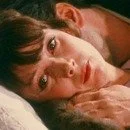
Ken Russell started production on THE BOY FRIEND immediately after finishing one THE DEVILS, one of cinema’s controversial films, and these two movies cannot escape comparison with each other. Both were also released in the same year, only heightening the contrast. Leaving behind the dynamic politics of the former film, the latter is effervescent, though it likewise demonstrates Russell’s penchant for adaptation and captivating mise-en-scene. While many of his films express a fascination with the theatrical, THE BOY FRIEND is a masterclass in balancing the stage with the camera, never ignoring either, but rather fully understanding a visual relationship between the two. Russell’s clever adaptation of the popular 1953 stage musical of the same name supports the film’s vivacious visuals. Twiggy plays Polly, a stage assistant who’s pressured into taking on the main role in a production of The Boy Friend after the original actress is injured. Set in the same era as the stage play, Polly’s real life begins to blend with the musical’s plot. The barrier between reality and fantasy collapses, making way for Russell to move beyond the dreary setting of Polly’s cash-strapped regional theater to create elaborate and enchanting dream sequences. With references to Busby Berkeley, these imaginations seamlessly weave in and out of the diegetic reality, blurring the lines between the two. Under the surface of the darling choreographed sequences and amid backstage drama concerning class and relationships are observations on the nature of form and format. Perhaps, in this respect, it also contains more political commentary than its bubbly surface would suggest. (1971, 138 min, Digital Projection) [Megan Fariello]
Zhang Yimou’s RAISE THE RED LANTERN (China/Hong Kong)
Music Box Theatre — See Venue website for showtimes
Set in one location, Zhang Yimou’s RAISE THE RED LANTERN effectively reveals the open-air cage of women living under oppressive systems. The warm red glow of the lanterns that haunt the simultaneously exposed and confined space are often contrasted with a mournful yet beautiful blue, signaling the constantly shifting of roles and safety. Based on the novella by Su Tong, the film is set in 1920s Republican China. Due to family tragedy, university student Songlian (Gong Li) is forced into concubinage, becoming the fourth mistress to an older wealthy man (Ma Jingwu). Songlian is immediately treated with reverence as the newest wife; she’s provided with massages and food to her liking and learns about the family’s tradition concerning the use of the red lanterns. She quickly realizes, however, that her status is wholly precarious, as she’s exposed to the intrigue between the other wives who are desperate to hold onto power. While the elder first wife (Jin Shuyuan) is comfortable in her position, the second and third wives (Cao Cuifen and He Saifei) seemingly perceive the stubborn Songlian as a threat. The sumptuousness of the spaces the women occupy and their lovely clothes mask the prison of their lives, which becomes more horrifying as the film bares the reality that for one woman to thrive here, the others must suffer. Li and Saifei (who plays and is herself a real-life accomplished opera singer) give especially riveting performances, as both characters come from educated backgrounds that make their adjustments to this confined lifestyle specifically difficult. They each venture out beyond the courtyard to the rooftops, to sing or explore, but ultimately and helplessly searching for freedom. The tragedy of RAISE THE RED LANTERN is that despite Songlian’s efforts to push back, there is no path to a successful escape. (1991, 125 min, New 4K DCP Digital Restoration) [Megan Fariello]
James Gray’s PAPER TIGER (US)
AMCs, The Davis Theater, the Music Box Theatre and Regals — See Venue websites for showtimes
After a sojourn through space movies, biopics, and coming-of-age films, one of our most accomplished American filmmakers has finally returned to that most American of genres: the crime drama. This is the type of thing James Gray cut his teeth on, and one can sense a comfort and confidence in his approach to PAPER TIGER as he wears his favorite tropes like an old pair of jeans. When the struggling and self-consciously honest middle-class engineer Irwin (Miles Teller) gets the opportunity of a lifetime to start an advisory business with his blowhard, wealthier brother Gary (Adam Driver), he takes to the job with a Boy Scout’s attention to detail. This does not mesh well with the extremely shady Russian business who’s contracting them, and a chance visit to their docks during a compromising moment sets in motion an increasingly terrifying power negotiation between Irwin, Gary, and the Russian mob. Followers of Gray’s work might recognize a certain amount of self-plagiarism here, from the plot that echoes WE OWN THE NIGHT (2007) to his favored ‘80s New York setting and the biographical detail that suffuses it. But while the territory is far from new, there’s a dramatic alchemy in Gray’s work that separates it from most, and it makes even well-tread ground feel compelling each time. Much of this comes from working with great actors, and this film in particular gets good mileage out of its leads, especially a magnetic Driver as a man negotiating heightening stakes when his only professional skill is confidence. Scarlett Johanneson is also key as Irwin’s wife Linda, who provides a clear moral center for the film. The family unit is the locus of the film’s dramatic material, which mostly dwells on the experience of outsiders whose normal lives intersect with a violent bureaucracy in jarring, unexpected ways. Gray calls to mind the emotional highs of A HISTORY OF VIOLENCE (2005) or UNFAITHFUL (2002) in his study of this sudden intrusion, and the reckoning with one’s own powerlessness against the organization and brute force of the mob can push the work past drama and thriller tropes towards something resembling horror, especially in two key sequences where Irwin’s family is directly confronted by the mob’s goons. Both scenes pair their dramatic flair with impressive work by previous Gray collaborator (and DP of SUPER TROOPERS) Joaquín Baca-Asay, who bathes the events in chiaroscuro to heighten the tension. His interest in slight visual obscurity colors the rest of the film too, often framing characters through windows and mirrors to suggest an almost voyeuristic angle by which we, like Irwin, are now tainted by something we were not meant to see. It’s partially thanks to him that the film’s climax, while being the film’s most blatant example of the self-plagiarism mentioned earlier, still hits as hard as it does, with every effect sharpened by Gray and his collaborators’ worn-in skills. (2026, 114 min, DCP Digital) [Maxwell Courtright]
Ian Bell's WTO/99 (US/Documentary)
Alamo Drafthouse — Monday, 7pm
The 1999 World Trade Organization Conference was the first time that the organization, a shadowy conglomeration of world leaders discussing foreign trade and global labor practices, would convene on US soil, and thus, the first time the controversial global organization would come face to face with the country’s long history of pro-labor organizing. Laborers and activists from across the country, and from across the political spectrum, would unite in Seattle in late November of 1999 to face off against these political giants, amassing a working-class movement whose stated mission of peaceful protest and direct action is genuinely inspiring to watch in retrospect. To see this noble mission, illustrated across Ian Bell’s WTO/99, ending in a state response that all too easily devolves into paramilitaristic carnage, is a harrowing experience, and perhaps far too familiar to those keeping track of contemporary activist movements, whose peaceful protests all too quickly get uprooted by police action that insidiously aggravates to the point of mass destruction. WTO/99—which Bell edited together with Alex Megaro—is told entirely through news coverage, television snippets, and mini-DV footage captured at the scene, creating an archival collage that transports us back to this terrifying moment where the US government realized that the immense power of free speech is no match for an immoral cache of tear gas, pepper spray, and rubber bullets. As terrifying as the literal weaponry on the ground is the swift moral decay within the media apparatus covering the protests, with Bell and Megaro showing us in real time how quickly the news media switched tactics and covered up the reality of the situation at hand. Above all, WTO/99 is a must-watch for those looking for a masterclass in archival preservation, editing, and how to deploy the power of the moving image through montage to craft narrative and express political anxiety. A slew of more contemporary clips throughout the end credits only cements how Bell and Megero’s pre-Millenium chronicling scarily mirrors our nightmare reality of today. (2025, 100 min, DCP Digital) [Ben Kaye]
Wong Kar-wai’s FALLEN ANGELS (Hong Kong)
The 400 Theater — See Venue website for showtimes
Released on the heels of his international breakthrough, CHUNGKING EXPRESS, Wong Kar-wai’s FALLEN ANGELS was initially envisioned as a section of the earlier film. Expanded into its own exploration of loneliness and longing in the neon-colored and noir-inspired cityscape of Hong Kong, FALLEN ANGELS follows two intersecting stories of chance encounters. The first concerns a detached hitman (Leon Lai), who’s ready to quit killing for good, and his associate (Michelle Reis). They’ve never met, but she cleans for him and sends him his next assignments—she’s also completely infatuated with him, fantasizing about this mysterious partner as they exchange secret messages. The second story has a lighter and more comedic tone and features the partner’s cheerful neighbor (Takeshi Kaneshiro), a mute delinquent who still lives with his father. He roams the city at night breaking into various businesses, pretending to be the proprietor to unwitting customers in order to make money. He ends up helping—and falling for—Charlie (Charlie Yeung), who he meets after her boyfriend dumps her for another woman, leaving her heartbroken and out for revenge. The two stories spiral around each other as characters intersect in the neon-lit nightscape. Wong uses kinetic camera movements and canted wide-angled close-up shots to drive emotion and intensity—in one scene, blood drips down the lens. The camera traps the audience in the visual maze of the city while still whimsically expressing the characters’ sense of isolation and aching for connection. It is clear how the film is both an extension of CHUNGKING EXPRESS while still standing on its own as a noirish, melodramatic departure; the world of FALLEN ANGELS is simultaneously dark yet sweet, cool yet funny, where it’s always night and everything—including love—has an expiration date, though that doesn’t mean it is without significance. (1995, 99 min, DCP Digital) [Megan Fariello]
Martin Scorsese’s THE LAST WALTZ (US/Documentary)
The 400 Theater — Friday, 9:15pm and Saturday, 2:30pm
"Abjuring the traditional hand-held camera for elegant dolly shots and zooms," wrote Greil Marcus of THE LAST WALTZ in 1980, "Martin Scorsese directed what will stand for a good while as the finest of rock concert movies." Today, it stands: fiery, exultant, glad to be alive. It's Thanksgiving night, 1976 at San Francisco's Winterland Ballroom, and the Band and friends are throwing a farewell celebration. Creating a personal fantasia about the changing of the guard, Scorsese deployed seven 35mm cameras manned by great cinematographers like Michael Chapman, Vilmos Zsigmond and László Kovács. Storied production designer Boris Leven lighted a set borrowed from Verdi’s La Traviata. The movie's sound, in Marcus' words, "cracked, shuddered, ripped and tore." The Band's tough, funky ensemble rock was a melting pot, and guests represent each ingredient: gospel; Chicago blues; New Orleans jazz/R&B; country; Tin Pan Alley. Thanks to the presence of the Staples and Bob Dylan, the movie reverberates with the antiwar and Civil Rights movements. Subterraneanly, it's about the divides of the 1860s and the 1960s, with a vision of making them whole: North and South, rural and urban, men and women, Black and white, tradition and revolution. It blazes with fun and good humor. I cherish Mavis Staples' whispered "Beautiful!" at the climax of "The Weight." Neil Young's "Helpless" conveys the experience of being left utterly disarmed in the face of beauty. Rick Danko sings "It Makes No Difference" into the darkness, and Garth Hudson steps into the frame with his alto sax, making the night come alive with warmth. Robbie Robertson is charismatic and thoughtful, Levon Helm fierce and soulful, Richard Manuel lovably, gently cracked. I treasure evenings spent seeing this communally, with friends, singing along with gusto. Memo to the projectionist: this film should be played loud! (1978, 117 min, DCP Digital) [Scott Pfeiffer]
Carl Franklin’s DEVIL IN A BLUE DRESS (US)
The 400 Theater — See Venue website for showtimes
Based on the hard-boiled detective novel by Walter Mosley, DEVIL IN A BLUE DRESS is a standout among the neo-noir film boom of the 1990s. A follow up to director Carl Franklin previous noir thriller ONE FALSE MOVE (1992), the film dexterously adapts Mosley’s 1940s period piece to reflect the unique dangers of being a detective as a Black man. DEVIL IN A BLUE DRESS examines visual power dynamics within the genre; as a detective doing the searching, the film’s protagonist is also being intensely scrutinized by those around him in every situation. This constant threat of violence toward the detective himself is something that can’t be ignored; additionally, the film’s exploration of it complicates the position of the femme fatale, commenting on the connection between—and history of—both a gendered and racialized gaze in American cinema. Out of work and needing to pay his mortgage, Ezekiel “Easy” Rawlins (Denzel Washington) accepts a job from a P.I. (Tom Sizemore) to find a missing woman, Daphne Monet (Jennifer Beals), the titular femme fatale. Of course, it’s never that simple, and Easy finds himself entangled in a convoluted plot of murder and political corruption, eventually calling on a friend from his complex past, Mouse (a standout Don Cheadle). Despite its winding plot, DEVIL IN A BLUE DRESS is guided by Washington’s steady performance, and Easy’s familiar yet refreshing detective voiceover. It’s also supported by Tak Fujimoto’s stunning cinematography, which highlights a hazy Los Angeles setting yet allowing for striking and unexpected pops of color, like Daphne’s iconic blue dress. (1995, 102 min, DCP Digital) [Megan Fariello]
Satoshi Kon’s TOKYO GODFATHERS (Japan/Animation)
Alamo Drafthouse — Saturday, 11:30am (Dubbed version), and Sunday, 4:15pm (Subtitled version)
Of the quartet of feature films that Satoshi Kon directed in a revelatory career tragically cut short, TOKYO GODFATHERS remains the most fascinating outlier. Unlike the reality-bending dramatic thrillers that came to define his career—PERFECT BLUE (1997), MILLENNIUM ACTRESS (2001), and PAPRIKA (2006)—TOKYO GODFATHERS is Kon’s only film that can unabashedly be categorized as a comedy, if a highly melancholic one. The Christmastime tale about three unhoused miscreants—the drunkard Gin, the matriarchal Hana, and the runaway teenager Miyuki—who happen upon an abandoned baby is less interested in the formal experimentation of Kon’s other works than in pushing the boundaries of what kinds of mature, emotionally layered stories can be told in the medium of animation. An episodic wild goose chase ensues through the snow-littered streets of Tokyo, with the heroes encountering mob bosses, drag queens, and mystery after mystery of who left this young child behind, the ever-unfurling backstory leaving breadcrumbs of resonance with the hidden tales of our central trio; each united in isolation, shutting themselves off from a world that has rejected them, or vice versa. The quest for found family amidst a cruel and confusing world shines a beam of thematic potency through an otherwise maniacally comic outing, with Kon’s expert skills as an editor and weaver of imagery working together for wonderfully comic purposes here. It’s a testament to Kon's mastery of storytelling that this delightful holiday excursion still packs a wallop two decades later, standing as continued proof of the open curiosity of Kon’s vision of animation as a medium of boundless narrative potential. (2003, 93 min, DCP Digital) [Ben Kaye]
Spike Lee’s DO THE RIGHT THING (US)
The 400 Theater — Sunday, 4pm; Monday, 7:30pm; and Thursday, 9pm
Spike Lee's long and prolific career has been maddeningly uneven but he is also, in the words of his idol Billy Wilder, a "good, lively filmmaker." Lee's best and liveliest film is probably his third feature, 1989's DO THE RIGHT THING, which shows racial tensions coming to a boil on the hottest day of the year in the Bedford-Stuyvesant neighborhood of Brooklyn. Lee himself stars as Mookie, a Black deliveryman working for a white-owned pizzeria in a predominantly Black community. A series of minor conflicts between members of the large ensemble cast (including Danny Aiello, Ossie Davis, Ruby Dee, Giancarlo Esposito, and John Turturro) escalates into a full-blown race riot in the film's incendiary and unforgettable climax. While the movie is extremely political, it is also, fortunately, no didactic civics lesson: Lee is able to inspire debate about hot-button issues without pushing an agenda or providing any easy answers. This admirable complexity is perhaps best exemplified by two seemingly incompatible closing-credits quotes—by Martin Luther King, Jr. and Malcolm X—about the ineffectiveness and occasional necessity of violence, respectively. It is also much to Lee's credit that, as provocative and disturbing as the film at times may be, it is also full of great humor and warmth, qualities perfectly brought out by the ebullient cast and the exuberant color cinematography of Ernest Dickerson. (1989, 120 min, DCP Digital) [Michael Glover Smith]
Tim Burton’s BATMAN RETURNS (US)
Alamo Drafthouse — See Venue website for showtimes
No one else captures the nostalgic kitsch and dark melancholy of Christmastime with perfect balance like Tim Burton. His first feature after one of his other Christmas classics, EDWARD SCISSORHANDS (1990), BATMAN RETURNS shifts the gloomy holiday cheer from the suburbs to Gotham City. The constructed sets and detailed production design have produced some of the most iconic images in a career filled with memorable visuals. The story involves Gotham industrial businessman Max Shreck (Christopher Walken) teaming up with twisted crime lord Penguin (Danny DeVito), who’s searching for his origins. Superhero vigilante Batman (Michael Keaton) is out to stop them, but everyone’s plans are complicated by Selina Kyle (Michelle Pfeiffer), Shreck’s meek secretary who seeks revenge against her boss as the formidable, whip-brandishing, latex-wearing Catwoman. It's hard to argue that this isn’t Pfeiffer’s movie, as the submissive cat lady violently transforms into the dominant Catwoman, one of the great cinematic femme fatales. Her early scenes, set in her baby pink apartment, where Selina talks to herself to cope with the loneliness of her life are unexpectedly moving, so much so that her story looms over the other character’s. Through her, the film presents complex themes about duality and female sexuality. She also helps to make the film more noir than anything else, despite its titular superhero; like its conflicted approach to the holiday season, BATMAN RETURNS is funny and morbid, beautiful and grotesque, ridiculous and sincere—one of Burton’s best. (1992, 126 min, DCP Digital) [Megan Fariello]
Joe Dante’s GREMLINS (US)
Alamo Drafthouse — See Venue website for showtimes
Filmed on backlots in homage to IT’S A WONDERFUL LIFE and styled after Norman Rockwell illustrations, GREMLINS creates a memorable nightmare of the wholesale destruction of its settings by the titular monsters. The movie can be genuinely scary, but it’s also a laugh riot, thanks in part to the adolescent glee that Dante and company take from laying waste to such cherished American institutions as Christmastime, Walt Disney, and suburban architecture. A product of ’60s counterculture and ’70s exploitation cinema, Dante has always maintained his outsider bona fides no matter how mainstream his productions have gotten, and one of the wonderful things about GREMLINS is how it feels like a bunch of weirdos successfully crashing the ultra-square party that was Reagan-era Hollywood. The movie’s subversive humor reaches its strongest expression in Phoebe Cates’ sickly funny Santa Claus monologue (which would have been cut from the finished film had not executive producer Steven Spielberg intervened with Warner Bros. studio bosses), but the sentiment can be found even in the premise—that inside every cuddly Spielbergian creation is a destructive monster desperate to come out. Both Dave Kehr and Jonathan Rosenbaum have likened Dante to Frank Tashlin, the Warner Bros. cartoonist who carried over the rubbery reality of Looney Tunes into his work as a director of live-action satires. And like Tashlin, Dante makes fun of his subjects with an air of gee-whiz affection. But Dante’s electrifying shifts between comedy and horror show the influence of other directors as well: James Whale, who was mixing the two genres in the early 1930s, as well as the pop-obsessed auteurs of the French New Wave. Indeed, GREMLINS is so rich in knowledge of film history that it requires several viewings to catch all the references Dante hides around the frames, which are as visually packed in their way as Vincente Minnelli’s. (1984, 106 min, DCP Digital) [Ben Sachs]
Paweł Pawlikowski’s FATHERLAND (Poland/Germany/Italy/France)
The 400 Theater — See Venue website for showtimes
Having read Colm Tóibín’s novel about the twilight years of Thomas Mann, Paweł Pawlikowski became fascinated with a small excerpt about Mann’s return to Germany after sixteen years in exile. The Polish director took liberty with historical events, replacing certain family members with others (for instance, Mann’s daughter Erika stands in for his wife) and altering the chronology with regard to his son Klaus’ suicide and his encounters with actor Gustaf Gründgens (who was Erika’s ex-lover and a friend to Hermann Görring). FATHERLAND is a five-day road movie where Germany’s greatest author tours a chaotic postwar landscape of apprehensive Marxists and defeated fascists. Location scouting for the film took five months solely to find German architecture within Poland’s borders. Sandra Hüller gives a rich performance as Erika; portraying the great writer, Hanns Zischler conjures the ghost of Thomas Mann as a human and great intellectual. The director considers the film a part of a trilogy, after IDA (2013) and COLD WAR (2018). Each film explores identity beyond national borders in a jumbled world of postwar Europe. FATHERLAND stands apart from the other films through its intellectual exploration of mise-en-scene. Mann, while quoted as saying, “Wherever I am, there is Germany,” struggled with his own ideas of the nature of home. It’s presumed that one of the contributing factors for Klaus’ suicide came from not knowing who to write for and in what language—struggling to embrace his German or American identity—all while standing the shadow of his father. As a former conservative (who famously defended Germany in WWI through Reflections of a Nonpolitical Man), Mann became firm against the Third Reich. Art does not recognize borders—even Johann Wolfgang Von Goethe’s art precedes the German state. (2026, 82 min, DCP Digital) [Ray Ebarb]
📽️ ALSO SCREENING
⚫ The 400 Theater
Peter Hedges’ 2003 film PIECES OF APRIL (80 min, Digital Projection) screens Friday at 7:30pm and Saturday at 12:45pm. More info here.
⚫ Alamo Drafthouse
Charles Sellier’s 1984 film SILENT NIGHT, DEADLY NIGHT (85 min, Digital Projection) screens Saturday at 10:30pm and Wednesday at 10pm.
Tokuzō Tanaka’s 1969 film HAUNTED CASTLE (82 min, Digital Projection) screens Tuesday, 9:30pm, as part of the Terror Tuesday series.
Jalmari Helander’s 2010 film RARE EXPORTS: A CHRISTMAS TALE (85 min, Digital Projection) screens Wednesday, 9:30pm, as part of the Weird Wednesday series. More info on all screenings here.
⚫ The Beach Beneath the Street (1703 E. 55th St.)
Sidney Lumet's 1977 film EQUUS (137 min, Digital Projection) screens Monday, 7pm, as part of Monday Night Film Club. More info here.
⚫ Chicago Public Library
The Chicago Public Library's Community Cinema program presents free film and TV screenings at dozens of neighborhood branches throughout the week. See the full schedule here.
⚫ ChiTown Drive-In (2343 S. Throop St.)
ChiTown Movies screens outdoor films throughout the week. More info here.
⚫ Cinema/Chicago
Cathy Yan's 2026 film THE GALLERIST (94 min, DCP Digital) screens Tuesday, 7pm, at AMC NEWCITY 14 as a Cinema/Chicago Member Screening (membership required). More info here.
⚫ Doc Films (at the University of Chicago)
Lutz Dammbeck’s 2003 film THE NET (121 min, DCP Digital) screens Tuesday, 7pm, as part of the Films of Thomas Plenert series.
Ernesto Contreras’ 2017 film I DREAM IN ANOTHER LANGUAGE (101 min, DCP Digital) screens Thursday, 6pm, as part of the Heteroglossia: Languages and Translation series. More info on all screenings here.
⚫ Eyewash Station
Andrzej Żuławski's 1981 film POSSESSION (124 min, Digital Projection) screens Monday, 8pm with a live score from Prisoner.
A Light Informs: A Birthday Screening of Shorts By Ramsey Khawaja screens Thursday, 8pm, including the premiere of a new experimental short. More info on all screenings here.
⚫ FACETS
Pierre Le Gall's 2026 film FLESH & FUEL (91 min, Digital Projection) screens Monday, 7pm, as part of the Queer Expression Film Festival, a program of Open Space Arts. More info here.
⚫ Music Box Theatre
Javier Ambrossi & Javier Calvo’s 2026 film LA BOLA NEGRA (155 min, DCP Digital) continues. See Venue website for showtimes.
Robert Wise’s 1965 film THE SOUND OF MUSIC (172 min, DCP Digital) screens several times this week in its popular sing-a-long version.
Ruggero Deodato’s 1980 film CANNIBAL HOLOCAUST (95 min, DCP Digital) screens Friday at 11:15pm.
Trey Parker’s 1999 film SOUTH PARK: BIGGER, LONGER & UNCUT (81 min, 35mm) screens Saturday, 11:15pm, with an introduction by Zack Paslay, as part of the Late Show series.
Kai Althoff and Isa Genzken’s 2012 film DIE KLEINE BUSHALTESTELLE (GERÜSTBAU) (71 min, DCP Digital) screens Thursday, 7:15pm, co-presented by Gertie as part of 82 Nights Only* and introduced by Gareth Kaye, director of Curatorial Affairs at Gertie. More info on all screenings here.
⚫ Siskel Film Center
Pedro Almodóvar’s 2026 film BITTER CHRISTMAS (111 min, DCP Digital) continues. See Venue website for showtimes.
Off Center presents Abigail Child’s 1996 film B/SIDE (60 min, 16mm) on Monday at 6pm.
The Romanian Film Festival begins Tuesday with new films from the country. Tudor Giurgiu’s 2026 film 3 DAYS IN SEPTEMBER (75 min, DCP Digital) screens Tuesday at 8pm; Paul Negoescu’s 2026 film ATLAS OF THE UNIVERSE (85 min, DCP Digital) screens Wednesday at 6pm; and Ivana Mladenović’s 2025 film CLOISTERED SISTER (107 min, DCP Digital) screens Thursday at 8pm. More info on all screenings here.
⚫ Truth & Documentary
Ben Kolak's documentary SHOULDERING SANCTUARY (74 min, Digital Projection), a Truth & Documentary production, screens Tuesday, 6pm, at Haymarket House (800 W. Buena Ave.); Wednesday, 6pm, at The Plant (4459 S. Marshfield Ave.); and Thursday, 6pm, at Mayfair Presbyterian Church (4358 W. Ainslie St.). More info here.
⚫ Uprising Theater & Cafe (2905 N. Milwaukee Ave.)
Francis Lawrence’s 2026 film THE HUNGER GAMES: SUNRISE ON THE REAPING (158 min, DCP Digital) screens again this weekend. See Venue website for showtimes. More info here.
MANAGING EDITORS // Ben and Kat Sachs
CONTRIBUTORS // Maxwell Courtright, Ray Ebarb, Megan Fariello, Shaun Huhn, Ben Kaye, Scott Pfeiffer, Michael Glover Smith
