



📽️ CRUCIAL VIEWING
Fred Camper’s SUICIDE NOTE (US/Experimental)
Chicago Film Society at the Film Studies Center (at the University of Chicago) — Friday, 7pm
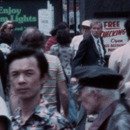
I have seen artist, filmmaker, and critic Fred Camper’s SUICIDE NOTE perhaps five times. The first several were as private screenings that Camper held on occasion. The next time was its second-ever public screening at Caro d’Offay Gallery in 2008, and finally, in 2011, when I had the opportunity to screen it at the Nightingale as part of a two-program retrospective of Camper’s films as part of my late White Light Cinema series. At that time, it was known under the title “SN” and screened from a combination of edited Super-8mm workprints and edited camera original. Recently, the film’s viewing context has changed in two significant ways: first, it has been restored by the Chicago Film Society and printed to 16mm, and second, Camper has publicly revealed the actual title of the film and the private impetus for its making. SUICIDE NOTE began as an attempt to try to understand the 1975 suicide of Camper’s stepfather, who left behind no note or other explanation. Knowing the true title of the film and its backstory gives additional depth to the already haunting and unsettling nature of the film—one that focuses largely on empty spaces or anonymous crowds mostly in New York City rather than on individuals that the viewer can create a connection with. When I wrote about the film fifteen years ago, I said: “Comprised of ten sections, one of which consists of three short reels randomly selected from a possible sixteen, Camper's film is a work that continually pushes in on itself, a ‘closing down’ of options (as Camper puts it) that force the viewer to consider the formal elements of the film: editing rhythm, camera movement, and, most importantly, the tension created by changing spatial configurations and the play between depth and shallowness in the image, both within each section and among the individual sections. A striking example comes late, in the longest reel: as Camper pans across the New York City skyline from different buildings the initial depth one sees collapses and flattens, becoming a near-blur and forcing attention away from the ‘subject’ to the flatness of the screen itself. It is an encapsulation of the kind of re-focusing and re-seeing that Camper is attempting to engage his audience in throughout.” This is a lightly edited quote; I have removed a couple of words, including the adjective “hermetic.” I think consideration of the film as a closed system can still hold—it’s still a moving exploration of solitude, emptiness, and incapacity. But knowing it now as SUICIDE NOTE gives the film’s formalist strategies deeper emotional resonance and allows viewers to connect to it in a more personal and intimate way. Camper in person. (1976-84, 105 min, 16mm). [Patrick Friel]
---
Read an interview with Camper on the Cine-File blog here.
A Cinema Named Desire: The Films of Andrzej Wajda
Music Box Theatre — See below for showtimes
Andrzej Wajda’s HUNTING FLIES (Poland)
Friday, 6:45pm
William Faulkner once said that he didn’t know how he felt about a subject until he wrote about it; by a similar token, sometimes a filmmaker has to make a movie on a particular subject to figure out how they feel about it. Such is the case with HUNTING FLIES, Andrzej Wajda’s confused yet not uninteresting response to the Sexual Revolution. The film is shot with an assurance that it isn’t always backed up by the material, an elaboration by Janusz Głowacki on a short story he wrote a few years earlier. Głowacki had won popular acclaim in the late ‘60s with his satirical stories and essays, so it makes sense that Wajda would want to work with him, particularly at this stage of his career. In the year and a half before releasing HUNTING FLIES, Wajda put out three films that showcased his expanding range as a storyteller: GATES TO PARADISE (1968), a religious allegory set in medieval France; PRZEKŁADANIEC (1968), a short sci-fi comedy written by Stansław Lem; and EVERYTHING FOR SALE (1969), a meta-fictional drama reminiscent of Bergman’s PERSONA (1966). So, seeing as he was on a roll, why not make a sex comedy? HUNTING FLIES centers on Włodek, a master’s student in his late 20s who lives with his wife, young son, and in-laws. One evening, he goes out to buy cigarettes and bumps into a beautiful young woman named Irena, who wears giant glasses that make her look like a fly. He’s struck by her beauty, and in what seems like no time at all, he’s wrapped up in an intensely sexual affair with her. All seems to be going well until Irena decides that Włodek is to become a famous translator and turns domineering and maniacal in her pursuit of his career. While the trope of the demonic shrew is never funny or interesting, Wajda’s camerawork often is. Often panning around the action, Wajda evokes the perspective of a fly, or else an artist grasping at meaning. Wajda himself later wrote of the film, “Unfortunately, my faculties were dimmed by my temporary disgust with women… I lacked clear judgement and had to pay for it.” Is it coincidental that HUNTING FLIES came out the same year that he divorced his third wife? (1969, 105 min, DCP Digital) [Ben Sachs]
---
Andrzej Wajda’s THE PROMISED LAND (Poland)
Sunday, 4:45pm
An intricate and formally commanding period epic à la THE LEOPARD (1963) or Bertolucci’s 1900 (1976), THE PROMISED LAND feels like the most Italian film ever made in Poland, down to its operatic bursts of sex and bloodshed. It’s based on a serialized novel from the late 19th century by future Nobel Laureate Władysław Reymont, and Andrzej Wajda, who wrote the script and directed, succeeds in making the material feel urgent. The camera is almost always in motion, and a surprising amount of the cinematography is handheld; the acting is uniformly intense in that post-ROCCO AND HIS BROTHERS (1960) kind of way too. The story concerns three best friends in Łódź who decide to start a textile factory together just as the city is becoming an industrial center. One is a Polish gentile, the second a Polish Jew, and the third a German emigré. Each comes from a different cultural background, but all are ruthless and generally impervious to the suffering of others. To raise the capital for their endeavor, the antiheroes lie, cheat, and demean themselves in turn—the irony of THE PROMISED LAND that the characters achieve their mission but lose their souls in their process. Though Reymont died before Poland turned Communist, his work was embraced in the Communist era for its anticapitalist themes, and Wajda delivers Reymont’s critical ideas with brute force; some of the shots depicting the brutality of industrialization wouldn’t be out of place in Tobe Hooper’s THE MANGLER (1995). The film is also rather graphic in its scenes concerning the main characters’ sexual appetites, which are decadent and swinish in the most robust capitalist tradition. Wajda later recut the film by about half an hour and excised most of the sex, which he said he included at the time of the film’s making primarily to defy the State censors. (The Music Box website lists the run time of the original version.) Yet these scenes feel appropriate in that they convey how lustful these characters are, not just for sex, but for money and status as well. THE PROMISED LAND shows on a grand scale how this lust turns men into monsters. (1975, 179 min, DCP Digital) [Ben Sachs]
---
Andrzej Wajda’s EVERYTHING FOR SALE (Poland)
Monday, 7pm
In memory of the great actor Zbigniew Cybulski, who died from his famous stunt of jumping onto a moving train, EVERYTHING FOR SALE is mainly an improvised film. One of Wajda’s most personal, it confronts ethical issues of creative endeavors and the open contradiction of remembering the deceased through a medium and industry populated by vanity. While not mentioning Cybulski by name, the film borrows heavily from those who knew him best, people who knew Cybulski and share the names of their characters. Daniel Olbrychski gives a fantastic performance as the actor who must fill the deceased’s shoes. In real life, this same actor would begin to take on roles fit for Cybulski. Some have compared EVERYTHING to 8 1/2 (1963), but the ethical and metaphysical exercise Wajda presents goes far deeper. One of the leading figures of Polish cinema, EVERYTHING removes the polish of Wajda’s earlier baroque films. Employing mixed media and less technical prowess than the earlier work, Wajda clearly wants to expand the bounds of the medium through mockumentary style and a self-referential approach to his subject, all while critiquing his own vanity. From his approach to closeup handheld sequences to repetitive crash zooms, the film exemplifies a director trying to break into the New Wave that stunned audiences across Europe. Much like Ingmar Berman’s PERSONA (1966), EVERYTHING does not fit snuggly into the crowd of young New Wave filmmakers; their failure to fit in with youth makes for art so utterly unique that it breaks the mold. (1969, 105 min, DCP Digital) [Ray Ebarb]
---
Andrzej Wajda’s INNOCENT SORCERERS (Poland)
Tuesday, 7pm
For his first film set outside of the horrors of war, Andrzej Wajda helmed this playful, romantic, jazz-soaked ode to the youth of Poland, a young class of love-lorn wanderers desperately searching for a sense of purpose and identity on the streets of Warsaw. Wajda’s film, written by fellow Polish artists Jerzy Andrzejewski and Jerzy Skolimowski, is as coy as its female lead (a coquettish and wily Krystyna Stypułkowska), who often finds herself looking directly into the camera at various intervals, as if trying to pull us directly into her cat-and-mouse flirtation with the womanizing sports doctor (Tadeusz Łomnicki) centering the narrative. Further enforcing this laissez-faire atmosphere, the film opens with characters walking past a billboard advertising the very film they’re starring in, while an announcer later on in the film literally announces the next song on the radio as “...a song from INNOCENT SORCERERS.” All of this feels serendipitously attuned to the work of the French New Wave just a few countries away, right down to the word games and misery and general sense of ennui floating in the air, all accompanied by Krzysztof Komeda’s intoxicating score. Jazz is integral to the success of INNOCENT SORCERERS, the genre itself becoming immensely popular in Poland after the de-Stalinization of the country, opening up more free-form, abstract works of art to be embraced by a young, hungry nation. As joyous and hopeful as Wajda’s work is here, that hunger runs throughout INNOCENT SORCERERS, a film about young people putting up masks to create a veneer of normalcy and stability, embracing countercultural forces in an attempt to stave off feelings of loneliness and fear. By the end, though, Wajda’s main duo, after struggling to find themselves, build up the courage to fearlessly find each other. (1960, 88 min, DCP Digital) [Ben Kaye]
---
Also screening is Wajda’s 1977 film MAN OF MARBLE (161 min, DCP Digital) on Saturday at 11:15am.
Tsai Ming-liang's GOODBYE, DRAGON INN (Taiwan)
Block Cinema (at Northwestern University) — Friday, 7pm
Tsai Ming-liang's GOODBYE, DRAGON INN is a gorgeous, heartbreaking, and strangely exhilarating film. Set in a condemned Taipei movie palace on the occasion of its sparsely attended, last-ever film screening, GOODBYE is a bizarre drama of fleeting passions and empty spaces, which meditates on the slow death of the traditional moviegoing experience even as it formulates audacious cinematic poetry that relies on its viewers' participation in that same moribund ritual. Along with contemporaries like Bela Tarr, Hou Hsiao-Hsien, Apichatpong Weerasethakul, and Gus Van Sant, Tsai makes profound use not only of silence, but also slowness and extreme long takes, reinventing the concept of Bazinian realism with topical potency. It is cinema that, when experienced in the proper setting, engulfs completely, proving that there are tricks other than CGI and accelerated montage that filmmakers can use to dazzle modern audiences. The proper setting is, of course, a movie theater. Though nothing can take away from the richness (and strangeness) of Tsai's characters or the beauty of his mise-en-scène, the pure magic of his tone and pacing is largely dispelled by small screens and remote controls. With an introduction from Corey Byrnes, Associate Professor of Chinese Culture at Northwestern, offered in conjunction with his Fall 2026 course on Taiwanese New Wave Cinema. (2003, 82 min, 35mm) [Darnell Witt]
Zhang Yimou’s RAISE THE RED LANTERN (China/Hong Kong)
Music Box Theatre — Wednesday, 6:30pm and Thursday, 6:45pm
Set in one location, Zhang Yimou’s RAISE THE RED LANTERN effectively reveals the open-air cage of women living under oppressive systems. The warm red glow of the lanterns that haunt the simultaneously exposed and confined space are often contrasted with a mournful yet beautiful blue, signaling the constantly shifting of roles and safety. Based on the novella by Su Tong, the film is set in 1920s Republican China. Due to family tragedy, university student Songlian (Gong Li) is forced into concubinage, becoming the fourth mistress to an older wealthy man (Ma Jingwu). Songlian is immediately treated with reverence as the newest wife; she’s provided with massages and food to her liking and learns about the family’s tradition concerning the use of the red lanterns. She quickly realizes, however, that her status is wholly precarious, as she’s exposed to the intrigue between the other wives who are desperate to hold onto power. While the elder first wife (Jin Shuyuan) is comfortable in her position, the second and third wives (Cao Cuifen and He Saifei) seemingly perceive the stubborn Songlian as a threat. The sumptuousness of the spaces the women occupy and their lovely clothes mask the prison of their lives, which becomes more horrifying as the film bares the reality that for one woman to thrive here, the others must suffer. Li and Saifei (who plays and is herself a real-life accomplished opera singer) give especially riveting performances, as both characters come from educated backgrounds that make their adjustments to this confined lifestyle specifically difficult. They each venture out beyond the courtyard to the rooftops, to sing or explore, but ultimately and helplessly searching for freedom. The tragedy of RAISE THE RED LANTERN is that despite Songlian’s efforts to push back, there is no path to a successful escape. (1991, 125 min, New 4K DCP Digital Restoration) [Megan Fariello]
Hiroshi Teshigahara's ANTONIO GAUDI (Japan/Documentary)
Siskel Film Center — Saturday, 2pm and Monday, 6pm
Hiroshi Teshigahara's meditative and enigmatic ANTONIO GAUDI long attracted a respectable and respectful annual crowd, with its fair share of SAIC architecture students done with finals and therefore blazed. In this film—devoid as it is of narration until the very end—every visual texture possesses its own subtle, droning sound: a particular class of curvature will produce an otherworldly gong-like shimmering; a long shot of Barcelona is accompanied by a low rumble. Anything involving intricate metalwork is, sonically, inexplicably menacing. Unless one is already ultra-familiar with Gaudi's oeuvre the viewer generally has no idea what they are looking at, where it is, or when it was constructed, and are thus transported to experiencing the cryptic persuasiveness of man-made structures before an age of writing and reading: to a time in which there may not have ostensibly been an explanatory narrative (or even a subtitle) for every surface. Screening as part of the 25 For 25 series, revisiting standout titles from the Siskel's State Street history. (1985, 72 min, 35mm) [Michael Castelle]
📽️ ALSO RECOMMENDED
Charles Burnett’s MY BROTHER’S WEDDING [Director’s Cut] (US)
Alamo Drafthouse — Saturday, 4pm
I haven’t seen the 1983 version of MY BROTHER’S WEDDING, which Charles Burnett cut by more than half an hour when the film was restored in 2007, so I can only assume that the later version (which is the one playing at the Film Center this week) feels more concise by comparison. Regardless, the way the 2007 edit is arranged, with jagged cuts and random fades to black, connotes a sense of urgency—it’s as though Burnett needed to get these scenes to us now and couldn’t let the niceties of form get in his way. There are precedents for this kind of vernacular filmmaking in European cinema—the neorealist masterpieces of Roberto Rossellini and Pier Paolo Pasolini, the piercing domestic dramas of Maurice Pialat (who once said he tried to cut everything from his films that didn’t feel true)—but not so many in American movies, which speaks to how valuable Burnett has always been. In MY BROTHER’S WEDDING, every gesture is revealing; few movies made in this country have so much to say about class relations. Pierce Mundy is a 30-year-old man living in the Watts neighborhood of Los Angeles with his mother and father and helping them with their dry-cleaning business. Though he doesn’t have any overt aspirations, Pierce is a valued member of his community—one of the small pleasures of the film is seeing him go about the neighborhood and check in with various friends and small business owners. At the start of MY BROTHER’S WEDDING, there are two impending major events in Pierce’s life: the first is the titular wedding between his brother, who’s advanced in society and become a lawyer, and another lawyer from an upper-middle-class background; the second is the release of Pierce’s best friend Soldier from prison. Like Harvey Keitel’s Charlie in MEAN STREETS (1973), Pierce feels pressured to keep his streetwise friend out of trouble, as Soldier has already burned most of his bridges due to his reckless behavior. For all of Soldier’s faults, moreover, Pierce feels closer to him than he does his own brother, whose upward mobility he regards as a form of betrayal. Burnett’s powers as a social observer reach their height during an extended uncomfortable dinner scene at the home of Pierce’s brother’s fiancée, where all the characters’ class prejudices and resentments wind up on display. Remarkably, every scene of MY BROTHER’S WEDDING says something this meaningful about how class experience shapes a person’s behavior. Consider the passage that occurs midway through the film when Pierce’s mother has to ward off an attempted robbery. Rather than stick with her after she defends herself (the way she calmly reaches for her gun tells us plenty already), Burnett follows the would-be robbers back to their car, where they inform their associates of what went down. This brief shift in focus reminds us that no matter how misfortunate some of the characters in the movie may seem, one can always go further down the social ladder. It’s also worth noting that Burnett’s perspective here remains accepting of his characters, regardless of their actions, one reason why the filmmaker ranks among the cinema’s great humanists. (1983/2007, 81 min, New 4K DCP Digital Restoration) [Ben Sachs]
Robert Altman's 3 WOMEN (US)
Doc Films (at the University of Chicago) — Friday, 7pm and Saturday, 9:30pm
Inspired by a dream, Robert Altman made a film that can only be explained using dream logic. Pinky (Sissy Spacek) starts out as a young, naive girl new to a bleak desert California outpost. She starts a job at a spa for seniors where she meets Millie (Shelly Duvall) and quickly attaches herself to her in an unhealthy way. They become roommates at a rundown apartment complex run by a sleazy former movie cowboy and his wife, Willie (Janice Rule), who’s pregnant and wanders around somnambulantly, painting mythological murals around the property. Each of the women is visually associated with a color at the beginning—Pinky’s red, Millie’s yellow, Willie’s blue. But colors, moods, even entire identities shift and switch as things go on. I’ve seen this film three or four times and fall under its trance/spell every time. Unencumbered by the constraints of somebody else’s screenplay, as he often was in much of his other work, Altman can free-associate dialogue and not worry at all about making narrative sense. There are resonances with films like Bunuel’s THAT OBSCURE OBJECT OF DESIRE (1977) and Polanski’s ROSEMARY’S BABY (1968) in the ways that male directors reckoned with the changing roles of women in contemporary society, but Altman’s take is more abstract and poetic. Still, it’s very much a man’s point of view that informs this almost entirely female-centric film. There’s an added interest to watching it now during another time of societal change in terms of gender roles. Or, you can just let its slippery vibe carry you off into the desert where these women may still be mutating into and out of one another to this day. Screening as part of the Behind the Mask: Femininity as Fabrication, Performance, and Identity Crisis series. (1977, 124 min, DCP Digital) [Dmitry Samarov]
William, David, & Liani Greaves’ ONCE UPON A TIME IN HARLEM (US/Documentary)
The 400 Theater, Music Box Theatre, and the Siskel Film Center — See Venue websites for showtimes
William Greaves’ career has always been tough to define. While not hurting for recognition from peers (his collaborators included Toni Morrison, Sidney Poitier, and Ossie Davis) and receiving numerous Emmy nominations, he didn’t become a household name in cinephilia like he deserved until late in his career, following the revival and restoration of his 1971 docu-whatsit SYMBIOPSYCHOTAXIPLASM in the early 2000’s. And even since then, discussions of his work have often been limited to that film, passing over the deep well of documentary work he produced over almost 50 years before passing in 2014. Thankfully, year by year, this veil of silence seems to fall slightly more, first with the restoration of NATIONTIME (1972) in 2020 and now with the release of his last film, shot by Greaves at a party he threw in 1972 but only recently edited by his children and previous collaborators, David and Liani. Gathering all of the then-surviving members of the Harlem Renaissance, Greaves conceived of the project as a sort of overview of the movement as remembered by those who were there, with the footage splitting the difference between one-on-one conversations with the attendees and group discussions/arguments. The audio is imperfect, and people are occasionally cut off or drowned out, but there’s a sense of deference and respect among the group for one another that allows each person space to articulate their memories and assertions about the time. There’s an embrace of mess in the work that, while surely partially due to being edited together from scraps decades after the fact, also reflects the difficulties that a group of people would face when defining their own cultural impact now that their work has been bracketed within another era. While some artists are advocating for themselves and clarifying their own contributions, many also speaking for deceased luminaries like Zora Neale Hurston and Countee Cullen, whose widow Ida Mae occasionally steals the show with her repeated insistence that the group needs to be talking even more about his work. But while the individual innovations of the most “name” artists are celebrated throughout, the film also highlights the participation of more behind-the-scenes workers, whether cultural (librarians, theater producers) or political (journalists, activists), in the scene, establishing not just a lineage of influence but an independent artistic infrastructure. There’s a subtle but pointed attempt in the younger Greaves’ editing to put their father in the lineage himself, as a sort of later-generation beneficiary of the movement at the vanguard of Black 20th century filmmaking. It’s a fair argument to make, especially given the groundbreaking nature of his work at the time—the late 60’s and early 70’s were an especially productive period in Greaves’ career, where he matched the cultural and intellectual heft of his subjects with a sort of high-minded conceptualism in films like the aforementioned rediscoveries and THE FIRST WORLD FESTIVAL OF NEGRO ARTS (1966), and in the TV news magazine Black Journal, which he executive produced from 1968 to 1970. In this sense, his closest analogue of the group we see is maybe James Van Der Zee, the foremost photographer of the Renaissance whose framings and double exposures elevated his documents of major figures of the period to works of expressive art. His photos supplement Greaves’ footage in the film as the most returned-to archival material, which recur in the film like a dreamy punctuation to break up the otherwise crowded and hectic frames shot at the party. To hear Van Der Zee tell it, photography was always a matter of practicality—he was a musician, but also owned photography equipment and began doing it mostly to make a living. Despite these roots, he developed a unique artistic style in order to approach functional material in innovative ways, making a blueprint for artists like Greaves to do the same decades later. (2026, 100 min, DCP Digital) [Maxwell Courtright]
Abel Ferrara's MS. 45 (US)
FACETS — Friday, 7pm
MS. 45 presents the enigmatic actress, musician, writer, and activist Zoe Lund in her earliest and most iconic screen role, her first collaboration with BAD LIEUTENANT (1992) director Abel Ferrara. The titular character of MS. 45 is a mute New York City seamstress named Thana who turns ruthless feminist vigilante, armed with the .45 pistol of her brutal assailant, after she's sexually assaulted twice on a return home from work. With the murder of one of her attackers, Thana is abruptly launched into a rape and revenge thriller now considered to be a cult classic and among the most influential of its kind on film. Gaining the full confidence of a righteous wrath on behalf of fellow women, Ms. 45’s identity is transformed from drab garment worker to achingly beautiful Angel of Vengeance (the film’s alternative title). This revenge journey quickly loses sight of any simple victim-perpetrator catharsis in favor of a nihilistic, flashback-fueled rampage against the abstract male predator, who in turn takes shape as a pimp, bar patron, sleazy photographer, businessman, and so on. Vampiric in her often-seductive encounters, Thana emanates a blank and insatiable rage with the clear implication that post-trauma atonement is forever out of the question. Ferrara’s plot simmers with a radicalization arc inspired by TAXI DRIVER (1976), wherein Ms. 45 gets her own wordless ‘You talkin’ to me?’ scene. She brandishes her gun with precision and applies her lipstick with the same exactitude only for it to become increasingly smeared across her visage when she descends into some kind of joker mode as the disruptive party guest in a stunning slow-motion finale. MS. 45 is a glamorously deranged, low-budget genre blend where grindhouse picks up the torch from its giallo counterparts in too-red gore, playful prog rock digressions, and even a punctuating invocation of witchery. (1981, 80 min, 35mm) [Elise Schierbeek]
---
Also screening as part of the Cold Sweat double feature is Virginie Despentes and Coralie Trinh Thi’s 2000 film BAISE-MOI (77 min, DCP Digital) at 8:45pm.
Maren Ade’s TONI ERDMANN (New German)
Siskel Film Center — Sunday, 12pm
On paper, TONI ERDMANN is the stuff of early-aughts awards fodder, the sort of vehicle that might've starred Dustin Hoffman opposite Julia Roberts in an Alexander Payne production. And were Hollywood to remake it today, as they have already threatened, one easily imagines an Adams-De Niro pairing helmed by David O. Russell. As it is, it goes something like this: after the death of his beloved dog, Winfried Conradi, an eccentric music teacher of the hippie generation, alone, divorced, and on the wrong side of the retirement age, sets out on a desperate attempt to woo back his estranged daughter Ines, an eighties child turned management consultant in Romania, and a good soldier in the neoliberal conquest of Eastern Europe. With the aid of a set of false teeth and an ill-fitting wig, Winfried, an outrageous prankster, crashes Ines in Bucharest, assumes the role of Toni Erdmann, “consultant and coach," and proceeds to upend her scrupulously cultivated professional life through a slew of haphazard, grotesquely humiliating sneak attacks. Sound familiar? In Maren Ade’s hands, this story of generational conflict is anything but. There is an extraordinary level of attentiveness and restraint to Ade’s regard here. On the one hand, this is a matter of camerawork and editing that always respect the evolving moment. On the other, it’s a matter of a screenplay that refuses to take even standard shortcuts to hit its beats. At no point, does any hand-of-god logic assert itself to steer things more quickly or more surely to their end. Instead, Ade preserves a deep, abiding trust in her leads Peter Simonischek and Sandra Huller, coupled with a refusal to allow them even momentary transcendence of the discomfort of their situation, and deepened by a wry, alert sense for the banal absurdities of self-presentation that dominate far too much of our contemporary lives. The result achieves a momentousness of both scale and intimacy the cinema simply hasn’t seen since the likes of Maurice Pialat and John Cassavetes. It’s also hilarious. Screening as part of the Contact Zones: Cinema of Globalization, 1989–2024 lecture series. (2016, 162 min, DCP Digital) [Edo Choi]
Chris LaMartina’s SPIRIT TASTING (US)
Music Box Theatre — Friday, 11:45pm
A wish is a peculiar thing to put into words, particularly when someone is listening closely enough to grant it. In Chris LaMartina’s SPIRIT TASTING, a New Year’s Eve gathering at an upscale distillery becomes an increasingly disastrous exercise in self-fulfillment. Seven guests sample rare spirits, each accompanied by a wish for something they lack, regret, or believe might improve their lives. Their host, Solomon, is an unusually theatrical spirits ambassador with an apparent gift for making those wishes come true. Drawing on W.W. Jacobs’ 1902 short story “The Monkey’s Paw,” LaMartina finds another variation on one of horror’s most enduring premises: the consequences of getting exactly what you ask for. From DEATHDREAM (1974) and WISHMASTER (1997) to SORORITY BABES AT THE SLIMEBALL BOWL-O-RAMA (1988) and the recent OBSESSION (2026), wishes granted with malicious literalness remain a durable source of horror. LaMartina uses multiple DPs, sometimes arranges workflow by camera angle, and flies through production. The result is a retelling of the be careful what you wish for trope for a modern audience where hope has become a rare commodity. Upon turning 40, LaMartina gave himself an appropriately unreasonable birthday present: make a feature-length film in four days with a budget of $40,000. Taking a page from the Roger Corman playbook, he assembled his team, secured backing from Terror Vision and Ryan Graveface, and set about cramming vampires, zombies, late-night horror hosts, and deadites into a production completed in less than a week. The bottle-film conceit provides an economical framework, recalling those memorable television episodes that confine an ensemble to a single location and let the personalities do the work. These characters are instantly recognizable. They've accumulated disappointments, regrets, and doubts over the years that have metastasized into a personality. Will (Sean Doherty) arrives at the distillery with old friends Jake (Trevor Wilhelms) and Sailor (Melissa LaMartina) to commemorate the first anniversary of her younger brother Robbie’s death. The building was once Herb’s Tavern, a punk-rock dive bar where the four friends played their first show twenty years earlier. Its transformation into a fancy distillery reflects the distance between their youthful rebellious ambitions and their stagnant present circumstances. Their reunion coincides with an elaborate New Year’s Eve tasting hosted by Solomon (Matt Lake), who instructs his guests to accompany each rare pour with a sincere wish. A promotion, a family, an abandoned opportunity to study art in Paris, or simply a little relief from everyday responsibilities. Then the wishes begin coming true. When Will learns that his workplace rival has died, suddenly clearing the way for his promotion, coincidence becomes increasingly difficult to explain. Other wishes produce similarly disturbing results, and the gathering descends into a supernatural game of missing companions, altered behavior, and increasingly grotesque revelations. Solomon remains remarkably composed, everything is proceeding according to the evening’s itinerary. His guests are doing such a thorough job of ruining themselves that he can simply stand back and admire pretentious cognac. The collision of punk nostalgia, bourgeois self-improvement, middle-aged disappointment, and supernatural comeuppance gives SPIRIT TASTING its tannins and floral bouquet. LaMartina is interested in the distance between desire and responsibility, and Solomon's philosophy carries a nasty little joke: how many of us actually know what we want? A wish to escape responsibility can become something considerably uglier than a night off; a wish for happiness can turn into a nightmare when nobody bothers to ask what happiness means. As SPIRIT TASTING proves, the devil no longer has to tempt us with unimaginable riches when most of us would be perfectly happy with a living wage. LaMartina in person for a post-screening Q&A. (2026, 74 min, DCP Digital) [Shaun Huhn]
Michał Marczak’s CLOSURE (Poland/Documentary)
Siskel Film Center — See Venue website for showtimes
In the documentary CLOSURE, the subjects sometimes address the camera, though director Michał Marczak doesn’t include his end of the conversation with them. As a result, the subjects’ comments feel like soliloquies, connecting us with their interior lives while obscuring the concrete reality surrounding them. This reinforces Marczak’s portrayal of the central figures as isolated and lonely; it adds to overarching sadness of the film. When CLOSURE begins, middle-aged Daniel has been searching for his missing teenage son for some time. Chris, we learn, left the family home in Warsaw one night about a year ago and never returned. Daniel and his wife Agnieszka have revisited the events leading up to Chris’ disappearance, traced his steps using CCTV footage, and worked with law enforcement, but none of their actions have provided understanding as to why Chris left, where he went, or even whether he’s still alive. The lack of resolution has made Daniel obsessed with solving the case. He routinely searches the Vistula River for corpses (since Chris was last seen on a bridge overlooking the river), and he remains in touch with police to follow up on any possible sighting of his son. His obsession, however, is straining his relationships with the family members who are still in his life; he also seems to have neglected his job (which I can’t remember being discussed in the film). CLOSURE recalls David Fincher’s ZODIAC (2007) in how it centralizes the frustration and uncertainty that come with investigating a cold case—the title becomes grimly ironic as the film proceeds. Marczak does find some optimism in the final half hour, when he charts how Daniel, having amassed experience in searching for missing people, becomes an aide to other families with children who have gone missing. In this development, Marczak finds another sad irony of his subjects’ lives: that in their search for Chris, they have found a sense of community that he seemed unable to find. (2026, 108 min, DCP Digital) [Ben Sachs]
Peter Greenaway's THE COOK, THE THIEF, HIS WIFE, & HER LOVER (UK)
Alamo Drafthouse — Friday, 10pm
The film opens with dogs fighting in the gutter over rotting flesh. Following them, rogues and thieves arrive for yet another night of fine dining at the posh restaurant, La Hollandais. A man owes money to renowned London gangster, Albert Spica. As a penalty for not paying up, Spica’s cronies force-feed and cover the man with dog feces. Albert and his wife Georgina dine at La Hollandais every night. Michael, a bookshop owner and another regular at the establishment, catches Georgina's eye, and they begin an affair in the restaurant bathroom. Albert uncovers his wife's extramarital activities, then hunts down Michael at home and murders him by stuffing pages from books into the bibliophile’s mouth. Furious at her husband, Georgina plots a revenge on par with Shakespeare’s Titus Andronicus. THE COOK was one of a group of films that forced the MPAA to reconsider its evaluation system. Harvey Weinstein wanted Miramax to distribute the film in the United States but knew it would receive an X rating if seen by the MPAA (the film had just escaped an X in the United Kingdom). Miramax went ahead and distributed the film with no rating. This initiated other independent distributors to follow suit, causing leadership at MPAA to reconsider their structure, leading to the creation of the NC-17 rating. Helen Mirren and Michael Gambon were already regarded as heavyweight actors in England, but the whole ensemble is stunning, including a young, vibrant Tim Roth and Ciaran Hinds. Peter Greenaway has painted his entire life. He places the utmost emphasis on color for each shot: a shade of green for the kitchen, red for the restaurant, stark white for the scenes in the bathroom. Between the intense gambit of color-coded sets and the visceral violence, the audience walks out of the theater, as Mirren stated in one interview, feeling "like they’ve been mugged." COOK takes major influence from Flemish painters such as Peter Paul Rubens and Anthony van Dyck. Greenaway places Frans Hals’ The Banquet of the Officers of the St George Militia Company in 1616 in the background of Spica’s table. The film’s visual style is not the only aspect inspired by the Baroque period. Michael Nyman’s score cranks through the film like a squeezebox borrowed from the likes of Kurt Weill or Dmitri Shostakovich, taking the melody of Henry Purcell’s “What Pow’r Art Thou?” from his 17th century opera King Arthur for the main theme. It’s reasonable to ask why Greenaway insisted on using 17th century art to influence his film released in 1989. There are two possible answers. First, its placing emphasis on the stark contrast between cultured, high-echelon delights and the brutish, dark souls who enjoy them exclusively. The second possibility requires a bit more historical context. With the rise of large industrial trading companies in the mid 17th century, England’s Parliament enacted the Tenures of Abolition Act 1660 into law. This event is considered the first baby steps toward modern capitalism and the contemporary notion of private property. When the legislative ink was still fresh on the page, the new ideas surrounding ownership made their way across Europe, informing art and philosophy. At the time of its release, many saw COOK as a condemnation of society’s obsession with materialism, Thatcher, and her financial reform that favored the powerful. Greenaway has exhibited political awareness since his career began. He started as an editor of propaganda for the Central Office of Information from the early 1960s and continued all the way through the counterculture revolution. Moreover, COOK's theatrical presentation and parable of rewarded thieves echo Brecht’s Threepenny Opera. Like Brecht, Greenaway chooses to identify characters by their occupations or function in society; the cook cooks, the thief thieves, and the wife obeys. There’s no given psychological explanation to their actions; they are fulfilling their role subscribed by society, cogs in a machine. Michael, although a bookstore owner in occupation, disrupts the status quo as a lover and is punished for it. Although the thief faces consequences for his actions, the audience finds no relief. Even Roger Ebert believed Albert was let off the hook too easy for his crimes of the flesh. (1989, 124 min, DCP Digital) [Ray Ebarb]
David Byrne's TRUE STORIES (US)
Alamo Drafthouse — Sunday, 4pm
Among other things, David Byrne's film is simultaneously a satire of television and a celebration of television. Two musical numbers specifically appropriate TV. "Wild Wild Life" has various characters lip synching to the song in front of a giant bank of video monitors, which all show a seemingly endless mélange of stock footage. "Love For Sale" is even more direct, featuring Byrne's band Talking Heads interacting with actual 80's era TV commercials before eventually transforming into chocolate-coated, foil-wrapped treats. Byrne's obsession with capturing striking environmental details is perfectly matched with Ed Lachman's cinematography. Visually, TRUE STORIES evokes the shiny pre-fab face of Texas, where money from oil and microelectronics makes everything look new, as well as the dusty, weird Texas, a result of its funky ethnic mix. Yet, at least according to the film's distributor, it was framed for the 1.37:1 aspect ratio. Perfect for TV. (1986, 90 min, DCP Digital) [Rob Christopher]
John Boorman's POINT BLANK (US)
Alamo Drafthouse — Monday, 6:45pm
Lee Marvin, patron saint of American cool, was never more iconic than as Walker, a disgruntled, double-crossed criminal who, honest to goodness, only wants his ninety-three thousand dollars back. Released mere weeks after BONNIE AND CLYDE, John Boorman's POINT BLANK reworks the American crime genre with similar panache, and though both movies now rank among the seminal works of the '60s, Boorman's thriller had a much longer road to acceptance, having just barely scraped its budget back at the box office. Rhythmic, rapid action sequences and brusque crosscutting set the pulpy pace, and Marvin takes it from there as he plays an exterminating angel to the San Francisco underworld. Along the way he matches wits and fists with a host of shady characters—the backstabbing John Vernon, the defiant Angie Dickinson, the enigmatic Keenan Wynn—all filling in pieces of the puzzle that will eventually lead him back to the scene of his original betrayal, the ominous post-prison-years Alcatraz. Slick, sexy, and just plain cool, POINT BLANK is a remarkably confident piece of filmmaking (especially for a director's second feature), the influence of which can still be felt today, whether emanating from Nicolas Winding Refn's DRIVE or surfacing in small bursts in Mad Men. A masterpiece of off-the-rails machismo. (1967, 92 min, DCP Digital) [Tristan Johnson]
Yuval Abraham & Rachel Szor’s NAZA (US/UK/Documentary)
FACETS — Saturday, 5pm and Sunday, 6pm
NAZA covers a part of International Customary Law regarding “precaution in attacks.” Its title comes from IDF acronym meaning “collateral damage,” tracking the number of civilian casualties from Israeli military strikes. Some of the film’s subjects discuss different Israeli military intelligence initiatives on the rooftops of Tel Aviv. One initiative includes AI models used to create profiles of alleged Hamas phone calls and match them with calls tracked throughout Gaza. When AI finds a match, the IDF uses drones to remotely target and bomb the suspect. One subject elaborates the technology allows the military plausible deniability for NAZA as AI carries out orders, not the soldiers themselves. Throughout these interviews, the B roll includes civilians enjoying Tel Aviv’s night life and the construction of new skylines. Filmmakers Yuval Abraham and Rachel Szor (who previously worked on NO OTHER LAND) capture an Arendtian tone, displaying images of a flourishing city paired with the monologues of soldiers’ anecdotes conforming to genocidal plans. In an ending echoing the work of Alain Renaias, the final sequence of the film reveals the film’s true subject—the destruction of a people. The film has created major outrage within the Israeli government and military. Benjamin Netanyahu ordered the attorney general to reveal the identities of complicit soldiers and prosecute them. The filmmakers continue to have their lives and families’ lives threatened by far-right groups within their own country. Abroad, the film won the Grand Jury Prize at Venice and continues to draw an international audience, eliciting interest and anguish over their own complacency. (2026, 77 min, DCP Digital) [Ray Ebarb]
Bong Joon-ho's THE HOST (South Korea)
Alamo Drafthouse and the Music Box Theatre — Saturday, 10pm and Monday, 7pm [Alamo] and Saturday, 9:45pm and Monday, 9:30pm [Music Box]
Prior to its release, THE HOST was one of the most anticipated films in South Korea of all time and it is easy to see why. After an American scientist orders his Korean assistant to dump hundreds of bottles of formaldehyde down the drain, the chemicals find their way to the Han River. Jumping ahead six years, a creature has mutated while living in the river and has grown into a 30-foot fish-monster, with legs and a tail that allow it to walk on land. When the monster finally reveals itself, a family’s life is torn asunder when its youngest daughter is taken away by the creature. Song Kang-ho’s performance as the daughter’s father, Park Gang-du, is full of nuance and hilarity, and his character’s arc is wonderfully realized, as he transforms from a dim-witted underachiever to a determined patriarch looking out for his family. THE HOST blends dark-humor and a compelling family drama with the trappings of American monster movies of the 1970s and 80s to form a well-rounded and heartfelt film. On a deeper level, the film provides plenty of social commentary on the United States’ presence in South Korea and plenty of political commentary to boot. Government agencies, both American and Korean, are depicted as uncaring, inept, and (sometimes) nefarious. A substance deployed to defeat the monster called “Agent Yellow” clearly alludes to the US' days in Vietnam. Other sequences in the film certainly allude to the United States' presence in Iraq and the War on Terror happening at that time. Featuring a prerecorded post-film Q&A with director Bong Joon Ho. (2006, 119 min, New 4K DCP Digital Restoration) [Kyle Cubr]
Paweł Pawlikowski’s FATHERLAND (Poland/Germany/Italy/France)
Music Box Theatre — See Venue website for showtimes
Having read Colm Tóibín’s novel about the twilight years of Thomas Mann, Paweł Pawlikowski became fascinated with a small excerpt about Mann’s return to Germany after sixteen years in exile. The Polish director took liberty with historical events, replacing certain family members with others (for instance, Mann’s daughter Erika stands in for his wife) and altering the chronology with regard to his son Klaus’ suicide and his encounters with actor Gustaf Gründgens (who was Erika’s ex-lover and a friend to Hermann Görring). FATHERLAND is a five-day road movie where Germany’s greatest author tours a chaotic postwar landscape of apprehensive Marxists and defeated fascists. Location scouting for the film took five months solely to find German architecture within Poland’s borders. Sandra Hüller gives a rich performance as Erika; portraying the great writer, Hanns Zischler conjures the ghost of Thomas Mann as a human and great intellectual. The director considers the film a part of a trilogy, after IDA (2013) and COLD WAR (2018). Each film explores identity beyond national borders in a jumbled world of postwar Europe. FATHERLAND stands apart from the other films through its intellectual exploration of mise-en-scene. Mann, while quoted as saying, “Wherever I am, there is Germany,” struggled with his own ideas of the nature of home. It’s presumed that one of the contributing factors for Klaus’ suicide came from not knowing who to write for and in what language—struggling to embrace his German or American identity—all while standing the shadow of his father. As a former conservative (who famously defended Germany in WWI through Reflections of a Nonpolitical Man), Mann became firm against the Third Reich. Art does not recognize borders—even Johann Wolfgang Von Goethe’s art precedes the German state. (2026, 82 min, DCP Digital) [Ray Ebarb]
John Hughes' PLANES, TRAINS AND AUTOMOBILES (US)
Alamo Drafthouse – Monday, 10:30pm and Thursday, 4pm
Even in John Hughes’ first directorial deviation from the world of teenage angst he had explored so effortlessly in works like SIXTEEN CANDLES (1984), THE BREAKFAST CLUB (1985), and FERRIS BUELLER’S DAY OFF (1986), he still found himself rooted in worlds of childish chaos, albeit of the grown adult variety. There’s nothing too complex about the formula that keeps the wheels on PLANES, TRAINS & AUTOMOBILES spinning throughout its hour-and-a-half runtime, but Hughes’ traditional penchant for balancing whip-sharp dialogue with meaningful emotional stakes pays off in dividends here, especially when combined with a contagious dose of Looney Tunes-inspired antics. The set-up is simple enough: it’s two days until Thanksgiving, and a combination of inclement weather, less-than-savory personalities, and good old dumb luck leaves tight-ass Neal Page (Steve Martin) and blabbermouth Del Griffith (John Candy) inextricably tied together as they try to head home to Chicago in time for the holiday. Pitting two forces of opposite yet undeniably panicked energy at each other—Martin’s droll, angry straight man versus Candy’s chummy good-natured buffoonery—is comedic dynamite that never fails to deliver, as this devilish twosome barrel along across motel rooms, diners, train cars, and cold highways, their fading sense of sanity ever loosening with their grasp. Each set piece tops the last, building up to a delirious climax with Del driving a rental car towards impending death where, ever so briefly, he literally becomes the Devil in the eyes of his beleaguered travel companion. Though the canon of Thanksgiving Cinema isn’t nearly as heralded as those found within the Halloween and Christmas seasons, Hughes' tale of opposite personalities learning to find kinship with each other holds a deserved spot in any comedy lover’s November watch list. (1987, 93 min, DCP Digital) [Ben Kaye]
📽️ ALSO SCREENING
⚫ Alamo Drafthouse
Lewis Jackson’s 1980 film CHRISTMAS EVIL (100 min, DCP Digital) screens Tuesday, 9:30pm, as part of the Terror Tuesday series.
Brian Damude’s 1975 film SUDDEN FURY (92 min, DCP Digital) screens Wednesday, 9:30pm, as part of the Weird Wednesday series. More info on all screenings here.
⚫ The Beach Beneath the Street (1703 E. 55th St.)
Bette Gordon’s 1983 film VARIETY (100 min, Digital Projection) screens Monday, 7pm, as part of Monday Night Film Club. More info here.
⚫ Chicago Public Library
The Chicago Public Library's Community Cinema program presents free film and TV screenings at dozens of neighborhood branches throughout the week. See the full schedule here.
⚫ ChiTown Drive-In (2343 S. Throop St.)
ChiTown Movies screens outdoor films throughout the week. More info here.
⚫ Doc Films (at the University of Chicago)
Renée Green’s 2016 short film WALKING IN NYL (44 min, DCP Digital) and Chantal Akerman’s 1976 film NEWS FROM HOME (89 min, DCP Digital) screen Saturday, 4pm, as part of the Renée Green: In Circuits series. Harun Farocki’s 1995 short film SCHNITTSTELE/INTERFACE (25 min, DCP Digital) and Renée Green’s 2017 short film ED/HF (33 min, DCP Digital) screen Sunday, 7pm, also as part of the Renée Green: In Circuits series. More info on all screenings here.
⚫ FACETS
Brydie O’Connor’s 2026 documentary BARBARA FOREVER (102 min, DCP Digital) screens Saturday, 2:30pm, and Sunday, 3:30pm, as part of the Must-Watch Indies series.
Padraic McKinley’s 2026 film THE WEIGHT (112 min, DCP Digital) screens Saturday, 7pm, and Sunday, 1pm, also as part of the Must-Watch Indies series.
The Reel Film Club presents Jorge Riquelme Serrano’s 2024 film ISLA NEGRA (105 min, Unconfirmed Format) on Tuesday at 7pm. Preceded by a reception at 6pm.
Sweet Void Cinema presents a screenwriting workshop on Wednesday from 6pm to 9pm in the Facets Studio. More info on all screenings and events here.
⚫ Mouse Arts and Letters (555 W. 31st St.)
Sarah Halpern & Tim Geraghty’s 2026 documentary MONUMENT (270 min, Digital Projection) screens Sunday at 4pm. Followed by a Q&A with the filmmakers. More info here.
⚫ Music Box Theatre
James Gray’s 2026 film PAPER TIGER (115 min, 35mm or DCP Digital [see Venue website for format]) begins screening and Javier Ambrossi & Javier Calvo’s 2026 film LA BOLA NEGRA (155 min, DCP Digital) continues. See Venue website for showtimes.
Ralph Bakshi’s 1983 film FIRE AND ICE (82 min, DCP Digital) screens Friday and Saturday, midnight, as part of the Animation Adventures series.
Robert Wise’s 1965 film THE SOUND OF MUSIC (172 min, DCP Digital) screens Saturday and Sunday, 11am, in its popular sing-a-long version.
Alex Gibney’s 2026 documentary KNIFE: THE ATTEMPTED MURDER OF SALMAN RUSHDIE (107 min, DCP Digital) screens Saturday at 11:30am. More info on all screenings here.
⚫ Siskel Film Center
Samuel P. Abrahams’ 2026 film LADY (95 min, DCP Digital) returns for an encore engagement. See Venue website for showtimes.
National Theatre Live presents Sam Yates’ 2026 production of Golden Boy (157 min, DCP Digital) starring Josh O’Connor on Saturday at 4pm and Sunday at 11:30am.
Pedro Almodóvar’s 2026 film BITTER CHRISTMAS (111 min, DCP Digital) begins its run on Wednesday and continues through December 10. More info on all screenings here.
⚫ Uprising Theater & Cafe (2905 N. Milwaukee Ave.)
Francis Lawrence’s 2026 film THE HUNGER GAMES: SUNRISE ON THE REAPING (138 min, DCP Digital) screens this weekend. See Venue website for showtimes. More info here.
MANAGING EDITORS // Ben and Kat Sachs
CONTRIBUTORS // Michael Castelle, Edo Choi, Rob Christopher, Kyle Cubr, Ray Ebarb, Megan Fariello, Patrick Friel, Shaun Huhn, Tristan Johnson, Ben Kaye, Dmitry Samarov, Elise Schierbeek, Darnell Witt
