


📽️ CRUCIAL VIEWING
Joseph Losey’s BOOM! (UK)
Chicago Film Society at the Music Box Theatre — Thursday, 7pm
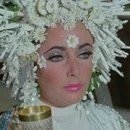
Tennessee Williams once said that BOOM was his favorite film adaptation of any of his plays. The movie was derided by both critics and general audiences, but I can see where Williams was coming from. In opposition to the relatively naturalistic approaches of Elia Kazan, Richard Brooks, and John Huston (who had directed movie versions of Williams’ work prior to this), Joseph Losey advances an over-the-top visual style that matches the great playwright’s language in daring, imagination, and flamboyance. It makes sense that the film has been dismissed as well as embraced as camp (it doesn’t help that its most outspoken defender is John Waters); however, it’s more complex than its reputation has made it out to be. Like the play on which it’s based, The Milk Train Doesn’t Stop Here Anymore (whose failure in 1963 signaled the demise of Williams’ Broadway career), BOOM is blatantly allegorical, feeling more like a Greek myth than Williams’ Orpheus Descending, which was directly inspired by one. Elizabeth Taylor stars Flora Goforth, an obscenely wealthy woman slowly dying on a private island in the Mediterranean; Richard Burton plays Christopher Flanders, the mysterious interloper who trespasses onto the island and becomes a figure of erotic fascination for both Flora and her assistant; and Noël Coward plays Flora’s frenemy, “the Witch of Capri,” who delights in making Flora suspicious of Christopher. Williams had intended for Flora to be an older woman, Christopher to be a younger man, and the Witch to be female, so the casting has the effect of highlighting how unnatural the material already is. At the same time, Williams never was a naturalistic writer anyway, and so the casting, in drawing attention to this, feels appropriate, just like Taylor’s ostentatious costumes or the baroque camera movements. These latter two aspects of BOOM anticipate Fassbinder’s epochal melodrama THE BITTER TEARS OF PETRA VON KANT (1972), while the general premise, with its mix of morbidity and eroticism, harkens back to Jean Cocteau’s THE EAGLE WITH TWO HEADS (1948). The dialogue, though, is pure Williams—unapologetically overripe yet often breathtaking in its poetic opulence. Preceded by an introduction from Karina Longworth, creator and host of the You Must Remember This podcast and a 10-minute Elizabeth Taylor trailer reel on 35mm. (1968, 113 min, 35mm) [Ben Sachs]
Buster Keaton and Clyde Bruckman’s THE GENERAL (US/Silent)
Music Box Theatre — Sunday, 11:30am
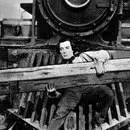
Lauded by many as one of the greatest films, silent or otherwise, of all time, Buster Keaton’s THE GENERAL is a masterwork of stunning physical comedy, lavish set pieces, and the culmination of all his directorial ingenuity from his years as an independent filmmaker. Based upon a true story set in Georgia, railroad engineer Johnnie Gray (Keaton) has two loves: Annabelle (Marion Mack) and his train, nick-named ‘The General,’ When the Civil War breaks out, Johnnie tries to enlist in the Confederate Army but is rejected due to the importance placed on his current job. Things don’t bode well for Johnnie as Annabelle and her father believe that he is shirking his patriotic duty. A year later, a series of events unfolds in which the General is stolen by the Union Army and Annabelle is taken prisoner. Johnnie takes chase after his two beloveds. THE GENERAL was one of Keaton’s highest budgeted works and it shows. Elaborate outdoor sets, functioning cannons, and nearly twenty freight cars, help to establish the fog of war as Keaton charmingly bumbles his way through. Keaton’s physical gags are in peak form here and feature some of his most dangerous stunts (this is the film where he broke his neck, not realizing it until years later), including a great one in which he sits on the cowcatcher of the General and throws a railroad tie at a loose one blocking the tracks. Sadly for Keaton, the film was not appreciated in its time and resulted in the cinematic wing clipping of his talents when he was made to sign a contract with MGM. Thankfully, 100 years later, cinephiles old and young can still appreciate the majesty of what is arguably the Great Stone Face’s final masterpiece. With live accompaniment by Dennis Scott. (1926, 80 min, 35mm) [Kyle Cubr]
Black Harvest Film Festival at the Siskel Film Center
See below for showtimes
Walter Thompson-Hernández’s IF I GO WILL THEY MISS ME (US)
Saturday, 8pm and Thursday, 8:15pm
Maybe the most surprising thing about IF I GO WILL THEY MISS ME, which chronicles a few months in the life of a poor, Black family in Los Angeles, is how it resists comparisons to both Charles Burnett’s understated early features and the grittier work of John Singleton. Walter Thompson-Hernández, who wrote and directed, makes lots of bold, fanciful decisions, incorporating frequent dream sequences and even some animation. He also shifts freely between characters, so that the family portrait comes into focus through a composite of perspectives. Gradually we learn that the head of the family, Big Ant, was recently released from prison, and not for the first time; while he finds work at a horse stable, he faces challenges in adjusting to daily life, especially with regards to the demands of parenting. His partner Lozita, who’s loved him since childhood, has welcomed him home and hopes to rebuild a sense of stability for their two children. One of the kids, 12-year-old Little Ant, receives most of the filmmaker’s attention; this boy responds to his difficult homelife with imagination (not unlike Thompson-Hernández), frequently drawing pictures and losing himself in daydreams about the Greek mythological figures he’s studying in school. Little Ant’s innocence stands in stark contrast to his father’s hardened demeanor, and Big Ant struggles to overcome this difference between them. IF I GO WILL THEY MISS ME ends up centering on Big Ant’s efforts to connect with his son; it’s a poignant development that reflects both characters’ need for compassion and understanding. (2026, 85 min, DCP Digital) [Ben Sachs]
---
Shatara Michelle Ford’s DREAMS IN NIGHTMARES (US)
Sunday and Thursday, 5:30pm
Shatara Michelle Ford’s intimate debut feature TEST PATTERN (2019) showed exceeding promise for the emerging director, their particular brand of ambitious visual and structural gambits gracefully navigating a story of immense frustration with the interpersonal and societal ruptures that emerge in the aftermath of a sexual assault. If that film was an investment in Ford’s skills as a filmmaker, then their follow-up, DREAMS IN NIGHTMARES, pays off beyond what one could imagine—this sprawling, poetic work of cultural and political introspection doubles down on their values as a contemporary storyteller while forging new paths for their skills as a filmmaker invested in the atmospheric and topographical potential of the medium. Where TEST PATTERN blew up the concept of the romantic drama, DREAMS IN NIGHTMARES turns the road trip film inside out, with three friends transforming their respective misfortunes into an opportunity to discover what it is that bonds them, and whether the country they call home even has the potential to love them back. After a sudden layoff from her teaching gig at CalArts, Z (Denée Benton) tags up with her Brooklyn-residing besties, Tasha (Sasha Compère) and Lauren (Dezi Bang), to travel across the country to find their missing-in-action Fourth Musketeer, Kel (Mars Storm Rucker). Their travels take them through Pittsburgh, Iowa City, and Kansas City, aided by Lia Ouyang Rusli’s discordant and jazzy score and Ludovica Isidori’s magnetic cinematography, honing in on light and texture in an appropriately ephemeral manner. They eventually find themselves in Oaxaca, Mexico, where Kel’s newfound life across the border has each of them examine whether the lives they’re leading—loudly and proudly Black, queer, and femme—are truly being supported by their home country, and whether a change of scene is enough to reaffirm whether “your life has been worth what you’ve been paying.” Alongside such immense discussions and grander excavations of Black Worth in 2020s America, it helps that Ford’s film is also incredibly funny, sensual, and personable, its larger artistic goals aided by an ease and joy throughout. Their scenarios and dialogue feel current and fresh, yet none of it ever comes off as out of place within a visual palette that feels in conversation with Maya Deren and Terrence Malick. Ford’s film succeeds, simply put, because it turns their dreams into heartfelt, tactile cinematic reality. (2024, 128 min, DCP Digital) [Ben Kaye]
---
For more information about the Black Harvest Film Festival, including a complete schedule, visit the festival website here.
Howard Hawks’ MONKEY BUSINESS (US)
Doc Films (at the University of Chicago) — Sunday, 4pm
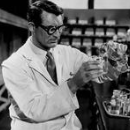
MONKEY BUSINESS exhibits some of the widest emotional range of any movie comedy—it may be Howard Hawks’ most ambitious film in that it considers a lifetime of experience through a narrative that spans only a few days and runs just over 90 minutes. It starts and ends in a place of ruminative bliss, but in between those bookends, the tone varies between broad humor, Chekhovian tragedy, and flat-out horror. Cary Grant stars as Barnaby Fulton, a chemist who’s working to develop a new “revitalizing” formula. The film introduces this middle-aged scientist not in a lab, but at home with his loving wife Edwina (Ginger Rogers, who at 40 was the oldest leading lady of any Hawks-directed feature); the opening scenes, in which the couple reminisces one evening about the early days of their marriage, have a leisurely, romantic sensibility that allows you to savor the chemistry between the two leads, who were never better than they are here. In their gentle reflections, the characters innocently set up the theme of the past encroaching on the present, which Hawks and company take to catastrophic extremes as the movie progresses. The next day at work, one of Barnaby’s chimpanzee test subjects breaks out of her cage and plays at mixing chemicals in a beaker. (Hawks films this scene in a couple of astonishing long takes that spotlight what a talented performer the chimpanzee is.) In a magical coincidence, the chimp’s concoction turns out to have genuine effects, making whoever drinks it revert to how they behaved when they were young. In the first act of MONKEY BUSINESS, Barnaby accidentally drinks the formula and, returning to his ways at 20, takes the afternoon off to go for a joyride with the office secretary (Marilyn Monroe, in one of her first major roles). In the second, Edwina consumes it and impulsively decides to recreate her honeymoon. The day after that, both spouses overdose on the formula and spend the day acting like hyperactive five-year-olds, wreaking havoc on everything around them. The concept of a magic potion upending a character’s personality hearkens back to Dr. Jekyll and Mr. Hyde, and Hawks seems well aware of the connection. As Barnaby and Edwina revert to their younger selves, they also lose common sense, and Hawks suggests, unnervingly, during these scenes that they’re just one mistake away from destroying their careers, their marriage, or their sanity. The year before he made this, Hawks unofficially directed the monster movie THE THING FROM ANOTHER WORLD, and MONKEY BUSINESS is by far the scarier film (Robin Wood once likened its premise to that of George Romero’s THE CRAZIES [1973]). It wouldn’t be so wrenching if Hawks didn’t have such tender affection for his characters so as to make you truly worry for their safety. This affection courses throughout the film, not only in the portrayal of the central marriage, but in the unexpected pathos Hawks finds in Monroe’s unrequited love for Grant. Screening as part of the Marilyn Monroe on the Centennial series. (1952, 97 min, DCP Digital) [Ben Sachs]
Home Movie Day 2026
Chicago Film Archives and Chicago Film Society at the Chicago History Museum — Saturday, 11am – 3pm
This yearly, worldwide celebration of home movies is absolutely essential viewing for anyone who cares a whit about motion picture art, history, sociology, ethnography, science, or technology. Anyone who loves the sound of a projector. Anyone who loves deep, luscious Kodachrome II stock that is as gorgeous as the day it was shot. Anyone who loves dated, faded, scratched, and bruised film—every emulsion scar a sacred glyph created by your grandfather's careless handling 60 years ago. Anyone who wants to revel in the performance of the primping and strutting families readying for their close up. Anyone who wants to see what the neighborhood looked like before you got there. So, find your 100-foot reels of 16mm you just had processed from your sister's Quinceañera or your grandfather's thousands of feet of Super 8mm from your uncle's Bar Mitzvah in 1976 or that 8mm your great aunt shot from Daley Plaza in 1963 and come out for Home Movie Day. Just walk in with your films (16mm, 8mm and/or Super 8mm) and staff and volunteers from Chicago Film Archives and the Chicago Film Society will inspect your home movies that day! A selection of those works will be screened; organizers will also offer tips on storage, preservation, and digitization, all for free. Home Movie Day has been happening around the world since 2003. For more information about its history, visit the Center for Home Movies website. With live accompaniment by pianist Dave Drazin. [Josh B. Mabe]
📽️ ALSO RECOMMENDED
Jean-Pierre Gorin's POTO AND CABENGO (US/Documentary)
Doc Films (at the University of Chicago) — Thursday, 7pm
As a vérité examination of the struggles of second-generation, lower-class European immigrant family life in Southern California, Jean-Pierre Gorin's POTO AND CABENGO is as immediately compelling as similar late-1960s and '70s works like Errol Morris' GATES OF HEAVEN or the Maysles' SALESMAN. As an enlightening and politically charged experimental horror movie about language standardization, on the other hand, this rarely screened film is completely unparalleled. At issue are two young, socially isolated twins, Gracie and Ginny Kennedy, who communicate with each other in an inscrutable argot—and who have been simultaneously pathologized by linguists and educators as "idioglossic" and sensationally credited by the San Diego Tribune as having invented a new language. Through ever-so-slight twists of détournement, Gorin creatively manipulates the documentary form's own arbitrary conventions in order to demand that the viewer face their own folk conceptions of the Platonic unity of standard languages like English or German. Brief onscreen entextualizations of his subjects' speech (and an unflinching lens towards authority) destabilize the idea that anyone (even the local well-intentioned grade school teachers and speech pathologists) can speak "correctly" outside of their own language communities, much less a pair of marginalized ten-year-old children raised in a closed environment with little access to standard English forms. But the co-occurring material is often far more playful than the subject matter suggests: Gracie and Ginny seem to exist in a ludic, polyglossic utopia that Gorin's microphone and camera can barely keep up with. Gorin has said that at the end of the filming he "was left with a sense that we do not speak, but that we are spoken through"; what he most wonderfully argues (no, proves) here is that what speaks through us is a monstrous apparatus of monoglot ideology, of which your eminently self-styled "grammar/spelling Nazi" acquaintances are but a mere symptom. Screening as part of the Heteroglossia: Languages and Translation series. (1980, 76min, Digital Projection) [Michael Castelle]
Mikio Naruse's FLOATING CLOUDS (Japan)
Siskel Film Center — Saturday, 2pm and Monday, 6pm
Mikio Naruse's 1955 slow-burn melodrama has long been considered his crowning achievement. This adaptation of feminist writer Fumiko Hayashi's novel tracks a doomed affair between two demobilized WWII veterans, piercing it with memories of its beginnings in Indochina via spectral mini-flashbacks four years before Alain Resnais' HIROSHIMA MON AMOUR. Naruse mainstay Hideko Takamine stays irrationally devoted to one of cinema's all-time pricks (Masayuki Mori) as he refuses to leave his wife and indulges in other flings. This is no mystical Mizoguchi shrine to female suffering, but a hard-nosed study of the cost—and the virtue—of one woman's pursuit of all-giving love amidst a postwar world of suffocating pragmatism, where scenes reek of desperate people bargaining and taking. Takamine and Mori breathe conviction into their characters' tortuous push-pull, occupying opposite sides of a shared self-abasement, while the tropical notes of Ichiro Saito's haunting score exude a feverish trance. Still, nothing beats the radiance of Takamine's face when Mori's decency is finally kindled. Screening as part of the 25 For 25 series, revisiting standout titles from the Siskel's State Street history. (1955, 123 min, DCP Digital) [Kevin B. Lee]
John Sayles’ THE SECRET OF ROAN INISH (Ireland/US)
Music Box Theatre — Saturday and Sunday, 11am
The period piece family films of the mid-’90s understand childhood—especially girlhood—as full of pensiveness and observation rather than intense action and adventure. It’s seen in Agnieszka Holland’s THE SECRET GARDEN in 1993 and Alfonso Cuarón’s A LITTLE PRINCESS in 1995; falling right between the two is John Sayle’s THE SECRET OF ROAN INISH, released in 1994. Fiona (a remarkable Jeni Courtney) is a quiet but stubborn girl who takes in the folktales and ancestral legends told to her by her family with earnestness and care. Sayles’ focus on oral tradition reflects the essential part of growing up that is listening to and processing stories. Taken in by her grandparents (Eileen Colgan and Mick Lally) after the death of her mother, Fiona learns about the mysterious island of Roan Inish, the legend of the selkies, and her family’s connection to it all, namely in the story of her baby brother who drifted out to sea years before. The film is set in the aftermath of World War II, and Sayles doesn’t ignore the political backdrop, acknowledging early on the damaging effects of British colonialism in suppressing Irish culture, especially the essential storytelling tool of language. Nature, too, plays a role, with Sayles’ focus on the stunning vistas of coastal Ireland emphasizing the inherent connection between culture and the land; Haskell Wexler delivers memorable cinematography. The fantasy of the film is gentle, slowly paced and grounded, allowing for Fiona to become fully immersed in her history and culture, understanding when the time is right exactly what she needs to do to reunite her family. Screening as part of the Indoor Kids: Family-Friendly Matinees series. (1994, 103 min, DCP Digital) [Megan Fariello]
Roy Ward Baker’s DON’T BOTHER TO KNOCK (US)
Doc Films (at the University of Chicago) — Sunday, 7pm
The title carries its own weight with double meaning: you can come on in, or don’t bother with me, I’m not worth it. By the close of Roy Ward Baker’s film, John Irving’s hopeful mantra in The Hotel New Hampshire came to mind. DON’T BOTHER TO KNOCK carries the emotional poetry of “Keep passing the open windows,” but means exactly the opposite. As Nell Forbes, Marilyn Monroe is almost unrecognizable. Upon her entrance, the blonde bombshell audiences knew is nowhere to be seen. Dressed in meekness, the only trace of Monroe is her signature way of speaking. Innocent. Childlike. Masking trauma and desperation. In Charlotte Armstrong’s source novel Mischief, released in 1950, the character of Nell is written as a psychopath who burned down her childhood home. She’s calculating, vicious, and manipulative. Monroe’s Nell may be unstable, but she maintains our sympathy throughout. Baker initially sets up a joke, then lets the punchline fall into the disparity of grief. The comedy gradually evaporates into a disturbing study of bereavement, emotional dependency, and sexual vulnerability. Lyn Lesley (Anne Bancroft) is a hotel lounge singer at the once-prestigious McKinley Hotel. She's just broken things off with Jed Towers (Richard Widmark) for lacking understanding. Jed, an airline pilot, is staying at the McKinley and has just read her breakup letter. Lyn's voice comes through the hotel intercom, singing about love, and he can't take it. Eddie (Elisha Cook Jr.), the hotel's elevator operator, who has worked there for forty-five years ("It's had its ups and downs"), finds work for his niece. When he hears that one of the guests requires a babysitter, he offers Nell the position. At this point, Baker has assembled the ingredients for a romantic triangle, a nannying disaster, or even an early variation of hyperlink cinema. Instead, he dives headfirst into psychosis. The film's treatment of Nell is interesting against the backdrop of early-1950s Hollywood, when mental illness was frequently reduced to a sensational plot device, a source of criminal menace, or a convenient explanation for otherwise inexplicable behavior. Psychological melodramas often relied on institutionalization as shorthand for instability, while characters experiencing mental distress were more readily presented as threats than people in need of understanding. Baker allows us to see the grief, loneliness, and emotional desperation beneath Nell’s behavior. This is her first job since arriving in New York, and she's never watched a child before. Fortunately, Bunny Jones (Donna Corcoran) likes reading stories and goes to bed early. With the parents gone, Nell begins playing dress-up in Mrs. Jones's belongings, trying on her negligee and perfume. For a moment, she resembles the Monroe audiences recognize, but something is off. Jed happens to have a room across the courtyard and, noticing Nell, decides to telephone her. She invites him over for a drink. What follows gradually reveals that her flirtation is less an invitation to romance than an attempt to resurrect one. Her growing attachment to the pilot quickly becomes dangerous, as she confuses the present with her traumatic past, even to the point of placing Bunny in jeopardy. Monroe's performance is extraordinary in its transitions between coy flirtation, childlike uncertainty, possessiveness, and terror. She captures the mannerisms associated with her outward persona without any of the emotional stability or social awareness normally seen. Set over a single evening within the McKinley Hotel's lobby, bar, corridors, and adjoining rooms, Baker makes effective use of the confined setting to connect its otherwise separate characters. The film's tonal shift is startling, but its underlying concern is compassion. Jed gradually recognizes Nell's condition and responds with patience rather than punishment, he helps to prevent a tragedy and get her the assistance she needs. The resolution is necessarily tidy, but its insistence on recognizing a person in crisis rather than condemning their behavior remains affecting. Jed's heart grew three sizes that day. More importantly, Monroe demonstrates just how much more there was to her than Hollywood's favorite blonde. Screening as part of the Marilyn Monroe on the Centennial series. (1952, 76 min, DCP Digital) [Shaun Huhn]
Curtis Matzke’s FIRST FEATURE (US/Documentary)
The Davis Theater — Monday, 7pm
In a banner year for cinema confronting the aged millennial (THE INVITE, NIRVANNA THE BAND THE SHOW THE MOVIE), a crafty timepiece hits the screen for those of us ready to bear witness to our own little sliver of cinematic time. The deft documentary FIRST FEATURE records the extended Obama-era production of ENDURING DESTINY, a self financed rom-com/high school sports drama/secret agent thriller crafted piecemeal by Michigan filmmaker Thomas Reilly-King, aka “TRK.” More than a behind-the-scenes chronicle of this peculiar yearslong, shoestring passion project, it’s a warm portrait of a relentlessly driven filmmaker made by a friend and collaborator. FIRST FEATURE’s director Curtis Matzke first encountered TRK when they were students at Michigan State’s film department. TRK had already been making ENDURING DESTINY for two years when Matzke, then and now, documents TRK and co. through the challenges that accompany amateur film production. TRK squeezes favors out of his performers and collaborators. He tries to complete scenes started years earlier, sometimes with replacement actors in different locations—which are barely locations to begin with. He relies excessively on wigs, green screen backgrounds, and ADR dubbing. Throughout the process, he makes unusual creative choices. He fights for shots in bad weather. He gets kicked off property. Every few months, he captures another scene. He designs posters and action figures. He writes a theme song. He keeps going. And through it all, he remains steadfastly optimistic, despite the questionable quality of what comes out. Of course he wishes he had more support, but never for a moment does that get him down. We’re shown his love for filmmaking as its own measure of success. The doc wisely resists the urge to spell out too plainly what drives TRK (though one diagnosis is suggested), instead choosing to humanize him through his persistent, prolonged activity. The heart of matter comes from FIRST FEATURE’s simple depiction of time. The passing months and years fly across the screen like the pages of a calendar. TRK loses access to school equipment. Collaborators graduate and move away. In that way only movies can draw our attention to, time passes slowly and then suddenly. Time’s march, it seems, is the only force more powerful than TRK’s passion behind his DV camera. Via cuts from present-day TRK nearing forty to his halcyon college days making ENDURING DESTINY, we know—or at least, experience—the effect time has had on his dreams. Indie film god Richard Linklater is clipped at the intro describing the human element as the most important part of film production. And FIRST FEATURE evokes time not unlike Linklater’s famously protracted BOYHOOD (2014). Age and time form a direct address that captures unavoidable and inevitable documentary truths. Through the years, in front of Matzke’s camera, there sits TRK and his bemused smile, holding onto enough millennial optimism for the rest of us. It’s easy to compare TRK’s saga to that of Ed Wood or AMERICAN MOVIE’S Mark Borchardt (and appreciably, like Borchardt, TRK and FIRST FEATURE are both deeply Midwestern), but it’s this added reflection on time that takes the doc from a cult curio to something more transcendent. Enduring destiny, indeed. Followed by a conversation between Matzke and Joe Swanberg. (2026, 92 min, DCP Digital) [Charlie Tarabour]
John McNaughton's HENRY: PORTRAIT OF A SERIAL KILLER (US)
Alamo Drafthouse — Tuesday, 9:30pm
Decades before the advent of a depressingly cynical streaming culture which capitalizes on the label of “true crime” to churn out endless paint-by-numbers documentaries and series, HENRY: PORTRAIT OF A SERIAL KILLER achieved its veneer of squalid plausibility by adapting a genuine fake. Director John McNaughton, a Columbia College graduate whose only previous credit was an archival documentary about Chicago gangsters, developed a film based on serial killer Henry Lee Lucas after watching a 20/20 segment on his exploits; in reality, Lucas had fabricated much of his legend during a period in Williamson County, Texas, jail where he copped to over six hundred killings. In April 1986, Texas Attorney General Jim Mattox released the “Lucas Report” comparing a timeline of the confessed crimes to Lucas and his accomplice Ottis Elwood Toole’s documented whereabouts, concluding “it is now clear that he confessed in reasonably accurate detail to murders he could not possibly have committed.” While he was ultimately convicted of eleven of these, Lucas’s tall tales—a feedback loop between a disturbed mind and the assumptions of police interrogators motivated to clear their own cold cases—combined with McNaughton and co-writer Richard Fire’s eye for local color to generate a uniquely vivid slasher in the Chicago way. Initially suppressed by its backers, HENRY discreetly circulated on video for years after its 1986 premiere at the Music Box (boosted by a favorable writeup by the Tribune’s Rick Kogan, who had borrowed a tape from then-colleague Dave Kehr), until its “unrated” theatrical run in 1990. The film’s Henry (Michael Rooker) and Otis (Tom Towles), first acquainted in prison, share a Wicker Park apartment with their television set, copious cans of Old Style, and Otis’s sister Becky (Tracy Arnold), crashing for a few weeks to escape a troubled marriage. Rooker’s mush-mouthed Bogart act establishes the strange bond between Becky and Henry, both victims of childhood sexual abuse by a parent, and although only the viewer at this point knows that Henry is an impulsive spree killer, Arnold’s battered, half-hypnotized performance suggests that his crimes might not be a dealbreaker. The Alabama-born Rooker showed up to an audition wearing paint-spattered clothes from his day job as a decorator, while McNaughton was introduced to Fire, Towles, and Arnold through their work with playwright and horror master Stuart Gordon’s Organic Theatre Company; the influence of Gordon’s confrontational stage productions (notably, 1968’s The Game Show, which simulated a literal assault on the audience), can be felt in HENRY’s self-reflexive wrinkle on the filmmaking process. When Otis joins Henry on the prowl, they randomly select a black-market TV merchant for their first joint kill, picking up a video camera which they use to document a home invasion in the movie’s most notorious scene. Presenting this and others episodes of violence only on a television screen—after an opening montage of attractively mutilated female corpses—the film establishes a discomfiting binary between Henry’s cold misanthropy and Otis’s sexual sadism, getting off on their rewound crimes. Although these devices serve to implicate the viewer, the primitive sophistication of McNaughton’s direction (call it outsider arthouse) has too much command of the genre’s pleasures to opt for indicting the audience at the expense of lurid payoffs; what has made HENRY a classic is the deep contrast between its sick fantasies and ugly truths. Screening as part of the Terror Tuesday series. (1986, 83 min, DCP Digital) [Brendan Boyle]
James Gray’s WE OWN THE NIGHT (US)
Alamo Drafthouse — Sunday, 12pm
Shakespeare, Coppola, Lumet, De Palma: when James Gray makes a movie, the masters are on his mind. His third feature, WE OWN THE NIGHT stages Henry IV as a narcodrama in the five boroughs, with nods to THE GODFATHERs and CARLITO’S WAY. Joaquin Phoenix flashes to life as flamboyant nightclub manager Bobby Green, concealing his alter ego Robert Grusinsky, scion of a NYPD deputy chief (Robert Duvall) and brother of newly minted captain Joseph (Mark Wahlberg). This prodigal son prefers his mock-coastal kingdom (the Brighton Beach club is “El Caribe”), where he rules alongside devoted girlfriend Amada (Eva Mendes) and plays heir apparent to the club’s patrician owner Marat (Moni Moshonov, giving his best Hyman Roth). The plot which mars this uneasy stasis contrasts Bobby not only with brother Joseph but the fearsome drug lord Vadim (Alex Veadov), whose business at the club brings the two families into quiet war. The film opens with a seduction in scarlet and yellow, then follows Phoenix down the stairs to the club floor, descending a waterfall of money into a whirlpool of ecstatic dance scored to the New Wave beat of Blondie’s “Heart of Glass.” (The soundtrack’s ska influence—The Clash, The Specials—flecks the narrative with a corollary tale of the Windrush migration, which birthed the UK music scene later exported to the States like so much contraband.) In the golden days, Bobby pitches his benefactor on a new kind of nightclub in the promised land of Manhattan, a variegated warehouse with themed rooms and boutique experiences on each level; this stowaway in the melting pot is dreaming of segregation, of a pleasure palace with its own enclaves and fiefdoms. As Vadim, Veadov has a precocious menace, hiding fine features under his imposing mustache and Samsonite locks, while Phoenix’s congenitally curled lip here gives him a mournful pout, the mirror of Wahlberg’s blank sneer. Bobby’s prince-of-the-city act disguises a profligate innocence spoiled and corrupted by experience; he’s a fallen angel descending up the ranks. The Bush-era release tips Duvall’s casting not just as an echo of the Corleones but as a surrogate Giuliani—America’s Mayor as an unimpressed father, retrenchment as an inevitable homecoming. The skeptic’s line on Gray is that his preference for clean, thick narrative lines betrays a morbid allegiance to the movies as they Were, but this old-fashioned story has a subversive stripe, suggesting that the Grusinsky family values and their code of patriarchal honor are themselves poisonous perversions of human ideals, of fast friendship and wild, romantic love. Andrew Tracy argued that “the inexorable progression, the ‘predictability’ of Gray’s story is not laziness, but the source of the film’s emotional and thematic weight: how the inner desires, and élan vital, of those accepting the mantle of their preordained role can move against the current of their respective fates.” It is this current that sweeps up Bobby at the bottom of a steep cascade, where he surfaces to find himself in a cold and narrow stream. We are with him in the undertow. On the banks, dead faces pass by. (2007, 117 min, DCP Digital) [Brendan Boyle]
Brian De Palma's CARRIE
Doc Films (at the University of Chicago) — Friday, 7pm
The strange CARRIE finds De Palma in a mode of perpetual discovery, movement, and defilement. In the film's now-legendary second scene, Carrie White, High School senior, cleans her thighs in the shower after P.E. class. She drops her bar of soap, and we, but not she, see it bounce off the tiles at her feet only to be replaced by a stream of blood filling her hand. After a moment, she gazes into her palm, and we see her fingers in close-up, cupped and dripping with menses. For Carrie, it is a moment of unspeakable horror—she wails like a beast for someone to help her—a horror of sudden knowledge: her body isn't what she thought it was, is in fact terrifyingly unruly where it ought most be domestic. Her blood has revealed her body to be a thing she cannot recognize, a thing we and Carrie are soon to see has a power that, like her first period, is uncontrollable, bloody in effect, and invisible in source. This moment becomes the structuring conceit for both the film's thematics and its style: nearly every shot finds space operating as on the principle of the jack-in-the-box, showing us what we expect to see but in a different place or way than it ought to be. While punishing her daughter for daring to enter sexual maturity, Carrie's religious fruitcake mother works with an antique sewing machine in a forced deep-focus composition made possible by the split-field diopter. It is a deeply uncomfortable shot, with the mother framed far to the right and a vast and preternaturally focused empty kitchen behind her. Suddenly, Carrie emerges through an unseen door into that kitchen. Two shots later, Carrie is weeping in a medium shot, but in a mirror: De Palma has faded from the woman, still at work making clothes, to her daughter's face in reflection such that Carrie's image has exactly replaced that of her mother's head. These slightly off revelations repeatedly reveal hidden filths, corruptions, or hatefulnesses we hadn't access to before: a hurtful graffito, a murderous parent, a bucket of blood. CARRIE begins and ends not in blood but in bleedings, horrifying transfers of what we keep desperately contained within our bodies at all cost, and as such it is a film that itself metaphorically bleeds, spreading though every crevice of its diegesis, mapping out the creepily familiar and labyrinthine space of monstrosity. Screening as part of the Behind the Mask: Femininity as Fabrication, Performance, and Identity Crisis series. (1976, 98 min, DCP Digital) [Kian Bergstrom]
Richard Kelly's SOUTHLAND TALES (US)
Alamo Drafthouse — Sunday, 10pm; Monday, 6:30pm; and Wednesday, 11:30am
After NO COUNTRY FOR OLD MEN, Richard Kelly's follow-up to DONNIE DARKO was the most divisive US film of 2007. By and large, critics and audiences dismissed it, but the impassioned defense among cinephiles included veteran reviewers at the Village Voice, who were all but in awe of the film's attempt to encompass the zeitgeist. (Nathan Lee named it movie of the year.) A confusing, hallucinatory work, it's difficult to summarize SOUTHLAND TALES' tangle of paranoid sci-fi premises, which touch on federal corruption, terrorism, declining energy sources, Hollywood schlock, and other issues currently plaguing the American psyche. Detractors argued that the satirical free-for-all lacked a cohesive political awareness, but that seems integral to the film's impact: politics emerge as simply another facet of the contemporary confusion. Where NO COUNTRY was deeply conservative in its structure and iconography, SOUTHLAND TALES was defiant—indeed, anarchic—lashing out at even the desire to be taken seriously while attempting bravura changes in tone and genre. This clash between formal ambition and weird humor is reminiscent of the novels of Thomas Pynchon (to which the movie was sometimes compared), as is Kelly's obsession with pop culture as a distorted mirror of mainstream ideology. Like the intentionally bad songs that litter Pynchon's books, the cast of SOUTHLAND TALES is drawn from the detritus of pop culture, but Kelly still elicits some resonant performances. Dwayne Johnson is strangely touching as a conservative action star who's lured into an anti-government plot; Sean William Scott (of AMERICAN PIE and DUDE, WHERE'S MY CAR?) also stands out as twin police officers with amnesia; other major roles are played by Saturday Night Live veterans, HIGHLANDER's Christopher Lambert, and Justin Timberlake, who stars in a disturbing and brilliantly staged musical number. (2006, 145 min, DCP Digital) [Ben Sachs]
Orson Welles' THE MAGNIFICENT AMBERSONS (US)
Alamo Drafthouse — Wednesday, 7pm
The reputation of Orson Welles as a failed wunderkind began to dog him with his second feature, THE MAGNIFICENT AMBERSONS, a story of fading aristocrats in turn-of-the-century Indianapolis. With Welles on assignment in Brazil, shooting the documentary IT’S ALL TRUE (which itself went unfinished after RKO pulled funding), the studio chopped forty minutes out of his original cut and tacked on a “happy” ending. The cut footage was destroyed, and a print possibly shipped to South America has been long considered one of the lost Grails of world cinema. The released film enjoyed good notices, though Manny Farber’s dissenting read intuited the discordant editing: “There is really no living, moving, or seeing to the movie; it is a series of static episodes connected by narration, as though someone sat you down and said ‘Here!’ and gave you some postcards of the 1890s.” The 1918 source novel by Booth Tarkington, himself a privileged scion of Indianapolis, includes among its virtues a knowing parody of the milieu’s manners, something the aristocratic Welles surely appreciated, a quality that together with its decades-long narrative sweep helped to win it a Pulitzer prize. In other respects the novel has aged poorly, with particular blind spots where Tarkington’s reactionary critiques of urbanism, his racist language, and stereotyping of the African-American servant class are concerned. Yet the blurred iris of the book’s perspective casts a somnolent spell over its snow-globe setting, a fairy tale about a rich boy who believes that neither he—nor the world—should ever grow up. The triangle of tormented affection between eccentric inventor Eugene Morgan (Joseph Cotten), his sweetheart the widowed Isabel Amberson Minafer (Dolores Costello), and her resentful son George (Tim Holt) structures the narrative as a disquieting forward drift. Morgan is the ambivalent agent of change, whose automobile factory changes the face of the town once lorded over by the Ambersons, as George stands athwart history—and his mother’s romance with Eugene—crying “Stop!” The masterstroke is the early image of an imperious boy George, kitted out as Lord Fauntleroy and proclaiming his innocence in an episode of awful mischief as neighbors pray for his “comeuppance”; the bill that comes due for the young Amberson Minafer in the end is ultimately a commonplace fate, of living to see people and places once loved pass away. The collision between the filmmaker’s realism and the novelist’s satirical kitsch finds expression in the Tolstoyesque party scene that introduces the central relationships, the rising and gliding of Stanley Cortez’s camera drawing out the networks of the Ambersons’ grand, yet shrinking and stifling set. Farber’s apprehension of the film’s perversely static cadence has revealed itself, with time, as the persistence of Welles’s vision, trapping the viewer with George inside the moldering Amberson estate as the world dramatically, imperceptibly, lurches on outside. (1943, 88 min, DCP Digital) [Brendan Boyle]
Park Chan-wook’s DECISION TO LEAVE (South Korea)
The 400 Theater — Saturday, 3pm; Sunday, 3pm; and Monday, 8:15pm
When the 59-year-old South Korean artist Park Chan-wook sat down to write a neo-noir for the modern age, he knew he wanted to write a love story. While it may seem like a story of the detective and femme fatale descending into tragedy, there is much more at play in the drama and technique of this one-of-a-kind filmmaker. In both writing and cinematography, it’s clear that Park is experimenting with his tools in the hopes of reaching a broader audience, much like Bong Joon-ho did with PARASITE (2019). Cinematographer Ji-yong Kim creates gorgeous visuals of a colder palette and close-ups of a Sven Nykvist sensibility; Park, meanwhile, is a great defender of his actors, having known to be more upset when they aren’t nominated for international accolades than himself. He provides the groundwork for both stars here to commit to their characters. The audience falls for Tang Wei’s great performance as a suspiciously indifferent widow the same way her male counterpart does. As the investigator and her soon-to-be lover, Park Hae-il wins audiences over as a charismatic leading man. Park has always been known for extreme violence with films like OLDBOY (2003) but even he has stated in interviews this film is separate from the rest of his filmography. As a police procedural, DECISION TO LEAVE takes influence from Billy Wilder’s DOUBLE INDEMNITY (1944) and Alfred Hitchcock’s VERTIGO (1958). While many detective noirs have been made in the history of cinema, DECISION TO LEAVE is enthrallingly enigmatic even among Park's own filmography. He interweaves genres and an unusual love story; it’s sexy yet asexual, as scarce intimacy is shown between lovers. There are few police procedurals that successfully integrate modern technology into the storytelling, making not only scenes more relatable to adding to the greater cause of having a film speak to the modern times of communication and connection. Park’s film breathes fresh air into the detective film through its inventiveness and manages to express profound thoughts on love in the new age of social media and smartphones. (2022, 139 min, DCP Digital) [Ray Ebarb]
Pedro Almodóvar's WOMEN ON THE VERGE OF A NERVOUS BREAKDOWN (Spain)
Alamo Drafthouse — Friday, 11:45am; Monday, 12:30pm; and Thursday, 7pm
WOMEN ON THE VERGE OF A NERVOUS BREAKDOWN was Pedro Almodóvar’s break-out hit, the film that introduced him to a wider audience and secured widespread distribution of his work for the rest of his career. It isn’t as provocative as the Almodóvar films that immediately preceded it (WHAT HAVE I DONE TO DESERVE THIS?, MATADOR, LAW OF DESIRE), yet it reflects a breathtaking fluency in all aspects of cinematic art that hadn’t been achieved to such a degree in his work until then. WOMEN is gorgeously designed; the costumes, decors, and camera movements are not only impressive on their own, they interact sumptuously. Favoring bold colors and ostentatious bric-a-brac, Almodóvar creates something like a live-action cartoon or pop art painting. It’s so easy to get wrapped up in the mise-en-scene, in fact, that the rapidly escalating plot developments can seem like a blur on a first (or even a second) viewing. The tone oscillates between melodrama and farce, charting a few calamitous days in the life of a frustrated actress (Almodóvar’s first muse, Carmen Maura) who can’t get in touch with her married lover, whom she suspects is going to leave her. Almodóvar shows great sympathy towards his characters’ desires and vulnerabilities while making light of hard drug use, terrorism, and the mentally ill, and the galvanic mixtures of good and bad taste match the visual design splendidly. If the film doesn’t add up to more than the sum of its parts, that may be because Almodóvar hadn’t yet developed the melancholy undertones that would enrich his work from THE FLOWER OF MY SECRET on. The mastery may be superficial here, but it’s still mastery. (1988, 89 min, DCP Digital) [Ben Sachs]
Paweł Pawlikowski’s FATHERLAND (Poland/Germany/Italy/France)
Music Box Theatre — See Venue website for showtimes
Having read Colm Tobin’s novel about the twilight years of Thomas Mann, Paweł Pawlikowski became fascinated with a small excerpt about Mann’s return to Germany after sixteen years in exile. The Polish director took liberty with historical events, replacing certain family members with others (for instance, Mann’s daughter Erika stands in for his wife) and altering the chronology with regard to his son Klaus’ suicide and his encounters with actor Gustaf Gründgens (who was Erika’s ex-lover and a friend to Hermann Görring). FATHERLAND is a five-day road movie where Germany’s greatest author tours a chaotic postwar landscape of apprehensive Marxists and defeated fascists. Location scouting for the film took five months solely to find German architecture within Poland’s borders. Sandra Hüller gives a rich performance as Erika; portraying the great writer, Hanns Zischler conjures the ghost of Thomas Mann as a human and great intellectual. The director considers the film a part of a trilogy, after IDA (2013) and COLD WAR (2018). Each film explores identity beyond national borders in a jumbled world of postwar Europe. FATHERLAND stands apart from the other films through its intellectual exploration of mise-en-scene. Mann, while quoted as saying, “Wherever I am, there is Germany”, struggled with his own ideas of the nature of home. It’s presumed that one of the contributing factors for Klaus’ suicide came from not knowing who to write for and in what language—struggling to embrace his German or American identity—all while standing the shadow of his father. As a former conservative (who famously defended Germany in WWI through Reflections of a Nonpolitical Man), Mann became firm against the Third Reich. Art does not recognize borders—even Johann Wolfgang Von Goethe’s art precedes the German state. (2026, 82 min, DCP Digital) [Ray Ebarb]
Ken Russell's THE DEVILS (UK) [Restored Director’s Cut]
AMC River East 21 and Music Box Theatre — See Venue website for showtimes
Ken Russell thought big and made big gestures, overloading most of his movies with historical references, psychedelic stylization, and outsized acting. He’s the sort of director you love or hate but never accuse of holding back. THE DEVILS comes from the middle of Russell’s most productive period as a director of feature films (he had been a prolific director of TV documentaries for years before that), when over a four-year period (1969-1972) he released five of his strongest films, which cover the full range of his style and themes. Perhaps the most extreme of that lot, it maintains an unrelenting air of hysteria that makes the bold, psychosexual imagery seem that much more provocative. The story, taken from true events, deals with power struggle and religious persecution in 17th-century France, but the design—as is often the case with Russell—is brazenly anachronistic. (Derek Jarman, who would become an uncompromising director in his own right, is the credited production designer.) Past and present bleed into each other to hallucinogenic effect, while Russell’s sincere interest in religious and political history vies with his strong desire to gross people out. Oliver Reed, in the role he was born to play, is a morally corrupt priest with a large flock of loyal followers; Vanessa Redgrave is the mad nun who desires him and wants to destroy him. (1971, 114 min, DCP Digital) [Ben Sachs]
📽️ ALSO SCREENING
⚫ Alamo Drafthouse
Cristian Mungiu’s 2026 film FJORD (146 min, DCP Digital) and Noah Segan’s 2026 film THE ONLY LIVING PICKPOCKET IN NEW YORK (88 min, DCP Digital) continue screening. See Venue website for showtimes.
James Gray’s 1994 film LITTLE ODESSA (98 min, DCP Digital) screens Saturday at 4pm.
Jason Waters’ 2026 film CROCODILE DOSE (70 min, Digital Projection) screens Wednesday, 9:30pm, preceded by Heather Landsman’s 2026 short film EE (7 min, Digital Projection), as part of the Weird Wednesday series. More info on all screenings here.
⚫ The Beach Beneath the Street (1703 E. 55th St.)
Paul Verhoeven’s 1987 film ROBOCOP (102 min, Digital Projection) screens Monday, 7pm, as part of Monday Night Film Club. More info here.
⚫ Block Cinema (at Northwestern University)
Denis Mitchell’s 1961 documentary CHICAGO: FIRST IMPRESSIONS OF A GREAT AMERICAN CITY (60 min, Digital Projection) screens Friday, 7pm, with an introduction by Block Cinema curator Michael Metzger.
Curtis Hanson’s 1997 film L.A. CONFIDENTIAL (138 min, 35mm) screens Thursday, 7pm, with an introduction by Prof. Eric Hoyt, Director of the Wisconsin Center for Film and Theater Research, as part of the “Special Collections” series. More info on all screenings here.
⚫ Chicago Public Library
The Chicago Public Library's Community Cinema program presents free film and TV screenings at dozens of neighborhood branches throughout the week. See the full schedule here.
⚫ ChiTown Drive-In (2343 S. Throop St.)
ChiTown Movies screens outdoor films throughout the week. More info here.
⚫ Doc Films (at the University of Chicago)
A24 presents Jordan Firstman’s 2026 film CLUB KID (122 min, DCP Digital) on Friday at 9:30pm. Free admission with RSVP.
Robert Smithson and Nancy Holt’s SWAMP (1971, 6 min, DCP), Renée Green’s PARTIALLY BURIED (1996, 20 min, DCP), Theresa Hak Kyung Cha’s VIDÉOÈME (1976, 3 min, DCP), and Renée Green’s PARTIALLY BURIED CONTINUED (1997, 36 min, DCP) screen Saturday, 6pm, followed by a Q&A with Green.
Henry Hathaway’s 1953 film NIAGARA (92 min, DCP Digital) screens Saturday, 9:30pm, as part of the Marilyn Monroe on the Centennial series.
Gaston Kaboré’s 1982 film GOD’S GIFT (71 min, DCP Digital) screens Monday, 7pm, as part of the Four From Burkina Faso, 1982-1992 series.
Lothar Warneke’s 1986 film BLOND TANGO (120 min, DCP Digital) screens Tuesday, 7pm, as part of the Films of Thomas Plenert series.
Souleymane Cissé 2009 film MIN YÉ (TELL ME WHO YOU ARE) screens Wednesday, 7pm, as part of the Mapping Melodrama series.
Ken Russell’s 1988 film SALOME’S LAST DANCE (89 min, Digital Projection) screens Thursday, 9:30pm, as part of the Ken Russell’s Pitch-Perfect Perversions series. More info on all screenings here.
⚫ Eyewash Station
Johnnie To’s 2004 film THROW DOWN (95 min, Digital Projection) screens Tuesday at 8pm.
Nikos Nikolaidis’s 1990 film SINGAPORE SLING (111 min, Digital Projection) screens Thursday at 8pm. More info on all screenings here.
⚫ FACETS
The European Union Film Showcase 2026 begins Friday and runs through Sunday, with seven new films from the European Union. See Venue website for a complete schedule.
Sweet Void Cinema presents a screenwriting workshop on Wednesday from 6pm to 9pm in the Facets Studio. More info on all screenings and events here.
⚫ Film Studies Center (at the University of Chicago's Logan Center for the Arts, 915 E. 60th St.)
Jan Lemstra and Piet Henneman’s IN DIT TEKEN (1949, 24 min, Digital Projection), James Crabe’s ALWAYS ON SUNDAY (1962, 8 min, DCP Digital), Jean Béranger’s LAFCADIO (1948, 16 min, DCP Digital), François Reichenbach’s LAST SPRING (1954, 22 min, DCP Digital), Jerett Robert Austin’s CAMILLE (1953, 50 min, 16mm), and Harold T. O’Neal’s VALLEJO (1947, 14 min, DCP Digital) screen Friday, 7pm, with an introduction by curator Hugo Ljungbäck, as part of the Amateur, Avant-Garde, or Underground? Gay Filmmaking at Mid-Century program.
As part of An Evening with Andrew Norman Wilson, a program of works by Andrew Norman Wilson screens Thursday, 7pm, followed by a Q&A with Wilson. Presented with the University of Chicago’s Department of Visual Arts and DOCUMENT. Both are free admission. More info on all screenings here.
⚫ The First Nations Film and Video Festival
The First Nations Film and Video Festival (FNFVF) Fall 2026 edition screens Friday, 6:30pm, at Skokie Public Library (5215 Oakton St., Skokie); Saturday, 3pm, at Restoried Bookshop (4613 N. Kedzie Ave.); and Sunday, November 8 online via Zoom (Program 1 at 4pm, Program 2 at 7pm). More info here.
⚫ Music Box Theatre
Kelly O’Sullivan and Alex Thompson’s 2026 film MOUSE (120 min, DCP Digital) begins screening and Javier Ambrossi and Javier Calvo’s 2026 film LA BOLA NEGRA (155 min, DCP Digital) continues. O’Sullivan and Thompson will be in attendance for a postshow Q&A following the Friday, 6:30pm, screening of MOUSE. See Venue website for showtimes.
John Waters' 1990 film CRY BABY (85 min, 35mm) screens Friday at midnight.
A double feature of two films by René Cardona, SANTO IN THE VENGEANCE OF THE MUMMY (1971, 87 min, 35mm) and SANTO VS. THE RIDERS OF TERROR (1970, 78 min, DCP Digital), screens Saturday at 11:30am. Co-presented by local programmer Raul Benitez and film archivist and member of the famed Calderon and Garcia Besne Families, Viviana Garcia Besne.
Tommy Wiseau’s 2003 film THE ROOM (99 min, 35mm) screens Saturday at 11:45pm.
A special screening of William, Lani, & David Greaves’ 2026 documentary ONCE UPON A TIME IN HARLEM (100 min, DCP Digital) is on Monday at 7pm. Followed by a post-film Q&A with directors David and Liani Greaves moderated by film critic Robert Daniels.
Tasha Hubbard’s 2025 film MEADOWLARKS (92 min, DCP Digital) screens Tuesday at 7pm, followed by a post-film Q&A with actor Michael Greyeyes. This is a free screening sponsored by First Nations Film and Video Festival.
Jim Terry’s 2026 film SHANK (105 min, DCP Digital) screens Wednesday at 6:15pm, with Terry in person for a post-screening Q&A. More info on all screenings here.
⚫ Patient Info (902 N. Western Ave.)
ERIN/RENE presents If you can’t handle me at my Babitz, you don’t deserve me at my Didion, a program of films by Magdalena Bermudez, Videofreex, Sofia Theodore-Pierce and Grace Mitchell, and Sam Drake, on Saturday at 7pm. More info here.
⚫ Siskel Film Center
Jia Zhangke’s 2004 film THE WORLD (139 min, DCP Digital) screens Sunday, 12pm, as part of the Contact Zones: Cinema of Globalization, 1989–2024 lecture series. Pablo Larraín’s 2012 film NO (118 min, DCP Digital) screens Tuesday, 6pm, also as part of Contact Zones: Cinema of Globalization, 1989–2024, with a pre-screening lecture and open discussion led by SAIC professor Daniel R. Quiles. More info on all screenings here.
⚫ University of Chicago
University of Chicago Cinema & Media Studies professor Allyson Nadia Field presents Black Love and the Birth of American Cinema, a talk on SOMETHING GOOD—NEGRO KISS (1898) and the overlooked history of Black performance it reveals, drawing on her book Acts of Love: Black Performance and the Kiss That Changed Film History, on Saturday, 12:30pm, at Ida Noyes Hall (1212 E. 59th St.), as part of UChicago Arts & Humanities Day. Free admission; registration required. More info here.
⚫ Uprising Theater & Cafe (2905 N. Milwaukee Ave.)
Jason Osder and William Lafi Youmans’ 2026 documentary WHO KILLED ALEX ODEH? (94 min, Digital Projection) and Yuval Abraham and Rachel Szor’s 2026 documentary NAZA (80 min, Digital Projection) screen this weekend. More info on all screenings here.
MANAGING EDITORS // Ben and Kat Sachs
CONTRIBUTORS // Kian Bergstrom, Brendan Boyle, Michael Castelle, Kyle Cubr, Ray Ebarb, Megan Fariello, Shaun Huhn, Ben Kaye, Kevin B. Lee, Josh B. Mabe, Charlie Tarabour
