

📽️ CRUCIAL VIEWING
Josef von Sternberg's THE DOCKS OF NEW YORK (US/Silent)
Chicago Film Society at the Music Box Theatre — Sunday, 11:30am
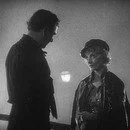
This film proceeds from a premise so listless and a cast of characters so forgettable that one can readily understand the critical indifference it received in 1928. More completely than most films, THE DOCKS OF NEW YORK sees a collection of pulp clichés as a vehicle for higher truth. Like many other films from '28, it registers as an incidental masterpiece, a thoroughly private creation that happened to use studio resources to produce a deceptively non-narrative mood piece. It possesses a rare, almost humorless, interest in recording the weathered wood of the planks, the sinews of the nets, and above all, the opacity of the fog. There's some intrigue and even a concluding courtroom scene, but make no mistake: Sternberg's feature is so rigorous that it may as well be an industrial film commissioned by the New York Port Authority. That's the contradiction of DOCKS OF NEW YORK: workaday but luminous, it's so delicate that you fear it might evaporate if you stare at it too long or too intently. It's art, all right, but like many Sternberg films, it doesn't particularly care whether it commands an audience. It exists regardless. Preceded by Peter Hutton’s 1972 short film NEW YORK NEAR SLEEP FOR SASKIA (10 min, 16mm) and with musical accompaniment by Whitney Johnson. (1928, 75 min, 35mm) [K.A. Westphal]
Three Views of London With John Smith (UK/Experimental)
Block Cinema (at Northwestern University) — Wednesday, 7pm [Free Admission]
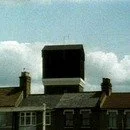
John Smith is one of the preeminent comedians of the avant-garde. Using exacting match cuts, seamless superimpositions, and added narration and foley work, Smith is an expert at toying with audience perception, often to droll and extremely British ends. But this is not to say he isn’t a serious filmmaker, and Block Cinema’s program Three Views of London contains some of his most serious, socially conscious efforts. In these films, modern London’s buildings form an abyss that stares back at you, most overtly in his classic THE BLACK TOWER (1987, 24 min, Digital Projection), an experimental narrative about a man seemingly stalked by the same black building looming over the skyline wherever he goes. As a sort of structuralist horror film, it might be seen as a progenitor to Peter Tscherkassky’s OUTER SPACE (1999) in how the filmmaker’s extra-filmic interventions meld with the diegetic reality of the main character, threatening to crush them. SLOW GLASS (1991, 40 min, Digital Projection) also employs a funny, dubiously reliable narrator’s quirky observations to reveal deeper, more unsettling truths about English society, but this time to more subtly ominous ends. The narrator here is a glass glazier talking the audience’s ear off while several beers deep at a pub, sharing his insights about the nature of his chosen material and his bitterness toward a changing society. When he talks of his dislocation in the new world, he compares it to being at a museum—everything’s visible, but out of reach to him. Under glass, so to speak. Visually, we see glass created at industrial scale, being cut and modified by handymen and blown by artisans, leading to the film feeling like Smith’s most complex work due to the multiplicity of ways we can understand the material: as a mediating mechanism alternately obvious and unseen; as something created by laborers for both practical and ornamental uses; and as something that, as a technically liquid material, proves both a potent metaphor and physical marker of an ever-changing world. Through this thematic complexity, the film also manages to be one of Smith’s most human, creating a compellingly bittersweet character who must reconcile the evil ways that capital interests force change onto an unwilling society with the more loose and natural ways that culture changes. Continuing this interest over the rest of his career, few were more suited to the “Covid film” subgenre than Smith, and his CITADEL (2020, 16 min, Digital Projection) introduces a variation on his usual themes that feels more locked into time and place, tracking the more abrupt social change experienced globally in 2020. As we look out Smith’s window, various buildings in the center of capital in downtown London illuminate to create a graphic equalizer effect as they’re ventriloquized by recordings of Boris Johnson’s missives to the public over the course of early lockdown. In this, as in the earlier two films, Smith’s read on the character of everyday architecture is astute and perhaps more hopeful this time around as he applies the same lit-window flicker effect to his neighbors’ apartments so they form a chorus of SOS signals. While all excellent films individually, this grouping of three allows the works to build off of one another to create a thorough portrait of a city over time, a vital sub-project within a master's oeuvre. Smith in person for a post-show discussion. [Maxwell Courtright]
---
Smith will also appear at 6pm on Thursday at the Siskel Film Center, where he returns to Conversations at the Edge for a special program of his work celebrating the 25th anniversary of his appearance at the very first CATE screening.
Elia Kazan's WILD RIVER (US)
Siskel Film Center — Saturday, 2pm; Monday, 6pm; and Wednesday, 6pm
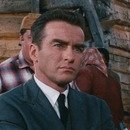
One of Elia Kazan’s most personal films, WILD RIVER finds a masterful balance between ethnographic portraiture and melodrama. Early in his career, Kazan assisted on the labor documentary PEOPLE OF THE CUMBERLAND (1937); over the following years, the director became fascinated by government agencies and how they relate to civilians. Written by Paul Osborn, the script incorporated Kazan’s experience alongside William Bradford Huie’s novel Mud on the Stars and Borden Deal’s Dunbar’s Cove. Like a documentary, the film opens with black-and-white, grainy footage of the suffering caused by the perpetual flooding of the Tennessee River. The newly formed Tennessee Valley Authority begins to construct dams in hopes of providing desperately needed electricity to the surrounding areas. Many locals feel threatened, however, as they are forced to give up their homes, values, and tradition to the project. One eighty-year-old matriarch, Ella Garth (Jo Van Fleet), personifies this sentiment. Tensions rise when she refuses to leave her small island. Outside the political themes of tradition versus progress, public wellbeing versus individual rights, and Black versus white, there is a human drama of love, dignity and tradition; a Hollywood love story between the dashingly handsome Clyde (Montgomery Clift), a government field agent, and the stunning southern belle played by Lee Remick. Clyde is physically vulnerable and has a thoughtfulness in his relationships to women. Whether this comes from the actor’s hidden sexuality or his training at the Strasberg school, he never embodies traditional masculinity. Known for his Anatolian smile and charm, Kazan had a knack for pulling performances out of any actor and injecting realism into any scene. When such a director is paired with such an actor, the results must be studied by students of the form. As suggested in art of this country’s antiquity, American life is full of pain and promise. With a land sprawling and open, prospects become boundless, yet those who inhabit the earth and tend to it have limitations. Entered into the National Film Registry, WILD RIVER presents images of woods, waters, towns, islands and land and their occupants, who survived strife through courage, grace, and humor. Screening as part of the 25 For 25 series, revisiting standout titles from the Siskel's State Street history. (1960, 110 min, 35mm) [Ray Ebarb]
Frank Capra’s ARSENIC AND OLD LACE (US)
Doc Films (at the University of Chicago) — Saturday, 4pm
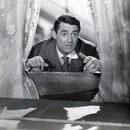
Joseph Kesselring’s original Broadway play had become one of the decade’s biggest theatrical hits. Kesselring initially approached the material as a serious drama before producers suggested its potential as a dark comedy. The story drew inspiration from the case of Amy Archer-Gilligan, who operated a home for elderly residents where more than sixty suspicious deaths and evidence of poisoning led to her conviction for murder. Kesselring transformed this into a comedy about respectable people whose moral reasoning is just a bit off. The Brewster household offers a compendium of madness: Teddy (John Alexander) believes himself to be Theodore Roosevelt and treats the cellar as a construction site for the Panama Canal; Jonathan Brewster (Raymond Massey), accompanied by an alcoholic plastic surgeon Dr. Einstein (Peter Lorre), seek refuge and a place to dump a body; and aunts Abby (Josephine Hull) and Martha (Jean Adair) provide additional services for lonely boarders. Jonathan’s resemblance to Boris Karloff is a running joke, particularly since Karloff originated the role on Broadway but was unavailable for the film. Capra’s adaptation, written by Julius J. Epstein and Philip G. Epstein, preserves the play’s escalating absurdity. Overlapping dialogue and comedic motifs create the fast pace of a screwball comedy but the Chiaroscuro lighting— pre-1940’s film noir—references the expressionism of Fritz Lang’s M (1931). Peter Lorre trades his Hans Beckert for Dr. Einstein, a face-sculpting surgeon with an affinity for FRANKENSTEIN (1931). Cary Grant, whose Mortimer is perpetually attempting to impose order within the Brewster house, is Capra’s most frantic instrument. His flailing gestures and increasingly desperate expressions provide a counterpoint to the aunts’ disarming serenity and the wooden monstrosity of Jonathan. Hull and Adair, reprising their stage roles, play the murderesses with the cheerful disposition of women having afternoon tea. For one gallon of elderberry wine, add one teaspoon of arsenic, a half teaspoon of strychnine, and one pinch of cyanide. The comedy grows from a collision of temperaments: the more horrifying the revelations, the more determined the sisters remain to be gracious hosts. The film was shot in 1941 but contractually withheld until 1944 to allow the Broadway production to complete its run. The film reshapes its ending to satisfy Hollywood’s Production Code, which demanded that criminal wrongdoing be met with punishment. There has been a re-evaluation of Capra’s sentimental optimism since the release of Joseph McBride’s girthsome takedown biography Frank Capra: The Catastrophe of Success. Regarding framing Capra as an optimist, one only has to look at rate in which suicide appears as a thread through his films. A blind veteran is stopped from jumping in THE MIRACLE WOMAN (1931). General Yen drinks poisoned tea in THE BITTER TEA OF GENERAL YEN (1933). Senator Paine tries to shoot himself in MR. SMITH GOES TO WASHINGTON (1939). John Doe climbs City Hall to jump on Christmas Eve in MEET JOHN DOE (1941)—Capra’s first of two suicidal Christmas films. And we all know George Bailey stands on the bridge in IT'S A WONDERFUL LIFE (1946). Set on Halloween, ARSENIC AND OLD LACE moralizes the killing of men who no longer have a use in society. This doesn’t sound particularly optimistic or sentimental. While the aunts’ prolific killings are committed with kindness, Jonathan kills as an act of malice. The distinction between the types of murder becomes the film’s moral compass. The aunts and Jonathan are all murderers and there are thirteen bodies in the basement to prove it. The aunts are allowed to get away with murder. They’re not punished because they are courteous. To pass the production code, the aunts decide to go live in an institution. That decision has nothing to do with their eleven murders and one heart attack. Capra’s gift for controlled chaos turns Kesselring’s macabre stage farce into a great ensemble comedy without the hindrance of scruples. The dark themes gleam with hospitality and bodies hidden in a window seat. (1944, 118 min, 35mm) [Shaun Huhn]
Park Nam-ok’s THE WIDOW (South Korea)
Doc Films (at the University of Chicago) — Wednesday, 7pm
THE WIDOW is the first Korean feature film to be directed by a woman; it’s also the only film Park Nam-ok would direct. Her commitment to cinema, however, extended beyond her own filmmaking. In a 2018 exhibition at the Korean Film Archive, held a year after her death, she was quoted as saying, “I am eager to see that our women in Korean filmmaking are going to produce better works and advance to the globe. This is why I would like to live even only one day more.” She wrote about cinema as a journalist before entering the film industry, where she worked in script continuity before making THE WIDOW. Though incomplete—the end of the last reel is missing—what survives of THE WIDOW is assuredly helmed and compelling in its consideration of a woman’s experience after losing her husband in the Korean War. Raising her young daughter alone, she explores relationships with other men; one is a wealthy acquaintance of her late husband whose wife suspects them of having an affair. It’s through the latter, ironically, that she meets a younger man with whom she falls in love and for whom she eventually leaves her daughter in the care of another lonely neighbor. The script was written by Park’s husband and presents the title character as an antihero of sorts, shaped by both her circumstances and her choices. The war had ended just two years earlier, leaving upwards of half a million women widowed. This contributed to more of them entering the workforce than ever before—the widow in the film aspires to open a business, part of the reason she initially entertains the advances of her late husband's wealthy acquaintance. Not only is the end missing, but the last several minutes of what survives are without sound. (I’ll also note here that while the Doc Films website and others that have shown it list its runtime as around 90 minutes, the extant version seems to be only 75 minutes.) The original ending apparently finds the widow brandishing a knife after the younger man abandons her for a former girlfriend he had believed to be dead during the war. If that’s the case, it’s an appropriate manifestation of both the desire she’s been forced to repress and the anger she feels over the hand she’s been dealt. Shot on 16mm with a limited budget, the film looks accordingly scrappy. Park carried her infant daughter on her back while filming and even cooked meals for the cast and crew when funds ran low. Yet the financial constraints were only part of the challenges Park faced as a woman filmmaker; she was reportedly barred from entering the sound studio to oversee the recording of dialogue. When it was originally released, the film screened in one Seoul cinema for just four days. That so much of it survives at all seems remarkable, even if what’s been lost leaves us to imagine the full extent of Park’s vision. Screening as part of the Mapping Melodrama series. (1955, 75 min, DCP Digital) [Kat Sachs]
Ken Russell’s MAHLER (UK)
Doc Films (at the University of Chicago) — Thursday, 9:30pm
MAHLER often gets described as the most subdued of Ken Russell’s composer biopics, though it does depict Gustav Mahler’s conversion to Catholicism by having him eat pork on a mountaintop while Cosima Wagner performs a one-woman Nazi parade behind him. So don’t worry, LISZTOMANIA fans—the film is by no means committed to realism, however sobering and Bergmanesque are the scenes portraying Mahler’s domestic life. Set just weeks before its subject’s death, MAHLER opens with Gustav and his wife Alma on a train to Vienna, heading home after a stint of conducting in the United States. The journey is not at all pleasant; Russell makes clear in moments that Gustav is a misanthropic control freak who browbeats Alma at every opportunity. He’s also in the process of dying from a longtime heart condition. And so, this voyage becomes a sort-of unwitting funeral march in which Russell imagines Mahler’s life passing before his eyes. The film gracefully interweaves scenes from the composer’s youth (when he discovers his love of nature and first starts to feel ashamed of being Jewish), moments from his tortured marriage, and dreamlike passages inspired by his symphonies. While Russell could be ironic or mocking in his visualization of other composers’ music, his approach to Mahler’s feels sincere, if not awestruck. Russell couldn’t afford to make MAHLER in Austria, so he ended up shooting it near his home in northwest England, but he still finds in the British countryside the sort of wonder that Mahler’s music inspires. It makes sense that Russell would revere Mahler’s symphonies—in their length, emotional variability, and manipulation of physical space, they anticipate movies. Russell’s imagery, which is at once cultured and base, does a surprisingly good job at reflecting their complicated nature. The filmmaker also effectively conveys the complexity of Mahler himself, a miserable human being who somehow communicated the sublime better than almost anyone. Screening as part of the Ken Russell’s Pitch-Perfect Perversions series. (1974, 116 min, 35mm) [Ben Sachs]
📽️ ALSO RECOMMENDED
Djibril Diop Mambéty's TOUKI BOUKI (Senegal)
Doc Films (at the University of Chicago) — Thursday, 7pm
TOUKI BOUKI was the feature directing debut of Djibril Diop Mambéty, the angriest and most experimental of Senegalese cinema's founding fathers (the Republic of Senegal itself was only 13 years old at the time, and a true African cinema had only emerged a decade prior with Ousmane Sembène's first film). Maybe due to Sembène's example, the greatest Senegalese films have always been distinguished by their candor. However, the opening sequence of TOUKI BOUKI, in which a peaceful scene of cattle being herded across a dusty plain is followed by unbelievably gruesome documentary footage of their slaughter on the killing floor, sets a new and brutal standard. Mambéty's nightmarish/playful "anti-realist" brashness finds its outlet in (of all things) a comedy, and one about a motorcycle-riding petty crook to boot, though everything seems to take on new and strange meanings through the bright colors and striking compositions of Georges Bracher's cinematography. Screening as part of the Heteroglossia: Languages and Translation series. (1973, 85 min, DCP Digital) [Ignatiy Vishnevetsky]
Chantal Akerman’s JEANNE DIELMAN, 23, QUAI DU COMMERCE, 1080 BRUXELLES (Belgium)
FACETS — Wednesday, 6:30pm
I used to think that Chantal Akerman’s films had more in common with Yasujirō Ozu’s than even those of his most devout disciples. Her use of still, waist-level medium shots (similar to Ozu’s signature “tatami shots,” said to mimic the perspective of someone kneeling on a tatami mat), stylized settings hyper-respective to her cultural background, and a seemingly detached tone that cloaks rich subtext all recall Ozu’s invariant oeuvre. After rewatching her seminal 1975 film JEANNE DIELMAN, 23, QUAI DU COMMERCE, 1080 BRUXELLES, which she made when she was just 25 years old, I still believe that her work exhibits these aspects, but to antithetical effect. Where Ozu reveals the calm within chaos, Akerman inveigles chaos out of the calm, and there’s perhaps no better example of this than her 201-minute tour de force that depicts three days in the life of its title character, a middle-aged mother played to perfection by the solemn, red-haired Delphine Seyrig. Most of the film is composed of superlative long takes in which Jeanne does her daily chores, intercut by brief expositional conversations with her 16-year-old son and oblique references to her “job” as a rather apathetic prostitute. Though it evokes experimental cinema in how it ingeniously uses a simple concept to confront the illusion of that simplicity, it’s also a brilliant depiction of real life as narrative; in a 2009 interview with the New York Times, Akerman observed that “[i]n most movies you have crashes or accidents or things out of the ordinary, so the viewer is distracted from his own life… [T]his film is about his own life.” A friend once remarked to me that their standard response when asked by a filmmaker to provide feedback about a film they didn’t like was to say that it gave them space to think about that very subject. Ironically, the same is true about the masterwork that is JEANNE DIELMAN. The long takes are simultaneously hypnotic and freeing, producing a sensation that’s almost as mindless as the tasks themselves. Akerman’s depiction of these chores, which are certainly banal even if rendered extraordinary by Babette Mangolte’s lens, is often regarded as a feminist interpretation, a label that Akerman rejects. Indeed, she’s said in several interviews that the seemingly monotonous routines were lovingly inspired by both childhood memories of her mother and Jewish ritual; in the aforementioned interview, she also said that “Jeanne has to organize her life, to not have any space, any time, so she won’t be depressed or anxious…[s]he didn’t want to have one free hour because she didn’t know how to fill that hour,” which speaks less to the mundanity of the tasks at hand and more to Jeanne’s general discontent. At the risk of spoiling the film for anyone still unfamiliar with its abrupt ending, the duration doesn’t so much emphasize the monotony as it provides context around the downturn of both character and tone. It doesn’t show three days in a life, but rather the day before the day that cracks start to appear in the foundation, and then the day that it finally crumbles to the ground, out of which something altogether new and different is formed. (On a tangential note, the ending reminds me of these lines from Sylvia Plath’s Holocaust-adjacent poem “Lady Lazarus”: “Out of the ash/I rise with my red hair/And I eat men like air.” In 1986, Akerman directed an adaptation of Rose Leiman Goldemberg’s off-Broadway play Letters Home, based on Plath’s letters to her mother. So much to unpack there.) Only the late filmmaker’s second feature, JEANNE DIELMAN is almost daunting in its command of the medium—perhaps the only label that can rightfully be attached to it is masterpiece. Screening as part of the Essentials series and free for FACETS members. (1975, 201 min, DCP Digital) [Kat Sachs]
Paweł Pawlikowski’s FATHERLAND (Poland/Germany/Italy/France)
AMC River East 21 and Music Box Theatre — See Venue website for showtimes
Having read Colm Tobin’s novel about the twilight years of Thomas Mann, Paweł Pawlikowski became fascinated with a small excerpt about Mann’s return to Germany after sixteen years in exile. The Polish director took liberty with historical events, replacing certain family members with others (for instance, Mann’s daughter Erika stands in for his wife) and altering the chronology with regard to his son Klaus’ suicide and his encounters with actor Gustaf Gründgens (who was Erika’s ex-lover and a friend to Hermann Görring). FATHERLAND is a five-day road movie where Germany’s greatest author tours a chaotic postwar landscape of apprehensive Marxists and defeated fascists. Location scouting for the film took five months solely to find German architecture within Poland’s borders. Sandra Hüller gives a rich performance as Erika; portraying the great writer, Hanns Zischler conjures the ghost of Thomas Mann as a human and great intellectual. The director considers the film a part of a trilogy, after IDA (2013) and COLD WAR (2018). Each film explores identity beyond national borders in a jumbled world of postwar Europe. FATHERLAND stands apart from the other films through its intellectual exploration of mise-en-scene. Mann, while quoted as saying, “Wherever I am, there is Germany”, struggled with his own ideas of the nature of home. It’s presumed that one of the contributing factors for Klaus’ suicide came from not knowing who to write for and in what language—struggling to embrace his German or American identity—all while standing the shadow of his father. As a former conservative (who famously defended Germany in WWI through Reflections of a Nonpolitical Man), Mann became firm against the Third Reich. Art does not recognize borders—even Johann Wolfgang Von Goethe’s art precedes the German state. (2026, 82 min, DCP Digital) [Ray Ebarb]
Martin Scorsese's THE LAST WALTZ (US)
Music Box Theatre — Tuesday, 7pm
"Abjuring the traditional hand-held camera for elegant dolly shots and zooms," wrote Greil Marcus of THE LAST WALTZ in 1980, "Martin Scorsese directed what will stand for a good while as the finest of rock concert movies." Today, it stands: fiery, exultant, glad to be alive. It's Thanksgiving night, 1976 at San Francisco's Winterland Ballroom, and the Band and friends are throwing a farewell celebration. Creating a personal fantasia about the changing of the guard, Scorsese deployed seven 35mm cameras manned by great cinematographers like Michael Chapman, Vilmos Zsigmond and László Kovács. Storied production designer Boris Leven lighted a set borrowed from Verdi’s La Traviata. The movie's sound, in Marcus' words, "cracked, shuddered, ripped and tore." The Band's tough, funky ensemble rock was a melting pot, and guests represent each ingredient: gospel; Chicago blues; New Orleans jazz/R&B; country; Tin Pan Alley. Thanks to the presence of the Staples and Bob Dylan, the movie reverberates with the antiwar and Civil Rights movements. Subterraneanly, it's about the divides of the 1860s and the 1960s, with a vision of making them whole: North and South, rural and urban, men and women, Black and white, tradition and revolution. It blazes with fun and good humor. I cherish Mavis Staples' whispered "Beautiful!" at the climax of "The Weight." Neil Young's "Helpless" conveys the experience of being left utterly disarmed in the face of beauty. Rick Danko sings "It Makes No Difference" into the darkness, and Garth Hudson steps into the frame with his alto sax, making the night come alive with warmth. Robbie Robertson is charismatic and thoughtful, Levon Helm fierce and soulful, Richard Manuel lovably, gently cracked. I treasure evenings spent seeing this communally, with friends, singing along with gusto. Memo to the projectionist: this film should be played loud! Programmed and presented by CHIRP Radio 107.1FM. (1978, 117 min, DCP Digital) [Scott Pfeiffer]
Martin Scorsese's CAPE FEAR (US)
Doc Films (at the University of Chicago) — Saturday, 9:30pm
Scorsese's remake of the J. Lee Thompson's 1962 thriller seems to occupy a lower tier of his filmography among fans of his work, falling into a gray area as that weird thriller the great filmmaker made in between canonical works GOODFELLAS, CASINO, and THE AGE OF INNOCENCE. But it's a joy to watch—an intricately constructed and satisfying genre exercise—and features some of the most exciting performances and moments that the director ever created. Some of these happen in the blink of an eye, like Robert De Niro's psychotic Max Cady sucking on a cigar and breathing out "You're gonna learn about suffering" as the camera rapidly tracks backwards from Nick Nolte's car window. Some of them are drawn out and milked to nail-biting surrealism, as in Joe Don Baker's tense plot to try and catch Cady entering the house; and during the film's triumph, the incredible and haunting meeting of Juliette Lewis' character Danielle Bowden with Cady in the basement of her high school, under the premise that Cady is her new drama teacher. But beyond these moments, there is a sense of longing, of tense sexual desire, and of reflection on the passing of time that CAPE FEAR's raw genre material brought out of Scorsese—much like what happened when other great filmmakers dipped their toes into more straightforward material, like Quentin Tarantino did a few years later with JACKIE BROWN and David Fincher the following decade with ZODIAC. (1991, 127 min, DCP Digital) [Max Frank]
Dario Argento’s THE CAT O’ NINE TAILS (Italy)
Alamo Drafthouse — Tuesday, 9:30pm
Hot on the heels of the international smash hit THE BIRD WITH THE CRYSTAL PLUMAGE (1970), Argento intended THE CAT O’ NINE TAILS (1971) as a sequel. During the writing process, he instead made the choice to go in an entirely different direction with this ambitious whodunnit. CAT became a part of the director’s "animal trilogy," to be followed by FOUR FLIES ON GREY VELVET (1971). In retrospect, Argento openly disapproves of his second film, specifying it having too many "American moments." Critics and giallo fans disagree with the auteur, citing CAT as one of his masterpieces. The story revolves around a break-in at an Italian medical institution. One of the doctors knows the culprit and plans to blackmail them but is pushed in front of a moving train before succeeding. A photographer captures the murder, and before the photo can be blown up, the photographer is murdered. Only reporter Carlo Giordani (James Franciscus) can crack the case with the assistance of a retired blind man, Franco “Cookie” Arnò (Karl Malden). It’s important to make the distinction between CAT taking influence from classic thrillers as opposed to relying on genre clichés. In writing and execution, Argento takes and expands on past work the way any virtuous artist would. The train murder sequence captured on a random photographer is a direct reference to Antonioni’s BLOW-UP (1966). The poisoned milk sequence refers to Hitchcock’s SUSPICION (1941). The narrative itself, nine suspects being killed off one creative way at a time calls back to the classic Agatha Christie novel, And Then There Were None. Regardless of the inspiration, Argento coaxes the best talent out of his collaborators. Both American actors, Franciscus and Malden give charming performances as an unlikely duo trying to get to the bottom of the mystery. Rejoined by the brilliant Ennio Morricone to create a truly unsettling experience, Dario Argento finds a way to build on the genre he sculpted. Screening as part of Terror Tuesday. (1971, 112 min, DCP Digital) [Ray Ebarb]
James Whale's BRIDE OF FRANKENSTEIN (US)
Siskel Film Center — Friday, 6pm; Saturday, 12pm; and Sunday, 1:30pm
When first approached to direct a sequel to FRANKENSTEIN (1931), James Whale declined, saying he felt he couldn’t top his work on the original. But Carl Laemmle, Jr., who championed Whale and more or less gave him free reign during his brief tenure as Head of Production at Universal Pictures, got him to change his mind by first letting him direct his pet project ONE MORE RIVER (1934). Junior also gave Whale considerable creative control over BRIDE OF FRANKENSTEIN, and as a result it may be the director’s most personal film. The justly famous passage in which Frankenstein’s Monster befriends the blind hermit represents the most moving expression of Whale’s sympathy for outsiders, which was no doubt colored by his experience of being openly gay. On a related note, the film’s humor marks one of the earliest expressions of intentional camp in a Hollywood production, from the hilarious posturing of the prelude sequence to Ernest Thesiger’s inspired performance as Dr. Pretorius. It’s worth noting that the comedic parts of BRIDE OF FRANKENSTEIN in no way detract from its sincere drama; rather, the tonal shifts suggest a sense of liberty from generic constraints, much like in George Cukor’s SYLVIA SCARLETT, another Hollywood film by an openly gay director released the same year. While this is surely one of the major auteurist horror films, it’s also representative of the studio system at its finest, given the contributions of composer Franz Waxman (who wrote one of the first great film scores for this), cinematographer John J. Mescall, the Universal props department, and hell, even the studio psychiatrist, who helped Whale develop the Monster’s personality and limited vocabulary. Boris Karloff clearly had a lot to work with here—his performance surpasses his work in the first FRANKENSTEIN, as he succeeds in making the Monster the most sympathetic character in the movie. His final line (“We belong dead”) has unexpected pathos and resonance, and it makes the film feel a lot more substantial than its 75-minute runtime might lead you to expect. Screening as part of the Creature Features series. (1935, 75 min, DCP Digital) [Ben Sachs]
Ken Russell's THE DEVILS (UK) [Restored Director’s Cut]
Alamo Drafthouse, AMC River East 21, Music Box Theatre, and Regal City North — See Venue website for showtimes
Ken Russell thought big and made big gestures, overloading most of his movies with historical references, psychedelic stylization, and outsized acting. He’s the sort of director you love or hate but never accuse of holding back. THE DEVILS comes from the middle of Russell’s most productive period as a director of feature films (he had been a prolific director of TV documentaries for years before that), when over a four-year period (1969-1972) he released five of his strongest films, which cover the full range of his style and themes. Perhaps the most extreme of that lot, it maintains an unrelenting air of hysteria that makes the bold, psychosexual imagery seem that much more provocative. The story, taken from true events, deals with power struggle and religious persecution in 17th-century France, but the design—as is often the case with Russell—is brazenly anachronistic. (Derek Jarman, who would become an uncompromising director in his own right, is the credited production designer.) Past and present bleed into each other to hallucinogenic effect, while Russell’s sincere interest in religious and political history vies with his strong desire to gross people out. Oliver Reed, in the role he was born to play, is a morally corrupt priest with a large flock of loyal followers; Vanessa Redgrave is the mad nun who desires him and wants to destroy him. (1971, 114 min, DCP Digital) [Ben Sachs]
F.W. Murnau’s NOSFERATU (Germany/Silent)
Doc Films (at Rockefeller Memorial Chapel, 5850 S. Woodlawn Ave.) — Friday, 7pm
Like his contemporary Jean Vigo, F.W. Murnau died far too soon. His death in an auto accident cut short the career of a great talent who was reaching new artistic milestones after his arrival in the US. He died having directed only three films for Hollywood (not including TABU) and, while he is celebrated among auteurists and cinephiles, his popular reputation never reached the level of other European émigrés like Fritz Lang. David Thomson writes that Murnau had an unparalleled talent for "photograph[ing] the real world and yet invest[ing] it with a variety of poetic, imaginative, and subjective qualities. The camera itself allowed audiences to experience actuality and imagination simultaneously." In the case of NOSFERATU, the result is a vampire story of startling realism. This is no fantasy, nor is it a lush period piece. This is mania, creeping fear, disease, and plague. Perhaps no film better illustrates the difference between dreams, which inhabit the margins of our world, and fantasies, which we each manufacture. Thanks to Murnau's pioneering style here and in later films, directors as diverse as Douglas Sirk and David Lynch have continued to practice a similar alchemy of melodrama, movement, desire, and fateful circumstance. With live organ accompaniment by Dennis Scott. (1922, 94 min, Digital Projection) [Will Schmenner]
Karl Freund's THE MUMMY (US)
The 400 Theater — See Venue website for showtimes
Karl Freund’s THE MUMMY is in many ways a reworking of the themes of DRACULA in a different register. Freund, who shot DRACULA, is in his directing debut (Charles Stumar, soon to shoot WEREWOLF OF LONDON, was his cinematographer). Where DRACULA cultivates the roughness of its texture, shocking us with every camera position and cut, THE MUMMY is an enterprise of early talkie virtuosity, from the stunning awakening of the monster in his tomb after thousands of years to the mesmeric connection between him and his reincarnated paramour. In his mastery of the suggestive and uncanny, Freund is unmatched, and he uses this mastery to connect horror and cinema as viscerally, though wholly differently, as Browning did in DRACULA. Here it is the idea of the projection, the phantasmatic connection between the ancient magician and his prey that allows him not merely to control her will but her sight as well that is the principal source of the Mummy's monstrosity. Indeed, he is the very epitome of the monstrous in Boris Karloff's performance, his career finest. As Ardath Bey, the resurrected Imhotep, he is an image of infinite fragility; a precisely-persisting piece of diabolical machinery so tender that it seems a single careless touch would destroy him. Freund fills his frame with Karloff's terrorized and terrorizing face and eyes, a visage that demonstrates at all times that all that remains of his existence is his asymptotically failing physicality, perpetually being transmuted into the mind of his victim/lover as vision, his power feeding on his own suspended existence like a reel of film always just about to run out. It is the greatest achievement of 1930s horror films. Screening as part of the Monster Mash series. (1932, 73 min, DCP Digital) [Kian Bergstrom]
Jordan Peele's GET OUT (US)
Doc Films (at the University of Chicago — Sunday, 7pm
Between the post-racial and the colorblind, evil festers in GET OUT. Released at the beginning of 2017, no film more effectively and immediately tapped into our cultural moment or provoked more conversation throughout the year than Jordan Peele’s feature film debut (now an Oscar winner for Best Original Screenplay). Its upcoming revivals at screening venues across Chicagoland suggests its breakthrough significance and continued importance as a cultural object. GET OUT is a horror story about cultural appropriation, gaslighting, and—most cleverly—the weaponization of social norms and etiquette to enforce strict hierarchies. It also followed an intriguing trend from 2017 of love stories that uneasily shift between scenes of intimacy and scenes of horror, where sentimental attachments are used to manipulate and ensnare (PHANTOM THREAD, MOTHER!, and THE SHAPE OF WATER are other titles that come to mind). GET OUT is also highly successful as a comedy (as the Golden Globes controversially categorized the film, to Peele’s dismay), and yet it is reductive to describe the movie merely in those terms. While it is irreverent, blistering, and funny in a way that frequently stings, a deep strain of melancholy runs throughout it. What story about the pernicious lasting effects of human hate could be otherwise? The film’s premise is simple but compelling: Chris (Daniel Kaluuya), a young photographer, goes to meet his girlfriend Rose’s parents at the Armitage family estate in the country. Chris is nervous from the start—he is black, the Armitages are white, and Rose has neglected to fill her parents in on this (to her, inconsequential; to him, crucial) detail. (Note the stroke of brilliance in casting the Armitage clan: are there any actors more recognizable as “good white liberal” indie stars than Catherine Keener and Bradley Whitford?) The weekend begins for Chris with an initially warm, if awkward, welcome from the parents, followed by uncanny run-ins with the Black household help. But Chris’s visit becomes increasingly hostile as the weekend wears on, and more guests arrive at the estate for the Armitages’ annual garden party. From there, Chris is made to suffer a series of small indignities and becomes the center of an increasingly uncomfortable attention. White partygoers insist on giving him their uninvited opinions about the African-American experience, cast objectifying glances over his body, and make fetishizing remarks about his “genetic make-up.” Like another horror film from 2017, Aronofsky’s MOTHER!, horror here is brilliantly imagined at first as simply the nightmare of having to deal with people who don’t understand social cues, and grows into the danger of not seeing the right time to get out of someone’s house. If the horror in GET OUT feels stark, real, and vivid, it is because of the way the movie builds this gradually from small moments of disquieting tension. The film’s important intervention is in showing how seemingly little instances of casual racism are never really little, but rather are stepping-stones to bigger, uglier transgressions to come. Seemingly small slights, off-hand remarks, and micro-aggressions are already toxic because they pave the way for larger, suffocating patterns of dehumanization like slavery, lynching, or the mass incarceration of Black men—all of these initial thoughtless actions are already symptoms of a failure to recognize another person as fully human. “Sometimes, if there’s too many white people, I get nervous.” This decisive line of dialogue is delivered as just a whisper in the film, but it expresses an intensely personal, un-PC, and painful truth. There are many things left unsaid in GET OUT, too, but the conversations that the film has started and the contemporary racial tensions it has helped bring to light are well worth revisiting at any public screenings with different audiences. Wherever monsters and mold grow, sunlight is the best disinfectant. Screening with Michael Robinson’s 2012 film CIRCLE IN THE SAND (47 min, DCP Digital) as part of the There Is No Center: Screening the Obama Era, 2009–17 series. (2017, 104 min, DCP Digital) [Tien-Tien Jong]
John Carpenter’s THE THING (US)
Siskel Film Center — Friday, 8pm; Saturday, 8pm; and Sunday, 6pm
John Carpenter has always been a minimalist when it comes to framing, using his preferred format of widescreen to create a pronounced sense of negative space and, with it, a pronounced sense of dread. Similarly, he tends to sculpt performances that are understated and direct, much as they are in the work of his favorite director, Howard Hawks. THE THING is a remake of Hawks’ foray into sci-fi horror, THE THING FROM ANOTHER WORLD (1951), and one can sense Carpenter’s reverence for the original in his Hawksian depiction of the professional community that makes up the principal characters. Yet where Hawks’ film was a portrait of heroism, showing how a group of scientists bands together to fight off a hostile extraterrestrial life form, Carpenter’s is a pessimistic work that shows a community coming apart in the midst of an alien invasion. (It’s widely suspected that the film was a commercial flop on first release because it came out only a few months after E.T. THE EXTRATERRESTRIAL, which presented a much rosier view of human-alien relations; Carpenter’s pessimism just wasn’t welcome at the time.) That breakdown is presented in exquisite, gory detail: Rob Bottin’s special make-up effects are some of the most lauded of their kind in movie history, depicting people and animals as they mutate into hideous half-alien creatures. This was Carpenter’s first major studio film, and he took full advantage of the resources available to him. In addition to the first-rate effects, THE THING features a brilliant mix of studio sets and location shooting (with British Columbia standing in for Antarctica) and an appropriately chilling Ennio Morricone score. Screening as part of the Creature Features series. (1982, 109 min, DCP Digital) [Ben Sachs]
David Lynch's WILD AT HEART (US)
Alamo Drafthouse — Monday, 6pm and Tuesday, 11:45am and 6pm
Films of the “lovers on the run” subgenre are sexual, dark, and exude a melodramatic dreaminess. They often, too, thematically address complications of Americana and nostalgia. With continual references to THE WIZARD OF OZ, WILD AT HEART explores themes of home that are found throughout David Lynch's work; while his more recent Twin Peaks: The Return is all about how it’s impossible to go home again, WILD AT HEART is ultimately about the dream beyond the rainbow. After getting out of prison for murder, Elvis-obsessed Sailor (Nicolas Cage) and his girlfriend Lula (a transcendent Laura Dern) run away to California, telling each other stories of their pasts along the way. Unbeknownst to them, they’re pursued by Lula’s mother (a fabulously unhinged Diane Ladd), who hires hitmen to kill Sailor. Filled with surreal vignettes and characters, WILD AT HEART is dynamic and strange, sordid and ethereal. At one point Lula and Sailor pull over to dance on the side of the road to heavy metal; it’s as if the film, too, needs to shake off some irrepressible energy. Scenes like these are paired with quiet moments of horror—namely, the scene where Willem Defoe’s character aggressively corners Lula in a motel is one of the most upsetting in cinema; Laura Dern portrays Lula’s reaction with heartbreaking authenticity. But the most affecting scene is where Lula and Sailor find a woman (Sherilyn Fenn) injured in a car accident on the side of the road. These kinds of emotionally driven images of violence and trauma experienced by women would be more fully addressed in his film TWIN PEAKS: FIRE WALK WITH ME, released just a few years later. (1990, 124 min, New 4K DCP Digital Restoration) [Megan Fariello]
📽️ ALSO SCREENING
⚫ Alamo Drafthouse
Cristian Mungiu’s 2026 film FJORD (146 min, DCP Digital) and Noah Segan’s 2026 film THE ONLY LIVING PICKPOCKET IN NEW YORK (88 min, DCP Digital) screen this week. See Venue website for showtimes.
Wes Craven’s 1996 film SCREAM (111 min, DCP Digital) screens Friday at 11am and Saturday at 1pm.
Charles Martin Smith’s 1986 film TRICK OR TREAT (97 min, DCP Digital) screens Friday at 9:45pm and Sunday at 10pm.
Yuval Abraham and Rachel Szor’s 2026 documentary NAZA (80 min, DCP Digital) screens Friday at 4:30pm; Sunday at 10:15am; and Monday at 11am and 4:30pm.
John Carpenter’s 1978 film HALLOWEEN (91 min, DCP Digital) screens Saturday at 10:15am, 4pm, and 10:45pm.
Jun Fukuda’s 1974 film GODZILLA VS. MECHAGODZILLA (84 min, DCP Digital) screens Sunday at 11:30am and Monday at 9:30pm. More info on all screenings here.
⚫ Block Cinema
William Girdler’s 1974 film ABBY (89 min, 16mm) screens Friday, 7pm, as part of “Repossessed: Reviving Supernatural Cinema from Beyond the Grave,” with a pre-screening introduction by Block technician Ben Creech on the film’s history as a regional horror curiosity and its fraught legal status. Free admission.
Denis Mitchell’s 1961 documentary CHICAGO: FIRST IMPRESSIONS OF A GREAT AMERICAN CITY (60 min, Digital Projection) and Alan Jacobs and Nicholas Egleson’s 1975 documentary short STUDS TERKEL: AT HOME ON THE AIR (27 min, 16mm) screen Thursday, 7pm, as part of the “Listening to Chicago: Denis Mitchell and Studs Terkel” program. An encore screening has been added Friday, November 6. Note that RSVPs are currently at capacity but you can be added to the waitlist. More info on all screenings here.
⚫ Chicago Film Archives
A video installation of films from the Chicago Film Archives depicting Chicago election history, architecture, and civic life screens Tuesday from 12pm to 1pm in the lobby of 150 N. Riverside Plaza as part of 150 Media Stream. Free and open to the public. More info here.
⚫ Chicago Filmmakers
Catherine Murphy and Iris de Oliveira’s 2025 documentary READING THE WORLD (70 min, Digital Projection) screens Friday, 7pm, hosted by poet and educator Toni Asante Lightfoot. Co-presented by HotHouse. More info here.
⚫ Chicago Palestine Film Festival
Julia Bacha’s 2021 documentary BOYCOTT (70 min, Digital Projection) screens Monday, 6pm, at Haymarket House (800 W. Buena Ave.) in collaboration with Palestine Cinema Days, followed by a discussion facilitated by BDS Chicago on their boycott and Illinois divestment campaigns. Proceeds will go to the Chicago Palestine Film Festival. More info here.
⚫ Chicago Public Library
The Chicago Public Library's Community Cinema program presents free film and TV screenings at dozens of neighborhood branches throughout the week. See the full schedule here.
⚫ ChiTown Drive-In (2343 S. Throop St.)
ChiTown Movies screens outdoor films throughout the week. More info here.
⚫ Doc Films (at the University of Chicago)
Darren Aronofsky’s 2010 film BLACK SWAN (108 min, 35mm) screens Friday, 7pm, as part of the Behind the Mask: Femininity as Fabrication, Performance, and Identity Crisis series.
Robert Eggers’ 2024 film NOSFERATU (132 min, DCP Digital) screens Saturday, 7pm, as part of the New Releases & Restorations series.
Idrissa Ouedraogo’s 1987 film THE CHOICE (80 min, DCP Digital) screens Monday, 7pm, as part of the Four from Burkina Faso, 1982–92 series.
Helke Misselwitz’s 1992 film HERZSPRUNG (87 min, 35mm) screens Tuesday, 7pm, as part of the Films of Thomas Plenert series. More info on all screenings here.
⚫ Eyewash Station
Jörg Buttgereit’s 1987 film NEKROMANTIK (75 min, Digital Projection) screens Monday at 6:15pm.
Earl Graves’ 2026 film CORPSE SYNDROME (Digital Projection) screens Monday, 7:45pm, with Graves in attendance.
Wainstop Nightmares & More, an animation program from the collective Wainstop featuring work by Joshua Boulous, GHXYK2, Bank Bank, Blake Andrews, Harrison Wyrick, Parker Davis, Swee Neezy, Redbugslove, and others, screens Tuesday at 8pm.
Ninja Thyberg’s 2021 film PLEASURE (109 min, Digital Projection) screens Wednesday at 8pm.
Paul Thomas Anderson’s 2014 film INHERENT VICE (148 min, Digital Projection) screens Thursday at 8pm. More info on all screenings here.
⚫ FACETS
Sweet Void Cinema presents a screening of William Lustig’s 1980 film MANIAC (87 min, DCP Digital) on Friday at 7pm.
First Nations Film and Video Presents: Fall Horror 2026, featuring four films that explore Indigenous horror through haunting visions, supernatural rituals, historical trauma, and the rise of a cult classic, on Tuesday at 7pm. The full program is approximately 79 min.
Sweet Void Cinema presents a screenwriting workshop on Wednesday from 6pm to 9pm in the Facets Studio. More info on all screenings and events here.
⚫ Film Studies Center (at the University of Chicago's Logan Center for the Arts, 915 E. 60th St.)
A/V Geeks founder Skip Elsheimer presents Were You Scared?, a program of vintage 16mm educational films on Friday at 7pm. Free admission. More info here.
⚫ Music Box Theatre
Javier Ambrossi and Javier Calvo’s 2026 film LA BOLA NEGRA (155 min, 35mm) begins and Cristian Mungiu’s 2026 film FJORD (146 min, DCP Digital) continues. See Venue website for showtimes.
John Carpenter’s 1978 film HALLOWEEN (91 min, DCP Digital) screens Friday, 8:45pm, as part of Music Box of Horrors: The Final Chapter. Please note this screening is SOLD OUT.
John Cherry’s 1991 film ERNEST SCARED STUPID (91 min, 35mm) screens Saturday, 11:30am, also as part of Music Box of Horrors: The Final Chapter.
Cory McAbee’s 2001 film THE AMERICAN ASTRONAUT (94 min, 35mm) screens Wednesday at 7pm.
The 2026 48 Hour Film Project takes place Thursday at 7pm. More info on all screenings here.
⚫ Siskel Film Center
Cristian Mungiu’s 2026 film FJORD (146 min, DCP Digital) continues and Samuel P. Abrahams’ 2026 film LADY begins screening. See Venue website for showtimes.
Fabián Bielinsky’s 2000 film NINE QUEENS (114 min, DCP Digital) screens Sunday, noon, as part of the Contact Zones: Cinema of Globalization, 1989–2024 lecture series. Jia Zhangke’s 2004 film THE WORLD (139 min, DCP Digital) screens Tuesday, 6pm, also as part of Contact Zones: Cinema of Globalization, 1989–2024, with a pre-screening lecture and open discussion led by SAIC professor Daniel R. Quiles. More info on all screenings here.
⚫ UIC Latino Cultural Center (Lecture Center B2, 803 S. Morgan St.)
Jose Luis Benavides’ 2018 film LULU EN EL JARDÍN (55 min, Digital Projection) screens Wednesday, 12pm, followed by a discussion with Benavides, as part of the UIC Gender and Sexuality Center’s “Queer & Trans Latine Liberation” series. Free admission. More info here.
⚫ Uprising Theater & Cafe (2905 N. Milwaukee Ave.)
Jason Osder and William Lafi Youmans’ 2026 documentary WHO KILLED ALEX ODEH? (94 min, Digital Projection) and Yuval Abraham and Rachel Szor’s 2026 documentary NAZA (80 min, Digital Projection) screen this weekend. More info here.
MANAGING EDITORS // Ben and Kat Sachs
CONTRIBUTORS // Kian Bergstrom, Maxwell Courtright, Ray Ebarb, Megan Fariello, Max Frank, Shaun Huhn, Tien-Tien Jong, Scott Pfeiffer, Wil Schmenner, Ignatiy Vishnevetsky, K.A. Westphal
