



🕵️ NOIR CITY: CHICAGO 2026
Music Box Theatre — See below for showtimes
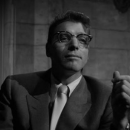
Alexander Mackendrick's SWEET SMELL OF SUCCESS (US)
Friday, 7pm
While much of what today is regarded as film noir depicts atomized characters estranged from public life, Alexander Mackendrick’s SWEET SMELL OF SUCCESS is a dark take on the world of publicity itself. New York locations, James Wong Howe’s signature high-key lighting technique, crackling slang-heavy dialogue by Ernest Lehman and Clifford Odets, a score by Elmer Bernstein and Chico Hamilton—the film offers all of these. But the centripetal force drawing everything together here is Burt Lancaster as the Walter Winchell-alike J.J. Hunsecker. Holding court at “21” Hunsecker, through his newspaper columns and radio programs, as well as the aid of Tony Curtis as the slithery publicity agent Sidney Falco, decides the fate of up and coming performers, advancing talent just as often as viciously crushing it with slangy sangfroid. But J.J. accrues his power though more than an innate dexterity with language; another key is his ability to acquire, withhold, and disclose secrets—both real and fabricated—at opportune times. SWEET SMELL OF SUCCESS is McCarthy’s America, a more proximate look at the sleazy world of scandal L.A. CONFIDENTIAL tried to pastiche, a study in control and manipulation, the cinematic equivalent of Wee Gee’s New York City photography, and, above all, it's Burt Lancaster in a role that will scare the shit out of you. (1957, 96 min, 35mm) [Nathan Holmes]
---
Otto Preminger’s THE MAN WITH THE GOLDEN ARM (US)
Friday, 9:15pm
While it’s generally agreed that THE MAN WITH THE GOLDEN ARM is crap as a Nelson Algren adaptation—Algren himself was so upset with it that he wanted to sue Otto Preminger but couldn’t raise the money for legal counsel—the film remains compelling as the evil twin of GUYS AND DOLLS, another 1955 release that starred Frank Sinatra. Like GUYS AND DOLLS, THE MAN WITH THE GOLDEN ARM takes place in a highly stylized version of an American city, with sets so obviously artificial that you half-expect the doorman from Murnau’s THE LAST LAUGH (1924) to show up. The film also features, like the Runyon-derived musical, a memorable array of cartoonish low-lives, chief among them a gregarious gofer played by Arnold Stang, the future voice of Top Cat. But while GUYS AND DOLLS took a fanciful view of vice, delivering jokes and songs about how fun it is to gamble, THE MAN WITH THE GOLDEN ARM is decidedly bleak. Sinatra plays the ex-con, backroom casino dealer, and recovering heroin addict Frankie Machine. Introduced fresh out of rehab, Frankie dreams of reinventing himself as a jazz drummer but finds himself returning to his old ways of dealing cards and shooting heroin, activities that are forever linked for him. There are two important women in Frankie’s life, each one pulling him toward a different path. His wife (Eleanor Parker), who has feigned to be paraplegic since a car accident a few years earlier (even Frankie remains deceived), wants him to keep his under-the-table job for the easy money, while Molly (Kim Novak), the compassionate woman with whom he once had an affair, believes in his ability to go straight. Sinatra considered his performance here to be his best, and he brings an uncommon innocence and vulnerability to the role; that most of the acting around him is exaggerated doesn’t detract from the nuance he brings to his work. Preminger, for his part, directs the hell out of THE MAN WITH THE GOLDEN ARM, employing deep focus and exquisite, proto-Spielbergian long takes that reframe the action several times within the same shot. Compared with Joseph L. Mankiewicz’s rudimentary use of widescreen in GUYS AND DOLLS, Preminger’s application of the 1.85:1 ratio is masterful. His use of big band jazz and blaring closeups to convey Frankie’s experience on drugs, however, is not, and it isn’t the only aspect of the film that’s of questionable taste. Still, Preminger deserves credit for broaching such controversial subjects as drug addiction, infidelity, and urban blight at a time when Hollywood films were generally avoiding them. The director often chose material that challenged the Hays Code; he would prove a valuable force in bringing it down. (1955, 119 min, 35mm) [Ben Sachs]
---
Howard Hawks' TO HAVE AND HAVE NOT (US)
Saturday, 2:15pm
Adapted by William Faulkner and Jules Furthman from what Howard Hawks described as Ernest Hemingway's worst novel, TO HAVE AND HAVE NOT stars Humphrey Bogart as a professional fisherman named Harry Morgan and Lauren Bacall as Marie "Slim" Browning, with whom Harry falls in love. Set in Martinique in the summer of 1940 shortly after France fell to the Nazis, a bartender at Harry's hotel pleads with him to transport members of the French Resistance between the islands, but Harry stubbornly refuses, determining to stay out of politics. He soon changes his mind when a former client skips out on paying him needed money. Hemingway denied Hawks' ability to make a good film out of "a god damned bunch of junk," but Hawks responded, "Yes I can. You've got the character of Harry Morgan." Although TO HAVE AND HAVE NOT features the budding romance between Harry and Slim, it also centers on Harry's place within the fight between Vichy France and the Resistance on a small Caribbean island. Throughout the film's entirety, Harry repeatedly emphasizes his unwillingness to take sides, in consequence isolating himself from a society that demands he choose. In a brief conversation about the end result of politics and its wars, he may tell us his reason, "I've handled quite a lot of gunshot wounds." Hawks often recycled themes and plots; his most common theme resembles that of Hemingway: to fulfill one's duty in the face of daunting odds. Although Harry does not fight for a cause, he still follows a code that first requires him to be a moral human being. Harry's code compels him to protect Slim and his friend Eddie and to save the lives of two members of the Resistance simply because it is the right thing to do. In his great essay on Hawks from the early 1950s, Jacques Rivette said, "Hawks epitomizes the highest qualities of the American cinema: he is the only American director who knows how to draw a moral. His marvelous blend of action and morality is probably the secret to his genius. It is not an idea that is fascinating in a Hawks film, but its effectiveness. A deed holds our attention not so much for its intrinsic beauty as for its effect on the inner workings of his universe." Hemingway's character of Harry Morgan adapted by Faulkner and Hawks provided the master director with the perfect vehicle to express his singular form of genius. (1944, 100 min, 35mm) [Candace Wirt]
---
Roy William Neill’s BLACK ANGEL (US)
Saturday, 7pm
The object of BLACK ANGEL is sympathy for the devil, or at least sympathy for Dan Duryea. Advertising his starring role in this Universal adaptation of a Cornell Woolrich thriller, the lobby cards led with the tagline “DURYEA! … That fascinating tough-guy of ‘Scarlet Street’!”, referencing a tragic role that built on his already established image as an alluring abuser; he was often quoted as saying that “[my] fan mail goes up every time I tee off on a girl.” As adapted by novelist and screenwriter Roy Chanslor (author of the source material for JOHNNY GUITAR and CAT BALLOU), BLACK ANGEL is certainly fascinated with Duryea’s drink-sodden composer Marty Blair, elevating him from a supporting character in the original story to co-lead with June Vincent’s avenging sleuth Catherine Bennett. In the convoluted plot, Catherine first suspects Marty of murdering his ex-wife (another siren: “Mavis Marlowe”), then teams up with him to hunt the real killer, for her faithless Mr. Bennett has been falsely convicted of the crime. The opening scenes anchor the movie in Marty’s murky subjectivity, first gazing up in a soaring trick shot that travels into his ex’s high-rise apartment, then plunging down below for a depressed barroom reverie before passing out at the piano. (For an alibi, a witness places Blair sleeping off his bender in a locked room at the time of death.) The vertical motif extends to the swank club where Vincent and Duryea team up undercover as a musical duo, a huge establishment where the haughty owner Marko—a prime suspect—keeps his inner sanctum atop a curving stair. The studio needed another heavy for their would-be star to play against, and it’s a compliment to Duryea’s stature that the actor they chose for Marko was Peter Lorre, as iconic a presence in genre pictures of the period as Humphrey Bogart or Edward G. Robinson. Lorre, like Bogart and Robinson, was recognizable enough that caricatures of him showed up in Looney Tunes, but it was Duryea born with the Tex Avery face—in BLACK ANGEL, he’s a downtrodden Droopy Dog suppressing his inner Big Bad Wolf. The major misstep is in the mid-film detour where Marty has a taste of a new life alongside Catherine, even as a necessary kind of false hope, for straight-arrow romance wasn’t the bill being sold. This was the final outing for director Roy William Neill, steward of the Sherlock Holmes franchise with Basil Rathbone, and his delicate, musical direction, particularly in the centerpiece number where Marty accompanies Catherine for a ballad called “Time Will Tell,” insinuates what viewers longed for most—not to have their crooked man face the music, but to see his fingers at the keys, playing them like a song. (1946, 81 min, 35mm) [Brendan Boyle]
---
Robert Altman’s KANSAS CITY (US)
Sunday, 2pm
Robert Altman’s innate curiosity as a filmmaker led him down many paths in his grand attempt to dissect the beating heart of America and to find out what makes it tick, for better or worse. Here, with his jazz-infused crime thriller KANSAS CITY, he takes the 1930s atmosphere he’d developed in THIEVES LIKE US (1974) and mashes it against the sprawling web of interconnected narrative storytelling he had perfected in NASHVILLE (1975), delivering a burst of yowling desperation for a country unaware of how much grimmer the world could get. As with NASHVILLE, KANSAS CITY takes a uniquely American mode of musical storytelling—trading in the mournful guitars of Tennessee for the wailing horns of Missouri—and deploys it as the soundtrack for an exploration of the ugliest building blocks of the American spirit. Altman’s narrative (co-written with semi-frequent collaborator Frank Barhydt) is ultimately concerned with a string of crimes gone disastrously wrong. It’s Kansas City, 1934, and a petty thief (Dermot Mulroney) dons blackface to rob a wealthy Black socialite, only to get caught by local mob boss, jazz club owner, and raconteur Seldom Seen (Harry Belafonte, giving a performance as bellowing as the saxophone in the next room). The thief’s wife—the conniving, Jean Harlow-obsessed Blondie O’Hara (Jennifer Jason Leigh)—figures the only way to fix things is to kidnap the wife (Miranda Richardson) of a local politician to try and blackmail her way back into the right. Amidst this interplay of crime and deceit, Altman provides us with electric footage of modern-day jazz musicians recreating some of the Kansas City jazz that was so integral to the musical stylings of the early 20th century, with dueling saxophones, booming drum sets, and pianos ready to burst. KANSAS CITY, then, continues Altman’s obsessions with American culture, politics, and class, with Richardson’s depressed, laudanum-addicted housewife emerging as the perfect avatar for a country hopped off on wealth and power, doing whatever it can to avoid the rancid rot of the nation’s underbelly. Well, at least the tunes are catchy. (1996, 116 min, DCP Digital) [Ben Kaye]
---
Michael Curtiz’s KING CREOLE (US)
Sunday, 4:15pm
Notable as Elvis Presley's second film and the first that featured him in an onscreen kiss, KING CREOLE simmers with passion and brutality in the New Orleans heat. Michael Curtiz directed, and his experience directing classic film noir in MILDRED PIERCE (1945) and tragic romance in CASABLANCA (1942) brings depth and gravitas to an otherwise surface-level screenplay of poverty and corruption. Curtiz was reportedly impressed by Presley's commitment and acting talent. Though Presley's acting is sometimes wooden and unhoned, he clearly worked hard to succeed in the role and brings his natural charisma and incredible singing talent to round out those deficiencies, especially during his musical numbers. Presley plays Danny Fisher, a struggling teen who’s drawn into the underbelly of New Orleans nightlife. While trying and failing to remain ethical, Fisher falls for both Ronnie (Carolyn Jones), the mistress of local gangster Maxie Fields (played with sinister panache by Walter Matthau), and Nellie, a five-and-dime employee played by Dolores Hart. Hart and Presley had previously performed together in LOVING YOU (1957), his film debut, and their chemistry on screen is tender and convincing. Danny and Ronnie are the electric and tragic center of this noir romance, however. (Audiences may find Carolyn Jones vaguely familiar because she went on to play Morticia Addams in The Addams Family.) As the fallen woman who can't help but lure Danny Fisher into corruption and danger, Ronnie also can't help but try to save him, failing on both counts and succumbing to a typical film noir ending. Though the acting and screenplay can be somewhat disappointing in KING CREOLE, the film endures as an atmospheric spectacle. The opening sequence is especially riveting, showcasing the grit and depth of the French Quarter in lush black and white. Curtiz was known for using dramatic lighting and majestic crane shots in his films and the cinematography often achieves what the screenplay cannot, bringing this story to life in all its tragic, greyscale glory. (1958, 116 min, DCP Digital) [Alex Ensign]
---
Charles Vidor’s LOVE ME OR LEAVE ME (US)
Sunday, 6:45pm
Doris Day's filmography, especially in the 1950s, is dominated by delightful musical comedies and playful farces like CALAMITY JANE (1953), THE PAJAMA GAME (1957), and PILLOW TALK (1959). LOVE ME OR LEAVE ME contrasts sharply with these as a gritty drama. It has become known as featuring one of Day's best performances, playing a determined, complex, and unhappy lead opposite an energetic and forceful James Cagney. LOVE ME OR LEAVE ME was well received by critics and audiences when it premiered in 1955, and critics were pleasantly surprised by Day's range in portraying the real-life Ruth Etting, a night club singer who makes a Faustian bargain with Chicago mobster Martin "The Gimp" Snyder (Cagney) to achieve success on the stage. In exchange for Snyder's controlling and volatile management of her career, which catapults her to the Ziegfeld Follies and eventually Hollywood (where Etting played minor roles and settled into a career in radio), Etting must remain loyal to Snyder, succumbing to his romantic advances and a tumultuous marriage. What could have been another cliched tragic tale of a fallen woman instead unfolds as a battle of wills under the strong writing by Daniel Fuchs and Isobel Lennart—known best as the writer of FUNNY GIRL (1967), a similar biopic of a complex woman performer—and capable direction of Charles Vidor, who directed memorable star turns in COVER GIRL (1944) and GILDA (1946). Numbers like "Ten Cents a Dance" and "Love Me or Leave Me," while compelling spectacles in their own right and opportunities to enjoy Day's incredible singing, also serve a dramatic role as glimpses into Etting's inner turmoil. Day is not the sole star of the film, however; Cagney commands the screen with every boisterous entrance and elicits a surprising amount of sympathy for the lovesick, tragic gangster, even as he behaves atrociously toward Etting. Etting and Snyder's marriage comes to a violent conclusion in the film's climax fitting of any film noir, and the subsequent conflict resolution would defy belief if not for the fact that it is, indeed, based on a true story. (1955, 122 min, 35mm) [Alex Ensign]
---
Raoul Walsh's THE MAN I LOVE (US)
Monday, 4pm
Unclassifiable in that distinctive Walsh way, this punchy/miserable film noir disguised as a melodrama (and vice versa) stars Ida Lupino as a singer caught between the moody musician (or is it just his choice of music?) she loves and the sleazeball gangster she doesn't. There's a lot to be said about Walsh's approach to form in directing (or, in a film this rich, one could almost say "inventing") THE MAN I LOVE, but that might overshadow his crackerjack handling of the actors, who seem to have been driven to the breaking point; this is one of Lupino's finest, fiercest, and most nuanced performances (presaging, in certain ways, Gena Rowlands' work with Cassavetes), and Gary Cooper sound-alike Bruce Bennett musters a surprising amount of depth as the pensive pianist. Out of all the classical studio directors, Walsh had the best nose for milieu, and the film is pungent with late-night nightclub atmosphere: musicians' sweat, cigarette smoke, bad perfume, spilled beer, alleyway piss. Seamy, steamy, brittle stuff. (1947, 96 min, 35mm) [Ignatiy Vishnevetsky]
---
Terence Fisher’s FACE THE MUSIC (UK)
Monday, 9:15pm
Before Terence Fisher became Hammer Films' definitive architect of Gothic horror, he honed his craft on a cycle of modest B-pictures that remain largely overlooked. Among these, FACE THE MUSIC (also released as THE BLACK GLOVE) stands as a distinctive artifact: a British noir whodunit steeped in jazz culture that reveals Hammer's versatility and fits nicely into the niche jazz-noir subgenre. The film emerged from Hammer's early-’50s contract with American producer Robert Lippert, which mandated English-shot crime thrillers starring Hollywood veteran actors or up-and-coming talent to ensure international appeal. Between 1948 and 1957, Hammer produced more than forty such titles, with Fisher directing several entries, including MAN BAIT (1952) and STOLEN FACE (1952). FACE THE MUSIC, adapted by Ernest Borneman from his own novel, arrived at the tail end of this phase. Borneman, a German émigré polymath who was equally ethnologist, sexologist, criminologist, film theorist, and jazz scholar, imbued the screenplay with an insider's understanding of musicianship that creates clues in record pressings and ambidextrous pianists. The narrative follows James Bradley (Alex Nicol), an American trumpet player who ditches an afterparty to head to his hotel and sleep off the rest of his jetlag. The siren song of Maxine Halbard draws him into a nightclub after hours. They have chemistry, witty dialogue, and an affinity for rhyming innuendo. When Brady wakes up the next morning, a misplaced trumpet makes him the prime suspect in the overnight murder of Maxine. The murderer begins tying up loose ends while Brady retraces his steps. He’ll have to figure out who the killer is before he becomes the next victim. Nicol, better known for Westerns and action roles with John Wayne, brings a physical, fish-out-of-water presence to the role of a professional outsider navigating smoky jazz clubs and rain-slick streets. Fisher employs classic noir devices, though his direction remains workmanlike and economical rather than expressionistic. The result is an atmosphere without the flamboyance of visual style that would later define his gothic films. What stands out is the film’s integration of music into the mystery's mechanics. Rather than functioning as background story elements, jazz is woven into the main narrative: a crucial clue hinges on cross-handed techniques, and much of the soundtrack is diegetic, featuring Kenny Baker's Dozen performing on-screen. The clubs function as workplaces, social spaces, and information networks, highlighting Borneman's conviction to putting the world of musicians onscreen as a lived culture not just background movement. As a British noir, the common existential despair of American noir is substituted with gentleman murders and poison-tipped trumpets. FACE THE MUSIC captures a studio and director in transition, experimenting with genre hybridity while refining the skills it would take to soon redefine the Universal Monsters for a new generation. In treating jazz as a methodology, Fisher and Borneman elevate this noir to more than a genre exercise. (1954, 84 min, 35mm) [Shaun Huhn]
---
John Brahm’s HANGOVER SQUARE (US)
Tuesday, 7pm
There’s plenty of terror in John Brahm’s HANGOVER SQUARE, but the horror of what happened offscreen may rival anything in the film. Made soon after THE LODGER (1945)—which Brahm also directed, and which involved both the later film’s screenwriter, Barré Lyndon, and its two stars, Laird Cregar and George Sanders—HANGOVER SQUARE proved that the winning formula had apparently lost its potency, at least among the collaborators, with Cregar and Sanders proving troubled and troublesome, respectively. Based on the 1941 novel by Patrick Hamilton, which 20th Century Fox acquired at Cregar’s behest, the film changed several details of Hamilton’s plot, including moving the story to the early 20th century. Cregar felt these changes made it too similar to THE LODGER. He had also grown increasingly anxious about his image: at six-foot-three and over 300 pounds, Cregar feared that his size would leave him continuously typecast as the villain. Initially, he declined the role in spite of having championed the project; under pressure from the studio he eventually accepted it, but had begun losing weight rapidly, shedding 102 pounds over the course of production of his final two films. He did this with the use of amphetamines, which caused him to behave erratically on set and contributed to the multiple heart attacks that killed him at just 31, months before the film was released. (It’s also been speculated that Cregar was gay, and that his desire to play the lover of women on screen, while presenting himself as one off screen, contributed to his personal turmoil. Though his character can’t necessarily be read as queer, his tumultuous desires take on an even greater intensity through Cregar’s tortured performance.) Sanders plays the detective trailing Cregar’s George Harvey Bone, a composer who goes into fugue states and commits crimes of which he’s not conscious. Sanders, meanwhile, was dissatisfied with the script and punched the film’s producer during a quarrel over its final line; when Cregar died, he wrote that “a tragic resolve was born in Laird’s mind to make himself over into a beautiful man who would never again be cast as a fiend.” Cregar’s performance is heartbreaking, its pathology made all the more palpable by the peripheral agony—it’s a compelling turn, at once shyly vulnerable and unbearably grim. The object of Bone’s obsession, which intensifies his subconscious murderous impulses, is a singer, Netta (Linda Darnell), who uses the composer to boost her own career, distracting him from the concerto on which he’s diligently been working. Bernard Herrmann composed the film’s score, part of which is Bone’s concerto; Stephen Sondheim cited it as an influence on Sweeney Todd. It’s quite a macabre earworm, compounding the eerie atmosphere conjured by Joseph LaShelle’s cinematography. There’s a genuinely terrifying scene that accounts for one of Bone’s fugue murders, involving a towering Guy Fawkes bonfire and the ghoulish cremation of a victim’s body, and it feels as horror-inducing now as it may have then. Despite the on-set friction, much of which was among Brahm, Cregar, and Sanders, the direction is taut, and even though there’s no real mystery per se—it’s made clear from the beginning that Bone is the murderer, even if the police investigation is part of the film’s plot—the tension is extraordinary. It’s hard to say what the film would have been like had so much not been happening offscreen, but, perhaps unfortunately, it’s because of, rather than in spite of, the strife that HANGOVER SQUARE may be even more horrific than its Ripper-esque predecessor. (1945, 78 min, 35mm) [Kat Sachs]
---
Alfred Hitchcock's THE WRONG MAN (US)
Tuesday, 9pm
Alfred Hitchcock adopted a tone of stark realism to tell the true story of a family man (Henry Fonda) falsely incarcerated because he resembled a serial bank robber. The film spares the audience no upsetting details--in Fonda's humiliating imprisonment, the accusations of his former colleagues and, ultimately, his wife's (Vera Miles) going mad from the stress of their plight. THE WRONG MAN denies the audience much of Hitchcock's familiar playfulness (Even grace notes like Hitch's "spot the director" cameo are omitted) in order to address his ongoing themes of guilt and marital discord with blunt seriousness. Needless to say, it was one of the director's least popular American releases; but for the young film critics at Cahiers du cinema who would later spearhead the French New Wave, it was a revelation. A 27-year-old Jean-Luc Godard made it the subject of his first lengthy essay, and Eric Rohmer and Claude Chabrol devoted an entire section to it in their book Hitchcock: The First Forty-Four Films. Their descriptions are worth quoting at length [Note: there are spoilers], as they demonstrate how Hitchcock's experiments with realism, rooted in a firm moral position, made possible many of their own experiments: "The most diverse styles blend very happily in this film, and their successive use in no way disturbs its perfect homogeneity. We are spared many intervals (spatial or temporal), but certain seemingly unimportant moments are evoked in exactly the time they take in real life. This is true of the scene of the handwriting check, or the one in which Balestrero's wife phones the lawyer. The point of view is only seemingly subjective. Though we see things with Balestrero's own eyes... the protagonist remains outside us, just as he is outside himself... The film's conclusion [in which Balestrero is freed but his wife remains committed to an asylum] is obviously ambiguous, but this is no hedge: the ambiguity is in things themselves. It is characteristic of Hitchcock to show us both sides of the coin. His work moves between two poles which, like extremes, can meet. We have called this moment 'exchange': let us recognize that it here finds its most noble expression in the idea of interchangeable guilt of all mankind." (1956, 105 min, 35mm) [Ben Sachs]
---
Bertrand Tavernier’s ’ROUND MIDNIGHT (US/France)
Wednesday, 6:30pm
Famous jazz saxophonist Dale Turner (a remarkable Dexter Gordon) comments apprehensively while sitting at the French seaside that, “the world is inside nothing.” He’s reflecting a theme running through ’ROUND MIDNIGHT about the unwieldiness of not only interpersonal connections but understanding oneself. Based on true events and real figures (the film is dedicated to musicians Bud Powell and Lester Young), French director Bertrand Tavernier examines the experiences of Black expatriates who decided to escape the racism of mid-century America and play music in the more accepting Paris. Dale, an alcoholic recovering from other drug addictions, plays regularly at a club in the city. He’s surrounded by fellow musicians, played by real-life jazz artists including Bobby Hutcherson and Herbie Hancock (who won an Academy Award for Best Original Score for the film). Dale is befriended by jazz enthusiast Francis (François Cluzet), a struggling visual artist and single father. Francis takes Dale in and helps him to get sober and revive his career. As noted by a dying pal of his at the beginning of the film, however, Dale can’t run away from himself, and his past tragically catches up. A softly lit, intimate, storybook Paris is interrupted by Dale’s recollections of his time in America, Tavernier grounding those scenes in a documentary-like quality, emphasizing the real historical context of Dale’s experience. ’ROUND MIDNIGHT is a showcase for Gordon’s quiet yet commanding performance, and it also features prolonged scenes of outstanding jazz performances by some of the best. Tavernier never lets the genius of Dale outshine the way it affects those around him. The women in this world especially are expected to be reliable caretakers. His friend Buttercup (Sandra Reeves-Phillips) is constantly looking out for him; the audience discovers that she herself is an accomplished performer only much later in the film. Even Francis becomes a caretaker as he prioritizes Dale’s career over all else—he asks his ex-wife (Christine Pascal) for money to help at one point. The sweet relationship between Dale and Berangere is reflected in Dale’s estranged relationship with his teenage daughter back in New York City. These swirling relationships demonstrate ’ROUND MIDNIGHT’s thoughtful meditation on the nature of internal and external struggles and the great task of finding some kind of harmony in it all. (1986, 131 min, DCP Digital) [Megan Fariello]
---
Screenings from Friday through Sunday will be hosted by Eddie Muller, Film Noir Foundation founder and host of TCM's Noir Alley, and screenings from Monday through Thursday will be hosted by FNF board member Alan K. Rode, author of Michael Curtiz: A Life in Film. View the full schedule here.
📽️ CRUCIAL VIEWING
Tom Palazzolo’s CALIGARI’S CURE (US)
Chicago Film Archives and the Chicago Film Society at Constellation (3111 N. Western Ave.) — Thursday, 8pm
Inspired by the archetype of German expressionist film, THE CABINET OF DR. CALIGARI, Chicago-based underground filmmaker Tom Palazzolo’s first feature length narrative is a cartoonishly whimsical examination of his childhood. CALIGARI’S CURE features actors from the School of the Art Institute playing children and adults alike, emphasizing the idiosyncrasies of the director’s working-class Catholic midwestern upbringing. Chicago stands in for 1940s St. Louis, with the outdoor city shots amusingly mismatching with vibrantly painted canted and oversized indoor sets. The mise-en-scène stresses that—despite scenes of childhood friends pretending to be a married couple—even the adult characters are playing house in this constructed world. Particularly striking is the consistent engagement with the role of women at the time. This is established in the film’s opening monologue, given directly to the audience by the mother, who casually explains how she ended up in her marriage. Despite the film essentially being from Palazzolo’s own observations of his youth, the women characters stand out as the driving force. Delightfully unkempt, CALIGARI’S CURE balances dark humor with a warped sweetness. Childhood occurrences continually blend into one another, reminiscent of distorted memory or dreams. Through the dissection of familiar tropes and visual references and by merging a classic cinema homage with underground filmmaking, Palazzolo imaginatively—but not completely contemptuously—scrutinizes both his personal history and midcentury American culture in general. Preceded by Palazzolo’s 1966 short film VENUS AND ADONIS (19 min, 16mm), with an introduction and post-screening discussion with Palazzolo. (1982, 65 min, New 16mm Preservation Print) [Megan Fariello]
An Evening With Karimah Ashadu (Nigeria/Germany/Experimental)
Conversations at the Edge at the Siskel Film Center — Thursday, 6pm
Video artist Karimah Ashadu has found about as many angles as one could hope to find on the intricacies of labor and capital flow. This CATE screening, held in concert with exhibits of Ashadu’s work opening this month at both the Art Institute and the Renaissance Society, collects three of her videos exploring different facets of Nigerian labor. The shortest and most abstract of the bunch, KING OF BOYS (ABATTOIR OF MAKOKO) (2015, 5 min, Digital Projection), also offers the most obscure look at a labor practice. While Ashadu rotates her camera back and forth behind a red plastic filter, we see a group of people butchering various animals at tables in the open air. The filter play creates a sort of peek-a-boo effect, with the carnage of the practice coming startlingly back into focus each time the consuming red tint is removed. The other videos offer firmer explanations of the practices therein. BROWN GOODS (2020, 12 min, Digital Projection) is shot in Germany but features Nigerian workers dealing largely with Nigerian capital, buying discarded items like furniture, appliances, and car parts to ship back for resale in their home country. In voiceover, our main subject carries a certain bitterness due to being a highly educated man who was forced out of his home and ended up in Hamburg after a long path of refugee resettlement. Though the marginal work is not what he wants, it’s still highly skilled, with our narrator functioning almost like a day-trader who needs to stay abreast of shifting demand and the availability of goods around him, keeping ready to pounce on purchases as needed. This theme of forced adaptation runs strongly through PLATEAU (2022, 30 min, Digital Projection) as well, with Ashadu training her eye on tin miners in the Plateau state. As we hear it, the current scale of the mining practice dates back to British colonial rule in the region, during which time the colonizers founded many of the mines, stripped them for resources, and left little wealth behind when they left. Today, mining is still a central part of the local economy, but locals are forced to re-till the same mines to diminishing returns, risking further harm to the land and their bodies in the process. This is handily the most visually dynamic of the three, with Ashadu’s various perspectives of the workers and their quarries defamiliarizing the landscape such that the dirt and water defy gravity in an omnidirectional flow. The soil, barren as it seems to be, carries such rich shades of orange and brown that the film’s contrasted shots of greenery (specifically cacti, the only plant that can grow in the conditions) feel muted by comparison. In the narrated videos, Ashadu’s subjects tend to spell things out for the viewer. While this might run afoul of the general sense that one should show, not tell, this feels deliberately of a piece with her radically labor-oriented approach. Taking care to not graft metaphors or interpretations onto the labor that the laborers aren’t making themselves, she allows her subjects to be the drivers of meaning in the work. As far as working modes for a truly materialist cinema, hers seems to be endlessly fruitful. [Maxwell Courtright]
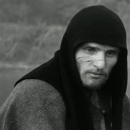
Andrei Tarkovsky's ANDREI RUBLEV (USSR)
Siskel Film Center — Saturday, 11:30am; Sunday, 2:30pm; and Wednesday, 6pm
A strong contender for the greatest Soviet film, Andrei Tarkovsky’s second feature (completed in 1966 but not shown publicly until 1969 and not released in its native country until 1971) is immersive and overwhelming, steeping viewers in a stunningly detailed recreation of the medieval world and offering profound meditations on the nature of human suffering, the social value of art and religion, and the possibility of achieving transcendence in earthly affairs. It’s also one of the most formally accomplished of all movies, featuring some of the densest mise-en-scène you’ll ever see and unfolding in meticulously choreographed long takes that suggest a ghostlike presence moving through the world. “At once humble and cosmic, Tarkovsky called RUBLEV ‘a film of the earth,’” J. Hoberman noted in his essay for the Criterion Collection. “Shot in widescreen and sharply defined black and white, the movie is supremely tactile—the four elements appearing as mist, mud, guttering candles, and snow. A 360-degree pan around a primitive stable conveys the wonder of existence. Such long, sinuous takes are like expressionist brush strokes; the result is a kind of narrative impasto.” The film charts the adult life of a 15th-century monk and painter who developed his talent as an artist around the same time as the Tartars were invading Russia. Tarkovsky presents the glories of Rublev’s creative process and the horrors that surrounded him, dramatizing the eternal struggle between the best and worst impulses of humankind. Interwoven throughout this struggle are visions that register like spiritual epiphanies, from the allegorical opening sequence (which imagines another artist who manages to fly above the world, only to destroy himself in the process) to the audacious re-imagining of the Crucifixion in a Russian snowscape to the reverential close-ups of Rublev’s paintings that conclude the film. Screening as part of Andrei Tarkovsky: Complete Retrospective. (1966, 183 min, DCP Digital) [Ben Sachs]
Siu-Tung Ching, King Hu, and Raymond Lee’s SWORDSMAN (Hong Kong)
Music Box Theatre — Saturday, 11:30am
Like the wind-wielding martial artists featured in the film, SWORDSMAN is a kinetically moving example of the wuxia genre. Its frenzied pacing may also be due in part to its troubled production: its original director King Hu left the project, and it was finished by a team of filmmakers, including its producer, Tsui Hark. That doesn’t diminish from the film; it’s filled to the brim with characters and plot, showcasing exciting choreography as it swiftly moves from impressive set piece to impressive set piece. It clearly struck a chord with audiences, as well, as its success resulted in two follow-up films. SWORDSMAN features Sam Hui as an affable warrior of the Huashan Sect and his younger follower (Ceclia Yip), who’s been posing as a boy on their travels. They find themselves entangled with various sects in search of a scroll stolen from the imperial palace that contains powerful, magical martial arts secrets. Amidst the action are a few quiet moments, including comedic bits and memorable musical interludes featuring a theme song written by James Wong. These passages underscore the themes at the heart of SWORDSMAN: the emotional bond between teacher and student and the collaborative and significant act of sharing and passing on knowledge. (1990, 120 min, 35mm) [Megan Fariello]
Siu-Tung Ching’s SWORDSMAN II (Hong Kong)
Music Box Theatre — Sunday, 11:30am
With only one credited director this time around, SWORDSMAN II maintains the brimming-over quality of the first film, with a bewildering plot buoyed by a constant stream of wuxia swordplay, humor, and political intrigue. The film also amps up the effects, starting off with a horse being split in half, continuing with memorable imagery like a rain of snakes, and many exploding bodies. Almost the entirety of the cast is replaced for this sequel; our genial, wine-obsessed hero, Ling Wu Chung, is this time played by martial arts star Jet Li, with Michelle Reis cast as his junior companion, Little Brat. The Huashan Sect pair are planning on retiring soon, but, of course, there’s way too much discord in the martial arts world for them to walk away. SWORDSMAN II’s running themes of gender and metamorphosis particularly stand out; tired of being teased for being clumsy and boyish, Little Brat attempts to be more ladylike throughout. These themes are even more evident in the film’s main villain, Invincible Dawn (Brigitte Lin), whose increasing power—via the magic martial arts scroll from the first film—gradually transforms him into a woman; his martial arts style, too, becomes more feminine, using needles and thread to channel his powers. (1992, 107 min, 35mm) [Megan Fariello]
Sidney Lumet's DOG DAY AFTERNOON (US)
Music Box Theatre — Monday, 1pm
In DOG DAY AFTERNOON, Sidney Lumet exploited his theatrical background to electrifying effect, building consistent dramatic tension from the essential mise-en-scene of a few stark locations and ramped-up performances. AFTERNOON has been justly canonized for Al Pacino's star turn, a product of genuine exhaustion and second-wind adrenaline (Pacino nearly turned the film down because it began shooting immediately after the epic schedule for THE GODFATHER PART II had wrapped); yet it's only one bright spark among a uniformly wired cast. Going against his usual loyalty to the written word, Lumet encouraged his actors to improvise after rehearsing Frank Pierson's script for seven weeks. The process yielded a unique performance style—which was, on the whole, perhaps Lumet's greatest contribution to movies—that combined the specific, spontaneous gestures of film acting with the internalized characterizations common to stage drama. The film depicts an infamous Brooklyn bank robbery of 1972, committed by a married man who wanted to raise the money for his male lover's sex change operation. The botched robbery devolved into a highly publicized hostage standoff, and under Lumet's direction, the events play out as a series of escalating, acutely realized crises. Thanks to the extended rehearsal period, everyone on screen seems confident in their daily business—be it running a bank or negotiating for the FBI—yet the demands of improvisation make everyone visibly, and convincingly, nervous. The film generates great suspense as well as comedy (note the scene where John Cazale's ad lib about Wyoming nearly makes Pacino crack up), often at the same time, as in Pacino's impassioned and ultimately exhausting phone conversation with his lover (Chris Sarandon). It's also worth noting that the exterior shots present some exciting snapshots of New York in the mid-’70s and that the film's sexual politics don't feel particularly dated. Introduced by film historian Rachel Walther, author of Born to Lose: The Misfits Who Made Dog Day Afternoon. (1975, 125 min, 35mm) [Ben Sachs]
📽️ ALSO RECOMMENDED
Apichatpong Weerasethakul’s MYSTERIOUS OBJECT AT NOON (Thailand/Netherlands)
Siskel Film Center — Saturday, 2pm and Monday, 6pm
On the one hand, Apichatpong Weerasethakul’s first feature is plainly enamored with the people, places, and culture of Thailand; on the other, the filmmaker has cited mostly international works as influences on the movie. Apichatpong, as we’re all fond of saying, studied at the School of the Art Institute, and he made excellent use of his time here, visiting the Art Institute itself on countless occasions and checking out plenty of screenings at the Film Center. He says the inspiration for MYSTERIOUS OBJECT AT NOON came principally from two Chicago experiences: one was absorbing the Art Institute’s collection of surrealist art, especially Joseph Cornell’s boxes and the exquisite corpse drawings from France; the second was attending a Film Center series on the Iranian New Wave, where he saw how Abbas Kiarostami and Mohsen Makhmalbaf blended fiction and documentary techniques in such masterpieces as CLOSE-UP (1990) and SALAAM CINEMA (1995). MYSTERIOUS OBJECT AT NOON (the name itself suggests an exquisite corpse drawing) was shot with non-actors around Apichatpong’s native country, and in surrealist fashion, he asked the performers to take turns writing the story. In addition to filming their brainstorming sessions, Apichatpong filmed the stories themselves, alternating between fiction and nonfiction filmmaking approaches as the shoot progressed. Editing took two years, as the filmmaker shaped the disparate material into a piece of cinema that flows musically between reality and fantasy. The tone of MYSTERIOUS OBJECT AT NOON is dreamy and gentle in the manner that would become Apichatpong’s signature, reflecting a welcoming acceptance of all who pass before the camera. Whether the writer/subjects are urbanites from Bangkok or villagers he met on his travels around Thailand, Apichatpong gives everyone space to imagine. What they create is by turns silly, folkloric, fantastical, and incomprehensible, after the fashion of classic surrealist art. At the same time, Apichatpong’s observant and reverential views of the Thai landscape ground everything in an earthy realism. An ingratiating debut by a modern master. (2000, 90 min, DCP Digital) [Ben Sachs]
Tsai Ming-liang's GOODBYE, DRAGON INN (Taiwan)
The 400 Theater — See Venue website for showtimes
Tsai Ming-liang's GOODBYE, DRAGON INN is a gorgeous, heartbreaking, and strangely exhilarating film. Set in a condemned Taipei movie palace, on the occasion of its sparsely attended, last-ever film screening, GOODBYE is a bizarre drama of fleeting passions and empty spaces, which meditates on the slow death of the traditional moviegoing experience even as it formulates audacious cinematic poetry that relies on its viewers' participation in that same moribund ritual. Along with contemporaries like Bela Tarr, Hou Hsiao-Hsien, Apichatpong Weerasethakul, and Gus Van Sant, Tsai makes profound use not only of silence, but also slowness and extreme long takes, reinventing the concept of Bazinian realism with topical potency. It is cinema that, when experienced in the proper setting, engulfs completely, proving that there are tricks other than CGI and accelerated montage that filmmakers can use to dazzle modern audiences. The proper setting is, of course, a movie theater. Though nothing can take away from the richness (and strangeness) of Tsai's characters or the beauty of his mise-en-scène, the pure magic of his tone and pacing is largely dispelled by small screens and remote controls. (2003, 82 min, DCP Digital) [Darnell Witt]
Pascale Plante’s RED ROOMS (Canada)
The Davis Theater — Thursday, 7pm
During a nationally publicized murder trial for a man accused of torturing young girls and streaming the acts on the dark web, the bulk of the crowds and news stations relate to the story with a sensationalist shock and awe. Two women break this mold: Clémentine (Laurie Babin), whose wide-eyed insistence on the man’s innocence feels pathological from the get-go, and our protagonist Kelly-Anne (Juliette Gariépy), a chic fashion model/internet poker player/hacker whose commitment to the case is more opaque. Both women line up outside the courthouse daily to observe the trial, growing closer and becoming, seemingly, each other’s only friend. In an era of genre movies that refuse to commit to genre thrills in service of a “serious” dramatic angle, RED ROOMS is one that fits that mold but feels more purposeful in its skewing of the stakes. It’s a courtroom drama, but the case feels all but solved; it’s a serial killer film with no threat of more kills. The salacious material is kept entirely offscreen, leaving the locus of the spectacle not in the violence itself, but in the obsession of those who seek it out. Plante uses a varied system of visual techniques, punctuating meandering long takes with more stylized body-mounted shots and occasional datamoshing. Across these modes, the constant is Gariepy’s gaze. As a true thriller of the 2020s, the film relies on witnessing the act of witnessing, trying to read a face that’s seen too much and compulsively seeks more. Fincher and Haneke seem like obvious influences—Plante inverts grotesque spectacle to look at those obsessed with grotesque spectacle, to the degree that they become one themselves. There’s also a pervasive sense that media is at the root of this all, and that mass media apparatuses are best at centering and amplifying the worst parts of our history both personal and national. Plante fits well in this lineage of “chilly” directors, evincing a sort of empathy that’s rooted in horror when one needs a clinical distance to confront the worst elements of themselves. Plante, like his forebears, is fundamentally interested in alienation. While his last feature, NADIA, BUTTERFLY (2020) was a completely different film on its surface, it too was a story of a woman (an olympic swimmer) struggling to bridge the gap between the innate loneliness of solo athletics and a shared sense of accomplishment with her team. Plante, perhaps more like Kiyoshi Kurosawa, uses loneliness as the gears of plot, with characters’ psychology responding to fill absences in their lives. While his last protagonist shrank from public attention, RED ROOMS is fundamentally a film about two people grasping for the intensity of their gaze to be returned to them. That desire is what motivates the film as it builds into a more conventional psychological thriller by its climax, but it underscores the film’s most lasting effect too: a consideration of what it means for the viewer to watch the watchers. Followed by a virtual Q&A with writer-director Plante moderated by Scott Tobias. (2023, 118 min, DCP Digital) [Maxwell Courtright]
Nagisa Oshima’s IN THE REALM OF THE SENSES (Japan/France)
The 400 Theater — See Venue website for showtimes
Nagisa Oshima once wrote that he tried as much as he could to eliminate the color green from his films because gardens and gardening played such an important role in Japanese culture. So profound was Oshima’s hatred for Japan, with its recent history of militarism and war atrocities and its ongoing endorsement of conformism and repression, that he let it shape even the most basic aspects of his mise-en-scène. The writer-director’s one-man revolt against Japanese society assumed numerous forms of expression, none perhaps more daring than IN THE REALM OF THE SENSES, a film made in open defiance of the country’s pornography laws. The movie abounds with images of genitalia and penetration, both of which remain illegal in Japan; Oshima shot it on a closed set, then snuck the footage out of the country to be edited in France. When he published an illustrated version of the screenplay in Japan in 1978, he was put on trial for obscenity and acquitted only in 1982. As part of his defense and in his writing about the film, Oshima argued that explicit depictions of sex had the potential to dissolve the taboos surrounding it—and this made such depictions not only permissible but necessary. Likewise, Catherine Breillat (one of the film’s greatest admirers) has said that IN THE REALM OF THE SENSES demonstrates that pornography had nothing to do with a film’s content and everything to do with the nature of the gaze upon that content. Clearly, Oshima did not make pornography—his reliance on static medium long takes during the sex scenes is deliberately cold, and the sex has too much to do with the development of character and theme to function as straightforward titillation. Based on a true story that had already been filmed in 1975, IN THE REALM OF THE SENSES depicts an infamous affair from 1936 between an upper-middle-class man, Kichizo Ishida, and a geisha house servant woman, Sada Abe. Though both were married to other people, the two became so addicted to sex with each other that they separated themselves from society to consummate their relationship as much as they could. Their relationship came to an abrupt halt when Abe accidentally killed Ishida while asphyxiating him, with his consent, during intercourse. Oshima tells this story by focusing intensely on the couple’s lovemaking, gradually to the exclusion of all else. The mood is claustrophobic—when Ishida leaves his hotel room and walks past a military procession late in the movie, the presence of real life seems like a non sequitur. Yet this is arguably the most important shot of the film, as it makes explicit the parallel that Oshima has been drawing throughout IN THE REALM OF THE SENSES between Ishida and Abe’s affair and Japan’s reckless turn to imperialism and militarism, which also reached its height in 1936 and which proved far more destructive. For Oshima, that historical development is the true obscenity. (1976, 102 min, DCP Digital) [Ben Sachs]
Michael Mann's COLLATERAL (US)
The Davis Theater — Tuesday, 7pm
Tom Cruise's final line in COLLATERAL is "This is what I do for a living," shouted with angry determination while holding a gun at the ready. It's a key moment in Michael Mann's filmography, a distillation of themes he'd been working on for more than a decade but presented as just another detail necessary to the film's restless momentum. Mann had always been fascinated with the costs of high professionalism—lives that must be lived outside the culture at large (in this sense, he's as much of an "underground" filmmaker as Jim Jarmusch)—but starting with THE INSIDER, his subject became the elusiveness of integrity itself. This approach came about pragmatically, when Mann set out to reinvent the modern docudrama (shifting its orientation from the meaning of events to their impression on individuals); in COLLATERAL, a preposterous story that could have been fleshed out by any hack director, it achieves an abstract beauty. The film was Mann's first in digital video—used, he said, to find new textures in a city under winter night—and it is a marvel to behold on the big screen, something like a moving exhibition by Chuck Close or Richard Estes. But there is an authenticity to the emotions, too, which is why Mann regularly stuffs his casts with great character actors. Special attention should be paid to Barry Shabaka Henley, a Mann regular since ALI, who has a remarkable scene as a jazz club owner quietly made aware of his own mortality; yet Jamie Foxx is overwhelming in the lead. Underplaying a taciturn cab driver forced to play chauffeur for a hitman (Cruise) on a night of work, Foxx builds a complex performance out of naked dread. It is not the fear of death that shapes this character, but the fear that he may die having made so little of himself. The action scenes in the movie's final third—which eschew special effects for brilliant stunt work and a masterful use of locations in downtown LA—are cathartic, intense, and unsettling. Screening as part of the Big Screen Classics series. (2004, 120 min, DCP Digital) [Ben Sachs]
David Cronenberg's CRIMES OF THE FUTURE (Canada)
The 400 Theater — See Venue website for showtimes
David Cronenberg is the most phenomenological of directors. I never feel more aware of being human, more embodied than while watching his films. This is certainly spurred on by his visual body horror, but it’s also found in his fascinating themes about what it means to exist—about consciousness being firmly grounded in the corporeal and whether technology amplifies or obstructs that experience. CRIMES OF THE FUTURE is this Cronenberg at his best, with themes from his previous films coalescing and evolving into something new. Particularly reminiscent of his last true body horror, eXistenZ (1999), where video game consoles are essentially external organs, CRIMES OF THE FUTURE imagines technology as textured and tangible, beautiful and grotesque; with a lot to admire in the film, the viscerally stunning design of the futuristic technologies stands out. It's set in a dystopian future where humans are mutating so they no longer feel pain, surgeries are performed on the streets and new government agencies like the National Organ Registry are founded. Kristen Stewart’s Timlin, an enthusiastic and awkward assistant at that agency, is the highlight in a film of striking and funny performances. But the protagonist here is Saul Tenser (Viggo Mortensen). He and his partner Caprice (Léa Seydoux) are well-known performance artists, sensually using Saul’s body— primarily the unique organs he can grow—as their canvas. They find themselves at the center of a secretive conflict about humanity’s future —will these strange new mutations be stopped or is there a leaning into the evolution? The plot draws heavily on neo-noir, as Saul covertly slinks through the city, trying to uncover secret factions at work. CRIMES OF THE FUTURE is overall claustrophobic; this dilapidated future is rich with dark corners, shadows, and crumbling structures. At one point a character speaks of the interior of the body as "outer space," suggesting the external world is empty compared to what’s going on inside. The science-fiction world of CRIMES OF THE FUTURE is completely realized, but expertly reveals only so much of its secrets, leaving one with the disappointment that it must end and an eagerness to revisit all of Cronenberg’s work. (2022, 107 min, DCP Digital) [Megan Fariello]
Na Hong-jin’s HOPE (South Korea)
The 400 Theater, Alamo Drafthouse, and the Music Box Theatre — See Venue websites for showtimes [Starts Wednesday]
HOPE is the most expensive South Korean film to date, and when you look at it alongside any recent Hollywood monster movie of its scale, you realize just how idiosyncratic and daring it is. Na Hong-jin (returning to filmmaking after a ten-year absence) accomplishes some jaw-dropping shifts in tone, from subdued drama to white-knuckle horror to nauseating gross-out comedy, resulting in a truly panoramic blockbuster. For roughly its first half-hour, HOPE plays like a Godzilla movie by way of Nuri Bilge Ceylan, following a handful of human characters as they survey the damage wrought by some unseen giant alien creatures in and around a small town near the northern border of South Korea. Na’s commanding widescreen compositions make exceptional use of the woody, mountainous terrain and hint at everlasting offscreen space, where untold further atrocities wait to be discovered. A sense of dread builds slowly, artfully; like Ceylan, Na works in long takes and alternates unpredictably between wide and medium shots, so that every edit becomes an event. When the aliens do appear, however, HOPE shifts gears and becomes as kinetic a film as you’ll ever see. Indeed, this may be the most accomplished movie of its kind since MAD MAX: FURY ROAD (2015) in that it conveys worlds of detail while barreling forward at breathtaking speed. It will likely take multiple viewings to parse everything Na has put into his frames, but HOPE works perfectly well as a suspense picture, with multiple chase sequences so brilliantly engineered that the craft seems invisible and the action sucks you in like a cyclone. In between the action set pieces, HOPE develops much like Na’s previous two features, THE YELLOW SEA (2010), and THE WAILING (2016), two-and-a-half-hour affairs that carefully meted out their networks of characters in novelistic fashion. Here, the writer-director shifts between a few groups of characters, including law enforcement agents, some vigilantes who decide to hunt the aliens for sport, and finally the aliens themselves, whose perspective enters the film only near the end but has a seismic impact on everything that’s occurred before. The intricate visual design of the aliens reflects the richness of Na’s imagination, ditto the various human responses to their arrival. The film is ultimately concerned with civil society at present vis à vis how it’s likely to respond to great change, and Na’s observations on this front confirm the bitter irony of the title. (2026, 156 min, DCP Digital) [Ben Sachs]
William Asher’s BUTCHER, BAKER, NIGHTMARE MAKER (US)
Alamo Drafthouse — Tuesday, 9:30pm
William Asher’s BUTCHER, BAKER, NIGHTMARE MAKER (later released as NIGHT WARNING) is exactly the kind of exploitation film that takes decades to find the right audience. On the surface, it’s a lurid collision of slasher, hagsploitation, melodrama, and a TABOO (1980)-inspired Oedipal psychodrama. Brimming with log lines as plot threads: a sexually-aggressive aunt wants her nephew all to herself, a brutal murder with attempted cover-up, a persecuted and bullied teen, a bubonic plague of a bigoted cop, and a family secret scratching to be uncovered. With all of these frayed-ends, there’s still a pointed critique of Reagan-era “family values” and gay panic—or, institutional homophobia. Asher is an unlikely director for such material. His résumé includes directing numerous episodes of I Love Lucy and Bewitched. Nothing in Asher’s credits prepares you for Aunt Cheryl. She is a spectacularly unstable Grand Dame Guignol, shifting from cheerful and handsy to abusive, flirtatious, and murderous. Aunt Cheryl has raised Billy (Jimmy Mcnichol) since he was a toddler. (The roadside accident that knocks the parents out of the picture is a Tom Savini-worthy decapitation as they plow into the back end of a logging truck.) At seventeen, Billy has his sights set on college and an athletic scholarship. When murdering a TV repairman and lying about being sexually assaulted doesn’t work to keep Billy at home, Cheryl uses more drastic measures. Aunt Cheryl attempts to infantilize Billy by dosing his milk. Soon, she ruins his chances of going to college and her claws sink further into him. She will not end up alone. Tyrrell’s epic performance conveys Cheryl’s fear of loneliness that has curdled into possession-at-all-cost. Meanwhile, the film has a second monster in bigoted detective Joe Carlson (Bo Svenson). Once Carlson discovers that the murdered TV repairman was gay and had been involved with Billy's basketball coach, Tom Landers (Steve Eastin), he constructs an elaborate homosexual conspiracy around Billy. With no evidence of this ‘gay plot,’ Carlson’s partner tries to steer the investigation toward Aunt Cheryl, but Carlson is ready to persecute gays. He uses homophobic slurs, harasses Coach Landers into quitting his job, and even with visible evidence to the contrary, still believes homosexuals are to blame. This is where BUTCHER, BAKER becomes unexpectedly subversive. The film contains vicious homophobic language, but the f-slurs are all slung by the villains and fools— this includes Bill Paxton’s cameo as Billy’s bully. Coach Landers, as gay representation in film at the time, is neither treated as a stereotype nor a doomed victim. He’s simply a gay man whose partner was brutally murdered. He’s a coach who cares about his students. He is the film's most sympathetic adult figure. The heterosexual nuclear family, meanwhile, is revealed as the true site of violence. Cheryl's possessiveness means keeping Billy drugged and killing anyone who attempts to interfere, while Carlson's institutional authority is fixated on bigotry, he fails to protect a child from abuse. These monsters deserve punishment. The manic tonal shifts and camp melodrama are not accidental. Screenwriter Alan Jay Glueckman, who was adopted and later came out to parents who dismissed his sexuality as a phase, understood the terror of having others dictate who you are. Billy is denied the chance to discover his own identity because everyone around him insists on defining it for him. His freedom from abusers comes with the burden of trauma. BUTCHER, BAKER, NIGHTMARE MAKER revels in a few trashy pleasures but also smuggles in real life horror: homophobic authorities do not protect, family values conceal domestic abuse, and liberation means finally escaping everyone else’s idea of who you should be. Screening as part of Terror Tuesdays. (1981, 96 min, Digital) [Shaun Huhn]
Ringo Lam's FULL CONTACT (Hong Kong)
Alamo Drafthouse — Wednesday, 9:30pm
In many of the films of Don Siegel, you will encounter a scene or two of violence that shocks you not because of its explicitness but because the cruelty behind it is rendered so vividly that you all but feel it—consider the attacks on children that occur in THE LINE-UP (1958) and THE KILLERS (1964) or the effects of the warden’s sadism in ESCAPE FROM ALCATRAZ (1979). In many of the films of Ringo Lam, almost every scene is like this. The brutality of Lam’s most characteristic work may be unrelenting, but it is also exactingly staged, kinetic, and vigorous, reflecting a kind of purity of creative vision. If there’s a cinematic equivalent to the trilogy of Rick Rubin-produced masterpieces that Slayer released between 1986 and 1990, it’s probably a film like FULL CONTACT, where the violence is punishing by design yet also cathartic and exhilarating. More importantly, the painfulness of the stabbings and shootings marks a serious artistic response to a world where corruption is rampant, most relationships end in betrayal, and sometimes having to maim or murder everyone in sight is the only way to survive. Lam’s favorite leading man Chow Yun-fat (whom the director had known since his acting school days in the 1970s, effectively making him the De Niro to Lam’s Scorsese) stars as Gou Fei, a decent guy who’s forced to join a group of psychotic, trigger-happy criminals to help his best friend pay off a loan shark in Bangkok. The group stages a number of heists that might also be described as terrorist attacks, given how many innocent civilians get killed. When the leader of the group (Simon Yam) crosses Gou Fei after one heist and leaves him for dead, the protagonist drops his heroic attitude and sets his sights on bloody revenge. FULL CONTACT was one of Lam’s less successful films in Hong Kong because audiences were apprehensive about seeing the lovable Chow Yun-fat play such a violent criminal; in fact, Chow’s reliable charisma ends up having a palliative effect on Lam’s nihilistic vision. Screening as part of the Weird Wednesday series. (1992, 104 min, New 4K DCP Digital Restoration) [Ben Sachs]
Ringo Lam's FULL CONTACT (Hong Kong)
Alamo Drafthouse — Wednesday, 9:30pm
In many of the films of Don Siegel, you will encounter a scene or two of violence that shocks you not because of its explicitness but because the cruelty behind it is rendered so vividly that you all but feel it—consider the attacks on children that occur in THE LINE-UP (1958) and THE KILLERS (1964) or the effects of the warden’s sadism in ESCAPE FROM ALCATRAZ (1979). In many of the films of Ringo Lam, almost every scene is like this. The brutality of Lam’s most characteristic work may be unrelenting, but it is also exactingly staged, kinetic, and vigorous, reflecting a kind of purity of creative vision. If there’s a cinematic equivalent to the trilogy of Rick Rubin-produced masterpieces that Slayer released between 1986 and 1990, it’s probably a film like FULL CONTACT, where the violence is punishing by design yet also cathartic and exhilarating. More importantly, the painfulness of the stabbings and shootings marks a serious artistic response to a world where corruption is rampant, most relationships end in betrayal, and sometimes having to maim or murder everyone in sight is the only way to survive. Lam’s favorite leading man Chow Yun-fat (whom the director had known since his acting school days in the 1970s, effectively making him the De Niro to Lam’s Scorsese) stars as Gou Fei, a decent guy who’s forced to join a group of psychotic, trigger-happy criminals to help his best friend pay off a loan shark in Bangkok. The group stages a number of heists that might also be described as terrorist attacks, given how many innocent civilians get killed. When the leader of the group (Simon Yam) crosses Gou Fei after one heist and leaves him for dead, the protagonist drops his heroic attitude and sets his sights on bloody revenge. FULL CONTACT was one of Lam’s less successful films in Hong Kong because audiences were apprehensive about seeing the lovable Chow Yun-fat play such a violent criminal; in fact, Chow’s reliable charisma ends up having a palliative effect on Lam’s nihilistic vision. Screening as part of the Weird Wednesday series. (1992, 104 min, New 4K DCP Digital Restoration) [Ben Sachs]
Mira Nair's MISSISSIPPI MASALA (US)
Siskel Film Center — Sunday, 12pm
Featuring one of the truly outstanding onscreen romances, Mira Nair’s MISSISSIPPI MASALA is also a multifaceted film about race. After their forced expulsion from Uganda by the dictatorship of Idi Amin, Mina (Sarita Choudhury) and her Indian family end up settling in rural Greenwood, Mississippi. Here, she falls deeply in love with Black business owner Demetrius (Denzel Washington), but their relationship reveals prejudices from both their families and communities. Nair’s camera moves to highlight the deep connections and profound rifts between characters. The gorgeous cinematography lends itself to Choudhury and Washington’s chemistry, which is completely realized; this is evidenced by a scene early in their relationship when they’re on the phone and still their passion is palpable and so sincere. MISSISSIPPI MASALA is grounded in its detailed and charismatic characters. The film is also very much historically grounded, especially with regards to Mina’s father, Jay (Roshan Seth), and his relationship to his homeland of Uganda, a framing plot likewise about love and heartbreak that's interweaved throughout. MISSISSIPPI MASALA never shies away from complicated issues such as displacement, racism, and colorism and concurrently maintains its sweetness as a charming and sexy romance; it’s not a juxtaposition but rather an effective illustration by Nair of the complexities of these cultures and communities. (1991, 117 min, DCP Digital) [Megan Fariello]
Joe Swanberg’s THE SUN NEVER SETS (US)
Music Box Theatre and the Siskel Film Center — See Venue websites for showtimes
If you’re part of the Chicago film community, chances are you have a personal connection with Joe Swanberg. Whether it’s renting VHS from a pizza place, attending Davis Theater screenings, or working on any of his countless Chicago projects, including Easy. Within the pool of contributing writers of Cine-File, some of us went to SIUC with him, worked on his student films, roomed with him, or even showed up as background actors in his upcoming work, and one writer currently stars in a new 16mm project. From L.O.L. (2006) onward, Swanberg’s natural talent is his ability to network and collaborate. Film festivals became a thinktank during the rise of mumblecore as groups of DIY aesthetic improvisational filmmakers began working together. From attending festivals to letting Adam Wingard sleep on his couch, making introductions to Ti West, the invention of mumblegore, Jake Johnson collaborations, Netflix, putting on a gimp suit for Mickey Keating, and now choosing to shoot only on celluloid, Swanberg continues to experiment. Though much can be said about his narratives involving messy relationships, his dissection of people through improvisation and naturalism allows for complex characters that only deepen as his career progresses. In THE SUN NEVER SETS, Swanberg recreates the same relationship dysphoria his characters wrestled with in his early output. Instead of mid-twenties Greta Gerwig navigating Mark Duplass, Andrew Bujalski, and Kent Osborne through a sweltering Chicago heatwave in HANNAH TAKES THE STAIRS (2007), we get thirtysomething Dakota Fanning questioning her life while deciding between Jake Johnson, Cory Michael Smith, or herself during an endlessly sunny Alaskan summer. Wendy (Fanning) has been in a loving, stable relationship with Jack (Johnson) for two years. She adores him and his two children, but she begins to feel stagnant. She wants a boat, the freedom to travel, a child, a marriage, perhaps all of it. Her restlessness prompts a seemingly selfless gesture from Jack: go figure out what you want, and if it's him, he'll be waiting. The gesture curdles into a martyr-victim dynamic when Wendy reconnects with her ex Chuck (Smith). Jack is older, divorced, and already has kids; he doesn't want another marriage or child. He's sensitive and well-adjusted, exactly the good guy who inadvertently pushes a restless partner back toward the person she left. Chuck is a pilot who comes flying back into Wendy’s life. They split three years earlier because he was a toxic bad-boy loser. Not much has changed, except that he now knows he’s a loser and wants more for himself. Ultimately, all three share the same problem: none of them know what they want out of their lives. Swanberg uses Alaska's mountains, forests, and perpetual daylight to externalize Wendy's uncertainty. She hikes within the vast wilderness and camps beneath an uncanny sun. Her question is deceptively simple: What do I actually want? Security, children, independence, a boat? That's where the film connects with Swanberg's earlier work. The adult crisis isn't about choosing the right person; it's about deciding whether the life you have is the life you want. The pull to start over, the push to make your situation work, and the temptation to destroy everything can coexist. When you compare Hannah and her suitors, to Wendy and her suitors, a great lesson emerges: whether you’re in your twenties, thirties, or forties, self-doubt at its best can inspire equal measures of crisis and growth. The sun may never set, but our lives move fast, and sometimes stepping outside what we know is enough to gain the perspective we need. Swanberg in person for a Q&A after the Thursday, 8:30pm screening at the Siskel Film Center. (2026, 102 min, DCP Digital) [Shaun Huhn]
Richard Linklater’s BOYHOOD (US)
Alamo Drafthouse — Monday, 6:15pm
Why revisit BOYHOOD? Exhibit A: with unthinking universal acclaim more befitting a generic Pixar or Marvel endeavor, the collective corpus of extant BOYHOOD reviews are a sign that contemporary film criticism (and its extraordinarily brief post-screening turnaround times) needs to be burned to the ground and its ashes tossed to sea. This is not because the movie isn't any good—it's because the myth of its diachronic production revealed the majority of pundits' inability to distinguish between fiction, documentary, and/or real life. (Even a relatively reflective late submission in the New York Review of Books explicitly assumed that there must be footage left over for one or "several" features.) Once one accepts that BOYHOOD is a conventional narrative fiction, with actors, a script, and the usual Linklater IRL influences (such as the armchair philosophy and/or unsubtle musical taste of Ethan Hawke) that happens to have had an extraordinarily staggered production schedule, it might become possible to consider—as few critics seemed to have managed to do—what the subject matter of the film might be. For example, it's not about "time" (none of the scripted content has anything interesting to say about that). A little bit is about adolescent psychological development—note the academic lectures moving from teacher to student: Pavlov replaced with Bowlby. But now observe the film's morality of technicity: 35mm cameras, cars, guns, blues-rock, (small amounts of) drugs: good, everything else (TV, beer, steroids): bad. It's pure Austin, TX, but Linklater's take on video games, cell phones, and the mobile Internet is far from incidental (no director points a camera at Halo on Xbox—or holds a lengthy Facetime conversation within a single static frame—by accident). Ellar Coltrane's Max Weber-esque speech on the iron cage of social media is the film's passionate précis; and its suggestive conclusion for the youth of today—to tune in, drop out and Be Here Now at Big Bend National Park—as radical a statement as one would find in any 2014 film festival. What Twitter-addled, deskilled scribe could resist it? Featuring a pre-recorded Q&A with Linklater and cast members Coltrane, Arquette, and Hawke. (2014, 163 min, DCP Digital) [Michael Castelle]
Amy Heckerling's FAST TIMES AT RIDGEMONT HIGH (US)
The 400 Theater — See Venue website for showtimes
FAST TIMES AT RIDGEMONT HIGH is often remembered for its beyond-iconic imagery and early performances from future movie stars–Sean Penn, Forest Whitaker, and Nicolas Cage, just to name a few. But director Amy Heckerling and writer Cameron Crowe’s first feature is, at heart, an honest and sweet portrayal of sex-obsessed teens just trying to figure it all out. Set to a classic early 80s soundtrack, the film takes place during a year at a San Fernando Valley high school, following a group of teens as they experience lots of firsts. These aren't just sexual firsts, but also first jobs, first loves, first heartbreaks. At the center of the circling narratives is serious Brad (Judge Reinhold), who’s hilariously struggling through his final year of high school, and his younger sister, Linda (a standout Jennifer Jason Leigh) who’s navigating dating and sex for the first time. FAST TIMES stands out among '80s teen comedies through its earnest and unprejudiced representation of a teenage girl’s interest in and experiences with sex. This is grounded by the relationship between Stacy and her best friend, the more worldly Linda (Phoebe Cates), who openly share their experiences with each other; in these scenes the film establishes their interest in sex is as strong and as normal as that of their horny guy counterparts. This continues to be a refreshing take on the coming-of-age film, and still extremely relevant. FAST TIMES’ nonjudgmental depiction of legal abortion was the first I had ever seen portrayed in pop culture. That’s stuck with me more than the music, iconic scenes, and 80s fashions; way beyond its archetypal influence, FAST TIMES remains essential more than 40 years after its original release. (1982, 90 min, DCP Digital) [Megan Fariello]
Paul Brickman's RISKY BUSINESS (US)
The 400 Theater — See Venue website for showtimes
In SCREAM (1996), Kevin Williamson jokes that pausing RISKY BUSINESS reveals Tom Cruise in all his glory, a sly wink at how the film was long misread as a teen-sex trifle. Studios wanted to sell it as another PORKY’S (1982). Its reputation calcified early: the underwear slide, the CTA tryst, the makeshift brothel. These images turned into pop-culture cutouts, much like THE GRADUATE (1967), whose iconic frames—Mrs. Robinson’s angled leg, Benjamin drifting in the pool, the wedding crash—eclipsed the darker pulse beneath. Both films trace boys seduced by systems larger than themselves, mistaking desire for autonomy until the trap springs shut. Williamson’s own misreading resurfaced in 1999 when Dawson’s Creek opened season three with “Like a Virgin,” swapping Joel Goodsen for Dawson Leery, who wrecks his father’s boat while chasing sex and scrambles to pay for the damage. He falls in with a stripper, hosts a chaotic house party, and winds up punished back into puritanism. The joke lands: RISKY BUSINESS had been reduced to a glossy emblem of 1980s misbehavior. Brickman, however, was crafting an anti-capitalist satire smuggled inside the language of a teen romp. The Trojan horse is obvious, complete with ice cream cones and adolescent fantasies. Inside it, Brickman hides a critique of Reagan-era prosperity and the market logic that colonizes adolescent dreams. Joel Goodsen isn’t merely a college-bound kid losing control; he’s a willing apprentice to an ideology that turns everything, including people, into negotiable assets. His Future Enterprisers club teaches him to compress life into profit margins: desire becomes cost, risk becomes capital, and Lana (Rebecca De Mornay), who is magnetic, unreadable, and alive in a way Joel barely understands, enters his life as both temptation and market disruption. Brickman’s tone oscillates between exuberance and dread. Cruise’s improvised slide feels buoyant and innocent until the Porsche sinks into Lake Michigan. A sacrifice to the gods of ambition. That tonal slipperiness baffled the studio, which wanted uncomplicated fun rather than an indictment of structural economics. Producer David Geffen battled Brickman over the ending, a conflict that sharpened the film’s thesis: the cost of doing business is always collected, even from the artist. Brickman’s near-silence as a director after 1983 reads like the film’s final warning. The film’s sensuality also leans toward something more adult than its reputation suggests. Cruise’s loosened charm, De Mornay’s luminous wariness, and the off-screen volatility of their relationship bleed into the film’s dreamlike atmosphere, heightened by Tangerine Dream’s score. What emerges isn’t voyeurism, but the fragile rhythm of two people briefly outrunning the world that will inevitably reclaim them. By the time Joel Goodsen delivers his infamous line, “I deal in human fulfillment,” the film has already exposed the greed behind the dark sunglasses. It’s easy to imagine Joel aging into Frank T. J. Mackey from MAGNOLIA (1999), a man who finally perfects the sales pitch he learned as a teenage manager of sex workers. Brickman shows us the price of confusing capitalism with identity, the way a boy can glide across a polished floor believing he’s free while the system surrounding him quietly tallies his value. RISKY BUSINESS shows that you can buy the American Dream for the low price of moral corrosion. But sure, try to pause it to see Tom Cruise’s penis. (1983, 99 min, DCP Digital) [Shaun Huhn]
Kent Jones’ LATE FAME (US)
Music Box Theatre — Saturday and Sunday, 11:15am
If you’ve heard the name Arthur Schnitzler, it’s likely in connection with either his oft-adapted stage play La Ronde or his novella “Dream Story,” the basis for Stanley Kubrick’s EYES WIDE SHUT (1999). Is it a matter of artistic prescience or societal stagnation that Schnitzler’s particular concerns regarding sexual intimacy and class dynamics, dreamt up in the late 19th and early 20th centuries, still speak to us so clearly today? Whatever the reason, it’s in Schnitzler’s recently unearthed novella “Late Fame,” where one societal vice (sex) is traded in for another (art), and matters of class, power, and identity rise right to the surface. Here, in a contemporary film adaptation by screenwriter Samy Burch and director Kent Jones, we find Ed Saxberger (Willem Dafoe), a solitary postal worker living a quiet, contented life, whose world becomes unmoored with the entrance of Meyers (Edmund Donovan), a young upstart of a self-proclaimed poet. In a past life, Saxberger was himself a poet, scraping by in the Boho realm of downtown Manhattan in the 1970s, trading barbs with Amiri Baraka and Robert Creeley before getting his own collection of poetry published (the charmingly titled Way Past Go) that has since vanished into the artistic ether. Meyers, alongside his rambling cohort of fellow wannabe starving artists, have uncovered Way Past Go and have taken it on as their self-proclaimed mission to provide Saxberger with the societal and cultural acclaim that his work deserves. The delicate balance of Saxberger’s life is disrupted to a disturbing degree, especially when he discovers that his own modest goals as a poet—that is, the pursuit of truth through literary means—is entirely at odds with this current generation of young, privileged, well-off clout-chasers who are more enamored with the status that comes with being a writer than the actual toil that goes into the art of putting pen to paper. This inner tension of revisiting one’s youthful glory days with the harsh wisdom of old age is handled deftly by Dafoe, who gives a tragic and grounded performance that stands in stark contrast to some of his more recent theatrical cinematic output. He dominates the film, present in practically every scene, and Jones and Burch have gifted him a meaningful showcase for his strengths as an actor capable of captivating an audience with nothing more than a brief smile or an askance look. If Schnitzler’s La Ronde wondered whether we can escape the cycles of our own humanity, “Late Fame” (and LATE FAME) asks if it’s even worth it to return to the cycles that defined us lifetimes ago. (2025, 97 min, DCP Digital) [Ben Kaye]
Mike Cheslik's HUNDREDS OF BEAVERS (US)
Music Box Theatre — Saturday, 11:30pm
A largely silent film that draws on Looney Tunes aesthetics as well as video game logic, HUNDREDS OF BEAVERS balances slapstick, sight gags, and sound effects with a genuinely arresting visual aesthetic, combining live action with animated elements. While all the features are familiar, together they create an imaginative modern approach and clever take on cinematic comedy. Jean Kayak (Ryland Brickson Cole Tews, who also co-wrote the film) is a popular applejack salesman, but when he loses his business in an explosion, he’s forced to find a way to survive in the snowy Midwestern wilderness. Desperate to find food, Kayak must learn the ways of a northern fur trapper, receiving help from some locals, though mostly struggling on his own to succeed; his goal to earn better equipment—and ultimately the hand of a local merchant’s daughter—by selling pelts is where HUNDREDS OF BEAVERS draws on a video game style, including recognizable sound cues, animations of how many pelts earn him which tools, and Kayak’s sneaking into the beavers’ hideout; it all adds to the uniqueness of the film’s storytelling. The cunning animals themselves are an annoying barrier to Kayak’s success. Larger creatures (such as the titular beavers) are performed by actors in mascot costumes, but director and effects designer Mike Cheslik also rounds out the animal residents with animation, puppets, and stuffed animals—which themselves are filled with stuffing guts; there’s a constant concurrence of the adorable, the gross, and cartoonish violence. Shot in black and white in both Wisconsin and Michigan, the film also looks striking, the backdrop of the forest landscape grounding the silly antics that ensue. Due its silent nature, the jaunty score by Chris Ryan is also an important driving force in the film, demonstrated in its first few moments with a catchy theme song about Kayak’s popular applejack. (2022, 108 min, DCP Digital) [Megan Fariello]
📽️ ALSO SCREENING
⚫ Alamo Drafthouse
David Kittredge’s 2025 documentary BOORMAN AND THE DEVIL (112 min, Digital Projection) screens Saturday at 12:15pm and Wednesday at 6:30pm.
Neil Breen’s 2026 film DIRE DUPLICITY (95 min, Digital Projection) screens Saturday at 10pm and Thursday at 7:15pm. More info on all screenings here.
⚫ Alliance Française de Chicago (54 W. Chicago Ave.)
Marjane Satrapi and Vincent Paronnaud's 2007 film PERSEPOLIS (95 min, Digital Projection) screens Tuesday, 6:30pm, as the opening screening of the 2026/2027 Cinémanuscrit film series. Presented and followed by a post-screening discussion with Norma Claire Moruzzi, Professor of Political Science and Gender & Women's Studies and Director of the International Studies Program at UIC. Registration required. More info here.
⚫ Chicago Film Society
The Chicago Film Society presents Films from the Bob Koester Collection on Saturday from 2 to 5pm at the Athenaeum Center (2936 N. Southport Ave.), as part of the Sound and Gravity Festival. The three-hour program draws from the 16mm film collection of Bob Koester, founder of Delmark Records and owner of Jazz Record Mart, and features rare vintage jazz and blues performances by Duke Ellington, Tiny Grimes, Cab Calloway, Martha Wayne, Bob Chester, Ethel Waters, and more, all screened from original 16mm prints. Free admission. More info here.
⚫ Chicago Public Library
The Chicago Public Library's Community Cinema program presents free film and TV screenings at dozens of neighborhood branches throughout the week. See the full schedule here.
⚫ ChiTown Drive-In (2343 S. Throop St.)
ChiTown Movies screens outdoor films throughout the week. More info here.
⚫ Eyewash Station
For this week's screenings at Eyewash Station, check the calendar here.
⚫ FACETS
Chocolate Fountain Productions presents Gooseberry Puppet Party and Premiere on Saturday from 11:30am to 2pm. The kid-friendly afternoon (recommended ages 5–10) begins with a puppet-building workshop (11:30am), followed by a double feature screening of GOOSEBERRY: SAM'S SANDWICH and the world premiere of GOOSEBERRY: THE PURLOINED PELICAN (12:30pm, 25 min total), a puppet Q&A with characters Pecan Pelican and Sam Fish, and a reception in the lobby. Free admission for children.
Facets Anime Club presents a members-only screening Thursday, 7pm, celebrating one of anime's most mischievous icons with a feature film and a curated selection from its classic English-language TV dub.
Sweet Void Cinema presents a screenwriting workshop on Wednesday from 6pm to 9pm in the Facets Studio. More info on all screenings and events here.
⚫ Movies in the Parks
The Chicago Park District's Movies in the Parks series continues throughout the summer, bringing free outdoor screenings of Hollywood classics, family favorites, and local films to parks across the city for its twenty-sixth season. Check the Park District website for the full schedule of dates, locations, and titles. More info here.
⚫ Music Box Theatre
Jane Schoenbrun’s 2026 film TEENAGE SEX AND DEATH AT CAMP MIASMA (112 min, DCP Digital) and Christopher Nolan’s 2026 film THE ODYSSEY (172 min, DCP Digital) continue screening. See Venue website for showtimes.
Scott Lucas's 2026 documentary LIFERS: A LOCAL H MOVIE (82 min, DCP Digital) screens Friday, 11:45pm, with Lucas in attendance for an acoustic performance and post-screening Q&A.
Na Hong-jin's 2008 film THE CHASER (123 min, 35mm) screens Friday at midnight. Free admission for Music Box members.
William Dear's 1987 film HARRY AND THE HENDERSONS (110 min, DCP Digital) screens Saturday and Sunday, 11am, as part of the Indoor Kids family matinee series.
Na Hong-jin's 2016 film THE WAILING (156 min, DCP Digital) screens Tuesday at 3pm. Free screening for Music Box Members. More info on all screenings here.
⚫ Siskel Film Center
Rafael Manuel’s 2026 film FILIPIÑANA (100 min, DCP Digital) begins and Poh Si Teng’s 2025 documentary AMERICAN DOCTOR (93 min, DCP Digital) continues screening. See Venue website for showtimes.
Radu Jude and Christian Ferencz-Flatz’s 2024 film EIGHT POSTCARDS FROM UTOPIA (71 min, DCP Digital) screens Tuesday at 6pm. More info on all screenings here.
MANAGING EDITORS // Ben and Kat Sachs
CONTRIBUTORS // Brendan Boyle, Michael Castelle, Maxwell Courtright, Alex Ensign, Megan Fariello, Nathan Holmes, Shaun Huhn, Ben Kaye, Ignatiy Vishnevetsky, Candace Wirt, Darnell Witt
