

📽️ CRUCIAL VIEWING
Baz Luhrmann's WILLIAM SHAKESPEARE'S ROMEO + JULIET (US)
Chicago Film Society at the Music Box Theatre — Monday, 7pm
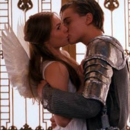
Just as films like EL TOPO and DEAD MAN were labeled acid Westerns because of their countercultural leanings, one might consider Baz Luhrmann's ROMEO + JULIET to be “acid Shakespeare,” not only because of its polychrome aesthetics but also its nonpareil interpretation of the timeless classic. The second film in his so-called ‘Red Curtain Trilogy’ (STRICTLY BALLROOM and MOULIN ROUGE being the first and third), ROMEO + JULIET takes the star-crossed lovers out of Verona proper and puts them in Verona Beach, hybridizing a decidedly '90s beach bum vibe with a kinetic, Tarantinoesque alacrity. Thirty years later, the film, like the play itself, hasn’t aged a day; despite the overabundance of bleach-blonde tips, the nostalgia that wells up when one first sees Leo’s soulful eyes and hears the first pangs of the its indelible soundtrack is untiring—a feeling that never really went away. Even if it is a shallow admiration, it would be all the more appropriate considering the nature of Shakespeare’s adolescent romance. Advanced though the language may seem to our 21st century ears, this story of more woe is actually a puerile reverie of superficial attraction. (Had Romeo and Juliet not killed themselves—sorry, spoilers!—one wonders how long their marriage would have lasted. Paul Rudd’s Paris may have begun to seem like the better option when Leo’s Romeo started hitting on supermodels and embarrassing himself at Coachella.) Luhrmann doesn’t betray that point, instead using the impetuous romance to highlight the play’s more radical elements. Much like WEST SIDE STORY, his film imagines the Montagues and Capulets largely as rival gangs, replacing knives and swords with a various array of pithily named guns. The gang violence in Luhrmann’s adaptation, however, is a more urgent depiction of a violence respective to the time in which it was made; often criticized as being shot in an “MTV style,” which is unfairly reductive of both, it does borrow the exigency of the era’s socially conscious music videos. Though from the standpoint of teeny-bopper and proto-hipster propensity, one can more fully appreciate the casting of both Leo and Claire Danes (the latter of whom was recommended to Luhrmann by fellow Aussie director Jane Campion, who had seen her on My So-Called Life), as well as the now-classic soundtrack with songs from the Cardigans, Butthole Surfers, and Radiohead. Another interesting casting choice and subsequent character execution is Harold Perrineau as a gender-bending Mercutio. Indeed, Luhrmann’s depiction of Mercutio as being a queer Black man who’s clearly in love with Romeo is perhaps the most audacious aspect of his interpretation, which he claims is how he thought Shakespeare would have done it had the play been a film. Reading Mercutio as having feelings for Romeo isn’t especially subversive, but the whole of Luhrmann’s characterization reflects a sympathy that wasn’t so widespread in 1996. In an interview with Creative Screenwriting magazine, he said that he didn’t “believe that there really are modern characters,” just that they have a “modern image” in the film. This embodies Luhrmann’s enduring vision—at its core, it’s a faithful rendition made modern by image rather than intent. The film begins and ends with a newscaster reporting the famous prologue and final monologue in remarkable deadpan, signaling both a seriousness and a self-awareness that don’t often co-mingle in contemporary interpretations of the Bard. Preceded by a reel of trailers from 1996 on 35mm. (1996, 120 min, 35mm) [Kat Sachs]
Andrei Tarkovsky's IVAN'S CHILDHOOD (USSR)
Siskel Film Center — Saturday, 11:30am; Sunday, 2pm; and Wednesday, 6pm
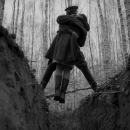
One of the boldest, most indelible directorial debuts in the history of cinema, Andrei Tarkovsky's IVAN'S CHILDHOOD centers on a young orphan who attempts to avenge his parents' deaths by performing reconnaissance operations for the Soviet army during WWII. Despite being ordered to return to the rear and attend military school, Ivan manages to hang around headquarters and volunteer for a deadly mission behind enemy lines. Ivan's behavior oscillates between being that of a callow child and a battle-hardened boy soldier with more valor and grit than most of his older comrades, and although we see him playact a knife fight, this is no game. As a result of the Khrushchev Thaw, IVAN'S CHILDHOOD is one in a series of late 50s Soviet films that eschews a typical propagandistic gung-ho outlook and deglamorizes the war by focusing on existential suffering. Though Mosfilm originally intended the film to be directed by Edward Gaikovich Abalyan, Tarkovsky makes it his own by imbuing it with fragments of his personal wartime experience. Indeed, the metaphysical forces prominently featured in his later work are already in play here. Similar to THE MIRROR, the film blurs the line between reality, memory, and the dream world. Tarkovsky incorporates a mélange of stylistic techniques that may or may not reflect the varying layers of reality, including negative images, documentary footage, dizzying point of view shots, and canted camera angles reminiscent of German Expressionist filmmaking. A third of the way through the film, Ivan encounters a distraught, shell-shocked old man whose house is largely in ruins; however, the man proceeds to hang a picture on what's left of a brick wall. With this image, Tarkovsky is suggesting that war obscures one's perception to the point that they are unable to delineate between the boundaries of reality and illusion. Perhaps Ingmar Bergman said it best: "My discovery of Tarkovsky's first film was like a miracle. Suddenly, I found myself standing at the door of a room the keys of which had, until then, never been given to me." Screening as part of Andrei Tarkovsky: Complete Retrospective. (1962, 95 min, 35mm) [Harrison Sherrod]
Jacques Rivette's CÉLINE AND JULIE GO BOATING (France)
FACETS — Wednesday, 6:30pm
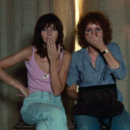
In 2012, the critic Miriam Bale coined the phrase “persona-swap film” to describe a previously unacknowledged genre, one that stretches from Howard Hawks’ GENTLEMEN PREFER BLONDES in 1953 through David Lynch’s MULHOLLAND DRIVE half a century later. She cites Jacques Rivette’s 1974 masterpiece CELINE AND JULIE GO BOATING as an essential entry in this unique cycle of movies that focuses on the female experience by examining how two friends with contrasting personalities—one eccentric, the other more conventional—either swap or magically merge identities. The publication of Bale’s essay coincided with the rehabilitation of Rivette’s reputation when a number of his major films that were previously difficult to see started to become more widely available in the wake of his 2009 retirement. CELINE AND JULIE GO BOATING, the most accessible film from Rivette’s greatest period (1969-1976), is only now receiving its long-awaited streaming debut in America, having never been released on DVD or Blu-ray in this country. (This, by itself, is a good reason to subscribe to the Criterion Channel.) Based on a 2017 restoration of the original 16mm elements by France’s Centre National du Cinéma, the movie’s colors are now tighter than ever, while the plentiful grain within its Academy aspect ratio is beautifully preserved—at times giving the image the quality of a pointillist painting. But the irresistible central performances—by two actresses with pointedly contrasting styles (the theatrically trained Dominique Labourier as Celine and the natural-born movie star Juliet Berto as Julie)—have always been and still are the main draw. Berto and Labourier, who also co-wrote, have admitted to consciously drawing on Bergman’s PERSONA for inspiration (while Rivette, more typically, was thinking of Hawks) as they created the scenario of a magician befriending a librarian and, with the aid of a psychotropic hard candy, entering into a “house of fiction.” This location is a literal Parisian mansion inside of which the same 19th-century mystery story (involving a love triangle and the murder of a young girl) plays out each time the women pay it a visit. Eduardo de Gregorio, Rivette’s regular co-writer during this period, apparently scripted these “film-within-a-film” scenes based on two stories by Henry James. The way Celine and Julie start out as passive spectators of the Jamesian mystery but gradually become active participants in its plot underscores the most intellectually provocative aspect of this otherwise supremely playful opus: A lot of filmmakers have made great movies about the process of making movies—but only Rivette made a great one about the process of watching them. The result is one rabbit hole I am happy to go down again and again. Screening as part of the Essentials series. (1974, 194 min, DCP Digital) [Michael Glover Smith]
Tobe Hooper’s EATEN ALIVE (US)
Alamo Drafthouse — Tuesday, 9:30pm
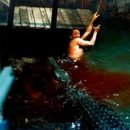
One of the distinctly impressive elements of Tobe Hooper’s filmmaking is his ability to create the most singular and terrifying set pieces. Here, it’s a rundown, backwater hotel run by Judd (a harrowing, scythe-wielding Neville Brand), who has a penchant for feeding his visitors to his pet Nile crocodile. Shown solely at night, the grimy hotel is constantly bathed in an eerie, impossible alternating red and blue light, the haze of the swamp constantly present. It’s a fitting setting for a disturbed story, as the hotel visitors are also struggling, their interpersonal issues emphasizing the film’s sense of despair and isolation. As an immediate follow-up to one of the greatest American (not just horror) films, THE TEXAS CHAIN SAW MASSACRE, EATEN ALIVE seems easy to dismiss; also set in Texas—and loosely based on a real serial killer—it naturally inspires comparison. Continuing the ferocious relentlessness of MASSACRE, EATEN ALIVE is more traditionally exploitation cinema, brutally stressing the way this remoteness chiefly harms women: the film underscores the setting’s rampant misogyny and sexual violence in disturbing ways. It is also a grisly step forward in Hooper’s oeuvre, featuring a plethora of nasty eccentrics played by character actors like William Finley, Carolyn Jones, and Robert Englund. Its dark content means it never quite reaches the satirical, comedic bent seen in something like THE TEXAS CHAINSAW MASSACRE 2, but hints of Hooper’s later career are evident. Screening as part of the Terror Tuesday series. (1976, 91 min, DCP Digital) [Megan Fariello]
📽️ ALSO RECOMMENDED
Francis Ford Coppola's THE OUTSIDERS: THE COMPLETE NOVEL (US)
Alamo Drafthouse — Monday, 7pm
THE COMPLETE NOVEL version of THE OUTSIDERS is both a restoration and a reevaluation. Released in 2005, this version isn’t just a “director’s cut,” it recovers Coppola’s original vision and delivers a more faithful adaptation of S.E. Hinton’s 1967 novel. With over 20 minutes of reinstated footage, the film has room to breathe, drawing viewers into its adolescent emotional rhythms. The additional scenes expand the domestic life of the Curtis brothers, reframe the soundtrack, and let the story unfold with a focus on character over plot. Set in 1960s Tulsa, Oklahoma, the narrative follows 14-year-old Ponyboy Curtis, a sensitive Greaser coming of age after the death of his parents. Alongside his older brothers Darry and Sodapop and a tight-knit group of friends, he navigates a harsh class divide: the Greasers, working-class and rough around the edges, are constantly in conflict with the privileged, reckless Socs (short for socialites). When a confrontation turns deadly, Ponyboy and his friend Johnny go on the run. Themes central to Hinton’s novel, including grief, identity, class violence, and found family, are given time and weight in this cut. Shot on location in and around Tulsa, the film gains a tactile authenticity: natural light, familiar neighborhoods, and a lived-in Curtis home enhance the realism and ground the performances. The young cast, many of whom would become major stars, perform with striking intensity and emotional honesty. C. Thomas Howell’s Ponyboy is thoughtful and raw; Matt Dillon’s Dallas simmers with wounded pride and rage; and Ralph Macchio’s Johnny carries the quiet trauma of an abusive home. Each actor hints at a larger inner world even when the script doesn’t spell it out. Coppola’s connection to the story began with a group of seventh graders who wrote to him in the early 1980s, asking him to adapt their favorite novel. After meeting them, he agreed. Though Coppola emerged from Roger Corman’s school of fast-and-cheap genre cinema, he approaches THE OUTSIDERS with reverence, treating Hinton’s text as sacred rather than sensational. Every major scene is intact. The character arcs are honored. Even the stylized violence feels mournful instead of thrilling. Coppola resists the impulse to modernize or reinterpret—instead, he amplifies what’s already there, drawing out the vulnerability of Ponyboy, Johnny, Darry, and Sodapop. These aren’t just kids facing economic hardship; they’re adolescents shouldering the weight of grief and responsibility and building a makeshift family out of loss. The class conflict with the Socs isn’t just about money; it’s about visibility, belonging, and dignity. The film’s emotional core is crystallized in its most iconic line, “Stay gold, Ponyboy,” which was drawn from Robert Frost’s poem "Nothing Gold Can Stay" that Johnny recites. It’s more than a poignant farewell; it’s the film’s entire thesis. Those brief, golden moments of purity like the smell of summer’s freedom, a lingering sunset, or bare feet in grass are all fleeting, but worth holding onto. Teens living on the "wrong side of the tracks" is a theme that dates back to the first adolescent-targeted films. It echoes the tendency of Corman’s films to frame teen hijinks and exploitation as morality tales. OUTSIDERS contains a literary depth that places it in the same lineage as REBEL WITHOUT A CAUSE (1955), WEST SIDE STORY (1961), OVER THE EDGE (1979), and STAND BY ME (1986). These are films that treat the complexities of youth with philosophical weight and cinematic care. A “Movie Party” event. (1983, 114 min, DCP Digital) [Shaun Huhn]
Krzysztof Kieslowski's THREE COLORS: WHITE (France/Poland/Switzerland)
Siskel Film Center — Sunday, 12pm
The second installment in the Krzysztof Kieslowski's Three Colors trilogy takes a lighter tone than the first and third. Following Karol Karol (a bumbling Zbigniew Zamachowski) as he seeks the love and then the downfall of his ex-wife (Julie Delpy), the Polish filmmaker crafts an anti-romance, a series of convoluted situations that aren’t actually that funny. He doesn’t intend to play these moments for laughs, but rather gives the audience a straight-laced version of a dark, absurdist comedy. Though WHITE has become the most forgotten of the trilogy, it lands its affecting blows near the end of the story, never opting for cheap twists or decisions that run contrary to the behavior of its central character. Zamachowski gives a slight performance as Karol, a man destined to lose even as he’s winning, and Delpy fills in the gaps in her limited screen time, always a welcome presence in any movie. But this film is a chance for Kieslowski to once again prove his ability to contort expectations and offer up something new in a vein that many of us can recognize. In WHITE, he’s reshaping our idea of the romantic comedy, putting forward a portrayal of love that’s far different than what was common in hits of the 1990s. WHITE isn’t the funniest film, or the gushiest, but it still has heart and appeal, even in a drab color palette and a disheartening story about the power and perils of love. Screening as part of the Contact Zones: Cinema of Globalization, 1989–2024 lecture series. (1994, 92 min, DCP Digital) [Michael Frank]
Mira Nair's MISSISSIPPI MASALA (US)
Siskel Film Center — Tuesday, 6pm
Featuring one of the truly outstanding onscreen romances, Mira Nair’s MISSISSIPPI MASALA is also a multifaceted film about race. After their forced expulsion from Uganda by the dictatorship of Idi Amin, Mina (Sarita Choudhury) and her Indian family end up settling in rural Greenwood, Mississippi. Here, she falls deeply in love with Black business owner Demetrius (Denzel Washington), but their relationship reveals prejudices from both their families and communities. Nair’s camera moves to highlight the deep connections and profound rifts between characters. The gorgeous cinematography lends itself to Choudhury and Washington’s chemistry, which is completely realized; this is evidenced by a scene early in their relationship when they’re on the phone and still their passion is palpable and so sincere. MISSISSIPPI MASALA is grounded in its detailed and charismatic characters. The film is also very much historically grounded, especially with regards to Mina’s father, Jay (Roshan Seth), and his relationship to his homeland of Uganda, a framing plot likewise about love and heartbreak that's interweaved throughout. MISSISSIPPI MASALA never shies away from complicated issues such as displacement, racism, and colorism and concurrently maintains its sweetness as a charming and sexy romance; it’s not a juxtaposition but rather an effective illustration by Nair of the complexities of these cultures and communities. Screening as part of the Contact Zones: Cinema of Globalization, 1989–2024 lecture series. (1991, 117 min, DCP Digital) [Megan Fariello]
Joe Swanberg’s THE SUN NEVER SETS (US)
Music Box Theatre — See Venue website for showtimes
If you’re part of the Chicago film community, chances are you have a personal connection with Joe Swanberg. Whether it’s renting VHS from a pizza place, attending Davis Theater screenings, or working on any of his countless Chicago projects, including Easy. Within the pool of contributing writers of Cine-File, some of us went to SIUC with him, worked on his student films, roomed with him, or even showed up as background actors in his upcoming work, and one writer currently stars in a new 16mm project. From L.O.L. (2006) onward, Swanberg’s natural talent is his ability to network and collaborate. Film festivals became a thinktank during the rise of mumblecore as groups of DIY aesthetic improvisational filmmakers began working together. From attending festivals to letting Adam Wingard sleep on his couch, making introductions to Ti West, the invention of mumblegore, Jake Johnson collaborations, Netflix, putting on a gimp suit for Mickey Keating, and now choosing to shoot only on celluloid, Swanberg continues to experiment. Though much can be said about his narratives involving messy relationships, his dissection of people through improvisation and naturalism allows for complex characters that only deepen as his career progresses. In THE SUN NEVER SETS, Swanberg recreates the same relationship dysphoria his characters wrestled with in his early output. Instead of mid-twenties Greta Gerwig navigating Mark Duplass, Andrew Bujalski, and Kent Osborne through a sweltering Chicago heatwave in HANNAH TAKES THE STAIRS (2007), we get thirtysomething Dakota Fanning questioning her life while deciding between Jake Johnson, Cory Michael Smith, or herself during an endlessly sunny Alaskan summer. Wendy (Fanning) has been in a loving, stable relationship with Jack (Johnson) for two years. She adores him and his two children, but she begins to feel stagnant. She wants a boat, the freedom to travel, a child, a marriage, perhaps all of it. Her restlessness prompts a seemingly selfless gesture from Jack: go figure out what you want, and if it's him, he'll be waiting. The gesture curdles into a martyr-victim dynamic when Wendy reconnects with her ex Chuck (Smith). Jack is older, divorced, and already has kids; he doesn't want another marriage or child. He's sensitive and well-adjusted, exactly the good guy who inadvertently pushes a restless partner back toward the person she left. Chuck is a pilot who comes flying back into Wendy’s life. They split three years earlier because he was a toxic bad-boy loser. Not much has changed, except that he now knows he’s a loser and wants more for himself. Ultimately, all three share the same problem: none of them know what they want out of their lives. Swanberg uses Alaska's mountains, forests, and perpetual daylight to externalize Wendy's uncertainty. She hikes within the vast wilderness and camps beneath an uncanny sun. Her question is deceptively simple: What do I actually want? Security, children, independence, a boat? That's where the film connects with Swanberg's earlier work. The adult crisis isn't about choosing the right person; it's about deciding whether the life you have is the life you want. The pull to start over, the push to make your situation work, and the temptation to destroy everything can coexist. When you compare Hannah and her suitors, to Wendy and her suitors, a great lesson emerges: whether you’re in your twenties, thirties, or forties, self-doubt at its best can inspire equal measures of crisis and growth. The sun may never set, but our lives move fast, and sometimes stepping outside what we know is enough to gain the perspective we need. Swanberg and actor Cory Michael Smith in attendance for a post-screening Q&A following the Friday, 7pm and Saturday, 7:30pm screenings. (2026, 102 min, DCP Digital) [Shaun Huhn]
Ishirō Honda’s MOTHRA VS. GODZILLA (Japan)
Alamo Drafthouse — See Venue website for showtimes
Unbeknownst to audiences at the time, MOTHRA VS. GODZILLA would mark an integral moment in the evolution of Godzilla as both a character and a pop culture icon; it would be the final film in the Shōwa era of the franchise (films made between 1954 and 1975) that would feature Godzilla playing the role of a villain. The rest of Godzilla’s time in the 1960s and 1970s would be spent defending Japan from new incoming monsters like King Ghidorah, Gigan, and Mechagodzilla, so this entry (Ishirō Honda’s third directorial effort in the franchise) would be the last chance for a generation to see this tyrannical lizard wreak full havoc. It’s a film of two worlds, then: the action-packed, comic mania that would come to define the majority of the Shōwa films, alongside the genuine terror that comes with hurling Godzilla onto the Japanese populace. It contains fanciful moments of magic and mystery and spectacle, while remaining open-hearted when facing the political and environmental terror inherent in a world full of colossal creatures. It’s also, most pressingly, a film about a gigantic moth trying to create (in this instance, her soon-to-hatch egg containing her children) versus a lumbering reptilian beast who thus far only knows how to destroy. After cementing her status in Honda’s earlier standalone kaiju film MOTHRA (1961), it was only natural to pit this rapturous gigantic moth creature, a guardian of the radiation-infected Infant Island, against Godzilla for a crossover that would become one of the defining match-ups in the franchise’s history. The true villains of the film, naturally, are the two capitalist humans who are dedicated to exploiting Mothra’s egg—discovered off the coast of Japan in the wake of a typhoon—for more money than is ethically tangible. Honda helpfully brings in a pair of news reporters to anchor the audience through the narrative, investing our focus on the sacred power of journalism as a public good to report on and take down the corrupt forces of capitalism that are often more menacing than the largest kaiju. Above all else, MOTHRA VS GODZILLA is an investment in the two most important tenets of the Godzilla franchise: political and environmental storytelling, and big bombastic fight scenes between impeccably designed creatures. (1964, 89 min, DCP Digital) [Ben Kaye]
Frank Oz's LITTLE SHOP OF HORRORS (US)
Alamo Drafthouse — See Venue website for showtimes
Originating from a 1960 film directed by Roger Corman, Frank Oz's LITTLE SHOP OF HORRORS is in turn based on Howard Ashman’s off-Broadway musical. It’s one of the rare films based on a stage show that holds on to its theatrical roots while successfully engaging with the cinematic format; Oz keeps the settings simple but uses striking camera angles and edits to make it distinctly filmic. Set in New York in the early 60s, the film is narrated by a doo-wop girl group acting as a Greek chorus. From moment one, the music is incredibly catchy and lyrically sharp; LITTLE SHOP OF HORRORS maintains a gentleness without diminishing the underlying dark humor. The story follows timid flower shop employee Seymour (Rick Moranis), who’s desperately in love with his co-worker Audrey (Ellen Greene, reprising her role from the original stage show). Seymour’s fortunes change when he acquires an unusual plant with a taste for human blood—and Audrey’s abusive dentist boyfriend (Steve Martin) makes for a choice first victim. Despite the stellar main cast and delightful cameos (including Christopher Guest, John Candy, and a memorable Bill Murray as the sadistic dentist's masochistic patient), Greene shines brighter than anyone. Her performance of “Somewhere That’s Green” is equal parts devastating and hilarious; the song epitomizes the film's send-up of '80s obsession with mid-century American culture without minimizing the heartbreaking stories and sincere desires of its main characters. Ashman—who also wrote the script—would go on to pen some of the most iconic Disney songs along with composer Alan Menken; THE LITTLE MERMAID’s “Part of Your World,” is a clear descendant of “Somewhere That’s Green.” Screening as part of the Queer Film Theory 101 series. (1986, 94 min, DCP Digital) [Megan Fariello]
Kent Jones’ LATE FAME (US)
Music Box Theatre — See Venue website for showtimes
If you’ve heard the name Arthur Schnitzler, it’s likely in connection with either his oft-adapted stage play La Ronde or his novella “Dream Story,” the basis for Stanley Kubrick’s EYES WIDE SHUT (1999). Is it a matter of artistic prescience or societal stagnation that Schnitzler’s particular concerns regarding sexual intimacy and class dynamics, dreamt up in the late 19th and early 20th centuries, still speak to us so clearly today? Whatever the reason, it’s in Schnitzler’s recently unearthed novella “Late Fame,” where one societal vice (sex) is traded in for another (art), and matters of class, power, and identity rise right to the surface. Here, in a contemporary film adaptation by screenwriter Samy Burch and director Kent Jones, we find Ed Saxberger (Willem Dafoe), a solitary postal worker living a quiet, contented life, whose world becomes unmoored with the entrance of Meyers (Edmund Donovan), a young upstart of a self-proclaimed poet. In a past life, Saxberger was himself a poet, scraping by in the Boho realm of downtown Manhattan in the 1970s, trading barbs with Amiri Baraka and Robert Creeley before getting his own collection of poetry published (the charmingly titled Way Past Go) that has since vanished into the artistic ether. Meyers, alongside his rambling cohort of fellow wannabe starving artists, have uncovered Way Past Go and have taken it on as their self-proclaimed mission to provide Saxberger with the societal and cultural acclaim that his work deserves. The delicate balance of Saxberger’s life is disrupted to a disturbing degree, especially when he discovers that his own modest goals as a poet—that is, the pursuit of truth through literary means—is entirely at odds with this current generation of young, privileged, well-off clout-chasers who are more enamored with the status that comes with being a writer than the actual toil that goes into the art of putting pen to paper. This inner tension of revisiting one’s youthful glory days with the harsh wisdom of old age is handled deftly by Dafoe, who gives a tragic and grounded performance that stands in stark contrast to some of his more recent theatrical cinematic output. He dominates the film, present in practically every scene, and Jones and Burch have gifted him a meaningful showcase for his strengths as an actor capable of captivating an audience with nothing more than a brief smile or an askance look. If Schnitzler’s La Ronde wondered whether we can escape the cycles of our own humanity, “Late Fame” (and LATE FAME) asks if it’s even worth it to return to the cycles that defined us lifetimes ago. (2025, 97 min, DCP Digital) [Ben Kaye]
Wes Anderson's MOONRISE KINGDOM (US)
Alamo Drafthouse — Friday, 12:30pm
If MOONRISE KINGDOM is any indication of Wes Anderson's future trajectory as a filmmaker, then making FANTASTIC MR. FOX may prove to have been decisive. The medium of stop-motion animation has a unique set of demands. For starters, a scene is not included unless it's already been thoroughly pondered, discussed, dissected, and designed; if a scene isn't integral to the story or at least the characters, it's usually jettisoned before it's even executed, no matter how clever or colorful the ideas behind it might be. In the world of animation, it's simply too laborious and expensive to go off on a tangent. That way of working seems to have spurred Anderson to create his most focused film since RUSHMORE. It's about the same length as THE DARJEELING LIMITED, yet feels much tighter, and he's chosen a story that's simple and sweet in all the ways that THE ROYAL TANENBAUMS was rococo and acrid. His trademark whimsy is still there (the non sequiturs, the natty production design, the carefully curated soundtrack, and so on). But, crucially, this time around those elements actually tell us something about the characters and their environs, rather than just serving as evidence of Anderson's exquisite taste. The bric-a-brac feels charming, not heavy-handed. As usual, Anderson has summoned a brilliant cast. Jared Gilman and Kara Hayward, awkward and tentative, are perfect as the runaway youngsters. Standing out from the rest of the excellent star-studded ensemble is Bruce Willis, at long last given another chance to do the kind of the comedy he does best: his wry, earthy, low-key performance is exactly the kind of humble grit that keeps MOONRISE KINGDOM anchored to recognizably human characters. A Kids Camp screening. (2012, 94 min, DP Digital) [Rob Christopher]
Steven Spielberg's JURASSIC PARK (US)
The 400 Theater — Friday, 6:30pm and Thursday, 7:30pm
I don't remember when I first saw JURASSIC PARK—my dad tells me it was at the Melody 49, a two-screen drive-in in Brookville, Ohio, that’s still screening spring/summer blockbusters like READY PLAYER ONE and AVENGERS: INFINITY WAR late into the night, with accompanying audio coming in through 105.3FM—but I do recall when I first declared it a masterpiece. The thought occurred to me one night during college, in a bar, as all the most poignant and affecting thoughts do. The person to whom I was delivering this drunken homily agreed that it was a good movie, but alas, not a masterpiece, and I recoiled in shame over my enthusiasm for such non avertis cinema. Twenty-five years after seeing it for the first time and almost ten years after my spasmodic declaration, I maintain—this time with the courage of my convictions—that Steven Spielberg’s 1993 film, based on the eponymous novel by famed potboiler peddler Michael Crichton, whose own career resembles Spielberg’s in regards to both their populist sensibilities and resultant accusations of their work having bona-fide “entertainment value,” is a genuine masterwork, perhaps even the lauded director’s pièce de résistance. (Ironically, this assertion comes on the heels of a recent revelation that, at one point, Spielberg resented having to make JURASSIC PARK because it distracted him from SCHINDLER’S LIST, which he was able to do the same year after agreeing to the prehistoric sci-fi action-drama.) The funny thing about Spielberg is that I’m sure there’s at least one person who could say that about each and every one of this films, from DUEL to, most recently, THE POST and READY PLAYER ONE, and everything in between—it’s not just that Spielberg’s filmmaking is personal, which anyone familiar with his biography knows is his greatest strength, but that his work invokes in its viewers a sense that the film in question is not just personal for its maker, but also for them, that whichever world Spielberg has created belongs as much to them as they do it. And even beyond the sense that the world of Drs. Alan Grant (Sam Neill), Ellie Sattler (Laura Dern) and Ian Malcolm (Jeff Goldblum), as well as John Hammond (Richard Attenborough) and his grandkids Lex and Tim, belongs to me outside the cinema’s darkened theater (inside or out) is the sense of hope that JURASSIC PARK provides. To me, it represents the possibility of cinema, the sense that with cinema, anything is possible. A corny sentiment to be sure, but accurate nonetheless, be it the possibility for realism or fantasy, the joys and horrors to be found in real life or joys and horrors invented anew. JURASSIC PARK may also have been a last vestige of hope for blockbuster cinema, specifically with regards to its groundbreaking special effects via an ingenious combination of practical effects (including men in raptor costumes—take note during the famous kitchen scene) and CGI. In Entertainment Weekly’s appropriately entertaining oral history of the film, Spielberg says, “I was using Universal’s money to basically make an experimental dinosaur picture,” an audacious claim but not altogether untrue. If narrative cinema is rooted in linearity, the prospect of having actors interact with non-existent entities, in this case dinosaurs, literally non-existent, creates a sort of dissonance that simultaneously astonishes and perturbs. Such effects are now so much the norm that it’s hard to find speculative wonder in their execution, but that was precisely the case with JURASSIC PARK. It’s not without irony that another director, Attenborough, plays Hammond, the sanguine CEO whose behemoth company InGen both pioneers the DNA-replicating science and opens the disastrous theme park—what is a filmmaker if not some sort of mad scientist-cum-reluctant businessperson? JURASSIC PARK was criticized for its capitalistic inclinations on-screen and off; as it takes place in a theme park, the branding and subsequent merchandising for said park is prominent within the film, and off-screen, merchandise sales were reported to have topped one-billion dollars just several months after the film, then the highest-grossing of all time, was released. I won’t deny that it certainly reeks of consumerist excess, but I’m also reminded of one of the film’s most iconic set pieces, when, at the end, the T. rex destroys the park’s visitor center after killing the raptors, a banner reading “When Dinosaurs Ruled The Earth” falling as the T. rex roars. A poignant, if unintentional, autocritique, it’s as if to say that all the stuff in the world is no match for that which is natural, be it dinosaurs or the power of a good yarn, as Spielberg calls it—or, when rendered cinematically, both. All this, based more so on feeling than fact, may not be very astute criticism, but maybe that’s okay. Perhaps some films should just exist to awe, to remind us of the medium’s potential for such an impact, one piece of the puzzle though it may be. (1993, 127 min, DCP Digital) [Kat Sachs]
📽️ ALSO SCREENING
⚫ AFC World Outreach Center (7859 S. Ashland Ave.)
Yelena Popovic's 2026 film MOSES THE BLACK (104 min, Digital Projection) screens Friday, 7pm, preceded by a black carpet (doors at 6pm) and a posthumous Community Catalyst Award presentation honoring Nikolaos "Nick" Mirkopoulos at 6:50pm. The screening is followed by a cast meet-and-greet and Q&A at 9:30pm and an after-party at CineCares at Cinespace Chicago Film Studios (2621 W. 15th Pl.); 9pm doors, food service and open bar at 10pm). Popovic, producer Alexandros Potter, executive producer Reginald Akeem Berry Sr., and cast members Corey Hendrix, JMB Bobby Hill, John-John Berry, Kay Eye, and Vonzell D. Scott are expected in attendance, alongside elected officials and faith leaders including U.S. Congressman Jonathan Jackson and 28th Ward Alderman Jason Ervin. $10 at the door; the first 200 people to register to vote on-site receive free admission.
⚫ Alamo Drafthouse
Archie Waugh's 1991 film WAY BAD STONE (84 min, Digital Projection) screens Wednesday, 9:30pm, as part of the Weird Wednesday series. More info here.
⚫ Bedsheet Cinema
Bedsheet Cinema celebrates its 100th screening on Sunday, 8pm, with a program of 16mm films and live performances. Free admission. More info here.
⚫ Chicago Public Library
The Chicago Public Library's Community Cinema program presents free film and TV screenings at dozens of neighborhood branches throughout the week. See the full schedule here.
⚫ ChiTown Drive-In (2343 S. Throop St.)
ChiTown Movies screens outdoor films throughout the week. More info here.
⚫ Chicago Filmmakers
Group 312 Films presents their 2026 Annual Report on Saturday at 7pm. The program features 15 short films by seven members of the not-for-profit digital video collective. More info here.
⚫ Cinema Femme
Cinema Femme presents its Fall Film Festival Preview Celebration on Friday, 6pm, at Kinowerks (5645 N. Ravenswood Ave.). The evening includes a catered social hour with food, beer, wine, and refreshments from local women- and queer-owned businesses, followed by an exclusive first look at the trailer for Cinema Femme's 8th annual short film festival and a special short film screening. The night continues with a mentorship panel featuring past program mentors Jennifer Reeder and Emily Lape alongside mentees Jet Harris, Krista Kane, and Linh Tran, plus the debut of the Summer/Fall 2026 digital issue. Proceeds support the upcoming Cinema Femme Short Film Festival at the Music Box Theatre. More info here.
⚫ Cinemanita
Cinemanita presents Wong Kar-wai's 1995 film FALLEN ANGELS (96 min, Digital Projection) Friday, 8pm, at Chicago Art Department (1926 S. Halsted St.) with mystery desserts, a special raffle, and mint tea. More info here.
⚫ Eyewash Station
For this week's screenings at Eyewash Station, check the calendar here.
⚫ FACETS
Facets presents Brett Neveu X 2, a celebration of acclaimed Chicago playwright Brett Neveu through two feature film adaptations. The program screens Jim Sikora's 2007 film THE EARL (73 min, Digital Projection) and Michael Shannon's 2023 film ERIC LARUE (119 min, Digital Projection), followed by a conversation with Neveu, Shannon, and Sikora, moderated by critic Michael Phillips.
Sweet Void Cinema presents a screenwriting workshop on Wednesday from 6pm to 9pm in the Facets Studio. More info on all screenings and events here.
⚫ International Museum of Surgical Science (1524 N. Lake Shore Dr.)
Tony Richardson's 1965 film THE LOVED ONE (122 min, Digital Projection) screens Thursday, 6:30pm, presented in collaboration with Inclusive Funeral Care. More info here.
⚫ Logan Square Film Club
Indie Park: Short Films Under the Stars presents a free outdoor short film program on Saturday, 7:30pm, at Unity Park (2636 N. Kimball Ave.). Presented by Shytown Sugar Films, Unity Park Advisory Council, and Logan Film Club. Free admission. More info here.
⚫ Movies in the Parks
The Chicago Park District's Movies in the Parks series continues throughout the summer, bringing free outdoor screenings of Hollywood classics, family favorites, and local films to parks across the city for its twenty-sixth season. Check the Park District website for the full schedule of dates, locations, and titles. More info here.
⚫ Music Box Theatre
Jane Schoenbrun’s 2026 film TEENAGE SEX AND DEATH AT CAMP MIASMA (112 min, DCP Digital) and Christopher Nolan’s 2026 film THE ODYSSEY (172 min, DCP Digital) continue. See Venue website for showtimes.
Geetu Mohandas's 2026 film TOXIC: A FAIRY TALE FOR GROWN-UPS (195 min, Digital Projection) screens Friday at 2pm. This screening features a 10-minute intermission.
SUPER-HORROR-RAMA! presents Jon McBride's 1988 film WOODCHIPPER MASSACRE (81 min, DCP Digital) on Friday at midnight and Jon McBride and Tom Fisher's 1988 film CANNIBAL CAMPOUT (88 min, DCP Digital) on Saturday at midnight. Each ticket includes a limited-edition pinback button, and the show kicks off with backwoods horror trivia hosted by John McDevitt with prizes from The Shadowboxery, Cryptid Craft Studio, Night Natalie, Migzie Flores, Full Bleed, and Drive-In Asylum. Both include a prerecorded intro from McBride.
Hiromasa Yonebayashi's 2010 film THE SECRET WORLD OF ARRIETTY (94 min, DCP Digital) screens Saturday and Sunday, 11am, as part of the Indoor Kids family matinee series.
Tim Burton's 1989 film BATMAN (126 min, 70mm) screens Saturday at 11:30am and 10:30pm and Sunday at 7:15pm.
Cinema Femme presents Sabrina Greco's 2025 film LOCKJAW (77 min, DCP Digital) on Tuesday, 7pm, with Greco in attendance for a post-screening Q&A. Preceded by Allison Torem’s 2025 short film DON’T COME HOME BEFORE MIDNIGHT (13 min, DCP Digital). More info on all screenings here.
⚫ Siskel Film Center
Poh Si Teng’s 2025 documentary AMERICAN DOCTOR (93 min, DCP Digital) and Emmanuel Courcol’s 2024 film THE MARCHING BAND (103 min, DCP Digital) screen all week. See Venue website for showtimes.
Mati Diop’s 2019 film ATLANTICS (104 min, DCP Digital) screens Saturday at 2pm; Monday at 6pm; and Thursday at 6pm as part of the 25 For 25 series, revisiting standout titles from the Siskel's State Street history. More info on all screenings here.
MANAGING EDITORS // Ben and Kat Sachs
CONTRIBUTORS // Kian Bergstrom, Rob Christopher, Ray Ebarb, Alex Ensign, Megan Fariello, Michael Frank, Jim Gabriel, Shaun Huhn, Ben Kaye, Josh B Mabe, Raphael Jose Martinez, Will Schmenner, Ignatiy Vishnevetsky
