


📽️ CRUCIAL VIEWING
Jean-Luc Godard's 2 OR 3 THINGS I KNOW ABOUT HER (France)
Chicago Film Society at the Music Box Theatre — Monday, 7pm
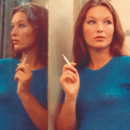
The film that is arguably the best artistic compilation of the political, intellectual, and cinematic currents of late-'60s French culture also happens to be, as the late-great Susan Sontag wrote, "perhaps Godard's greatest feature." 2 OR 3 THINGS I KNOW ABOUT HER was made the same highly creative year as two other works that many a cinephile would consider heavyweight contenders for the same title: WEEKEND and LA CHINOISE. While it clearly shares the genetics of both, 2 OR 3 THINGS is the most comprehensive of the three, packed full of brilliant analogies, from the universe in a cup of coffee (via extreme close-up) to a graveyard of consumer products to a representation of capitalism domesticating sex work. Godard is, of course, thinking about movies and history—his two favorite topics. For him—as revealed more explicitly in his later masterpiece HISTOIRE(S) DU CINÉMA—they are one in the same. But here Godard takes his interest in the dual nature of cinema to unequaled heights. He not only asks whether this is that or that is this, but questions the very language we use to ask such questions. He muses: "How do you render events? How to say or show that at 4:10pm that afternoon, Juliette and Marianne came to the garage where Juliette's husband works? Right way, wrong way—how can one say exactly what happened? Of course, there is Juliette, her husband, the garage. But are these the words and images to use? Are there no others? Am I talking too loud, looking too close?" One could say that it's a movie that knows it's a movie that knows it's a movie more than any other movie. Preceded by Mikheil Kobakhidze's 1966 short film QOLGA (UMBRELLA) (20 min, 35mm). (1966, 85 min, 35mm) [Kalvin Henley]
Howard Hawks x3
Doc Films (at the University of Chicago) — See below for showtimes
Howard Hawks' THE CRIMINAL CODE (US)
Friday, 5pm
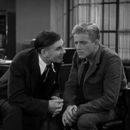
Howard Hawks directed the pre-Code Hollywood crime film THE CRIMINAL CODE as his tenth feature. It was the director's first assignment for Columbia Studios; before this, he had made his mark in the silent era with comedies and dramas over at Fox. Made at the start of the 1930s, an era of class consciousness and unity that hasn't been replicated since, THE CRIMINAL CODE is a critique of the prison system that remains entertaining and never too theoretical for a wide audience. The film opens with Robert (Philips Holmes) receiving the maximum sentence of ten years after murdering a man in defense of his lover. The story then jumps six years into Robert’s prison term, where the harsh, cramped conditions have taken their toll on him. Living behind bars may wither the individual, but it strengthens the bonds between criminals. Boris Karloff gives a magnetic performance as a cellmate looking to seek revenge on the officer who has wronged him; he would go on to star as Frankenstein’s Monster the next year. THE CRIMINAL CODE depicts prisoners in a sympathetic light, asking the audience to imagine how they would feel if they were cramped in a space with strangers for years on end. Prior to this film, Hollywood regularly depicted prisoners as two-dimensional caricatures. A master storyteller, Hawks gave his actors the room to give compelling performances, whether it’s Holmes with his humanity or Karloff with his gripping realization of a character seeking vengeance. The performances carry the film even when the plot slows down. The pre-Code era, a new studio, and the introduction of sound provided the conditions for Hawks to expand his repertoire. Pushing the soundtrack to new realms of possibility, the speedy dialogue anticipates some of the classics Hawks would direct later in his career, namely the screwball comedies BRINGING UP BABY (1938) and HIS GIRL FRIDAY (1940) and the hard-boiled mystery THE BIG SLEEP (1946). (1930, 97 min, 35mm) [Ray Ebarb]
---
Howard Hawks’ THE CRADLE SNATCHERS (US/Silent) + TWENTIETH CENTURY (US)
Wednesday, 5pm and Thursday, 8pm
Howard Hawks' third film—and the third of seven silent features he made for Fox—THE CRADLE SNATCHERS (1927, 45 min, 35mm) was thought lost until the early 1970s when Peter Bogdanovich discovered an incomplete print in the Fox vaults, with portions of several reels and the entirety of the fourth missing. (The filmography section of Robin Wood's book on the director gives the original running time as 103 minutes. Modern sources are surprisingly inconsistent: Doc Films and Harvard Film Archive programs list the surviving version at 59 minutes, while Cinema Ritrovato, which screened it in 2011, gives 47 minutes, a figure that matches the versions I was able to preview online. I'm oddly intrigued by the discrepancy; I suppose I'll find out whether it runs 59 or 47 minutes once I see it.) Hawks had previously submitted a treatment for an uncharacteristic romance called BUDAPEST, set in the city prior to the First World War—uncharacteristic and also bizarre, as Todd McCarthy details in his book on the director that “the story contains such startling elements as the sadistic hero’s seduction of a beautiful dancer while she is strapped into his prize possession, a torture chair from the Spanish Inquisition”—but when that project fell through, Fox instead assigned him "one of the studio's most promising commercial projects,” adapted from Russell G. Medcraft and Norma Mitchell’s enormously successful 1925 Broadway play of the same name. The fairly conventional sex farce centers on three college boys enlisted by three spurned wives to make their philandering husbands jealous; no one who plays any of these characters achieved enduring stardom—best remembered today would be Louise Fazenda, who appeared in over 300 silent films and was married to producer Hal B. Wallis—though Humphrey Bogart starred as one of the college boys in the Broadway production. (Hawks, however, was unimpressed by Bogart's stage performance and declined to cast him.) The version of the film available to preview online isn’t conducive to rigorous critical analysis. From what I could glean, THE CRADLE SNATCHERS feels more like a perfunctory curio than a modest revelation. Still, as Leland Pogue observes, "we see several sorts of role reversal typical of later Hawks films," referring to characters adopting false identities or otherwise performing versions of themselves in pursuit of romantic ends. Contemporary reception likewise treated the film as straightforward commercial entertainment. A Motion Picture Herald review noted that "some of the subtitles are a bit spicy, especially in their double meanings; however, there is nothing at which any one could take offense," predicting that the film "should prove hilarious amusement for a great majority of patrons." The film's real importance, however, lies less in its surviving form than in what it represented for Hawks' emerging career. As McCarthy notes, “at this point, Fox had every reason to believe that its new director, after a year and a half on the job, had found his niche in comedy.” The film was photographed by Chicago-born cinematographer L. W. O'Connell, who would later shoot Hawks' A GIRL IN EVERY PORT and SCARFACE. [Kat Sachs]
---
Howard Hawks is usually credited with having a hand in the invention and/or popularization of the screwball comedy, but more important is that, within his own oeuvre, he shepherded the "genre" from TWENTIETH CENTURY (1934, 91 min, DCP Digital) to a burnished modernity six years later in HIS GIRL FRIDAY (1940). Whereas HIS GIRL, with its subtle but nonetheless present heart of darkness (corruption, obsession, madness, murder), seems very much of its and our time, TWENTIETH CENTURY, by comparison, has a foot—like the New York-Chicago passenger train that it's named after—in the nineteenth: in blackout sketches and quack entrepreneurial optimism. Far from making TWENTIETH CENTURY a relic, however, this quality of being out of time makes its every rediscovery a pleasure: viewing it lets us breathe an air more foreign and surprising than HIS GIRL's, which has, by so becoming so definitively the "face" of sophisticated screwball, turned invisible, entered into our language. TWENTIETH's pop-eyed frenzy is clear and brittle by comparison: Carole Lombard and John Barrymore spar with operatic desperation, not urbane restraint. Since Hawks' comedies tend to get revived with a certain regularity, it's difficult to imagine that there are many fans left who know this side of his work mainly from BRINGING UP BABY (1938) and HIS GIRL, but in case there are any holdouts, here is a golden opportunity. [Jeremy M. Davies]
---
All films screening as part of the Howard Hawks’ Pre-War Years series.
Harry Dodge & Silas Howard’s BY HOOK OR BY CROOK (US)
Siskel Film Center — See Venue website for showtimes
“By hook or by crook” effectively translates to “by any means possible.” And even though the “crook” in this particular saying does not mean those who commit crime (historians think it originally referred to a shepherd’s hooked staff), it certainly applies to Harry Dodge and Silas Howard’s BY HOOK OR BY CROOK, in which the filmmakers also star. Shy (Howard) abandons small-town Kansas in the wake of his father’s death and flees to San Francisco. Both Shy and Valentine (Dodge), whom he meets upon arrival in the city, are characters often described as trans, butch, or gender-bending. The film, written by Dodge and Howard with co-star and collaborator Stanya Kahn, avoids definitive labels, which allows the nuances of the pair’s gender identities to be revealed naturally versus didactically. (Howard said about this, “We take gender ambiguity… and we don’t explain it, dilute it or apologize for it—we represent it for what it is—something confusing and lovely!”) Shy comes across Val as he’s being beaten up; Shy intervenes, and they hit the town. A friendship develops when Shy, feeling guilty over having stolen Val’s wallet after the skirmish, returns it. Where Shy is more jaded, having been inspired to pursue a life of crime after seeing a newscast in his hometown where a woman (played by Joan Jett in a great cameo) admiringly recounts interacting with some bank robbers during a hold-up, saying how they didn’t steal from the customers, but rather from a big corporation, Val is something of a troubled naif, plagued by severe mental illness but also blessed with a kind countenance and sweet sense of eccentricity. They and Val’s lover Billie (Kahn) begin committing relatively minor crimes to get by, while Shy starts dating a woman and Val, who had been adopted but later disowned for dressing like a boy, continues to search for his birth mother. The trio find trouble when the police show up at their house, setting into motion the climatic events that further solidify their connection. Dodge and Howard, who co-owned a cafe together in San Francisco at the time, haphazardly threw themselves into independent filmmaking; the movie indeed looks like what it cost, which isn’t much. But that’s only to its benefit, the gritty digital video aesthetic perfectly serving the underground yet still tight-knit community on screen, evoking how it may have appeared in home movies at the time. (It was shot by Chicago-born cinematographer Ann T. Rossetti, who also shot Rose Troche’s 1994 lesbian classic GO FISH.) Released just a few years after Kimberly Peirce’s controversial BOYS DON’T CRY (1999), Dodge and Howard’s film is a sometimes humorous, occasionally intense non-response to the trope-ish arcs of queer and trans characters before theirs. As Jack Halbertsam writes in his 2005 book In a Queer Time and Place: Transgender Bodies, Subcultural Lives, “Representations of transgenderism in [then-]recent queer cinema have moved from a tricky narrative device designed to catch an unsuspecting audience off guard to truly independent productions within which gender ambiguity is not a trap or a device but part of the production of new forms of heroism, vulnerability, visibility, and embodiment.” Comparing the film to BOYS DON’T CRY, Halbertsam continues that BY HOOK OR BY CROOK “make[s] clear the flaws of ‘representative history,’ and call[s] for the kind of shared vision that we see in [it]—a vision of community, possibility, and redemption through collaboration.” Something that Dodge, Howard and a subsequent generation of filmmakers have achieved by any means possible. (2001, 98 min, New 4K DCP Digital Restoration) [Kat Sachs]
Guy Maddin's CAREFUL (Canada)
Music Box Theatre — See Venue website for showtimes
Eye Wash — Sunday, 7:15pm
CAREFUL, director Guy Maddin's third feature, is a perfect realization of his postmodern appropriation of silent film aesthetics and Freudian psychosexual theories. The film takes place in a small Alpine town where all the residents speak in whispers for fear of starting an avalanche. The suppression of noise in the village naturally makes outbursts of emotion and impulse undesirable—resulting in a rather repressed and inhibited populace. Of course, this is where the real fun starts for Maddin, who lets this scenario devolve to explore his by-now usual interests of incest, mother obsession, hysteria, and sexual deviance. Guy Maddin's expert use of silent film techniques (images by Murnau, editing by Eisenstein) rather effectively provides a burlesque of the popular cultural notion that past times were more decent ones. (1992, 100 min, New 4K DCP Digital Restoration) [Doug McLaren]
Alfred Hitchcock x2
Music Box Theatre — See below for showtimes
Alfred Hitchcock's ROPE (US)
Saturday, 11:30am
While maybe not Hitchcock's best film, ROPE is certainly one of his most curious. Based on an English play entitled Rope's End in which two elitist university students murder an acquaintance and hold a cocktail party over his hidden corpse, Hitchcock's 1948 film sanitizes it for American audiences. The play, ostensibly about the infamous Leopold and Loeb case, purports a homosexual relationship between the two male leads, and a supposed affair with their former professor—the inspiration for the murder—who also sniffs out the crime at the party. Hitchcock's film, by removing the offending gay cues and suggestive Britishisms—"my boy!"—leaves us mostly with elephants in the room. According to screenwriter Arthur Laurents, Warner Bros. purportedly never used the word homosexuality or its variants, preferring to use "it," and never acknowledged its basis on Leopold and Loeb. It is only fitting that Hitchcock's ROPE, often described as an experiment, would strike such tension with Hollywood filmmaking: dialogue-driven, single location, long takes, etc. Even its unique editing construction—long shots that attempt to hide cuts by disguise through clever camera movements—is interesting considering the Hollywood style of "invisible" editing. ROPE isn't exactly subversive, but it doesn't play by the rules either—a distinctive feature for much of Hitchcock's work. (1948, 80 min, 35mm) [Brian Welesko]
---
Alfred Hitchcock’s MARNIE (US)
Thursday, 9:30pm
The second collaboration between Tippi Hedren and Alfred Hitchcock is a lush, seething melodrama of perversion. It is a filthy little fairy tale about the domestication of violence and the violence of domestication, about the ways women are raised to be their own victimizers. Hedren plays Marnie, a frigid ice maiden prone to kleptomania, compulsive lying, a morbid fear of the color red, and a general loathing for all men everywhere. The only creature she feels any affection for is her horse Forio, to whom she whispers, “If you want to bite someone, bite me.” She has no stable identity, moving from town to town, living under fake names and disguises, keeping herself carefully quarantined away from the world. Sean Connery, having rocketed to stardom by his role as James Bond in DR. NO (1962) and FROM RUSSIA WITH LOVE (1963), plays Mark Rutland, an erection in the shape of a man who serves as the film’s fairy tale monster. He is a hunter, a tamer of wild beasts of all kinds, and a scholar of “predators, what you might call the criminal class of the animal world.” Rutland stalks and captures her, determined to cure Marnie’s problems with the magic powers of blackmail and marital rape. As he puts it, “I’ve tracked you and caught you and by god I’m going to keep you.” And keep her he does, all the way into perhaps the most astonishing flashback sequence in Hitchcock’s career. In keeping with the artificial, constructed nature of Marnie’s past, Hitchcock develops his visual style to its most expressionistic: rear projections, flashes of color saturation, off-putting framings, explosions of non-naturalistic acting, lighting, set design. Characters move through, are divided by, vast architectures of glass, fields of peculiar opacity, backdrops of impossible fakeness. (In Hitchcock’s subtlest visual metaphor, Marnie carries bundles of stolen cash in a variety of leather bags shaped like vaginas.) Two demented souls, each cursed to bring misery to the other, each damned to find the other inescapable. A general theme for Hitchcock is that there is a sickness at the heart of every love story, and here, too. But there’s also a weird, uncanny love at the heart of the degradation and corruption here. Indeed, degradation and affection are, in the end, inseparable here, as Marnie’s mother angrily points out. Do we grow out of our traumas or just ripen into them? As with all the best fairy tales, and as all children already know, neither: the only way to truly love something is to kill it. After all, it’s not for nothing that the pivotal scene in MARNIE is one of euthanasia. With an introduction by John Early, director of MADDIE'S SECRET. (1964, 130 min, 35mm) [Kian Bergstrom]
---
Both screening as part of the Fond of His Mother: Queer-coded Hitchcock series.
📽️ ALSO RECOMMENDED
Rosa von Praunheim’s IT IS NOT THE HOMOSEXUAL THAT IS PERVERSE, BUT THE SOCIETY IN WHICH THEY LIVE (West Germany)
Goethe-Institut Chicago (150 N. Michigan Ave.) — Wednesday, 6pm
In West Germany, Paragraph 175 criminalized homosexual acts from the Nazi era until partial reform in 1969 and full repeal in 1994. Four years after that initial reform, Rosa von Praunheim released IT IS NOT THE HOMOSEXUAL THAT IS PERVERSE, BUT THE SOCIETY IN WHICH THEY LIVE. It was the first West German feature to place openly homosexual characters on screen. Born Holger Radtke, the director adopted his pseudonym from the pink triangle forced upon gay prisoners during the war, refusing to separate queer identity from its political history. Shot as a silent film with voice-over to evade censorship, the film employs stiff performances, blunt narration, and deliberate artifice that at times mimics 1950s drug-scare films and educational PSAs. Co-developed with sexologist Martin Dannecker, the script draws on psychoanalytic barbs and Marxist critique, creating discomfort through clinical language juxtaposed with images of free sexuality. Lines like "Lust that can't be experienced directly turns into perversion" typify this confrontational register. Praunheim described his style as a self-conflicting film language designed to disrupt viewer identification rather than invite it. The narrative follows Daniel (Bernd Feuerhelm), a provincial native arriving in West Berlin, through a series of episodes examining queer subcultures. His disinterest in women fully realized, Daniel drifts from a domestic partnership with Clemens (Beryt Bohlen) to kept-boy arrangements with wealthy older men, anonymous park cruising, and public restroom encounters. Each segment is dissected as a form of self-oppression necessitated by a society still hostile toward homosexuality. From attempts at bourgeois respectability to bikers, leather, and chrome, the film frames each milieu as its own constrained expression of queer life before converging them in a cabaret safe space where queer joy is expressed freely. Praunheim could have ended the film there. Instead, the final ten minutes shift from diagnosis to manifesto. Daniel reclines in a communal bed with five other men, shirts off, covers raised, smoking post-coital cigarettes. What begins as a recounting of Daniel’s sexual escapades deepens into a conversation about identity after decriminalization but still within the bounds of discrimination. The epilogue delivers calls to action that became movement slogans: "Fuck freely and respect the other," "Become proud of your homosexuality!," and the iconic "Get out of the toilets and take to the streets!" Premiering at the 1971 Berlin International Film Festival, the film immediately garnered controversy. Conservatives attacked its subject matter. Censorship attempts and public outrage followed, yet the reaction also proved catalytic, sparking the founding of gay rights groups across West Germany and Switzerland. Praunheim became an icon of the gay and lesbian movement and would continue exploring queer life throughout his career, including TALLY BROWN, NEW YORK (1979). More than fifty years later, the film functions as a deliberately uncomfortable historical document. Its moralizing tone, tension between pleasure and politics, lack of lesbian and trans representation, and oversaturation of white men reflect the limitations of early gay liberation discourse. Modern queer theory has rightfully interrogated these blind spots. Yet the film's central thesis endures: liberation demands more than tolerance. To be liberated requires confronting the systems that produce shame, invisibility, and exclusion in the first place. (1971, 67 min, Digital Projection) [Shaun Huhn]
Katsuhito Ishii’s THE TASTE OF TEA (Japan)
Siskel Film Center — See Venue website for showtimes
THE TASTE OF TEA feels like a remake of Yasujiro Ozu’s beloved family comedy EARLY SUMMER (1951) by way of Luís Buñuel’s surrealist free-for-all THE PHANTOM OF LIBERTY (1974). Writer-director Katsuhito Ishii takes the basic framework of Ozu’s film—a season in the life of a generally happy extended middle-class Japanese family—then proceeds to treat it like Silly Putty, pulling it into a variety of narrative digressions and dreamlike non sequiturs. The tone is gentle overall, the visual style generally understated. Ishii favors static, medium-wide long takes that suggest living comic book panels—not surprisingly he’s worked as an animator (most famously on the cartoon sequence of KILL BILL: VOL. 1 [2003]) in addition to making live-action films—and which have the effect of grounding everything in a sort of deadpan realism. Dave Kehr once wrote that Buñuel proved how much realism is required in surrealism, and so it goes with THE TASTE OF TEA, which earns its surrealist bona fides through its attenuation to the mundane. Most reviews of the film point out the subplot about the little girl who’s pestered by visions of a giant version of herself; fewer note such reassuring details as the father of the Haruno family catching the train home at the same time as his adolescent son every night or how the father and son quietly bond over games of Go. It’s because Ishii has such a strong grasp of the quotidian (the children rarely seem overly cute, for instance) that his more outlandish ideas are able to flourish. Consider the ghost story that Tadanobu Asano’s Uncle Ayano tells his young niece early on in the picture. The story comes out of nowhere, of course, but what makes it really funny is that Ishii introduces the episode as though Ayano is going to pass on some lesson to his relative. Perhaps there is a lesson to be learned (Don’t shit on a rare egg?), but whatever it is, Ishii overshadows it with his inventive storytelling. It’s always reassuring to remember how susceptible the cinema is to the will of dreams. (2004, 143 min, New HD Restoration) [Ben Sachs]
Satyajit Ray's PATHER PANCHALI (India)
FACETS — Wednesday, 7pm
Perhaps the most acclaimed Bengali film, Satyajit Ray's first film PATHER PANCHALI has acquired an additional mythic status due to the difficulties of its production. The story of a Brahmin family living in intense poverty, PATHER PANCHALI ("Song of the Little Road") was shot over the course of five years with a cast of non-actors, a crew with almost no film experience, and with Ray in an almost constant struggle to find funding. The film follows the family's children, sister Durga and little brother Apu, who live out the episodes of their childhood in wide-eyed innocence. Together they chase after the candyman and imitate the extravagances of a traveling theater company. The film's atmosphere becomes increasingly claustrophobic, however, and much of this is owed to the cinematography of first-timer Subrata Mitra. As the family struggles to find income, the jungle creeps in on all sides into their decaying rural manor. The images are bleak but profoundly beautiful. Despite his struggles, Ray was desperate not to compromise the film: for the exhilarating sequence when Apu and Durga discover a train, perhaps the film's most famous image, Ray believed he could only shoot in a week-long sliver of spring when the region's white flax flowers were in bloom. PANCHALI has been cited as a considerable influence by later directors such as Terrence Malick, Abbas Kiarostami, and Wes Anderson. (Remember the overhead shot of a baby swinging in its cradle in THE DARJEELING LIMITED? Ripped straight out of Satyajit Ray.) A classic story of loss and renewal in bitter circumstances, PATHER PANCHALI remains a landmark of international (and for the matter, independently produced) cinema. Screening as part of the Essentials series. (1955, 115 min, DCP Digital) [Liam Neff]
Michael Roemer’s VENGEANCE IS MINE (US)
Alamo Drafthouse — Sunday, 7pm
There’s little else in cinema like VENGEANCE IS MINE. The films of John Cassavetes may exhibit a comparable emotional intensity and specificity, but Michael Roemer’s style—becalmed, unassuming—is vastly different from Cassavetes’, which tended to play into the overwhelming feelings his characters were experiencing. By maintaining a slight distance from his characters, Roemer keeps it open-ended as to how we’re supposed to feel about them; they simply exist, in awesome, sometimes frightening complexity. Brooke Adams stars as Jo, who at the beginning of the film returns to New England to visit her adopted mother, who’s entering the hospital, and sister, who’s just had a baby. Jo is quick to tell anyone about her frustrations and disappointments—that her birth mother abandoned her, that she never developed a satisfying relationship with her adopted mother, that she had a child as a teenager out of spite for her adopted family. It’s bracing to be introduced to a character through such confessions—where most movies would try to ingratiate viewers to the heroine before revealing the most difficult parts of her past, Roemer presents them up-front. This is one way of saying there’s more to Jo than her trauma, but it also foregrounds trauma in the definition of her character, telling us she’s yet to get beyond her struggles. Jo quickly becomes confrontational with her adopted mother and sister, and just when the movie seems like it will detail the uneasy reunion between these three women, Jo starts spending time with her sister’s neighbors and quickly becomes invested in their lives. (This transition is no less bracing than the film’s opening minutes.) Donna, the mother of this family, is losing her mind and taking it out on her husband Tom and her preteen daughter Jackie. Jo befriends them all, but takes a protective interest in Jackie, in whom she sees a younger version of herself. The heroine’s motives for involving herself in the lives of these strangers are never clear. Does she want to solve their problems to forget about her own? Or does she think that she’ll help herself by helping them? Is she secretly out to destroy their lives? (That would explain the enigmatic title.) Roemer offers no hints, but rather observes, and his fascination is infectious. There’s something warm and accepting about Roemer’s gaze, which is why it feels off to liken VENGEANCE IS MINE to an Ingmar Bergman chamber drama, despite how gifted a director of actors or a chronicler of distress that Roemer was. (1984, 119 min, DCP Digital) [Ben Sachs]
Mark Jenkin’s ROSE OF NEVADA (UK)
Music Box Theatre — See Venue website for showtimes
Made with Bolex 16mm cameras and an acute attunement to physical detail, ROSE OF NEVADA is ravishingly haptic cinema; throughout, light leaks and scratches on the surface of the film form a quivering textural tapestry with pervasive images of rust, water, wood, and dirty skin. This materialist bent is well suited to the film’s milieu, an economically depressed coastal town in Cornwall, England, where nearly every surface bears the marks of decay. Into this village floats the Rose of Nevada, a fishing boat that was lost at sea with its crew 30 years ago. Its inexplicable reappearance draws two very different young men into its orbit: family man Nick (George MacKay) and drifter Liam (Callum Turner), who are recruited by the boat’s former owner Mike (Edward Rowe) to resume the fishing expeditions that once pumped blood through the village. That seemingly distant past returns, quite literally, when Nick and Liam disembark after their first voyage and are transported back to 1993, the year the Rose went missing. What’s more, both men are perceived by the community as the original crew members from the doomed ship. While Liam settles easily into the domestic stability this time warp affords him (he’s now married with child), Nick has inversely lost contact with his own wife and child and seeks desperately to reach the solid ground of the present. In the hands of Mark Jenkin—who served as writer, director, cinematographer, editor, composer, and sound designer (the intricate soundscape is entirely post-sync!)—ROSE OF NEVADA is not your grandfather’s time travel movie. More in the vein of Alain Resnais, it has an elliptical logic that borders on abstraction, making the spectator feel as disoriented as Nick. Jenkin tells his story primarily through images, prompting us to locate meaning in cryptic montage, varied shooting and editing speeds, and objects of peculiar fixation, particularly shoes and hands. What emerges most vividly from this mannered, sometimes impenetrable form is the plight of the working-class laborer, fed through a callous, cyclical system that values him only as an expendable source of profit. Will Nick and Liam simply repeat the fate of their predecessors, swallowed by the merciless forces of industry and time? Maybe, if Jenkin’s searing images are anything to go by, they will not be so easily forgotten. Opening Night Q&A with Mark Jenkin. (2025, 114 min, DCP Digital and 35mm [See Venue website for format]) [Jonathan Leithold-Patt]
Philip Hartman’s NO PICNIC (US)
Music Box Theatre — See Venue website for showtimes
Watching Philip Hartman’s NO PICNIC feels like encountering a stranger that you feel like you’ve known your whole life. Languishing in obscurity for several decades, Hartman’s East Village faux-noir feels right at home alongside the work of fellow 1980s filmmakers like Jim Jarmusch and Jonathan Demme, poking at the gaping maw of what it is to be a city dweller navigating the last vestiges of true bohemian life. We’re guided along by the droll narration of Mac (David Brisbin),a jukebox repairman whose dry wit paints him as an aspiring Humphrey Bogart, the purveyor of a city that only he can understand. A failed musician of a band charmingly known as Three-Legged Dog, Mac has a new raison d’etre to shake up his monotony: tracking down the mysterious woman in the striped dress from the photograph he’s found clutched in the hand of a dead pimp (played by the limp corpse of Steve Buscemi, no less). This shaggy dog fetch-quest takes up little narrative real estate, though, with Mac mainly billowing in the wind of the East Village from place to place, navigating the rent strike in his building, and his various encounters with the thriving downtown music scene, all captured in the vivid black-and-white cinematography of Peter Hutton (the film won “Excellence in Cinematography” at the Sundance Film Festival, one of the few markers that has helped NO PICNIC still cement a legacy). NO PICNIC is, as one might say, “a vibe,” a document of New York City at one of the last moments before the city imploded into a squeaky-clean, commercial enemy of affordability, with rampaging neighbors, wailing musicians, and even a baby-faced Luis Guzmán to hold court with Brisbin. Hartman keeps Mac’s narration arch and bombastic throughout, bemoaning the idiocy of the French, coining gorgeous bon mots like describing his binge drinking as a “Star-Spangled Bender,” and cementing his deep malaise in what might as well be his mantra; “the more things change, the more they change.” After the premiere of NO PICNIC, Hartman, alongside his producer (and future ex-wife) Doris Kornish, would go on to open Two Boots Pizza, a franchise that’s still operating to this day. Even decades later, Hartman is keeping the spirit of New York alive and well fed. (1987, 88 min, DCP Digital) [Ben Kaye]
John Early's MADDIE'S SECRET (US)
Music Box Theatre — Thursday, 7pm
Social media can be a real villain to self-image, causing us to unfavorably compare ourselves to others or worry about how we’re being perceived. When Maddie (John Early) unexpectedly lands a job as an online food influencer, her deep-seated insecurities about her body are triggered in destructive ways. She appears to be a total natural when presenting her new recipes on camera, but what people don’t see is her chronic struggle with bulimia nervosa, a condition that only becomes harder to handle when cooking and eating are her very vocation. The directorial debut of comedian, actor, and writer John Early, MADDIE’S SECRET exhibits the askew tone of some of his previous projects, mixing camp, earnestness, melodrama, and satire in ways that bring to mind John Waters and Douglas Sirk. His use of high-key lighting and expressionistic color (particularly deep blues and reds in the scenes in Maddie’s home) create a heightened, off-kilter atmosphere, while the more broadly comic elements, such as the performances from Conner O’Malley, Vanessa Bayer, and a deliciously hammy Kristen Johnston, tie the film to a playful sketch-comedy sensibility. Early is dealing with serious subjects — eating disorders, parental abuse, psychiatric treatment — and he manages to give them sufficient weight while still winking at the audience. Perhaps what is most admirable about MADDIE’S SECRET is the uncommonness, indeed the queerness, of characters rarely seen on screen in quite this way, from Maddie’s doting teddy bear of a husband Jake (Eric Rahill) to her lesbian best friend Deena (Kate Berlant). The most unusual might be Maddie herself, played by Early like a more sedate Divine from POLYESTER. No comment is made about this woman being portrayed by a man in drag; it’s just another element revealing the arbitrariness of body-image standards, and how feeling comfortable in your own skin is for nobody but you to decide. Early in attendance for a post-screening Q&A. (2025, 100 min, DCP Digital) [Jonathan Leithold-Patt]
Brian De Palma's BLOW OUT (US)
Alamo Drafthouse — Wednesday, 6:30pm
The tides of auteurist reputation seem to be turning away from BLOW OUT and toward CARLITO’S WAY as De Palma’s finest achievement. Not, as they say, that there’s anything wrong with that; CARLITO is an undersung triumph and is held in special esteem by the director himself. But BLOW OUT remains De Palma’s signature moment, the nexus of so many strains of his directorial temperament: the longstanding fascination with technology blooming into fullest mastery of the filmmaker’s toolkit, the use of lens and angle to force the viewer into a way of seeing; the political bent of his young career metastasizing into a vision of macro- versus micropolitics no less despairing for their couching in pop thriller verities. John Travolta’s Jack Terri, a sound man reduced to working on T&A bloodbath B’s who finds himself front and center in an assassination conspiracy, seems like Keith Gordon’s whiz kid from DRESSED TO KILL now grown up, ostensibly wised up, but marinating in cynicism. He’s too young to be this beaten up, but beaten he is, phoning it in at the job, taking weakish jabs at the political operative who wants him to disappear after fishing escort Nancy Allen out of a river-sunk Presidential candidate’s car. Travolta is marvelous, by turns giving and withdrawn, petty and playful—a wounded romantic if ever there was one. (Vilmos Zsigmond’s cinematography is rightly renowned for its inky blacks, split diopters, and bravura 360-degree moves, but the cherry on the sundae is his lighting of his star’s eyes, which reaches Golden Age heights of expressiveness.) Travolta here embodies an underreported trait of De Palma’s—his deeply felt political sense, a foursquare sense of right and wrong that runs through his career from HI, MOM! to BLOW OUT, the furious CASUALTIES OF WAR, and REDACTED. Travolta processes every deception as a personal affront, and proceeds as such, bringing his technical prowess and sheer cussedness to bear, to the point of finally using Allen as bait to expose the conspiracy. The movie was originally to be called PERSONAL EFFECTS, and it never strays far from that title’s resonance. Travolta and Allen’s give and take, their flirts and terrors, their romance that dies aborning, is among the sweetest and saddest things you’ll ever see. (Allen is every bit the screen presence as Travolta, or at least as nearly beloved of the camera. Her comic timing is impeccable, and her character’s upshot heartbreaking.) BLOW OUT is, along with THE AGE OF INNOCENCE, the finest of modern American romantic tragedies, released at point in time when the moviegoing public had no inclination to buy tickets for such bitter pills, no matter how expert and tantalizing their coating. But what remains is that De Palma-ness: the whiz-bang and the mourning, the fetish and the hard truth, the sex and the lie. With Dennis Franz, John McMartin, and a scarifying John Lithgow. Screening as part of the De Palma Summer series. (1981, 108 min, DCP Digital) [Jim Gabriel]
Vittorio De Sica's BICYCLE THIEVES (Italy)
Siskel Film Center — See Venue website for showtimes
BICYCLE THIEVES may not have started Italian neorealism, but it was (and still is) the most beloved and influential film the movement produced. Every scene of this concentrated masterpiece speaks volumes about the state of postwar Italy and the indignity of poverty everywhere, but the movie never feels academic or dogmatic. Rather, it is a supremely emotional work, developing such strong empathy for its protagonists that the viewer comes to share in their anxiety, anger, and small joys. Vittorio De Sica cited Chaplin as his favorite filmmaker, and one feels Chaplin’s influence on BICYCLE THIEVES in the precision of the characterizations. The gestures are graceful and expressive, and they create a direct link between the viewer and whatever the characters are feeling. A fine actor himself, De Sica deserves much credit for the beautiful performances, but one shouldn’t write off the cast, most of whom hadn’t acted before and who don’t play their characters so much as embody them. The use of non-professional actors here inspired countless other directors, notably Abbas Kiarostami, whose work with children (and the sweet-and-sour effect he often achieved with them) seems to have grown directly out of De Sica’s work with eight-year-old Enzo Staiola on this film. Staiola’s Bruno is one of the most enduring characters in cinema, an adorable little boy hardened by growing up in Rome after it was decimated by war. One of the film’s most shocking moments is of Bruno starting his shift at a gas station at a time when he should be in school—in just one shot, De Sica shows not only a life of hardship, but the dignity with which the boy accepts his position. Indeed, BICYCLE THIEVES is one of the most affecting of all films when it comes to the theme of dignity, specifically what people will do in order to preserve it. One continues to empathize with Bruno’s father Antonio even after he accosts and threatens strangers because De Sica—directing a script he wrote with neorealist mastermind Cesare Zavattini and five others—makes it clear that the character is acting out of desperation. Antonio only threatens others because he needs information about his stolen bicycle, which he needs to maintain his job putting up posters around Rome, which he needs to keep his family from utter destitution. His single-minded quest for the bicycle takes up a good deal of the film, though he briefly pauses from it to take his disillusioned son to lunch. Their brief fun at a restaurant registers as a miracle. Screening as part of the 25 for 25 series, in celebration of the Film Center’s 25 years on State Street. (1948, 89 min, DCP Digital) [Ben Sachs]
Orian Bakri & Meriem Bennani's BOUCHRA (Italy/Morocco/US/Animation)
Siskel Film Center — See Venue website for showtimes
Orian Barki and Meriem Bennani have teamed up again after their collaborative web series 2 Lizards, which documented life during lockdown. In a similar stylistic vein, BOUCHRA, a 3D-animated metafilm, tells an intimate story of multiculturalism, city night life, queer love, and its consequential struggle of navigating family expectation. Taking place between a cyberpunk, rainy Manhattan and a sunny, colorful Casablanca, Bouchra, this centers on a young lesbian filmmaker, who takes the form of a humanoid coyote; she moves into her New York apartment and tries to make an autobiographical film as she reconnects with her ex-lover. She draws her life and memory into storyboards and meticulously finds ways to initiate a conversation over the phone with her mom, Aicha, who lives back home in Casablanca, about her sexuality—or to resolve something that was mentioned years ago but has been buried since. At some point, scenes from the film Bouchra's making blends with the reality that Bouchra occupies, but to figure out what’s real and what isn't is missing the point. Barki and Bennani excel at constructing an absorbing story that so effortlessly conveys many things at once. For one, this reflects the lived experience of someone who constantly finds ways to reconcile parts of her identity that are difficult to be forged together. It’s a love letter to metropolitan loneliness and living with differences. The dizzying tracking shots that close up to the face are dreamy. Light and shadows convolute under flickering neon signs. It’s also a medium-conscious film that’s rich in social commentary. Many shots, albeit fleeting, are given to teenagers (also animal humanoids) loitering in groups but each hooked to their phone screens. The myriad screens integral to our daily life are represented thoroughly: the smartphone that lights up when it rings; the phone calls we take through the computer; the back-and-forth text messages that progress into voice messages; a 3D-animated “Is It Cake?” put through a moiré filter to look like it’s on TV; cell phone videos that are shown in a vertical format… The details are touching and thought-provoking. And even though the animated body can sometimes come off stiff, there’s never an ounce of doubt that a beating heart is therein, screaming to be understood. (2025, 83 min, DCP Digital) [Nicky Ni]
Joel Gallen’s NOT ANOTHER TEEN MOVIE (US)
Music Box Theatre — Saturday, Midnight
Joel Gallen helped define modern pop culture. He created the MTV Movie Awards, produced the VMAs during the network's peak, introduced Derek Zoolander at the VH1 Fashion Awards, organized America: A Tribute to Heroes after 9/11, and convinced Prince to perform alongside Tom Petty for George Harrison's Rock & Roll Hall of Fame induction. Few filmmakers understood the language of ‘90s entertainment better, making him the ideal director for NOT ANOTHER TEEN MOVIE. Rather than simply mocking teen films, Gallen dissects the formula John Hughes helped codify in the ‘80s. The central story borrows from SHE'S ALL THAT: popular jock Jake Wyler (Chris Evans) wagers he can transform the supposedly unattractive Janey Briggs (Chyler Leigh) into prom queen. Her social exile hinges on little more than glasses, a ponytail, and paint-splattered overalls. Set at John Hughes High, characters self-identify with metafictional bluntness: "I’m the popular jock," "I’m the token Black guy.” Background banners and posters label cliques and stereotypes that reward multiple viewings. The slow-clap motif, lifted from LUCAS (1986), builds throughout the film until it culminates in a fight between rival slow-clap coaches. These references serve the story instead of existing as disconnected punchlines. Its reach is remarkable. The film folds in THE BREAKFAST CLUB, PRETTY IN PINK, AMERICAN PIE, CRUEL INTENTIONS, BRING IT ON, CAN'T HARDLY WAIT, FERRIS BUELLER'S DAY OFF, SIXTEEN CANDLES, GREASE, 10 THINGS I HATE ABOUT YOU, VARSITY BLUES, and dozens more. Every reference reinforces the same observation: the teen movie had become so formulaic that its conventions were impossible to ignore. The makeover sequence delivers the film's sharpest insight. Janey's miraculous transformation begins only after Jake's sister erotically removes her glasses and ponytail, prompting onlookers to react as though they've witnessed a divine transformation. The joke targets more than SHE'S ALL THAT. It exposes the genre’s habit of equating self-worth with consumption. Telling female characters they could transform their entire identity through consumerism (new clothes, new hair, and contact lenses). By challenging this motif, NOT ANOTHER TEEN MOVIE performs a miracle by genuinely showcasing feminist critique amongst hyperbolic poop jokes. A series of identical high school stories centered on prom, popularity, virginity, and cliques saturated the market by the end of the ‘90s. NOT ANOTHER TEEN MOVIE recognized the exhaustion of overused storylines. The title says it all. The cameos reinforce its argument. Molly Ringwald, Paul Gleason, Melissa Joan Hart, Sean Patrick Thomas, and Lyman Ward all return as echoes of the characters that made them famous, becoming willing participants in dismantling the mythology they once embodied. Critics often cite the film's racial caricatures, fat-shaming, sexual stereotypes, and incest jokes as evidence that it has aged poorly. Those moments are uncomfortable because they exaggerate conventions that many of the films being parodied presented with far less self-awareness. The elements that don't work now as jokes, never did, and that is what is being called out. Gallen's target was never a single movie but the factory that packaged adolescence into a marketable profit strategy. By exposing the mechanics behind teen cinema, NOT ANOTHER TEEN MOVIE would have been a perfect obituary for the genre, but studios still regurgitate these same story beats. Gallen’s film remains as perceptive as it is funny. Screening as a part of The Late Show series. (1999, 89 min, 35mm) [Shaun Huhn]
Filmspotting Fest II
Athenaeum Center (2936 N. Southport Ave.) — See below for showtimes
Agnès Varda's CLÉO FROM 5 TO 7 (France)
Saturday, 11am
Cléo, a stupid and prodigiously influenced rising pop singer, believes she is dying of stomach cancer, a fear that overwhelms her for the majority of the film's real-time running time and which functions as the movie's primary organizing device. The opening scene features Cléo at a tarot reading (the only scene in color), setting up a kind of aesthetic thesis statement on Varda's part: all of existence, in this work, is intimately orchestrated, choreographed, and meaningful, but, crucially, only for this one moment. The fortune-teller is no mere character but a marker for a structural division that cleaves the entirety of the film. The first two-thirds of it are intensely kinetic--mirrors everywhere, setting up bizarre pseudo-split screens, jump cuts unmotivated by plot or psychological concerns, self-reflexive insertions within the narrative (a song performance, a silent film)—and an effect of this is to make the film's constructed nature unmistakable. As Cléo leaves the tarot reader's apartment, for instance, her footsteps are in perfect synchrony with the nondiegetic music we hear, and in a remarkable move Varda repeats the same shot of her descending stairs multiple times in a row, drawing her film into the orbits of such hyper-controlled avant-garde artworks as Duchamp's Nude Descending a Staircase and Murphy and Léger's 1924 film BALLET MÉCHANIQUE. But after a puzzling encounter with a friend who works as a nude model for sculpture students, Cléo enters a wooded park for the first time and meets a soldier on leave about to return to Algeria. Up until now, the film has been a city-bound labyrinth, filled with confusing and grotesque people, buildings, and images. But in the park and in the company of Antoine (the two share an almost instant connection) the film veers into romance. In a series of lyrical long takes and graceful, unobtrusive stagings, Antoine accompanies her to the hospital where test results await her, findings that she knows may well condemn her to death. And here Varda pulls her most brilliant structural play, for just as Cléo begins to contemplate what the doctor's words mean to her future, the film ends, half an hour early. CLÉO FROM 5 TO 7 thus turns its protagonist's melodramas into the stuff of deepest power, for the ending is not conclusion but a demand that each of us in the audience supply the missing minutes of Cléo's life. Indeed, the final five minutes reveal the formal virtuosity of the preceding scenes to have actually been ruminations on the roles of fate, love, and death, and turn Cléo's silly up-and-coming singer into a chanteuse of modernist melancholy. The ideal screening of this masterpiece would keep the lights low and theatre doors shut two quarter hours after the projectors were silenced, forcing the viewers to dwell in the same tenuous uncertainties that Cléo, freed now from her celluloid prison, no longer needs concern herself with. With an introduction and post-screening conversation with author Carrie Rickey. (1961, 89 min, Digital Projection) [Kian Bergstrom]
---
David Wain’s WET HOT AMERICAN SUMMER (US)
Saturday, 7pm
Based on the director's personal experiences at Jewish summer camps, David Wain’s WET HOT AMERICAN SUMMER draws from '80s summer-camp comedies like MEATBALLS and summer-camp horror like SLEEPAWAY CAMP to portray a crash course in expertly interweaving modern humor and silliness. Wain co-wrote WET HOT with Michael Showalter, with whom Wain worked as part of the '90s comedy sketch team The State, a group represented by members of the large ensemble cast (Showalter, Joe Lo Truglio, and Ken Marino). Taking place over the last full day of camp in the summer of 1981, the film follows the counselors and staff of Camp Firewood as they navigate love, sex, stressful theatrical productions, and astrophysics. The cast includes Janene Garofalo, David Hyde Pierce, Molly Shannon, Paul Rudd, and Bradley Cooper, to name just a few of the many familiar faces (H. Jon Benjamin provides a familiar voice). WET HOT grounds moments of pure absurdity, overacting (Rudd’s performance stands out here), and fantasy with some of true sincerity; a friend of mine mentioned this movie as representing the cinematic representation closest to his own summer camp experiences. Wain parodies familiar 1980s film tropes in outrageous ways, including an incredible take on '80s montages, as camp cook and Vietnam vet Gene (Christopher Meloni) teaches counselor Coop (Showalter) how to dance for an audition for the camp’s talent show. The montage is set to an original song that perfectly mimics the inspirational rock songs of the period. The entire soundtrack is spot on—for me, Jefferson Starship's "Jane" is synonymous with the film. While not a critical or financial success upon release, partially due to its distribution, WET HOT found its audience on cable and home video. It had two spin-off Netflix series in 2015 and 2017 with the original cast returning, one a prequel set on the first day of camp and the other catching up with the gang ten years later. With actress Marguerite Moreau and critic Scott Tobias. (2001, 92 min, Digital Projection) [Megan Fariello]
---
Also screening is Trey Edward Shults’ 2015 film KRISHA (81 min, Digital Projection) at 3pm with Shults in person. There’s also a Filmspotting Family Meet & Greet at 6pm. Note that Wes Anderson's 2001 film THE ROYAL TENENBAUMS (110 min, 35mm) also screens as part of the festival on Sunday, 11am, at the Music Box Theatre.
Siobhan McCarthy’s SHE’S THE HE (US)
Alamo Drafthouse — Monday, 9:45pm and Tuesday, 7pm
There’s something cheekily joyous in watching Siobhan McCarthy take what could otherwise be a morally noxious film logline out of context (“two teen boys pretend to be trans to get closer to their female classmates”) and transform it into something effortlessly funny, incisive, and heartfelt. McCarthy’s film is a gleeful queer-friendly spin on the tried-and-true heteronormative trappings of the high school comedy genre—from the makeover montage in the retail store dressing room, to the inevitable third-act “break up” moment at the house party. It follows two loser high school seniors, Alex and Ethan (Nico Carney and Misha Osherovich, respectively), as they grapple with their own gender insecurities; the two are frequently targets of homophobic name-calling from the more macho of their student compatriots, Alex’s pathetic attempts at tough-guy masculinity as pathetic as Ethan’s shut-in tactics. The generally welcoming spirit of the female students—alongside nonbinary force Forest (Tatiana Ringsby)—provides a runway for Alex to finally discover how to shed his sex-forward brain and become a more empathetic gentleman, whereas Ethan’s life finally locks into place, the ploy of their initial gender ruse unlocking something in herself that becomes euphoric and affirming by the film’s end. The tonal bridge between wacky teen hijinks (accompanied by onscreen onomatopoeic sound effects and high-octane editing) and deep-seated, lived-in dramatic moments is a tough one to navigate, yet McCarthy and her cast and crew of queer and trans artists handle it briskly, unlocking something that has the guts to aim for cult classic status and the craft to back that ambition up. As far-right forces in the US continue to make lives living hell for our trans youth, SHE’S THE HE is a welcome antidote of charming comedy light on didacticism, and high on good vibes, gross-out humor, and charming characters. (2025, 82 mins, DCP Digital) [Ben Kaye]
Takashi Miike's AUDITION (Japan)
FACETS — Friday, 9:30pm [Sold Out]
AUDITION may have been Takashi Miike’s international breakthrough, but it’s an uncharacteristic work in several respects. When Miike is at his freewheeling best (as in DEAD OR ALIVE 2: BIRDS, THE HAPPINESS OF THE KATAKURIS, or DETECTIVE STORY), he’ll change a film’s tonal register repeatedly over the course of the running time; AUDITION, on the other hand, contains only one significant shift in tone. Many of Miike’s other features abound with outlandish humor as well as gruesome violence, but (save for a humorous montage that occurs fairly early) AUDITION abounds only with violence. In terms of style, Miike often likes to alternate between long takes and brisk montage; this film favors the former over the latter. AUDITION is also one of the only Miike features (of which there are now over 100) that can be said to tackle issues of sexual politics and gender roles; his work is usually too absurd to connect to real-world concerns. Still, AUDITION is thoroughly Miike-esque in the devilish glee with which it provokes its viewers. That big shift—from muted drama to grisly horror—is one of the great surprises in modern movies, and it plays like a tramcar veering wildly in a dark funhouse. Miike restrains himself for the movie’s first half, seldom moving the camera and developing a gentle (albeit occasionally wry) tone. The movie promises to be a subdued, if eccentric tale of a 60-ish widower, Aoyama, who gets persuaded to look for a new wife—until the story becomes something totally different. Aoyama pretends to be a producer holding auditions for a fake movie, videotaping women talking about themselves under the assumption they’ll be cast in the lead role. He comes to pay for this ruse and then some, experiencing emotional manipulation and ultimately torture at the hands of the woman he picks to be his bride. His comeuppance is excruciating, yet also bleakly funny, representing an ironic reversal not only of the audience’s narrative expectations, but also what they might think a straight man can get away with. (1999, 115 min, DCP Digital) [Ben Sachs]
---
Screening as part of a Cold Sweat double feature, with Michael Haneke’s 2001 film THE PIANO TEACHER (131 min, DCP Digital) at 7pm. Note that both screenings are currently sold out.
📽️ ALSO SCREENING
⚫ Alamo Drafthouse
Kazuki Ōmori's 1989 film GODZILLA VS. BIOLLANTE (105 min, Digital Projection) screens Friday at 4:15pm, Saturday at 12:15pm, Sunday at 12:30pm, Monday at 3pm, and Tuesday at 12pm.
A Mystery Machine screening takes place Monday at 7pm, with discounted admission.
Luigi Bazzoni's 1975 film FOOTPRINTS (95 min, Digital Projection) screens Tuesday, 9:30pm, as part of the Terror Tuesday series.
Ruth Leitman and Carol Weaks Cassidy's 1994 documentary WILDWOOD, NJ (59 min, Digital Projection) screens Wednesday, 9:30pm, as part of the Weird Wednesday series. More info on all screenings here.
⚫ Bedsheet Cinema
Aki Kaurismäki's 1996 film DRIFTING CLOUDS (96 min, Digital Projection) screens Sunday, 8pm, presented by Bedsheet Cinema at 1737 N. Sawyer Ave. More info here.
⚫ Chicago Cultural Center (78 E. Washington St.)
On Friday, a Prince tribute DJ set takes place at 3pm, followed by a screening of Albert Magnoli's 1984 film PURPLE RAIN (111 min, Digital Projection) at 5:30pm, both in the Claudia Cassidy Theater.
Chris Miller and Phil Lord’s 2014 film THE LEGO MOVIE (100 min, Digital Projection) screens Thursday, 12pm, also in the Claudia Cassidy Theater, as part of the Chicago Film Office's Family Matinees series. Both are free; no RSVP required. More info on all screenings and events here.
⚫ Chicago Film Archives
The Chicago Film Archives hosts an Open House on Sunday, 1–4:30pm, at 329 W. 18th St. (Suite 610). Drop-in visitors can chat with staff, tour the workspace and cold storage vault, see a film scanner demonstration, and watch a 16mm film. Free admission.
A Celebration, a large-scale video installation by experimental filmmaker and Chicago Film Archives curatorial assistant Colin Mason, is on view through Saturday, July 4, in the lobby of 150 N. Riverside Plaza (enter via Randolph Street); free and open to the public Monday–Friday 4–7pm and Saturdays 11am–5pm. The installation is part of the 150 Media Stream arts program, curated by Chicago video artist Yuge Zhou, and was produced in partnership with Chicago Film Archives. More info on all screenings and events here.
⚫ Chicago Public Library
The Chicago Public Library's Community Cinema program presents free film and TV screenings at dozens of neighborhood branches throughout the week. See the full schedule here.
⚫ The Davis Theater
Frank V. Ross' 2015 film BLOOMIN MUD SHUFFLE (75 min, Digital Projection) screens Monday, 7pm, followed by a Q&A with Ross moderated by Joe Swanberg. The screening will also include a preview of footage from Ross' upcoming feature ARBITRARY CORNERS. More info here.
⚫ Doc Films (at the University of Chicago)
Christopher Nolan’s 2000 film MEMENTO (113 min, Digital Projection) screens Friday, 8pm, as part of the L.A. Neo-Noir series.
Quentin Tarantino’s 1994 film PULP FICTION (154 min, DCP Digital) screens Wednesday, 8pm, and Thursday, 5pm, also as part of the L.A. Neo-Noir series. More info on all screenings here.
⚫ Eye Wash
Joaquim Pedro de Andrade's 1969 film MACUNAÍMA screens Sunday at 5pm.
Music Video Night: Madonna Edition, a program of Madonna music videos curated and hosted by Collin Kirk, screens Wednesday starting at 7:30pm. More info on all screenings here.
⚫ FACETS
Sunday is an all-day event presented by Tyler Michael Balentine as part of his Sunday's Best series, dedicated to short films by local Black filmmakers. Eight short films by Muffy Film Productions (Allie Morgan and Mariana Duncan) screen at 1pm, with a Q&A at 2:30pm and a reception at 3pm; Sandrel "Sanicole" Young screens four short films at 4pm, with a Q&A at 5:30pm; and Harvey Pullings II screens three short films at 6:30pm, with a Q&A at 8pm.
Felipe Holguín Caro's 2023 film LA SUPREMA (83 min, Digital Projection) screens Tuesday, 6pm, as part of the International Latino Cultural Center's Chicago Reel Film Club. The screening includes a reception and post-screening discussion.
Sweet Void Cinema presents a screenwriting workshop on Wednesday from 6 to 9pm in the FACETS Studio.
Tomas Haglund and Oskar Sjödin's 2025 documentary JAWBREAKER (85 min, DCP) screens Thursday, 7pm, as part of the Optical Noise series and followed by a live performance by the band Warfilth, with an official post-screening party at Liar's Club. More info on all screenings and events here
⚫ Filmscape Chicago
Filmscape Chicago 2026, the Midwest's largest film and television production expo, takes place Saturday–Sunday at CineCity Studios Chicago. The two-day event features a full exhibit hall showcasing current production technology, classes on practical on-set disciplines, live demonstrations, panel discussions, and networking with vendors, crew, and industry professionals. The event is free and open to the public. More info here.
⚫ Goethe-Institut Chicago (150 N. Michigan Ave.)
Lateral Entrant, a site-specific exhibition by Chicago-based interdisciplinary artist Maya Nguyen incorporating video, photography, and performance, exploring migrant strategies of camouflage and adaptation across languages and visual cultures connecting Vietnam, Germany, and the United States, is on view through July 31. Public viewing hours are available by advance registration on Eventbrite, and a state- or federally-issued photo ID is required for building check-in. More info here.
⚫ Music Box Theatre
Adrian Chiarella's 2026 film LEVITICUS (88 min, DCP Digital) continues screening. See Venue website for showtimes.
Wes Anderson's 2001 film THE ROYAL TENENBAUMS (110 min, 35mm) screens Sunday, 11am, as part of Filmspotting Fest II, organized around the long-running Filmspotting podcast and WBEZ Chicago radio show. The screening includes an introduction by and post-screening conversation with Filmspotting hosts Adam Kempenaar and Josh Larsen and critic Michael Phillips. More info on all screenings here.
⚫ Reeling: The Chicago LGBTQ+ International Film Festival
Mandie Fletcher's 2016 film ABSOLUTELY FABULOUS: THE MOVIE (91 min, Digital Projection) screens Tuesday, 8pm, at Landmark's Century Centre Cinema (2828 N Clark St.), as a 10-year anniversary screening. The event is hosted by drag queen Kimberly Summer in character as Patsy Stone. Each guest receives free popcorn, a drink, and a swag bag. Free admission; please note that RSVPs are currently sold out but a waitlist is available. More info here.
⚫ Siskel Film Center
Trent Harris’ 2000 film THE BEAVER TRILOGY (85 min, Digital Projection) screens Monday, 6pm, as part of the Off Center series. More info here.
⚫ Tone Glow
Tone Glow presents "Hitching a Ride with the Devil: Michael Wallin's Queer Journeys," a program of four 16mm films by Bay Area filmmaker Michael Wallin, on Monday, 7pm, at Elastic Arts (3429 W Diversey, #208). The program runs 84 minutes and includes TALL GRASS (1980, 12 min), ALONG THE WAY (1983, 20 min), DECODINGS (1988, 15 min), and BLACK SHEEP BOY (1995, 37 min). More info here.
⚫ Uprising Theater & Cafe (2905 N. Milwaukee Ave.)
Andy Mundy-Castle's 2025 documentary SHOOT THE PEOPLE (86 min, Digital Projection) screens this week. See Venue website for showtimes. More info here.
CINE-LIST: June 26 - July 2, 2026
MANAGING EDITORS // Ben and Kat Sachs
CONTRIBUTORS // Kian Bergstrom, Jeremy M. Davies, Ray Ebarb, Megan Fariello, Jim Gabriel, Kalvin Henley, Shaun Huhn, Ben Kaye, Jonathan Leithold-Patt, Doug McLaren, Liam Neff, Nicky Ni, Brian Welesko
