



📽️ CRUCIAL VIEWING
William A. Wellman's NIGHT NURSE (US) and Alfred E. Green's BABY FACE (US)
Music Box Theatre – Saturday, 11:30am
Of the five movies that William A. Wellman directed for Warner Bros.-First National in 1931 (he would up the pace to six apiece in 1932 and 1933), THE PUBLIC ENEMY is obviously the most influential and OTHER MEN'S WOMEN is indisputably the finest. SAFE IN HELL creaks like the stage adaptation that it is, but that title makes up for a lot. The sociological inflection of THE PUBLIC ENEMY finds its opposite number in the last two features from '31, which both endorse "for the hell o' it" as the snappiest answer to any conceivable question. (The more pompous the set-up, the more irreverent the reply.) THE STAR WITNESS is a full-throated defense of vigilante justice, and NIGHT NURSE (1931, 72 min, 35mm) casts a sly side-eye in the same direction. Like so many films tossed off in the early '30s, NIGHT NURSE casually ambles between genres before setting itself straight. It plays, at various points, as an unapologetically lewd peepshow, a workplace action comedy, an exercise in gliding, free-form camerawork, a treatise on medical ethics, a low-key romance, and ultimately, a morality play. Though NIGHT NURSE includes its share of memorable wisecracks (when asked by a mother why her son can't have a screen around his bed, the nurse deadpans that they're only for dead people) and fine work by Barbara Stanwyck, the underrated Ben Lyon, and a creepily androgynous Clark Gable, it's perhaps most arresting for its typicality. Before the gloss and rote genre mechanics of the late '30 and early '40s asserted themselves, the best pre-Code movies were modest things: character studies delivered in wispy slang, even when the stakes rose to nothing less than a woman's soul. If the first half of NIGHT NURSE contrives the flimsiest pretexts for nurse trainees Stanwyck and Joan Blondell to strip to their nightgowns, the back end gets serious and assays greater moral weight from its ridiculous gangster plot than a bare synopsis could suggest. Wellman's political agenda is less coherent, less central than what Stephanie Rothman would do with the subgenre four decades later in THE STUDENT NURSES, but everything has to start somewhere. Take two slugs of rye whiskey and call me in the morning. [K.A. Westphal]
---
Perhaps remembered best for his prolific output, Alfred E. Green had a flair for eliciting compelling performances from his lead actors and actresses (witness Bette Davis in DANGEROUS, for one example). BABY FACE (1933, 75 min, 35mm) is no exception. This sultry Pre-Code Hollywood picture finds Lily Powers (Barbara Stanwyck) fleeing her hometown after the death of her father and heading to New York, where she uses her sexuality to achieve newfound fortune and power. Very early in the film, Lily is given a Nietzsche book by one of the few men in the world she seems to trust, and we can infer much of the film’s philosophical intentions from there. Be it to sneak aboard a freight train or to land a job as a secretary, Lily has no qualms about manipulating the revolving door of men she comes across to get what she wants, and she easily discards them like pieces of trash once she’s outgrown their use. This sexual openness, both implied and realized, is quite shocking even for the laxness associated with Pre-Code era Hollywood (one year later, with the Production Code in effect, it would have been impossible). Stanwyck’s performance is the film’s high point and its one where she approaches the femme fatales of the next decade. Upon release, the film’s original ending was altered to one that was more upbeat in order to appease New York State censors (but the print showing is a restoration of the original uncensored version, thought lost until 2004, followed by the alternate censored ending). Almost a century later, BABY FACE remains a stirring and timely tale about greed, promiscuity, and the willingness to rebrand oneself in order to get ahead in life. [Kyle Cubr]
---
Both screen as part of the Working Girl: The Films of Barbara Stanwyck series.
Boris Barnet and S. Mardanov’s BY THE VERY BLUE SEA (USSR)
Doc Films (at the University of Chicago) – Wednesday, 7pm
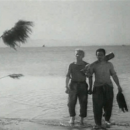
Between the Sarah Maldoror series that begins Tuesday, the Boris Barnet series that starts Wednesday, and the Rose Lowder series that kicks off next Sunday, Doc Films’ winter calendar contains a treasure trove of hard-to-see movies; anyone looking to expand their sense of cinema history is encouraged to buy a quarter pass. The first title in the Barnet series is this early Soviet talkie (also known as BY THE BLUEST OF SEAS), of which Jonathan Rosenbaum has written, “For a sexy view of collectivism, it’s hard to think of any movie much better than this one.” It seems a fitting introduction to this enthusiastically championed, if infrequently revived director, whose work has been praised for its earthiness and humanity. (The programmers of this invaluable series have titled it “A Cinema Despite Life,” acknowledging how Barnet’s filmography, which spanned the mid-1920s to the early 1960s, managed to run counter to the dictates of Soviet propaganda.) BY THE VERY BLUE SEA tells the simple narrative of a sailor and a mechanic who survive a shipwreck in the Caspian Sea and come to shore on a small island in Azerbaijan. They’re taken in by a beautiful young woman who’s in charge of the local fishing co-op; both men fall in love with her, and a good-natured rivalry ensues as the men settle in to life on the island community. Barnet makes exquisite use of the location, likening the characters’ natural (and sometimes hard-to-control) feelings to the visual poetry of the coast and crags, with daunting shots of the waves serving as an important visual motif. But for all the urgency of the emotions, the film seems in no hurry to tell a story; for the most part, the filmmakers seem content to document a way of life and generate chemistry between the principal characters, who exhibit a life-affirming vitality. To return to Rosenbaum’s writing on the film: “We wind up feeling affection for the three leads, partly because of the affection they show for one another and partly because of the gusto with which they show it. This aspect reminds me of some of Raoul Wash’s character-driven comedies of the early ‘30s, such as ME AND MY GAL (1932) and SAILOR’S LUCK (1933). But there’s also an undertow of sadness that seems quite foreign to Walsh—a sense of melancholy wrapped around each moment of joy that seems quintessentially Russian.” Screening as part of the Boris Barnet: A Cinema Despite Life series. (1935, 70 min, 35mm) [Ben Sachs]
Éric Rohmer’s Tales of the Four Seasons
Siskel Film Center – Saturday, 11am
Éric Rohmer’s A TALE OF SPRINGTIME (France)
Despite his considerable gifts in the realm of visual composition, Éric Rohmer was ultimately interested in things that couldn’t be seen. His most popular film, MY NIGHT AT MAUD’S (1969), is about faith on the one hand and seduction on the other; the chief quality they share is that they’re both experiential. We can describe these things all we like—and Rohmer’s characters certainly do—but we can never touch either. A TALE OF SPRINGTIME, the first of Rohmer’s late career cycle “Tales of the Four Seasons,” is similar in its focus on the intangible—not for nothing is the main character a philosophy teacher. The opening sequence finds the 30-ish Jeanne (Anne Teyssèdre) leaving her boyfriend’s messy apartment, where she’s been staying while a visiting cousin uses her flat. Jeanne’s boyfriend has been out of town (indeed he never appears in the film), and his absence has Jeanne feeling impetuous. On a whim, she goes to a party one evening and meets a 17-year-old piano prodigy named Natacha (Florence Darel). The two become fast friends, with the teenage girl doing her best to draw the cool-tempered Jeanne into her life. Before A TALE OF SPRINGTIME enters into conversations of philosophy and the unknowability of others, it introduces the theme of trust, another intangible force. Natacha seems almost excessively, preternaturally attached to Jeanne, confiding in her new friend about her parents’ divorce from five years ago, her father’s love life since then, and her own current romance with a man roughly 20 years her senior. (The film addresses the problematic nature of this relationship, which, like Jeanne’s own romance, remains offscreen, though only once and in passing. Make of that what you will.) Does Natacha have ulterior motives in diving into this close friendship? She does hate her father’s current girlfriend and wants to replace her… Rohmer doesn’t characterize Natacha simply by her neuroses; rather, she’s a complicated individual who can go from being lovable to irritating and back again within the same scene. The great writer-director also manages nimble shifts in tone during the movie’s climax, an extended dialogue between Jeanne and Natacha’s father Igor (Hugues Quester) that represents, for at least part of its duration, one of the finest passages of Rohmer’s chaste eroticism. Critics like to invoke the old saying that Rohmer’s films are about privileged characters enjoying their privilege, yet it’s important to note that the privileges Rohmer considered are rarely material (although a beloved necklace is an important motif in A TALE OF SPRINGTIME). What Rohmer’s characters enjoy most is the privilege of free time, when they can think freely and abstractly, admire nature, or maybe fall in love. Spring is a good time to do all three, but it is above all a time of regeneration. Rohmer pursues that theme (another intangible) so subtly that it doesn’t become clear until the movie’s final scenes. That revelation is a classically unassuming surprise from a filmmaker capable of delivering at least one in every film. (1990, 107 min, DCP Digital) [Ben Sachs]
---
Éric Rohmer's A TALE OF WINTER (France)
A TALE OF WINTER is the second film that Éric Rohmer made in his "Tales of the Four Seasons" series—the third and final of his major film cycles, after "Six Moral Tales" and "Comedies and Proverbs"—but, thematically and according to the narrative's placement within the calendar year, it feels like the true end point to the series. (For the record, the films can be enjoyed when seen in any order.) It is also a special movie in the director's canon, one that begins atypically with an extended wordless montage as two newly acquainted lovers, Félicie (Charlotte Véry) and Charles (Frédéric van den Driessche), cavort in a French seaside resort town while on vacation before they become separated by a simple twist of fate. Even more atypically, Rohmer then flashes forward five years into the future to focus on Félicie's day-to-day life as an unwed single mother living in Paris. She's now involved with two new men, the snooty academic Loic (Hervé Furic) and the more down-to-earth hairdresser Maxence (Michel Voletti), but she refuses to fully commit to either of them since she has never gotten over Charles, the man she considers to be her soulmate in spite of the fact that their time together was so brief. In many ways, A TALE OF WINTER feels like a more female-centric remix of Rohmer's beloved 1969 film MY NIGHT AT MAUD'S. Both are set during Christmastime and feature "Pascal's wager," the philosophical argument that it is logical to "bet" in favor of the existence of God, as a prominent plot point. But WINTER is also arguably a more mature and profound reworking of the earlier film's ideas: in contrast to Jean-Louis Trintignant's mathematician-protagonist in MAUD, Félicie has never even heard of Pascal—whose name is only invoked by Loic, a character portrayed as an annoying mansplainer—so that she works through her dilemma regarding faith on the level of emotional intuition rather than intellectual calculation (and thus allowing Rohmer to keep his philosophical themes more on the level of subtext). It is not giving anything away to say that the lovably stubborn Félicie is ultimately rewarded for her faith and that the film climaxes with the depiction of a miracle that is as moving as any scene Rohmer ever directed. As in A MAN ESCAPED, an otherwise very different kind of movie by another great French Catholic director, Robert Bresson, the outcome here seems preordained from the beginning, with Rohmer generating suspense not by making viewers wonder what will happen but rather how it will happen. The result is Rohmer's most purely romantic film, a balm for the heart as well as the mind. (1992, 114 min, DCP Digital) [Michael Glover Smith]
---
Éric Rohmer’s A TALE OF SUMMER (France)
A TALE OF SUMMER, French director Éric Rohmer’s third in his “Tales of the Four Seasons” series, might be called quintessential Rohmer. Following a young man named Gaspard (Melvil Poupaud), the film uses the beachy, sunny landscape of Brittany, creating a “walk and talk” of sorts, as Gaspard meets various women over the course of his pre-career-starting vacation. Sans a soundtrack, with Rohmer’s characteristically simple, yet stunning visuals, A TALE OF SUMMER revels in Gaspard’s inability to choose between three women: Margot (Amanda Langlet), Solène (Gwenaëlle Simon), and Léna (Aurelia Nolin). While waiting for Léna, his on-and-off again girlfriend, Rohmer’s just-graduated, curly-haired protagonist meets local waitress Margot, spending his days meandering on the beach, chatting about her interest in ethnology, his musical ramblings, and the ideas surrounding a summer fling. Despite its affinity for romantics, the light drama is baked in a dose of reality, unwilling to flatter Gaspard, but rather taking every moment as a stroke of luck in his life. It harkens back to the freedom and levity of summer, before your career, family, and responsibilities fill your days. A level of uncertainty and opportunity feel limitless for Gaspard in this way, in that each chance encounter could lead to something as beautiful as love. As with some of us, when bouts of lust or passion come, we feel like they’re bound for destruction. Gaspard is no different, enacting a woeful tone with the innate knowledge that none of these romances will likely work out. Like several other Rohmer dramas, A TALE OF SUMMER focuses on the flaky nature of young love in all of its hopefulness and hopelessness. As Gaspard’s situations becomes hazier, by meeting the more-excitable Solène and the return of the less-committed Léna, he begins thinking and deciding in each moment what he will do next, with little to no concern for the girls’ well-being. Still, Margot remains a constant, a smile that seems to shine a bit brighter, a friendship that has more stakes than his two strictly romantic dealings. And this relationship swells into one of many points in A TALE OF SUMMER: friendship is as, if not more, serious than romance. (1996, 113 min, DCP Digital) [Michael Frank]
---
Éric Rohmer's A TALE OF AUTUMN (France)
With A TALE OF AUTUMN, Éric Rohmer, cinema’s great observer of the psychology of the human heart, made what must be, in its characteristically modest way, one of the finest of romantic comedies. It’s warm and rather magical, even profound, in its elegant simplicity. The final film in the “Tales of the Four Seasons” cycle, it was made by a Rohmer who was in his late seventies, but arguably possessed of a keener-than-ever eye for the vagaries of friendship and love. The setting is a small, sun-kissed town in the Rhone Valley in southern France (Pont-Saint-Esprit and environs), gloriously illuminated by cinematographer Diane Baratier. It’s about two forty-something best friends, Isabelle (Marie Riviere), a happily married bookseller, and Magoli (Beatrice Romand), a widowed winegrower, as well as the cross-generational friendship between Magoli and Rosine (Alexia Portal), a twenty-something student who’s dallying with Magoli’s son, Leo. Noticing her loneliness, Magoli’s two friends plot, independently, to find her a man. Rosine wants to fix Magoli up with Etienne (Didier Sandre), her ex-philosophy prof (and ex-lover), with whom she’s struggling to establish the boundaries of a friendship. Meanwhile, Isabelle clandestinely places a personal ad in the local paper on Magoli’s behalf: though Magoli would like to meet someone, she feels she could never love someone she met through a “ploy.” Like a typical Rohmer hero, Magoli has a predicament, but also a certain ethical and philosophical code to which she dedicates herself uncompromisingly—whether it helps or hinders. The true Rohmer surrogate here, though, is Isabelle: watch how closely she observes other people, the way she lets her “actors” believe they are running the show, even as she’s discreetly setting the stage. Gerald (Alain Libolt) is the gentleman who answers the ad, and Isabelle begins secretly meeting with him, adopting an identity based on Magoli to vet him. Misunderstandings and mistaken identities ensue in a way that never quite feels clichéd, as Isabelle plans for Magoli and Gerald to meet “accidentally” at her daughter Emilia’s upcoming wedding. As acting, as writing, as direction, the film is so alive to the stories that faces and gestures tell—of hope against hope, of awareness of experience: glances and touches suffused with affection and intelligence. I loved watching these visages light up with the bloom of love, trust, and happy surprise at the continued possibility of both. I’d adored the younger versions of Riviere and Romand as seen in two earlier Rohmer films: Riviere as the somewhat neurotic protagonist of THE GREEN RAY (1986), unwilling to dissemble in matters of the heart, and Romand as the delightfully articulate and self-possessed teenager in CLAIRE’S KNEE (1970). It is stirring to see them again here, in middle age. In fact, like Gerald, I found myself falling in love with both of them a bit. (The film leaves tantalizingly open the question of whether Isabelle hadn’t started to fall in love with Gerald a bit, as well.) Meanwhile, Rohmer simply observes it all, as if to say, isn’t it all so beautiful: the wind in the trees, the way the sunlight falls on a woman’s hair as the day wanes? Aren’t human beings beautiful, and aren’t we a mystery, in our fumbling, confused way? And doesn’t the world Rohmer creates—in which life often seems to work out, by whatever mysterious combination of luck, fate, and demiurge, so that we meet the right people at the right time—resonate with our own experience? That’s not always an easy feeling to sustain, but whenever I’m watching one of the best films of Éric Rohmer—which A TALE OF AUTUMN most certainly is—my answer to these questions is always “yes.” (1998, 120 min, DCP Digital) [Scott Pfeiffer]
---
Screening as part of the Settle In series.
John Waters' SERIAL MOM (US)
Music Box Theatre – Friday, 10:30pm
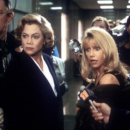
Perhaps not the best John Waters film, and definitely not the most influential, but without a doubt the movie he was working toward his entire career. The trajectory of his transgressive ‘60s and ‘70s Warhol meets Wishman, arthouse for the grindhouse films was always aiming toward the mainstream. Waters looked to subvert and knew that the more mainstream you are, the more subversive you can be. Plus, he's a populist at heart and has never been shy about his love of Big Hollywood. So, after the surprise breakout success of HAIRSPRAY (1988) and critical love for CRY BABY (1990), he decided to leave the world of ‘50s subgenres like dance films and J.D. films behind and go for the least “John Waters” type of story possible, a family comedy. But of course, he couldn't possibly have it be totally normal. Presented as a true crime biopic, SERIAL MOM follows the story of Beverly Sutphin, a seemingly perfectly average suburban homemaker. A dutiful and loving wife and mother, Sutphin is actually completely deranged when alone. Played to perfection by Kathleen Turner, Beverly secretly gets perverse joy from making obscene phone calls to her neighbors and scrapbooks news clippings about serial killers. When a teacher insults one of her kids at a parent teacher conference, she gets revenge by running them over in the parking lot. Now having a taste for blood, she starts killing people whom she feels are breaking the rules of polite society. Even when Waters wants to make a film about a loving family who sticks together no matter what, he can't help but be John Waters. But what really makes SERIAL MOM the high-water mark of his career is its cultural context. This is the exact moment the culture met John Waters where he was at. The saturation of the 24-hour news cycle. Tabloid journalism as news. News as entertainment. When infamy became interchangeable with fame. This was the first time you could make a family comedy about serial killing and not have it be taken as being purely in bad taste. It's so prescient of where American society was heading that it's now almost quaint. It's no surprise that this seems to be the last Waters film that people have a visceral love for. It was the last time John Waters could possibly be seen as being more distasteful than the news and the daily media being presented to the average American. It's the movie Waters was always trying to, hoping to, working to make—a fully accessible film based on an utterly trashy conceit. Utterly distasteful but with a veneer of family friendliness, the satire of SERIAL MOM reveals how morally disgusting Americans really are. That our moral fabric is threadbare at best. This is a high camp j'accuse in the vernacular of populist low art. A dumb movie for smart people. Undeniable proof that John Waters is America's Only Director. (1994, 95 min, 35mm) [Raphael Jose Martinez]
Michael Mann’s BLACKHAT [Director’s Cut] (US)
The Davis Theater – Thursday, 7pm
To prepare for writing this I watched both the theatrical and director’s cuts of BLACKHAT (the latter of which is screening—it's difficult to see, so be sure not to miss), one right after the other. Let me begin by asserting that I love them both and that, upon rewatching the film after several years, I really don’t understand why it was so maligned upon its release in 2015, resulting in the eight-year gap between this and Mann's next film, FERRARI. (Per a postmortem in Deadline, its failure at the box office, at least, may have been due in part to its marketing, which Mann, as a notoriously precise and some-may-say controlling producer and director, had input into. Anthony D’Alessandro writes that “the film wasn’t helped by a marketing campaign that failed to convey a sophisticated plot and a romance . . . BLACKHAT instead chased a young audience with action footage that did not seem fresh.” Basically, it may have been a disservice to not communicate quite how smart the movie is.) It’s MANHUNTER by way of MIAMI VICE, a boundless, probing thriller awash in the glow of urban grime and the haunting glare of technological advancement. Its title refers to hackers with malicious intent, such as those in the film who undertake a series of labyrinthine attacks that the protagonists rush to uncover. Chris Hemsworth stars as a convicted hacker, Nick Hathaway, who’s sprung from prison to help discover the source of the attacks—effectively becoming a whitehat, the seemingly antithetical “ethical” hacker. He joins his ex-MIT roommate and Chinese governmental liaison, Dawai (Wang Leehom); Dawai’s sister, network engineer, and Hathaway’s eventual romantic interest, Lien (Tang Wei)—a reason for the film’s failure at the global box office is that it was not approved by the Chinese government to screen in exhibition there, where Wang Leehom and Tang Wei are household names and would have surely drawn a crowd; and various U.S. government officials (including Viola Davis and Holt McCallany, both excellent). The biggest difference between the theatrical and director’s cuts is the order in which the attacks occur. In the former, it’s an attack on a nuclear reactor first, then a run-up on soy prices (at the Chicago Mercantile Exchange!) second, while in the latter, it follows an order of increasingly severe assaults, starting with soy and then the nuclear reactor. (Though I enjoyed watching both equally, I do think the director’s cut makes more sense and that the slower burn is more logically gratifying. Ironically, it was Mann who made the decision to change the sequence of events, so as to make the stakes higher right off the bat, though he later said this had been a mistake.) Both versions are approximately the same length, but each is, per Mann’s wont, almost nonsensically dense, a proliferation of meticulously researched ideas and plot points that resist the idea that less could ever be more. Just as MANHUNTER explores the psyche of both a killer and his hunter, positing them as being similar—one needing to become, even if metaphorically, the other, so as to be able to surmount him—BLACKHAT does so around the evolution of crime itself, with the silent and bloodless but even more potentially devastating cyber attack. It’s this and also somehow a love story (evocative of the one in MIAMI VICE), a globetrotting, Mann-appropriate procedural that delves into the hyperspecificities of such an investigation, and a treatise on human nature and how, with the advent and continued expansion of technology, it too is being reprogrammed. Presented by the Oscarbate Film Collective. (2015, 132 min, DCP Digital) [Kat Sachs]
Umberto Lenzi’s PARANOIA (Italy)
Music Box Theatre – Monday, 7pm
During a January Giallo screening, film programmer Katie Rife offered a key insight for the subgenre’s enduring pull: “We watch beautiful people act horribly to each other.” PARANOIA fills each frame with despicable characters. There’s little in the way of onscreen death, but what Umberto Lenzi lacks in blood he makes up for in eroticism. Sex as leverage. Intimacy as strategy. Released in Italy as ORGAZMO and retitled PARANOIA for its X-rated American run, the film suffered from the usual transatlantic identity crisis. Its reputation arrived later, when viewers were better equipped to recognize cruelty that didn’t announce itself with gloves and a knife. The film also marked a rebirth for Carroll Baker. Once a Hollywood star drifting out of favor, Baker chose exile over erasure, immersing herself in European genre cinema. PARANOIA was the first of four collaborations with Lenzi, followed by SO SWEET… SO PERVERSE (1969), A QUIET PLACE TO KILL (1970), and A KNIFE OF ICE (1972). Together these form a cycle less concerned with solving crimes than with watching desire, money, and entitlement quietly dismantle the people who think they own everything. Here, Baker plays Catherine West, a wealthy American widow whose oil tycoon husband has just died in a car accident. She retreats to an Italian villa seeking privacy, control, and perhaps absolution. What she finds is inertia. Time slackens. J&B whiskey becomes ritual. Her authority inside the house erodes, especially under the steady disapproval of Teresa, the house manager, who never lets Catherine forget this is borrowed ground. Then Peter arrives: Young. American. His car, conveniently, has broken down. Catherine invites him in. Sex follows with minimal hesitation. Days dissolve into drinking and lust until complication arrives in the form of Peter’s sister Eva, played by Colette Descombes. Eva whispers compliments like they're weapons. She and Peter, step-siblings and uncomfortably intimate, make little effort to disguise their bond. Their open sexuality becomes bait, drawing Catherine deeper into a relationship designed to consume her. What follows is a slow poisoning. Peter and Eva keep Catherine saturated with whiskey and barbiturates, watching as her coherence slips. She appears hysterical, paranoid, and unwell. Lenzi grasps something giallo films often dodge: madness is most convincing when it’s documented, encouraged, and authorized by the right people. Often dismissed as a journeyman, Lenzi is razor-precise here. He avoids operatic murder and Bava’s painterly excess. His interests are colder. Psychological pressure. Bourgeois rot. The mechanics of exploitation. Restless zooms, kaleidoscopic flourishes, and jagged editing collide with Piero Umiliani’s perversely cheerful score, which refuses to acknowledge the damage onscreen. The disconnect is the point. The music reminds us that watching the wealthy rip each other apart has always been sold as entertainment. As Peter, Eva, the family lawyer, and the dead man’s aunts circle Catherine’s fortune, the noose tightens. The tension accumulates in small increments until it detonates in an abrupt, cacophonous finale. With no moral accounting and justice nowhere in sight, the film makes its position clear. We’re not here for virtue. We’re here to watch beautiful people treat each other terribly. And like the cultural obsession with Real Housewives, we enjoy every minute of their downfall. Screening as part of the January Giallo series. (1969, 91 min, 35mm) [Shaun Huhn]
📽️ ALSO RECOMMENDED
Billy Wilder's DOUBLE INDEMNITY (US)
Music Box Theatre – Sunday, 11:30am
Raymond Chandler shepherds his procedural style to the screen in Billy Wilder's quintessential noir, DOUBLE INDEMNITY, helping to bring the genre to a boil. Ironic, given that its placement in the canon of Hollywood cinema is attributable to a chilly murder plot by two frozen-souled conspirators. Told in flashback from his desk and in a bloody suit, insurance salesman Walter Neff (Fred MacMurray) narrates how, while an on a routine sales visit, he falls for Mrs. Dietrichson (Barbara Stanwyck), a femme fatale housewife plotting her husband's demise. Fully seduced, Neff uses his knowledge of his industry to foil investigators and kill Mrs. Dietrichson's husband "accidentally"—invoking a clause in the policy that pays double. Mrs. Dietrichson's dark past crops up to break the spell on Neff—who even then stays in it too long—as Keyes (Edward G. Robinson), fellow insurance agent and confidant, sniffs out their scheme. With so many imitators, DOUBLE INDEMNITY shines with wonderful idiosyncrasies: Neff on crutches imitating a broken-legged Mr. Dietrichson, the unabashed sexiness of Mrs. Dietrichson, the authentic bare bulb dialogue, and so many venetian blinds. Without them, the murder and investigation might become overly flat. But through its methodical telling, Wilder's film allows us to contemplate the significance of what is essentially a fatalist's cynicism—after all, we know the ending the whole time—"killed him for money, and for a woman. I didn't get the money, and I didn't get the woman." Screening as part of the Working Girl: The Films of Barbara Stanwyck series. (1944, 107 min, 35mm) [Brian Welesko]
Richard Linklater's BEFORE SUNRISE (US)
Doc Films (at the University of Chicago) – Monday, 7pm
A French woman and an American man (Julie Delpy and Ethan Hawke) spontaneously disembark from a train in Vienna and spend the afternoon, evening, and wee hours of the morning together—talking, walking, listening, flirting. Before this slender movie became the opening chapter of a trilogy, it was easy to dismiss its premise as flattering, post-collegiate wish fulfillment—a narcissistic ode to pitter-prattle interpersonal profundity that bears a striking proximity to resoundingly conventional male fantasies. Yes, but—viewing BEFORE SUNRISE in narrowly heterosexual terms or pigeonholing it as a precociously alt-Gen X love story would be enormous errors. More so than any screen romance I know, BEFORE SUNRISE exalts the pliability of gender roles and records a desperate, joyous urge to inhabit another person's consciousness. (By contrast, the deflationary exhaustion of BEFORE MIDNIGHT endorses a middle-aged imperative to live in one's own stubborn body and to ridicule and repudiate youthful idealism; but see below for an alternate opinion.) The closest direct antecedent to the radical vision of BEFORE SUNRISE is Jean Vigo's L'ATALANTE, but that film is about characters who can't talk to each other, who thrash about and dream of faraway cities and disembodied hands in jars. BEFORE SUNRISE, instead, is about the endlessly fecund possibility of connection. When Delpy sits in a restaurant, leans into her imaginary telephone, and belches, "Hey dude, what's up?," we're witnessing one of the most quietly utopian moments in movies. In another one of BEFORE SUNRISE's key moments, we watch Delpy and Hawke in a cramped record booth, listening to a Kath Bloom LP and trying so hard to conceal their mutual interest in one another: she cannot let him know that she's looking at him, just as surely as she must not know that he's looking at her. It's a scene that bedeviled Robin Wood's famously inexhaustible powers of analysis, perhaps because the content, form, and emotion are thoroughly irreducible and inseparable. In this movie, where people cannot help but reveal the totality of themselves to strangers, a single glance could prove fatal. Eschewing the concentrated intensity of its even finer follow-up, BEFORE SUNRISE manages to present a parade of deftly sketched supporting characters as well, none appearing for more than a minute or two but each suggesting an infinite expanse of possible feeling outside of Delpy and Hawke's bodies. A landmark of modern cinema. Screening as part of the City Serendipity series. (1995, 101 min, DCP Digital) [K.A. Westphal]
Léos Carax’s THE LOVERS ON THE BRIDGE (France)
Siskel Film Center – Friday, 8:15pm; Sunday, 2:30pm; and Tuesday, 6pm
THE LOVERS ON THE BRIDGE is one of the culminating works of the 20th century, channeling numerous great films and filmmakers of the previous several decades while advancing a romantic, almost innocent vision that harkens back to the some of the very first movies. It begins like a blunt report on the homeless population of Paris (as though to honor the cinema’s roots in documentary realism) before it erupts into a full-blown spectacle about the titular characters, a former circus performer who can’t stop drinking (Denis Lavant, the leading man in four of Carax’s six features to date) and a painter who’s losing her sight (Juliette Binoche, who had been Carax’s girlfriend for several years when this was made). The writer-director famously rebuilt Paris’ Pont Neuf and its surrounding blocks on a lake outside Montpelier so he could shoot as much as he wanted, which made THE LOVERS ON THE BRIDGE one of the most expensive French productions of all time. Yet this is no populist spectacle in the tradition of Cecil B. DeMille and James Cameron, but rather something very personal, even delicate writ large. Jonathan Rosenbaum has likened it to Murnau’s SUNRISE (1927) and Tati’s PLAYTIME (1967) in how it treats the modern city as a playground, while Adrian Martin invoked everything from Abel Gance’s NAPOLEON (1927) to Francis Ford Coppola’s ONE FROM THE HEART (1982) in his writing on LOVERS. Carax’s film does operate in such grand gestures as to invite, and often merit, comparison to any of these cinematic zeppelins. What distinguishes it from most of these touchstones is the feeling of wild uncertainty it engenders; the surprising shifts in tone and the unpredictable camera setups suggest a film not entirely in control of itself, as if the movie were taking cues from the reckless abandon of its main characters. Screening as part of the Needle Drops series. (1991, 126 min, New 4K DCP Digital Restoration) [Ben Sachs]
Martha Coolidge’s REAL GENIUS (US)
Alamo Drafthouse – Sunday, 12:45pm
It’s easy to mistake REAL GENIUS for another ‘80s teen comedy about nerds and social outcasts; it’s a trend seen in a film from the very same year, often getting mentioned alongside REAL GENIUS: WEIRD SCIENCE. Directed by Martha Coolidge, who already proved she was interested in more complex teen comedies with VALLEY GIRL (1983), REAL GENIUS is full of wacky shenanigans while also focused on character and heart. This is in no small part also due to its star, Val Kilmer. The follow-up to his breakout leading role in the Zucker Brothers’ TOP SECRET (1984), REAL GENIUS is a showcase for his unique brand of comedic charm. He plays college student Chris Knight, who’s incredibly smart, but prefers to slack off, using his intelligence instead for pranks and hijinks. He receives a new roommate, Mitch (Gabriel Jarret), a high school student recruited by Professor Hathaway (the man you call when you need a classic 80s villain, William Atherton). Hathaway is working for the CIA developing weapons technology but has been hiring students to do all the work and siphoning project funding for his own personal use. Chris, Mitch, and a band of fellow geniuses use both their brains and penchant for disobedience to thwart Hathaway. That band includes Mitch’s love interest Jordan, a bubbly animated insomniac played by Michelle Meyrink, who herself starred in REVENGE OF THE NERDS the year before. It’s a testament to REAL GENIUS that while so much of it feels familiar with its typecasting and utilization of existing trends, it manages to stand out in a sea of sameness. The film treats its madcap set of characters with respect; the joke is never on them but more on a world that doesn’t know what to do with them other than exploit. Even with its larger-than-life pranks, that focus on characterization makes everything feel grounded. The cliche cinematic journey of a nerd finding acceptance is avoided; Kilmer’s Chris is a nerdy genius who is also endlessly cool from the beginning. He is also a very generous character, along with Jordan, who both welcome Mitch into the fold without judgement or skepticism. It’s something that always strikes me about REAL GENIUS: in all its fun and formulaic elements, it’s also so distinctively heartwarming. (1985, 106 min, DCP Digital) [Megan Fariello]
Kleber Mendonça Filho’s THE SECRET AGENT (Brazil)
AMC River East 21, the Davis Theater, and the Music Box Theatre – See Venue websites for showtimes
The films of Kleber Mendonça Filho unfold like novels, immersing viewers in the specificities of place while gradually revealing aspects of the principal characters that aren’t immediately apparent. They also abound in digressions and supporting characters, neither of which advance the plot so much as expand on it so that the world of the movie seems as rich as the one we inhabit. The richness of THE SECRET AGENT has a lot to do with how the film engages with Brazilian history. Mendonça Filho doesn’t confront the legacy of his nation’s military dictatorship head-on, but rather obliquely and circuitously, dramatizing how citizens lived under the terror of the period until that terror enters the foreground of the action. The story takes place mainly in 1977, at the height of the dictatorship; per a title card that comes near the beginning, this is a time of “great mischief,” one of several euphemisms for state-sponsored violence that arise during the film. Wagner Moura stars as a technical analyst who returns to his hometown of Recife after an unspecified time away. He wants to reconnect with his young son, who’s currently living with his maternal grandparents, but circumstances (also unspecified) keep the two from residing together. Mendonça Filho evokes a climate of fear and secrecy through his presentation of the intricate community networks that Moura’s character must navigate to stay safe in Recife. The writer-director also sometimes jumps forward a few decades to consider some young women in the present who are researching the character’s life, suggesting that Brazil is far from done with its culture of surveillance. These flash-forwards aren’t the only curveballs in THE SECRET AGENT, which also features a fascinating subplot about a human leg found in the body of a shark that’s washed up on the Recife coast (an event that coincides with the local popularity of JAWS) as well as a thorough account of how Recife’s police department functioned under dictatorship. The sheer volume of narrative detail recalls the films of Arnaud Desplechin, and Mendonça Filho adds to the complexity with his inspired direction, employing innovative widescreen compositions, unpredictable montage, and daring shifts in tone. Indeed, the film’s technical brilliance is so astonishing as to almost distract from the story, which is another way of saying that this towering achievement probably requires multiple viewings to reveal all it has to offer. (2025, 160 min, DCP Digital) [Ben Sachs]
Satoshi Kon's PAPRIKA (Japan/Animation)
FACETS – Thursday, 7pm
PAPRIKA was Satoichi Kon's final film, and what a wonderful way to wrap up a remarkable career. Kon passed away in 2010 due to pancreatic cancer at the early age of 46, but his work has left a lasting impression on cinema, inspiring filmmakers worldwide and even garnering some copycats, to put it nicely (just Google it). In PAPRIKA, we see the culmination of themes and stylizations that occur throughout his work; it also represents a boundlessly creative approach to the anime medium. Kon often blurred the line between reality and fantasy, and in PAPRIKA he addresses the world of dreams and its position in our worldview. The titular Paprika is the dream persona of a psychologist who enters patients' dreams to help guide their rehabilitation. Things get chaotic when someone steals a device that makes Paprika's dream-hopping possible and starts to use it for nefarious purposes. PAPRIKA successfully juggles a multitude of genres—it’s a horror movie, comedy, and psychological thriller at the same time. Kon, like a few of his contemporaries, recognized the similarities between cinema and dreams. Filmmakers like David Lynch and Apichatpong Weerasethakul are known for utilizing dream logic in their films, and Kon deserves to be mentioned in the same discussions about the close relationship between these two forms. In PAPRIKA, Kon recognizes that cinema has the power to manipulate and replicate dreams, and he questions the morality of cinema's ability to do so. Is it wrong to toy freely with dreams, places of purity and unbounded freedom and safe havens from the harsh reality that plagues our waking lives? Kon decides that, through cinema we can take the joy and freedom of our dreams and transplant them into our day-to-day lives for everyone to enjoy. Anime Club celebrates five years of programming with the return of two classics voted on by members. PAPRIKA is back by popular demand, followed a secret second feature, one of anime’s most visually striking and influential queer works. Free for Film Club Members. (2006, 90 min, Digital Projection) [Drew Van Weelden]
Elizabeth Lo's MISTRESS DISPELLER (China/US/Documentary)
Siskel Film Center – See Venue website for showtimes
A shockingly intimate documentary, MISTRESS DISPELLER highlights a new industry on the rise in China. With the goal of keeping couples together, a "mistress dispeller" can be hired to infiltrate family dynamics and bring harmony back to marriages flailing due to infidelity. Featuring the challenges of modern relationships, dating, marriage, family, and loneliness, the film creates space for everyone involved, demonstrating sincere empathy for all sides of the love triangle. MISTRESS DISPELLER follows a couple, Mr. and Mrs. Li, as the wife reaches out to Teacher Wang, a mistress dispeller who skillfully inserts herself into their dynamic, discovering the innermost details of the relationships involved to save the marriage; her purpose, however, expands to helping everyone, including the mistress. The film insightfully draws connections between personal relationships and larger cultural norms and expectations. Frank conversations, shot with arresting stillness, many featuring close-ups, are juxtaposed with lingering shots of Chinese art, landscapes, and cityscapes. Throughout, as well, there are interludes with images of new brides, lonely hearts ads, dating seminars, and matchmaking services, illuminating the cultural pressures that exist in finding and maintaining successful relationships—so much so that industries spring up to fill the need. What is most surprising is how director Elizabeth Lo got everyone involved to agree to willingly participate; a fact she is clear to emphasize with text at the beginning of MISTRESS DISPELLER. The result is true cinematic melodrama in documentary form. (2024, 94 min, DCP Digital) [Megan Fariello]
Nicolas Roeg's THE MAN WHO FELL TO EARTH (UK)
Alamo Drafthouse – Friday, 10pm and Wednesday, 2:15pm
At once the origin story of a pop icon, a McLuhan-esque critique of mass media, a postmodern western, and a commentary on the space age, Nicolas Roeg's elusive, kaleidoscopic THE MAN WHO FELL TO EARTH firmly defies classification. David Bowie plays Thomas Jerome Newton (in his first film role), an extraterrestrial who has traveled to Earth in search of water for his drought-stricken planet. Candy Clark and Rip Torn turn in equally offbeat performances as Newton's lover and scientific consultant, respectively. The plot, which involves Newton becoming a technology tycoon and celebrity enigma, is disjointed and incoherent. The sooner one can refrain from attempting to impose a conventional narrative structure onto the film, the easier it becomes to appreciate it as a freeform, hallucinatory head trip. Stylistically, the film is as capricious and unpredictable as Bowie's off-screen shape-shifting persona. Roeg hurls every trick in his cinematic arsenal at the screen, from point of view shots to trippy flashbacks. Time is warped to the point that days, months, and even years vanish between scenes, and just when things begin to feel stagnant, the viewer is bombarded with a neon lit alien sex scene right out of a Jodorowsky graphic novel. A film that could have only been made by a foreigner, THE MAN WHO FELL TO EARTH is a twisted fun house mirror image of post-60s America in which even the most far out of outsiders embraces the ways of the establishment: capitalism, religion, and the imbibing of copious amounts of gin. (1976, 139 min, DCP Digital) [Harrison Sherrod]
Park Chan-wook’s NO OTHER CHOICE (South Korea)
Alamo Drafthouse and the Music Box Theatre – See Venue website for showtimes
Neon, the distribution company handling the US release of NO OTHER CHOICE, put out an exquisite piece of PR: “On behalf of Director Park Chan-wook's new film, we are cordially inviting all Fortune 500 CEOs to a special screening of NO OTHER CHOICE. This is truly a film that speaks to our gracious executive leaders and the culture they have cultivated.” Whether any CEO accepted the invitation is beside the point—the provocation lands cleanly. NO OTHER CHOICE looks directly at the class that treats labor as an abstraction and asks them to sit with the human residue left behind. Audiences have embraced the film for its sharp wit and plainspoken clarity, recognizing themselves in its vision as the world lurches each day closer toward economic collapse. The film follows Man-su (Lee Byung-hun), a veteran paper-industry professional whose stable life implodes after an abrupt layoff during corporate restructuring. What unfolds is a slow erosion marked by repetitive job interviews leading nowhere, mounting debts, and quiet domestic compromises. Months stretch into a year. Man-su’s sense of dignity becomes increasingly bound to professional reinstatement, and his family home, formerly a symbol of personal history and stability, becomes a pressure cooker. Park shapes Man-su’s moral descent with procedural discipline. Routine governs the rhythm. Each decision emerges through deliberation, framed as practical problem-solving rather than impulse. Park’s labyrinthine tales of vengeance like LADY VENGEANCE (2005) are traded here for a straightforward logic. The tension at each moral quandary comes from recognition. Every step makes sense. And morality becomes another variable to manage. This framework traces back to Donald E. Westlake’s 1997 novel The Ax, a corporate satire that charts violence as career strategy. Park retains the architecture while reshaping the emotional terrain. Man-su is no longer alone inside his reasoning like the novel’s protagonist Burke Devore. The film places him within a family whose survival depends on shared silence and mutual implication. Responsibility spreads outward. Consequences echo inward. Glimpses of other laid-off workers provide a mirror for Man-su: men who have given up, workers who have been spit out and forgotten. Within Park’s body of work, NO OTHER CHOICE occupies a transitional space. His precision remains unmistakable: calibrated compositions, ironic musical cues, an enduring fascination with self-justifying ethics. Yet the film abandons the operatic violence of his other films like OLDBOY (2003), THIRST (2009), and THE HANDMAIDEN (2016). Violence here feels laborious and draining. Murder aligns with job hunting, interviews, and evaluations. It becomes another task to complete, another box to check. Dark humor, awkward missteps, and poorly executed plans brush against slapstick, an unexpected lightness that keeps Man-su recognizably human. By shifting focus away from revenge and obsession toward systemic design, NO OTHER CHOICE emerges as Park Chan-wook’s most direct examination of work as ideology. Employment defines dignity. Automation signals erasure. Survival demands compromise. The film offers no relief, only a clear-eyed portrait of a system accelerating toward collapse, guided by those insulated from its costs. Build identity around labor, strip it away, demand adaptation, and call it opportunity. Eventually, resistance becomes inevitable. There is no other choice. Unless, of course, a few CEOs attended the premiere and decided to reduce profits and expand their workforce. Cinema inspires miracles all the time; maybe that’s why the film was released on Christmas day. (2025, 139 min, 35mm at the Music Box and DCP Digital elsewhere) [Shaun Huhn]
James Cameron's TERMINATOR 2: JUDGMENT DAY (US)
The Davis Theater – Tuesday, 7pm
A prime example of the atomic bomb's unintentional popular promotion of a divine, millenarian Christian theocracy—an ideal from which our nation basically has yet to recover—James Cameron's TERMINATOR 2: JUDGMENT DAY remains in the gentile closet, despite its explicit subtitle. In retrospect, however, this blockbuster infancy gospel of divinely-born post-apocalyptic savior John Connor (Edward Furlong)—a miraculous ATM-cracker who acquires his morality and military wits under the crossfire of two asexual, fallen archangels (Arnold Schwarzenegger and Robert Patrick)—wholly exposes secular pop science-fiction culture as a simultaneously technophobic and technophiliac boys' theology. The young J.C. instructs his reprogrammed protector in the Commandments ("You can't just go around killing people!"); Judas is recast as an innocent VLSI engineer (BROTHER FROM ANOTHER PLANET's Joe Morton) who sacrifices himself after learning of his own future betrayal to humanity; and the film cannily bridges blue-collar, survivalist vehicular/firearms fetishism with an anti-nuclear Neo-Luddism in addressing the philosophical contradiction (shared by both the Church and the quantum-physics ivory tower) between predestination and free will. The action scenes are also shot with a remarkable, now-antiquated spatial coherence. (1991, 137 min, DCP Digital) [Michael Castelle]
Sam Raimi's EVIL DEAD II: DEAD BY DAWN (US)
Alamo Drafthouse – Monday, 10:15pm
Sam Raimi's THE EVIL DEAD broke astonishing ground in its cinematic inventiveness and willingness to go for broke in terrifying its audience. It was brutal, coarse, grimy, and fabulously scary: his preternaturally mobile camera implied—and often inhabited—overwhelming forces of evil rushing past and at his characters at all times, unseen and terrible, possessing and destroying at their whim and pleasure. EVIL DEAD II: DEAD BY DAWN finds Raimi operating in a much more complicated mode, melding the horror of the first film with an increasing interest in slapstick and gross-out comedy. Neither evincing the relentless stream of malevolence that is the first EVIL DEAD film nor the good-natured silliness of ARMY OF DARKNESS, for many viewers, this second entry in the series is the best, finding the perfect balance between stupid and startling, between eerie and icky. Less a sequel than a loose remake of the first, EVIL DEAD II brings back Bruce Campbell's Ash, the knuckle-headed zombie-slayer of uncertain destiny, now stronger, more resourceful, and more idiotic than ever. In many ways, the film resembles the tail-end entries in Universal's classic cycle, only reflecting Raimi's peculiar influences, as if it were MOE HOWARD MEETS THE LEGIONS OF THE DAMNED. In his precarious dance between absurd and terrifying, Raimi conjures a vision of the uncanny in which the line separating the living is less a heart-beat than a gasp, and for which the of the world is but the set-up to a punchline just about to be uttered. (1987, 84 min, DCP Digital) [Kian Bergstrom]
Sam Raimi's ARMY OF DARKNESS (US)
Alamo Drafthouse – Tuesday, 7pm
Also known as BRUCE CAMPBELL VERSUS ARMY OF DARKNESS, this is the third film in Raimi's saga following the moron Ash (Campbell) as he strives to save the world from the legions of the damned. Dripping with glee, ARMY OF DARKNESS revels in its gore-splattered Deadite lunacy, featuring a plot that's little more than a series of contrivances for visual puns, hackneyed romantic clichés, and action set-pieces of virtuosic, if incoherent, energy. Every poke in the eye, every zombie glare, every threat upon one's edible soul is an opportunity for Raimi's teenage sense of humor to show itself, making this perhaps the most 3 Stooges-inflected action-horror film ever made. Certainly it's the lightest film Raimi's ever made, an effervescent dollop of self-mockery capping off a stage in his career of wild-eyed experiment and go-for-broke invention. This is filmmaking at it's happiest, glorying in the bald capacities of cinema to shrink, duplicate, and transform its actors, to mold and mistreat space, to weirdly stutter and truncate time. Merely getting to move the camera is enough pretext for Raimi to set up an elaborate genre reference or visual gag, and the intricate stupidity of Ash, thrust back in time to Medieval England to fight the zombies he unleashed from the Necronomicon in the previous two (modern day) films is an elaborate counterpoint to his surprisingly badass versatility with a chainsaw and broomstick. In this lead role, Bruce Campbell, long-time muse to Raimi, demonstrates a self-effacing, deeply sensuous performance style that's long been under-recognized. One of the great physicalists of screen acting, Campbell's anti-naturalistic tics, too-careful gestures, and winking, self-aware line readings form a kind of over-saturated scaffold upon which the campy drapery of the narrative hangs. A scene-chewer in the best possible sense, Campbell steals every scene, dominates every shot, never missing an opportunity to deflate the film's artifices or turn his fellow actors' work against them. In the face of his mugging, defamiliarizing body, everyone else plays permanent catch-up. This is the last great Raimi film to date, and a milestone in Campbell's career. "Hail to the King, baby." (1992, 89 min, DCP Digital) [Kian Bergstrom]
Karyn Kusama's JENNIFER'S BODY (US)
Doc Films (at the University of Chicago) – Thursday, 7pm
Much has been written about the unfairly harsh criticism JENNIFER’S BODY received on its original release; it's been considered a failing of studio marketing executives, who couldn’t figure out who exactly the film’s target audience was. Reassessments have deemed it a feminist, queer, late-aughties cult classic. The film cleverly combines the horror genre with the dark teen comedy. Director Karyn Kusama and writer Diablo Cody create a self-contained world; the visual aesthetic, the characters, and their relationships feel completely lived-in, so that it’s easy to want to go along for the wild ride. Self-proclaimed dork Needy (Amanda Seyfried) has always been best friends with popular cheerleader Jennifer (a fantastic Megan Fox)—their close bond is at times mystically uncanny. A catastrophic night in their small town of Devil’s Kettle results in a conspicuous change in Jennifer; she’s suddenly hungry for flesh, namely the high school boy variety. As more guys from school end up dead, Needy must decide whether to stay loyal to her friend or stop her. At its core, the film is a sincere portrayal of the intensity and angst of female friendships. It’s also been noted that Jennifer’s transformation is a timely and powerful portrayal of sexual violence against women and the aftermath of abuse. The film shrewdly packages these themes into the teen horror comedy. Its imagery, especially of the demon-possessed Jennifer has become iconic. I could discuss the aught fashions on display here for days—so many layers and low rise. Also, very 2009, JENNIFER’S BODY features a relentless pop punk soundtrack, which plays a notably twisted role in the film’s plot. Screening as part of the Femalaise series. (2009, 102 min, DCP Digital) [Megan Fariello]
📽️ ALSO SCREENING
⚫ Alamo Drafthouse
Quentin Tarantino’s 1992 film RESERVOIR DOGS (99 min, DCP Digital) screens Friday at 11am and Saturday at 4:15pm.
A sneak preview of Gus Van Sant’s 2025 film DEAD MAN’S WIRE (105 min, DCP Digital) takes place Tuesday, 8pm, followed by a livestream Q&A with Van Sant, screenwriter Austin Kolodney, and surprise actors, moderated by Eli Roth.
Jess Franco’s 1973 film A VIRGIN AMONG THE LIVING (105 min, Digital Projection) screens Tuesday, 9:30pm, as part of the Terror Tuesday series.
Andy Sidaris’ 1988 film PICASSO TRIGGER (94 min, Digital Projection) screens Wednesday, 9:30pm, as part of the Weird Wednesday series. More info on all screenings here.
⚫ Doc Films (at the University of Chicago)
Sarah Maldoror’s 2005 short film SCALA MILAN AC (18 min, DCP Digital) and her 1981 film A DESSERT FOR CONSTANCE (61 min, DCP Digital) screen Tuesday, 7pm, as part of the Sarah Maldoror: To Make a Film Means to Take a Position series.
Kinji Fukasaku’s 2000 film BATTLE ROYALE (113 min, DCP Digital) screens Thursday, 9:30pm, as part of the Screen Play: Cinematic Visions of Video Games and Sports series. More info on all screenings here.
⚫ Dorothy (2500 W. Chicago Ave.)
Ryan White’s 2025 documentary COME SEE ME IN THE GOOD LIGHT (104 min, Digital Projection) screens Thursday, 7pm, preceded by poets sharing their favorite work by the film’s subject Andrea Gibson. More info here.
⚫ Music Box Theatre
Rémi Fréchette’s 2025 film TIE MAN (100 min, DCP Digital) screens Saturday at 11:55pm.
The premiere of the short film PAULA TAKES THE STAGE takes place on Wednesday, 8pm, followed by a cocktail reception in the lounge. More info on all screenings here.
⚫ Siskel Film Center
Rohan Parashuram Kanawade’s 2025 film CACTUS PEARS (112 min, DCP Digital) and Urska Djukic’s 2025 film LITTLE TROUBLE GIRLS (89 min, DCP Digital) begin screening this week. See Venue website for showtimes. More info on all screenings here.
⚫ VDB TV (Virtual)
oliverio rodriguez and Victoria Stob's 2018 short film LYNDALE (24 min) and Sandi DuBowski's 1993 short film TOMBOYCHIK (15 min) stream for free on VDB-TV. Programmed by Cine-File contributor Elise Schierbeek. More info here.
CINE-LIST: January 2, 2026 - January 8, 2026
MANAGING EDITORS // Ben and Kat Sachs
CONTRIBUTORS // Kian Bergstrom, Michael Castelle, Kyle Cubr, Megan Fariello, Michael Frank, Shaun Huhn, Ben Kaye, Raphael Jose Martinez, Scott Pfeiffer, Harrison Sherrod, Michael Glover Smith, Drew Van Weelden, Brian Welesko, K.A. Westphal
