



📽️ CRUCIAL VIEWING
Michael Powell’s PEEPING TOM (UK)
Chicago Film Society at the Music Box Theatre — Thursday, 7pm
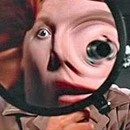
Michael Powell opens PEEPING TOM with a shot that reverberates through horror history as profoundly as Tod Browning’s famous framing of Dracula on the staircase. We’re thrust behind the lens of a camera—gridlines and all—following a sex worker up to her room, and we’re not just watching; we’re participating. The voyeurism leads straight to a murder, an unsettling prelude to what Powell’s film delivers: a killer’s-eye view of the world and a sharp phallus on a tripod. That chilling perspective would seep into Mario Bava’s chic fashion house murders, Dario Argento’s slick gialli, Michael Myers slaying Judith in HALLOWEEN (1978), and Pamela Voorhees carving through campers at Crystal Lake. Powell’s camera and psychologically shattered protagonist offer a grim commentary on the nature of watching and being watched. But compared to the juggernaut that was Hitchcock’s PSYCHO, released the same year, PEEPING TOM didn’t stand a chance. Powell's twisted vision wasn’t what anyone expected from the man behind the lush melodramas of THE RED SHOES (1948) or BLACK NARCISSUS (1947). This was the director who had given us the life-affirming A MATTER OF LIFE AND DEATH (1946), and now here he was, showing us a world where fear is a point of obsession and thrills can be found in capturing the terror-stricken faces of the doomed. No one could have predicted that Powell—beloved for his vibrant Technicolor masterpieces—would create a character like Mark Lewis (Karlheinz Böhm). He’s a soft-spoken introvert with a camera fetish and a childhood trauma that has turned him into a methodical killer. Mark spends his days as an assistant cameraman with a side hustle that includes photographing seedy, under-the-counter softcore smut. When he's not working, he's lurking: spying on his neighbors, reliving his homemade snuff films, or listening to abusive recordings of his father, who used him as a subject in bizarre experiments designed to study fear. It’s no wonder Mark grew into a man who needs the distance of a camera to feel anything at all, especially emotion. Powell cast himself as Mark’s tyrannical father, and his real-life son, Columba, as the young Mark, adding a personal layer of voyeurism. Powell claimed to feel guilty about traumatizing his son for the sake of a scene, but he kept the footage, further underscoring the film’s exploration of exploitation. The lines between spectator and participant blur, and the audience, complicit in the viewing of these acts of violence cannot help Mark’s victims. The UK audience in 1960 didn’t want to confront a dark level of self-reflection so the film was mercilessly panned. To make matters worse, the film was lumped into a so-called "sadist trilogy" with HORRORS OF THE BLACK MUSEUM and CIRCUS OF HORRORS, as they were all distributed by Anglo-Amalgamated and included voyeurism, disfigurement, and sadism. In the US, PEEPING TOM was released as a horror film, an art film, and even an exploitation flick, but it found no love in any camp at the time. Over the years, however, the film developed a devoted following, eventually being recognized for its technical mastery and its intricate commentary on cinema, voyeurism, and violence. Though PEEPING TOM effectively ended Powell’s career, its influence on filmmakers—from art-house directors to shameless purveyors of gore—is undeniable. Powell lived long enough to witness the film’s resurgence and see it hailed as a masterpiece, an ironic fate for a director who explored the dangers of watching too closely. Preceded by J. Leighton Pierce’s 1984 short film THE MIRACLE OF CHANGE (7 min, 16mm). (1960, 101 min, 35mm) [Shaun Huhn]
Abel Ferrara’s BODY SNATCHERS (US)
Music Box Theatre — Tuesday, 9:15pm
The third film adaptation of Jack Finney’s The Body Snatchers is significant for having had the input of at least three significant auteurs: Larry Cohen (who receives credit for co-writing the story), Stuart Gordon (who co-wrote a few drafts of the script), and Abel Ferrara (who wound up directing it). With so many fingers in the pie, BODY SNATCHERS was all but bound to become what Robin Wood called an incoherent text; that the film holds together at all must be the result of some kind of cinematic alchemy. Not surprisingly, Ferrara’s personality tends to predominate. His regular writer at the time, Nicholas St. John, completed the final draft of the screenplay; the cinematographer, Bojan Bazelli, had shot a few of his other features, including KING OF NEW YORK (1990); and the performances (particularly those by Meg Tilly, Forest Whitaker, and Steppenwolf cofounder Terry Kinney) are marked by the improvisatory flareups of emotion that comprise one of Ferrara's artistic signatures. Critically, BODY SNATCHERS derives its thematic heft, like a number of other major Ferrara features, from the assertion that the most hallowed institutions in American life—in this case, the military and the nuclear family—are easily susceptible to malign influences. If it feels like a Ferrara film only in moments (likely a result of how many times the script had been rewritten and studio interference during postproduction), then fans of the director can just savor those moments. It’s far from the only compromised work in his oeuvre. Kinney plays an engineer for the EPA who’s spending a summer inspecting military bases in the South. Traveling with his family, he arrives at one base where the people are being replaced by space aliens who grow in vegetable-like pods. The scenes depicting the process by which the human characters get replaced showcase some impressive special effects, though the most striking images are the ones on and around the base where Ferrara and Bazelli make expressionistic use of shadows. These shots convey an air of paranoia even before the alien invasion is discovered, possibly an expression of Ferrara’s profound distrust of authority. Screening as part of the Music Box of Horrors: the Final Chapter. (1993, 87 min, 35mm) [Ben Sachs]
Terence Davies' THE LONG DAY CLOSES (UK)
Block Cinema (at Northwestern University) — Thursday, 7pm
In his Biographical Dictionary of Film, David Thomson describes Davies' masterpiece as "a poem to ordinary bliss ... [it] is about a state of being, a kind of paradise, despite the rain, the harsh circumstances, and the cramped tenement house... Nothing happens, yet lives and a time have been opened up and gently restored, as in a tender anatomy lesson." The lives are those of a lonely schoolboy, Bud, who takes solace in the local moviehouse, and his tight-knit family. The time is post-WWII—not a span of specific years, but an atmosphere that goes beyond time. There's no story, exactly, only the progression of a mood as it unfolds. The camera glides through this mood with infinite slowness, as if afraid to disturb anything, exactly the way your memory works when you're replaying a life-changing moment in your head. Yet, moment-to-moment, the film is bursting with a vibrancy that goes beyond mere memory. It's exhilaration so simple and pure that it's almost mysterious. Introduced by professor and film historian Nick Davis. (1992, 85 min, 35mm) [Rob Christopher]
Jack Clayton’s THE INNOCENTS (UK/US)
Music Box Theatre — Sunday, 7pm
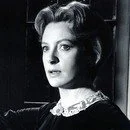
Imagination is a striking refrain in Jack Clayton’s THE INNOCENTS. Its relationship to truth and experience is especially poignant, as an absent uncle (Michael Redgrave) remarks about it early on. He’s hired a governess, Miss Giddens (Deborah Kerr), to care for his niece and nephew, in whom he has no interest. His apathy is contrasted by Giddens’ immediate emotional attachment. Flora (Pamela Franklin) is a sweet but spooky child; precocious Miles (Martin Stephens) is inexplicably dismissed from boarding school, returning home shortly after Giddens’ arrival. Giddens’ melodramatic nature is also tied to Bly Manor, the large estate where the children reside. As she learns more about the mysterious deaths and occurrences that led to her entrance—and begins to see apparitions—Giddens increasingly becomes convinced that the children have been possessed by something evil. She floats through the house in her hoop skirts, mimicking a spirit long before the suggestion of any, the vast, lush domestic space both beautiful and terrifying. This setting is a canvas for the exquisite black and white cinematography by Freddie Francis, who would go on to work with David Lynch, most relevantly on THE ELEPHANT MAN (1980). A slow burn of a ghost story, it has standout moments of the most striking haunted imagery, subtle and terrifying. Based on a play by William Archibald (who’s co-credited on the film’s script, though Truman Capote worked on it uncredited), which is turn is an adaption of Henry James’ novella The Turn of the Screw, THE INNOCENTS is a dense text, ambiguous and psychological while also commenting on gender roles of both the turn of the 20th century (when the story takes place) and the early 1960s (when the movie was made). While Kerr is its star, it becomes clearer on multiple watches that there’s a trio of women characters at the heart of the film. Giddens’ insistence that the evil resides in the children rather than them merely being affected by the horrors they’ve experienced represents a panic of Victorian sexual repression that doesn’t address the issues at hand. A counter is Mrs. Grose (Megs Jenkins), the sturdy but reluctant housekeeper, who seems to see these children as simply struggling to move past trauma. Finally, Miss Jessel (Clytie Jessop), the former governess, haunts the film both literally and figuratively; for Giddens’ she’s a malevolent warning, for the audience, a melancholic figure whose connection to Flora suggests deeper tragic themes. Screening as part of the Music Box of Horrors: the Final Chapter series. (1961, 100 min, 35mm) [Megan Fariello]
Leontine Sagan's MÄDCHEN IN UNIFORM (Germany)
Doc Films (at the University of Chicago) — Wednesday, 7pm
The story of a fourteen year old girl's relationship to both her teacher and her headmistress at a traditional German boarding school, Leontine Sagan's MÄDCHEN IN UNIFORM is a film marked both by controversy and multiple stages of critical assessment. Although popular in Europe upon release in 1931, the film was banned both in the US (to be released only after significant cuts) and by Goebbels following the Nazi assumption of power. It was not shown again in Germany until a 1977 television broadcast, while screenings at New York and Chicago women's film festivals in the mid-’70s generated a significant reevaluation of the film, heralding it as a landmark of queer cinema, with some suggesting that it may be the first film with an openly lesbian storyline. In his seminal survey of Weimar cinema, From Caligari To Hitler, Siegfried Kracauer reads the film as a progressive response to the rising tide of fascism that was to overtake Germany in 1933. Despite its abstention from the expressionism that dominated the 1920s, Kracauer sees MADCHEN, along with films like THE TESTAMENT OF DR. MABUSE and THE CABINET OF DOCTOR CALIGARI, as exploring ideas of despotism and rebellion, with the tyrants of their story lines as nothing less than prefigurations of Hitler. MÄDCHEN's anti-fascism dominates much of the early commentary on the film, which sees it as a critique of the authoritarianism of the Prussian school system and an exploration of the emotional ramifications of life under dictatorship. However, such a reading obscures the film's palpable lesbian cadence. As B. Ruby Rich has written, "...most important to the film's reputation through the years has been its significance as an anti-authoritarian and prophetically anti-fascist film… In emphasizing the film's progressive stance in relation to the Nazi assumption of power, however, film historians have tended to overlook, minimize, or trivialize the film's central concern with love between women... One of the few films to have an inherently gay sensibility, it is also one of the most central to establishing a history of lesbian cinema." Screening as part of the Mapping Melodrama series. (1931, 87 min, DCP Digital) [Erika Balsom]
Adam and Zach Khalil’s AANIKOOBIJIGAN [ANCESTOR/GREAT-GRANDPARENT/GREAT-GRANDCHILD] (US/Denmark/Documentary)
Conversations at the Edge at the Siskel Film Center — Thursday, 6pm
AANIKOOBIJIGAN [ANCESTOR/GREAT-GRANDPARENT/GREAT-GRANDCHILD], the new documentary by Adam and Zach Khalil, brothers and core contributors of the Native artists collective New Red Order, is a crash course on Native activism. The directors do a remarkable job of recounting Indigenous people’s centuries-long suffering and decades-long struggle against racism and injustice with a poignant clarity that touches the heart. Weaving together interviews, historical research, poetry, and surrealist imagery, AANIKOOBIJIGAN follows tribal representatives and repatriation specialists working at the Michigan Anishinaabek Cultural Preservation and Repatriation Alliance (MACPRA) as they jump through endless bureaucratic hoops and persevere through lengthy legal battles to repatriate Native ancestors from museums and private collections to their rightful homelands, specifically the many ancestors whose remains were held at Michigan State University. As the film witnesses two major repatriation victories unfold, it introduces a Native worldview that conceptualizes time, distance, and familial and ancestral relationships in ways drastically different from the white European perspectives we often treat as universal and “scientific.” One salient aspect is distilled in the title, Aanikoobijigan, an Ojibwe word that simultaneously means ancestor, great-grandparent, and great-grandchildren, spiraling the past, present, and future into unity. We follow the camera that plunges into the aisles of sterile, bone-white shelves at some archival storage, scanning rows and rows of objects looted from sacred Native sites. The film serves a strong institutional critique that questions the foundation of disciplines such as archeology and anthropology, which to date continue to uphold practices such as excavating, collecting, trading, and holding onto human remains and funerary objects in museums’ collections—the majority of which are of Native people—and whitewash them in the name of science. An expert in the film astutely describes such practices as lacking “basic human decency.” The Khalils unapologetically uproot the racism these “scientific traditions” stem from, juxtaposing MACPRA’s endeavors against the rampant bigotry of imperial America’s colonialist thinking (which is exemplified by footage of a ‘90s TV program that cunningly argued against the repatriation of the Ancient One). But the film doesn’t stop there. Through various historical vignettes, the Khalils interrogate the modern conception of a museum, which can trace its troubled history to the trophy-collecting practice of the cabinet of curiosities, and call out institutions—speaking to you, Harvard Peabody Museum—for maintaining a laissez-faire attitude toward compliance with the Native American Graves Protection and Repatriation Act (NAGPRA), which passed in 1990. Occasional humorous moments offer a lighthearted breather, such as when Wooster Group’s Jim Fletcher—the self-described “Reformed Native American Impersonator” who narrated New Red Order’s 2018 infomercial satire NEVER SETTLE: THE PROGRAM—appears as a caricature of some greedy bones collector surreptitiously digging a grave. Fletcher was recruited—quite ironically—after Wooster’s flunking Shakespeare remake, Cry, Trojans!, stirred outcry for its stereotyped depictions of Indigenous people and, worse yet, for featuring redfaced cast members. Forgiveness can lead to redemption. However, the mixed emotions that overwhelmed MACPRA members toward the end of the film, when they saw the success of reclaiming many ancestors’ remains from MSU, could not palimpsest the deeply disturbing crimes by eugenic racist scientists or bigoted collectors in history too recent to forget. AANIKOOBIJIGAN addresses this wound that opens up like the dug trenches on the ground at the reburial ceremonies. Pried open in front of our eyes is systemic racism that blatantly seeks novel ways to reinforce itself. Much work is yet to be done. Khalil, producer Jacque Clark, and historian and NAGPRA officer Veronica Pasfield in person, moderated by Debra Yepa-Pappan of the Center for Native Futures. (2026, 80 min, DCP Digital) [Nicky Ni]
📽️ ALSO RECOMMENDED
Hong Sang-soo’s HILL OF FREEDOM (South Korea)
Doc Films (at the University of Chicago) — Thursday, 7pm
HILL OF FREEDOM may be Hong Sang-soo’s most experimental film; it’s a Nabokovian narrative puzzle that leaves most of its mysteries unresolved at the end. Hong establishes the rules of the game in just a few shots (the writer-director’s gift for concision has never been better used than it is here). A woman, Kwon (Seo Young-hwa), returns to Seoul after spending some time out of town. Waiting for her at her place of employment is an envelope full of letters written by a Japanese man, Mori (Ryô Kase), whom she met a few years earlier. After she reads the first one, in which Mori explains that he came to South Korea with the hope of reconnecting with her, Kwon drops the stack, and the letters get blown out of order. She retrieves all but one of them (in a little nod to Hitchcock, Hong alerts viewers to her mistake while leaving the character ignorant of it), and what follows is a series of flashbacks that present the content of Mori’s letters (describing his trip to South Korea) in the order that Kwon reads them. Thus, characters get drunk and flirt with each other before they’re formally introduced, Mori checks into his hostel after settling into his vacation routine, and friendships seem to form spontaneously. While it can be somewhat confusing at times, ultimately HILL OF FREEDOM makes you realize that Hong’s cinema has never been about narrative development anyway. So what if the climactic scene of drunken social embarrassment occurs in the first act instead of the second or third? We all knew it was coming. HILL OF FREEDOM contains some wonderful variations on Hong’s signature comedy of faux pas, with Mori stumbling, in English, through a series of awkward encounters with the Koreans he meets on his trip. The most awkward of these may be Mori’s extended introduction to the proprietor of his hostel (Youn Yuh-jung), who makes the mistake of describing Japanese people as “polite and clean.” The funniest, however, has got to be the first big scene with Moon So-ri, who plays the owner of the coffee shop for which the film is named. Her intoxicated attempts to hide her attraction to the hero mark one of the most hilarious passages of Hong’s career. HILL OF FREEDOM ends on a bittersweet note, however, with a switcheroo that recontextualizes the rest of the story. Hong had pulled a trick like this just a year before, in his NOBODY’S DAUGHTER HAEWON (2013), but it still works. Screening as part of the Heteroglossia: Languages and Translation series. (2014, 67 min, DCP Digital) [Ben Sachs]
Agnieszka Smoczyńska's THE LURE (Poland)
Siskel Film Center — Friday, 8:45pm; Sunday, 5pm; and Tuesday, 6:15pm
As with most fairy tales, it is easy to go back to the source material to envision a more terrifying adaptation than the Disney-fied ones to which we’ve become accustomed. THE LURE does just that with Hans Christian Anderson’s The Little Mermaid, drawing on the original tale’s darkness and turning sweet mermaids into vampiric sirens. Set in the 1980s in the colorful club-scene of Warsaw, this isn’t just a horror, but a full-blown musical. Two mermaid sisters, Golden (Michalina Olszańska) and Silver (Marta Mazurek) join up with a rock band, eventually starting their own singing act. It gets messy, however, when Silver falls for the bass player and, oh yes, the sisters have a thirst for blood. It is as bizarre as it sounds, as the film contains scenes like a musical number set at a shopping mall but also obsessive shots of the sisters’ tails, which are not beautiful emerald fins, but fleshy, realistic fish appendages. The film also doesn’t shy away from engaging directly with the constant sexual objectification the young mermaids face as they become a part of the club scene. Olszańska and Mazurek expertly navigate the emotional themes of this dark coming-of-age story, primarily through their singing. It doesn’t hurt, either, that some of the musical performances featured throughout are genuinely great. Director Agnieszka Smoczyńska marries outwardly disjointed styles together seamlessly; the whole film is an ingenious work of imagination, that leans into both the delight of an '80s mermaid club act, and the melancholy reality of life beyond the safety of the water, especially referencing the chilling tragedy of Anderson’s original story. THE LURE would make a fantastic double-feature with Nobuhiko Obayashi’s 1977 cult-classic HOUSE—both genre-distorting horrors about adolescence, bursting with unabashed girlish whimsy while still delivering on the terror. Screening as part of the Creature Features series. (2015, 92 min, DCP Digital) [Megan Fariello]
Haskell Wexler's MEDIUM COOL (US)
Siskel Film Center — Sunday, 2pm and Monday, 8pm
How many times have you gone somewhere expecting a massive riot? And if you did go, did you also expect to come away with cinematic gold? That's pretty much what Chicago native Haskell Wexler did in 1968 when he decided to shoot footage of protesters outside the Democratic National Convention. Already an Oscar-winning cinematographer for his work on WHO'S AFRAID OF VIRGINIA WOOLF?, he set a fictional film about the ethics of a TV news cameraman amidst the actual chaos in the city. In MEDIUM COOL he used what was essentially a documentary crew (operating the camera himself), and had the actors intermingle with real protesters and police as all hell broke loose in Chicago. Other documentary footage was repurposed and additional narrative scenes were shot to fill in the gaps of the superficial plot, and Wexler used these elements to walk the line between fact and fiction while addressing the political climate of the times. Perhaps more than any other filmmaker, Wexler is responsible for the shooting style used in films by directors like John Cassavetes, John Sayles, and Kelly Reichardt, who all seem to have taken his advice: “If your film can reflect areas of life where people feel passion, then it will have genuine drama.” (1969, 111 min, DCP Digital) [Jason Halprin]
Billy Wilder's ACE IN THE HOLE (US)
Siskel Film Center — Sunday, 4:15pm and Monday, 5:45pm
Billy Wilder's films often carry with them an underlying contempt for the hostility of society, but his 1951 follow-up to SUNSET BLVD.—itself part noir and part fraught elegy for obsolesced silent film stars—finds his disgust in full flourish. ACE IN THE HOLE, alternatively released as THE BIG CARNIVAL by a skittish Paramount, features a menacing Kirk Douglas as a down-and-out newspaper reporter banished to Albuquerque intent on reviving his career. Stumbling upon a local trapped in a collapsed silver mine, the reporter seizes on the chance to create and prolong a media circus, keeping the story alive while the victim be damned. A wrenching and all-too-accurate portrayal of vulture media, ACE IN THE HOLE strikes a raw nerve. Dusky and textured mine walls contrast with the severe lighting outside, suggesting the states of mind of victim and voyeur. The reporter, opportunistic and self-interested, floats between the spaces as Kirk Douglas's angular features are used to great effect: jagged and inscrutable in the shadows of the mine, jutting out with confidence among the frenzy. Wilder later called the film "the runt of my litter" in response to audiences' tepid reaction. But by downplaying it, Wilder actually underscores the central role contempt and cynicism play in his films. Perhaps Wilder's most honest work, ACE IN THE HOLE might be a breath of fresh air if it didn't knock the wind out. (1951, 111 min, DCP Digital) [Brian Welesko]
---
Both screening as part of the Democracy at Risk double feature. The Sunday, 4:15pm show of ACE IN THE HOLE will be followed by a discussion with Jonathan Rosenbaum moderated by Jane Ruby, President of the League of Women Voters Chicago.
Kim A. Snyder’s THE LIBRARIANS (US/Documentary)
Northbrook Public Library — Tuesday, 7pm
Like Julia Loktev’s MY UNDESIRABLE FRIENDS: PART I (2024), THE LIBRARIANS documents the breakdown of civil society as it’s happening—the film has such urgency that it’s challenging to discuss as art. Still, Kim A. Snyder displays commendable restraint as a filmmaker (Donald Trump is mentioned only once, yet the impact of his incendiary politics can be felt in every scene), and her sobriety makes the film’s content all the more chilling. Snyder’s subject is the recent book bans in Texas, Florida, and Louisiana and the subsequent harassment (and in some cases threatening) of librarians in these states. Many of the bans, the film reports, are said to be in the name of protecting children from “pornography,” but a review of the titles deemed dangerous reveals nothing pornographic; rather, the bans are being applied to books that White Christian supremacists find objectionable. Snyder shares some of the more egregious examples—How to Be an Antiracist by Ibram X. Kendi, Queerfully and Wonderfully Made: A Guide for LGBTQ+ Christian Teens, and antiauthoritarian novels like The Magic Mountain by Thomas Mann and Fahrenheit 451 by Ray Bradbury—and reaches the conclusion that the real goal of these bans is to undermine libraries’ ability to serve as safe spaces for queer people, people of color, and freethinkers generally. There are historical precedents for this kind of political action, both at home (during the McCarthyite Red scare of the 1950s) and abroad (in Germany under Hitler), and Snyder succinctly reminds us of these in building her argument against present-day censorship, which she presents as a sort of violence against civil society. I do not use violence as a euphemism: at least one of the librarians interviewed in the film appears with her face obscured because she fears for her life and doesn’t want to be recognized. Who would have thought that a film about libraries would address the subject of political violence? Yes, there are currently people who support censorship so much they will threaten murder against those who don’t conform to it. Snyder profiles some of the individuals and groups who pushed for the bans; they are all fascists, and they include Florida Governor Ron DeSantis, Texas State Representative Matt Krause, the organization Moms for Liberty, and the cell phone company Patriot Mobile. I found it difficult not to be appalled and terrified by this lot, as they represent the worst of humanity, yet Snyder presents them in a clear-eyed manner. That THE LIBRARIANS confronts evil without resorting to hyperbole or Michael Moore-style histrionics is commendable, even virtuous. (2025, 85 min, DCP Digital) [Ben Sachs]
Jean Negulesco's HOW TO MARRY A MILLIONAIRE (US)
Siskel Film Center — Saturday, 2pm and Monday, 6pm
"Do you seriously believe that having money automatically brings you happiness?" Tom Brookman (Cameron Mitchell) demands of Schatze Page (Lauren Bacall), exasperated. "No, but it doesn't exactly depress me either," Schatze responds wryly. Bacall, Betty Grable, and Marilyn Monroe star as three single pals in HOW TO MARRY A MILLIONAIRE, the first comedy shot in glorious CinemaScope by 20th Century-Fox. Developed as Hollywood's anxious reaction to the rise of television's popularity in the early 1950s, CinemaScope offered an ultra-wide aspect ratio through innovative camera technique that would hopefully draw audiences out of their living rooms and into theaters. Also shot in vivid Technicolor, HOW TO MARRY A MILLIONAIRE consistently succeeds in keeping the audience entertained with well-timed comic beats and luxuriously roomy mise-en-scène. In an effort to fully utilize the aspect ratio, Jean Negulesco makes abundant use of the frame, favoring long takes and wide shots over quick shot/reverse-shots and close-ups. As a result, the film relishes Bacall, Grable, and Monroe as they drape themselves over furniture, trounce coquettishly across a shockingly spacious Manhattan apartment, and fall unceremoniously in well-timed slapstick moments. HOW TO MARRY A MILLIONAIRE follows the three young women as they work together to snare a rich man (And they only need one! A "cool 30 million" can be shared amongst friends, after all) and quit their day jobs as department store models. As leader of the pack, Bacall makes good use of her commanding tone and acerbic delivery, charming the older and very much richer J.D. Hanley (played gently by William Powell) even as she can't help but fall against her will in love with Tom Brookman, a shabby rascal of a millionaire she mistakes for a "crummy gas jockey." The trio's strategy quickly runs afoul of their dubious taste in men, which leads to a cold but romantic detour in Maine for Loco Dempsey (Grable) and a myopic but ultimately reassuring detour in Kansas City for Pola Debevoise (Marilyn Monroe). Rounding out this solidly entertaining farce is a slew of gorgeous costumes designed by William Travilla, who became well known for dressing Monroe in her most iconic dresses on celluloid, and a lively score by Alfred Newman, which begins with a theatrical overture he composed in the style of George Gershwin and displayed in wide, sweeping shots of a 70-piece orchestra. Do yourself a favor and experience this comedy on the big screen as the film gods intended. Screening as part of the 25 For 25 series, revisiting standout titles from the Siskel's State Street history. (1953, 95 min, DCP Digital) [Alex Ensign]
Joe Dante’s GREMLINS 2: THE NEW BATCH (US)
Siskel Film Center — Friday, 6pm; Saturday, 4pm; and Thursday, 8:15pm
In 2003, Joe Dante attempted to bring the Looney Tunes back to the big screen in an experience he would go on to call “the longest year and a half of my life.” While certainly not the unmitigated disaster one might expect from such a remark, the unfairly maligned LOONEY TUNES: BACK IN ACTION still represents a creative nadir for Dante within the studio system, a harrowing production where any sense of creative vision was all but hampered by the powers-that-be at Warner Bros. Pictures. Curious, then, that just over a decade prior, that very same studio had given Dante carte blanche over what is, in essence, the greatest Looney Tunes film ever made, spiritually if not literally (but heck, Dante did have the gleeful nerve to open the film with a Chuck Jones-directed original Bugs Bunny & Daffy Duck short). Back in 1984, Dante’s initial entry in the Gremlins franchise was a delightful, horrifying, kooky creature feature firmly situated within the larger Amblin universe of family entertainment with an edge. GREMLINS 2: THE NEW BATCH, meanwhile, does everything in its power to take all that goodwill granted by the first film and shove it right into a paper shredder until all that’s left is green goop. You can practically hear Dante giggling behind the camera in every scene, reveling in a film that actively thumbs its nose at its predecessor’s earnestness—characters actively attempt to poke holes in the franchise’s sci-fi logic and the monsters even attack an unsuspecting Leonard Maltin while he delivers an on-camera pan of the original film. Creating even more topographical opposition from the first film, the action is moved from quaint suburbia to a bustling capitalist high-rise in the heart of Midtown Manhattan, where the comically capitalist Clamp Corporation—a charming caricature of late 1980s business-minded suits that almost feels quaint compared to today’s roster of techno-fascist billionaires—becomes the perfect playground for Gizmo and his demented offspring to lay siege. Calling back to one of his earliest projects, the epic mashup film THE MOVIE ORGY (1968), Dante uses this once-in-a-lifetime franchise opportunity to throw all of his influences and eccentricities into a blender and let loose; references ranging from Batman to Busby Berkeley to Kander & Ebb to RAMBO color the margins of the runtime until the Clamp Corporation Lobby is filled head to toe with enough mutated Gremlins to make you wonder how no one at Warner Bros. caught wind of this maniacal anti-capitalist parade. Watching GREMLINS 2: THE NEW BATCH is perhaps one of the more anarchic experiences one could have watching a major studio blockbuster, but for Joe Dante, it was the moment when, perhaps more than any time in his career, he felt like he was king of the hill, top of the heap. Screening as part of the Creature Features series. (1990, 106 mins, DCP Digital) [Ben Kaye]
Rainer Werner Fassbinder's ALI: FEAR EATS THE SOUL (West Germany)
FACETS — Wednesday, 7pm
Rainer Werner Fassbinder remains an unsettling force in world cinema decades after his death, bringing an urgency to cinephilia by marrying it to radical politics and emotional candor, and ALI: FEAR EATS THE SOUL is an ideal starting point for those unfamiliar with his work. Taking Douglas Sirk's ALL THAT HEAVEN ALLOWS as inspiration, Fassbinder updated the '50s melodrama to confront modern social ills such as racism and the enduring presence of fascism in German culture. Sirk's May-December romance is now set among Munich's working-class, with the players recast as a former Nazi bride and a Moroccan immigrant—the pair's punishment by society is far crueler than anything Sirk could have imagined. Yet in Fassbinder's eyes, even the most prejudiced individuals are above loathing. His diagrammatic approach to drama, influenced by Brecht and Straub and Huilet, lets us see all the characters as victims of the State's neglect. (Gary Indiana once described Fassbinder's milieu as a "democracy of victims," which nicely summarizes his radical, if pessimistic worldview.) The style is breathtaking, as was often the case in the director's Hollywood-influenced middle period, evoking Sirk's tracking shots and controlled mise-en-scene while critiquing their underlying emotion. This paradox inspires not only social commentary but some brilliant dark humor, which helps the film from seeming truly merciless. The jokes are to prevent us from weeping. Screening as part of the Essentials series. (1974, 94 min, DCP Digital) [Ben Sachs]
Mario Bava’s BLACK SABBATH (Italy)
Alamo Drafthouse — Tuesday, 9:30pm
In between making two giallo films, THE GIRL WHO KNEW TOO MUCH and BLOOD AND BLACK LACE, Mario Bava released BLACK SABBATH. This horror anthology consists of three tales: “The Telephone”, “The Wurdalak”, and “The Drop of Water”. Each sequence has an introduction and conclusion by Boris Karloff in a style later used in Tales From the Crypt. In “The Telephone”, a young prostitute receives threatening phone calls from her former pimp, Frank, who was just escaped from prison. As the phone calls become more ominous, she invites over her estranged friend (who also used to work for Frank) to help her feel safe, but her friend’s true motivations are revealed to be nefarious. In “The Wurdalak”, a Russian man discovers a man’s body and shortly after he stumbles upon a cottage with a family whose patriarch, Gorca (Karloff), has yet to return from hunting a wurdalak (a vampire-like creature that feasts on the blood of the living). When the wurdalak reveals itself, the family is scattered and a game of cat and mouse ensues. In “The Drop of Water”, Nurse Helen Chester (Jacqueline Pierreux) is called to prepare the corpse of a recently deceased medium. Upon stealing the medium’s ring and returning home, Helen is tormented by the persistent sound of dropping water, a fly, and visions of the medium’s corpse—she wants her ring back even in death. The third story is the film’s strongest by far. Bava’s film received an American release that sought to appeal to a younger audience and so some of the film’s violence was toned down, the order of stories was changed, and the film’s color scheme was cooled to feature more blues instead of reds. Overall, BLACK SABBATH’s tones of paranoia, claustrophobia, and dread make it a strong work from the Italian horror master as the film manages to create the horrifying from everyday items. Screening as part of the Terror Tuesdays series. (1963, 93 min, DCP Digital) [Kyle Cubr]
Hélène Cattet and Bruno Forzani’s AMER (Belgium/France)
Alamo Drafthouse — Wednesday, 9:30pm
AMER is a 2009 giallo stripped to its most elemental components: color, sound, skin, fear, desire, voyeurism, and murder. The Belgian-French filmmaking couple Hélène Cattet and Bruno Forzani’s feature debut is usually described as a postmodern homage to Italian giallo, but AMER does not attempt to revive the genre’s murder mysteries or imitate them as a Tarantino-style pastiche. Instead, Cattet and Forzani build “on the ruins of the giallo,” extracting its visual and sensory language and using it to tell a deeply subjective story about the female experience of desire and fear. They had already spent nearly a decade making four self-produced, giallo-inspired shorts, gradually developing a filmmaking language and team that would contribute to AMER. The film follows Ana through three stages of her life, with three actresses portraying her as a child, adolescent, and adult. A childhood encounter with death, an adolescent awakening to sexuality, and an adult confrontation with desire become increasingly abstracted through subjective camerawork, extreme close-ups, saturated colors, fetishistic compositions, abrupt edits, and an almost obsessive emphasis on sound. Dialogue is sparse because the filmmakers want the spectator inside Ana’s sensory experience. As Cattet insists, it is “the story of a girl at three moments of her life where she discovers body and desire.” They use giallo coding that reflects childhood encounters with death, teenage hormones, and fears of sexual desire. The narrative then consists of three clusters of memory, nightmare, fantasy, and physical sensation. Cattet and Forzani were also influenced by the surrealist cinema of Luis Buñuel; their fascination with the giallo’s manipulation of viewpoint is equally important. Their camera repeatedly shifts between watching Ana and seeing through her, turning the spectator’s gaze into something unstable, intimate, and occasionally threatening. The film’s low budget demanded obsessive preparation. Every shot was storyboarded and tested beforehand with digital cameras, with Cattet and Forzani themselves standing in for the actors, allowing them to determine the precise choreography before bringing the cast onto the set. They then shot the film on Super 16mm, later printing to 35mm ‘Scope, which gave the images the grain and texture associated with ‘70s cinema. Sound is equally structural. The filmmakers wrote the script while listening to Italian soundtrack music by composers including Bruno Nicolai, Stelvio Cipriani, and Ennio Morricone, so the music was effectively part of the screenplay rather than something added afterward. Familiar cues are deliberately removed from their original contexts, changing their meanings in the process. The result is a film where footsteps, breathing, fabric, insects, flesh, and music become narrative information. Close-ups of perspiration and skin, the crawling of ants, the scrape of a blade: you can almost smell the seaside air. AMER shifts the male gaze embedded within much of the giallo tradition by placing the viewer inside Ana’s vulnerability, while retaining the genre’s fascination with looking. It is simultaneously homage, experiment, coming-of-age story, erotic nightmare, and a complete sensory explosion. The magic of AMER is that it makes you want to believe it is a long-lost ‘70s giallo. Screening as part of the Weird Wednesday series. (2009, 90 min, DCP Digital) [Shaun Huhn]
Olivier Assayas' IRMA VEP (France)
Siskel Film Center — Sunday, 12pm
IRMA VEP successfully takes on the influences of Truffaut, Fassbinder, and Louis Feuillade and still manages to include a lesbian subplot and address French racial attitudes in the film industry. The film takes place in an alternate reality where Maggie Cheung, playing herself, gets cast in her French feature-film remake of Louis Feuillade’s classic serial LES VAMPIRES (1915). As principal photography starts, the relationships between collaborators deteriorate and reality loosens its grip on both star and director. You might assume that the characters' problems could come off as niche; in reality, Assayas places the audience right in the middle of the chaos that is making a picture. The camera pans through the heart of production as all departments rush to get their work done on time, comparable to any busy office or dinner hour restaurant kitchen. As Assayas has mentioned in interviews, IRMA VEP specifically invokes Fassbinder's BEWARE OF A HOLY WHORE, with a short-tempered manic director in charge of a disorganized film; Jean-Pierre Léaud plays the director, slipping into an archetype previously played by Lou Castel in the self-reflexive 1971 classic. It should be noted that Fassbinder’s difficult auteur plays a difficult racist auteur in this film, as an artist frustrated that an Asian actress would be cast in a French film. Maggie Cheung, already a beloved star at this point in her career, gives a part of herself here, showing not her glamorous side, but seeming like a woman just trying to do her job well under constraints. It’s very easy to idolize stars but Cheung exemplifies the experience of many actors working in the industry, someone trying to get through the day, not get fired and maybe create some good work. Screening as part of the Contact Zones: Cinema of Globalization, 1989–2024 lecture series.(1996, 99 min, DCP Digital) [Ray Ebarb]
Michael Mann's MANHUNTER: THE FINAL CUT (US)
Doc Films (at the University of Chicago) — Saturday, 7pm
A turning point in the career of Michael Mann—the film in which ambiance takes on equal importance to the detailed observation of professional ritual—MANHUNTER marks the beginning of this curious director's ongoing fusion of Howard Hawks and Stan Brakhage. Though its story of an FBI agent's pursuit of a demonic serial killer is suspenseful enough and the cast contains stellar turns by Joan Allen, Dennis Farina, and Brian Cox, among others, you may find that your strongest memories of the film are in Mann's eerie use of fluorescent light or an unfurnished suburban home. Much commercial art of the 1980s was built on the fetishization of material excess, often in the form of designer decor or ultra-modern lighting schemes that make commodities out of any subject: In retrospect, many key films of the decade act as subversions of this aesthetic by making material wealth seem either unreal (e.g., Nicolas Roeg's EUREKA, Alain Resnais' MELO) or a thin veneer for existential dread (e.g., Scorsese's AFTER HOURS, Edward Yang's TAIPEI STORY). MANHUNTER definitely belongs to the latter category, although a supermarket confrontation between the main character and his son unexpectedly evokes the work of William Klein. The film's surfaces wouldn't be so compelling, though, if they didn't find counterpoint in Mann's great conflict—the professional's sacrifice of his humanity in the perfection of his craft. Screening as part of the New Releases and Restorations series. (1986, 120 min, DCP Digital) [Ben Sachs]
Andrei Tarkovsky’s SOLARIS (USSR)
Siskel Film Center — Saturday, 6:30pm
In Tarkovsky’s luminescent and beautiful adaptation of Stanislaw Lem’s novel, Kris Kelvin, a psychologist, has been sent to a space station orbiting the mysterious planet Solaris, which is covered entirely by a potentially sentient ocean. Kelvin is to take charge of the station and either close it down or take drastic, violent measures against the ocean in order to generate scientific data. When he arrives, though, he discovers that the station is regularly populated with ‘visitors,’ people seemingly generated out of thin air while one sleeps, who are manifestations of one’s own memories and dreams. In adapting Lem’s book, Tarkovsky develops a complex structure of flashbacks, dream sequences, and fantasies that are at times indistinguishable from the ‘actual’ events of the plot, and alternates between color and black-and-white cinematography to further alienate us from the narrative flow. The way he shoots Natalya Bondarchuk, uncannily incandescent in nearly every shot as she ethereally wafts through the sets, is in direct conflict with the staid, weathered and deeply conflicted Donatas Banionis, questioning her very existence. While the novel is set solely on the space station, Tarkovsky developed a crucial prologue set on Earth, in which the philosophical and aesthetic issues are introduced that will later play out in dramatic form. It is there that Burton appears, a retired scientist who is the only one we meet to have actually returned from the mysterious planet. It is Burton who gives voice to a potential thesis of the film, that “knowledge is only valid when it is based on morality,” when he learns of the potentially destructive nature of Kris’ mission. Burton’s shadow hangs low over the film, over the violence that the story heaps on the body of Hari, Kelvin’s lost love reborn. If Burton is right, what are we to make of Kelvin’s own understanding of his relationship with her, which is based on betrayal and pain? What conclusions are we to draw on the apparent attempts by Solaris itself to study the scientists by means of the ‘visitors,’ when their inevitable result is heartbreak? Late in the film, the camera lingers on a print of Breughel’s “Hunters in the Snow,” a painting that seems to imply that the titular hunters, instead of returning home empty-handed, are instead on the trail of the ice-skating children in the distance. It is an invocation of the untamable nature of violence, which once released can never be controlled. Kelvin’s reaction to his first ‘visitor,’ the first appearance of Hari, is to attempt to destroy her. Breughel’s hunters with their ambiguous target are mocking commentaries on Kelvin’s own predetermined failure as a scientist and as a human being. Like them, his inability to come to terms with his own nature leads him to lash out against those closest to him, and in so doing to destroy himself. When, in the end, he returns to a heavily ironic homecoming with his surely deceased father, it is with a sense not of a journey completed, but of a cycle repeated, with inevitable tragedy and with inescapable loss that he can never come to terms with. Screening as part of the Andrei Tarkovsky: Complete Retrospective. (1972, 166 min, DCP Digital) [Kian Bergstrom]
James Whale's BRIDE OF FRANKENSTEIN (US)
The 400 Theater — See Venue website for showtimes
When first approached to direct a sequel to FRANKENSTEIN (1931), James Whale declined, saying he felt he couldn’t top his work on the original. But Carl Laemmle, Jr., who championed Whale and more or less gave him free reign during his brief tenure as Head of Production at Universal Pictures, got him to change his mind by first letting him direct his pet project ONE MORE RIVER (1934). Junior also gave Whale considerable creative control over BRIDE OF FRANKENSTEIN, and as a result it may be the director’s most personal film. The justly famous passage in which Frankenstein’s Monster befriends the blind hermit represents the most moving expression of Whale’s sympathy for outsiders, which was no doubt colored by his experience of being openly gay. On a related note, the film’s humor marks one of the earliest expressions of intentional camp in a Hollywood production, from the hilarious posturing of the prelude sequence to Ernest Thesiger’s inspired performance as Dr. Pretorius. It’s worth noting that the comedic parts of BRIDE OF FRANKENSTEIN in no way detract from its sincere drama; rather, the tonal shifts suggest a sense of liberty from generic constraints, much like in George Cukor’s SYLVIA SCARLETT, another Hollywood film by an openly gay director released the same year. While this is surely one of the major auteurist horror films, it’s also representative of the studio system at its finest, given the contributions of composer Franz Waxman (who wrote one of the first great film scores for this), cinematographer John J. Mescall, the Universal props department, and hell, even the studio psychiatrist, who helped Whale develop the Monster’s personality and limited vocabulary. Boris Karloff clearly had a lot to work with here—his performance surpasses his work in the first FRANKENSTEIN, as he succeeds in making the Monster the most sympathetic character in the movie. His final line (“We belong dead”) has unexpected pathos and resonance, and it makes the film feel a lot more substantial than its 75-minute runtime might lead you to expect. (1935, 75 min, DCP Digital) [Ben Sachs]
David Lynch's TWIN PEAKS: FIRE WALK WITH ME (US)
Doc Films (at the University of Chicago) — Friday, 7pm and Saturday, 9:30pm
I once knew a survivor of childhood sexual abuse who told me that David Lynch's TWIN PEAKS: FIRE WALK WITH ME is the only film that ever really got it right. The way incest deranges you, the unprocessable betrayal, the PTSD. Describing her abuse, she said she'd had her own personal Freddie Krueger, and Lynch portrays Laura Palmer's final days as a horror movie—scarier than most, and truer. Critics missed the thrust of this baffler, calling it the worst thing Lynch ever did, if not one of the worst films ever made. Today, it looks like a flawed masterpiece, exhausting and exhilarating. It's a singular portrayal of "garmonbozia" (pain and sorrow), the cream corn of evil—with all the Lynchian disjunctures that sentence implies. It's abrasive at every level, from Lynch's screaming, whooping sound design to the punishing immersion into Laura's hell. But its extremism is the source of its hypnotic power, and Lynch's corybantic surrealism fits the theme. Sheryl Lee is astonishing as doomed, anguished Laura; Ray Wise is terrifying (and, in deranging moments, loving) as her molester father. Then there's that first 35 minutes, which play like a savage parody of the TV show, with Chris Isaak and Keifer Sutherland investigating a murder in Deer Meadow, a negative image of our favorite Pacific Northwest town. Here, the coffee's two days old, the diner is seedy, the small-town cops are jerks, and the dead woman is not exactly the homecoming queen. (One suspects that the cherry pie would be damn poor.) The "Lil the Dancer" scene is a delightful thumbnail illustration of semiotics, and Harry Dean Stanton is on hand as Carl, manager of the Fat Trout trailer park. Angelo Badalamenti's score is creamy and dreamy, mournful and menacing. Actually, I suspect that if you're not already well-versed in the lore of Bob, Mike, the One Armed Man, The Arm a.k.a. The Man From Another Place, Mrs. Tremond and her grandson, and the Owl Cave ring, then you might have stumbled upon this site by accident. I'd guess our readers share my excitement that the stars, and the passage of 25 years, have aligned so that we are actually poised to reenter the Black Lodge. If you haven't boned up on this prequel, then hie to this revival. (Or even if you have: you'll see something new every time.) Screening as part of the Behind the Mask: Femininity as Fabrication, Performance, and Identity Crisis series. (1992, 135 min, DCP Digital) [Scott Pfeiffer]
David Lynch's BLUE VELVET (US)
Alamo Drafthouse — Sunday, 12pm and Tuesday, 9pm
This is where the legend really began. It's curious to think how Lynch's career would have developed if DUNE (1984) had not been a box office failure, but cinema history can thank him for not playing it safe with this rebound project. Though Lynch had already made three features, BLUE VELVET was the first full articulation of his core theme of the evil that lurks in small towns everywhere. Not the outright surrealist endeavor that was ERASERHEAD, it is also not the most accessible of narratives. Dark, violent, sexual, and reeking of 1963 suburbia, the film is at times a noir mystery and at others a violent thriller. Many of the visual symbols that would populate TWIN PEAKS are introduced here, such as red curtains appearing when danger is present in a scene, and Lynch's continued growth as a complete cinematic artist is evident. Despite having a cast that didn't feature a legitimate star (Dennis Hopper may be the exception, but his career was in the dumps when he was cast...as the third choice), the film earned Lynch his second Academy Award nomination for Best Picture, as well as praise from critics throughout the world. It's also notable that Kyle MacLachlan (essentially playing Dale Cooper) might never have worked again if not for his excellent performance. Still dangerous all these years later, the film is as gorgeous as it is classic. (1986, 120 min, DCP Digital) [Jason Halprin]
Danny DeVito's MATILDA (US)
The 400 Theater — See Venue website for showtimes
Children’s literature is often focused on abandonment—a child who's a missing parent or even orphaned completely, on one’s own or placed in the care of heartless guardians. Roald Dahl’s Matilda is rather about the struggle of dealing with selfish and incompetent parents. In his adaptation, Danny DeVito plays Mr. Wormwood, Matilda’s scheming father. He also provides a voiceover throughout the film as an omniscient narrator. It may seem unnecessary, but in a children’s film about child abuse, DeVito’s dual presence provides a balance to the horrors that Matilda (Mara Wilson) faces every day. He also provides an off-kilter cinematic world, with saturated bright colors and exaggerated camera angles and close-ups to emphasize a child’s perspective. It’s not a storybook, but the style is exaggerated just enough to steady the implications of real horror the characters face. Born to the Wormwoods (Rhea Perlman plays her mother, in stupendously kitschy costumes and makeup), Matilda learns to take care of herself at a very young age, her intellect allowing her to manage on her own—and develop telekinetic powers. She also finds comfort in books, escaping into the fictional worlds they provide. She finally gets her wish of going to school and is there provided some much-needed comfort from her sweet teacher, Miss Honey (Embeth Davidtz); however, she continues to be mistreated there, now by the terrifying principal Miss Trunchbull who actively hates children. Played with impressive unhingedness by Pam Ferris, Trunchbull is the true villain of the film. While the Wormwoods are cruel, they rarely come off as truly threatening, providing much of the comedy of the film. Trunchbull gets in some hilarious one-liners, but she is an unambiguously violent character. Again, MATILDA uses exaggeration here to counteract any realistic violence, but the horror of angry and hateful adults is ever present. Fortunately, MATILDA is ultimately a story of resilience, friendship, and the profound effect of small and big kindnesses alike. (1996, 102 min, DCP Digital) [Megan Fariello]
MANAGING EDITORS // Ben and Kat Sachs
CONTRIBUTORS // Erika Balsom, Kian Bergstrom, Rob Christopher, Kyle Cubr, Ray Ebarb, Alex Ensign, Megan Fariello, Jason Halprin, Shaun Huhn, Nicky Ni, Scott Pfeiffer, Brian Welesko
