


📽️ CRUCIAL VIEWING
Mikhail Kalatozov's I AM CUBA (Cuba/USSR)
Chicago Film Society at the Siskel Film Center — Sunday, 5pm
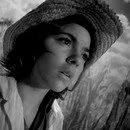
The career of Georgian filmmaker Mikhail Kalatozov is a virtual index of the changing prerogatives of the Soviet film industry. Following the formalist gambits of SALT FOR SVANETIA (1930) and NAIL IN THE BOOT (1931), Kalatozov was excommunicated from revolutionary filmmaking and eventually appointed Moscow's ambassador to Hollywood. With the post-Stalin thaw, Kalatozov was suddenly in vogue again. His 1957 film THE CRANES ARE FLYING was a festival phenomenon and even earned US distribution from Warner Bros. For Pauline Kael, Kalatozov represented a deceptively non-ideological strain of Communism kitsch, calculated to make Westerners swoon with drippy romantic sentiment. Kael didn't have much to fear. Kalatozov would soon begin work on I AM CUBA, a belligerent third-world epic practically engineered to alienate liberal sympathizers. Indeed, I AM CUBA never played in the States until a 1992 engagement at the Telluride Film Festival; shortly thereafter, it was picked up by Milestone and asserted itself as, in J. Hoberman's phrase, the "Siberian mammoth" of Cold War cinema. The formal brilliance of I AM CUBA is now well known and copied recklessly by capitalists everywhere (P.T. Anderson most unabashedly). The staggering, swaggering camera choreography and unapologetic reliance on white-hot infrared film stock acknowledged, we should also consider I AM CUBA as a daffy but ultimately sincere political document. Kalatozov and his cameraman Serguey Urusevsky were adolescents in 1917 and experienced the corrosion of the Revolution first hand. The poet Yevgeni Yevtushenko, who co-wrote the screenplay with Cuban Enrique Pineda Barnet, was born in 1933 and knew the Revolution only in its debased Stalinist form. To these artists, Castro's Cuba was a legitimate laboratory and a beacon of promise. One version of the film, with Spanish dialogue and a Russian overdub that translates each line, literalizes the superimposition of one political experience upon another. One regime salutes another and incubates a full-blown pulp creation myth. Preceded by a 10-minute 1964 trailer reel on 35mm. (1964, 141 min, 35mm) [K.A. Westphal]
Ringo Lam’s FULL CONTACT (Hong Kong)
Oscarbate at the Davis Theater — Saturday, 7pm
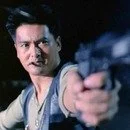
In many of the films of Don Siegel, you will encounter a scene or two of violence that shocks you not because of its explicitness but because the cruelty behind it is rendered so vividly that you all but feel it—consider the attacks on children that occur in THE LINE-UP (1958) and THE KILLERS (1964) or the effects of the warden’s sadism in ESCAPE FROM ALCATRAZ (1979). In many of the films of Ringo Lam, almost every scene is like this. The brutality of Lam’s most characteristic work may be unrelenting, but it is also exactingly staged, kinetic, and vigorous, reflecting a kind of purity of creative vision. If there’s a cinematic equivalent to the trilogy of Rick Rubin-produced masterpieces that Slayer released between 1986 and 1990, it’s probably a film like FULL CONTACT, where the violence is punishing by design yet also cathartic and exhilarating. More importantly, the painfulness of the stabbings and shootings marks a serious artistic response to a world where corruption is rampant, most relationships end in betrayal, and sometimes having to maim or murder everyone in sight is the only way to survive. Lam’s favorite leading man Chow Yun-fat (whom the director had known since his acting school days in the 1970s, effectively making him the De Niro to Lam’s Scorsese) stars as Gou Fei, a decent guy who’s forced to join a group of psychotic, trigger-happy criminals to help his best friend pay off a loan shark in Bangkok. The group stages a number of heists that might also be described as terrorist attacks, given how many innocent civilians get killed. When the leader of the group (Simon Yam) crosses Gou Fei after one heist and leaves him for dead, the protagonist drops his heroic attitude and sets his sights on bloody revenge. FULL CONTACT was one of Lam’s less successful films in Hong Kong because audiences were apprehensive about seeing the lovable Chow Yun-fat play such a violent criminal; in fact, Chow’s reliable charisma ends up having a palliative effect on Lam’s nihilistic vision. Presented by Oscarbate. Lao Peng You will be firing up the grill and serving up food outside the theater before the screening—first come, first served. (1992, 104 min, New 4K DCP Digital Restoration) [Ben Sachs]
Jane Campion’s THE PIANO (New Zealand/Australia/France)
Music Box Theatre — See Venue website for showtimes
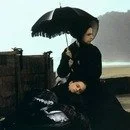
It says something about Jane Campion that her most celebrated film before THE POWER OF THE DOG could be both an extraordinarily perverse work and a critical and commercial triumph. (Obligatory firsts, here dutifully noted: the film shared that year's Palme d'Or, making Campion the first woman to win it, and earned her an Academy Award nomination for Best Director, only the second for a woman in this woefully estrogen-shy category.) That combination is a notable achievement, given that it's eluded many a filmmaker; for example, Emerald Fennell sought a similar outcome with her recent overwrought yet pandering WUTHERING HEIGHTS adaptation. Incidentally, Campion cites Brontë as an inspiration, yet THE PIANO, set also in the 19th century, doesn't feel like Brontë by way of the New Zealand bush, but rather Campion's singular vision of a contumacious love affair. Though it's been argued, occasionally with a hint of grievance, that the film has much in common with Jane Mander's 1920 novel The Story of a New Zealand River, its plot nevertheless feels strangely of its own, wryly idiosyncratic, focusing on a mute Scottish woman, Ada (Holly Hunter), who's sent to colonial New Zealand with her young daughter for an arranged marriage with a pious settler, Alisdair (Sam Neill, compelling as ever despite his character's terribleness). The reason for her elective muteness, as well as the father of her daughter Flora (Anna Paquin), whom she had out of wedlock, is unknown. What we do know is that she's an ardent lover of her piano, which is left on the beach and then later used as the object of a bargain for sexual favors with George Baines (Harvey Keitel), a white compatriot of her husband who's adopted Māori customs and communicates intimately with them (the other settlers, on the other hand, condescend to the natives). That the love affair between Ada and Baines begins as an exchange of sexual favors for the piano he’s bought from her husband is perverse; that it’s erotic and eventually romantic as a result implicates the viewer as much as the participants in this wayward haggling. Campion's sex scenes are never sexy for being explicit—it's often what's not shown, or what's specifically shown, that accounts for any quivers one might feel in their heart and nether regions. For example, when Baines, who's taken a position on the floor watching Ada play the piano, fingers a hole in her stocking. Or, even more sensually, when he takes off his sleepshirt to dust the piano in a moment of privacy, signaling a deep affection in spite of his holding her most prized possession (that's been sold to another man as if it didn't even belong to her) over her head for sex. But more perverse than Baines—or even Alisdair, who later chops off one of Ada’s fingers in a fit of rage after learning of her affair—is Ada’s daughter, Flora, whose preciousness borders on sociopathy. Paquin became the second-youngest winner in Oscar history for her performance, and decades later it still astounds as one of the great turns by a child; she’s menacingly adorable and genuinely terrifying in equal measure. But through all this perversion, Baines’ and Flora’s and even Ada’s embodiment of it is ultimately a defiance of repression that Alisdair and the other settlers can’t overcome. As with all of Campion’s films, it looks somehow both sumptuous and foreboding, even at its most unexpectedly whimsical. Across her work with various cinematographers, Campion has always managed to craft enduring images; this is her second of three collaborations with Stuart Dryburgh, the others being AN ANGEL AT MY TABLE (1990) and THE PORTRAIT OF A LADY (1996), each collaboration mounting its own distinct visual thesis. Michael Nyman’s score is as abiding as any of the film’s images. He composed the music as if it were Ada herself writing it, the score serving as her figurative voice, and the now-multiplatinum soundtrack startles with emotional clarity. Campion's films are all fully realized; of those she'd made by then, however, this feels the most complete, which is no small claim given TWO FRIENDS (1986), SWEETIE (1989), and AN ANGEL AT MY TABLE before it. She had wanted to make something like this since she graduated from film school, but did not feel mature enough at the time. Her patience paid off: the film is remarkably sophisticated, not least because of its tonal particularity, which distinguishes it from anything else of its era and, outside Campion's own oeuvre, from almost everything since. It’s also worth noting that with this new restoration, supervised by Campion and Dryburgh, the Miramax logo is no longer displayed. (1993, 120 min, New 4K DCP Digital Restoration) [Kat Sachs]
Angela Schanelec’s PASSING SUMMER (Germany)
Doc Films (at the University of Chicago) — Thursday, 8pm
In “The Dehumanization of Art,” Spanish philosopher José Ortega y Gasset’s 1925 essay grappling with modernist painting, Ortega makes an aside about the levels of emotional distance one may have from both art and that which it depicts. To him, the abstract painting emerging at the time was a true break from even the most radical of figurative paintings to date, which still usually bore some connection to their most realist predecessors: “The primal aspect of an apple is that in which I see it when I am about to eat it. All its other possible forms—when it appears, for instance, in a Baroque ornament, or on a still life of Cézanne’s, or in the eternal metaphor of a girl’s apple cheeks—preserve more or less that original aspect.” In a dramatic sense, filmmaker Angela Schanelec could be said to be right at this boundary, essentially a Cézanne of the contemporary art film who maps the most abstract reaches of realist drama. There’s no question that her films are born of and depict human conflict, but viewers of the work are reliant on the primal aspects of the archetypes she explores in order for the work to be legible at all. Her early film PASSING SUMMER is an interesting case study in this style, placed between the travelogue-tinged PLACES IN CITIES (1998) and MARSEILLE (2004) but focused on a wandering mind that refuses to change places. Valerie (Ursina Lardi), reluctant to leave for a summer vacation outside of Berlin, decides to rent a different room in the city from Marie (Anne Tismer) in the apartment she shares with her husband and daughter. Marie’s brother Thomas (Andreas Patton) is often around the place as well, becoming an ambiguously romantic prospect at the periphery. As Valerie’s trip intersects with the domestic squabbles of her hosts (Marie is pregnant a second time and doesn’t want to be; Thomas has an uncertain custody situation with his own ex and their son), she’s interrupted by her own father’s sudden illness which brings her back into the folds of her own family. This is a film of absences. While most of Schanelec’s scenes are normal human interactions animated by recognizable conflicts, she omits key details in the dialogue and occasionally jumps through time or into new relationship dynamics that haven’t factored into the film yet. Most scenes involve characters coming together whose communication is colored by their time spent apart. When characters are alone, they’re often in transit, moving between similar scenes of parting or reunification while visually dwarfed by the features of buses and ferries. Avoiding any obvious resolutions for its plot threads, the film’s clearest forward motion is seen in its depictions of dance. There are three dance scenes, the first of which leaves the movement entirely off-camera when Marie’s daughter demands that her nanny dance to Franz Schubert’s Erlkönig, while the camera stays trained on the child’s watching face; the second is a reunion of Valerie and her brother, sharing a cathartic onscreen dance at a club while the brother’s lover looks on from afar; the third is a communal dance at a wedding, one that begins with a father and daughter but grows to include the crowd until there’s no distinction between dancer and observer. This moment threatens to envelop the viewer too, and by the film’s conclusion we, like Valerie, have learned to embrace the unique balance of motion and stasis found in dance, lazy summer vacations, and the films of Angela Schanelec. Screening as part of the Four by Angela Schanelec series. (2001, 85 min, DCP Digital) [Maxwell Courtright]
Bridgett M. Davis’ NAKED ACTS (US)
Logan Center for the Arts (915 E. 60th St., Screening Room 201) — Sunday, 1pm [Free Admission]
Bridgett M. Davis—more than a triple threat as a writer, filmmaker, professor and curator—was inspired by Kathleen Collins to make NAKED ACTS, an auspicious, independent debut that echoes Collins’ exploration of Black art and identity. “As an emerging filmmaker in the ‘90’s, I felt I’d found a kindred spirit after chancing upon an interview with Kathleen Collins in Black Film Review,” Davis said. “She was so erudite, so passionate, so inspiring about the life of a woman artist.” Thus the main character in Davis’ film, Cicely (Jake-ann Jones), called Cece informally, is an artist, specifically an actress. But her choice to be so is in opposition to her mother, Lydia Love (Patricia DeArcy), a former Blaxploitation star who now runs a video store, where her former glory as a sex symbol is still being touted for all to see. In a pertinent flashback at the beginning of the film, we glean the toll that her mother’s career and accordant lifestyle has had on her through a subtle but heartbreaking scene that sets the stage for what’s to come. Upon visiting her mother for the first time in several years she reveals that she’s also an actress and has a part in an independent film (Davis was also inspired by the film-within-a-film aspect of Collins’ LOSING GROUND); her mother warns her of the industry’s penchant for exploiting young women, relegated as she was to exploitation films. Cece insists that hers is a more pure, artistic pursuit, though, ironically, the role—of a model for an esteemed older artist—requires nudity. Cece has recently lost a lot of weight, but the insecurities that came with her bigger body have not dissipated. As much as the film is about Cece’s artistic identity, it’s also about her corporeal self, an aspect that’s especially well-timed given recent conversations around Black peoples’ bodies and what it means to inhabit them. It’s the exploitation of her body (a fact that can be extrapolated to be about the exploitation of Black bodies in general) that prohibits her from being truly vulnerable both in her life and in her practice, the former of which is illuminated by her relationship with the film’s director (Ron Cephas Jones). His photographer sister, Diana (Renee Cox), becomes an integral part of the story, as much of her artistic work centers on taking nude photos of strong women from a distinctly female gaze. (Cox is an acclaimed feminist photographer in real life who uses her own naked body as the subject in many of her works; she was another source of inspiration for Davis.) The purported tension of the film’s story is Cece’s inability to open up and embrace real emotions in her performance; its actual tension is between Cece and her own body, betrayed through the abuse suggested by the flashback at the beginning but still beautiful and ultimately capable of revealing itself on her own terms. Similarly, Davis makes the film her own, despite the strength of her influences, and like Cece is both born of but yet separate from her own “mother” (Collins in this case, spiritually speaking), having embraced her own creativity in a way befitting her predecessors’ legacies and also providing inspiration for future generations. Takes place as part of Screening Possession, a free film and discussion series. (1996, 87 min, Digital Projection) [Kat Sachs]
📽️ ALSO RECOMMENDED
Gregg Araki’s I WANT YOUR SEX (US)
The 400 Theater, Music Box Theatre, and the Siskel Film Center — See Venue websites for showtimes
It feels good to have Gregg Araki and his sex-positive, gonzo energy back on the big screen. After a twelve-year absence from feature-film making (though not for lack of trying, and with plenty of television work to keep his directing muscles active), one of the key figures of the 1990s New Queer Cinema movement remains as true to his spirit as ever, his worlds still full of bright colors, angsty young people, and cartoonish style centered around a disaffected, sex-obsessed culture. Araki was reportedly inspired to dig into I WANT YOUR SEX after a study came out stating that only 30% of Gen Z had been sexually active in the last year. Araki, who had built his career on art investigating a sex-crazed youth culture, knew that he had to respond to such a dire report with his own cinematic debate (carried out with both words and bodies) concerning contemporary sexual habits. Araki resists the temptation to merely finger-wag at younger generations, instead painting an earnest portrait of a young man (the ever-charismatic Cooper Hoffman) entering a submissive relationship with his domineering visual artist boss (a livewire Olivia Wilde) and exploring how such a relationship might manifest itself in 2020s America. I WANT YOUR SEX revels in Araki’s signature garish environments, now rendered in appropriately sickly digital cinematography, filling his frame with eye-popping costumes and deliciously decadent production design (there isn’t a wall that Araki can’t turn into a modern art piece), while his droll characters utter the kind of oddball quirky dialogue that Quentin Tarantino could only dream of. While the early portions of the film focus on the physical dimensions of Hoffman and Wilde’s relationship, much of the remainder of I WANT YOUR SEX attempts to dig deeper into the emotional toll such a power dynamic might take on such a young, impressionable mind. Even Araki, the secret softie that he is, can’t help but let his earnestness get the best of him as the plot unravels, though things are kept appropriately spiky by hilarious supporting turns from Chase Sui Wonders, Daveed Diggs, and Mason Gooding. It’s Hoffman and Wilde’s effortless chemistry, though, that carries even the duller moments in I WANT YOUR SEX, their ease across frequent dialogue scenes—alongside their respective performance styles’ natural fit within the larger Araki-verse—providing a believable and endearing emotional underpinning for a film that frequently tries to have its absurdist cake and eat it too. Naturally, Araki ends things back where they started, in the realm of the ridiculous, reminding us that all relationships are equal parts foolish, rewarding, and repulsive. (2026, 90 min, DCP Digital) [Ben Kaye]
Yasujiro Ozu's TOKYO STORY (Japan)
FACETS — Wednesday, 7pm
Yasujiro Ozu's films tend to bring out the inner poet of the critics writing about them, and I suspect it's because his work is as paradoxically straightforward and inexplicable as that very medium. Much like one might read a poem and reflect on its ability to impart awe in such an unassuming way, so one watches an Ozu film and feels utterly perplexed by its sublimity. TOKYO STORY is the film that introduced him to American audiences; it's also a prime example of his elegiac approach to filmmaking. Just as in other Ozu films, the plot doesn't matter. Rather, it's the particular societal arrangement and the depth of characterization that gives each film its distinction. TOKYO STORY is about an elderly couple who go to the city to visit their grown children, and, well, as with other Ozu films, that's basically the gist of it. Generational differences between the old, young, and even younger provide most of the 'conflict,' as does the question of place within a family. Setsuko Hara plays Noriko, the wife of the parents' son who died in the war; she remains attached to them even eight years after her husband's death. It's she who bonds with the mother, redeems the father, and imparts wisdom on their youngest daughter. (In perhaps one of the most heartbreaking scenes in cinema, the young daughter asks Noriko, "Isn't life disappointing?" Noriko responds, "Yes, it is," with a guileless smile on her face, one that she wears throughout the film until an uncharacteristic breakdown at the end.) The film also embodies Ozu's signature style, which consists of seemingly slow-moving plot and humbly low camera placement. It's widely considered his masterpiece, yet it rejects critical examination. It exists just as his characters do, wholly and unremarkably, and alive in the truest sense of the word. To scrutinize an Ozu film is, like poetry, to vitiate its essence; to ask "why?" is to miss the point completely. Screening as part of the Essentials series. (1953, 136 min, DCP Digital) [Kat Sachs]
Fritz Lang’s M (Germany)
Siskel Film Center — See Venue website for showtimes
M cost relatively little compared to Fritz Lang’s super-productions of the 1920s (DIE NIBELUNGEN [1924], METROPOLIS [1927], and WOMAN IN THE MOON [1929]), yet it conveys a remarkably broad perspective, suggesting at times a narrative version of a late-silent city symphony film. Lang profiles what feels like all of Berlin, surveying criminals, working families, the police, and the unhoused, interweaving the various elements through a complex system of editing and sound design. Kristin Thompson, who’s discussed the film’s sonic effects at length, has noted that M was one of the first films to connect scenes with sound and dialogue, continuing the speech from one scene into the next to create a flow between disparate locations. Animating this flow is the collective hunt for a child killer who has been plaguing the city when the movie begins. Lang shows how the character’s crimes disrupt life for everyone in the city, but he focuses on the undesirable aspects of society (gangsters, beggars), who find themselves subjected to heightened police scrutiny in the hypervigilant atmosphere. One of the ironies of M is that the undesirables prove better organized than the police and succeed in capturing the killer who manages to elude the authorities. In the second half of the film, which details the final night of the manhunt, the hunters become so obsessed with pursuing their prey that audiences often find themselves sympathizing with the killer, whom Lang reveals to be a pathetic, mentally ill man who seems almost pitiable in his helplessness. (The director would pull a similar narrative trick in his penultimate American film, WHILE THE CITY SLEEPS [1956].) Played by Peter Lorre in his breakthrough role, the killer is also the only character in the film who isn’t obviously connected to anyone else; given the film’s emphasis on community, this fact renders him especially pitiable. Jonathan Rosenbaum elaborated brilliantly on this theme in his 1997 essay on the film: “It’s easy, I suppose, to feel nostalgic about a time when an artist could dare to examine and embrace the entire life of a grand metropolis, from top to bottom, physically as well as psychologically. What I think I love most in M, emanating directly from the brilliance of its form, is its faith and confidence in the possibility of such an enterprise—speculating in the process on the havoc that one individual can wreak on an organism such as a city, then on the emotional havoc that organism can wreak on the individual. It assumes a kind of naive faith in the world we live in as something that can be seen, heard, and ultimately grasped, at least up to a point. Beyond that point is merely terror—a metaphysical terror connected to the vastness of the unknown, perceived as the daunting enormity of overhead and underground spaces—something that M also acknowledges and exploits to the utmost.” (1931, 110 min, DCP Digital) [Ben Sachs]
Joseph H. Lewis' GUN CRAZY (US)
Siskel Film Center — See Venue website for showtimes
The legacy of Joseph H. Lewis was cemented by GUN CRAZY, a B noir whose audacity well exceeds its small budget. The film's visual ingenuity is still remarkable: Lewis stages tracking shots in reverse, creates odd compositions that intentionally leave faces or key actions out of the frame, and—most famously—shoots a bank robbery in a single long take from the back of a car. Along with some of Val Lewton's productions, it's one of the few US films of the '40s that can be compared to CITIZEN KANE in its go-for-broke stylization. But the psychological element of the film (so pronounced it can't really be called "subtext") is fascinating as well, as John Dall's emotionally stunted antihero is pulled into crime by a femme fatale as protective as she is conniving. This makes him different from the standard noir hero, who's confident but merely unlucky. Given his introversion and child-like fascination with guns, Dall is vulnerable to misfortune from the very start. This would place GUN CRAZY among the most fatalistic noirs, if it weren't for Lewis' overt sympathy for the character, which in turn makes the Rocky Mountain manhunt of the third act even more intense. The accomplished black-and-white cinematography is by Howard Hawks regular Russell Harlan. Screening as part of the Vroom, Screech series. (1949, 86 min, DCP Digital) [Ben Sachs]
Elaine May's MIKEY AND NICKY (US)
The Davis Theater — Tuesday, 7pm
Letting Peter Falk (Mikey) and John Cassavetes (Nicky) run wild on film can be a dangerous proposition. Sure, Cassavetes got away with it as a director, but he financed his own movies. After shooting 1.4 million feet of film while running 3 cameras at once, Elaine May was understandably over budget and the studio was understandably disappointed. Paramount buried the film after a short run, and it would be 12 more years until she would direct again (ISHTAR). Although the film was panned by critics at the time, May's approach yielded a nuanced portrait of the male ego that has rarely been matched. The two close-ups and a master shot approach to cinematography was effective, albeit listless, in generating a claustrophobic world—a structure largely controlled during May's lengthy editing process. Although the two leads play low-level gangsters, they may as well be any of Cassavetes' standard protagonists: cornered by their jobs and social circumstances, and long past fighting to break out of them. We know the hero isn't going to win by the end of the first reel, and we know that he's not much of a hero by the end of the second. But watching May's collaboration with two great method actors in their prime is worth savoring until the credits roll. Screening as part of the Staff Picks and Spotlight on Women series. (1976, 119 min, New 4K DCP Digital Restoration) [Jason Halprin]
Robert Klane’s THANK GOD IT’S FRIDAY (US)
Doc Films (at the University of Chicago) — Thursday, 5pm
Defending Robert Klane's directorial debut is a thankless task against the barrage of one-star, bomb, and turkey reviews that have followed it for nearly fifty years. Once Casablanca Records became involved, creative decisions prioritized soundtrack sales over character development. The strategy worked commercially. The double-LP soundtrack became a major success, and Donna Summer's "Last Dance," produced by Giorgio Moroder, earned the Academy Award for Best Original Song. For a disco movie, what more could you ask? Klane's film appears to be a SATURDAY NIGHT FEVER cash-in while still offering a fascinating counterpoint to John Badham's dark vision of disco culture. Critics dismissed it, judging it almost exclusively against SATURDAY NIGHT FEVER. Vincent Canby wrote in the New York Times that the film, "written by Barry Armyan Bernstein in the breathless, multi-narrative manner of CAR WASH, gives one the impression that a good deal is happening even when the movie is standing still." Roger Ebert argued that simply describing the plot made the film sound more entertaining than it was. Some films invite audiences to inhabit a place, a moment, enjoy some good music, soak in the atmosphere, and let every character find exactly what they’re looking for over the course of a single night. AMERICAN GRAFFITI had Wolfman Jack, TGIF has Bobby Speed, a DJ at The Zoo discotheque, who has lined up The Commodores to do a live broadcast show. When the band arrives without instruments, Donna Summer, done with asking for permission, steals the spotlight and becomes a diva. Instead of a powerful feminist image, it is John Travolta's white suit, Bee Gees, and finger-pointing that became shorthand for the entire era. SATURDAY NIGHT FEVER is a masculinity-in-crisis film, not-so-much a disco film. Klane’s maligned film comes far closer to capturing what a discotheque felt like. TGIF deserves recognition as a vibrant time capsule. Disco wasn’t born of machismo or misogyny; it was born from marginalized communities and cultivated in underground spaces. Early discos dissolved social hierarchies, replacing them with celebration, self-expression, and communal release. SATURDAY NIGHT FEVER, however, became the dominant cultural image. Tony Manero measures his worth through competition, his swagger masks deep insecurity, and he’s cruel to women. As a portrait of disco culture, it fails. THANK GOD IT'S FRIDAY approaches the nightclub from the opposite direction. Klane fills The Zoo with aspiring singers, awkward romantics, married couples, teenagers, DJs, dancers, bartenders, dreamers, and lovable eccentrics. Rather than centering on a single protagonist, the club itself becomes the main character. The audience is invited to wander through one Friday night, watching lives briefly intersect before drifting apart again. The emotional centerpiece belongs to Donna Summer. Her performance transforms the nightclub into a communal celebration. It is a Black female artist commanding the room through music, bypassing traditional male gatekeepers to become the film's emotional and cultural center. That choice feels remarkably faithful to disco's origins, where diva worship, collective dancing, and shared liberation mattered far more than individual dominance. Viewed today, THANK GOD IT'S FRIDAY preserves the architecture of Los Angeles discos alongside their fashions, choreography, lighting, music, and social rituals at the height of the movement's commercial popularity. More importantly, it captures an ethos. The film embraces a generous, nonjudgmental sense of pluralistic joy, celebrating eccentricity without punishing its characters for seeking escape, connection, or reinvention on the dance floor. History crowned the better drama. It overlooked the better disco film. (1978, 89 min, 35mm) [Shaun Huhn]
Brian De Palma's THE UNTOUCHABLES (US)
Alamo Drafthouse — Wednesday, 6:15pm
For the most part, De Palma's career has moved between the very personal, deeply self-reflexive, and politically agitational films which he has largely written himself (the major exceptions here are the astonishing late ‘70s pair OBSESSION and THE FURY) and the impersonal, formalist exercises in genre and narrative construction for which he has mainly been a hired director for the projects of others. These journeyman pieces tend to be opportunities for him to explore tensions and structures in the creation and manipulation of space, of rhythm, of imagery that are more daring and extreme than what is found in his more organically built films. Depending on the very conventional, very unproblematic scripts and Hollywood-standard casting developed through the studio processes has allowed him to be more wildly and dangerously experimental in many ways in his direction, knowing that his competent and star-powered actors and predictable, predigested dialogue and story patterns will be reliably intelligible to a mainstream audience no matter what devious or disruptive visual strategies he might deploy around them. THE UNTOUCHABLES is one of De Palma's most extraordinary deviations from the norms of cinematic narrative, though its propulsive, fascistic screenplay by David Mamet and wooden, aw-shucks central performance by Kevin Costner do wonders in disguising that. De Palma creates a Prohibition-era Chicago that is drunk on violence and corruption, in which the vileness of the city's degradation and humiliation by Al Capone's rule of terror seeps up from the streets like a miasma, distorting the world as though the very atmosphere was drunk, as though the city buildings themselves were insane. He shoots in disconcerting, narratively-unmotivated wide angles, and makes his camera weave in eldritch patterns through corridors, through shootouts, through windows and off the edges of rooftops, creating a kind of evil-eyed counterpoint to the staid and simplistically heroic tale of white hats battling black hats that the movie's ostensibly telling. As the film progresses, the incoherence between the deeply sane, self-satisfied, and respectably inoffensive Hollywood half and the mad, self-critical, and cartoonish De Palma half reaches a breaking point in the justifiably lauded sequence in which Costner's Eliot Ness attempts to capture Al Capone's bookkeeper amidst a firefight in Union Station. Any pretense of realism is abandoned as De Palma teleports characters from one end of the station to another, has gunshots propel victims multiple yards through plate glass walls, dilates time well past its breaking point, and does this all as part of a grand upstaging of himself by building the shootout around a short moment lifted and perverted from Eisenstein's BATTLESHIP POTEMKIN. While others of his films are more accomplished and powerful and disturbing—there is nothing here to rival, for instance, the anti-patriotism of BLOW OUT and its vision of America as a machine for turning the deaths of the poor into capital, or the distressingly insoluble problems of free-floating personal identity, determinism, and illusory mental states that are at the heart of FEMME FATALE's double roles and unreliable narration—but the constraints provided by the crutches of so much prima facie normalcy come with their own radical freedoms. This is top-notch B-grade De Palma. (1987, 119 min, DCP Digital) [Kian Bergstrom]
Jane Schoenbrun's WE'RE ALL GOING TO THE WORLD'S FAIR (US)
Alamo Drafthouse — Tuesday, 7pm
Here in 2022, it seems we’re finally shedding some well-worn tropes about how to depict the internet on film. At a stage when webcam horror has been played out for a number of years (and considering there are only so many ways to dramatize message notifications), how does a filmmaker hope to capture the omnipresent role of the internet in our lives without resorting to the usual cliches? Enter Jane Schoenbrun’s WE'RE ALL GOING TO THE WORLD'S FAIR. Schoenbrun has been a mainstay of independent film for the last 6 years, heading up projects like the experimental TV show The Eyeslicer and dreamy anthology COLLECTIVE: UNCONSCIOUS (2016) and also lending their talents as a producer to indie oddities like CHAINED FOR LIFE (2018) and TUX AND FANNY (2019). WORLD'S FAIR, their debut feature, continues Schoenbrun’s creative hot streak by flipping the script on internet horror, exploring the ups and downs of the digital world in all of its mess. Newcomer Anna Cobb anchors the film as Casey, a lonely teenager who spends most of her free time (and much of the film’s runtime) running a small YouTube channel. In the opening scene, Casey begins the "World’s Fair Challenge," where the participants repeat "I want to go to the world’s fair" on camera several times à la CANDYMAN, wipe a bit of their blood on their monitor, and wait for strange things to start happening to them. It’s clear that Casey is seeking a sense of community by participating in the post-capitalist hellscape of the internet, where self-expression is rewarded mostly by how well one fits themselves into established memes on established platforms. Casey’s view counts suggest she has been shouting into the void for a while now, which is taking its toll on her mental health and setting her up to be a living creepypasta. The film doesn't repeat the usual “Is this real or inside my head?” question; both possibilities are equally scary, since most of the depersonalization that Casey describes is consistent with severe depression. Whether or not the supernatural elements come to bear, someone still develops a double-consciousness about their problems, coping with the difficulties of life by turning them into objects of horror. The approach is a sort-of corrective for the preponderance of trauma-plot horror films—here is a character who exists in our world, where trauma can sell quite well if you know how to package it. Schoenbrun’s skills as a director are numerous, but maybe the most significant derives from their experience as a producer. Their penchant for editing anthologies comes to bear on the fake viral video collages that break up Casey’s increasingly disturbing video diaries, with material coming from a diverse list of collaborators that includes filmmakers Theo Anthony and Albert Birney as well as ASMR artist Slight Sounds. While the variety of approaches to the subject is refreshing on its own, Schoenbrun’s editing rhythms heighten the material, expertly re-creating the real-life discomfort of seeing a timeline where shitposts and footage of war crimes pop up back-to-back. Perhaps more important is Schoenbrun’s empathy towards Casey, a young and confused woman with a codependent relationship with the internet. Eschewing moralistic didacticism, Schoenbrun lets the conflicts play out ambiguously, particularly when an anonymous older man begins contacting Casey about her videos. On the one hand, any grown man reaching out to a teenager online should send up immediate red flags. On the other, he seems to be the only one actually concerned about Casey’s health. Will the internet be Casey’s savior or downfall? Schoenbrun asks, why not both? (2021, 86 min, DCP Digital) [Maxwell Courtright]
📽️ ALSO SCREENING
⚫ Alamo Drafthouse
Dario Argento's 1982 film TENEBRE (101 min, Digital Projection) screens Tuesday, 9:30pm, as part of the Terror Tuesday series.
Jeff Leroy's 2002 film HELL'S HIGHWAY (70 min, Digital Projection) screens Wednesday, 9:30pm, as part of the Weird Wednesday series. More info on all screenings here.
⚫ The Arts Club of Chicago (201 E. Ontario St.)
The Arts Club of Chicago presents the debut screening of Derek Spencer's AND DO FOR HER WHAT HE WOULD DO FOR ME on Friday at 6pm. The newly commissioned, site-specific film uses Oren Pinhassi's sculptures currently on view in the gallery as inspiration. Spencer will discuss the work with filmmaker Sid Branca before and after the screening. More info here.
⚫ Chicago Public Library
The Chicago Public Library's Community Cinema program presents free film and TV screenings at dozens of neighborhood branches throughout the week. See the full schedule here.
⚫ ChiTown Drive-In (2343 S. Throop St.)
John Carpenter's 1988 film THEY LIVE (93 min, Digital Projection) screens Saturday, 7pm, presented by ChiTown Drive-In and Metal Movie Night. The evening includes a pre-party with DJ Metal Vinyl Weekend, a vendor fair, a food truck, and the Metal Movie Night video pre-show before the feature. More info here.
⚫ Cinema/Chicago
Pau Durà's 2024 film BIRDS FLYING EAST (100 min, Digital Projection) screens Saturday, 1pm, at the Chicago History Museum (1601 N. Clark St.), as part of Cinema/Chicago's Free Summer Screenings series. Free admission; note that tickets are sold out online, but a standby line will be available at the venue.
Kent Jones' 2025 American film LATE FAME (96 min, Digital Projection) screens Tuesday, 7pm, at AMC NewCity 14 (1500 N. Clybourn Ave.), as part of Cinema/Chicago's Member Screening series. Free; Cinema/Chicago members only.
Han-Sol Seo and Kwon Min-pyo's 2020 film SHORT VACATION (79 min, Digital Projection) screens Wednesday, 6:30pm, at the Chicago Cultural Center (78 E. Washington St.), as part of Cinema/Chicago's Free Summer Screenings series. Free admission; note that tickets are sold out online, but a standby line will be available at the venue. More info on all screenings here.
⚫ Comfort Film at Comfort Station (2579 N. Milwaukee Ave.)
Comfort Film presents Silent Films and Loud Music featuring Walter Ruttmann's 1927 silent documentary BERLIN: SYMPHONY OF A GREAT CITY (65 min, Digital Projection) on Wednesday, 8pm, with a live musical score performed by the band Holy Taker. Presented in partnership with the Goethe-Institut Chicago. Free admission. More info here.
⚫ Doc Films (at the University of Chicago)
Angela Schanelec's 2007 film AFTERNOON (95 min, DCP Digital) screens Friday, 5pm, as part of the Four by Angela Schanelec series.
J. Robert Wagoner's 1979 film DISCO GODFATHER (93 min, DCP Digital) screens Friday, 8pm, as part of the Disco Nostalgia series. More info on all screenings here.
⚫ Elastic Arts (3429 W. Diversey)
VASTLab presents VLX 7.5 — NIREUS LIVESCORE SCREENING on Friday at 8pm. The seventh season of VASTLab's touring experimental film series pairs eleven short films from nine countries with a live score performed by Chicago duo Nireus (T. Clara Takarabe and H. Anton Riehl). More info here.
⚫ Eyewash Station
Adam Curtis's 2016 documentary HYPERNORMALISATION (161 min, Digital Projection) screens Sunday at 6pm.
Lukas Moodysson's 1998 film SHOW ME LOVE (89 min, Digital Projection) screens Tuesday at 7pm.
Tomás Gutiérrez Alea's 1979 film STORIES OF THE REVOLUTION (81 min, Digital Projection) screens Thursday at 7pm. More info on all screenings here.
⚫ FACETS
Sweet Void Cinema presents a screenwriting workshop on Wednesday from 6pm to 9pm in the Facets Studio. More info on all screenings and events here.
⚫ HAIBAYÔ (1132 W. Argyle St.)
The Foundation for Asian American Independent Media (FAAIM) presents First Thursdays AAPI Film Night: Second Helpings on Thursday at 6pm. The program features six short films about cooking, serving, and eating through the lenses of AAPI filmmakers and storytellers. Select filmmakers will be in attendance for a post-screening Q&A, with a food pop-up by Maa Maa Dei. Free admission with RSVP. More info here.
⚫ Movies in the Parks
The Chicago Park District's Movies in the Parks series continues throughout the summer, bringing free outdoor screenings of Hollywood classics, family favorites, and local films to parks across the city for its twenty-sixth season. Check the Park District website for the full schedule of dates, locations, and titles. More info here.
⚫ Music Box Theatre
Hirokazu Kore-eda's 2026 film SHEEP IN THE BOX (126 min, DCP Projection) begins and Christopher Nolan’s 2026 film THE ODYSSEY (172 min, 70mm) and David Wain’s 2026 film GAIL DAUGHTRY AND THE CELEBRITY SEX PASS (93 min, DCP Digital) continue screening. See Venue website for showtimes.
Ron Clements and John Musker's 1997 animated film HERCULES (93 min, Digital Projection) screens Saturday and Sunday at 11am as part of the new Indoor Kids: Family-Friendly Matinees series.
Strange and Found, a live screening of hand-picked VHS rarities curated by Joe Pickett (Found Footage Fest) and Scott Miller (Strange Tapes Zine) from their combined collection of over 16,000 tapes, takes place Thursday at 9:15pm. More info on all screenings here.
⚫ Parkway Social
Steve Carr's 2003 film DADDY DAY CARE (92 min, Digital Projection) screens Friday, 8:30pm, in the courtyard of the Parkway Ballroom (4455 S. King Dr.), presented by Parkway Social and Sandy Film Festival as part of the Feature Fridays: Kings on King series. Free admission. More info here.
⚫ Siskel Film Center
Peter Yates’ 1968 film BULLITT (113 min, DCP Digital) screens four times this week in the Vroom, Screech series. See Venue website for showtimes.
Carolina Cavalli’s 2025 film THE KIDNAPPING OF ARABELLA (108 min, DCP Digital) screens all week. See Venue website for showtimes.
Penny Lane’s 2026 documentary WILD INSIDE (95 min, DCP Digital) screens Tuesday, 6pm, with an introduction by Andy Burnham of the Chicago Bird Alliance. More info on all screenings here.
⚫ Uprising Theater and Cafe (2905 N. Milwaukee Ave.)
Cyril Aris’s 2025 film A SAD AND BEAUTIFUL WORLD (110 min, Digital Projection) screens several times this weekend. See Venue website for showtimes.
Hathairat Phalholtap's 2025 documentary BLOOD BERRIES (50 min, Digital Projection) screens Saturday, 2:30pm, followed by a discussion with Phalholtap, editor-in-chief of the Isaan Record. More info here.
MANAGING EDITORS // Ben and Kat Sachs
CONTRIBUTORS // Kian Bergstrom, Maxwell Courtright, Jason Halprin, Shaun Huhn, Ben Kaye, K.A. Westphal
