



📽️ CRUCIAL VIEWING
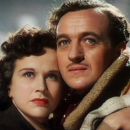
Michael Powell & Emeric Pressburger's A MATTER OF LIFE AND DEATH (UK)
Chicago Film Society at the Music Box Theatre — Sunday, 7pm
A MATTER OF LIFE AND DEATH was renamed STAIRWAY TO HEAVEN for its American release because Hollywood distributors feared that people wouldn’t want to see a movie with “death” in the title. And while “Stairway to Heaven” accurately reflects the film’s sense of romantic fantasy, the original name speaks to its morbidity, which is no less critical to the film’s overall power. When Jonathan Rosenbaum introduced the film in a lecture series several years ago, he pointed out how common it was in Great Britain for people to have lost loved ones during World War II (whether through combat or German bombings), and he proposed that the movie responded to this national trauma by confronting the inevitability of death. One might add that it attempts to resolve that trauma by offering a reassuring portrait of the afterlife. Indeed, Powell and Pressburger’s depiction of the Other World is one of the cinema’s great imaginings, an awesome vision of humankind made one with the cosmos; when experienced on a big screen, it allows one to grasp a sense of the infinite. The Archers famously shot the heaven-set sequences in three-strip Technicolor but didn’t use color dye when processing the film, resulting in an otherworldly look that the movie’s IMDB trivia page aptly describes as pearlescent; the filmmakers reserved the color dye for the earthbound sequences, which render our world so ravishing as to make you thankful to be alive. The central love story has this effect too—as the British title suggests, the film makes romantic love seem all-important, a reason for living. At the same time, A MATTER OF LIFE AND DEATH never feels like a work of breast-beating; the Archers’ quirky sense of humor keeps the more spectacular elements in check. The Other World’s elaborate bureaucracy is as brilliant a creation as the Other World itself, and the film’s very premise of a slip-up in Heaven has the effect of making the universe seem more human than it’s typically presented by Modern Science. Every scene contains some detail to reaffirm your faith in life’s wonderful peculiarity, whether it’s Roger Livesey’s supporting performance as a kooky doctor, the use of freeze frames during the ping pong game, or the Archers’ witty depiction of Anglo-American relations. Preceded by Bruce Baillie's 1966 short film ALL MY LIFE (3 min, 16mm). (1946, 104 min, 35mm) [Ben Sachs]
Looney Tunes on 35mm
Music Box Theatre — Saturday, 10am - 3pm and Sunday, 10am - 1pm [Free Admission]
As integral as the characters of the Looney Tunes (Bugs Bunny, Daffy Duck, Porky Pig, you know the rest, I hope) have become to our modern day lives and vernacular, some might be hard-pressed to describe the short adventures of this wacky bunch as "cinema." But how else are we to categorize the artful grandiosity of WHAT’S OPERA, DOC?, the surrealist experimentation of DUCK AMUCK, the grand array of silent antics found in any number of Wile E. Coyote vs. Roadrunner shorts? The Looney Tunes—concocted by, but not limited to, the likes of actor Mel Blanc, writer Michael Maltese, and illustrious directors including Chuck Jones, Friz Freleng, Tex Avery, and Bob Clampett—have endured for nearly a century not just because of their excessive entertainment value, but arguably because of how intricately in conversation they are with the history of moviemaking; the rapid ratatat dialogue and anarchic banter between Bugs and Daffy in RABBIT FIRE feel directly pulled from a Three Stooges short, the visual iconography of DUCK DODGERS IN THE 24 1/2TH CENTURY is entirely indebted to the serial adventures of Buck Rogers, and the comic ingenuity of the gags in FASTEST WITH THE MOSTEST would be enough to make Buster Keaton blush. The artists who wrote, voiced, and animated these hilarious feats of filmmaking deserve a worthy mention in the lineage of cinema, fulfilling the promise of silent film’s particular brand of antics by blowing them up via the seemingly endless possibilities within the medium of animation. Above all else, the durability of these films lies in how strong these scenarios have withstood the test of time, how well-defined these characters remain, how each cel of animation bursts from the screen with vivid movement and color. There is undeniably thorough intentionality in the way Bugs Bunny cheekily breaks the fourth wall, or when and how Roadrunner tilts his head for a particular "Meep meep!" Or perhaps it’s just as simple as our collective desire to laugh at silly-looking characters doing funny things. Maybe that is all, folks. (Note that the cartoons mentioned in this blurb may not be screening in this year’s line-up.) [Ben Kaye]
Jerry Blumenthal's THE CHICAGO MATERNITY CENTER STORY (US/Documentary)
Music Box Theatre — Tuesday, 6:30pm
Considering the current state of America's horrific health care system and the battle to ensure affordable care for everyone, this classic documentary from Kartemquin's venerable film catalog is a still-relevant look back at a time when those in the medical industry not only wanted to help those in need of care, but effectively could help every person who walked in the door. Actually, that's not entirely true: MATERNITY CENTER examines the last days of Chicago's maternity center as it attempts to continue helping those seeking home births, with the center facing pressure to close from the medical industrial complex rapidly rising in America. Unapologetically on the side of the women who rely on the center, the film posits the reasons for the center's closing as the center's board members' competing interests in other, more lucrative aspects of the health care industry, namely hospitals and drug companies. Exasperated supporters of the clinic meet repeatedly with the board with testimonials and statistics showcasing the need for low-cost birthing options in Chicago, yet the board offers only platitudes, with one member stating blithely "This [center] is charity." What allows MATERNITY CENTER to rise above partisan activism is the fifteen-minute documentation of a home birth near the beginning of the film. The camera records one of the last center-assisted home births in Chicago as head practitioner Beatrice Tucker oversees and instructs a young doctor in handling a potentially difficult birth. The scene is tense, and the labor is difficult, exhausting the family members gathered to assist, but the baby's arrival confirms the center's position that modern, sterile childbirth need not happen at an expensive hospital. Watching MATERNITY CENTER it's hard to suppress the creeping realization that the inequalities presented in the films are far too similar to today's to be coincidental, as if we've been stuck living in a time loop the past 50 years. Presented by Kartemquin Films, Birth Workers of Color Collective, and Muffy Film Productions, and followed by a post-screening community conversation. (1976, 60 min, DCP Digital) [Doug McLaren]
Lino Brocka’s MACHO DANCER (Philippines)
Siskel Film Center — Saturday, 2:30pm; Sunday, 12pm; and Thursday, 5:45pm
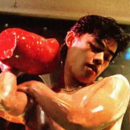
There is a merciless quality to Lino Brocka’s work—when bad things happen in his films, they tend to feel coldly inevitable. MACHO DANCER is a harrowing account of one sex worker’s descent into a living hell, and one thing that distinguishes it from other movies that follow this trajectory is that the protagonist isn’t especially happy or idealistic when he sets out. When the film begins, Pol is a young man who lives in the countryside and supports his family as the paid lover of an American soldier. When the soldier leaves, Pol finds he needs to find another source of income. A friend just back from Manila tells Pol that he’s making good money at a sex club there and invites Pol to go back to the city with him, where he might be able to get him a job. Pol accepts, and within days, he’s working at the club as a nude dancer; he’s also exposed to Manila’s criminal milieu, as some of the dancers with whom he bonds are selling drugs and performing other nefarious favors for the corrupt cop who “protects” the place. Brocka presents all this bluntly, factually, as if to underscore how commonplace this story must be. (His painful cinematic realism suggests an update of what Buñuel achieved in LOS OLVIDADOS [1950].) The director’s approach is especially pulverizing when Pol joins another dancer, Noel, in his search for his younger sister who has gone missing, a journey that takes them into the world of sexual slavery. MACHO DANCER asks us to confront a society in which people are little more than pieces of meat and life seems to hold little value. Even the friendships that exist seem like mere reprieves from lives defined by exploitation and abuse. (Notably, Pol and Noel struggle to find time off from work in order to pursue their search.) Brocka depicts those reprieves with such tenderness that they stand in stark relief from the rest of the movie; however, they remind us of the humanity that these characters are otherwise so cruelly deprived. Screening as part of the 20th Century Queers series. (1988, 133 min, New 4K DCP Digital Restoration) [Ben Sachs]
Howard Hawks' THE DAWN PATROL (US)
Doc Films (at the University of Chicago) — Friday, 5pm
Describing the early talkies of Howard Hawks, Henri Langlois observed that they are "stripped bare almost to the point of abstraction—it is as if they are made of concrete." This applies especially to THE DAWN PATROL, an effort as orderly and grim as its subject matter. Coming after a cycle of elaborate Great War epics (THE BIG PARADE, WHAT PRICE GLORY, WINGS, and ALL QUIET ON THE WESTERN FRONT), THE DAWN PATROL looks diminutive and rough. The cynical sobriety undercuts the action climax and the overarching fatalism preempts traditional character development. It lacks the vulgar immediacy of Howard Hughes's box office rival, HELL'S ANGELS. What makes THE DAWN PATROL haunting—and undermines the traditionalist reflex of assuming that early talkies were merely incompetent—is the fact that these choices were apparently deliberate. Interviewed by Joseph McBride in 1977, Hawks took credit for the undercooked intensity and creaky integrity of the production: "When I was making THE DAWN PATROL, which was my first talking picture, I got forty letters from the front office saying that I'd missed chances of doing good scenes because I'd underdone them so much. I've saved the letters just for fun. The dialogue before that reminded you of a villain talking on a riverboat, UNCLE TOM'S CABIN or something like that. They hammed it up. And I stopped them from doing that in DAWN PATROL. They weren't used to normal dialogue. They weren't used to normal reading. They wanted to have somebody beat his chest and wave his arms." This disavowal of melodrama is THE DAWN PATROL's most notable aspect: Hawks' next picture, THE CRIMINAL CODE, hinted at a reversion to the norm, while SCARFACE exploded the excess—and effectively purged it from Hawks' art. Hawks' visual sense isn't very developed here: the handling of confined spaces and restricted geography is threadbare next to RIO BRAVO or TO HAVE AND HAVE NOT. The themes, developed in concert with novelist John Monk Saunders, are visible in embryo: THE DAWN PATROL serves as a sketch and spiritual prequel to Hawks' ONLY ANGELS HAVE WINGS—another portrait of men so frightened by death that they can only mock it, disbelieve it, and gleefully submit. (The two pictures also share silent heartthrob Richard Barthelmess: his DAWN PATROL despair serves as an alternative biography, or perhaps an alibi, for his broken flier in ONLY ANGELS HAVE WINGS.) So, the pleasures of THE DAWN PATROL are largely auteurist—those not invested in the trajectory of Hawks' career need not apply. Screening as part of the Howard Hawks’ Pre-War Years series. (1930, 108 min, 35mm) [K.A. Westphal]
Michael Mann's MANHUNTER: THE FINAL CUT (US)
Music Box Theatre — Saturday, 5pm and 8pm
A turning point in the career of Michael Mann—the film in which ambiance takes on equal importance to the detailed observation of professional ritual—MANHUNTER marks the beginning of this curious director's ongoing fusion of Howard Hawks and Stan Brakhage. Though its story of an FBI agent's pursuit of a demonic serial killer is suspenseful enough and the cast contains stellar turns by Joan Allen, Dennis Farina, and Brian Cox, among others, you may find that your strongest memories of the film are in Mann's eerie use of fluorescent light or an unfurnished suburban home. Much commercial art of the 1980s was built on the fetishization of material excess, often in the form of designer decor or ultra-modern lighting schemes that make commodities out of any subject: In retrospect, many key films of the decade act as subversions of this aesthetic by making material wealth seem either unreal (e.g., Nicolas Roeg's EUREKA, Alain Resnais' MELO) or a thin veneer for existential dread (e.g., Scorsese's AFTER HOURS, Edward Yang's TAIPEI STORY). MANHUNTER definitely belongs to the latter category, although a supermarket confrontation between the main character and his son unexpectedly evokes the work of William Klein. The film's surfaces wouldn't be so compelling, though, if they didn't find counterpoint in Mann's great conflict—the professional's sacrifice of his humanity in the perfection of his craft. (1986, 120 min, New 4K DCP Digital Restoration) [Ben Sachs]
Lucrecia Martel's THE HEADLESS WOMAN (Argentina)
Siskel Film Center — See Venue website for showtimes
Lucrecia Martel’s films demand your attention to infinitesimal details and then upbraid you—albeit thoughtfully, like a sage imploring you to reconsider all your preconceived notions—for caring too much about them. Her 2008 film THE HEADLESS WOMAN, the last in her de facto Salta Trilogy (called as such because all three, with LA CIÉNAGA from 2002 and THE HOLY GIRL from 2004, are set in the Argentine province, also her hometown), is the preeminent example of this tactic within her oeuvre. The plot is cunningly simple: before the title card even appears, a well-to-do Argentine woman, Verónica (referred to as Vero and played in a masterful performance by María Onetto), gets distracted by her phone while driving and hits something—possibly a dog, possibly a child. Rather than verify and, if necessary, help the victim, she drives on, presumably stopping only to get out and seek assistance for herself. The film’s Byzantine trajectory is rendered dreamlike via Martel’s perversely epical perspective (and real-life inspiration; she reportedly conceived of the film in a dream)—nothing is what it seems, neither for the protagonist nor the viewer. Although this is a trend in world cinema of later, considering some noteworthy films born of the Iranian and Romanian New Waves such as Asghar Farhadi’s A SEPARATION (2011) and Călin Peter Netzer’s CHILD’S POSE (2013), among others, Martel’s disembodied approach is less tactical and more intrinsic than others’ use of such means. It may be trite to say that Martel challenges viewers to question what they see (and hear—her use of sound is exquisite), but it’s a logical deduction. After Vero hits whatever it is, I was almost sure that, when the film shows the casualty in the car’s rear window (movie pun unintended, though many critics reference its Hitchcockian overtones) as she drives away, it was in fact a dog; but when her family starts quietly helping cover up the accident following a series of disconcerting events—a servant’s child goes missing and is then found drowned in the canal next to the road where the accident occurred—I wondered what it was I think I saw, this newfound confusion mirroring Vero’s while likewise reinforcing the flimsy impudence of the very sense most crucial to film viewing. Martel’s sound design is similarly dumbfounding, the acousmatic dialogue further distancing us from already removed figures, practically unable to be called characters in how little is revealed about them. This distance, then, makes us question our own complicity, thus positioning the role of spectator, a seemingly passive viewpoint, as an active, if not political, stance. Martel said in an interview that “there is a relationship between the dead body you never see and the desaparecidos,” referring to when a military junta disappeared tens of thousands of political dissidents during Argentina’s 'Dirty War' of the 1970s. This context reframes the scenario, prompting one to wonder if there’s any real difference between what one thinks they see and what one, either naively or maliciously, wants to see. There’s also an intriguing motif involving Vero’s hair, dyed blonde, making her bourgeois status even more prominent against the darker-skinned, lower-class people who serve her, that ties all this together. It’s another element that confronts one’s perceptions—what seems like a clever embodiment of the film’s central metaphor is, when Vero dyes her hair dark brown towards the end, further indictment of one’s connivance. Where Martel challenges her viewer’s preoccupation with minute narrative details, she impugns for what is confessed in that very absorption. If there’s no detail too small, how do we miss—or, better yet, ignore—so many big ones? Screening as part of the 25 for 25 series, in celebration of the Film Center’s 25 years on State Street. (2008, 87 min, New 4K DCP Digital Restoration) [Kat Sachs]
MUBI Fest 2026
See below for Venues and showtimes
Coralie Fargeat's THE SUBSTANCE (France/US)
The Salt Shed (1357 N. Elston Ave.) — Saturday, 12pm
The newest film by French genre fiend Coralie Fargeat is body horror in extremis. In 2017 she gave us REVENGE, an over-the-top bloody pastiche of rape and revenge/one-(wo)man army exploitation films. A preposterously bloody affair to the point of almost being camp, REVENGE polarized its audiences. With THE SUBSTANCE, we see both the natural evolution and a giant leap in her filmmaking. A sci-fi horror, THE SUBSTANCE centers around Elisabeth Sparkle (Demi Moore), a 50-year-old media celebrity whose star has faded into being a TV aerobics host. After getting into a car accident, the nurse who is attending to her gives her a flash drive with an ad for “The Substance,” a mysterious cure-all guaranteed to make you perfect again. After some deliberation, Sparkle decides to partake. The film ratchets up into high-concept here as the serum creates a fully formed, younger, astonishingly beautiful woman that literally crawls out of Sparkle’s body like some kind of Cronenbergian Athena. This new Sparkle, Sue (Margaret Qualley) is both a physical and psychological manifestation of Sparkle that requires upkeep. Only one can be conscious at a time, and must switch back and forth every seven days in order to maintain stasis. But of course, they don't. Fargeat uses THE SUBSTANCE to talk about a lot of things at once: the psychological weight of aging (particularly as a woman), the entertainment industry, Ozempic, self-loathing, addiction. But while this movie is gross—and it's very gross—it's also decidedly campy and funny. It just received a Golden Globe nomination for Best Motion Picture – Musical or Comedy, if that gives you an idea of how purposefully silly this movie is. There is a great balance between the unsettling and the humorous, and Fargeat knows exactly when to lean harder into which. While one could dismissively say this is a modern take on Oscar Wilde’s The Picture of Dorian Gray, it equally draws from such diverse films such as Brian Yunza’s SOCIETY (1989) for body horror social satire, Paul Verhoeven’s SHOWGIRLS (1995) for camp explorations of sex and sexuality, Darren Aronofky’s REQUIEM FOR A DREAM (2000) for the physical degradation of addiction, and of course David Cronenerg’s THE FLY (1988) for, well, watching a human body fall apart in real time. By far greater than the sum of those parts, THE SUBSTANCE gives us something like Katheryn Bigelow’s POINT BREAK (1991), a film that can be enjoyed on multiple levels as either pure, mindlessly indulgent genre entertainment, or as an acerbically sharp commentary. It's a rare film that is as clever and smart as it is completely disgusting. Somehow this movie has found an audience in both the arthouse and grindhouse, with both the credentialed critics and the gutterstink gorehounds. When Ovidio G. Assonitis and Roberto Piazzoli released BEYOND THE DOOR (1974), the legally adjudicated Italian rip off of THE EXORCIST (1973), they infamously hired people to pretend to pass out during screenings and have ambulances waiting outside movie theatres in order to drum up hype for the film. Two months ago, as I was at the movies seeing a different film, someone in the next theatre actually threw up, passed out, and took a ride in an ambulance out of a screening of THE SUBSTANCE. Proof that for 50 years that the film industry has been trying to fake what THE SUBSTANCE naturally has. Attendees will receive a scratch-and-sniff card keyed to twelve scenes. (2024, 141 min, DCP Digital) [Raphael Jose Martinez]
---
Hirokazu Kore-eda's MONSTER (Japan)
Siskel Film Center — Saturday, 1pm
For Hirokazu Kore-eda, one of contemporary cinema’s preeminent humanists, people are seldom all bad. If they do something unscrupulous, as in the director’s Palme d’Or-winning SHOPLIFTERS (2018), it is usually not out of malice but symptomatic of systemic inequities beyond their control. Understanding and empathy can be achieved through a change in perspective, which is the overarching theme of MONSTER. The Cannes-laureled script, by Yuji Sakamoto, is structured as a triptych, with each section assuming a different character’s point of view. The first focuses on Saori (Sakura Ando), a single mother raising a surly, taciturn boy named Minato (Soya Kurokawa). Discovering that her son’s erratic behavior could be the result of alleged abuse by his schoolteacher, Saori conducts a heated meeting with the school staff to address the wrongdoing. The film then shifts to the perspective of the accused teacher, Hori (Eita Nagayama), who reveals a different version of events. MONSTER concludes by focusing on the feelings and experiences of those society is often most ill-equipped to understand: children. Through Minato and his burgeoning relationship with an effeminate, bullied classmate named Hoshikawa (Hinata Hiiragi), the film elucidates the truth behind its spiraling dramas, surfacing the social prejudices and repressive cultural attitudes that lead a boy to act out, or a teacher to be vilified, or a parent to pass the blame. Sakamoto’s script risks didacticism in how it preaches the pitfalls of making assumptions; it’s so precisely engineered to elide or disclose perception-shifting information at just the right moments that it can feel overly rigged for effect. On the other hand, we could all use a reminder—especially one as warm as this—that none of us have all the knowledge, and that we’d be wise to interrogate even our smallest judgments before they grow into the real monsters. (2023, 125 min, DCP Digital) [Jonathan Leithold-Patt]
---
Akiva Schaffer & Jorma Taccone's POPSTAR: NEVER STOP NEVER STOPPING Sing-A-Long (US)
The Salt Shed (1357 N. Elston Ave.) — Saturday, 3:15pm
The twenty-first century musician-sanctioned behind-the-scenes documentary is a bizarre and noteworthy genre worth digging into; contemporary artists like Justin Bieber, Beyonce, Taylor Swift, and Billie Eilish have so tightly and meticulously crafted their careers and brands that, when becoming the subjects—and often, the producers—of introspective non-fiction films about themselves, there is only so much authenticity that can truly be shared for fear of tarnishing that exquisitely constructed brand. Even the moments of vulnerability that do shine through are often moments that are solely aligned with said brand. It’s inauthentic authenticity at its finest. So how else to parody this kind of vapidity in pop music than by creating a musician whose sheer hubris and idiocy become the “brand” in and of itself? Thus, the Lonely Island's POPSTAR: NEVER STOP NEVER STOPPING (beautiful title, no notes) shines forth, creating a lead musical character—Andy Samberg’s Connor4Real—who’s every move is chaotic, moronic, self-centered, disastrous, and only a few degrees crazier than the kind of behavior an actual pop musician might display in public. Easily seen as a modern day successor to Rob Reiner’s seminal THIS IS SPINAL TAP (1984), Schaffer and Taccone’s mockumentary unfolds through a series of concert footage, behind-the-scenes antics, celebrity-laden interviews (including the likes of Usher, Questlove, Mariah Carey, and Ringo Starr) and social media clips, creating an atmosphere of importance and grandeur for a songwriter with such lyrical bon mots as “Mona Lisa/You’re an overrated piece of shit.” Amidst the buffoonery, the Lonely Island crew are wise enough to thematically center things around a charming tale of friendship gone awry, as Connor4Real’s former musical endeavor—the infectious pop-rap trio “The Style Boyz”—fractures before our very eyes, with true friendship triumphing above fame. As with their infamous SNL Digital Shorts, Samberg, Schaffer and Taccone prove, in feature film form, that their ultimate strengths lie in expertly crafted stupidity. (2016, 86 min, Digital Projection) [Ben Kaye]
---
Wes Anderson’s THE ROYAL TENENBAUMS (US)
Siskel Film Center — Sunday, 12:30pm
THE ROYAL TENENBAUMS was probably the most emulated American movie to come along after PULP FICTION, and like Quentin Tarantino’s Palme d’Or winner, Wes Anderson’s third feature suggested an American spin on a French New Wave film, wearing its influences on its sleeve and taking delight in (and often drawing attention to) a range of cinematic devices. Tarantino updated the New Wave sensibility by drawing on TV shows, comic books, and fast food as well as other movies in the creation of his cultural pastiche; Anderson made it his own by drawing extensively on popular literature. Many have noted the parallels between Anderson’s Tenenbaums and J.D. Salinger’s Glass family, but THE ROYAL TENENBAUMS also contains critical allusions to John Irving’s The Hotel New Hampshire, William Gaddis’ J R, and E.L. Konigsburg’s From the Mixed-Up Files of Mrs. Basil E. Frankweiler. Given these points of reference, Anderson’s film can feel not just literary, but also somewhat precious, a quality that decades of imitators and parodists have been quick to overemphasize. And to be fair, Anderson has often set himself up for parody with some of his more whimsical conceits—Ben Stiller’s character in TENENBAUMS, who wears the same red track suit as his two young sons and responds to his wife’s sudden death by obsessing over home safety drills, is a prime example of this tendency. Yet Anderson’s critics fail to recognize how he tempers his whimsy with pointed observations of sadness and disappointment. For instance, the celebrated prologue of THE ROYAL TENENBAUMS catalogues not only the three Tenenbaum children’s ridiculously advanced accomplishments but also the ways in which patriarch Royal let down those children so painfully that they’d still be wrestling with it in adulthood. That Royal, his wife, his children, and a few other characters evolve meaningfully over the course of the picture is not just remarkable, but practically miraculous, something Anderson underscores with his use of Vince Guaraldi’s music from A Charlie Brown Christmas. (The film’s diverse soundtrack, which also features Erik Satie, Nico, the Ramones, and Elliot Smith, goes a long way in creating a sense of timelessness; ditto the celebrated production design, which transforms contemporary Manhattan into something out of a Demy musical or a mid-20th century storybook.) The optimism of the conclusion may feel like a bit too much, but then, everything in THE ROYAL TENENBAUMS is a bit too much—compared with most other American films of its era, it contains too many principal characters, too many jokes, too many visual details to take in on one viewing. On the other hand, this overwhelming quality feels purposeful. What a marvelous representation of New York City not as it is (or ever was), but as it exists in an active imagination informed by good books. (2001, 109 min, 35mm) [Ben Sachs]
---
Kelly Reichardt's THE MASTERMIND (US)
Music Box Theatre — Sunday, 3:30pm
THE MASTERMIND begins, like so many Kelly Reichardt films, obliquely and suggestively. A man moseys through an art museum, his gaze oddly intense. In another room, a woman, turned away from the camera, ignores her chatty boy; both then ignore another, similar-looking boy who sits down beside the other, nose in a comic book. As a security guard naps in the background, the man nicks a small figurine from a glass case and slips it unnoticed into the woman’s bag before they and the kids leave together. In this quietly observant opening, Reichardt succinctly sets the stage for a film about compromised attention and useless hubris, and how a person’s myopic self-interest ultimately affects a self-defeating estrangement from the world. The ubiquitous Josh O’Connor is smartly cast as James, bringing a soft-spoken affability to a character who is profoundly selfish and dishonest. Living a comfy, conservative middle-class life with his wife (Alana Haim, sadly underused) and two kids in suburban Massachusetts circa 1970, he puts it all on the line by plotting the heist of four Arthur Dove paintings from the museum he was scouting in the opening scene. Only, the unduly confident James doesn’t feel he’s risking anything at all, and after he’s able to successfully steal the paintings with his two accomplices, he thinks he’s in the clear. But things fall apart quickly, not with the frenzy of a traditional thriller but with the placid melancholy Reichardt has honed throughout a filmography populated with the most ordinary and hapless of outcasts and loners. James takes the inverse course to many of the filmmaker’s protagonists, starting from social privilege before becoming increasingly displaced and alienated. Surrounded by news broadcasts of the Vietnam War and the activism of protestors, he can do nothing but retreat ever-inward; his tragedy is not born from his criminal activity but his chronic failure to attend to the things that actually matter. Reichardt’s longtime DP Christopher Blauvelt shoots in glowing autumnal shades that gradually give way to the chilly light of late fall; Rob Mazurek’s lively jazz score is the only element not joining in the sense of regressive drift. By the deeply ironic denouement, thick with societal disillusionment, THE MASTERMIND has repeatedly and dolefully shown that its ostensible hero—perhaps America itself—has no clothes. Live Score with composer Rob Mazurek and the Mastermind Quartet. (2025, 110 min, DCP Digital) [Jonathan Leithold-Patt]
---
David Cronenberg's THE FLY (US)
Siskel Film Center — Sunday, 4pm
David Cronenberg may have finally shed the moniker of "former midnight-movie director," but it's worth noting that the major themes of his recent work have been present all along. This revival of THE FLY is a reminder of how much Cronenberg has always been in control of his ideas—and, as importantly, how he could use them to truly unsettle an audience. The film was a potentially thankless project (a remake of a 50s sci-fi/horror item affectionately remembered as camp), but Cronenberg transformed it into something wholly personal, an existentialist allegory about growing alienated from your own body. It's discomforting filmmaking from literally the first shot, a classic Cronenbergian close-up that isolates the main character (Jeff Goldblum, in the performance of his career) in a frame purposely devoid of context: the surrounding milieu (in terms of both space and time) is rendered unclear, and the overly technical sci-fi jargon, delivered with deadpan assurance, only complicates things further. It takes a few minutes to determine that, no, we're not in a dream; the rest of the film can be seen as a deepening of that initial uncertainty. As Goldblum's scientist transforms into a giant insect (an extremely nuanced process, thanks to Cronenberg's scientific imagination and some of the finest make-up of any movie), the more sympathy he arouses in the journalist who's fallen for him. Some critics have read the film as an AIDS metaphor; and on that level, it ranks with the best of Derek Jarman and Todd Haynes. But the central romance—in which love is strengthened by the impossibility of love—resonates in a number of directions, sustaining the film across multiple viewings. (1986, 95 min, 35mm) [Ben Sachs]
---
Alex Russell's LURKER (US)
Siskel Film Center — Sunday, 6:30pm
Sometimes a movie feels innately connected to the moment it's released, as if the film’s existence was sparked by an alchemical reaction to the culture around it. This isn’t to say that Alex Russell’s LURKER isn’t walking on well-trod cinematic ground; the horrors of parasocial fans wreaking havoc on their celebrities of choice have been mined in films as varied as THE KING OF COMEDY (1982) and PERFECT BLUE (1997). But LURKER feels particularly tied to our current moment, specifically its relationship to the way social media and surveillance culture have shaped our perception of celebrity. Just this week, the engagement of a billionaire pop star to a professional football player was deemed breaking news on the level of governmental malfeasance and international war crimes, the personal lives of the rich and famous receiving as much journalistic real estate as a fascist uprising. The latter news item likely wouldn’t even cross the mind of Théodore Pellerin’s Matthew; his mind is focused solely on the world around up-and-coming musician Oliver (a dazzling Archie Madekwe), a British pop singer who swallows Matthew into his orbit practically as a lark. Kindness gives way to artistic collaboration and tight-knit friendship, as Matthew exchanges his humdrum life working in retail for the opulence and vacuity of Oliver’s fame, joining an entourage of yes men unwilling to burst the bubble of Oliver’s celebrity. Pellerin—his bulging eyes filling up the screen, his grin indecipherably inviting—commands LURKER, his every move becoming more harrowing and maniacal, his physical performance shifting between a house cat and a mountain lion, forever trying to suss out how he can manipulate those around him to further entrench himself in Oliver’s life. A film like LURKER carries the possibility of countless endings, and it’s to Russell’s credit that he takes things in an ambiguous and nuanced direction, honing in on Oliver’s revelation that maybe part of becoming a pop culture icon is needing fans like himself to sustain his image. (2025, 100 min, 35mm) [Ben Kaye]
---
In addition to the films listed above, the festival opens Friday, 6:30pm, at the Music Box with the Chicago premiere of Jane Schoenbrun's 2026 film TEENAGE SEX AND DEATH AT CAMP MIASMA (112 min, DCP Digital), followed by a late show of Robert Hiltzik's 1983 film SLEEPAWAY CAMP (84 min, 35mm) at 10pm, with Peaches Christ, original star Felissa Rose, and Midnight Mass co-host Michael Varrat in attendance. This screening features an opening drag performance, a pre-screening conversation, and an 80's Camp Costume Contest before the movie begins. VIP ticket holders get exclusive access to a meet and greet photo opportunity with talent from the film. On Saturday, at the Salt Shed, a free MUBI Market runs outdoors from noon to 6pm and a live performance by Current Joys with Delroy Edwards takes place at 7:30pm. Also on Saturday, at the Film Center, Akinola Davies Jr.'s 2025 film MY FATHER'S SHADOW (94 min, DCP Digital) screens at 4pm, while the Music Box hosts a sneak preview of Karim Aïnouz's 2026 film ROSEBUSH PRUNING (95 min, DCP Digital) at 4:30pm, ahead of its upcoming theatrical release. On Sunday at the Music Box, Steven Soderbergh's 2001 film OCEAN'S ELEVEN (116 min, DCP Digital) screens at noon. More info here.
📽️ ALSO RECOMMENDED
Ross McElwee’s SHERMAN’S MARCH (US/Documentary)
Music Box Theatre — Tuesday, 7pm
There are things about Ross McElwee’s SHERMAN’S MARCH that shouldn’t work, or, at the very least, might not have aged well. That it’s a documentary centered almost entirely on the white, male, heterosexual filmmaker’s search for romance sounds problematic when put in summary. Yet, through McElwee’s unconventional talent as a non-fiction filmmaker working in a distinctly personal register, it transcends its conceit and emerges as a profoundly empathetic, organically idiosyncratic treatise on life and love, both as it pertains to McElwee and, somehow, universally. Setting out to make a documentary about Union General William Tecumseh Sherman’s March to the Sea, McElwee instead—one might say “also,” but the personal comes almost entirely to eclipse the historical, the latter becoming a supplement to the former rather than the other way around—ends up detailing his search for love in the American South, from which he hails. The film becomes a compendium of the women he encounters during this extended period of time, and in turn also brief portraits of the women themselves, whose personalities represent a vast range of interests and temperaments. McElwee depicts them almost ethnographically, though still as people rather than merely subjects, his romantic interest in them existing alongside rather than diminishing his curiosity. (To his credit, McElwee doesn’t completely exonerate himself from stereotypically male tendencies. One woman asks that he document her bizarre but nevertheless titillating anti-cellulite exercises and he readily complies; another, he playfully grills on camera about her history of having had love affairs with her linguistic professors.) Some reviews of the film can be disparaging of the women, citing them as being reflective of a shallowness inherent to the South or just generally nutty in unjustifiable ways. McElwee clearly finds them fascinating, as do I—my favorites, so to speak, are those of the anecdotes cited above. The former, Pat, is an aspiring actress who views herself, though somehow not egotistically, as a sort of female prophet (she describes a prospective screenplay in which her head, having been cut off by her lover, who’s also her toxic boyfriend in real life, dispenses wisdom that resonates with the whole world). The latter, Winnie, could be her exact inverse: a linguist working on her dissertation on a remote island off the Georgia coast near Savannah, where McElwee had obtained permission to film material relating to Sherman's campaign. These women embody the kind of attractiveness you see in old photos of your mother or grandmother, natural beauty that now often feels eclipsed by the pursuit of Instagram Face. Sherman is as much a “character” as they are; in one hilarious and edifying sequence, McElwee, having returned home from a costume ball, drunk and still dressed in a Confederate uniform, waxes poetic about the misunderstood general. Dressing as a Confederate soldier wouldn’t be acceptable in such a film nowadays; politics as they relate to the Civil War aren't expressly broached, only facts conveyed, though there’s a contemporary undercurrent pertaining to nuclear war that’s signaled by the film's subtitle, A MEDITATION ON THE POSSIBILITY OF ROMANTIC LOVE IN THE SOUTH DURING AN ERA OF NUCLEAR WEAPONS PROLIFERATION. This is evoked by longstanding dreams McElwee has of nuclear disaster, stemming from the rare but perhaps accursed opportunity to witness an overwater nuclear test as a boy. It’s a parallel to the concept of total war that Sherman infamously employed in his march to the sea, something McElwee fears becoming more fully realized in the era of nuclear proliferation. This throughline asserts an unexpected symmetry that's become a hallmark of today's facsimiles of the mode he helped pioneer; all of this feels undergirded by a famous assertion from the film, made by one of its most memorable characters, Charleen. She’s desperate to connect him with eligible women, and in doing so becomes frustrated when he doesn’t stop filming to take seriously her matchmaking, screeching at him, "This isn't art, it's life!” Much like life, the film is the sum of its parts, having aged only inasmuch as time has passed since it was made and first released. McElwee in attendance for a post-screening Q&A. (1985, 158 min, DCP Digital) [Kat Sachs]
Robert Altman's THE PLAYER (US)
Doc Films (at the University of Chicago) — Friday, 8pm
Robert Altman, having successfully brought QUINTET, HEALTH, and O.C. AND STIGGS to the big screen, was perhaps overly familiar with the very special interaction ritual known as the Hollywood Pitch, whose unformalized rules permeate nearly every other scene in THE PLAYER. The prevalence of these consistently awkward interrogations (pragmatically asking: why should your movie exist?) become inevitably redirected to the material on screen, and part of the elegance of THE PLAYER is how it cues into and channels this spectatorial recursiveness. For while there has been many a movie about making a movie, this is the only one firmly lodged inside some scumbag studio VP's (Tim Robbins) head: with nary a camera crew in sight but many, many celebrity faces milling about and making awkward, backstabbing small talk in the background. Thomas Newman's oneiric score of extended dissolve cues, in particular, successfully transforms the narrative into a psychological study, like the fever dream an exec might have on his deathbed, after a career's worth of speed-reading by-the-numbers screenplays penned by anxious, balding dudes in their late 20s. Perpetually ironic and thoroughly unsubtle mise-en-scène provides a steady flow of chuckles, but the film's other theoretical subject—the Hollywood Ending—manages to refer not just (as Hollywood Endings do) to the century past of Hollywood Endings but to the entire structure of the film itself. This is Altman's ANSIKTET—morally ambiguous, self-reflexive in the extreme, questioning the very social foundations of the endeavor of film production—but somehow it can keep the audience grinning as they leave the theater. The cast is primarily a Who's Who ass-kissing orgy, but Richard E. Grant (WITHNAIL AND I) and Cynthia Stevenson are exceptional as a director and young executive who respectively attempt, unsuccessfully, to keep it real in the land of the hyperreal. Screening as part of the L.A. Neo-Noir series. (1992, 124 min, DCP Digital) [Michael Castelle]
Howard Hawks' BRINGING UP BABY (US)
Doc Films (at the University of Chicago) — Thursday, 8pm
A box-office flop when it was released in 1938, Howard Hawks' screwball comedy has since gained classic status. Cary Grant takes a nerdy turn as David Huxley, a klutzy paleontologist reluctantly wooed by flaky socialite Susan Vance (Katharine Hepburn). The baby is, of course, a pet leopard that unwittingly brings the two together. As is typical of the genre, the pair is mismatched, the banter is rapid-fire and full of double entendres, and the plot leads to a variety of slapstick situations in WASPy locales (the Connecticut countryside). Stanley Cavell likens the structure to a "comedy of equality" in its refusal to exclusively identify either of its leads as the hero or the "active partner" in quest. There's some truth to that sense of romantic parity, but more simply, what we have here is a kooky woman relentlessly pursuing a straight-laced man. Call it the anti-KNOCKED UP. Here, love equals the triumph of the quirky and childlike over the proper and adult. Also of note: reputedly, Grant's ad-libbed line, "I just went gay all of a sudden!," is among the first filmic usages of the word in a homosexual context. Screening as part of the Howard Hawks’ Pre-War Years series. (1938, 102 min, 35mm) [Martin Stainthorp]
Alex Phillips' ANYTHING THAT MOVES (US) + ALL JACKED UP AND FULL OF WORMS (US)
FACETS — Friday, 7pm (ANYTHING) and 9:30pm (WORMS)
Perhaps you’re like me and, upon hearing the title of Alex Phillips’ latest Chicago-based genre rollercoaster hopped up on adrenaline, your mind went to Dennis Hopper’s inimitable delivery in David Lynch’s BLUE VELVET (1986), maniacally declaring that he will, indeed, “fuck anything that moves.” It’s not a huge leap, to be fair, as echoes of Lynch inarguably reverberate through the cheekily sordid and sickly sweet ANYTHING THAT MOVES (2025, 80 min, DCP Digital) like a dream folding in on itself to create something new. If BLUE VELVET exposed the dark underbelly of squeaky-clean American suburbia, then Phillips discovers the underbelly of the underbelly, a rot living deeper within the rot. Yes, the world is depraved and vile, but that’s just surface level, folks. What else can we find? This isn’t to say there aren’t moments of joy and absurdity throughout (far from it), as the tender core of the film slowly emerges through the muck of it all. Captured on visually sumptuous Super 16mm film—some shots feel like the film reels were unearthed from the depths of an abandoned grindhouse cinema—accompanied by a transfixing melodic score by Cue Shop, and luxuriating in frequent oscillating moments of ecstatic sex and gore-focused violence, Phillips’ protagonist, the lovable sex worker Liam (Hal Baum), is constantly told to question the authenticity of the love he doles out. “I don’t know if you love anybody,” an older client tells him early in the film, “but we love you just the same.” Off the clock, Liam gets plenty of love from his fellow sex worker/lover Thea (Jiana Nicole), similarly affectionate yet weary and watchful of the world outside their orgasmic bubble. One might call them partners in crime, were it not for Liam’s client list slowly morphs into a series of homicidal crime scenes, his litany of lovers mysteriously being brutally murdered one by one. With two maniacal, all-nonsense cops on their tail, Liam and Thea slink through this exciting genre exercise, a giallo lathered in giardiniera, touring through delightfully recognizable Chicago locales, from the side streets around Wrigley Field to the immortal Wolfy’s sign. Phillips is in full control of the tone and style that a piece like this demands, the emotional stakes of the characters never butting heads with the more absurd comedic beats encountered along the way (a personal favorite; a funeral for one of the murder victims leading to a young child sheepishly smoking a cigarette to honor his late deadbeat dad), as if A BAY OF BLOOD (1971) and MULTIPLE MANIACS (1970) were spliced together. Most noteworthy is another invention of cinematic fantasia, where moments of orgasm are captured with musical trills and bright shining lights, as if the angels themselves were on hand to deliver coital reward to the respective climaxing character. Once more, a delightful device where the elements at hand seamlessly entwine in sexual and cinematic congress. Preceded by Phillips’ 2020 short film SURROUNDED BY FUCKING IDIOTS (5 min, Digital Projection) and 2019 short film WHO’S A GOOD BOY (11 min, Digital Projection). [Ben Kaye]
---
This batshit-crazy body horror/black comedy is the reason why "After Dark" sidebars at film festivals exist. It may not have a lot on its mind, aside from the desire to provoke visceral reactions from adventurous viewers, but seeing it with a boozy late-night crowd should be fun. ALL JACKED UP AND FULL OF WORMS (2022, 72 min, DCP Digital) begins with bearded weirdo Benny (Trevor Dawkins) mail-ordering a plastic baby sex doll aimed at the pedophile market—one of the more disturbing props in contemporary cinema—to satisfy his earnest desire to become a parent. After sex-worker Henrietta (Eva Fellows) turns him on to eating earthworms that possess hallucinogenic properties, Benny teams up with motel employee and fellow worm enthusiast Roscoe (Phillip Andre Botello), and the duo embark on an absurd and violent crime spree. This microbudget psychedelic odyssey, which boasts a fair number of gruesome and impressive practical effects, may not ultimately "mean anything" but it does possess a certain scuzzy integrity. The cast, led by Dawkins (a veteran of Chicago's Neo-Futurist Theater who first proved his transgressive cinema bona fides in Spencer Parsons' BITE RADIUS [2015]), certainly gives it their all; and, formally, the story becomes increasingly non-narrative as it progresses in order to correspond to the disintegrating mental states of the characters. By the final scene, it feels like the film itself is tripping. Preceded by Phillips’ 2020 short film PUSHING MONGO (8 min, Digital Projection) and 2025 short film I’M GONNA KILL YOU (8 min, Digital Projection). [Michael Glover Smith]
---
Phillips in person for a Q&A between screenings.
Sasha Waters’ MARY OLIVER: SAVED BY THE BEAUTY OF THE WORLD (US/Documentary)
Siskel Film Center — See Venue website for showtimes
Some filmmakers just love a challenge: how does one document the life and impact of a lesbian poet who was a hermit and intensely private for most of her life? Director Sasha Waters, an experienced documentary and experimental filmmaker, rose to the challenge by using archival footage (diligently sourced from public archives) and photographs sourced from Mary's longtime partner, photographer Molly Malone Cook, to share earlier moments of Mary's life, including imagined moments of archival nature footage to represent her nature rambles, lyrically spliced to readings of her poetry in both her own voice and recited by others who are later interviewed on screen in the film. Oliver is one of our most famous American poets, often compared to Whitman (whom she adored), Thoreau, and other Transcendentalists who ascribed the natural world a power to bring us closer to spiritual enlightenment and understanding of the human realm. Her poetry often leverages metaphors found through observation of the natural world, an experience she describes rapturously, vividly, and with unabashed feeling throughout her body of work—though it meant her work was taken less seriously by critics and contemporaries who thought her subject matter dated, trite, and sometimes downright embarrassing. As a result, Oliver languished in obscurity in Provincetown, Massachusetts, for much of her adult life, working at a bookstore and doing other odd jobs so that she could take precious time to write and ramble in the woods. During her time in Provincetown, she became lifelong friends with John Waters, one of the star talking heads of MARY OLIVER and an astute, irreverent observer of her life and unique personality. Other talking heads include celebrity readers of her poetry (Stephen Colbert, Oprah, Helena Bonham Carter, Lucy Dacus) and fellow poets, critics, and writers. Over time, I became suspicious that this was going to be a train of celebrity fans masquerading as a documentary, but Sasha Waters tread carefully here, only inviting celebrities who were publicly ascribed admirers to read in the film. This is evident in the sheer emotion with which they speak of her work—especially Colbert, who is unable to complete the reading, being so overcome by emotion. These readings do end up taking second stage to Oliver's own readings of her poetry: her voice is powerful and unique in reading her works, which she did rarely in her early years of obscurity but executed almost to excess late in life, up almost until her death in 2019, as though making up for lost time. Several surprisingly powerful interviews in the film relate to this later, gregarious period of her life, so at odds with her decades of hermitage, sparked by a revelation that Mary was a victim of sexual abuse as a child by her own father. One is with V (formerly Eve) Ensler, who shared a similar story of abuse and was met with strong emotion by the typically taciturn Oliver backstage at a conference, and Maria Shriver, who learned of the abuse in an interview with Mary late in life that had been published in written form in Oprah Magazine, but also filmed and never aired—until Waters inquired during the making of this documentary. I like to think that this film will be as moving and insightful for longtime Oliver fans like myself as well as newcomers to her work. It serves as both a revelation to those who thought they knew her and a tender, moving introduction to her for those who are not familiar. Her words, treated with great care and attention by the filmmaker, deserve to be heard, not just read, through this unique opportunity, including these famous lines from "Wild Geese" read in the film by Helena Bonham Carter: "Whoever you are, no matter how lonely/the world offers itself to your imagination, calls to you like the wild geese, harsh and exciting—/over and over announcing your place/in the family of things." (2026, 91 min, DCP Digital) [Alex Ensign]
John Boorman’s EXCALIBUR (UK)
Alamo Drafthouse — Sunday, 12:30pm and Tuesday, 6pm
There’s an early tell in John Boorman’s rapturous EXCALIBUR, the enduringly divisive and undeniably definitive cinematic retelling of the Lancelot-Grail cycle, that illuminates the deep vein of philosophical gamesmanship lurking at the heart of the film. The fearsome dragon—part and parcel of any medieval tale worth its salt and sumptuously evoked by the trickster Merlin (Nicol Williamson), who draws upon it at the behest of despots desperate to triumph via any fatal gambit—is not depicted as a mere obstacle to be overcome, nor as the frightful guardian of some mythic cache of treasure. Instead it seems to encompass nothing less than the entire world, or as Merlin himself puts it, “It unfolds itself in the storm clouds; it washes its mane sparkling white in the blackness of seething whirlpools; its claws are the forks of lightning; its scales glisten in the bark of trees; its voice is heard in the hurricane.” Equally championed for its visual splendor and lambasted for its chunky dialogue and campy decadence, Boorman’s lightning-in-a-bottle adaptation of Thomas Mallory’s Le Morte d’Arthur (not to be confused with la mort de l’auteur, per Wikipedia) is a quintessential cult object, one whose flirtations with utter risibility can be rewardingly circumvented by a viewer of sufficiently heroic constitution. There are few images in all of cinema as breathtaking as the Lady of the Lake hoisting the titular blade from the depths of a tranquil forest pond, cast in a mind-boggling wash of green gel-filtered light. Boorman’s is a painterly film of extravagant hues, bound at the seams by an unusually sensitive attunement to intellectual arcana, namely the esoteric logic of the tarot deck and a personal affinity for Jungian medievalism and metaphysical archetype. Boorman has gone on record calling the indomitable Arthurian cycle the “past, present, and future of humanity,” and this conviction vividly colors his attempt to wrangle the entire tangled mythos into a three-act film depicting King Arthur’s ascendency to the throne, the utopian days of the kingdom of Camelot, and the world’s subsequent descent into chaos. His is a full-bore quest for cinematic truth that, in rich accordance with the work of Joseph Campbell, depicts a hero emerging from the hoi polloi, fashioning a social order from writhing bestial chaos, becoming steadily disillusioned with his estrangement from nature, and finally taking solace in his symbolic legacy as king and questgiver of epochal renown. Born from lengthy dalliances with The Lord of the Rings and Irish ethnography, the film, shot entirely on location in Ireland, launched the careers of numerous British and Irish actors (Patrick Stewart and Liam Neeson are among the innumerable familiar faces in the stacked ensemble cast). Reminiscing on EXCALIBUR’s scripting process, Boorman shared in a 2003 interview, “The valley in the Wicklow Hills outside of Dublin where my house sits is as close to Middle-Earth as you can get in this depleted world.” Now, Boorman’s film feels about as close as the cinema can take you to a true and unbridled excavation of the recursive power of mythology. I’ll let Arthur’s iconic appeal to the knights of the round table ring out by way of a conclusion: “We must find what was lost. The Grail. Only the Grail can restore leaf and flower. Search the land. The labyrinths of the forest. To the edge of within. Only the Grail can redeem us. Search. Seek.” (1981, 141 min, DCP Digital) [David Whitehouse]
Lucrecia Martel's OUR LAND (Argentina/Documentary)
FACETS — Saturday, 2pm and Sunday, 3pm
Lucrecia Martel’s four narrative features are some of the most important films of the 21st century, and one of the remarkable things about her first feature-length documentary is how it expands on themes of these previous achievements while operating on its own terms. Martel’s earlier work considered (among other things) white privilege in Argentina, with the country’s Indigenous people existing on the margins; in OUR LAND, she confronts the impact of colonialism and industrialization on Argentina’s native population, looking specifically the Chuschagasta community in the northwest part of the country. The film centers on the trial of several white men who killed a member of this community when he was resisting eviction from his land in 2009 (the shooter had claimed ownership of the region)—a trial that didn’t take place until nearly a decade after the events unfolded. Martel interweaves courtroom footage with profiles of the dead man’s friends and neighbors, gradually expanding her scope to consider the last two centuries of Argentine history vis a vis the Chuschagasta people. (To give a sense of how broad her perspective is, Martel starts the film with NASA footage regarding the Earth from space, and she frequently incorporates drone shots that observe the Chuschagastas’ land from above.) It’s a sobering history lesson about how Indigenous people have been consistently discriminated against and forcibly removed from land they’ve always known as theirs. One can observe traces of this historical ill treatment in the condescending attitudes of the judge and prosecutors at the trial, who seem barely able to hide their contempt for the Chuschagasta witnesses. At the same time, Martel tempers her portrait of these individuals (the first “villains” to appear in any of her movies, per a recent MUBI interview) with affectionate views of the Indigenous subjects, who recount their connection to their homeland and their struggles to get by over the decades. The complex form of OUR LAND speaks to Martel’s genius as a storyteller; the film’s intermingling of history and contemporary struggles has the effect of flattening time and allowing for a more holistic point of view. Per the director, this comes from “a conviction that the history of Indigenous communities has to do with the future of the country, not just the past.” Screening as part of the Must-Watch Indies series. (2025, 124 min, DCP Digital) [Ben Sachs]
Carl Franklin’s DEVIL IN A BLUE DRESS (US)
Doc Films (at the University of Chicago) — Thursday, 5pm
Based on the hard-boiled detective novel by Walter Mosley, DEVIL IN A BLUE DRESS is a standout among the neo-noir film boom of the 1990s. A follow up to director Carl Franklin previous noir thriller ONE FALSE MOVE (1992), the film dexterously adapts Mosley’s 1940s period piece to reflect the unique dangers of being a detective as a Black man. DEVIL IN A BLUE DRESS examines visual power dynamics within the genre; as a detective doing the searching, the film’s protagonist is also being intensely scrutinized by those around him in every situation. This constant threat of violence toward the detective himself is something that can’t be ignored; additionally, the film’s exploration of it complicates the position of the femme fatale, commenting on the connection between—and history of—both a gendered and racialized gaze in American cinema. Out of work and needing to pay his mortgage, Ezekiel “Easy” Rawlins (Denzel Washington) accepts a job from a P.I. (Tom Sizemore) to find a missing woman, Daphne Monet (Jennifer Beals), the titular femme fatale. Of course, it’s never that simple, and Easy finds himself entangled in a convoluted plot of murder and political corruption, eventually calling on a friend from his complex past, Mouse (a standout Don Cheadle). Despite its winding plot, DEVIL IN A BLUE DRESS is guided by Washington’s steady performance, and Easy’s familiar yet refreshing detective voiceover. It’s also supported by Tak Fujimoto’s stunning cinematography, which highlights a hazy Los Angeles setting yet allowing for striking and unexpected pops of color, like Daphne’s iconic blue dress. Screening as part of the L.A. Neo-Noir series. (1995, 102 min, DCP Digital) [Megan Fariello]
Cheryl Dunye's THE WATERMELON WOMAN (US)
Siskel Film Center — See Venue website for showtimes
It’s 1997 in Philadelphia, but Cheryl (Cheryl Dunye) can’t get her mind off the 1930s. An aspiring filmmaker who pays the bills by juggling various wedding gigs and shifts at a video store, Cheryl becomes fascinated by an obscure film actress named Fae Richards—also known as The Watermelon Woman—who played Black “mammy” roles throughout the ‘30s. Cheryl turns this obsession into her first real film project, a documentary that leads to a journey of finding forgotten pieces of Black lesbian history and filmmaking. At the same time, Cheryl navigates her budding relationship with a white woman, Diana (Guinevere Turner), often mirroring Richards’ rumored relationship with director Martha Page. Dunye makes it clear that THE WATERMELON WOMAN is both a Black film and a lesbian film, and that acknowledging the importance of how those identities relate to one another is integral to understanding a broader picture of queer history in America. This is not a film that cares about a white gaze—nor should it—but it is crucial viewing all the same. The dialogue is sometimes charming, sometimes awkward, and always laugh-out-loud funny, making THE WATERMELON WOMAN a breeze to watch. But there is real heart and substance in addition to all that; the yearning for a past that was never yours, a future that isn’t quite here yet, and an identity that guides how you move through the world. Screening as part of the 20th Century Queers series. (1997, 90 min, DCP Digital) [Cody Corrall]
Brian De Palma's CARLITO'S WAY (US)
Alamo Drafthouse — Friday, 2:45pm and Monday, 6:30pm
Midway through Frederick Wiseman’s documentary JUVENILE COURT (1973), a bespectacled drug counselor named Robert interrupts a young defendant’s appeal to tell his own story: “I’ve been arrested for [the] sale of narcotics, heroin… I’ve had burglaries, armed robberies, assault and robberies… I was a beast in the streets of New York.” Edwin Torres may have had similar scenes in mind when he developed the character of reformed New York hood Carlito Brigante in his novels Carlito’s Way and After Hours. Born in Spanish Harlem in 1931, Torres became a criminal defense lawyer and eventually a judge for the New York State Supreme Court, moonlighting as a crime novelist whose books provided original dictionaries of ethnic urban slang, corruption, recidivism, and redemption. Sidney Lumet adapted his novel Q&A with Nick Nolte in 1990, while the Carlito novels became CARLITO’S WAY, a passion project for Al Pacino since first discovering the novels in the 1970s. Abel Ferrara was first attached to direct David Koepp’s script but fell out with producer Martin Bregman after stealing a bottle of wine from the studio offices. The package came together as a reunion with SCARFACE (1983) director Brian De Palma, who sublimated his transgressive instincts to fashion a career highlight, arguably his most successful work of pop moviemaking. The film opens with a triumphant Carlito telling a captive courtroom his story with an air of vindication; his thirty-year sentence has just been overturned thanks to sloppy police work exploited by defense attorney David Kleinfeld (Sean Penn). He begins building a nest egg, investing in a nightclub with his eye on retiring to run a car rental business in Paradise Island, Bahamas (at the time, host to the Atlantis Resort owned by Merv Griffin), but Torres, like De Palma, does not believe in clean getaways. Pacino’s brash Nuyorican affect is complemented by a chorus of iconic Latino actors, including Luis Guzmán, John Leguizamo as "Benny Blanco from the Bronx," and John Ortiz, a repeat collaborator of director Michael Mann. In its treatment of the convict’s psychology, the film has more than a little in common with Mann’s cinema (Carlito refers to himself in voiceover as "Last of the Mo-Ricans… well, maybe not the last"), particularly the wistful scenes between Carlito and his love Gail (Penelope Ann Miller), an echo of the dialogues about lost time and best-laid plans between James Caan and Tuesday Weld in THIEF (1981). The soundtrack is packed with disco favorites by KC and the Sunshine Band, the O’Jays, and the Hues Corporation, whose classic "Rock the Boat" features the chorus "Our love is like a ship on the ocean." The club scenes have a subterranean quality, as figures from Carlito’s past emerge from and vanish into the shadows, betrayal a question of when, not if, while De Palma’s restlessly floating camera in the last two reels—among the finest suspense sequences ever committed to screen—clinches the nautical theme, Carlito glimpsed through the windows of a moving subway car as if passing his own destiny like a ship in the night. A work of peak Hollywood artistry engineered for heart-in-throat mass appeal, CARLITO’S WAY speaks for itself—perhaps best in the words of its hero, watching Gail glide effortlessly across the floor with a suave stranger for a partner: "They’re just dancing. Don’t you appreciate that—the movement, the rhythm?” (1993, 144 min, DCP Digital) [Brendan Boyle]
Jacques Demy's THE UMBRELLAS OF CHERBOURG (France)
Alliance Française de Chicago (Enter via 54 W. Chicago Ave.) — Tuesday, 6:30pm
Jacques Demy is a cinematic alchemist. Ever present in his body of work is an uncanny ability to transform standard, even banal, elements of various genres into 'gold'—or, rather, something so luminous and rarefied that it can only be Demy who's created it. THE UMBRELLAS OF CHERBOURG is arguably the best of his films, and almost certainly the first film of his to so fully bend genre and style convention. Demy was a member of the French New Wave and, like several of his peers, he had an unabashed love for Hollywood studio musicals of the era. Demy's most 'New Wave-ish' films preceded THE UMBRELLAS OF CHERBOURG; LOLA (1960) and BAY OF ANGELS (1962) were shot in black and white, and dealt more straightforwardly with themes inherent to the movement. Both hinted at Demy's progression, but THE UMBRELLAS OF CHERBOURG, when viewed in the context of his first three features, certainly stands out. (For example, it’s his first film in color.) In an essay about the film for the Reader, critic Jonathan Rosenbaum admitted that he originally considered it to be a commercial sellout, comparing it to other "corny pretenders" allegedly borne of the New Wave but merely ascribing the label where it didn't belong. Demy's vision is understandably confounding, as he uses elements that, when mixed, shouldn't create something this spectacular. Virtually undefinable, THE UMBRELLAS OF CHERBOURG is neither just a musical nor entirely an opera. The film's narrative is completely conveyed through song, with a jazzy score by longtime Demy collaborator Michel Legrand providing the music against which the sung dialogue is set. It's about a young couple, Guy and Genevieve; she's the too-young daughter of an overbearing mother who owns an umbrella shop in Cherbourg, he's a mechanic who hasn't yet served his time with the French military. Their courtship is shown in the first part of the film, titled "Departure." Naturally, he's drafted to fight in the Algerian War and soon thereafter Genevieve learns she is pregnant. In this part, titled "Absence," Genevieve's mother compels her to consider the overtures of a well-to-do jeweler while Genevieve wonders if her and Guy's love is waning. (It was common among the New Wave filmmakers to reference other films in their work, and here Demy references himself. The jeweler, Roland Cassard, was a suitor of Lola's in LOLA, and Lola herself returns in Demy's 1969 film MODEL SHOP.) Genevieve soon gives in to Roland, who accepts that she is pregnant with another man's child. In the third and final part, "Return," Guy is back from the war and spiraling out of control, likely due to Genevieve's desertion. The ending is bittersweet and surprisingly cynical, two hallmarks of Demy's romantic pragmatism. It has this in common with his previous films, and somewhat separates it from his 1967 film THE YOUNG GIRLS OF ROCHEFORT, in which all is happy in the end despite Demy's overall tone of deceptively joyful endurance. This and THE YOUNG GIRLS OF ROCHEFORT are noted for their use of color, but the schemes are distinct. In the latter, the fluffier of the two, sunny pastels and bright whites obscure any hint of grimy realism. In THE UMBRELLAS OF CHERBOURG, which is more operatic in tone and structure, Demy utilizes bolder, more primary colors. This further allows for hints at the film's fateful bitterness. All that glitters is gold in Demy's world, but his is a gold that illuminates the screen while revealing its own artifice. Screening as part of the Cinémélodie series. (1964, 91 min, Digital Projection) [Kat Sachs]
Peter Bogdanovich’s PAPER MOON (US)
The Davis Theater — Tuesday, 7pm
Laszlo Kovacs’ cinematography is a wonder to behold in PAPER MOON—especially during the night scenes, in which black skies appear so rich and deep that you almost feel you could swim in them. Shooting in high-contrast black-and-white (and frequently in Wellesian deep focus), Kovacs creates vivid images that make the past seem startlingly, palpably alive. (It was Welles himself who suggested that Kovacs shoot through a red filter to get the contrasts especially high.) Bogdanovich’s direction is another feat of hyperrealism: the film features numerous long takes that contain both lots of dialogue and complicated blocking; these sequences are all the more impressive given that one of the leads was only eight years old when the movie was made. The immersive, arty visuals—redolent of much '60s European art cinema (and the contemporaneous road movies of Wim Wenders)—mix surprisingly well with Alvin Sargent’s classical, three-act script, which features much '30s screwball-style dialogue and Chaplinesque pathos. Bogdanovich makes the old-fashioned qualities seem new again and the modernist elements feel rooted in tradition. Ryan O’Neal plays a traveling con artist in 1935 Kansas who gets saddled with a young orphan (Tatum O’Neal, the actor’s real-life daughter) after one of his schemes goes awry; the little girl turns out to be a born scammer, and the two go into business together. Bogdonavich maintains a delicate balance between sweet and sour, pitting the winning relationship between O’Neal and O’Neal against stark Dust Bowl settings and a fairly jaundiced view of humanity that reduces almost everyone to con artists or dupes. (The film abounds with scenes of callousness and petty cruelty—despite the presence of a precocious eight-year-old, there’s nothing cute about it.) The forces of cynicism and romanticism don’t cancel each other out, but rather combine to yield something multifaceted and grand. Screening as part of the Big Screen Classics series. (1973, 102 min, DCP Digital) [Ben Sachs]
Robert Rodriguez’s THE FACULTY (US)
Alamo Drafthouse — Tuesday, 9:30pm
THE FACULTY is essentially the science-fiction answer to SCREAM. Like Kevin Williamson's earlier screenplay, it rewards audiences who already know the genre. Robert Rodriguez approaches the material with the enthusiasm of someone wandering video store aisles for inspiration. Fresh off FROM DUSK TILL DAWN (1996), he filters Williamson's script through restless camera movement, practical creature effects, and music-video energy, transforming what could have been a straightforward INVASION OF THE BODY SNATCHERS retread into something distinctly his own. While the film borrows liberally from earlier science fiction, it does so without nostalgic reverence. Williamson wasn't cinema's first postmodern screenwriter, but he made self-awareness feel young, funny, and accessible. Between SCREAM, Dawson's Creek, and THE FACULTY, late-'90s teenagers spoke in pop-culture shorthand, treating movies, television, and books as a shared language. Before social media fractured youth culture into countless niches, there was a brief moment when recognizing every sci-fi reference actually felt like a superpower. Literacy turns out to be the film's greatest weapon. Clea DuVall's Stokely doesn't simply reference INVASION OF THE BODY SNATCHERS; she debates the relationship between Jack Finney's The Body Snatchers and Robert Heinlein's The Puppet Masters. Heinlein's earlier novel imagined parasitic aliens as a Cold War allegory, while Finney introduced extraterrestrial pod people immortalized by Don Siegel's 1956 adaptation. THE FACULTY knowingly combines parasites and hive consciousness while openly discussing their literary origins. Like SCREAM, it argues that genre knowledge isn't trivia but survival training. The teachers, including Famke Janssen, Piper Laurie, Salma Hayek, and Robert Patrick, possess power; the students possess interpretation. In THE FACULTY, that difference saves the world. Beneath the self-aware dialogue lies an efficient remix of THE PUPPET MASTERS, INVASION OF THE BODY SNATCHERS, THE THING, and THE BREAKFAST CLUB. Its central concern isn't an alien invasion but the pressure to surrender individuality. High school already rewards conformity, asking students to fit neatly into recognizable roles, and the extraterrestrials utilize that process. Casey (Elijah Wood) is invisible, Stokely isolates herself by choice, Stan (Shawn Hatosy) feels trapped by popularity, and Zeke (Josh Hartnett) buries genuine intelligence beneath cultivated apathy. Even Delilah (Jordana Brewster) and Marybeth (Laura Harris) struggle against identities that no longer fit. The film quietly dismantles every stereotype it introduces, suggesting adolescence is less about discovering yourself than escaping who everyone expects you to be. The alien hive understands that vulnerability, promising not conquest but belonging. Their offer is simple: trade loneliness for assimilation. Heinlein and Finney both wrote alien invasion stories that paralleled 1950’s Red Scare paranoia, while Siegel transformed these stories into a universal fear of conformity. Rodriguez and Williamson update those anxieties for the end of the twentieth century, shifting the threat from political ideology to institutional normalization. The aliens don't destroy the school; they perfect it, creating classrooms where everyone is polite, productive, cooperative, and utterly devoid of independent thought. Each generation encounters its own version of a hive mind. Today it’s the safety of an algorithm, online tribalism, or fascism. In 1998, humanity's last hope rested with six teenagers who didn't belong anywhere. Their greatest achievement wasn't defeating an alien invasion but refusing to surrender the contradictions that made them individuals. Screening as part of the Terror Tuesday series. (1998, 104 min, Digital Projection) [Shaun Huhn]
Steven Spielberg's JURASSIC PARK (US)
Alamo Drafthouse — Wednesday, 6:15pm
I don't remember when I first saw JURASSIC PARK—my dad tells me it was at the Melody 49, a two-screen drive-in in Brookville, Ohio, that’s still screening spring/summer blockbusters like READY PLAYER ONE and AVENGERS: INFINITY WAR late into the night, with accompanying audio coming in through 105.3FM—but I do recall when I first declared it a masterpiece. The thought occurred to me one night during college, in a bar, as all the most poignant and affecting thoughts do. The person to whom I was delivering this drunken homily agreed that it was a good movie, but alas, not a masterpiece, and I recoiled in shame over my enthusiasm for such non avertis cinema. Twenty-five years after seeing it for the first time and almost ten years after my spasmodic declaration, I maintain—this time with the courage of my convictions—that Steven Spielberg’s 1993 film, based on the eponymous novel by famed potboiler peddler Michael Crichton, whose own career resembles Spielberg’s in regards to both their populist sensibilities and resultant accusations of their work having bona-fide “entertainment value,” is a genuine masterwork, perhaps even the lauded director’s pièce de résistance. (Ironically, this assertion comes on the heels of a recent revelation that, at one point, Spielberg resented having to make JURASSIC PARK because it distracted him from SCHINDLER’S LIST, which he was able to do the same year after agreeing to the prehistoric sci-fi action-drama.) The funny thing about Spielberg is that I’m sure there’s at least one person who could say that about each and every one of this films, from DUEL to, most recently, THE POST and READY PLAYER ONE, and everything in between—it’s not just that Spielberg’s filmmaking is personal, which anyone familiar with his biography knows is his greatest strength, but that his work invokes in its viewers a sense that the film in question is not just personal for its maker, but also for them, that whichever world Spielberg has created belongs as much to them as they do it. And even beyond the sense that the world of Drs. Alan Grant (Sam Neill), Ellie Sattler (Laura Dern) and Ian Malcolm (Jeff Goldblum), as well as John Hammond (Richard Attenborough) and his grandkids Lex and Tim, belongs to me outside the cinema’s darkened theater (inside or out) is the sense of hope that JURASSIC PARK provides. To me, it represents the possibility of cinema, the sense that with cinema, anything is possible. A corny sentiment to be sure, but accurate nonetheless, be it the possibility for realism or fantasy, the joys and horrors to be found in real life or joys and horrors invented anew. JURASSIC PARK may also have been a last vestige of hope for blockbuster cinema, specifically with regards to its groundbreaking special effects via an ingenious combination of practical effects (including men in raptor costumes—take note during the famous kitchen scene) and CGI. In Entertainment Weekly’s appropriately entertaining oral history of the film, Spielberg says, “I was using Universal’s money to basically make an experimental dinosaur picture,” an audacious claim but not altogether untrue. If narrative cinema is rooted in linearity, the prospect of having actors interact with non-existent entities, in this case dinosaurs, literally non-existent, creates a sort of dissonance that simultaneously astonishes and perturbs. Such effects are now so much the norm that it’s hard to find speculative wonder in their execution, but that was precisely the case with JURASSIC PARK. It’s not without irony that another director, Attenborough, plays Hammond, the sanguine CEO whose behemoth company InGen both pioneers the DNA-replicating science and opens the disastrous theme park—what is a filmmaker if not some sort of mad scientist-cum-reluctant businessperson? JURASSIC PARK was criticized for its capitalistic inclinations on-screen and off; as it takes place in a theme park, the branding and subsequent merchandising for said park is prominent within the film, and off-screen, merchandise sales were reported to have topped one-billion dollars just several months after the film, then the highest-grossing of all time, was released. I won’t deny that it certainly reeks of consumerist excess, but I’m also reminded of one of the film’s most iconic set pieces, when, at the end, the T. rex destroys the park’s visitor center after killing the raptors, a banner reading “When Dinosaurs Ruled The Earth” falling as the T. rex roars. A poignant, if unintentional, autocritique, it’s as if to say that all the stuff in the world is no match for that which is natural, be it dinosaurs or the power of a good yarn, as Spielberg calls it—or, when rendered cinematically, both. All this, based more so on feeling than fact, may not be very astute criticism, but maybe that’s okay. Perhaps some films should just exist to awe, to remind us of the medium’s potential for such an impact, one piece of the puzzle though it may be. (1993, 127 min, DCP Digital) [Kat Sachs]
Sophy Romvari's BLUE HERON (Canada)
FACETS — Saturday, 4:30pm; Sunday, 1pm; and Thursday, 7pm
Like a long-lost childhood memory, Sophy Romvari’s BLUE HERON exists within a series of flitting moments of comfort before shifting suddenly and revealing something entirely raw, pulling the rug out from under you in the process. Though this is her feature debut, Romvari has already made a name for herself with an array of short films that explore the uncanny marriage between media and memory. Her particular fascination, and the patient, anthropological methodology with which she explored it could have only culminated in something like BLUE HERON, a jarring yet kindhearted work whose efforts to prod nostalgia reveal nothing but a tender bruise in the aftermath. Romvari has oh-so slightly twisted and morphed her own biography to create the family at the center of the film, a Hungarian-Canadian quintet who have recently moved to a scenic new home on Vancouver Island in the late 1990s. The summer weeks that follow comprise the first half of the narrative, where brief, jutting memories emerge as revelatory moments within young minds. A young girl, Sasha, amusingly draws a mouse on Microsoft Paint while her two brothers play in the other room; an older brother, Jeremy, steals a bird keychain from a nature gift shop, while Mom peels potatoes, Dad develops photographs, and summer hours idle away. Romvari’s camera prefers static wide shots, entire canvases of nature bathed in cool tones providing the backdrop for a young family that is unknowingly in the midst of a personal crisis. Jeremy, the only child born from the mother’s previous relationship, has begun behaving in exponentially more aggressive ways, building to his own arrest for shoplifting, with his parents struggling to come to terms with their own inability to manage his social and emotional needs. The cast, comprised of both actors and nonactors (Edik Beddoes, playing Jeremy, was discovered from a clip Romvari had found of him talking about video games), move through these difficult spaces almost effortlessly, their naturalistic styles meshing together with ease. This would all be well and good for a charming film debut, but BLUE HERON levels up and takes a turn about halfway through, shattering the chronology we’ve become accustomed to and shifts from the story of a struggling family into the story of a struggling mind. We follow one of our characters, now twenty years older, and using the archival tools at her disposal to try and see where things all went wrong two decades ago. We eventually begin to grapple with how helpful it really is to use the art of film, of photographs, of recreation, to try and, in essence, bring someone back to life. BLUE HERON builds to a scene where characters move across time and space to dissect whether there’s any catharsis to even be found in using cinema to excavate trauma. Romvari has no answers, our distrust in our own memories merely a feature, not a bug, of this ugly, beautiful world of ours. But that doesn’t mean we can’t cherish the things we do remember, the lives we do live, and the art we do create. Screening as part of the Must-Watch Indies series. (2025, 90 mins, DCP Digital) [Ben Kaye]
Jafar Panahi’s IT WAS JUST AN ACCIDENT (Iran/France/Luxembourg)
Northbrook Public Library (1201 Cedar Ln., Northbrook) — Saturday, 2pm
There’s a scene in this film, where the group of Iranians who have kidnapped their supposed torturer in hopes to identify him beyond a shadow of a doubt so that they may enact their own justice and ruin his life as he had theirs, are pushing the van that contains the man’s prostrate body—tranquilized but not yet dead, and in a wooden box that foreshadows his intended fate—after it has run out of gas. It’s a humorous scene, ironic but also openly laughable because one of the “kidnappers” is a bride wearing her wedding gown. But as the group pushes the van, one or two others, strangers, rush to help them. As much as it’s a film about a torturer, it’s also a film about helpers; there’s no clear connection between Panahi and Mister Rogers, but this thought brought to mind his famous statement that, “When I was a boy and I would see scary things in the news, my mother would say to me, ‘Look for the helpers. You will always find people who are helping.’” The overall narrative of helping pertains to the central drama. A family pulls over after their car breaks down; at the place where they stop and are helped by a random person also works Vahid (Vahid Mobasseri) who, upon hearing the squeak of what sounds like a prosthetic leg, suspects that the father might be Iqbal, or Peg Leg, the man who tortured him and countless others while detained as political prisoners several years prior. He meets some of those others when referred to another victim by his friend, also a victim but who doesn’t want to be involved; ultimately a ragtag group is assembled, which includes a photographer, her troubled ex-boyfriend, and a bride and her groom (they'd been taking pre-wedding photos with the photographer), all one-time political prisoners who are first eager to confirm the torturer is in fact who they think he is and then to decide what to do with him. Ambiguity is inherent to Iranian cinema, as much of it embodies a sense of irresoluteness. But while I wouldn’t go so far as to say this is a bait and switch, it at first seems more enigmatic than it ends up being. Eventually it becomes about retribution and whether it will ease their trauma; it’s a consideration on the prolongation of violence, not really about if the torturer is who they think he is, and if that violence will ever end if they exact revenge. This is obviously personal for Panahi, who has been imprisoned twice for dissent, most recently in 2022; he had been previously unable to leave the country and made this film, as well as many others, without permission from the Iranian government. The film’s meditation on the futility of revenge finds a real-world parallel: just as the characters confront the limits of retribution, Panahi receives support from a global network of artists and audiences, proving that solidarity, not violence, is what carries lasting power. (2025, 103 min, DCP Digital) [Kat Sachs]
Wes Anderson's THE LIFE AQUATIC WITH STEVE ZISSOU (US)
Northbrook Public Library (1201 Cedar Ln., Northbrook) — Tuesday, 2pm
It seems no accident that Wes Anderson's first film not co-written by Owen Wilson begins with the death of its hero's closest collaborator, and the challenge of soldiering on after the loss of a creative partner hangs over THE LIFE AQUATIC WITH STEVE ZISSOU like a dark cloud. Professionally adrift and despondent over his dead mate, Zissou (mid-2000s blank slate du jour Bill Murray) sets his sights on a possibly unrealizable goal and does his best to get fired up about it, but it's clear his heart isn't in it. That the film, too, slowly deflates isn't a misfire—it's just following suit. This is profoundly depressed cinema, all the more poignant for trying to hide it, which it does perhaps too well. Upon its initial release, the line on this was that the auteur had finally become a prisoner in his own dollhouse, despite the fact that Anderson devotes much of LIFE to turning his much-mimicked tropes on their head. All the familiar ingredients are here (intergenerational troupe of star-crossed lonelyhearts, superstar cast, meticulous design, choice soundtrack), but inverted. There's plenty of flirting on this ship of fools, but no couples together at the end. The soundtrack draws from Anderson's usual '60s well, but in the place of infectious, corner-turning montages set to "Alone Again Or" and "Here Comes My Baby," are brief nonstarters like Scott Walker's "30 Century Man" and the Zombies' "The Way I Feel Inside." Even Ziggy-era Bowie is rendered plaintive. And, perhaps most alarmingly, everyone wears the same outfit (thus marking the merciful end of the Wes Anderson character as Halloween costume micro-fad). Like Zissou's attempted suicide mission, LIFE seems to fail by design, which makes its final glimmer of wonder especially moving. (2004, 119 min, DCP Digital) [Mike King]
John Early's MADDIE'S SECRET (US)
Alamo Drafthouse, Davis Theater, and the Music Box Theatre, plus others — See Venue websites for showtimes
Social media can be a real villain to self-image, causing us to unfavorably compare ourselves to others or worry about how we’re being perceived. When Maddie (John Early) unexpectedly lands a job as an online food influencer, her deep-seated insecurities about her body are triggered in destructive ways. She appears to be a total natural when presenting her new recipes on camera, but what people don’t see is her chronic struggle with bulimia nervosa, a condition that only becomes harder to handle when cooking and eating are her very vocation. The directorial debut of comedian, actor, and writer John Early, MADDIE’S SECRET exhibits the askew tone of some of his previous projects, mixing camp, earnestness, melodrama, and satire in ways that bring to mind John Waters and Douglas Sirk. His use of high-key lighting and expressionistic color (particularly deep blues and reds in the scenes in Maddie’s home) create a heightened, off-kilter atmosphere, while the more broadly comic elements, such as the performances from Conner O’Malley, Vanessa Bayer, and a deliciously hammy Kristen Johnston, tie the film to a playful sketch-comedy sensibility. Early is dealing with serious subjects — eating disorders, parental abuse, psychiatric treatment — and he manages to give them sufficient weight while still winking at the audience. Perhaps what is most admirable about MADDIE’S SECRET is the uncommonness, indeed the queerness, of characters rarely seen on screen in quite this way, from Maddie’s doting teddy bear of a husband Jake (Eric Rahill) to her lesbian best friend Deena (Kate Berlant). The most unusual might be Maddie herself, played by Early like a more sedate Divine from POLYESTER. No comment is made about this woman being portrayed by a man in drag; it’s just another element revealing the arbitrariness of body-image standards, and how feeling comfortable in your own skin is for nobody but you to decide. (2025, 100 min, DCP Digital) [Jonathan Leithold-Patt]
Mark Jenkin’s ROSE OF NEVADA (UK)
Music Box Theatre — Friday, 3pm and Monday, 3:30pm and 9:45pm
Made with Bolex 16mm cameras and an acute attunement to physical detail, ROSE OF NEVADA is ravishingly haptic cinema; throughout, light leaks and scratches on the surface of the film form a quivering textural tapestry with pervasive images of rust, water, wood, and dirty skin. This materialist bent is well suited to the film’s milieu, an economically depressed coastal town in Cornwall, England, where nearly every surface bears the marks of decay. Into this village floats the Rose of Nevada, a fishing boat that was lost at sea with its crew 30 years ago. Its inexplicable reappearance draws two very different young men into its orbit: family man Nick (George MacKay) and drifter Liam (Callum Turner), who are recruited by the boat’s former owner Mike (Edward Rowe) to resume the fishing expeditions that once pumped blood through the village. That seemingly distant past returns, quite literally, when Nick and Liam disembark after their first voyage and are transported back to 1993, the year the Rose went missing. What’s more, both men are perceived by the community as the original crew members from the doomed ship. While Liam settles easily into the domestic stability this time warp affords him (he’s now married with child), Nick has inversely lost contact with his own wife and child and seeks desperately to reach the solid ground of the present. In the hands of Mark Jenkin—who served as writer, director, cinematographer, editor, composer, and sound designer (the intricate soundscape is entirely post-sync!)—ROSE OF NEVADA is not your grandfather’s time travel movie. More in the vein of Alain Resnais, it has an elliptical logic that borders on abstraction, making the spectator feel as disoriented as Nick. Jenkin tells his story primarily through images, prompting us to locate meaning in cryptic montage, varied shooting and editing speeds, and objects of peculiar fixation, particularly shoes and hands. What emerges most vividly from this mannered, sometimes impenetrable form is the plight of the working-class laborer, fed through a callous, cyclical system that values him only as an expendable source of profit. Will Nick and Liam simply repeat the fate of their predecessors, swallowed by the merciless forces of industry and time? Maybe, if Jenkin’s searing images are anything to go by, they will not be so easily forgotten. (2025, 114 min, DCP Digital) [Jonathan Leithold-Patt]
📽️ ALSO SCREENING
⚫ Alamo Drafthouse
S.S. Rajamouli's 2025 film BAAHUBALI: THE EPIC (225 min, Digital Projection), a re-edited and remastered single-film version of Rajamouli's two-part saga, screens Saturday at 2:30pm and Monday at 1:30pm.
Ruggero Deodato's 1980 film CANNIBAL HOLOCAUST (95 min, Digital Projection) screens Tuesday, 7:30pm, as part of the Terror Tuesdays series. More info on all screenings here.
⚫ Chicago Cultural Center (78 E. Washington St.)
Paul King’s 2018 film PADDINGTON 2 (104 min, Digital Projection) screens Thursday, 12pm, in the Claudia Cassidy Theater as part of the Chicago Film Office's Family Matinees series. Free admission; no RSVP required. More info here.
⚫ Chicago Public Library
The Chicago Public Library's Community Cinema program presents free film and TV screenings at dozens of neighborhood branches throughout the week. See the full schedule here.
⚫ Cinema/Chicago
Marcelo Gomes' 2024 film PORTRAIT OF A CERTAIN ORIENT (92 min, Digital Projection) screens Saturday, 1pm, at the Chicago History Museum (1601 N. Clark St.), as part of Cinema/Chicago's Free Summer Screenings series. Free admission.
Joan Gómez Endara's 2021 film THE RED TREE (94 min, Digital Projection) screens Wednesday, 6:30pm, at the Chicago Cultural Center (78 E. Washington St.), also as part of Cinema/Chicago's Free Summer Screenings series. Free admission, but note that RSVPs for this screening are sold out online; standby line opens one hour prior to showtime. More info on all screenings here.
⚫ FACETS
Anime Club presents a double feature of Mamoru Hosoda’s 2009 film SUMMER WARS (114 min, DCP Digital) and Hosoda’s 2012 film SUMMER WARS (117 min, DCP Digital) on Saturday night. SUMMER WARS begins at 6:30pm and WOLF CHILDREN at 9pm.
David Lowery’s 2026 film MOTHER MARY (112 min, DCP Digital) screens on Sunday at 5:30pm and Thursday at 9pm.
Sweet Void Cinema presents a screenwriting workshop on Wednesday from 6pm to 9pm in the FACETS Studio.
The Spectacular Optical Corporation celebrates their one-year anniversary on Wednesday, 7:30pm, with a shorts program. More info on all screenings and events here.
⚫ Filmmaker Friday Chicago
Adam Rioux’s 2026 film URCHINS (Digital Projection) screens Thursday, 7:15pm, at the Davis Theater (4614 N. Lincoln Ave.). Billed as the first feature film made through Filmmaker Friday, the premiere includes a Q&A and after-party. More info here.
⚫ Goethe-Institut Chicago (150 N. Michigan Ave.)
Lateral Entrant, a site-specific exhibition by Chicago-based interdisciplinary artist Maya Nguyen incorporating video, photography, and performance, exploring migrant strategies of camouflage and adaptation across languages and visual cultures connecting Vietnam, Germany, and the United States, is on view through July 31. Public viewing hours are available by advance registration on Eventbrite, and a state- or federally-issued photo ID is required for building check-in. More info here.
⚫ Logan Center for the Arts (915 E. 60th St., Screening Room 201)
Barry Jenkins' 2008 film MEDICINE FOR MELANCHOLY (88 min, Digital Projection) screens Sunday, 1pm, kicking off Screening Possession, a free film and discussion series exploring the economic, political, and spiritual meanings of possession through Black independent cinema, followed by a group discussion. Free admission with RSVP. More info here.
⚫ Logan Square Film Club
Logan Square Film Club presents Dennis Hopper's 1969 film EASY RIDER (95 min, Digital Projection) and William Friedkin's 1977 film SORCERER (121 min, Digital Projection) on Wednesday, 6pm, at Central Park Bar (2924 N. Central Park Ave.). More info here.
⚫ Movies in the Parks
The Chicago Park District's Movies in the Parks series continues throughout the summer, bringing free outdoor screenings of Hollywood classics, family favorites, and local films to parks across the city for its twenty-sixth season. Check the Park District website for the full schedule of dates, locations, and titles. More info here.
⚫ Music Box Theatre
David Wain’s 2026 film GAIL DAUGHTRY AND THE CELEBRITY SEX PASS (93 min, DCP Digital) begins screening. See Venue website for showtimes.
Joe Gross, Jeff Krulik, and Joseph Pattisall’s 2023 documentary WE ARE FUGAZI FROM WASHINGTON, D.C. (96 min, DCP Digital) screens Wednesday at 7pm. A portion of all ticket sales will be donated to Lumpen Radio.
Christopher Nolan’s 2026 film THE ODYSSEY (172 min, 70mm) screens Thursday at 3pm and 7:30pm in advance of the run beginning next Friday. More info on all screenings here.
⚫ The National Museum of Mexican Art (1852 W. 19th St.)
Travis Gutiérrez Senger's 2025 documentary ASCO: WITHOUT PERMISSION (96 min, Digital Projection) screens Tuesday through Thursday, 6:30pm, at the National Museum of Mexican Art (1852 W. 19th St.). The Wednesday screening is followed by a conversation with Senger and NMMA Chief Curator Cesareo Moreno. More info here.
⚫ Siskel Film Center
Carla Simón’s 2025 film ROMERÍA (112 min, DCP Digital) begins screening. See Venue website for showtimes.
Dan Geller and Dayna Goldfine’s 2025 documentary PETER ASHER: EVERYWHERE MAN (118 min, DCP Digital) screens Saturday at 5:30pm and Tuesday at 8:15pm. More info on all screenings here.
⚫ Tone Glow
Tone Glow presents Perceptual Ambiguity: Four by Pat O'Neill, a two-part program of 16mm prints by the LA avant-garde filmmaker and optical-printing pioneer, on Tuesday at 7pm. More info here.
⚫ Walls Turned Sideways
Margaret Byrne's 2026 documentary POST CONVICTION (Digital Projection) screens Thursday, 6:30pm, at 2717 W. Madison St., hosted by Walls Turned Sideways and A.B.C. Reentry, and followed by a post-screening conversation and Q&A with Byrne and others. Free admission. More info here.
CINE-LIST: July 10 - July 16, 2026
MANAGING EDITORS // Ben and Kat Sachs
CONTRIBUTORS // Brendan Boyle, Michael Castelle, Cody Corrall, Alex Ensign, Megan Fariello, Shaun Huhn, Ben Kaye, Mike King, Jonathan Leithold-Patt, Raphael Jose Martinez, Doug McLaren, Michael Glover Smith, Martin Stainthorp, K.A. Westphal, David Whitehouse
