


📽️ CRUCIAL VIEWING
Pre-Code Picture Party
Chicago Film Society at the Film Studies Center (at the University of Chicago) – See below for showtimes
Norman Z. McLeod’s HORSE FEATHERS (US)
Friday, 7pm
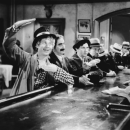
The joy of watching the Marx Brothers comes from seeing them demolish any notions of propriety they encounter. Sometimes they do this casually, as when Groucho tells his son near the start of HORSE FEATHERS, “I’d horsewhip you if I had a horse,” and other times they do it elaborately, as when all four brothers come together to rig a college football game at the end of the film. It goes without saying that the Brothers’ movies at Paramount are superior to the ones they made at MGM because they aren’t saddled with unfunny subplots; clocking in at just over an hour, HORSE FEATHERS is lean and unrelenting—an ideal vehicle for the Marxes’ brilliance. This is the one where Groucho, playing newly inducted college president Quincy Adams Wagstaff, sings “Whatever It Is, I’m Against It” at his inauguration ceremony, then decides that academics can go to hell and sets out to have a winning football team by any means necessary. He also wants to get his son, now a student and played by Zeppo, out of the clutches of the local “college widow.” (If I had to look up what that means, then so can you.) Chico and Harpo play Baravelli and Pinky, respectively, a couple of schemers whom Wagstaff mistakes for talented football players. He invites them to his office to discuss matters, and Harpo proceeds to throw Groucho’s books into the fireplace. Later in the picture, Pinky and Baravelli attempt to kidnap the star players from the opposing team and end up getting kidnapped themselves; they escape when Pinky finds a saw in his trench coat and uses it to cut a hole in the floor. This is also the one where each brother takes a turn singing (or playing on the harp) “Everyone Says I Love You,” which later had the misfortune of becoming the title of a Woody Allen movie. Incidentally, the later film, a cavalcade of complacency and entitlement, represents the exact opposite of a destructive masterpiece like HORSE FEATHERS. Is it okay to call a film a masterpiece when the director is barely doing anything? Maybe when dealing with a force like the Marx Brothers, it was generally best to stand out of the way. Preceded by Doc Saloman’s 1929 short GUIDO DEIRO, THE WORLD’S FOREMOST PIANO-ACCODRIONIST (6 min, 35mm). (1932, 67 min, 35mm) [Ben Sachs]
---
William A. Wellman’s WILD BOYS OF THE ROAD (US)
Saturday, 8pm
Released on the cusp of the enforcement of the Hays Code, William A. Wellman’s WILD BOYS OF THE ROAD stands out as a stark and harsh cinematic representation of the era. Jobs are lost, money is scarce, and evictions loom: the film doesn’t shirk from the hardships of the Great Depression. What begins as a lighthearted college comedy quickly takes a more serious turn as best friends Eddie Smith (a standout Frankie Darro) and Tommy Gordon (Edwin Phillips) decide to drop out of school and run away to the city. They aim to lighten the financial load on their families as well as make some money to send back home. When they hop a train to Chicago, they meet Sally (Dorothy Coonan), a girl disguised as a boy with the same goals. These three are far from the only ones, as when they arrive, numerous kids get off the train, a desolate reminder of the extent of suffering in this moment; Wellman purposefully pauses here to give the audience a glimpse into some of their stories. Realizing their strength in numbers, the teen drifters band together as they make their way toward the East Coast. Their collective nature feels acutely radical, especially as they navigate the harrowing and violent risks of being on the run, constantly standing against police and other authority figures for their survival. WILD BOYS OF THE ROAD also makes clear the specific dangers at hand, as in a brief but wholly distressing scene in which a girl is sexually assaulted by a train brakeman (this sequence was heavily featured in the film’s promotion). The overwhelming optimism of Eddie and his friends despite their trials pays off in a hopeful ending, but it comes with the clear understanding that there are many, many children out there like these. Preceded by George Marshall’s 1932 short THEIR FIRST MISTAKE (21 min, 35mm). (1933, 68 min, 35mm) [Megan Fariello]
---
Dorothy Arzner’s ANYBODY’S WOMAN (US)
Sunday, 6pm
It’s not so much a meet cute as it is a meet strange in Dorothy Arzner’s pre-Code romantic drama: lawyer Neil (Clive Brook), whose upper-crust wife has just left him for another man, is rip-roaring drunk in a hotel room when he declares that the lower-class women across the way—women “like that”—would be just as good a candidate for a wife as his more genteel one. One of them is Pansy (Ruth Chatterton), a down-on-her-luck showgirl. She and Neil marry while he’s blacked-out drunk; incidentally, this brings the attorney business from a theater owner (Paul Lukas) for whom Pansy had previously worked. Amidst all this serendipity, Pansy falls in love with Neil and spends the remainder of the story trying to become worthy of him. At the same time, she fends off advances from upper-crust men who still think she’s “like that,” as well as the theater owner, who ardently loves her in spite of her background. The screenplay was written by Zoe Akins, Doris Anderson, and Gouverneur Morris; Akins, a Pulitzer Prize winner, would go on to write the scripts for Arzner’s WORKING GIRLS and CHRISTOPHER STRONG a few years later. (Admittedly this is the lesser of the three collaborations, the latter two of which are among Arzner’s best films.) ANYBODY'S WOMAN hits a similar note repeatedly, albeit with the interesting twist of the theater owner’s love for Pansy and the genuine question of who she might end up with. Arzner, of course, needs no introduction, though I did find one source who referred to her as “the only woman who has made a success of the megaphone vocation”—one runs out of ways to situate such a trailblazer; “first” and “only” are accurate yet still insufficient, but this is an especially clever formulation. (The writer then goes on to say of ANYBODY'S WOMAN that “this one definitely establishes [Arzner’s] place among the select. May we offer sincere congratulations?” May we, indeed.) And it’s somewhat true: Arzner was the only female filmmaker working in Hollywood for almost 20 years. Despite not being as widely remembered as some of her peers, Chatterton was also a trailblazer; in addition to her stage and film career, she was one of the few women aviators of her time and was friends with Amelia Earhart. Arzner wasn’t much a fan of the film, saying the story wasn’t well developed, though she did like Chatterton’s character and the actress herself. Of the latter she noted, “She plays upon her emotions as a musician plays upon a harp.” Despite Arzner’s misgivings, the film was a hit—it holds up as a satisfying artifact of several leading-edge talents. Preceded by Monte Brice’s 1930 short film THE GOLF SPECIALIST (20 min, 35mm). (1930, 80 min, 35mm) [Kat Sachs]
---
Also screening are E. A. Dupont's 1933 film LADIES MUST LOVE (70 min, 35mm) on Friday at 9pm; Jean de Limur's 1929 film THE LETTER (60 min, 35mm) on Saturday at 3pm, preceded by the 1929 short film DANGEROUS FEMALES (21 min, 16mm); Berthold Viertel's 1932 film THE WISER SEX (76 min, 35mm) on Saturday at 5pm; Sidney M. Goldin's 1931 Yiddish-language film HIS WIFE'S LOVER (80 min, 35mm) on Sunday at 1pm; and Erik Charell's 1934 film CARAVAN (102 min, 35mm) on Sunday at 3pm. More info here.
Agnès Varda’s LA POINTE COURTE (France)
Siskel Film Center – Saturday, 12pm and Monday, 8pm
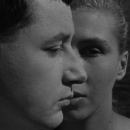
In my estimation, Agnès Varda’s first film, LA POINTE COURTE, is comparable to Orson Welles’ CITIZEN KANE as an especially auspicious debut feature deserving of the label 'masterpiece,' even as the filmmakers were just starting out in their long and influential careers. Of course, many first features are extraordinary, but LA POINTE COURTE doesn’t generally receive the same level of recognition as some of its peers, which is odd given its distinction of anticipating the “official” start of the French New Wave by several years. (That Varda achieved this intuitively—having not seen many films before making one, as she claimed, putting her outside the realm of the New Wave critics-turned-filmmakers—makes it even more astounding.) Yet the film is more than an assured inceptive effort; Varda’s background as a photographer lends itself to a cinematographic style that effortlessly brings those pictures to life, and, having been inspired by William Faulkner’s The Wild Palms, she employs an ambitious narrative structure that intertwines two disparate but similarly expansive stories. Set in the eponymous fishing village in the south of France, the film partly follows a Parisian couple (Philippe Noiret and Silvia Monfort) who are at a crossroads in their marriage, determining whether or not to stay together or separate; it also looks at the townspeople as they contend with the joys and misfortunes of daily life, focusing on their battle with the local bureaucracy over fishing rights in a polluted lagoon. The sequences with the townspeople were born out of Varda’s collaboration with the non-actors whose stories inspired these parts of the film; with her photographer’s sensibility she captures the rhythm of quotidian life, with a marked focus on the village’s feline population. In contrast, the scenes between the couple feel unnatural—intentionally so. One shot of the couple, with the man facing forward while the woman’s profile obscures half his face, predates a similar image from Ingmar Bergman’s PERSONA (1966); such self-conscious abstractions may feel out of place in a Varda film, but even these experiments (that aren’t as much a part of her later work) feel integral. The scenes of the townspeople feel more organic, though Varda manages to find in the everyday a certain mise-en-scène that pulls cinema out of reality, which is perhaps her greatest skill as a filmmaker. Varda was also masterfully economical—nothing is wasted here, as each shot, even a cutaway to a stray cat, is in service to its cohesive whole. Fellow Left Bank New Wave filmmaker Alain Resnais edited the film. Andre Bazin championed it, saying, “There is a total freedom to the style, which produces the impression, so rare in the cinema, that we are in the presence of a work that obeys only the dreams and desires of its auteur with no other external obligations.” Indeed, it’s a near anarchic style that nevertheless still feels inviting. When we think of Varda, we should always start here. Screening as part of the Ages of Agnès series. (1955, 80 min, DCP Digital) [Kat Sachs]
Barbara Kopple's HARLAN COUNTY, U.S.A. (US/Documentary)
Siskel Film Center – See Venue website for showtimes
In the wake of the turbulent protests of the late ‘60s, a smaller, but not unrelated struggle was being waged in rural Harlan County, Kentucky. In her brave, harrowing documentary, Barbara Kopple follows a community of miners as they go on strike after being prohibited from unionizing. The miners and their families are met with hostility from the police and pro-corporation workers referred to as "scabs." Using a direct cinema approach, Kopple details a seemingly never-ending cycle of government corruption and corporate skullduggery. Some of the film's most compelling images show the weary miners as they emerge from underground, their faces caked with soot and ash, reduced to undead automatons. The cruel irony of HARLAN COUNTY, U.S.A. is that the miners are struggling for the right to work a job that's extremely hazardous to begin with. With its ramshackle houses devoid of running water and with armed goon squads committing random acts of violence, Harlan County feels more like the lawless badlands of a feudal third world country than any dignified state of the US. The film is accompanied by the haunting folk ballads of Hazel Dickens and Florence Reece, whose song "Which Side Are You On?" has since become a popular protest anthem. In a rare moment of good taste on the part of the Academy, HARLAN COUNTY, U.S.A. was awarded an Oscar for Best Documentary. (1976, 103 min, New 4K DCP Digital Restoration) [Harrison Sherrod]
---
Kopple’s 1990 documentary AMERICAN DREAM (98 min, New 4K DCP Digital Restoration) also screens this week. See Venue website for showtimes.
Sophy Romvari’s BLUE HERON (Canada)
Siskel Film Center – See Venue website for showtimes
Like a long-lost childhood memory, Sophy Romvari’s BLUE HERON exists within a series of flitting moments of comfort before shifting suddenly and revealing something entirely raw, pulling the rug out from under you in the process. Though this is her feature debut, Romvari has already made a name for herself with an array of short films that explore the uncanny marriage between media and memory. Her particular fascination, and the patient, anthropological methodology with which she explored it could have only culminated in something like BLUE HERON, a jarring yet kindhearted work whose efforts to prod nostalgia reveal nothing but a tender bruise in the aftermath. Romvari has oh-so slightly twisted and morphed her own biography to create the family at the center of the film, a Hungarian-Canadian quintet who have recently moved to a scenic new home on Vancouver Island in the late 1990s. The summer weeks that follow comprise the first half of the narrative, where brief, jutting memories emerge as revelatory moments within young minds. A young girl, Sasha, amusingly draws a mouse on Microsoft Paint while her two brothers play in the other room; an older brother, Jeremy, steals a bird keychain from a nature gift shop, while Mom peels potatoes, Dad develops photographs, and summer hours idle away. Romvari’s camera prefers static wide shots, entire canvases of nature bathed in cool tones providing the backdrop for a young family that is unknowingly in the midst of a personal crisis. Jeremy, the only child born from the mother’s previous relationship, has begun behaving in exponentially more aggressive ways, building to his own arrest for shoplifting, with his parents struggling to come to terms with their own inability to manage his social and emotional needs. The cast, comprised of both actors and nonactors (Edik Beddoes, playing Jeremy, was discovered from a clip Romvari had found of him talking about video games), move through these difficult spaces almost effortlessly, their naturalistic styles meshing together with ease. This would all be well and good for a charming film debut, but BLUE HERON levels up and takes a turn about halfway through, shattering the chronology we’ve become accustomed to and shifts from the story of a struggling family into the story of a struggling mind. We follow one of our characters, now twenty years older, and using the archival tools at her disposal to try and see where things all went wrong two decades ago. We eventually begin to grapple with how helpful it really is to use the art of film, of photographs, of recreation, to try and, in essence, bring someone back to life. BLUE HERON builds to a scene where characters move across time and space to dissect whether there’s any catharsis to even be found in using cinema to excavate trauma. Romvari has no answers, our distrust in our own memories merely a feature, not a bug, of this ugly, beautiful world of ours. But that doesn’t mean we can’t cherish the things we do remember, the lives we do live, and the art we do create. (2025, 90 mins, DCP Digital) [Ben Kaye]
The Chicago Critics Film Festival
Music Box Theatre – See showtimes below
David Cronenberg's THE FLY (US)
Friday, 9:30pm
David Cronenberg may have finally shed the moniker of "former midnight-movie director," but it's worth noting that the major themes of his recent work have been present all along. This revival of THE FLY is a reminder of how much Cronenberg has always been in control of his ideas—and, as importantly, how he could use them to truly unsettle an audience. The film was a potentially thankless project (a remake of a 50s sci-fi/horror item affectionately remembered as camp), but Cronenberg transformed it into something wholly personal, an existentialist allegory about growing alienated from your own body. It's discomforting filmmaking from literally the first shot, a classic Cronenbergian close-up that isolates the main character (Jeff Goldblum, in the performance of his career) in a frame purposely devoid of context: the surrounding milieu (in terms of both space and time) is rendered unclear, and the overly technical sci-fi jargon, delivered with deadpan assurance, only complicates things further. It takes a few minutes to determine that, no, we're not in a dream; the rest of the film can be seen as a deepening of that initial uncertainty. As Goldblum's scientist transforms into a giant insect (an extremely nuanced process, thanks to Cronenberg's scientific imagination and some of the finest make-up of any movie), the more sympathy he arouses in the journalist who's fallen for him. Some critics have read the film as an AIDS metaphor; and on that level, it ranks with the best of Derek Jarman and Todd Haynes. But the central romance—in which love is strengthened by the impossibility of love—resonates in a number of directions, sustaining the film across multiple viewings. (1986, 95 min, 35mm) [Ben Sachs]
---
John Early’s MADDIE’S SECRET (US)
Sunday, 4:15pm
Social media can be a real villain to self-image, causing us to unfavorably compare ourselves to others or worry about how we’re being perceived. When Maddie (John Early) unexpectedly lands a job as an online food influencer, her deep-seated insecurities about her body are triggered in destructive ways. She appears to be a total natural when presenting her new recipes on camera, but what people don’t see is her chronic struggle with bulimia nervosa, a condition that only becomes harder to handle when cooking and eating are her very vocation. The directorial debut of comedian, actor, and writer John Early, MADDIE’S SECRET exhibits the askew tone of some of his previous projects, mixing camp, earnestness, melodrama, and satire in ways that bring to mind John Waters and Douglas Sirk. His use of high-key lighting and expressionistic color (particularly deep blues and reds in the scenes in Maddie’s home) create a heightened, off-kilter atmosphere, while the more broadly comic elements, such as the performances from Conner O’Malley, Vanessa Bayer, and a deliciously hammy Kristen Johnston, tie the film to a playful sketch-comedy sensibility. Early is dealing with serious subjects—eating disorders, parental abuse, psychiatric treatment—and he manages to give them sufficient weight while still winking at the audience. Perhaps what is most admirable about MADDIE’S SECRET is the uncommonness, indeed the queerness, of characters rarely seen on screen in quite this way, from Maddie’s doting teddy bear of a husband Jake (Eric Rahill) to her lesbian best friend Deena (Kate Berlant). The most unusual might be Maddie herself, played by Early like a more sedate Divine from POLYESTER (1981). No comment is made about this woman being portrayed by a man in drag; it’s just another element revealing the arbitrariness of body-image standards, and how feeling comfortable in your own skin is for nobody but you to decide. (2025, 100 min, DCP Digital) [Jonathan Leithold-Patt]
---
Steven Spielberg's A.I. ARTIFICIAL INTELLIGENCE (US)
Sunday, 8:45pm
In many regards, A.I. ARTIFICIAL INTELLIGENCE represents the inverse of Steven Spielberg's E.T. THE EXTRA-TERRESTRIAL (1982). In this film, the alien creature is not from outer space but manmade, and the broken family he attempts to heal rejects his efforts. Adapted by Spielberg from a script he'd developed with Stanley Kubrick, A.I. imagines a dystopian future where rising water levels have rendered much of Earth uninhabitable; androids, who live like second-class citizens, mediate most human interactions. The film's first act focuses on a couple who adopt an android boy to take the place of their biological son, who's in a coma. After the couple abandons their adopted son (in one of the most upsetting passages in Spielberg's filmography), the android embarks on a search to recover his human family, discovering unwelcome truths about himself--and humanity--in the process. The movie divided audiences on first release with its conclusion, which imagines the end of humanity and the ironic fulfillment of the android boy's wish to be reunited with his mother. For some, Spielberg's handling of this development constituted a betrayal of Kubrick's cynicism; for others, it represented a strange and powerful conflation of Spielbergian uplift and Kubrickian ambiguity. That the ending has inspired so many readings confirms that A.I. is more in line with Kubrick's work than Spielberg's, despite the surface sentimentality. Spielberg has often said that he considers Kubrick the greatest director of all time, and A.I. is a moving and multifaceted tribute to his hero's career. The emotionalism doesn't detract from the Kubrickian themes of dehumanization and annihilation, but rather complicates them and renders them strange. (2001, 146 min, 35mm) [Ben Sachs]
---
Jonathan Demme's SOMETHING WILD (US)
Wednesday, 9:30pm
One of the most free-spirited US films of the 80s, SOMETHING WILD begins as a sexed-up screwball comedy, blossoms into a road movie, and climaxes as a pretty terrifying crime film. Jonathan Demme directed it just two years after STOP MAKING SENSE, at what was arguably the peak of his career. E. Max Frye's screenplay, brilliantly twisty as it is, could have inspired a self-conscious genre exercise; but Demme brings it into the real world as much as he can. The film is rife with offbeat observations of blue-collar America, particularly in the small town high school reunion dance that serves as one of the movie's major pieces. It's also filled with insider portraits of U.S. hipster culture circa 1986, with cameos by John Waters, the Feelies (who play the house band at the high school reunion), and David Byrne's mother. What's so remarkable about Demme's achievement here is that he looks at both milieus with equal affection. "The movie gives you the feeling you sometimes get when you're driving across the country listening to a terrific new tape," wrote Pauline Kael in her ecstatic piece on the film, "and out in nowhere you pull in to a truck stop and the jukebox is playing the same song. Demme is in harmony with that America and its mix of cultures." She also wrote: "Demme has a true gift for informality. It shows in the simple efficiency with which he presents [his characters]; it shows even more in the offhandedness with which he fits in dozens of subsidiary characters... Demme somehow enables each of the small characters to emerge as a comic presence. I can't think of any other director who is so instinctively and democratically interested in everybody he shows you. Each time a new face appears, it's looked at with such absorption and delight that you almost think the movie will flit off and tell this person's story." (1986, 114 min, 35mm) [Ben Sachs]
---
See the Also Screening section for the full lineup.
Doc10 Film Festival
See below for venues and showtimes
Felipe Bustos Sierra’s EVERYBODY TO KENMURE STREET (UK/Documentary)
The Davis Theater – Saturday, 3:45pm
EVERYBODY TO KENMURE STREET recounts a stirring act of collective resistance that occurred in Glasgow in May 2021. On the morning of Eid, one of the holiest days of the Muslim calendar, immigration enforcement agents attempted to detain two Muslim men who were living on the titular residential street. Yet before the officers’ van could leave with the detainees, some of the men’s neighbors spread the word about what was happening, and within moments a crowd formed to block the vehicle from moving. The crowd grew and so did the police presence, and a huge standoff took place. Director Felipe Bustos Sierra recounts the events as though presenting a thriller, cutting between various activists and Kenmure Street residents, who take turns sharing their perspectives while moving the narrative forward. Some of the people involved didn’t want to be interviewed, and so Sierra has actors deliver their testimonies; this adds to the overall texture of the film and reinforces how cinematic the whole situation was. Emma Thompson plays an activist known only as “Van Man,” who crawled under the immigration officials’ vehicle and clung to the axles to prevent it from leaving. She reads her lines while lying under a van, and this makes the story seem like it’s unfolding in the present tense—which, in a sense, it is, given that deportations like these continue to terrorize communities, and not just in Scotland. EVERYBODY TO KENMURE STREET finds hope in this ongoing situation in the actions of concerned neighborhood residents, who are shown coming together to protect victims of state persecution. It’s a heartening reminder of the power of community, something that fascists the world over are trying to undermine by stoking divisions between people. The film ends on an optimistic note, reinforcing the notion that togetherness is always more powerful than segregation. Filmmaker to appear via Zoom. (2026, 99 min, DCP Digital) [Ben Sachs]
---
Michał Marczak’s CLOSURE (Poland/Documentary)
Siskel Film Center – Sunday, 4:15pm
In the documentary CLOSURE, the subjects sometimes address the camera, though director Michał Marczak doesn’t include his end of the conversation with them. As a result, the subjects’ comments feel like soliloquies, connecting us with their interior lives while obscuring the concrete reality surrounding them. This reinforces Marczak’s portrayal of the central figures as isolated and lonely; it adds to overarching sadness of the film. When CLOSURE begins, middle-aged Daniel has been searching for his missing teenage son for some time. Chris, we learn, left the family home in Warsaw one night about a year ago and never returned. Daniel and his wife Agnieszka have revisited the events leading up to Chris’ disappearance, traced his steps using CCTV footage, and worked with law enforcement, but none of their actions have provided understanding as to why Chris left, where he went, or even whether he’s still alive. The lack of resolution has made Daniel obsessed with solving the case. He routinely searches the Vistula River for corpses (since Chris was last seen on a bridge overlooking the river), and he remains in touch with police to follow up on any possible sighting of his son. His obsession, however, is straining his relationships with the family members who are still in his life; he also seems to have neglected his job (which I can’t remember being discussed in the film). CLOSURE recalls David Fincher’s ZODIAC (2007) in how it centralizes the frustration and uncertainty that come with investigating a cold case—the title becomes grimly ironic as the film proceeds. Marczak does find some optimism in the final half hour, when he charts how Daniel, having amassed experience in searching for missing people, becomes an aide to other families with children who have gone missing. In this development, Marczak finds another sad irony of his subjects’ lives: that in their search for Chris, they have found a sense of community that he seemed unable to find. Filmmaker in person. (2026, 108 min, DCP Digital) [Ben Sachs]
---
Ross McElwee’s REMAKE (US/Documentary)
The Davis Theater – Saturday, 1pm
In film, auteurism is the consistent inclusion of the personal into work that might otherwise have been generic; ironically, this label isn't generally applied to, say, experimental and documentary filmmakers, whose work is explicitly, and sometimes interminably, personal. The distinction might lie in the lack of impediment to the filmmaker's personal expression. Even so, the ability to be fully personal doesn't automatically make the result successful. Ross McElwee is among the rare documentarians for whom it does—like Jonas Mekas or, from another mode, Joan Didion, his life experiences transcend the corporeal into the offhandedly existential, inspiring in others journeys and realizations of their own. After an almost 15-year break, McElwee has come back with what might be his most personal work yet. Ostensibly a documentary about the making of the narrative adaptation of his own 1986 documentary SHERMAN'S MARCH, it's actually about the death of McElwee's son, Adrian, from an accidental drug overdose in 2016. (In expanding the connection between McElwee and Didion, the latter's own daughter also died from addiction issues. In an interview with the International Documentary Association, he quotes Didion on her daughter's death: "Memories are what you no longer want to remember," something he challenges himself to do in the film.) Outliving a child is an unimaginable grief that resonates universally, and McElwee embraces the discomfort of it, letting something beautiful, if admittedly very painful, arise from this tension. Much of the film is footage of McElwee's family, much of it shot during the making of his previous films—namely IN PARAGUAY (2008), about the adoption of McElwee's daughter, and PHOTOGRAPHIC MEMORY (2011), which was partially about Adrian's struggles—creating a throughline in McElwee's oeuvre that connects directly to his relationship with his son. The parts about Adrian eclipse anything about the SHERMAN'S MARCH adaptation specifically, and the film becomes, in effect, about McElwee's filmmaking philosophy overall, looking back in order to qualify the present. Ultimately, it is the emotional weight that makes everything else feel secondary; by the end I felt as if I'd known Adrian and lost him as well. Filmmaker and guest Hyun Kyung Kim in person. (2026, 116 min, DCP Digital) [Kat Sachs]
---
See the Also Screening section for the full lineup.
📽️ ALSO RECOMMENDED
Orson Welles’ THE MAGNIFICENT AMBERSONS (US)
Northbrook Public Library (1201 Cedar Ln., Northbrook) – Wednesday, 2pm
The reputation of Orson Welles as a failed wunderkind began to dog him with his second feature, THE MAGNIFICENT AMBERSONS, a story of fading aristocrats in turn-of-the-century Indianapolis. With Welles on assignment in Brazil, shooting the documentary IT’S ALL TRUE (which itself went unfinished after RKO pulled funding), the studio chopped forty minutes out of his original cut and tacked on a “happy” ending. The cut footage was destroyed, and a print possibly shipped to South America has been long considered one of the lost Grails of world cinema. The released film enjoyed good notices, though Manny Farber’s dissenting read intuited the discordant editing: “There is really no living, moving, or seeing to the movie; it is a series of static episodes connected by narration, as though someone sat you down and said ‘Here!’ and gave you some postcards of the 1890s.” The 1918 source novel by Booth Tarkington, himself a privileged scion of Indianapolis, includes among its virtues a knowing parody of the milieu’s manners, something the aristocratic Welles surely appreciated, a quality that together with its decades-long narrative sweep helped to win it a Pulitzer prize. In other respects the novel has aged poorly, with particular blind spots where Tarkington’s reactionary critiques of urbanism, his racist language, and stereotyping of the African-American servant class are concerned. Yet the blurred iris of the book’s perspective casts a somnolent spell over its snow-globe setting, a fairy tale about a rich boy who believes that neither he—nor the world—should ever grow up. The triangle of tormented affection between eccentric inventor Eugene Morgan (Joseph Cotten), his sweetheart the widowed Isabel Amberson Minafer (Dolores Costello), and her resentful son George (Tim Holt) structures the narrative as a disquieting forward drift. Morgan is the ambivalent agent of change, whose automobile factory changes the face of the town once lorded over by the Ambersons, as George stands athwart history—and his mother’s romance with Eugene—crying “Stop!” The masterstroke is the early image of an imperious boy George, kitted out as Lord Fauntleroy and proclaiming his innocence in an episode of awful mischief as neighbors pray for his “comeuppance”; the bill that comes due for the young Amberson Minafer in the end is ultimately a commonplace fate, of living to see people and places once loved pass away. The collision between the filmmaker’s realism and the novelist’s satirical kitsch finds expression in the Tolstoyesque party scene that introduces the central relationships, the rising and gliding of Stanley Cortez’s camera drawing out the networks of the Ambersons’ grand, yet shrinking and stifling set. Farber’s apprehension of the film’s perversely static cadence has revealed itself, with time, as the persistence of Welles’s vision, trapping the viewer with George inside the moldering Amberson estate as the world dramatically, imperceptibly, lurches on outside. Screening as part of the Way Back When series. (1943, 88 min, DCP Digital) [Brendan Boyle]
Spike Lee's CROOKLYN (US)
Doc Films (at the University of Chicago) – Friday, 9:30pm
CROOKLYN is Spike Lee’s contribution to a rich cinematic subgenre, the autobiographical memory film. Like Tarkovsky’s THE MIRROR, Fellini’s AMARCORD, and Davies’ DISTANT VOICES, STILL LIVES, the film is based on the director’s childhood, and, like them, it’s designed to feel less like a story than a series of memories. It takes place in Brooklyn over the spring and summer of 1973, and for the first half-hour or so, Lee (who collaborated with siblings Cinqué and Joie Lee on the script) just rejoices in recreating this time and place. The weather is nice, kids play in the street, the music on the radio is killer, and people of all races more or less get along (the white neighbor played memorably by David Patrick Kelly is at worst an uptight weirdo). Lee’s filmmaking is as exuberant here as it was in SCHOOL DAZE, with the director trying out all sorts of cinematic devices as though he were a kid first discovering the medium. At the same time, CROOKLYN is as vivid a depiction of poverty as you’ll find in mainstream American cinema of the 1990s—one memorable episode revolves around the main character (a nine-year-old girl presumably based on Joie) experiencing embarrassment over having to pay for groceries with food stamps. Alfre Woodard and Delroy Lindo play the parents of five children, and they do a good job of playing parents as children see them—their performances are warm and a little larger than life. Critics writing about this are all but forced to mention that Lee shot one scene in widescreen without anamorphically adjusting the image to create a disorienting effect. Used to convey the young heroine’s feelings of disorientation when she visits her religious, socially aspirational cousins in suburban Virginia, the device is—at least from this writer’s perspective—one of the more successful formal experiments in the director’s accomplished body of work. Screening as part of the Black Girlhood series. (1995, 115 min, 35mm) [Ben Sachs]
Martin Ritt's HUD (US)
Doc Films (at the University of Chicago) – Monday, 7pm
A sardonic, hard-drinking anti-hero, Paul Newman's Hud Bannon is both lamentable and irresistible. Based on Larry McMurtry's first novel Horsemen, Pass By, HUD is a steamy take on a male melodrama that pits Hud, his father Homer, and his impressionable nephew Lonnie in a family conflict where nothing less than the values of the next generation are at stake. Homer, an honorable cattleman nearing the end of his life, discovers a possible devastating outbreak of foot-and-mouth disease among his stock. Homer wants to abide by the law; Hud wants to do everything but; Lonnie is caught between his father figure and the rebel he admires. Patricia Neal delivers an equally compelling (and Oscar-winning) performance as Alma, the sultry though world-weary maid who confounds Hud, rebuffing his so-called charm. Hud is something of a filmic brother to Frank Sinatra's Dave Hirsch in SOME CAME RUNNING: both have no regard for people or rules, both are incompatible with their surroundings, and both ultimately can never be truly happy. And like SOME CAME RUNNING, HUD is set in the recent past of a postwar small town that appears static—see the quaint Kiwanis Club fair—but where its inhabitants are constantly evolving. Shot in black and white, the film evokes a tempered nostalgia for a grittier but simpler West. As David Kehr put it, the film puts "a little too much dust in the dust bowl," but it is nonetheless effective in drawing a stark contrast between rudderless Hud and his principled father; where the west was and where it is going. Screening as part of the Painting with Light: The Cinematography of James Wong Howe series. (1963, 112 min, 35mm) [Brian Welesko]
Adam J. Wilde’s SLOWBURN SHOOT (US/Documentary)
The Davis Theater – Wednesday, 7pm
This is a solid documentary about professional wrestling that uses the story of Cleveland-based Absolute Intense Wrestling (AIW) and its wrestlers as a microcosm for the world of contemporary independent professional wrestling as a whole. SLOWBURN SHOOT is a wonderful and long-needed counterbalance and update to Barry W. Blaustein's pro-wrestling industry-changing 1999 doc BEYOND THE MAT, which allowed unprecedented behind-the-scenes access to the biggest pro-wrestling company of all time, WWE (then WWF). While BEYOND THE MAT showed how things got done at the highest level, with some segments showing how smaller promotions function, SLOWBURN SHOOT lives in the trenches of regional, independent wrestling. It also recognizes the unfortunate reality that WWE is the only major league institution and all other promotions are ostensibly feeder minor leagues for them. But it’s with this sober and realistic view that the film gives incredible weight and dignity to these types of promotion companies, which are not only crucial to the ecosystem of professional wrestling but also have profound value in and of themselves. Not solely a sports business documentary, the film focuses on the people involved in AIW and the personal lives and mindsets of those who choose to slam their bodies to the point of injury every weekend for little to no money. This angle of looking at professional wrestling—the same way we often look at artists, musicians, actors and other folks that are generally given cultural cachet and respect for being starving/struggling/underground creatives—is what sets this documentary apart from the countless other wrestling documentaries. Like the music industry, pro-wrestling contains a whole world of scrappy local/regional hobbyists who dream of making it big but also know that the chances are slim and that every day another door closes. And while most fans are happy to settle with the big arena acts, there is a world of tiny venues hosting performances that are equally passionate and powerful. It's often cheap and easy to call things "punk"— and even easier to be completely wrong in the comparison. But the parallels to the world of actual punk rock musicians and pro-wrestling is almost 1:1. Like some bands, some wrestlers know they'll never make it big for myriad reasons. And like in punk, some genuinely don't care or want to. But those who do want to know that there is a very, very small amount of room available for big acts, a smaller window of time to do so, and that they're going to have to make a lot of sacrifices and hard decisions to even have the chance of being given the option to sell out. SLOWBURN SHOOT, possibly without the filmmakers consciously doing so, tells its story within the framework of countless music/artist documentaries as opposed to traditional sports docs—something that makes the film’s resonance all the more universal. In a way, wrestling isn't even the focus. It's the people. People who find something they love more than anything and dedicate their lives (and bodies) to it. This is a documentary you can show to someone who isn't already into the overt subject matter and still have it resonate with them. It's a wrestling documentary that doesn't punish viewers who come to it with no previous knowledge or interest in pro wrestling, though it very much rewards those who do. Wrestler Gringo Loco and filmmakers in attendance for post-show, moderated by Joe Swanberg. (2026, 82 min, DCP Digital) [Raphael Jose Martinez]
Catherine Breillat’s ANATOMY OF HELL (France)
Doc Films (at the University of Chicago) – Thursday, 9:30pm
When the unnamed Man (Rocco Siffredi) first feels the wetness of the unnamed Woman (Amira Casar) as she sleeps, he brings his fingers up to his forehead and runs the moisture through his hair, as if anointing himself with her body. ANATOMY OF HELL’s plot revolves around a provocative proposition. After an interrupted suicide attempt in the bathroom of a gay nightclub, a Woman employs the queer Man who saved her to watch her when she is “unwatchable.” Over the course of four nights, in her scarcely furnished seaside villa, she strips, he sits, they converse, she falls asleep, and he watches. A homosexual Man and a heterosexual Woman discarding the idea of pleasure and embracing a clinical examination of unconscious, innate, and instinctive bodily function. It is an unceremonious dance of bodies akin to combat, a duel of a conservatively defined and confined Man/Woman dynamic. The long, philosophically winding conversations on gender and sexual dynamics they participate in rarely enlighten, acting as a distraction from the biological violence of our own bodies and our own consciousness within them. So much of Breillat’s filmography deals with facets of women’s desire. Although entirely about sex, ANATOMY OF HELL lacks the jolt of desire; it is sterile. The intimate and sexual interactions are filmed under a removed gaze, as the characters approach bodies and sexuality like children playing doctor (as a flashback of the woman’s childhood explicates), much of it coming off as bumbling and immature. Breillat has never been one to shy away from shocking bodily images, and there are plenty here. ANATOMY OF HELL’s intimacy is about inflammatory discovery, not pleasure, not urge. These two characters have no desire for each other while engaging in the most close and penetrating (no pun intended) acts. This is the second of only two collaborations between provocative French director Catherine Breillat and famous porn star Rocco Siffredi, one of the most fascinating artist/muse relationships of the turn of the 21st century. Both Rocco and Amira Casar maintain the pained expressions and apprehensive yet decisive movements of open wounds. Every edge of the screen, empty space of the room is filled with their oozing internal machinations that we, as an audience, can only attempt to know through their mythologizing words and unpredictable actions. I have often seen this film (and Breillat at large) described as misandrist, but for one to posit that as fact based on Siffredi’s character, one could just as easily assume misogyny and hatred of women based on Casar's. No, Breillat does not hate men or women. The film tells us this immediately, the opening frame is a statement: “A film is an illusion. Not reality-fiction or a happening: it is a true work of fiction.” What she chooses to do in this work of fiction is treat both characters as challenging studies, never separate from their bodies, but not defined by them either. The driving forces of ANATOMY OF HELL are fascination and vanity, self-humiliation as self-actualization. Screening as part of the Arthouse Vulgarity series. (2004, 77 min, DCP Digital) [Olivia Hunter Willke]
Amir Naderi's THE RUNNER (Iran)
Doc Films (at the University of Chicago) – Wednesday, 7pm
Amir Naderi’s tenth film, THE RUNNER, is the first to reach international acclaim after the Iranian Revolution. The filmmaking has as much energy and excitement as the subjects, destitute young boys determined to survive poverty and have a good time doing so. Given the limitations of storytelling under the new regime, Iran’s premier filmmakers (e.g., Kiarostami, Beyzai and Naderi) found artistic liberation amidst the constraints, creating art that is deeply personal and universally recognizable through childhood stories. Naderi here takes inspiration from European auteurs, whether borrowing shots from Godard or themes from De Sica; he lights the way by setting an example for future generations of filmmakers in the region. Cinematographer Firooz Malekzadeh masterfully fills each frame, whether in basic shot composition or extreme visual language and sequences; the fire and ice sequence, for instance, grips the viewer and sears into the mind. THE RUNNER has been described as hyperrealist, placing the spectator in the world of the characters through all means possible. Naderi achieves this through its long tracking shots across the background, European New Wave-style editing, or simply allowing the location’s “room tone” to permeate the experience. The explosive stamina of lead Majid Niroumand is remarkable for any actor, regardless of age. Naderi discovered him after he saw a newspaper photo of him winning a race and cast him as an orphaned street urchin resigned to hustle for survival on the coast of Abadan. For the immediate circumstances of our protagonist, one would expect this to be a grim, wallowing tragedy. Instead, the character (based on the filmmaker) and the art itself bounce with excitement and giddiness despite the direst of situations. Screening as part of the Iran Through the Lens of Childhood series. (1984, 94 min, DCP Digital) [Ray Ebarb]
Lucio Fulci’s MURDEROCK: DANCING DEATH (US/Italy)
Alamo Drafthouse – Tuesday, 9:30pm
Coming off the mean-spirited, Donald Duck-infused THE NEW YORK RIPPER (1982), Lucio Fulci was pressured by his producer to pursue something more commercially viable: Adrian Lyne's FLASHDANCE reimagined as horror. The result is a diluted Fulci rarely seen. THE NEW YORK RIPPER being designated as a Video Nasty had curbed his ambitions for surrealist horror. His script, “The Last Scent”—closer in spirit to Mario Bava's BLOOD AND BLACK LACE—was retrofitted into MURDEROCK to capitalize on the dance craze. FLASHDANCE didn't invent the dance film, but it reengineered it into a sequence of MTV-ready montages. Michael Sembello's "Maniac," originally rooted in slasher territory, was repurposed as an aerobic anthem that skyrocketed with the release of FLASHDANCE. Keith Emerson, who had scored Dario Argento's INFERNO shortly before, was enlisted to craft a variation on Sembello’s “Maniac.” Lyne's film spawned domestic imitators—FOOTLOOSE, DIRTY DANCING, BREAKIN'—and international counterparts like HEAVENLY BODIES and AEROBICIDE. Fulci's MURDEROCK (also released as SLASHDANCE and DANCING DEATH) became a giallo in dance attire. Set in New York's "Arts for the Living Center," the film follows Candice Norman (Olga Karlatos), a dance instructor guiding ambitious performers toward a televised breakthrough. That momentum shatters when Susan, the troupe's most gifted dancer, is found murdered in a locker room. Lieutenant Borges (Cosimo Cinieri) and a police profiler sift through an extensive suspect list as the killings continue with mechanical regularity. Each victim is chloroformed, then pierced through the heart with a bejeweled hairpin—a ridiculous, domestic weapon. After THE NEW YORK RIPPER drew industry scrutiny for its explicit brutality, MURDEROCK marks a deliberate reduction in gore. Where Fulci's signature operatic bloodletting once dominated, he substitutes his murder tableaux with surgical precision. The penetration of skin is emphasized over its rupture; the moment of resistance elongated into something clinical. It is less spectacle than procedure, and arguably more unsettling for it. Atmospherically, however, Fulci remains unmistakably himself. The Arts for the Living Center becomes a laboratory of bodies: dancers observed not as psychological subjects but as anatomical specimens of sweat, strain, and pulsing veins. The camera lingers on physical exertion with a fetishism Fulci typically reserved for eyeball punctures and torn throats. The instructor's fears introduce dream sequences shot in stark, overexposed interiors, where a handsome young man (George Webb) materializes as both memory and omen. These passages are closer to Fulci's unrealized surrealist ambitions than to the commercial assignment at hand. They evoke telepathy, doubling, and guilt as formal principles, rendered in diffused light. Meanwhile, the investigation proceeds through the giallo's familiar machinery: arrests of convenient suspects, procedural confidence eroded by narrative excess, institutional incompetence disguised as order. The red herrings multiply; even characters caught mid-attempted-murder prove false flags. The final revelation of the killer's identity springs from jealousy, obsolescence, and a fractured past. In MURDEROCK, the dance film and the giallo share the frame without ever fully integrating. It reveals a filmmaker operating under constraint without surrendering his grammar of unease. Screening as part of the Terror Tuesdays series. (1984, 93 min, DCP Digital) [Shaun Huhn]
Jacques Tati's PLAYTIME (France)
Alamo Drafthouse – Saturday, 3:45pm
Jacques Tati's psycho-geographical treatise par excellence, PLAYTIME, begins in a pedagogical mode: for the first hour, working entirely in and around a multimillion-dollar parody of contemporary skyscrapers constructed in the outskirts of Paris, he teaches the viewer a new way to watch a film. The primary use of long shots and deep focus suggests a Bazinian spectatorial freedom, but the meticulously dubbed, panlingual audio is constantly in close-up: from the cacophony of American tourists to the analog buzzing of an office intercom, from the crash of Mr. Hulot's umbrella to the comic deformation of a squeaky leather chair. By the time we reach a long sequence set outside an apartment with soundproof glass, we have learned that the ear can lead the eye as often as the reverse. And none too soon, for the next 40 minutes--detailing the opening night of the posh "Royal Garden" restaurant and its progressively chaotic, visually and aurally exhausting demolition at the unconscious hands of a repressed, consuming tourist society--is what Jonathan Rosenbaum calls "one of the most staggering accomplishments on film." Here, Tati inscribes an intricate, painterly progression on his enormous canvas: from a restrictive, rigid grammar of straight lines and orthogonal angles to the continuous sweeps of French curves, expressed most directly in the movement of his characters' bodies--progressively intoxicated and compelled not just by alcohol and the increasingly frantic music but by an inevitable collective camaraderie--as they travel through an overplanned and overheating environment that, in a series of destructive sight gags, has lost its organizational power to constrain human desire. Once a disastrous critical flop, PLAYTIME is an odd and striking masterpiece of urban studies that absolutely must be seen on the big screen. PLAYTIME is presented as part of Alamo’s Boots Riley Guest Selects for his new film, I LOVE BOOSTERS. (1967, 124 min, DCP Digital) [Michael Castelle]
Carl Theodor Dreyer's THE PASSION OF JOAN OF ARC (France/Silent)
FACETS – Wednesday, 7pm
Praised effusively upon its release by critics who instantly regarded it as a belated vindication for the whole art of cinema (do seek out Harry Alan Potamkin's review), THE PASSION OF JOAN OF ARC was also recognized as the capstone of an expiring medium. This is a proudly silent movie, one that integrates the intertitle into its rhythm better and more comprehensively than any other example I can name. (Astonishingly, rather than interrupting the flow of Dreyer's breakneck montage, the titles actually serve as graphic punctuation.) It's also a perverse one—stripped down to essentials, focusing on faces even though Dreyer's investors paid for enormous and authentic sets barely glimpsed in the finished film. When we see a man in very modern-looking glasses in the final sequences, this possible anachronism registers as something else: Dreyer and Falconetti have truly created a living Joan, larger than liturgy and beatification and indeed, larger than her own time. The film itself was not so lucky. Its original cut lost in a fire, with a subsequent recut lost in another fire, PASSION played for many years in a version cobbled together from outtakes. (Appropriately enough, an original print of the first Danish version turned up in a mental hospital in the 1980s.) Screening as part of the Essentials series. (1928, 82 min, DCP Digital) [K.A. Westphal]
Radu Jude’s KONTINENTAL ’25 (Romania)
Doc Films (at the University of Chicago) – Saturday, 4pm
With the title and premise of KONTINENTAL ’25, Radu Jude alludes to Roberto Rossellini’s EUROPA ’51 (1952), one of the hallmarks of postwar European cinema. In that film, Ingrid Bergman plays an upper-class woman who acts on the preventable death of her ten-year-old son by committing herself to charity with increasing fervor; through her actions and the way they’re greeted by the people around her, Rossellini raises the question of whether saintliness is possible in modern times. Jude’s film is not a remake of Rossellini’s, nor are its concerns particularly religious, yet the Romanian director is clearly a descendant of the great Italian modernist in how he makes films to generate thought about morality and the state of the world. KONTINENTAL ’25 begins as a documentary-like account of a homeless man in the Romanian city of Cluj-Napoca (once the capital of Transylvania), centering on his degrading efforts to find work and food. After a bailiff comes to the boiler room where he’s been sleeping to evict him, the man commits suicide, and Jude shifts focus to the bailiff for the rest of the picture. Orsolya (Eszter Tompa) may feel terribly guilty about the man’s death, but she doesn’t develop any aspirations of saintliness (she does, however, get a Brechtian monologue in which she relates how much she donates each month and to which charity). Rather, she falls into a funk but tries to go on with life as usual, tending to her job, marriage, and children and trying to disregard the waves of online hate that have entered her life since news of the homeless man’s suicide went viral. In what’s become characteristic for the Romanian filmmaker, Jude presents Osolya’s life as a series of encounters that double as psychosocial examinations of late-capitalist Romania; more than ever, the prognosis looks bad. The writer-director’s wit remains forever sharp, and the subject matter here offers plenty of opportunities for his gallows humor. But the overriding sensibility is one of sadness and resignation; the more we learn about Osolya, the more unhappy we realize she is. A lot of this has to do with her limited economic possibilities, but that’s not all—Jude is trying to identify a despiritualized quality in contemporary Europe that’s making everybody miserable. Screening as part of the New Releases and Restorations series. (2025, 109 min, DCP Digital) [Ben Sachs]
Agnieszka Smoczyńska's THE LURE (Poland)
Alamo Drafthouse – Wednesday, 9:30pm
As with most fairy tales, it is easy to go back to the source material to envision a more terrifying adaptation than the Disney-fied ones to which we’ve become accustomed. THE LURE does just that with Hans Christian Anderson’s The Little Mermaid, drawing on the original tale’s darkness and turning sweet mermaids into vampiric sirens. Set in the 1980s in the colorful club-scene of Warsaw, this isn’t just a horror, but a full-blown musical. Two mermaid sisters, Golden (Michalina Olszańska) and Silver (Marta Mazurek) join up with a rock band, eventually starting their own singing act. It gets messy, however, when Silver falls for the bass player and, oh yes, the sisters have a thirst for blood. It is as bizarre as it sounds, as the film contains scenes like a musical number set at a shopping mall but also obsessive shots of the sisters’ tails, which are not beautiful emerald fins, but fleshy, realistic fish appendages. The film also doesn’t shy away from engaging directly with the constant sexual objectification the young mermaids face as they become a part of the club scene. Olszańska and Mazurek expertly navigate the emotional themes of this dark coming-of-age story, primarily through their singing. It doesn’t hurt, either, that some of the musical performances featured throughout are genuinely great. Director Agnieszka Smoczyńska marries outwardly disjointed styles together seamlessly; the whole film is an ingenious work of imagination, that leans into both the delight of an '80s mermaid club act, and the melancholy reality of life beyond the safety of the water, especially referencing the chilling tragedy of Anderson’s original story. THE LURE would make a fantastic double-feature with Nobuhiko Obayashi’s 1977 cult-classic HOUSE—both genre-distorting horrors about adolescence, bursting with unabashed girlish-whimsy while still delivering on the terror. Screening as part of the Weird Wednesday series. (2015, 92 min, DCP Digital) [Megan Fariello]
Alexander Mackendrick's SWEET SMELL OF SUCCESS (US)
Alamo Drafthouse – Monday, 7pm
While much of what today is regarded as film noir depicts atomized characters estranged from public life, Alexander Mackendrick’s SWEET SMELL OF SUCCESS is a dark take on the world of publicity itself. New York locations, James Wong Howe’s signature high-key lighting technique, crackling slang-heavy dialogue by Ernest Lehman and Clifford Odets, a score by Elmer Bernstein and Chico Hamilton--the film offers all of these. But the centripetal force drawing everything together here is Burt Lancaster as the Walter Winchell-alike J.J. Hunsecker. Holding court at “21” Hunsecker, through his newspaper columns and radio programs, as well as the aid of Tony Curtis as the slithery publicity agent Sidney Falco, decides the fate of up and coming performers, advancing talent just as often as viciously crushing it with slangy sangfroid. But J.J. accrues his power though more than an innate dexterity with language; another key is his ability to acquire, withhold, and disclose secrets—both real and fabricated—at opportune times. SWEET SMELL OF SUCCESS is McCarthy’s America, a more proximate look at the sleazy world of scandal L.A. CONFIDENTIAL tried to pastiche, a study in control and manipulation, the cinematic equivalent of Wee Gee’s New York City photography, and, above all, it's Burt Lancaster in a role that will scare the shit out of you. (1957, 96 min, DCP Digital) [Nathan Holmes]
Rungano Nyoni’s ON BECOMING A GUINEA FOWL (UK/Zambia/Ireland/US)
Siskel Film Center – Wednesday, 6pm
Rungano Nyoni’s transfixing sophomore feature opens in silence and ends in cacophony. The journey from one end to the other is littered with images volleying between painfully accurate recollection and lucid dreaming, sometimes within the same scene, or flowing into one another seamlessly. From the moment our protagonist Shula (Susan Chardy in a revelatory debut performance) finds a dead body in the middle of the road and slowly realizes that the corpse just so happens to be her Uncle Fred, she finds herself (literally) caught between her adult self seeking shelter from the situation and her younger self enraptured by the bizarre scenario before her. Nyoni is deeply fascinated by the rituals of mourning, particularly in older generations, and how the reverent behaviors of preserving someone’s legacy often clash with the sins of the dead. Steeped in the cultural specifics of its Zambian characters and setting, there are still cultural echoes that reverberate, from the aunties’ disappointment in Shula having bathed before the burial, to the lethargic tone that occupies the memorial home. This seemingly holy experience is ultimately threatened by the unfurling revelations of Uncle Fred’s lecherous past, particularly his proclivity towards sexually abusing the younger women of the family. As humorous as early stretches of the film are (Nyoni’s actors nimbly handle early moments of dark comedy with aplomb), the film takes a seamless sour turn, as Shula navigates her own past mirrored against the twists and turns and horrid revelations that lie before her. Visions of the past are resurrected, threatening to upend Shula’s steely exterior, the dam ever in fear of breaking. Perhaps most remarkably, Nyoni’s work of self-actualization finds an ending that confidently navigates narrative ambiguity and thematic closure, seeking justice and retribution and connection through sheer, discordant rage. Screening as part of the African Cinema: From Independence to Now lecture series. (2024, 99 min, DCP Digital) [Ben Kaye]
📽️ ALSO SCREENING
⚫ Alamo Drafthouse
Paul Schrader's 1985 film MISHIMA: A LIFE IN FOUR CHAPTERS (121 min, Digital Projection) screens Sunday, 3:45pm, as part of the Guest Selects series.
Taratoa Stappard's 2026 film MĀRAMA (89 min, Digital Projection) screens Tuesday at 7pm. More info on all screenings here.
⚫ Alliance Française de Chicago (enter via 54 W. Chicago Ave.)
Pierre-Olivier François and Judith Rueff's 2025 documentary GLACIERS, ICE IN FREEFALL (90 min, Digital Projection) screens Wednesday at 6:30pm. A post-screening Q&A follows with University of Chicago glaciologist Weijia (Emma) Liu; guests More info here.
⚫ Cinema/Chicago
A free "Digging Deeper Into Movies" film talk, CANNES STAYCATION 2026, led by film professor Nick Davis, takes place Saturday, 11am, at the Alliance Française de Chicago (810 N. Dearborn St.). The session previews the 2026 Cannes Competition slate, with recommended viewing suggested in advance.
Chloé Robichaud's 2025 film TWO WOMEN (100 min, DCP Digital) screens Wednesday, 7pm, at AMC NEWCITY 14, as a Cinema/Chicago Members' Screening. More info on all screenings and events here.
⚫ Doc10 Film Festival
In addition to films listed above, also screening are: J.M. Harper's 2026 documentary SOUL PATROL (100 min, DCP Digital) on Friday, 6pm , at the Davis Theater, with Harper in attendance; Maite Alberdi's A CHILD OF MY OWN (96 min, DCP Digital) on Friday, 8pm, at the Davis Theater, with director Alberdi in attendance; Alysa Nahmias's 2026 documentary COOKIE QUEENS (91 min, DCP Digital) on Saturday, 5:45pm, at the Davis Theater, with Nahmias in attendance; Judd Apatow and Neil Berkeley's PARALYZED BY HOPE: THE MARIA BAMFORD STORY (116 min, DCP Digital) on Saturday, 8:15pm, at the Davis Theater, with Bamford and Berkeley in attendance for a Q&A; Ben Proudfoot and Steph Curry's 2025 short documentary THE BADDEST SPEECHWRITER OF ALL (29 min, DCP Digital) on Sunday, 2pm, at the Siskel Film Center, with Proudfoot and Michael Strautmanis in attendance; and Alex Gibney's KNIFE: THE ATTEMPTED MURDER OF SALMAN RUSHDIE (107 min, DCP Digital), which closes the festival, on Sunday, 7pm, at the Davis Theater, with Gibney, Salman Rushdie, and poet Rachel Eliza Griffiths in attendance; the Q&A will be moderated by author and journalist Bethany McLean. More info and tickets for all screenings here.
⚫ Doc Films (at the University of Chicago)
Akira Kurosawa’s 1990 film DREAMS (119 min, DCP Digital) screens Friday, 7pm, as part of the Psychodynamic Cinema series.
Michael Winterbottom's 2002 film 24 HOUR PARTY PEOPLE (117 min, 35mm) screens Saturday, 9:30pm, as part of the Board Picks series.
Judit Elek's 1963 short film ENCOUNTER (23 min, DCP Digital) and her 1969 feature THE LADY FROM CONSTANTINOPLE (79 min, DCP Digital) screen together on Sunday, 4pm, as part of the Judit Elek: Reality by Itself series.
Three films by Robert Beavers—THE HEDGE THEATER (1986-90/2002, 19 min, 35mm), THE STOAS (1991-97, 22 min, 35mm), and THE GROUND (1993-2001, 20 min, 35mm)—screen Sunday, 7pm, as part of the Robert Beavers: My Hand Outstretched to the Winged Distance and Sightless Measure series.
Claire Denis and Serge Daney's 1990 documentary JACQUES RIVETTE, THE WATCHMAN (125 min, DCP Digital) screens Tuesday, 7pm, as part of the Jacques Rivette's Late Style series.
Wanuri Kahiu's 2018 film RAFIKI (82 min, DCP Digital) screens Thursday, 7:00pm, as part of the Black Girlhood series. More info on all screenings here.
⚫ FACETS
Seyfettin Tokmak's 2024 film EMPIRE OF THE RABBITS (94 min, Digital Projection) screens Friday, 5:30pm, as part of a Cinema4aCause benefit screening presented by Bridge to Türkiye Fund. All proceeds support the Fund's Empowerment Education Scholarship Programs for girls in rural Turkey.
The Chicago Underground Film Festival presents Rolf Belgum's 1999 documentary DRIVER 23 (76 min, Digital Projection) on Saturday, 7pm, followed by his 2001 documentary THE ATLAS MOTH (72 min, Digital Projection) at 8:30pm, followed by a Q&A with Belgum.
Jiang Wen's 2010 film LET THE BULLETS FLY (132 min, DCP Digital) screens Sunday, 3pm, presented by STArt Film Studio.
Sweet Void Cinema presents a Screenwriting Workshop on Wednesday from 6pm to 9pm in the FACETS Studio. More info on all screenings and events here.
⚫ Music Box Theatre
The 13th Chicago Critics Film Festival, curated by the Chicago Film Critics Association, takes over the Music Box Theatre this week. In addition to films listed above, also screening are: Olivia Wilde's 2026 film THE INVITE (107 min, 35mm), which opens the festival Friday, 6:30pm, with Wilde appearing in person for a post-screening Q&A; Alberto Vázquez's 2025 animated film DECORADO (95 min, DCP Digital) screening Friday, midnight, co-presented with the Music Box's Animation Adventures series; A SHORTS PROGRAM 1 (approx. 90 min, DCP Digital) screening Saturday, 11:30am, with four filmmakers in person; Daniel Roher's 2025 film TUNER (109 min, DCP Digital) screening Saturday at 2pm; Adam Carter Rehmeier's 2026 film CAROLINA CAROLINE (105 min, DCP Digital) screening Saturday at 4:30pm; John Carney's 2026 film POWER BALLAD (98 min, DCP Digital) screening Saturday at 7:15pm; Gregg Araki's 2026 film I WANT YOUR SEX (90 min, DCP Digital) screening Saturday at 9:45pm; Adrian Chiarella's 2026 film LEVITICUS (98 min, DCP Digital) screening Saturday at midnight; Nick Davis's 2025 documentary YOU HAD TO BE THERE: HOW THE TORONTO GODSPELL IGNITED THE COMEDY REVOLUTION (98 min, DCP Digital) screening Sunday at 11:30am; A SHORTS PROGRAM 2 (approx. 90 min, DCP Digital) screening Sunday, 1:45pm, also with four filmmakers in person; Kent Jones's 2025 film LATE FAME (96 min, DCP Digital) screening Sunday at 6:30pm; Francesco Sossai's 2025 film THE LAST ONE FOR THE ROAD (100 min, DCP Digital) screening Monday, 4:15pm, co-presented by the Italian Cultural Institute of Chicago; Dawn Porter's 2026 documentary WHEN A WITNESS RECANTS (112 min, DCP Digital) screening Monday, 6:30pm, as the festival's centerpiece, with Porter and film subjects Alfred Chestnut and Ransom Watkins in person, and co-presented by Black Women Directors (this screening is free for Music Box members); Sara Dosa's 2026 documentary TIME AND WATER (90 min, DCP Digital) screening Monday at 9:30pm, co-presented by the Sierra Club Chicago; Walter Thompson-Hernández's 2026 film IF I GO WILL THEY MISS ME (95 min, DCP Digital) screening Tuesday at 4:30pm, co-presented by the Black Film Club Collective; Edd Benda and Stephen Helstad's 2026 film CHILI FINGER (100 min, DCP Digital) screening Tuesday, 7pm, with star Judy Greer and both co-directors in person; Maya Annik Bedward's 2026 documentary BLACK ZOMBIE (90 min, DCP Digital) screening Tuesday at 9:45pm; Carla Simón's 2026 film ROMERÍA (114 min, DCP Digital) screening Wednesday, 4:15pm, co-presented by Instituto Cervantes de Chicago; Zach Schnitzer's 2026 film LOAFERS (87 min, DCP Digital) screening Wednesday, 7pm, with Schnitzer and producer Nate Simon in person; Iain Forsyth and Jane Pollard's 2025 documentary BROKEN ENGLISH (99 min, DCP Digital) screening Thursday at 5pm; and Joe Swanberg's 2026 film THE SUN NEVER SETS (102 min, DCP Digital), which closes the festival on Thursday, 7:30pm, with Swanberg and actor/producer Cory Michael Smith in person. More info and tickets for all screenings here.
⚫ Siskel Film Center
Rita Coburn's 2026 documentary W.E.B. DU BOIS: REBEL WITH A CAUSE (112 min, DCP Digital) screens Saturday, 2pm, with Coburn, gallerist Gerald Griffin, and Northwestern professor Aldon Morris in attendance for a post-screening Q&A moderated by actor and playwright Regina Taylo. Presented as part of Cinema/Chicago's Black Perspectives program, now celebrating its 30th anniversary.
Jing Ai Ng's 2025 film FORGE (114 min, DCP Digital) screens Thursday, May 7, 8:15pm, as the Opening Night of the 29th Annual Asian American Showcase. More info on all screenings here.
⚫ Women Make Movies Film Festival
A program of short films by female filmmakers screens Saturday, 6pm, at Kinowerks (5645 N. Ravenswood Ave.). More info here.
⚫ World Water Film Festival
Flow Interrupted: A Day Of Panels, Film & Action, a free full-day event presented by the World Water Film Festival as part of Chicago Water Week, takes place Monday, from 10am to 4pm, at the Civic Arts Church/Sweet Water Foundation (5810 S. Lafayette Ave.), hosted by urban designer and Sweet Water Foundation executive director Emmanuel Pratt. The program features a curated slate of short documentary and experimental films alongside Katrina McGowan's 2024 documentary HOW TO POISON A PLANET (78 min, Digital Projection) as well as panels and speaker presentations with climate advocates including Mohamed Salem Mohamed Ali (traveling from a Saharan refugee camp in Algeria), PFAS activists Michael and Nora Strande, and Wisconsin Conservation Voters' Nels Lindquist. A guided walking tour of the Sweet Water Foundation's six-block Common|Wealth campus is included between sessions. More infohere.
CINE-LIST: May 1 - May 7, 2026
MANAGING EDITORS // Ben and Kat Sachs
CONTRIBUTORS // Brendan Boyle, Michael Castelle, Ray Ebarb, Megan Fariello, Nathan Holmes, Shaun Huhn, Ben Kaye, Jonathan Leithold-Patt, Raphael Jose Martinez, Harrison Sherrod, Brian Welesko, K.A. Westphal, Olivia Hunter Willke
