


📽️ CRUCIAL VIEWING
Picture Restart: Bringing It All Back Home (Shorts)
Chicago Filmmakers – Saturday, 6pm
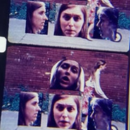
With his Picture Restart series, filmmaker and curator Ben Creech has done something singular, and something of which to be very proud. In the past twelve months (a period that somehow feels both short and long), he’s explored an archive and, in the process, awakened some sleeping giants of short-form film practice. His final program, aptly entitled Bringing It All Back Home, includes “Seven Films Asking Intimate Questions of Self & Society,” as per its official sub-description. Knowing Ben, I’d say the films feel uniquely him; he may not have made them, but in choosing them I sense his presence as if I were watching something he’d made himself. (And, in a way unique to curation, he sort of did.) Starting strong, almost uncomfortably so, is Tony Buba’s BRADDOCK FOOD BANK (1985, 5 min, 16mm). Completely silent, with only onscreen words over still images to illustrate the moral dilemma at hand, Buba contemplates the potential impact of either making a documentary about the titular food bank or funneling the necessary resources toward the bank itself, a Trolley Problem-esque impasse for those invested in the arts. Perhaps like Ben, I enjoy the discomfort elicited by such a conundrum, lest we take ourselves too seriously: art can save us until it literally can’t. (As Buba told Scout Tafoya recently in an interview, “You’re always having these battles going on in your head. When I made BRADDOCK FOOD BANK, I kept seeing all these documentaries about Nicaragua and I was just getting depressed. Did anyone down there think these films would come out and change their lives? … You can do stuff that ends up being more cathartic for yourself. How big is your ego that you think your film’s gonna change the world?” The sense of home is evoked more literally in Bill Turner’s FRAMING A HOUSE (1988, 7 min, 16mm). Old houses especially might feel secretly alive, and here they become so quite literally. The intricate patterns of their timeworn edifices, via single-frame cinematography, transform into a zoopraxiscope of Victorian architecture. The next two films, Ruth Peyser’s ONE NATION UNDER TV (1985, 3 min, 16mm) and Byron Grush’s WHY WE FIGHT (1991, 3 min, 16mm), are irreverent animations recalling Ben’s keen curation of the medium throughout the year. In the former, a TV addict self-destructs, conveyed through photographs over which animations are drawn, making the “real” even more uncanny. It’s also set to the song “One Nation Under TV” by the No Wave band Bump, for which Peyser played guitar. Using deceptively simple line animation, WHY WE FIGHT was made in response to TV coverage of the first Gulf War; its soundtrack is composed of the refrain “fear itself” (or some variation thereof) repeated over and over atop sounds of warfare and a sitar. The animations continually evolve, moving from more innocent scenes, such as child’s play and lovemaking, to those of violence and destruction. Ben has included many films by women in his series, including a program made up entirely of them, and Kathleen Laughlin’s MADSONG (1976, 5 min, 16mm) feels like a perfect emblem of the importance of these inclusions. Made by a woman, and very much about women, the film incorporates both animation and live-action footage as it delivers a sermon on womanhood (a madsong, indeed) and its natural cycles: fractured, lovely, and blossoming. Dirk de Bruyn’s UNDERSTANDING SCIENCE (1991, 16 min, 16mm) is evocative of what Ben programs that most confounds, but also energizes, me. Which is to say: dense, dense, dense. I most look forward to watching this in person, if not to better understand it, then at least to revel more fully in its perplexity. I also love this line from the program description, “Can we ever truly understand science?”, as it’s something I wonder about all the time, too. In that way, science is like religion, for some requiring a faith that supersedes any possibility of comprehension. Last up is THE DISCIPLINE OF D.E. (1979, 9 min, 16mm) by Gus Van Sant (a filmmaker hailing from Kentucky, like Ben), based on a story by William S. Burroughs. It’s what Ben deserves after all these months: to Do Easy. Per the story, to DE “is simply to do everything you do in the easiest and most relaxed manner you can achieve at the time you do it.” Van Sant had to request permission from Burroughs to adapt this short, and several years later he got back in touch with the writer to see if he’d like to be in DRUGSTORE COWBOY, for which Burroughs and his assistant wrote Burroughs’s character’s lines. Until there’s another exceptional series to be programmed, of course. [Kat Sachs]
Charlie Chaplin’s MODERN TIMES (US)
The Davis Theater – Sunday, 12pm
Like Fritz Lang’s METROPOLIS (1927), MODERN TIMES is a touchstone of silent filmmaking that confronts the enduring conflict of humanity versus technological progress. But, as the Dardenne brothers observed in the 2003 French TV series Chaplin Today, Lang concerned himself with society as a whole while Chaplin focused on the individual. Moreover, the individual with whom Chaplin was most associated, the beloved Little Tramp, was an outcast who couldn’t fit into the larger society and relied on his eccentricities to survive. MODERN TIMES’ iconic shot of the Tramp swimming between the gears of a giant machine sums up Chaplin’s worldview perfectly, calling attention to the person—and the humor—within a dehumanizing system. The film marked the Tramp’s final screen appearance; it was also the last silent movie produced in Hollywood, coming out nearly a decade after the first talkie, THE JAZZ SINGER (1927). That Chaplin alone could continue making silents in America into the mid-1930s speaks to his near-universal popularity at the time, something he felt depended on the Tramp being unable to speak. Communicating expertly through body language, Chaplin could convey the experience of outcasts everywhere; to give the Tramp words would be to limit his relatability. It’s not a coincidence that speaking is presented in a negative light in MODERN TIMES, whether it’s the factory boss’ orders, the unwelcome voices from radios, or the prerecorded sales pitch for that infernal feeding machine. When Chaplin finally allows his own voice to enter into the film, he has the Tramp sing a song entirely in gibberish while relating its meaning through vivid pantomime. It’s a very funny scene as well as an eloquent rebuke to sound cinema, insisting that images are more powerful than words when it comes to storytelling. Indeed, nearly every scene of MODERN TIMES contains some memorable image: the Tramp inadvertently leading a parade of communists; the Tramp roller-skating blindfolded near a fourth-story ledge; the Tramp’s dream home, where a cow obediently walks by the kitchen door to be milked; the final shot (one of the most famous in cinema) of the Tramp and the Gamin walking down an open road to wherever life may take them. The open-endedness of that concluding image reflects Chaplin’s eternal romanticism, which would seem to run counter to his knowing portraits of poverty in general and hunger in particular in this and almost all of his films with the Tramp. Yet these two aspects of his worldview coexist in beautiful and often deeply moving complexity. In a telling episode that occurred during the almost yearlong (if not proto-Kubrickian) shoot of MODERN TIMES, Chaplin significantly rewrote the scene where the Tramp, working as the night watchman at a department store, encounters a team of holdup men. The scene was to inject more villains into the movie, until Chaplin realized that the Tramp himself often resorted to stealing; he decided to give one of the men the line, “We’re not burglars—we’re just hungry,” then have the Tramp befriend them. (1936, 87 min, DCP Digital) [Ben Sachs]
Bi Gan's RESURRECTION (China/France/US)
Siskel Film Center – See Venue website for showtimes
Bi Gan’s latest film unfolds as a cosmology disguised as cinema. In its world, humanity has discovered the secret to eternal life: stop dreaming. A person who no longer dreams becomes like a candle that does not burn. It can exist forever, but it produces no light, no heat, no risk. Within this brutal logic, dreaming becomes sabotage. Those who persist are branded “Deliriants,” figures whose dreams introduce pain and instability into reality. Cinema, Bi Gan suggests, is the oldest and most dangerous Deliriant of all. RESURRECTION opens inside a movie theater, with cinema confronting its own origin. Film stock burns as the audience recoils. An intertitle announces the governing law: immortality requires the abolition of dreams. Yet cinema survives precisely because it refuses this command. It retreats into opium dens, nested dollhouses, silent-era distortions, and German Expressionist sets. The assassin assigned to eliminate Deliriants can see through illusion, yet must adopt the gentlest of forms to destroy them. This contradiction structures the film. Each chapter inhabits a distinct cinematic mode, less homage than lived environment. At the center is a nameless Deliriant whose world appears as a tinted silent film. He eats flowers and would rather die than stop dreaming. When the assassin brings him home, she discovers an empty projector cavity in his back and threads it with film. When the projector runs, they are transported into a field. Cinema quite literally animates him. A poet before he was a filmmaker, Bi Gan has always treated cinema as a tool for excavating memory rather than advancing plot. From KAILI BLUES to LONG DAY’S JOURNEY INTO NIGHT, he dissolves past, present, and future into a single perceptual state through long takes, nonprofessional actors, and Buddhist philosophy. RESURRECTION extends this project outward. Cinema itself becomes both subject and setting, staging a century of film history as a dream that has begun to forget why it once mattered. THE ARRIVAL OF A TRAIN (1896) mutates into film noir, complete with an unsolved murder, false accusations, and a suitcase serving as a MacGuffin. Jagged shadows stripe alleyways like jailhouse bars before a hall-of-mirrors shootout closes the chapter. The relay continues through winter wastelands, monasteries, and apocalyptic cities. Across time, the Deliriant appears as monk, con artist, and lover, facing detectives, deities, thieves, and vampires. Each episode marks a cinematic era and a philosophical shift. In the monastery, bitterness becomes a literal spirit summoned after a tooth is pulled. In the con-artist chapter, supernatural power reveals itself as performance: timing, gesture, confidence. Bi Gan also punctures his own seriousness when needed. One episode asks a riddle: what can never be recovered once lost? After prolonged insistence, the answer lands. A fart. The film’s most ambitious chapter is a monumental long take set on New Year’s Eve, 1999, cinema’s collective nervous breakdown. Biker gangs roam as the camera glides through docks, alleys, stairwells, and karaoke clubs without blinking in the rain. When a character addresses the camera directly, it responds. It has a name. Cinema becomes sentient, implicated, unable to feign neutrality. By dawn, as lovers race for the 7am boat, RESURRECTION has compressed cinema’s history into lived duration. Two hours pass for the assassin. A hundred years pass for the Deliriant. Cinema ages differently than people. It accumulates suffering, desire, and memory at a higher speed. It dies young and ancient at once. RESURRECTION argues that cinema persists not because it grants immortality, but because it insists on burning anyway. Immortality without art is just another name for death. (2025, 160 min, DCP Digital) [Shaun Huhn]
Sydney Pollack’s JEREMIAH JOHNSON (US)
Siskel Film Center – Monday, 6pm
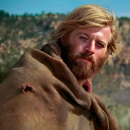
The most widespread cultural impact of Sydney Pollack’s 1972 Western JEREMIAH JOHNSON is the “nodding guy” meme, which features its star, Robert Redford, blonde and bearded, shaking his head in agreeable approval to something off camera. The meme can be traced back to the early 2010s and has resurfaced a few times throughout the years: once for the internet’s shock that the figure featured is not, in fact, Zach Galifianakis and furthermore cited in the aftermath of the passing of its actual star, cinema icon Redford, in 2025. The memeification of JEREMIAH JOHNSON, while quite literally flinging the film out of time and context, does nevertheless successfully concentrate—at least in part—its mood and the unflappable performance at its center. Beginning unhurriedly with a musical overture, a balladeer narrator (Tim McIntire, who cowrote the score with John Rubinstein), then sets the scene, introducing Mexican-American War veteran turned mountain man Jeremiah Johnson. The opening sequence takes you through the seasons, moseying its way to Johnson in a snow-covered landscape of the Rockies, learning how to survive in the wilderness. Based on a real-life mountain man, the film follows his journey and many encounters in the west as he futilely attempts to settle down, with a home and makeshift family. Featuring stirring cinematography (the film was shot entirely in Redford’s beloved Utah), JEREMIAH JOHNSON explores the complex relation between man and nature, at times reveling in its serenity, while never ignoring the colonial violence enacted to the land and the Indigenous population. The film lulls you into its peaceful beauty only to jolt you with sequences that feature shocking reality of the west. Johnson himself, along with the film’s leisurely pace—though under two hours, it contains an intermission—then comes to represent a sort of paradox between wandering travelogue and true horror. Redford’s Johnson is iconic because of his uncanny ability to navigate, reluctantly, between the two. If memes like the “nodding guy” represent anything, it’s focused, legible, and relatable emotion. Redford’s face throughout, set against the striking landscapes, without much dialogue, is all comprehensible, vigorous feeling. Screening as part of Golden Boy: A Robert Redford Retrospective. (1972, 108 min, DCP Digital) [Megan Fariello]
📽️ ALSO RECOMMENDED
Jafar Panahi’s IT WAS JUST AN ACCIDENT (Iran/France/Luxembourg)
FACETS – Saturday, 7pm & Sunday, 4pm and 6pm
There’s a scene in this film, where the group of Iranians who have kidnapped their supposed torturer in hopes to identify him beyond a shadow of a doubt so that they may enact their own justice and ruin his life as he had theirs, are pushing the van that contains the man’s prostrate body—tranquilized but not yet dead, and in a wooden box that foreshadows his intended fate—after it has run out of gas. It’s a humorous scene, ironic but also openly laughable because one of the “kidnappers” is a bride wearing her wedding gown. But as the group pushes the van, one or two others, strangers, rush to help them. As much as it’s a film about a torturer, it’s also a film about helpers; there’s no clear connection between Panahi and Mister Rogers, but this thought brought to mind his famous statement that, “When I was a boy and I would see scary things in the news, my mother would say to me, ‘Look for the helpers. You will always find people who are helping.’” The overall narrative of helping pertains to the central drama. A family pulls over after their car breaks down; at the place where they stop and are helped by a random person also works Vahid (Vahid Mobasseri) who, upon hearing the squeak of what sounds like a prosthetic leg, suspects that the father might be Iqbal, or Peg Leg, the man who tortured him and countless others while detained as political prisoners several years prior. He meets some of those others when referred to another victim by his friend, also a victim but who doesn’t want to be involved; ultimately a ragtag group is assembled, which includes a photographer, her troubled ex-boyfriend, and a bride and her groom (they'd been taking pre-wedding photos with the photographer), all one-time political prisoners who are first eager to confirm the torturer is in fact who they think he is and then to decide what to do with him. Ambiguity is inherent to Iranian cinema, as much of it embodies a sense of irresoluteness. But while I wouldn’t go so far as to say this is a bait and switch, it at first seems more enigmatic than it ends up being. Eventually it becomes about retribution and whether it will ease their trauma; it’s a consideration on the prolongation of violence, not really about if the torturer is who they think he is, and if that violence will ever end if they exact revenge. This is obviously personal for Panahi, who has been imprisoned twice for dissent, most recently in 2022; he had been previously unable to leave the country and made this film, as well as many others, without permission from the Iranian government. The film’s meditation on the futility of revenge finds a real-world parallel: just as the characters confront the limits of retribution, Panahi receives support from a global network of artists and audiences, proving that solidarity, not violence, is what carries lasting power. (2025, 103 min, DCP Digital) [Kat Sachs]
Kahlil Joseph’s BLKNWS: TERMS & CONDITIONS (US)
Siskel Film Center – Sunday, 11:30am
“I know what you’re thinking… But this is not a documentary.” With this bit of cheeky onscreen text—hilariously presented with accompanying memes of a smiling Denzel Washington and a relieved Vivica A. Fox—Kahlil Joseph interrupts himself practically mid-sentence to extend an olive branch to his audience, letting us know that we are not, in fact, about to be subjected to two hours of droll, academic analysis. There are still hints of that sprinkled throughout Joseph’s expansive and purposely uncategorizable BLKNWS: TERMS & CONDITIONS, a film that dares to live and luxuriate in what acclaimed art curator Okwui Enwezor called "the space between the spectator and the work of art." Joseph’s imagery and artistry has been viewed by millions around the world, even if they don’t know his name, as he's collaborated on music videos and visual albums with the likes of Beyoncé, Travis Scott, and Kendrick Lamar, cementing his bona fides as an artist in direct conversation with some of the most influential Black performers of the day. Here, Joseph’s interests have led him to a grander project, using the Africana Encyclopedia—a massive text birthed from the ambitions of W.E.B. DuBois—as a jumping off point to interrogate Black history in four dimensions. Past, present, future, and even alternate realities are extrapolated and interrogated, “BLKNWS” itself popping up as a fictional in-universe news source and Tumblr page, an artistic corrective to re-center and reclaim Black and African culture in the larger diaspora. Joseph intentionally blurs and remixes the lines between reality and fiction, even evoking a charming quotation from Agnes Varda, “What is bad for cinema is the categories; this is real fiction, fake fiction, real documentary, fake documentary. This is a film.” Varda’s not alone as inspiration here, as Joseph’s work, with its intense montage spanning millennia and onscreen text both supporting and contrasting the images presented—recalls Chris Marker’s SANS SOLEIL (1983) and especially the late-career essay films of Jean-Luc Godard, all filtered through an unabashed contemporary Black lens, ancient artifacts and sculptures and cinema positioned alongside memes and TikToks and reality television. The barrage of montage is interspersed with fictional reenactments of the lives of DuBois and Marcus Garvey, alongside beautifully textured explorations of the Nautica, an epic, futuristic ocean vessel looking to retrace the Transatlantic Slave Route but in reverse (a homecoming-turned-luxury liner). Here, a young journalist explores the onboard TransAtlantic Biennale, a place for Black art to be reimagined and recontextualized, perhaps a direct reference to Joseph’s own presence in the art gallery space, where BLKNWS was seen in its early forms. There is certainly something of a museum quality to Joseph’s work; the film warrants intense dissection and analysis, but it could also be easily consumed in short bites by wandering travelers, something to be both memed and studied. This bold attempt at reconfiguring cinematic language and form positions Joseph as a talent to reckon with and watch; his eye for our current moment and what may come next makes him as exciting as any filmmaker out there. (2025, 113 min, DCP Digital) [Ben Kaye]
Lukas Moodysson’s LILYA 4-EVER (Sweden/Estonia)
FACETS – Friday, 7pm
LILYA 4-EVER follows a teenager, Lilja, who opens the film believing she is moving to America with her mother and her mother’s boyfriend. She glows with anticipation, giving a farewell tour of the slums like a victory lap. That fantasy collapses almost immediately. Lilja is abandoned in a crumbling post-Soviet town, left to fend for herself amid shuttered factories and zero opportunity. Her reality erodes further when she is lured to Sweden by a boyfriend offering work. The camera clings to actress Oksana Akinshina’s shoulders as Lilja’s money, identification, and options disappear. What remains is hunger, powerlessness, and men who pay to be alone with her. Akinshina was fifteen when cast, a fact that deepens the performance rather than sensationalizing it. Both actress and character are forced to improvise adulthood, creating a fragile tension between bravado, innocence, and survival. The story draws from the 1999 case of Lithuanian high schooler Danguolė Rasalaitė, who was trafficked after her mother emigrated to the United States and formally relinquished responsibility of her. Lukas Moodysson keeps the abandonment but relocates the setting across the Baltic to Paldiski, Estonia, and lets his heroine speak Russian. The change reframes a single national tragedy as a regional condition. Wherever economies collapse and currencies keep mutating, a girl with a backpack becomes prey for men who know how to turn people into cash. Moodysson’s career has swung wildly in tone. SHOW ME LOVE (1998), a high school romance story released in Sweden as FUCKING ÅMÅL, announced a director unafraid to exploit local mores. TOGETHER (2000) gently skewered a 1970s Stockholm commune, while A HOLE IN MY HEART (2004) bombed at Cannes with its DIY porn, surgical close-ups, and assaultive editing. Despite these shifts, his method remains consistent: isolate a micro-community, let idealism corrode, and keep the camera close enough to see their pores—much like a Vanity Fair photoshoot. Raised in a Lutheran tradition, Moodysson initially imagined overt Christian symbolism, including a literal Jesus figure accompanying Lilja. Instead, the film introduces Volodja, a younger boy who trades glue-sniffing for brief shelter and becomes the sole witness to her descent. He is too small to intervene, too honest to look away. Without Volodja and a handful of dream sequences, LILYA 4-EVER would risk becoming pure documentation, an unbroken chain of suffering. Shot inside real Soviet barracks, the film drains its palette to wet concrete and peeling wallpaper. The handheld camera stays at her height, catching the calculations that cross her face when a door shuts or a client pays. There are no statistics, no lectures, no savior subplot, only the steady subtraction of exits. Swedish censors rated the film suitable for fifteen-year-olds “with teacher guidance,” a bureaucratic aside that captures its uneasy position between art and testimony. After its premiere, shelters reported a forty percent increase in calls from Eastern European teenagers who recognized themselves in the corridors, the wallpaper, and the rotting McDonald’s bags. LILYA 4-EVER is bleak, beautiful, and devastating. Moodysson’s camera refuses mercy, insisting we keep looking and ask why this keeps happening, and why it still takes fiction to make us empathize. Screening as part of the Cold Sweat film series. (2002, 109 min, DCP Digital) [Shaun Huhn]
---
Screening as part of a Cold Sweat double feature with Catherine Hardwicke's 2003 film THIRTEEN (100 min, Unconfirmed Format), which begins at 9:15pm.
Norifumi Suzuki’s SCHOOL OF THE HOLY BEAST (Japan)
Leather Archives & Museum – Saturday, 9pm
Norifumi Suzuki’s SCHOOL OF THE HOLY BEAST cuts into the underbelly of religious hypocrisy while smashing societal taboos with gleeful abandon. This Japanese exploitation gem isn’t just a nunsploitation film—it’s a feverish descent into the labyrinth of power, repression, and resistance, delivered with the visual excess of a baroque painting and the nihilistic bite of a late-night confession. As one of Toei Studio’s most celebrated directors, Suzuki pushed exploitation boundaries further than most Japanese filmmakers. His highly acclaimed SEX AND FURY (1973) and FEMALE YAKUZA TALE (1973) showcase his talent for elevating exploitative cinema into challenging high art. SCHOOL OF THE HOLY BEAST is a masterstroke of blending the profane with the profound, using the Catholic Church as a backdrop for lurid thrills while skewering patriarchy and the brutal machinery of religious institutions. The story—of Maya Takigawa infiltrating a convent to uncover the truth behind her mother’s mysterious death—is surface-level melodrama. Yet Suzuki’s hallucinatory visuals and a tone oscillating between the operatic and the grotesque reveal a filmmaker at the top of his craft. The film begins in montage, with Maya enjoying her city—going to the movies, splashing her hand in a water fountain, and lying with her lover. Her first line of dialogue announces her intent: she is heading to a place where “a woman is no longer a woman.” The quick editing and off-center framing of Maya in the city give way to meticulously framed compositions and dolly work upon her arrival at the convent. The convent reveals itself as a microcosm of sadistic authority. Punishments inflicted in the name of discipline are staged like rituals—whippings in front of a cross, water torture in candlelit chambers—each sequence more unhinged than the last. Suzuki’s use of religious iconography is sacrilegious and striking, subverting symbols of purity into tools of oppression. Maya, the steadfast hero, challenges the church with fierce determination. She is an avenging angel and feminist insurgent, navigating a world where male authority is absolute, and female suffering is institutionalized. Her vengeance is delivered with blood-soaked ferocity, transforming her into a symbol of divine retribution. Suzuki’s meticulous direction shines throughout. Even amidst sadomasochism and bondage, he maintains full control of the frame. Utilizing chiaroscuro lighting and vibrant splashes of red, the convent becomes a gothic nightmare. The editing underscores the film’s feverish tone, while the soundtrack—a blend of traditional melodies and bizarre modern compositions—elevates the surreal atmosphere. SCHOOL OF THE HOLY BEAST transcends its genre, critiquing not only the Church but broader power dynamics, patriarchy, and moral hypocrisy. The hierarchies, forced celibacy, and self-punishment within the convent serve as metaphors for societal repression. While many exploitation films critique the Catholic Church’s hypocrisy and patriarchal systems, nunsploitation often wrestles with contradictions. These films indict the church while indulging in voyeuristic depictions of female suffering and repressed sexuality, catering to the male gaze they ostensibly critique. Despite its unrelenting violence and blasphemous imagery, SCHOOL OF THE HOLY BEAST distinguishes itself through its ambitious filmmaking. Unlike the onslaught of nunsploitation films inspired by Ken Russell’s THE DEVILS (1971), Suzuki’s work transcends genre conventions. It is a brutal, beautiful act of rebellion that lingers long after the final, fiery reckoning. (1974, 91 min, Digital Projection) [Shaun Huhn]
---
Screening as part of a double feature with Joe D’Amato’s 1979 film IMAGES IN A CONVENT (93 min, Digital Projection), which begins at 7pm. Both screen as part of the Fetish Film Forum.
Renny Harlin's THE LONG KISS GOODNIGHT (US)
Alamo Drafthouse – Saturday, 10:30pm and Monday, 7pm
Perhaps the quintessential Shane Black screenplay—and his last before a nine-year silence that ended with the giddy KISS KISS BANG BANG—THE LONG KISS GOODNIGHT splits the difference between Luc Besson's fetishization of female avengers and Quentin Tarantino's fetishization of the same, throws in a little Brian De Palma, and then covers all of that up with layers of snappy, spewing tough talk delivered by a group of actors that aren't merely chewing scenery, but devouring it whole. Toss in some occasionally gorgeous camerawork by Guillermo Navarro, Samuel L. Jackson's funniest performance (as a fake-tough private investigator decked out in vintage clothes) and a few phantasmagoric touches that hearken back to director Renny Harlin's work on A NIGHTMARE ON ELM STREET 4: THE DREAM MASTER (check out that car crash scene!), and the result is entertaining, goofy, heady excess—the sort of overwrought, stunningly over-written action movie that could only have been made in 1996. A very "of-its-time" box-office flop that has aged unusually well, it seems to occupy its own sub-genre: "baroque cynicism." Screening as part of the Queer Film Theory 101 series. (1996, 120 min, DCP Digital) [Ignatiy Vishnevetsky]
Jia Zhang-ke's CAUGHT BY THE TIDES (China)
Siskel Film Center – Friday, 6pm; Saturday, 8:15pm; and Tuesday, 8:30pm
Jia Zhang-ke reflects on the last two and a half decades of Chinese history through the filter of his own work—the title seems to be referring to the tides of time itself. CAUGHT BY THE TIDES was assembled from mostly unseen footage that Jia shot for three of his earlier films: UNKNOWN PLEASURES (2002), STILL LIFE (2006), and ASH IS PUREST WHITE (2018). Using this material, Jia constructs a story about a woman (Zhao Tao, naturally) who spends much of the 21st century in search of her missing lover. Her journey takes her across the country and permits her to bear witness to various changes that modern China has experienced. The film hinges on her visit to the region that would become the Three Gorges Dam in the mid-2000s. As Jia showed in STILL LIFE, the area was completely demolished and the denizens were forcibly relocated to make way for the project; the filmmaker clearly sees the event as a telling moment in China’s history insofar as it marked the triumph of “progress” over concern for the citizenry. In this regard, Zhao’s quest represents an attempt to locate humanity amidst state concerns that threaten to overwhelm it entirely; she also suggests a tenacity that Jia seems to be saying is necessary to survive in this ever-shifting landscape. In one of the film’s most memorable shots, Zhao contends with a man determined to keep her on a parked bus, pushing her down every time she attempts to leave. The pattern repeats several times until the man finally lets her go, signaling a reprieve in Zhao’s torment and a rare occasion where the proverbial tide breaks for a determined swimmer. (2024, 111 min, DCP Digital) [Ben Sachs]
Ryan Coogler's SINNERS (US)
Siskel Film Center – See Venue website for showtimes
Ryan Coogler, one of the most gifted director-screenwriters working today, has garnered popular acclaim by offering original stories that are wildly entertaining while providing the kind of food for thought that cinephiles used to chew on with every new release. That in itself makes the film an outlier in this age of mostly vacuous retreads and superhero movies. The filmmaker also has come under attack for negotiating a supposedly “extinction-level event” for Hollywood studios by securing final cut, a percentage of box office, and ownership of his film after 25 years. There is nothing unprecedented about this deal, that is, if you’re white. The racist hysteria aimed at Coogler, however, emphasizes the more serious point behind SINNERS—the need for Black Americans to have agency over their own lives and intellectual property. This need is the motivation that propels Coogler’s story. Twin brothers Smoke and Stack (Michael B. Jordan), World War I veterans and Chicago bootleggers, return to their hometown of Clarksdale, Mississippi, in 1932 after finding that the North was little more than Jim Crow with tall buildings. They make a deal to buy an empty mill to set up their own juke joint, recruit their cousin Sammie (Miles Caton) to play guitar and sing, sign up a local musician legend Delta Slim (Delroy Lindo) with the promise of all the food and drink he wants, pluck a large cotton picker (Omar Miller) out of the field to act as bouncer, and line up food and a venue sign from a Chinese couple (Li Jun Li and Yao). With everything set in place, the brothers prepare to open their venture the same night. Little do they know that a trio of white vampires, drawn to Sammie’s music, will show up at their club to “assimilate” them. Coogler takes his time settling us into life in the Mississippi Delta, slowing us down to the pace of life in a hot, rural environment. His return of the prodigal sons shows off the pride they feel and inspire in others, as well as the ruthlessness they learned as war veterans and Capone associates. The no-fuss deals Smoke strikes with his juke joint employees are as efficient and amusing as the touching reunion of Stack with his wife, Annie (Wunmi Mosaku), and grave of their infant son, which Annie sets with a bottle of milk almost daily. His elements of magic realism move beyond vampire manifestations to include a dance floor peopled with Black musicians from every place and era, from Africa to the Bronx, in a celebration of Black creativity and joy that the juke joint revelers easily tap into. The failure of the vampires to gain permission to enter the juke joint thus separates them from that which they hoped to appropriate. SINNERS is teeming with the joy of Black life even in its sorrow and the obstacles faced by its characters in just trying to live their lives with purpose and dignity. The always interesting Jordan differentiates his dual roles beautifully. Caton is a skilled musician and surprisingly affecting actor who has a huge future ahead of him. A final, personal delight for me was seeing Buddy Guy play the elderly Sammie in his own club, named for the woman he got busy with at the juke joint, as he contemplates that fateful night. Having the rare movie that is an authentic cultural expression wrapped in an ever-satisfying horror and revenge fantasy is something to celebrate and encourage. (2025, 137 min, DCP Digital) [Marilyn Ferdinand]
Stanley Kubrick's EYES WIDE SHUT (UK/US)
Alamo Drafthouse – Wednesday, 3:15pm
It took more than a decade for audiences to begin to appreciate Kubrick's final film, which is set in a facsimile of contemporary New York but heeding closely to the psychology and sexual mores of the 1924 Arthur Schnitzler novella on which it is based. This discrepancy sparked incurious outrage in 1999—particularly among writers in the New York Times, who actually seemed offended by the lack of realism—but it's come to resonate as one of the deepest mysteries of the director's monumental career. For Martin Scorsese, who placed the film in his top five for the entire decade, it's about New York as it appears in a dream. "And as with all dreams," he wrote, "you never know precisely when you've entered it. Everything seems real and lifelike, but different, a little exaggerated, a little off. Things appear to happen as if they were preordained, sometimes in a strange rhythm from which it's impossible to escape. Audiences really had no preparation for a dream movie that didn't announce itself as such, without the usual signals—hovering mists, people appearing and disappearing at will or floating off the ground. Like Rossellini's VOYAGE IN ITALY, another film severely misunderstood in its time, EYES WIDE SHUT takes a couple on a harrowing journey, at the end of which they're left clinging to each other. Both are films of terrifying self-exposure. They both ask the question: How much trust and faith can you really place in another human being? And they both end tentatively, yet hopefully. Honestly." Kubrick arrived at this combination of mystery and exposure through singular working methods unlikely to be repeated in a major film. Reportedly the longest shoot in movie history, Kubrick spent weeks on individual scenes, running actors through conversations until they were no longer conscious of performing. He had pursued this sort of marathon process before—most notably on THE SHINING and FULL METAL JACKET—but never on material so explicitly psychological. As a result, even superstars like Tom Cruise and Nicole Kidman (giving their finest performances as a wealthy married couple) seem unfamiliar and strangely vulnerable. But EYES WIDE SHUT is only truly unsettling on contemplation: on the surface, it's one of Kubrick's funniest (with some of the most eccentric supporting performances in anything he made after THE KILLING) and most luminous, capturing the allure of Manhattan in winter with remarkably simple lighting arrangements. (1999, 159 min, DCP Digital) [Ben Sachs]
Alan J. Pakula's ALL THE PRESIDENT'S MEN (US)
Siskel Film Center – Saturday, 5:15pm
Although it may be coming to an end with the threatened collapse of the newspaper industry, the newspaper movie has had a long run in motion pictures, chronicling both the cynicism that characterized the early years of yellow journalism in CHICAGO (1927) as well as Fourth Estate crusading, both helpful (DEADLINE, U.S.A., 1952) and harmful (TRY AND GET ME!, aka THE SOUND OF FURY, 1950). The inherent drama of headline news provides filmmakers with a constant supply of riveting material that offers audiences more bang for their buck for being at least partially true. Arguably the most acclaimed and influential newspaper movie is Alan J. Pakula’s ALL THE PRESIDENT’S MEN, based on the best-selling book by Bob Woodward and Carl Bernstein, then reporters for the Washington Post, whose investigative reporting on the 1972 burglary of Democratic National Committee headquarters at the Watergate office complex in Washington, D.C., revealed a vast dirty-tricks conspiracy that eventually ended the presidency of Richard M. Nixon. Pakula and screenwriter William Goldman avoid histrionics, but amp up the tension of the film, borrowing from Antonioni’s urban alienation and George Romero’s paranoia to paint a portrait of ultimate power as both dangerous and deeply stupid. There are numerous shots of Woodward (Robert Redford) and Bernstein (Dustin Hoffman) driving past the White House, the endpoint of their inquiry, though they didn’t know it from the start. Cinematographer Gordon Willis favors high overhead shots to emphasize the informational maze through which the heroes must travel. One famous shot shows the pair in the mandala that is the Library of Congress, rifling through stacks of library slips. Willis also likes long shots of the wide-open city room, as though to emphasize the egalitarian and transparent nature of news reporting. Pakula uses a sort of Shakespearean construction of deep drama alternating with comic moments to keep the audience on a roller coaster of tension and release, an effective strategy for a story whose momentous outcome was known years before. Foremost is the character of Deep Throat (Hal Holbrook), now known to be W. Mark Felt, associate director of the FBI at the time of the break-in. The archetype of the oracle is an ancient one, and Willis’ shadowy underlair—a parking garage where he met with Woodward—suggests a plot born from Hell, pulling the film out of the everyday and marking it with mythic dimensions. Of particular note is the movie’s Oscar-winning sound design, which emphasizes a strong, muscular, determined group of professionals plying their trade with machines whose metal keys punch ink onto paper. It’s a distinctive and percussive sound, and emphasizes why I find so annoying the anemic, plastic clicking of the computer keyboards that have taken over from the typewriters and teletype machines in life—and especially in the movies. Coins ring into pay phones, telephone dials spin and click, stereo knobs click on and off—there are a whole range of sounds that are nearly lost to us today that make a more direct connection between the characters and their actions. Hoffman and Redford are iconic in these roles. Scrappy, energetic Hoffman channels just a bit of his Ratso Rizzo sleaze from MIDNIGHT COWBOY (1969), marrying it to ambition and the good sense to let Woodward take the high ground when needed. Redford has us on his side all the way, his blond good looks and low-pressure style encouraging people to volunteer information they initially refuse to divulge. Screening as part of Golden Boy: A Robert Redford Retrospective. (1976, 138 min, DCP Digital) [Marilyn Ferdinand]
---
This film has also been written about by Cine-File Contribute Kian Bergstrom. Read ithere.
Elizabeth Lo's MISTRESS DISPELLER (China/US/Documentary)
FACETS – Sunday, 2pm
A shockingly intimate documentary, MISTRESS DISPELLER highlights a new industry on the rise in China. With the goal of keeping couples together, a "mistress dispeller" can be hired to infiltrate family dynamics and bring harmony back to marriages flailing due to infidelity. Featuring the challenges of modern relationships, dating, marriage, family, and loneliness, the film creates space for everyone involved, demonstrating sincere empathy for all sides of the love triangle. MISTRESS DISPELLER follows a couple, Mr. and Mrs. Li, as the wife reaches out to Teacher Wang, a mistress dispeller who skillfully inserts herself into their dynamic, discovering the innermost details of the relationships involved to save the marriage; her purpose, however, expands to helping everyone, including the mistress. The film insightfully draws connections between personal relationships and larger cultural norms and expectations. Frank conversations, shot with arresting stillness, many featuring close-ups, are juxtaposed with lingering shots of Chinese art, landscapes, and cityscapes. Throughout, as well, there are interludes with images of new brides, lonely hearts ads, dating seminars, and matchmaking services, illuminating the cultural pressures that exist in finding and maintaining successful relationships—so much so that industries spring up to fill the need. What is most surprising is how director Elizabeth Lo got everyone involved to agree to willingly participate; a fact she is clear to emphasize with text at the beginning of MISTRESS DISPELLER. The result is true cinematic melodrama in documentary form. (2024, 94 min, DCP Digital) [Megan Fariello]
Tim Burton’s BATMAN RETURNS (US)
Alamo Drafthouse – Tuesday, 6:30pm
No one else captures the nostalgic kitsch and dark melancholy of Christmastime with perfect balance like Tim Burton. His first feature after one of his other Christmas classics, EDWARD SCISSORHANDS (1990), BATMAN RETURNS shifts the gloomy holiday cheer from the suburbs to Gotham City. The constructed sets and detailed production design have produced some of the most iconic images in a career filled with memorable visuals. The story involves Gotham industrial businessman Max Shreck (Christopher Walken) teaming up with twisted crime lord Penguin (Danny DeVito), who’s searching for his origins. Superhero vigilante Batman (Michael Keaton) is out to stop them, but everyone’s plans are complicated by Selina Kyle (Michelle Pfeiffer), Shreck’s meek secretary who seeks revenge against her boss as the formidable, whip-brandishing, latex-wearing Catwoman. It's hard to argue that this isn’t Pfeiffer’s movie, as the submissive cat lady violently transforms into the dominant Catwoman, one of the great cinematic femme fatales. Her early scenes, set in her baby pink apartment, where Selina talks to herself to cope with the loneliness of her life are unexpectedly moving, so much so that her story looms over the other character’s. Through her, the film presents complex themes about duality and female sexuality. She also helps to make the film more noir than anything else, despite its titular superhero; like its conflicted approach to the holiday season, BATMAN RETURNS is funny and morbid, beautiful and grotesque, ridiculous and sincere—one of Burton’s best. (1992, 126 min, DCP Digital) [Megan Fariello]
The 42nd Annual Music Box Sing-a-Long & Double Feature
Music Box Theatre – See Venue website for showtimes
Frank Capra's IT'S A WONDERFUL LIFE (US) [Also screening at the Alamo Drafthouse]
Frank Capra was associated more with reassuring, patriotic sentiment than with actually making movies; but just beneath the Americana, his films contain a near-schizophrenic mix of idealism and resentment. In this quality, as well as his tendency to drag charismatic heroes through grueling tests of faith, it wouldn't be a stretch to compare Capra with Lars von Trier. There's plenty to merit the comparison in IT'S A WONDERFUL LIFE alone: The film is a two-hour tour of an honest man's failure and bottled-up resentment, softened only intermittently by scenes of domestic contentment. Even before the nightmarish Pottersville episode (shot in foreboding shadows more reminiscent of film noir than Americana), Bedford Falls is shown as vulnerable to the plagues of recession, family dysfunction, and alcoholism. All of these ills weigh heavy on the soul of George Bailey, a small-town Everyman given tragic complexity by James Stewart, who considered the performance his best. Drawing on the unacknowledged rage within ordinary people that he would later exploit for Alfred Hitchcock, Stewart renders Bailey as complicated as Capra himself—a child and ultimate victim of the American Dream. It's because the film's despair feels so authentic that its iconic ending feels as cathartic as it does: After being saved from his suicide attempt (which frames the entire film), Stewart is returned to the simple pleasures of family and friends, made to seem a warm oasis in a great metaphysical void. (1946, 130 min, DCP Digital) [Ben Sachs]
---
Michael Curtiz's WHITE CHRISTMAS (US)
Critics agree that Mark Sandrich's HOLIDAY INN (1942), the first musical comedy to feature Bing Crosby, an inn, and Irving Berlin's "White Christmas," is a better film than this partial remake. Yet it turns out that it's the revivals of this Technicolor, VistaVision version that people look forward to this time of year. WHITE CHRISTMAS incorporates the history of its own title song, which, while it would go on to become perhaps history's largest-seller, actually seemed a flop at first. Music historians Dave Marsh and Steve Propes note, "What saved 'White Christmas' were requests made by GIs to Armed Forces Radio around the world. Soldiers away from home, many of them in the South Pacific or North Africa, uncertain of whether they'd ever again see family and friends, let alone a snowfall, responded passionately to Berlin's understated evocation of the mythic romance of Christmas Past." This history is folded into the opening scene: it's Christmas Eve, 1944, somewhere on a World War II battlefield, and Crosby sings the song to fellow troops amidst some very fake rubble, as bombs explode in the background. The movie's got Crosby and Danny Kaye as music-and-lyrics team Wallace and Davis, and Vera-Ellen and Rosemary Clooney as sister act the Haynes. They're a treat to watch even just sitting around a railroad passenger car singing "Snow," bound for Pine Tree, Vermont, where the inn turns out to be run by ex-General Waverly (Dean Jagger). When people gather for a screening of this movie, I doubt they worry that it may not rank with Michael Curtiz's best work (CASABLANCA, YANKEE DOODLE DANDY, MILDRED PIERCE). They come to mark the change of years together. If there's a season for nestling in the warmth of nostalgia, it's this one. Plus, there's the camp appeal of Crosby and Kaye doing "Sisters." (1954, 120 min, DCP Digital) [Scott Pfeiffer]
📽️ ALSO SCREENING
⚫ Alamo Drafthouse
Joachim Trier’s 2025 film SENTIMENTAL VALUE (133 min, DCP Digital) continues screening this week. See Venue website for showtimes. More info here.
⚫ FACETS
Pascal Bonitzer’s 2024 film AUCTION (91 min, DCP Digital) screens Saturday at 3pm and 5pm.
The director’s cut of Shu Lea Cheang’s 2000 film I.K.U. (90 min, DCP Digital) screens Saturday at 9:15pm.
The Chicago Japan Film Collective presents Toshiaki Toyoda’s 2021 documentary SHIVER (89 min, Unconfirmed Format) on Sunday at 10:30am. More info on all screenings here.
⚫ Music Box Theatre
Kleber Mendonça Filho’s 2025 film THE SECRET AGENT (160 min, DCP Digital) begins screening this week. More info here.
⚫ Siskel Film Center
National Theatre Live’s 2025 production of The Life of Pi (150 min, DCP Digital) screens Saturday at 11:30am and Sunday at 2pm.
Barry Levinson’s 1984 film THE NATURAL (138 min, DCP Digital) screens Saturday at 2:30pm and Sunday at 5pm, and Phil Alden Robinson’s 1992 film SNEAKERS (126 min, DCP Digital) screens Tuesday, 6pm, both as part of the Golden Boy: A Robert Redford Retrospective series.
Amy Berg’s 2025 documentary IT’S NEVER OVER, JEFF BUCKLEY (106 min, DCP Digital) screens Wednesday at 6:30pm and Thursday at 3:30pm. More info on all screenings here.
⚫ VDB TV (Virtual)
oliverio rodriguez and Victoria Stob's 2018 short film LYNDALE (24 min) and Sandi DuBowski's 1993 short film TOMBOYCHIK (15 min) stream for free on VDB-TV. Programmed by Cine-File contributor Elise Schierbeek. More info here.
CINE-LIST: December 19 - December 25, 2025
MANAGING EDITORS // Ben and Kat Sachs
CONTRIBUTORS // Megan Fariello, Marilyn Ferdinand, Shaun Huhn, Ben Kaye, Scott Pfeiffer, Ignatiy Vishnevetsky
